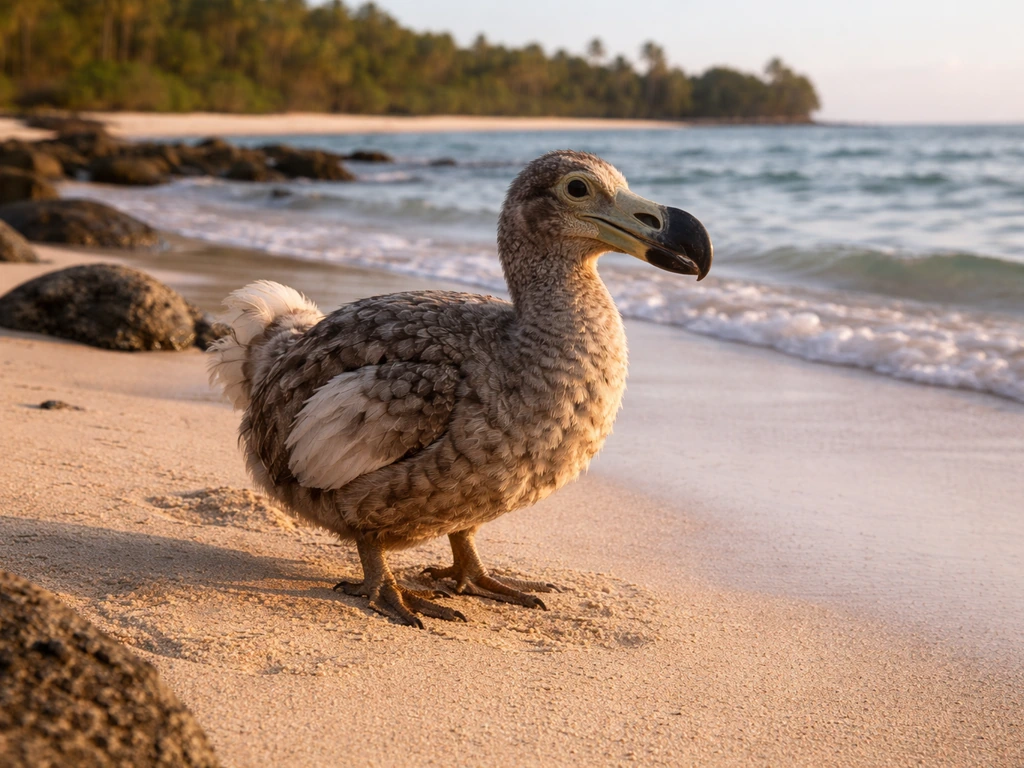
No, the dodo bird does not still exist. It is fully extinct, with no living populations anywhere on Earth. The U.S. Fish and Wildlife Service lists Raphus cucullatus as extinct, the IUCN Red List confirms the same, and every credible natural history institution in the world agrees: the last confirmed dodo sighting was recorded in 1662, and the species was gone by around 1680 to 1693, depending on which evidence and dating method you trust. If you came here wondering whether any dodos are alive today, in some remote corner of the world or a zoo somewhere, the answer is definitively no.
Does Dodo Bird Still Exist? Answer and Extinction Facts

Maya Hennessy
22 Apr 2026
What actually happened to the dodo
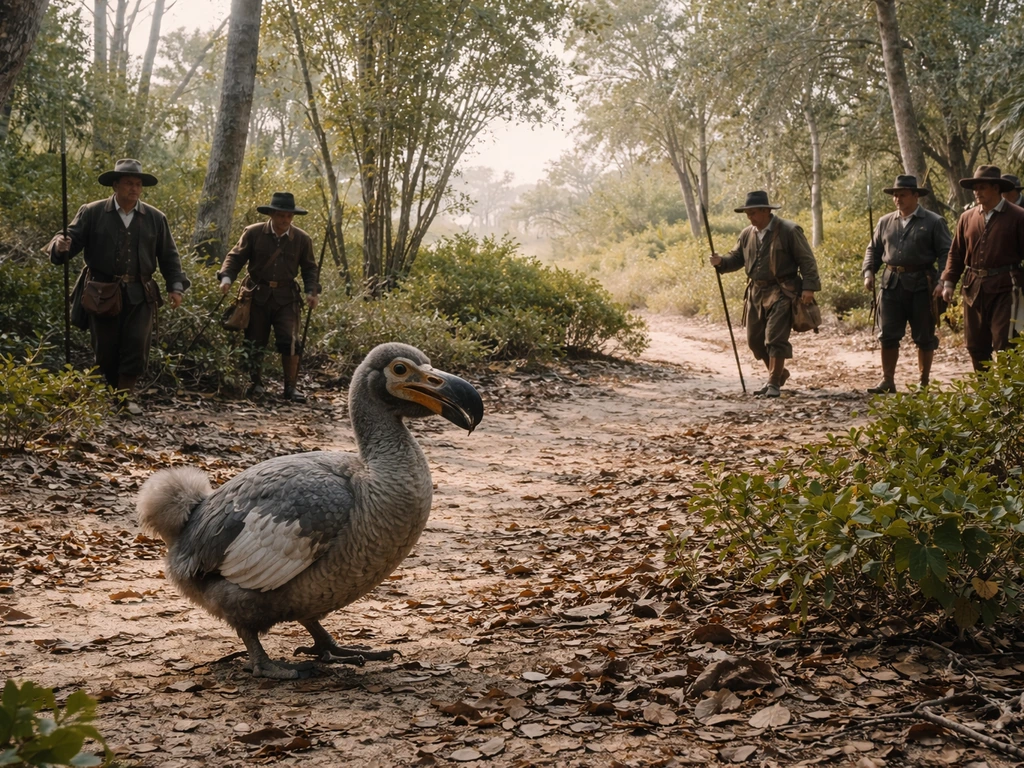
The dodo's disappearance was fast by any standard. Europeans first encountered the bird on Mauritius in the late 16th century, and within roughly a hundred years, it was gone. The Oxford University Museum of Natural History puts extinction at around 1680, while some researchers using Bayesian statistical modeling push that estimate slightly later, to around 1693. Either way, we are talking about a species that went from undiscovered by Europeans to completely wiped out in less than a century.
The popular story pins the blame on sailors hunting dodos for food, but the actual picture is more complicated. A 2015 review of archaeological evidence from Fort Frederik Hendrik, a late 17th-century settlement on Mauritius, found little clear sign that dodos were being slaughtered as a primary food source. That points toward a multi-factor extinction model rather than simple overhunting. The bigger drivers were the animals that European settlers brought with them: dogs, cats, pigs, and rats. These introduced predators raided dodo nests and ate eggs and chicks, which was catastrophic for a ground-nesting bird that had never evolved defenses against mammals. Habitat destruction from settlement also played a role, stripping away the forests the dodo depended on.
- Late 16th century: Europeans arrive on Mauritius and first encounter the dodo
- 1662: Last confirmed sighting of a living dodo, recorded in historical accounts
- c. 1680–1693: Scientific consensus extinction window, depending on the dating method used
- Early 1800s: Subfossil dodo remains begin to be recovered and studied
- 2002: Mitochondrial DNA successfully extracted from museum specimens using ancient DNA methods
- 2005 onward: Major excavations at Mare aux Songes reveal a rich fossil bone bed with dodo remains
Where the dodo lived and what made it so unusual
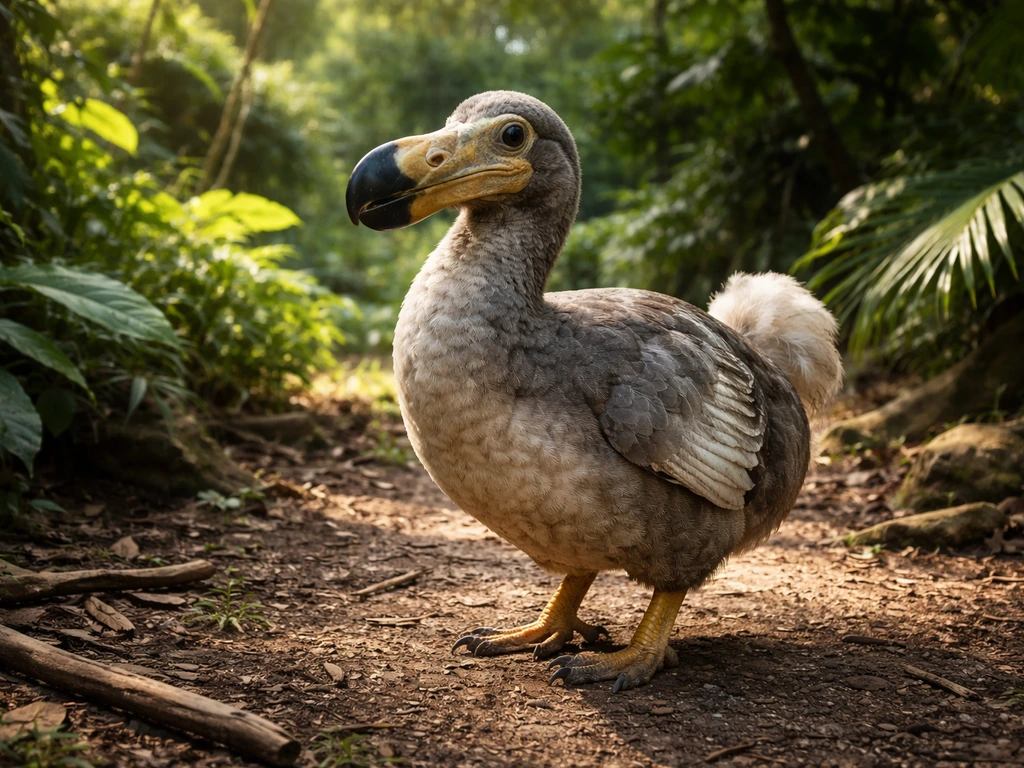
The dodo was endemic to Mauritius, a small island in the Indian Ocean roughly 900 kilometers east of Madagascar. It evolved in near-total isolation, which is exactly why it ended up the way it did: large, flightless, and completely unafraid of humans. Islands strip away the evolutionary pressures that keep mainland birds sharp. With no native land predators on Mauritius, the dodo had no reason to maintain the ability to fly or to run from anything. Its wings reduced to small, useless stubs, and its body grew heavy, reaching an estimated weight of around 10 to 18 kilograms. That same fearlessness that made it fascinating to sailors made it easy to catch.
Ecologically, the dodo was likely important as a seed disperser, eating fallen fruit and moving seeds through the forest. Some researchers have suggested that at least one Mauritian tree species, the tambalacoque, may have depended partly on the dodo passing seeds through its digestive tract, though that specific link has been debated. What is not debated is that the dodo occupied a real ecological niche, and its loss reshaped the island's ecosystem in ways we are still trying to fully understand.
The evidence we actually have today
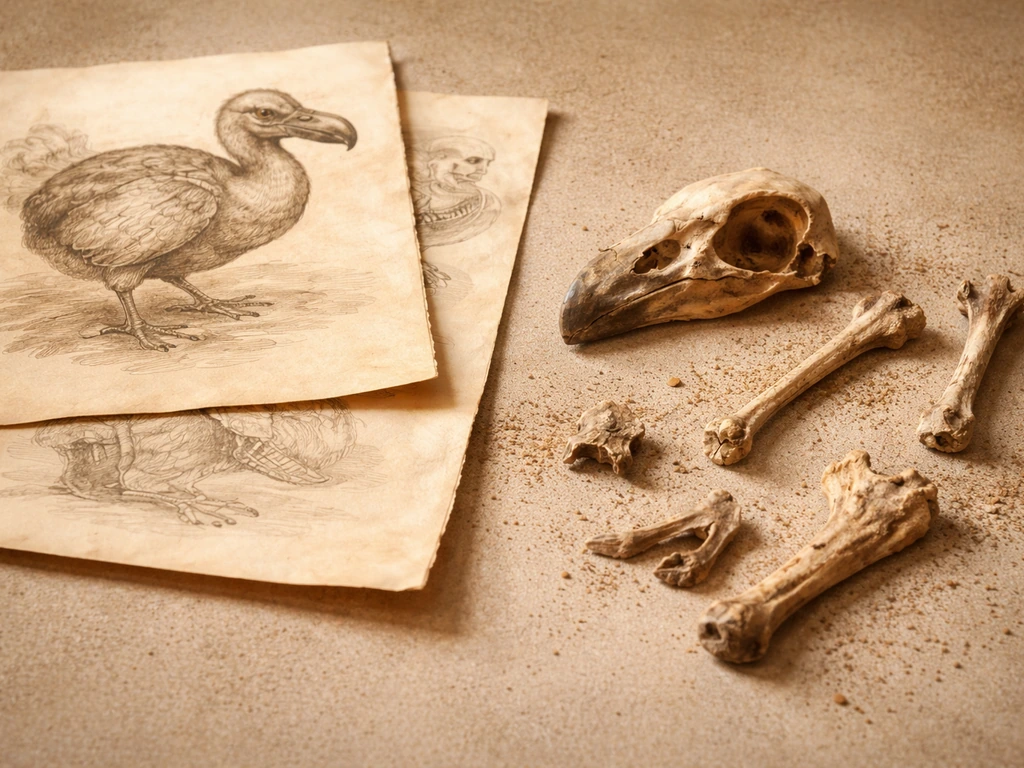
You might wonder: if the dodo has been gone for over 300 years, how do we know so much about it? The answer is that we have a surprisingly rich body of physical and scientific evidence, even if we have no living birds.
The Mare aux Songes swamp in southeastern Mauritius is the most important site. This coastal lagerstätte (a term paleontologists use for a site with exceptional fossil preservation) has yielded a dense concentration of dodo bones, some dating back roughly 4,200 years based on radiocarbon calibration. PubMed-indexed research from post-2005 excavations describes the swamp as extraordinarily rich, with bones preserved in ways that allow detailed biological analysis. The Natural History Museum in London also describes Mare aux Songes as the place where some of the first dodo subfossil remains were found.
Beyond bones, we have the Oxford Dodo: a specimen held at the Oxford University Museum of Natural History that includes the only surviving soft tissue from the species, specifically a mummified head and foot. That soft tissue has been a critical resource for DNA research. In 2002, scientists published work in Genome Biology describing the successful extraction of mitochondrial DNA sequences from dodo remains using ancient DNA methods. They also analyzed DNA from the Rodrigues solitaire, a close relative of the dodo that went extinct around the same time. This genetic work confirmed that the dodo was not a member of the vulture or ratite families as once thought, but a giant, flightless relative of pigeons and doves. ScienceDirect has documented laboratory methods using a 420 base-pair region of dodo mitochondrial DNA (specifically the 12S rRNA gene) as a validation tool for species identification. None of this points to living animals. All of it points to a species thoroughly studied through its remains.
Historical accounts round out the picture. Sailors and settlers from the late 1500s through the mid-1600s left written descriptions and illustrations of living dodos. The last credible eyewitness account dates to 1662. After that, silence. No verified sighting, photograph, captured specimen, or credible report of a living dodo has emerged in over 360 years.
Clearing up the common myths
A few persistent questions keep circulating online, so it is worth addressing them directly.
Could the dodo have survived on another island or in a remote area? No. The dodo was an island endemic, biologically shaped by Mauritius specifically. It could not simply relocate. Its inability to fly made any kind of dispersal across open ocean impossible. There is no credible evidence, no bones, no eyewitness accounts, and no genetic material suggesting a surviving population anywhere other than historical Mauritius.
Are sightings sometimes misidentified? Occasionally, people claim to have seen a "dodo-like" bird, but these are consistently explained by misidentification of other large birds, hoaxes, or confusion with related species. Some historical records from after 1662 that mention "dodo" appearances have been re-examined by researchers and attributed to rails (other ground birds on Mauritius), not actual dodos. This is part of why the extinction date carries a small uncertainty range.
Is the dodo related to current birds you might mistake for it? Its closest living relatives are, surprisingly, pigeons. The Nicobar pigeon is considered among the nearest living relatives based on genetic analysis. Visually, you would never confuse them, but genetically, the dodo belongs firmly in the pigeon-dove lineage (Columbidae), not among the large ratites like ostriches or emus.
What about de-extinction? Scientists have discussed the possibility of bringing the dodo back using ancient DNA and gene-editing techniques. This is a real area of scientific interest, and the genetic groundwork exists thanks to the mitochondrial DNA work done over the past two decades. But as of today, <a data-article-id="FBF7FE24-2343-43B2-B005-FFDD5287EF79"><a data-article-id="FBF7FE24-2343-43B2-B005-FFDD5287EF79">no dodo has been brought back</a></a>. The science is still developing, and a living, reproductively viable dodo does not exist anywhere. That is a separate topic worth exploring on its own, and the questions of whether scientists are actually working toward this and what that would realistically look like are ones researchers are actively discussing.
Dodo vs. other famous extinct birds
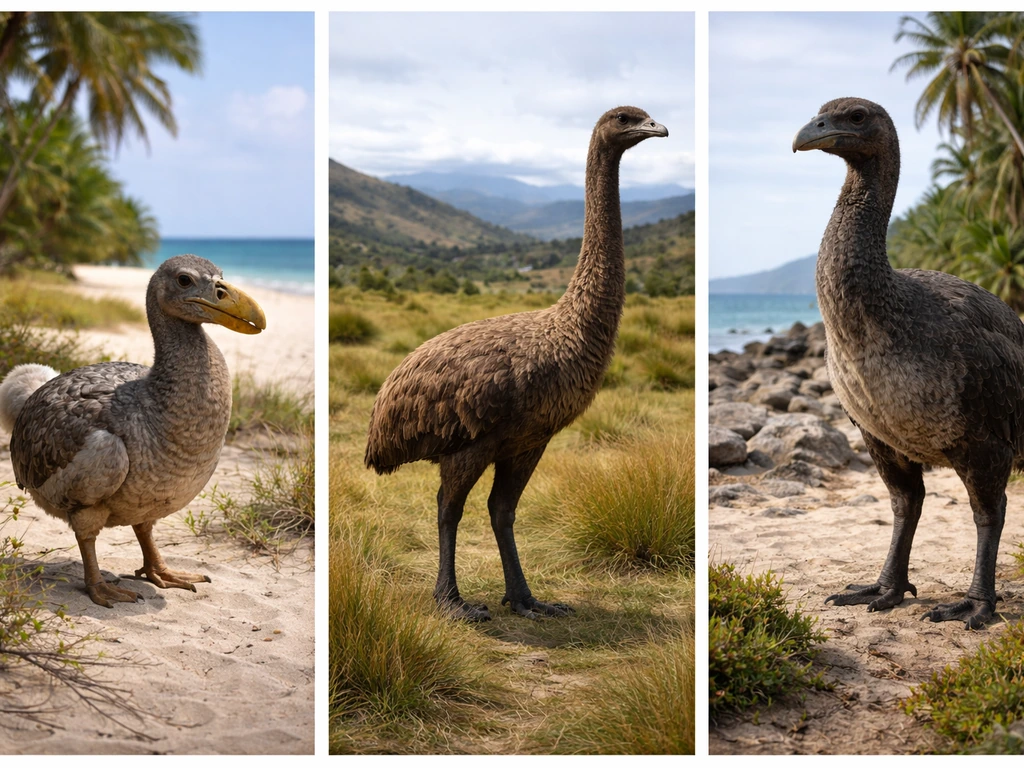
The dodo is the most famous extinct bird, but it was not alone. Comparing it briefly to the moa and the elephant bird puts its story in useful context.
| Feature | Dodo | Moa (New Zealand) | Elephant Bird (Madagascar) |
|---|---|---|---|
| Extinction date | c. 1680–1693 | Early-to-mid 15th century | At least by the 17th century |
| Primary extinction driver | Introduced predators, habitat loss, some hunting | Intensive Māori hunting after arrival c. 1250–1300 CE | Debated: hunting, egg exploitation, habitat loss |
| Flightless? | Yes | Yes (9 species, all flightless) | Yes |
| Size | ~10–18 kg | Up to ~230 kg (South Island giant moa) | Up to ~500 kg (Aepyornis maximus) |
| DNA evidence available? | Yes, mitochondrial DNA extracted | Yes, ancient DNA widely studied | Limited but partial genetic data exists |
| Island endemic? | Yes (Mauritius only) | Yes (New Zealand) | Yes (Madagascar) |
| Key fossil site | Mare aux Songes, Mauritius | Widespread South Island sites | Various Madagascan sites |
All three birds share a pattern: island endemism, flightlessness, no evolved fear of humans, and rapid extinction following human contact. The moa's story is particularly well-documented. Nature Communications research using Bayesian radiocarbon dating concluded that Polynesian settlers arrived in New Zealand in the early 14th century and that all nine moa species were gone by the early-to-mid 15th century, driven by intensive hunting pressure. The Te Ara Encyclopedia of New Zealand notes that Māori hunted moa extensively within roughly the first century of arrival. The elephant bird's story is murkier: as Forbes has reported, the cause-and-effect chain for elephant bird extinction is still being actively researched, with direct physical evidence of slaughter harder to pin down than once assumed. In all three cases, the lesson is the same: once a flightless island bird lost its natural isolation, it rarely lasted long.
How to verify claims and find reliable information
If you are trying to confirm something you read about the dodo, or any extinct species, a short checklist of source types will save you from misinformation.
- Official conservation databases: The IUCN Red List (iucnredlist.org) is the global standard for species status. If a species is listed as Extinct there, that reflects scientific consensus.
- Government wildlife agencies: The U.S. Fish and Wildlife Service species profiles are another reliable check for conservation status, particularly for species with any U.S. regulatory history.
- Major natural history museums: The Natural History Museum in London and the Oxford University Museum of Natural History both maintain detailed, publicly accessible information about the dodo specifically, including what physical specimens exist and where.
- Peer-reviewed journals: For genetics and paleontology claims, look for publications indexed on PubMed or available through academic publishers. The 2002 Genome Biology piece on dodo mitochondrial DNA is a good example of the kind of primary source that underpins species-relationship claims.
- Encyclopedias with editorial standards: Te Ara (New Zealand's encyclopedia) and similar national reference projects apply editorial review. Wikipedia can be a starting point but should be cross-checked against the sources it cites.
- Red flags to watch for: Any site claiming living dodos exist, offering blurry photos, or sourcing claims only to social media or tabloids is not reliable. The same applies to de-extinction claims. Until a peer-reviewed announcement from a named research institution confirms a living dodo, none exist.
The dodo's extinction is one of the most thoroughly documented in natural history. The bones are in museums. The DNA has been sequenced. The historical records end in 1662. When you see a headline that seems to suggest otherwise, including breathless claims about de-extinction projects, it is worth pausing to check whether a living bird actually exists today or whether scientists are simply exploring what might theoretically be possible in the future. Those are very different things, and right now, the dodo exists only in the fossil record, in museum collections, and in the genetic data researchers have carefully extracted from what it left behind.
FAQ
What evidence would actually count as proof that a dodo still exists today?
Not as a real, living species. The only “dodo” results you will find are preserved remains in museums, historical descriptions and illustrations, and DNA extracted from those materials. Any claims of a current dodo population should be treated as unverified unless they provide repeatable evidence like documented sightings with experts on the ground, captured specimens, or genetic proof from living individuals.
If someone claims they saw a “living dodo,” what bird group is it most likely confused with?
The closest living bird-like relatives are pigeons and doves, not ratites. Even though some people see large island birds and assume “dodo,” true dodo traits (flightlessness, specific Mauritius-only lineage) would make a correct identification possible only with expert observation and, ideally, genetic testing of the individual.
Could a living bird be misclassified as something else, effectively hiding the dodo under a different name?
No. The dodo is not a subspecies of a living bird, and there is no established “hidden” dodo population under a different name. It is treated as its own extinct species with a well defined scientific identity, so rebranding the claim usually reflects confusion rather than a scientific discovery.
Why do dodo sightings keep resurfacing online, even though the species is extinct?
The main risk is misidentifying other ground birds, rails, or hoax claims, especially when the word “dodo” is used loosely in local folklore or viral posts. A good sanity check is whether the report includes location details, time window, and identification by qualified experts, because vague sightings are where misinformation clusters.
Do dodo-like birds on Mauritius today prove the dodo survived somewhere?
If “dodo-like” birds exist anywhere, they would be different species that resemble aspects of the dodo but do not match its lineage. On Mauritius, the historical “post-1662 dodo” references were re examined and linked to other birds, particularly rails, which shows how easily labels can drift from evidence.
Why is the extinction date a range, and does that ever leave room for a surviving population?
Because the timeline is based on multiple types of evidence. Even with small uncertainty in the exact last disappearance window (around the late 17th century), all the lines of evidence converge on no later confirmed living population. So the uncertainty is about dating precision, not about whether dodos still exist.
Could de-extinction mean a dodo is already alive somewhere, even if not in the wild?
De-extinction efforts are not the same as resurrecting a fully functional, reproductively viable dodo in the wild. Even with ancient DNA work, researchers would still need a compatible egg-laying surrogate path, developmental viability, and sustained breeding success, none of which currently exists for dodos.
How should I evaluate a viral “dodo sighting” post before sharing it?
A credible claim would require more than a photo or a single video. Ideally it would include expert identification, repeated observations over time, and ideally physical or genetic material from living individuals. Without those, the claim typically falls into misidentification or hoax territory, which matches the pattern described in re examined reports.
Next Article
Are Scientists Bringing Back the Dodo Bird? What’s Real
Explains dodo de-extinction reality, the science limits, and why researchers want to revive it or not.