
High concentrations of DDT devastated bird populations primarily by causing reproductive failure, not by killing adult birds outright. One of the best-known examples of this is the flightless bird that is extinct, the dodo, though its decline was driven by human impact rather than pesticides. The pesticide accumulates up the food chain, reaching toxic levels in predatory and fish-eating birds, where its main metabolite DDE disrupts eggshell formation. Shells became so thin they cracked under the weight of a brooding parent, and entire nesting seasons produced almost no viable chicks. That cascade drove measurable population crashes in species like the bald eagle, brown pelican, osprey, and peregrine falcon across the mid-20th century.
How High Concentrations of DDT Affected Bird Populations

Maya Hennessy
30 Apr 2026

What DDT is and why high concentrations matter
DDT (dichlorodiphenyltrichloroethane) is a synthetic organochlorine insecticide that was used heavily from the 1940s onward, especially in agriculture and mosquito control. The problem with DDT is not just that it's toxic; it's that it almost never goes away. Its half-life in soil can reach around 30 years, and in aquatic food webs the effective persistence is even longer, with some estimates extending exposure impacts over 150 years. It binds to fat tissue and stays there.
This persistence becomes a serious issue because of a process called biomagnification. Each organism in a food chain eats many individuals below it, so DDT concentrations multiply at each trophic level. In aquatic systems, the bioconcentration factor (BCF, meaning the ratio of tissue concentration to ambient environmental concentration) for DDT across species has been reported anywhere from about 1,000 to 1,000,000. That means a fish-eating bird sitting at the top of the chain can carry tissue concentrations that are orders of magnitude higher than what's measurable in the water or sediment below it. It's a compounding problem, and it explains why raptors and seabirds bore the worst of it.
How DDT affects birds physiologically

Here's the key mechanistic detail that changed how scientists understood DDT's harm: adult birds exposed to DDT rarely died from direct toxicity in the field. What researchers found instead was that the primary damage happened during reproduction. DDT is metabolized in a bird's body into DDE (dichlorodiphenyldichloroethylene), and it's DDE that does the most damage to breeding success.
DDE disrupts the chemistry of eggshell formation. The shell gland in a bird's reproductive tract normally deposits calcium carbonate to build a protective shell around the egg. DDE interferes with calcium transport within the shell gland, meaning the shell that forms is abnormally thin and fragile. A landmark 1967 paper in Nature documented that DDT exposure was associated with a direct decrease in eggshell calcium, and subsequent lab studies confirmed the effect experimentally in mallard ducks and sparrowhawks. Sparrows were also among the raptors and birds studied for DDE-driven reproductive harm, even though the species was not driven extinct by DDT. Shell thickness in some affected populations dropped by as much as 30% compared to pre-DDT baselines.
The practical result was that eggs broke. A brooding pelican or eagle sits on its eggs to incubate them, applying the same body pressure it always has. When the shell is 17% to 30% thinner than it should be, it simply can't hold. Researchers collecting brown pelican eggs from nesting colonies in 1969 and 1970 found that essentially every egg analyzed showed measurable eggshell thinning, and every egg contained measurable DDE. Crushed eggs in nests became a field observation, not a rarity.
Bird species most negatively impacted
The pattern across affected species is consistent: birds at the top of food chains, especially those eating fish or other wildlife, accumulated the highest DDE loads and showed the sharpest reproductive declines. That said, the degree of impact varied by diet, habitat, and how much DDT was applied in their range.
| Species | Diet/Exposure Route | Key Impact Documented | Recovery After 1972 Ban |
|---|---|---|---|
| Bald Eagle | Fish and aquatic prey | Mean eggshell ~8.8% thinner than pre-1947 baseline; DDE detected in analyzed eggs | Population increased significantly; delisted from endangered |
| Brown Pelican | Fish (coastal/marine) | Shells up to 30% thinner (CA populations); crushed eggs common in colonies | Removed from Endangered Species List in 2009 |
| Osprey | Fish | Eggshell thinning linked to DDE; population declines in major estuaries | Chesapeake Bay population more than doubled post-restrictions |
| Peregrine Falcon | Birds (apex predator) | Severe reproductive failure; near-extirpation in parts of North America | Recovered after DDT ban; delisted in 1999 |
| American Kestrel | Insects and small vertebrates | DDE residues in eggs averaging 30–40 ppm in field studies; correlated with thinning | Populations stabilized with declining DDE levels |
| Sparrowhawk | Birds | Shell thinning and reproductive effects reproduced experimentally | Gradual recovery with DDT restrictions in Europe |
The common thread is dietary exposure through contaminated prey, particularly fish or other animals that had themselves bioaccumulated DDT. Birds of prey and fish-eating colonial seabirds were hit hardest because they sit at the end of the longest food chains. Species with broader or lower-trophic diets, like many songbirds, were less severely affected, though residues have been detected in wild birds globally across many orders.
What population decline actually looked like
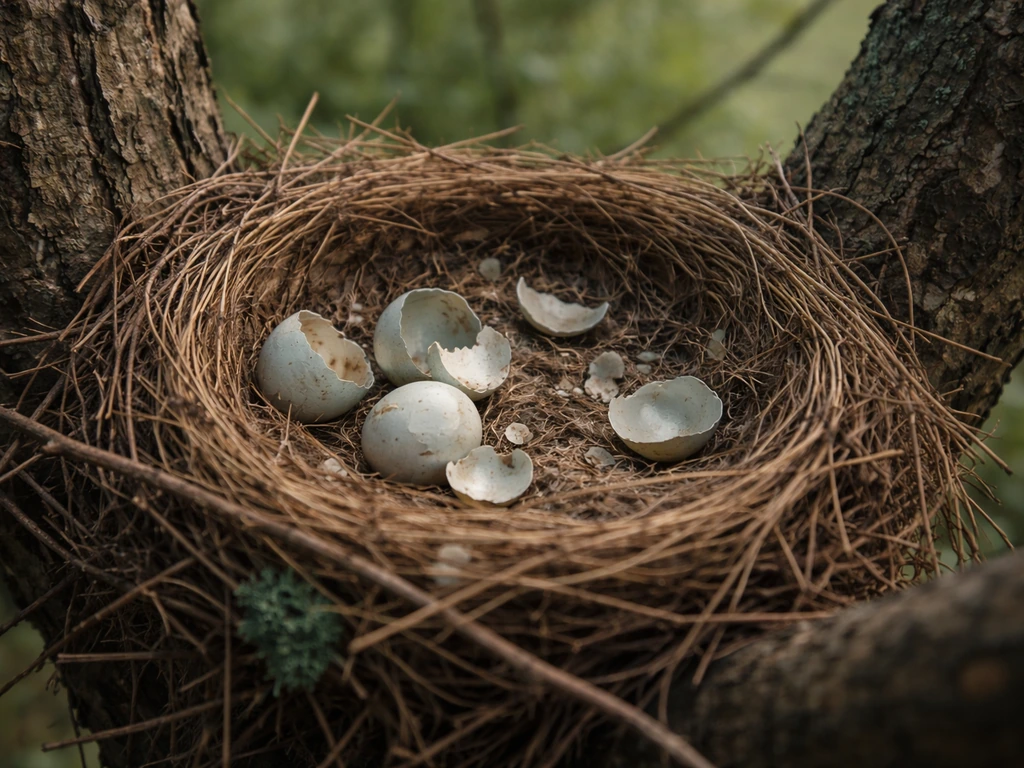
Population decline from DDT didn't look like mass die-offs. It looked like quiet nesting failures, season after season. In many colonies, the mother bird would not return to nest in the way she normally would, reflecting persistent reproductive failure mother bird has not returned to nest. Adult birds were present, nesting behavior continued, but chick production collapsed. Monitoring data from brown pelican colonies along the South Carolina and California coasts in the late 1960s showed populations where essentially no productive breeding was happening. Eagles and ospreys were similarly affected in regions with high agricultural DDT use near waterways.
This is an important distinction that researchers had to work through carefully. Early toxicity testing focused on adult lethality and didn't flag DDT as especially dangerous because birds weren't dropping dead. The real impairment was reproductive failure, a subtler endpoint that required field monitoring of breeding success rather than body counts. Once scientists shifted their focus to measuring eggshell thickness and hatchling production, the picture became clear: DDE exposure above certain dietary thresholds was sufficient to cause population-level reproductive failure across multiple species.
The Chesapeake Bay osprey is a well-documented case. The population tracked through long-term studies showed clear declines tied to organochlorine contamination in the 1950s through early 1970s, followed by measurable recovery after DDT restrictions took hold. USGS Circular 1316 (Chapter 9) also describes long-term “sample egg” tracking in osprey nests near Chesapeake Bay toxic regions of concern to document exposure and its reproductive impacts. That kind of before-and-after population data, combined with residue analysis and eggshell measurements, is what eventually built an airtight causal case linking DDT to bird population declines.
Long-term ecological consequences
When apex predators like peregrine falcons and bald eagles stop successfully reproducing, the effects ripple outward. Prey populations can go unchecked. Colonial seabird colonies that fail to produce chicks leave coastal ecosystems without nutrient cycling contributions from nesting activity. And because DDT persists in soil and aquatic sediments for decades, the contamination outlasted the pesticide's active use by a long margin. Sediment and tissue analyses conducted well after the 1972 U.S. DDT ban still found concentrations above wildlife-protection guidelines.
There's also a generational lag to consider. DDT accumulates in a bird's fat tissue, and residues found in eggs directly reflect the parent's contamination load. That means a female eagle that accumulated DDE before restrictions were in place continued to pass those residues into her eggs for years afterward, even if her dietary exposure had slowed. The toxicokinetics of DDE versus DDT and DDD (the relative elimination half-lives differ) have even been proposed as biomarkers to distinguish recent from long-term exposure in individual birds. Recovery wasn't instant; it tracked the slow biological clearance of DDE from breeding populations.
From a food web perspective, fish-eating birds sit at an intersection between aquatic and terrestrial systems. Their decline pulled on both. The loss of nesting colonies also meant the loss of breeding habitat disturbance that certain species depend on, and in some cases the abandonment of traditional nesting sites that took years to reestablish. The broader consequences of bird population reduction on ecosystems are substantial, and DDT provided one of the clearest natural experiments in demonstrating how a single contaminant can unravel interconnected relationships. One effect of the reduction in bird populations is that it can disrupt food webs, including changes to prey and other ecosystem processes.
Recovery and what conservation science learned

The U.S. banned general DDT use in 1972, and the recovery data that followed became some of the strongest causal evidence in conservation toxicology. Bald eagle populations increased. Brown pelican populations recovered enough to be removed from the Endangered Species List entirely in 2009, with the Department of the Interior explicitly attributing the recovery to the 1972 federal DDT ban. Chesapeake Bay osprey numbers more than doubled following DDT and organochlorine restrictions. Peregrine falcons, which had been nearly eliminated from the eastern United States, were eventually delisted in 1999 after reintroduction programs built on a population no longer losing eggs to eggshell failures.
The lesson that conservation science extracted from the DDT episode goes beyond this one pesticide. The case established that reproductive endpoints, not just acute toxicity, are critical for evaluating whether a contaminant is harming a wild population. It validated the use of eggshell thickness as a biomonitoring tool. It demonstrated that biomagnification through food chains means that top predators can be exposed to lethal reproductive doses of a compound even when concentrations in the environment look relatively low. And it showed that population recovery is possible when the source of harm is removed, though the timescale is determined by the persistence of the compound and the life history of the species.
DDT is now listed under Annex B of the Stockholm Convention on Persistent Organic Pollutants (POPs), with use restricted to disease vector control under strict guidelines. The Stockholm Convention itself names eggshell thinning in birds of prey as the best-known toxic effect of DDT on wildlife. That acknowledgment at an international treaty level is a direct result of the field and laboratory evidence built over decades of bird monitoring.
Where to go from here if you're researching a specific species or region
If you're trying to understand the status of a particular bird that was affected by DDT, the most useful starting point is monitoring data from before and after 1972 in the U.S., or the equivalent restriction dates in other countries (many European countries banned or restricted DDT use in the late 1960s and early 1970s). USGS long-term contaminant studies and EPA CADDIS materials document the evidence base species by species. For fish-eating birds like brown pelicans and ospreys, population recovery is well-documented. For species where DDT exposure was combined with habitat loss or other pressures, the picture is more complicated. For updates and broader perspectives on flightless birds in the news, see our flightless bird news coverage.
It's also worth remembering that DDT isn't the only pressure bird populations face. Cacao farms can also influence bird abundance through changes in habitat structure and the use of pesticides, so the impacts can depend on how farms are managed. Habitat destruction, invasive species, and other pesticides all contribute to declines, and those causes of bird extinction often interact with each other in ways that make single-factor explanations incomplete.
Today, the question of what bird is almost extinct is often tied to how pollutants and other pressures combine to threaten survival. The DDT story is powerful precisely because it was eventually possible to isolate the mechanism clearly. That clarity is rarer than we'd like when studying why bird populations decline, and it's part of why the DDT case remains a foundational reference point in conservation biology today.
- Check USGS Patuxent Wildlife Research Center databases for long-term contaminant and population trend data by species
- Use USFWS delisting records and status reviews for recovery documentation on specific species like the brown pelican or bald eagle
- For current DDE exposure concerns (DDT is still used in parts of Africa and Asia for malaria control), look at migratory species that winter in regions where DDT use continues
- Eggshell thickness collections held in natural history museums provide pre-DDT baselines that researchers still use to quantify historical thinning by species
- If you're following a specific region, local breeding bird surveys combined with contaminant monitoring data give the clearest picture of whether organochlorine legacy contamination is still affecting reproduction
FAQ
Did high DDT concentrations kill adult birds directly, or was it mainly a breeding problem?
Adult birds often survived long enough to keep nesting, but embryos and eggs failed. The key reproductive endpoint was eggshell thinning and resulting breakage, driven largely by DDE rather than acute poisoning, so field evidence looked like “quiet” nesting failure instead of mass mortality.
Why would birds show high DDE even if water and sediment levels seemed modest?
Because DDT and its breakdown product concentrate at higher trophic levels. Even relatively low environmental concentrations can yield much higher tissue burdens in prey fish and then in fish-eating birds, especially predators at the end of long food chains.
How can scientists tell whether a decline is from DDT exposure versus other causes like habitat loss?
They look for converging lines of evidence: residue presence in eggs or tissues, eggshell thinning measurements, and consistent pre-to-post population trends after restrictions. If population changes do not align with contaminant reductions, habitat or other stressors may be the dominant driver.
If DDT was banned, why did reproductive problems persist for years?
Residues stored in fat do not disappear instantly. Eggs reflect the mother’s prior contamination load, so even after dietary exposure decreases, DDE can keep impairing eggshell formation for multiple breeding seasons until biological clearance catches up.
What role did the DDT breakdown product DDE play compared with DDT itself?
DDE is the main mediator of eggshell impairment. Birds metabolize DDT into DDE, and it is DDE that disrupts calcium transport needed for eggshell deposition, leading to thinner, more fragile shells.
Do all bird species experience the same level of harm from DDT?
No. Impact varies by diet and trophic level, how much prey is contaminated, and local exposure intensity. Fish-eating and raptor species at higher trophic positions typically show stronger effects, while many ground- or insect-feeding songbirds show lower severity even when residues can still be detected.
Is eggshell thinning always the mechanism you would expect from DDT, or can other effects matter?
Eggshell thinning is the best-established hallmark in birds of prey and other sensitive species, but studies often treat it as a key mechanism within a broader set of reproductive disruptions. When evaluating a population, researchers prioritize eggshell thickness and hatchling success because these endpoints translate more directly into population viability.
What kinds of monitoring data are most useful for assessing whether DDT caused population declines?
Long-term breeding metrics paired with contaminant measurements, such as eggshell thickness, hatch rates, and residue levels in eggs or tissues. Short-term observations that only track adult numbers can miss the reproductive bottleneck that ultimately determines population growth.
Why did researchers initially underestimate the risk if adult birds were not dying in the field?
Early testing emphasized acute lethality and did not focus on reproduction. Sublethal reproductive impairment can produce severe population declines without obvious adult deaths, so field monitoring of nesting success was required to reveal the true impact.
After restrictions, what determines how quickly bird populations recover?
Recovery speed depends on DDE clearance, the persistence of contamination in sediments and soils, and species life history. Long-lived predators and species relying on contaminated prey may recover more slowly because stored residues and prey contamination can persist across many breeding cycles.
Next Article
Is the Dodo Bird Still Alive? What Evidence Shows Today
Learn if any dodos could exist today, why scientists say they are extinct, and how to judge sightings reliably.