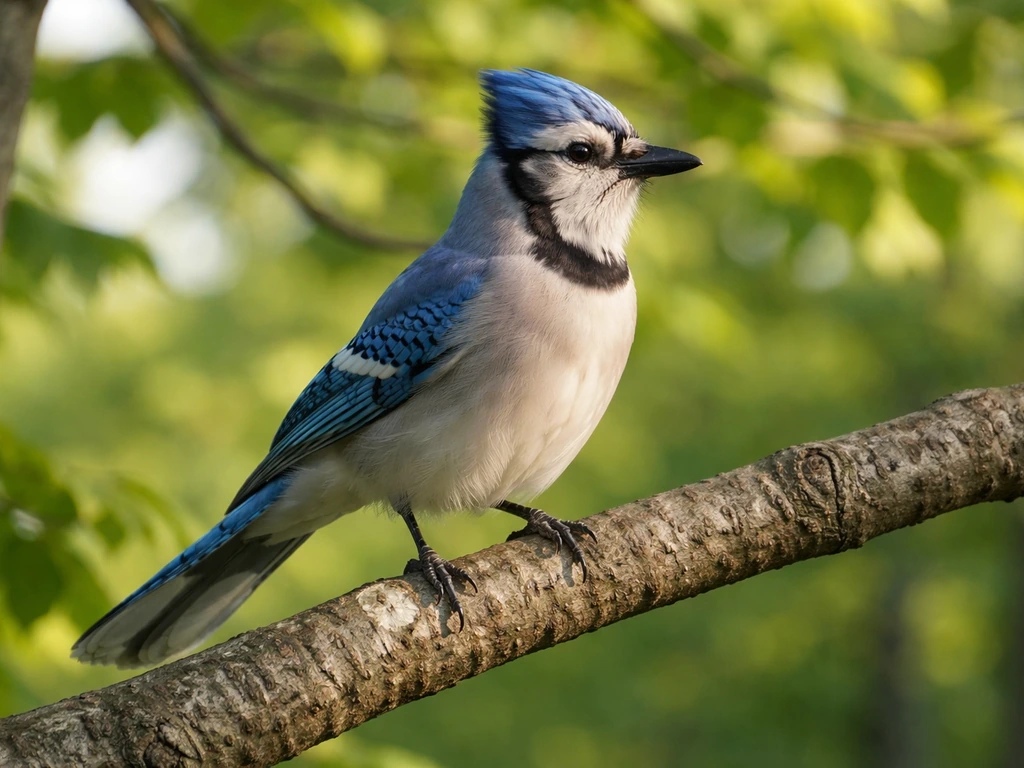
The short answer: blue jays are not endangered
Blue jays (Cyanocitta cristata) are listed as Least Concern on the IUCN Red List, which is the lowest risk category the world's most authoritative conservation body assigns. The U.S. Fish and Wildlife Service does not list blue jays under the Endangered Species Act, and they are not flagged as threatened at the federal level. If you spotted one in your yard or saw a headline that made you worry, you can set that worry aside: these birds are still common, still widespread, and still doing what they've done for thousands of years across North America.
That said, "Least Concern" doesn't mean "totally fine, nothing to watch." It means the species isn't currently at risk of extinction under the criteria used to evaluate population size, decline rate, and range. Blue jays are protected under the Migratory Bird Treaty Act (50 CFR § 10.13), which means it's illegal to harm, kill, or possess them in the United States. So they have legal protection even without a threatened or endangered listing. Understanding what conservation categories actually mean helps here, so let's break that down quickly.
What conservation categories actually mean
The IUCN uses a tiered system to rank how close a species is to extinction. From most to least urgent, the main categories are Critically Endangered (CR), Endangered (EN), Vulnerable (VU), Near Threatened (NT), and Least Concern (LC). A species that qualifies as EN or CR has documented, measurable declines or extremely limited populations that put it at real risk of disappearing. Blue jays sit at the opposite end of that scale. Compare that to some birds covered elsewhere on this site, like the maleo bird or the secretary bird, where conservation pressures are far more acute. For blue jays, the numbers simply don't trigger any of the threshold criteria for a higher-risk category.
Where blue jays live and what they need
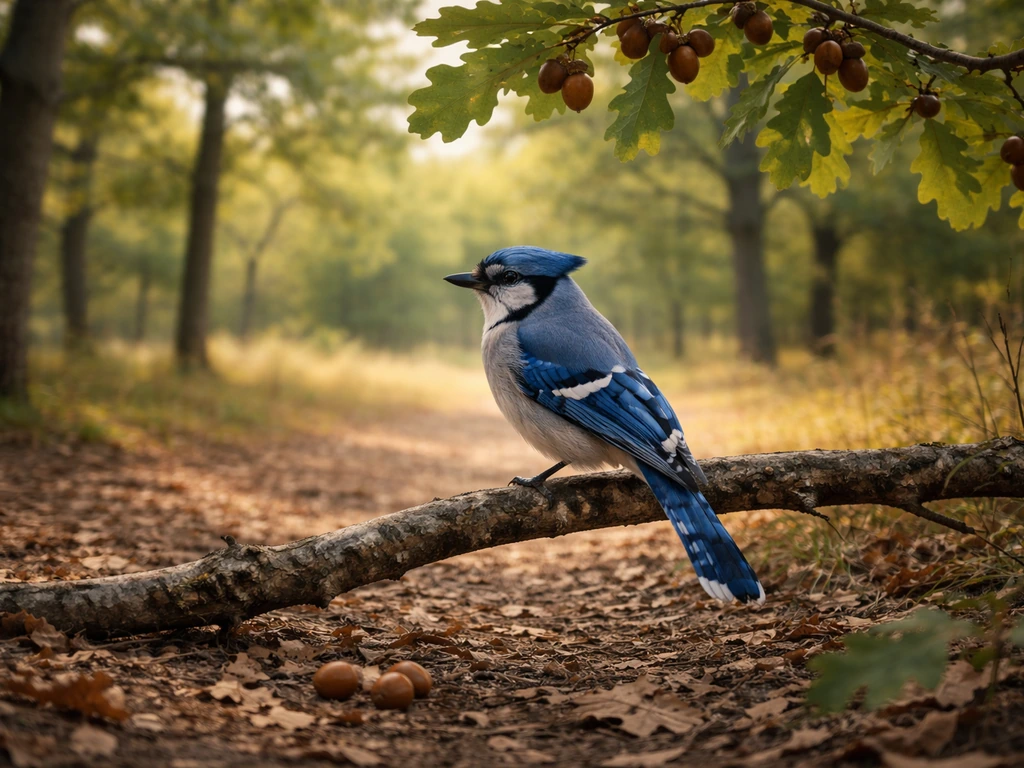
Blue jays are native to North America east of the Rocky Mountains. Their year-round range covers much of the eastern and central United States and stretches into southern Canada. Some northern populations migrate south in winter, but many stay put year-round, which is part of why they're such a familiar backyard bird in so many regions. The USGS range dataset and Cornell Lab's eBird maps both show this broad, stable footprint across the continent.
Habitat-wise, blue jays aren't picky in the way some specialists are. They thrive in deciduous and mixed forests, suburban neighborhoods, parks, and especially forest edges. blank" rel="noopener noreferrer">According to All About Birds, they're actually more abundant near forest edges than deep inside continuous forest. Audubon's field guide notes they prefer habitats with plenty of oak and beech trees, and that preference isn't arbitrary: blue jays are champion acorn cachers. Radio-tagged birds have been recorded burying thousands of acorns in a single autumn. That behavior makes them one of the most important seed dispersers for oak trees in North America, which means their presence or absence has ripple effects on forest regeneration.
One thing blue jays don't tolerate well is dense, purely coniferous forest. If you're standing in an old-growth pine forest in the Pacific Northwest and wondering why you're not hearing any jays, it's because you're in Steller's jay territory, not blue jay country. The two species' ranges are largely separated by geography and habitat type, with blue jays staying east and Steller's jays dominating the west.
Population trends and real threats worth knowing
Here's where the picture gets a little more nuanced. Blue jays aren't endangered, but their long-term population trend isn't entirely flat either. The Breeding Bird Survey, which has tracked North American bird populations since 1966, shows a slow but significant continental decline in blue jay numbers over the long term. CDC surveillance and control guidance notes that corvids and other selected bird groups [are particularly susceptible to West Nile virus](https://www.
cdc. gov/west-nile-virus/php/surveillance-and-control-guidelines/index. html), which helps explain why blue jays are at elevated risk during WNV seasons. Partners in Flight's continental plan data puts that population change at roughly -24% over the survey period.
That's a real number and worth acknowledging, even if it doesn't push the species into any threatened category. Minnesota's Breeding Bird Atlas data reflect a similar story: generally stable at the state level with fluctuations, but the long-term BBS signal across the continent shows a gradual downward drift.
The main pressures on blue jay populations
- Habitat loss and fragmentation: As forests are converted to development or agriculture, the mosaic of forest-edge habitat that blue jays rely on shrinks or becomes isolated.
- West Nile virus: This is a documented and serious threat. Blue jays are highly susceptible to WNV. Studies published in peer-reviewed journals, including research in The Auk, have shown that corvids like blue jays were among the hardest-hit groups when WNV spread across North America in the early 2000s. CDC surveillance data from 2002 recorded significant numbers of dead, WNV-infected blue jays from reporting states during that outbreak period. WNV is now endemic across the continent, meaning blue jays face ongoing exposure every mosquito season.
- Window collisions: Billions of birds die from window strikes in the U.S. each year. Blue jays, given their forest-edge and suburban habitat, are regularly affected.
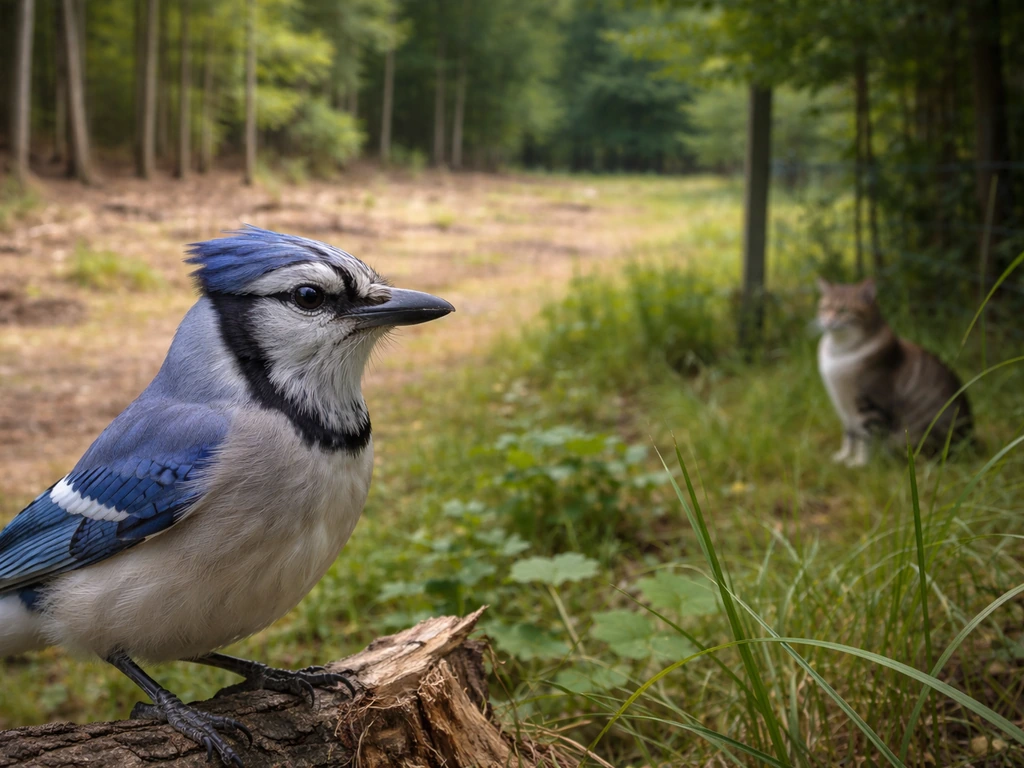
- Nest predation and edge effects: Living near forest edges increases exposure to predators like raccoons, crows, and house cats. Blue jays are themselves known nest predators of other songbirds, but they also lose their own nests at elevated rates in fragmented edge habitat.
- Climate shifts: Changes in oak mast cycles and shifting forest composition can affect food availability, particularly for a species so tightly linked to acorn production.
None of these pressures have pushed blue jays toward endangered status, but they do explain why the long-term trend line bends slightly downward rather than staying flat. It's a useful reminder that "Least Concern" today doesn't guarantee the same status in 20 years if pressures accumulate.
How blue jays are protected and monitored
Federal protection under the Migratory Bird Treaty Act is the primary legal shield for blue jays in the United States. This law makes it illegal to pursue, hunt, take, capture, kill, or possess blue jays or their feathers, eggs, or nests without a permit. It applies to individuals, not just commercial actors, so that means you cannot legally trap or relocate a blue jay on your own even if it's raiding your feeder.
Population monitoring happens through several ongoing programs. The USGS Breeding Bird Survey coordinates thousands of volunteer and professional roadside counts each year, producing the long-term trend data mentioned above. Cornell Lab's eBird platform collects millions of sightings from birders worldwide and generates Status and Trends products, including abundance maps and breeding-season trend models with confidence intervals. These tools allow researchers and state agencies to detect regional changes in blue jay populations before they become crises. The USFWS Urban Bird Treaty program also works with cities and communities to reduce hazards for migratory birds, including blue jays, through education and habitat improvements.
What you can do to help blue jays where you live
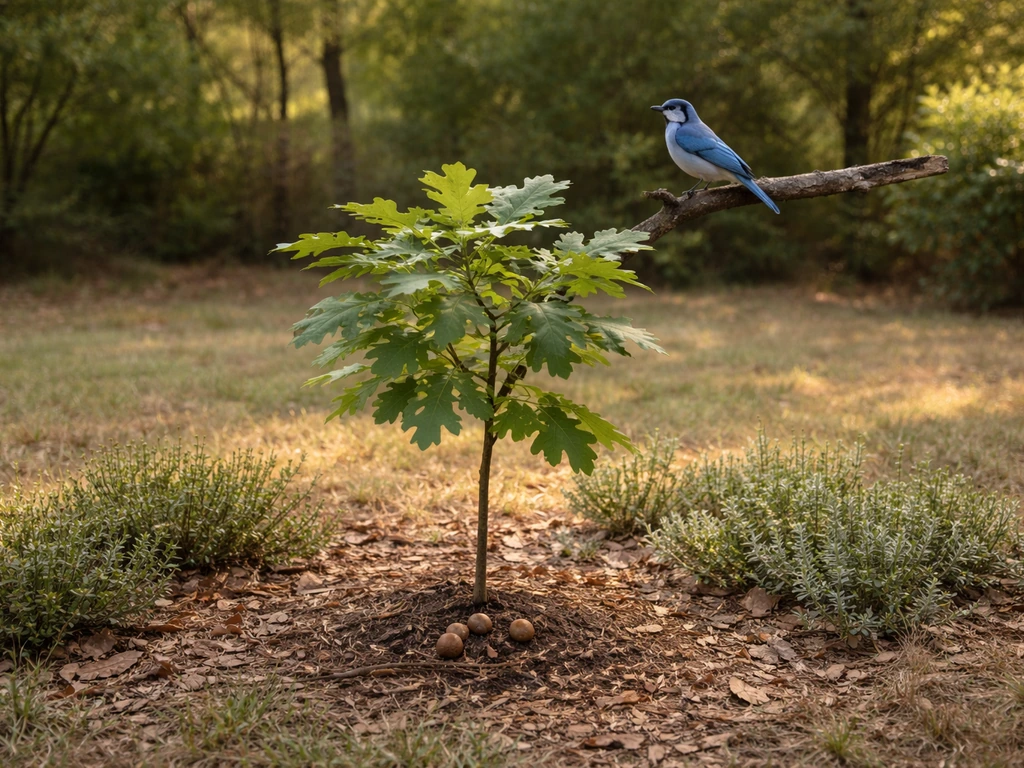
You don't need to be a conservation biologist to make a real difference for blue jays in your neighborhood. The most impactful actions are practical and low-cost.
- Plant native oaks or other mast-producing trees: Blue jays are deeply tied to acorn availability. Even a single oak in a suburban yard becomes a resource. Beech and hickory trees also fit naturally into their foraging behavior.
- Make your windows bird-safe: USFWS Bird-Friendly Home Toolkit guidance and All About Birds both recommend applying bird-friendly glass treatments or external window tape/screens that break up reflections. Avoid relying on the old "place a sticker in the center" method, which doesn't work well. Patterns covering the full window surface are far more effective.
- Keep cats indoors: Domestic cats are one of the leading causes of bird mortality in North America. A roaming outdoor cat near a blue jay nest can wipe out an entire clutch.
- Reduce pesticide use: Insecticides reduce the invertebrate prey that blue jays feed to nestlings and can accumulate in food chains. A pesticide-free yard supports more of the food web blue jays depend on.
- Report sightings: Submitting your blue jay observations to eBird (ebird.org) directly contributes to the population monitoring infrastructure that scientists use to track trends. Cornell Lab generates state-level conservation summaries from exactly this kind of community-sourced data. If you find a dead bird and suspect disease (especially during summer mosquito season when WNV risk peaks), report it to your state wildlife agency or local health department.
- Support local habitat: Advocate for preserving forest-edge habitat in your community, whether that's a local greenway, a park, or undeveloped land near a school. Blue jays are one of the easiest species to monitor as a proxy for broader habitat health.
Don't mix up the blue jay with these look-alikes
One reason people sometimes search anxiously about blue jays being endangered is that they're not entirely sure which bird they're asking about. If you're also wondering about is maya bird endangered, that's a different conservation case to check separately from common species like blue jays. If you meant the species named in your question, you can confirm whether is martinez bird endangered by checking that bird's current IUCN and local conservation listings.
If you are asking about peacocks specifically, you can check whether the is peacock endangered bird status applies to the species you mean. If you want a quick way to verify conservation status, search for what bird is endangered in your region and compare it to local IUCN or U. S. listings.
Several North American birds are blue, jay-like, or share part of the name, and they have different ranges and different conservation situations. Here's a quick breakdown to make sure the conservation answer above actually applies to the bird you have in mind.
| Species | Range | Key ID Feature | IUCN Status |
|---|
| Blue Jay (Cyanocitta cristata) | Eastern and central North America | Bold black necklace, prominent blue crest, black bars on wings and tail | Least Concern |
| Steller's Jay (Cyanocitta stelleri) | Western North America (mountains and Pacific coast) | Dark blackish-brown head and crest, all-blue body, no black necklace | Least Concern |
| Western Scrub-Jay / California Scrub-Jay | Western U.S. and Pacific coast | No crest, blue and gray with white underparts | Least Concern |
| Indigo Bunting | Eastern North America (smaller bird) | All-blue plumage, no crest, much smaller than a jay, no black markings | Least Concern |
| Blue Grosbeak | Southern U.S. into Central America | Deep blue with rusty wing bars, large thick beak, no crest | Least Concern |
The true blue jay is the only one of these with that distinctive bold black necklace running across the throat and chest, combined with a blue crest that the bird raises when alert or agitated. If your bird has that combination, you're looking at Cyanocitta cristata, and the conservation status above is your answer. Steller's jay is the most commonly confused species: it's also crested and blue, but it lives in the western mountains and has a dramatically darker head. The two species barely overlap in range, so location alone usually settles the question.
If you're curious about birds that genuinely do face serious conservation pressure, the contrast with blue jays is instructive. You can read more about whether the is maleo bird endangered and what threats affect it. Species like the maleo bird, the secretary bird, or certain sparrow populations face documented population collapses driven by habitat destruction, hunting, or invasive species, which puts them in genuinely different conservation territory than the blue jay.
Sparrows have their own conservation stories, and some species can be endangered or declining depending on region and threats endangered sparrow bird. Keeping that distinction clear is part of what good conservation literacy looks like, and it helps direct attention and resources toward the birds that truly need it most.