Vorombe titan holds the title of the biggest extinct bird by scientific consensus. This elephant bird from Madagascar weighed an estimated 640 to 800 kg and stood around 3 meters tall, making it heavier and more massive than any other bird species we have fossil evidence for. The title got reshuffled as recently as 2018, when a major taxonomic reassessment split the oversized elephant-bird remains that had long been lumped under Aepyornis maximus into a distinct genus and species, and the numbers came out even more impressive than before. The goliath bird-eating spider is also of conservation concern and is often discussed alongside its rare status in the wild is the goliath bird-eating spider endangered.
What Is the Biggest Extinct Bird? The Likely Answer

Maya Hennessy
4 May 2026
Why 'biggest' is actually three different questions
Before diving into the contenders, it helps to know that paleontologists think about size in at least three separate ways: body mass (weight), standing height, and wingspan. These don't always point to the same species, and a lot of the confusion you see online comes from mixing them up. A bird can be the heaviest without being the tallest, and neither of those tells you anything about wingspan.
- Body mass: estimated from skeletal proxies like femoral shaft circumference, using allometric equations calibrated on modern birds. This is generally the most reliable single measure of overall 'bigness.'
- Height/stature: reconstructed from limb-bone length and vertebral column dimensions. Useful for visualizing a species but can be misleading if proportions are unusual.
- Wingspan: relevant mainly for flying birds; for giant flightless birds like moas and elephant birds, wingspan is essentially zero or vestigial, so it drops out of the comparison entirely.
When scientists publish a mass estimate for an extinct bird, they're usually working from incomplete material. The most common approach is a single-bone allometric equation: you measure one preserved element (often femoral circumference, because the femur scales predictably with total mass in birds), plug it into a regression formula built from modern species with known masses, and get a number with a confidence range. Different skeletal elements produce different predictive accuracy, which is why estimates for the same species sometimes vary between studies. Volumetric reconstruction (building a 3D body model from articulated or near-complete skeletons) is more accurate but requires much better fossil material than we usually have.
The main contenders, ranked by metric

A handful of species consistently appear at the top of these lists, each with a legitimate claim depending on which metric you're using. Here's where the real science lands.
| Species | Estimated Mass | Estimated Height | Best Claim | When/Where |
|---|---|---|---|---|
| Vorombe titan | ~642–800 kg | ~3 m | Heaviest bird ever | Holocene, Madagascar |
| Aepyornis maximus | ~275–400 kg | ~2–2.5 m | Runner-up elephant bird (mass) | Holocene, Madagascar |
| Dromornis stirtoni | ~450–530 kg | ~2.5–3 m | Largest pre-Holocene bird (mass/height) | Miocene, Australia |
| Dinornis robustus | ~195 kg | ~1.8–2 m | Among tallest moa species | Holocene, New Zealand |
| Pachyornis australis / elephantopus | ~238–500 kg | ~1.5–1.8 m | Heaviest moa contender | Holocene, New Zealand |
Vorombe titan: the current record holder
The 2018 reassessment published in Royal Society Open Science is the key paper here. Researchers re-examined elephant-bird skeletal material housed in museums around the world and found that the largest bones didn't actually belong to Aepyornis maximus at all. They were a distinct species, and the authors erected the genus Vorombe (from the Malagasy word for 'big bird') with Vorombe titan as its single species. The mean body-mass estimate from femoral shaft circumference came out at around 643 kg, with individual specimens suggesting the upper range could reach 730 kg or more. At roughly 3 meters in height, this was an enormous animal by any standard.
Dromornis stirtoni: Australia's thunder bird
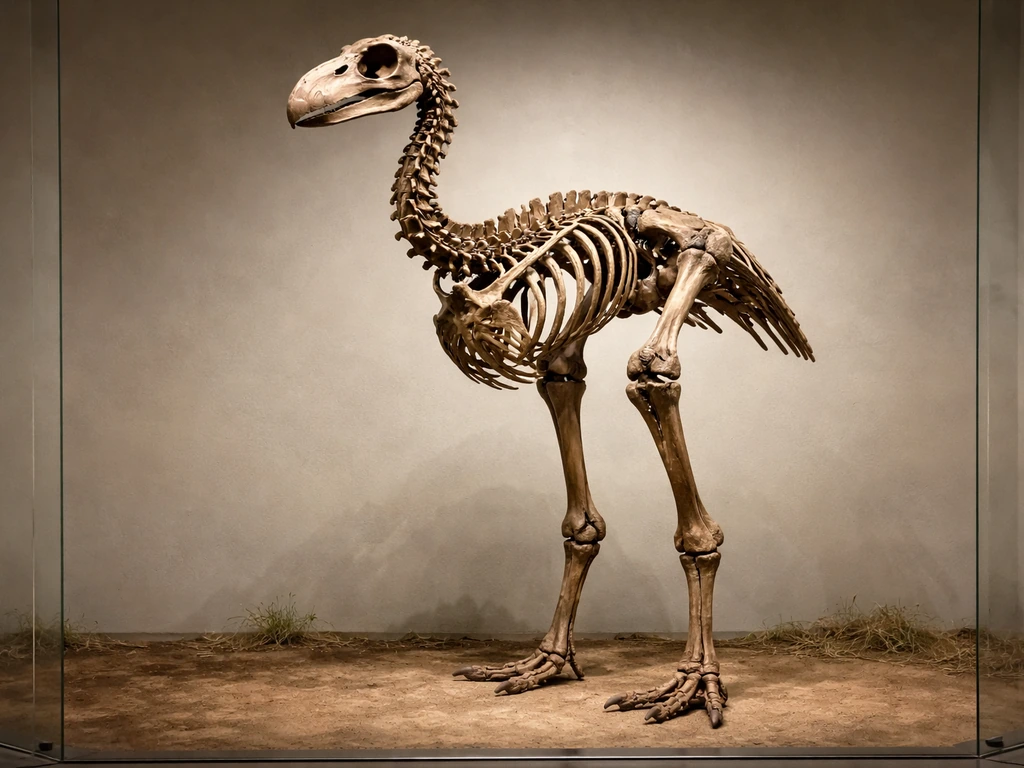
Before the 2018 reclassification, Dromornis stirtoni (sometimes called Stirton's Thunder Bird) was frequently cited as the largest bird ever. It lived in Australia during the Miocene, roughly 8 million years ago, and belonged to the dromornithids, a group of giant flightless birds unrelated to ratites. Mass estimates run around 530 kg for males and 450 kg for females. It's genuinely massive, but it falls short of Vorombe titan on body mass. Some sources still list it as the largest 'prehistoric' bird to distinguish it from more recent Holocene giants, which is technically a valid framing but often just adds to the confusion.
Moa: tallest rather than heaviest
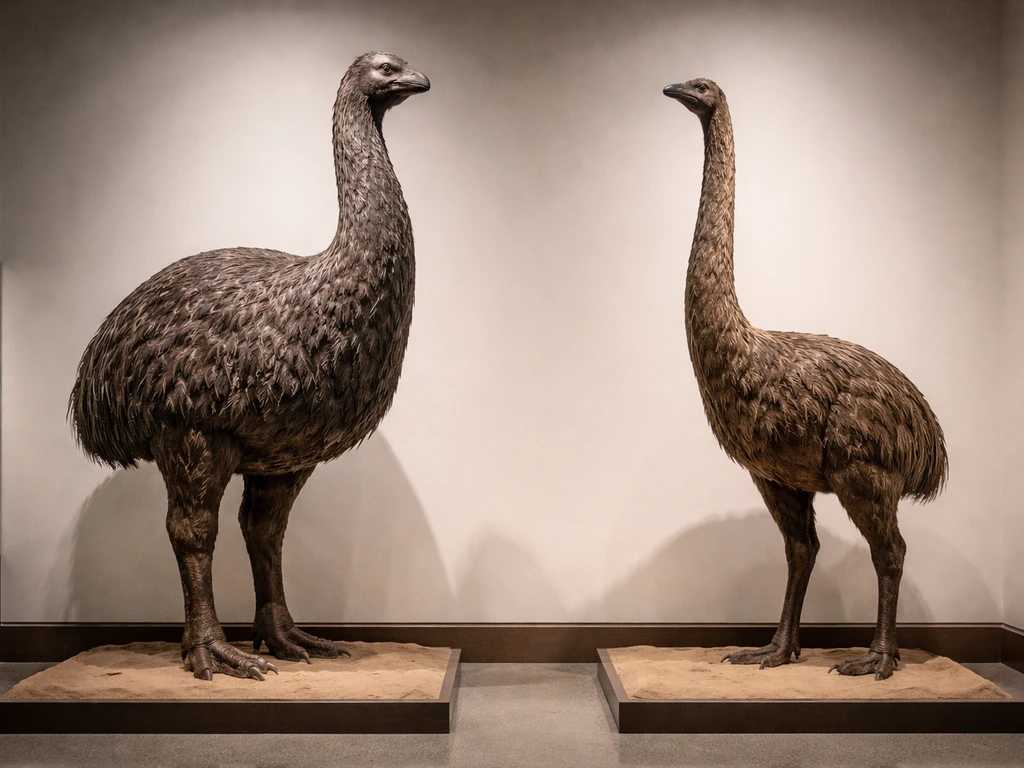
New Zealand's moa are the birds most often brought up as rivals to elephant birds, and their story is genuinely remarkable. Nine species are recognized, ranging widely in size. Dinornis robustus, the South Island giant moa, was among the tallest, with some estimates placing it over 3.5 meters when the neck was fully extended. But tall doesn't mean heavy: mass estimates for even the largest moa top out around 238–250 kg in most studies, well below Vorombe titan. If you're asking which extinct bird stood tallest in a room, the giant moa is a legitimate contender. If you're asking which was the biggest overall, the elephant bird wins on mass by a wide margin.
Where they lived and how they disappeared
Elephant birds in Madagascar
Elephant birds (family Aepyornithidae) were endemic to Madagascar and survived well into the period of human occupation on the island. Goliath birds that hunt or feed on carrion are typically discussed as Old World or New World, depending on which region the species was native to are goliath bird eaters old world or new world. The extinction story involves several overlapping factors.
Hunting pressure from human communities is a major part of it, and the birds' enormous eggs (the largest eggs of any known animal, with a volume around 160 times that of a chicken egg) would have been an obvious and easy caloric resource. Habitat loss through forest clearance and deforestation played a role too, as did longer-term climate and vegetation shifts.
Molecular work on fossil eggshells, including a 2023 Nature Communications study, has helped resolve questions about how many lineages existed and how the largest bones should be assigned to species, which matters directly for the 'biggest bird' question.
Moa in New Zealand
The moa extinction is one of the clearest documented cases of human-driven megafaunal collapse. All nine moa species were gone within roughly 100 to 200 years of Polynesian settlement in New Zealand, around 500 to 600 years ago. Radiocarbon dates on moa bones and the archaeological record of moa-hunting sites tell a remarkably consistent story: a very small human population hunted these birds to extinction at a rate that the slow-reproducing animals couldn't sustain. There's no compelling evidence of a significant climate driver. The birds had no prior experience of mammalian predators and were likely easy targets.
Dromornis in Miocene Australia
Dromornis stirtoni lived in a very different world: Australia's Miocene, when much of the continent still supported subtropical forests. It went extinct long before modern humans arrived in Australia, which rules out human hunting as a cause. The dromornithids declined and eventually disappeared through a combination of climate change (the long drying trend that transformed Australia's interior) and the habitat shifts that came with it. Its extinction story has no human chapter, which makes it a useful contrast to the Holocene megafauna collapses driven by hunting.
What the fossil record actually tells us (and where the gaps are)
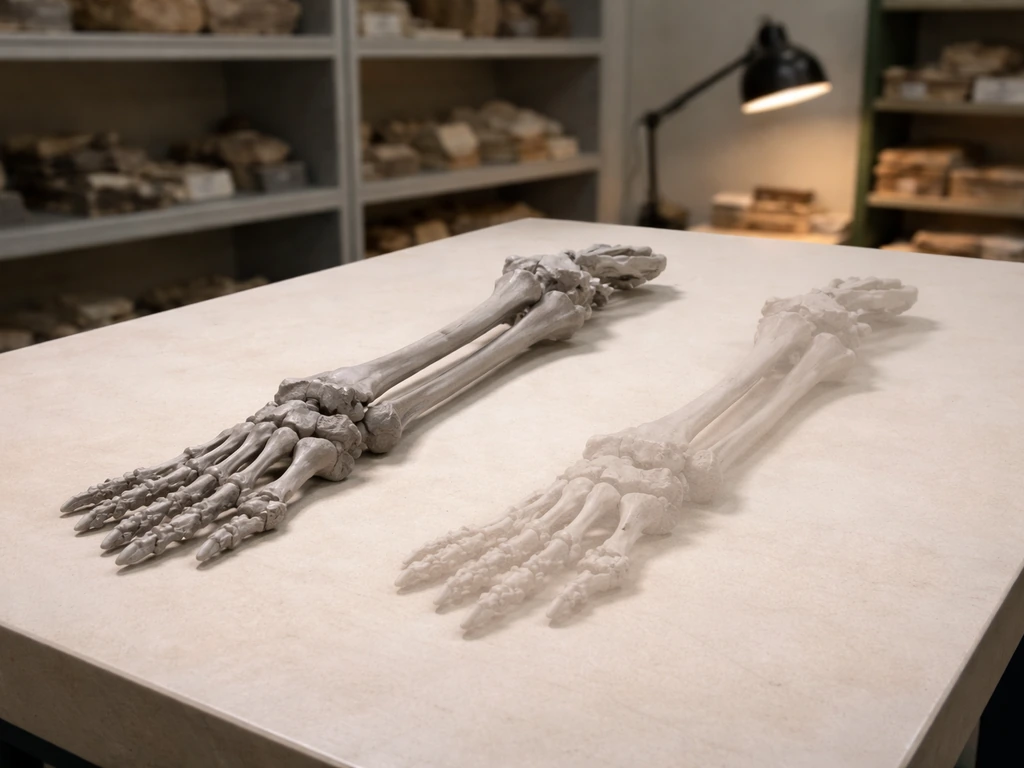
The evidence for Vorombe titan's size is solid but not without caveats. The 2018 reassessment was based on a careful re-examination of museum collections, and the mass estimates come from well-established allometric methods. That said, no complete skeleton of Vorombe titan exists. The largest elements are limb bones, and the mass estimates depend on how well the scaling relationship holds for a bird this far outside the size range of modern calibration species. The upper-end estimates (approaching 800 kg) represent maximum plausible reconstructions from the largest individual specimens, not the species average.
For moa, the fossil record is actually quite good by paleontological standards: New Zealand's cave sites and swamp deposits have yielded thousands of bones, including some near-complete specimens. This is part of why moa size estimates tend to be more reliable and consistent between studies than elephant-bird estimates. For Dromornis, the record is fragmentary but enough to support robust mass estimates, particularly given the identification of sexual dimorphism in the skeletal material.
One area of genuine ongoing uncertainty involves taxonomy. The 2018 reassessment redrew the elephant-bird family tree considerably, and while Vorombe titan's status as the largest is now the consensus view, taxonomic reassessments can shift again as new material comes to light. UCL Discovery hosts a correction entry related to the 2018 Royal Society Open Science elephant-bird taxonomic and mass paper, highlighting that published results can later receive corrections [taxonomic reassessments can shift again as new material comes to light. ](https://discovery.
ucl. ac. uk/id/eprint/10165670/). The 2023 molecular eggshell study adds further nuance by tracking lineage diversity through ancient DNA from fossil eggshells, which doesn't always line up perfectly with skeletal-based taxonomy.
This isn't a reason to doubt the headline result, but it is a reminder that the 'biggest bird' answer has changed before and could theoretically be refined again.
How to check these claims yourself
A lot of 'biggest extinct bird' content online is outdated, listing Aepyornis maximus or Dromornis stirtoni as the winner without reflecting the 2018 revision. Here's a quick workflow for separating reliable information from stale or confused content.
- Start with a trusted general reference. Britannica's entry on elephant birds and Guinness World Records' 'Largest bird ever' page both reflect the post-2018 consensus and name Vorombe titan. If a source still says Aepyornis maximus is the largest, it predates the reassessment.
- Check the peer-reviewed primary source. The 2018 paper 'Unexpected diversity within the extinct elephant birds (Aepyornithidae) and a new identity for the world's largest bird' (published in Royal Society Open Science) is freely accessible and contains the actual mass estimates and methodology. Reading the abstract takes five minutes and gives you the numbers directly.
- Cross-check taxonomy and fossil coverage via the Paleobiology Database (PBDB) at paleobiodb.org or the Fossilworks interface. You can search Vorombe titan, check what specimens are recorded, and follow the literature references tied to the taxon entry.
- For specimen-level data (which museum holds the holotype, what elements are known), iDigBio's portal provides accessible collection metadata and is useful for confirming that the size claims are based on actual physical specimens rather than estimates extrapolated from eggshell or footprint data.
- Watch for the height vs. mass distinction. If a source describes a bird as the 'largest ever' based solely on height, it may be implicitly comparing the neck-extended posture of giant moa against the mass-based estimates for elephant birds. These are not equivalent comparisons. The clearest single measure of overall body size is mass, and on that metric Vorombe titan is the consensus winner.
It's also worth knowing that the broader question of 'what was the largest bird to ever live' sometimes pulls in flying species or even considers birds that may have existed in forms we haven't fossilized yet. If you're interested in comparing extinct flightless giants with other remarkable species like the cassowary (the most dangerous living bird, and a size reference point for understanding just how large these extinct species were), that context adds useful scale to the numbers above. The cassowary, impressive as it is at up to 85 kg, is roughly one-seventh the mass of Vorombe titan at best.
FAQ
Is the biggest extinct bird also the tallest?
It depends on which “biggest” you mean. On body mass, the consensus winner is Vorombe titan (elephant-bird relatives from Madagascar). On height, the giant moa (for example Dinornis robustus) can exceed 3.5 m when neck posture is assumed as fully extended, even though its body mass is far lower.
Why do older sources name a different “biggest extinct bird”?
Most online lists conflict because they reuse older taxonomies or mix different size metrics. For instance, Aepyornis maximus used to be treated as the main bucket for the largest elephant-bird remains, but later reassignment created Vorombe titan as a distinct species with updated mass estimates.
How certain are scientists about Vorombe titan’s body weight?
Vorombe titan’s mass is inferred from limb-bone measurements using scaling equations calibrated on modern birds. The article notes there is no complete skeleton for this species, so the top-end numbers are best treated as maximum plausible reconstructions for the largest individuals rather than the average animal.
Can one species be the heaviest but not the biggest by height (or wingspan)?
Yes. Birds can rank differently by mass, standing height, and wingspan. The article highlights that confusion often comes from mixing these metrics, so a species that wins on one measure may not win on another.
Which extinct bird group should I compare if I only care about maximum size?
If your goal is “biggest extinct bird” among well-sampled fossils, the key comparison is across elephant birds, moa, and dromornithids using similarly derived mass estimates. If you are comparing tallest birds, moa are the usual standout, but if you are comparing heaviest birds, the elephant-birds (specifically Vorombe titan in current consensus) dominate.
Why does “largest bird to ever live” give a different result than “biggest extinct bird”?
A common mistake is asking the question too broadly, then accidentally including flying birds or poorly evidenced taxa. The article warns that “largest bird to ever live” sometimes pulls in flighted species or even lineages not firmly fossilized, which can change the answer you get.
Could Vorombe titan lose the “biggest extinct bird” title later?
Taxonomy can shift again. The article points out ongoing uncertainty because skeletal-based classification and fossil-egg molecular work may not always match perfectly, even though Vorombe titan currently holds the consensus position.
Is there a simple reference animal that helps me visualize how big Vorombe titan was?
If you want a quick mental benchmark, compare cassowary weight to Vorombe titan’s estimated mass. The article gives a practical scale point, with cassowary up to about 85 kg, which is roughly one-seventh of Vorombe titan at best.
Why does the article mention the goliath bird-eating spider when I’m asking about extinct birds?
For conservation or side facts, don’t let it steer the “biggest extinct bird” question. The article’s sidebar about goliath bird-eating spiders is unrelated to bird size estimates, but it can cause distraction if you are scanning quickly.
Do sex differences change how we compare Dromornis stirtoni to other giant birds?
Dromornis stirtoni is a prime example of why sex and missing material matter. The article notes sexual dimorphism is recognized in the fossil material, with mass estimates around 530 kg for males and 450 kg for females, so a single published number may reflect one sex or an average assumption.
Next Articles
Is the Dodo Bird Still Alive? What Evidence Shows Today
Learn if any dodos could exist today, why scientists say they are extinct, and how to judge sightings reliably.
Does Dodo Bird Still Exist? Answer and Extinction Facts
No, dodo birds are extinct. Learn when, why, where they lived, and how evidence confirms it.
Are Scientists Bringing Back the Dodo Bird? What’s Real
Explains dodo de-extinction reality, the science limits, and why researchers want to revive it or not.