Birds are living dinosaurs. Not descendants, not distant cousins, actual dinosaurs, nested phylogenetically within the theropod branch of the dinosaur family tree. The transition from early theropods to modern birds took roughly 100 million years, moved through dozens of branching lineages, and left behind some of the most remarkable fossils ever found. Decades of new discoveries and studies have convinced researchers of a [direct link between modern birds and theropod dinosaurs](https://www.
Dinosaur Bird Evolution Timeline: Key Milestones Explained

Maya Hennessy
15 May 2026
nhm. ac. uk/discover/how-dinosaurs-evolved-into-birds. html), as explained by the Natural History Museum in London.
The first true birds appear in the fossil record around 150 million years ago, with the famous Archaeopteryx from the Late Jurassic, and the modern bird groups we recognize today diversified explosively after the end-Cretaceous mass extinction around 66 million years ago.
How we know birds evolved from dinosaurs
The evidence connecting birds to theropod dinosaurs isn't a single smoking-gun fossil. It's a convergence of independent lines of evidence that all point the same direction, and that convergence is what makes the case so strong. If you also ran into issues with Cobblemon mechanics like the cobblemon fossilized bird not working, the underlying troubleshooting steps can be similar even when the topic is different.
Osteology, the study of bones, is the foundation. Birds and theropods share a suite of skeletal features that are too specific and too numerous to be coincidental: a wishbone (furcula), hollow bones, a three-fingered hand (with specific fingers modified in the same way), a pubis that rotates backward, and an ankle that hinges in the same distinctive way. Phylogenetic analyses, which map shared derived characters across hundreds of species, consistently place birds inside the maniraptoran theropods, the same group that includes dromaeosaurids like Velociraptor and troodontids.
Soft tissue and integument evidence fills in the story beyond bones. Quill knobs, the bony attachment points for large flight feathers, have been found on the forearm of Velociraptor mongoliensis, confirming that this classic non-avian dinosaur had well-developed feathers anchored to its skeleton exactly as they are in modern birds. Fossils from the Jehol Biota of northeastern China preserve feather impressions in extraordinary detail on animals like Microraptor, Anchiornis, and dozens of early birds, showing the full spectrum from simple filamentous proto-feathers to complex pennaceous flight feathers.
Physiology adds another layer. Ossified uncinate processes, small bony projections on the ribs that improve breathing efficiency, have been identified in non-avian maniraptoran dinosaurs, suggesting an avian-style respiratory system evolved before true birds did. That means the physiological groundwork for the high-energy demands of flight was being laid long before anything actually flew.
Put it all together: bones, feathers, physiology, and molecular phylogenetics (comparing proteins and genetics in living birds against the broader animal tree) all tell the same story. Decades of new fossil discoveries, particularly from China, have turned what was once a contested hypothesis into one of the best-supported transitions in the entire vertebrate fossil record.
Dinosaur-to-bird timeline: key evolutionary milestones
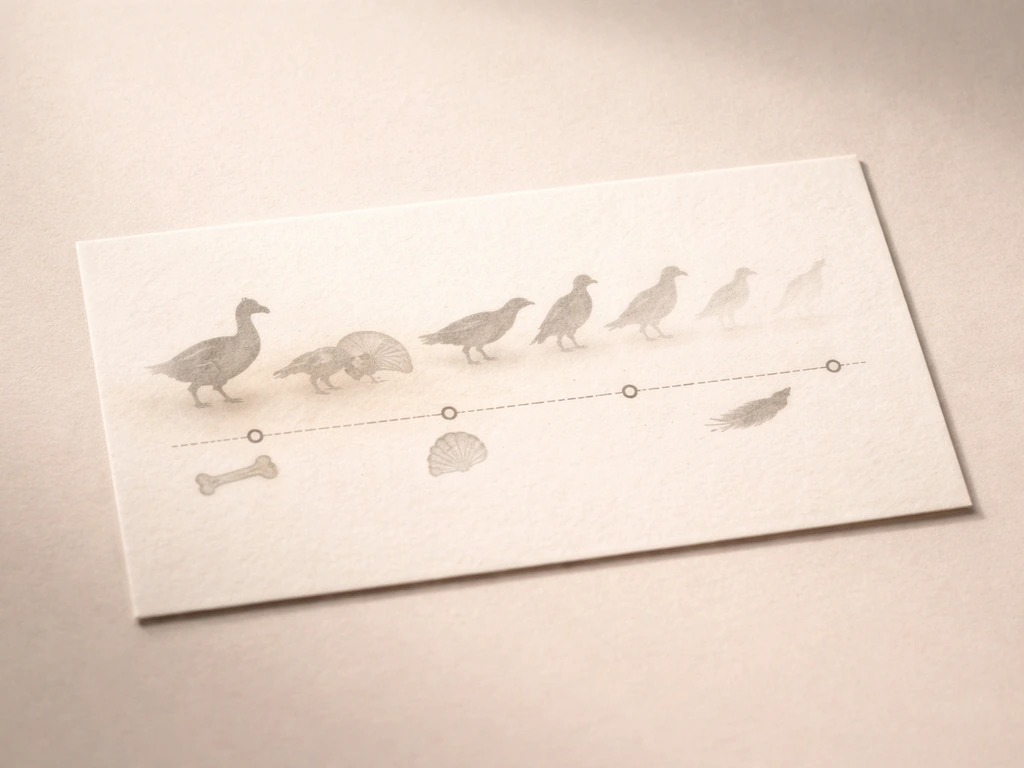
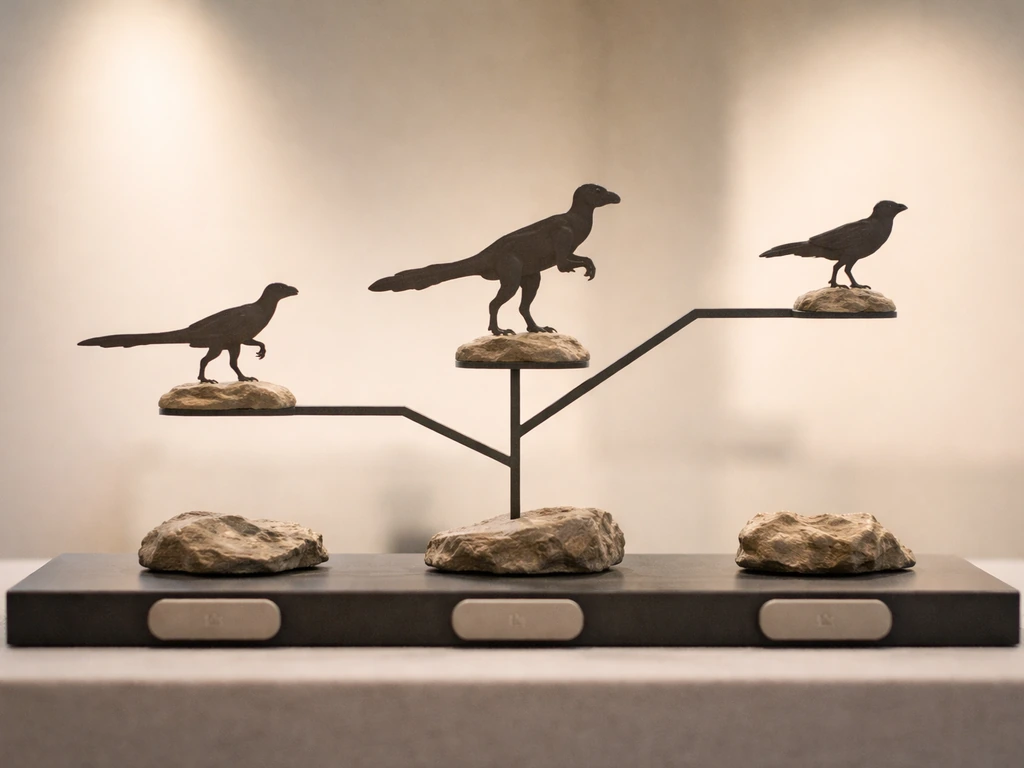
Think of this as a branching tree, not a straight line. Multiple feathered lineages existed simultaneously, and not all of them led to modern birds. Here are the major milestones.
| Time (approx.) | Milestone | Key taxa / evidence |
|---|---|---|
| ~230 Ma (Late Triassic) | First theropod dinosaurs appear | Eoraptor, Herrerasaurus — bipedal, early coelurosaur ancestors |
| ~165–160 Ma (Middle–Late Jurassic) | Early maniraptorans diversify; proto-feathers inferred | Epidexipteryx, early dromaeosaurids; filamentous feather structures |
| ~160 Ma (Late Jurassic) | Anchiornis-type paravians with complex pennaceous feathers | Anchiornis huxleyi — four-winged, hindlimb and forelimb feathers |
| ~150 Ma (Late Jurassic, Tithonian) | Archaeopteryx: first widely recognized true bird | Solnhofen limestone, Germany; dated ~150.8–148.5 Ma |
| ~135–125 Ma (Early Cretaceous) | Jehol Biota radiates; enantiornithines and ornithuromorphs diversify | Microraptor, Confuciusornis; oldest enantiornithines ~129–131 Ma |
| ~125.8–124.1 Ma (Early Cretaceous) | Yixian Formation peak — dense feathered dinosaur/bird record | High-precision U–Pb zircon dates bracket this window tightly |
| ~120–66 Ma (mid-to-late Cretaceous) | Ornithurae (including modern bird ancestors) proliferate | Hesperornithiforms, Ichthyornithiforms, early neornithines |
| ~66 Ma (K–Pg boundary) | Mass extinction; non-avian dinosaurs and most bird lineages lost | Enantiornithines and archaic ornithurines go extinct; neornithines survive |
| ~66–55 Ma (Paleocene–Eocene) | Explosive radiation of modern bird orders (Neornithes) | Ancestral passerines, ratites, waterbirds, raptors diversify rapidly |
One thing worth emphasizing: the Jehol Biota of northeastern China is the single most important fossil window for understanding this transition. Dated using high-precision zircon U–Pb geochronology, the Yixian Formation within the Jehol Biota spans roughly 125.755 to 124.122 million years ago, a remarkably narrow, well-constrained window. The fossils from this ecosystem capture feathered dinosaurs and early birds living side by side, which is exactly what you'd expect from an ongoing transition rather than a sudden event.
The dinosaur lineages at the center of the story
Not all dinosaurs are equally relevant here. The bird lineage runs through a specific corridor of theropod evolution.
Theropoda: the starting point
Theropods are the bipedal, mostly carnivorous dinosaurs, the group that includes T. rex, Spinosaurus, and, yes, birds. They appear in the Late Triassic around 230 million years ago. The bird-relevant lineages, though, sit within a subset called Coelurosauria, which encompasses the smaller-bodied, more lightly built theropods.
Maniraptora: where things get interesting
Within coelurosaurs sits Maniraptora, and this is the key group. Maniraptorans have enlarged, grasping hands, a semi-lunate (half-moon shaped) wrist bone that allows the folding wrist motion used in the flight stroke, and they're the group where complex feathers first appear. Dromaeosauridae (the raptors, including Velociraptor and Deinonychus) and Troodontidae are the closest non-avian relatives of birds. They're not ancestors of birds, they're evolutionary cousins, which is an important distinction. The actual lineage leading to birds passed through paravian maniraptorans that are either closely related to or ancestral to the dromaeosaurid/troodontid cluster.
Paraves: the immediate bird relatives
Paraves is the broader group containing dromaeosaurids, troodontids, and birds (Aves) together. This is where feathered, winged, and flight-capable body plans cluster. Many paravians were small, some as small as a modern crow, had long arms relative to body size, and preserved feathers in fossilized form. Microraptor gui, a four-winged dromaeosaurid from the Jehol Biota, is one of the most studied paravians for understanding early flight dynamics.
The transitional features that tell the story
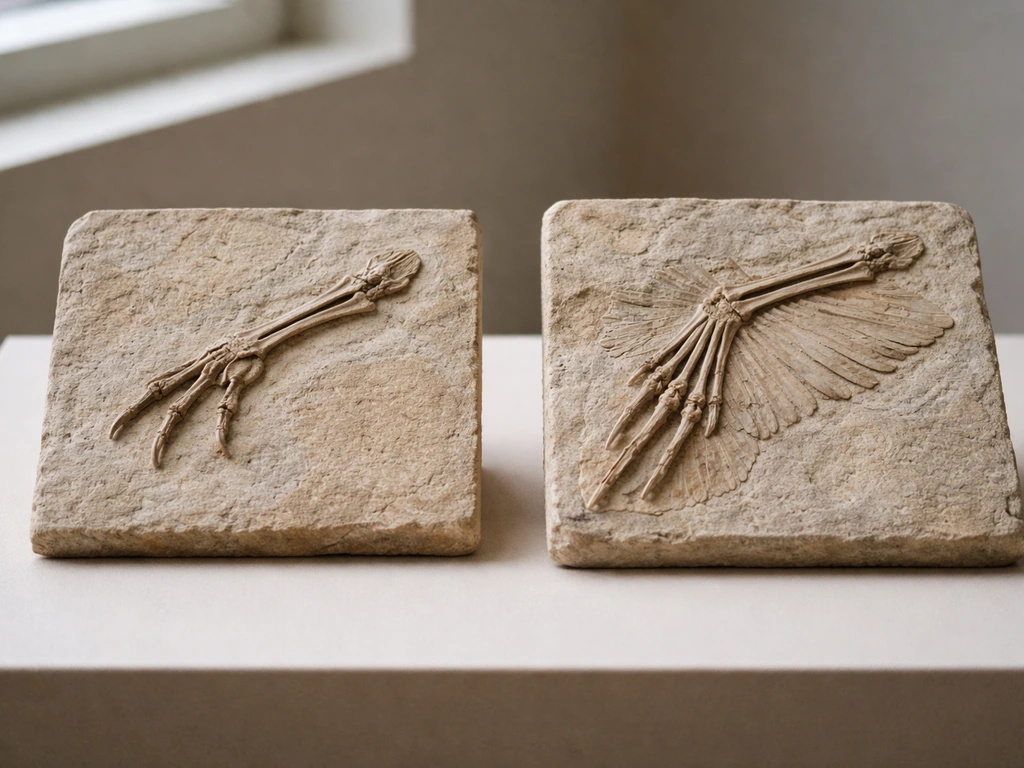
Evolution doesn't swap out one body plan for another overnight. What you see in the fossil record is a gradual accumulation of features, some related to feathers, some to the skeleton, some to physiology, that built up over tens of millions of years. If you are wondering whether there are bird fossils, the record shows a gradual build-up of bird-like feathers, skeleton traits, and physiology over tens of millions of years.
Feathers: far older than flight
Feathers evolved before birds did, and almost certainly before flight. The earliest feather structures appear to have been simple filaments, probably used for insulation or display. Complex pennaceous feathers, the asymmetric, vaned feathers used for flight in modern birds, show up in multiple paravian lineages. Anchiornis had well-developed wing feathers on both its arms and legs, creating a four-winged body plan.
Microraptor had the same configuration, and aerodynamic modeling of its wing shape suggests it was capable of meaningful gliding or powered flight. The important point: feather complexity was not restricted to the direct bird lineage. Some dromaeosaurids show evidence for large pennaceous-feather wings even when their skeletons may not look optimized for flight, implying flight evolution may have involved varied intermediate morphologies [large pennaceous-feather wings even when skeletons may not look optimized for flight](https://www. nature.
com/articles/srep11775). Multiple branches evolved advanced feathers, and what the bird lineage did was consolidate and refine those features.
Skeleton: shrinking, lightening, fusing
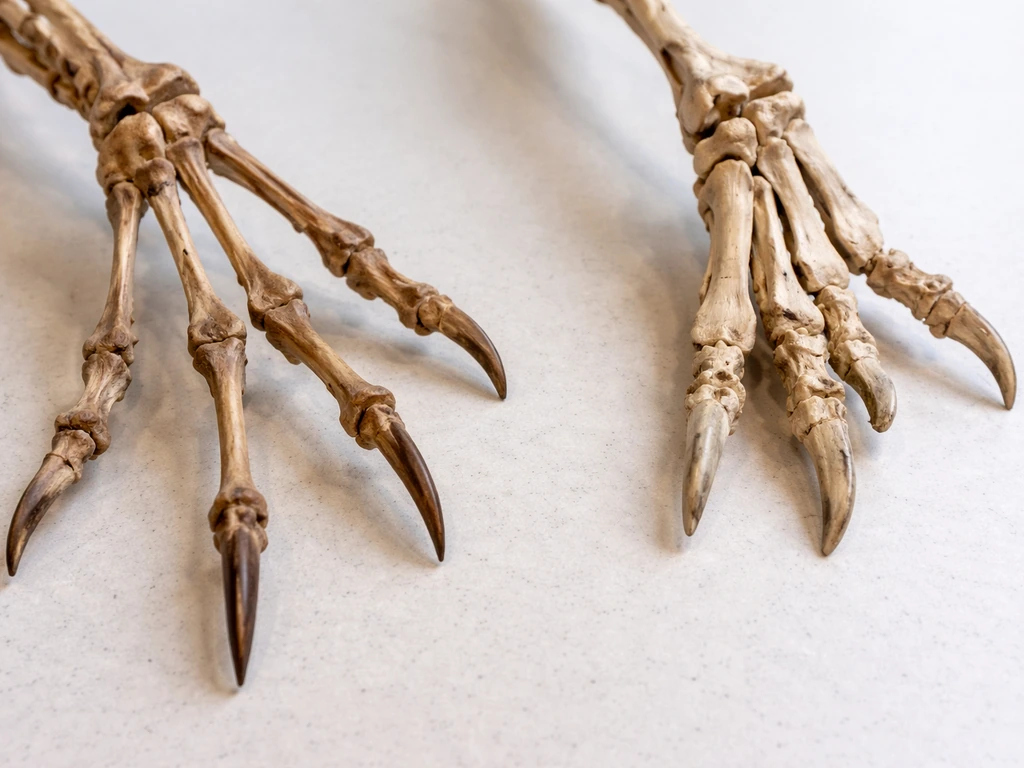
The skeleton of birds is a heavily modified theropod skeleton. Key changes along the lineage include: reduction and fusion of the hand bones into the structure that anchors the primary flight feathers, fusion of the clavicles into a furcula (wishbone), pneumatization (air-filled hollowing) of bones to reduce weight, reduction and eventual fusion of tail vertebrae into the pygostyle (the stub that anchors tail feathers), and the development of a keeled sternum for flight muscle attachment. Not all of these changes happened at once, and the fossil record shows them appearing at different points along the lineage.
Flight and flightless pathways
Flight didn't evolve once along a single path. The current evidence supports that multiple paravian lineages independently developed flight-capable or gliding-capable body plans, and that flightlessness evolved repeatedly in birds after flight was already established. Modern flightless birds, ratites like ostriches, emus, kiwis, and the extinct moas and elephant birds, are not primitive holdovers. They descended from flying ancestors and secondarily lost flight, in most cases after the K–Pg extinction cleared ecological space. Flightlessness in birds is an evolutionary outcome, not a starting point.
When did true birds first appear? Dating the transition
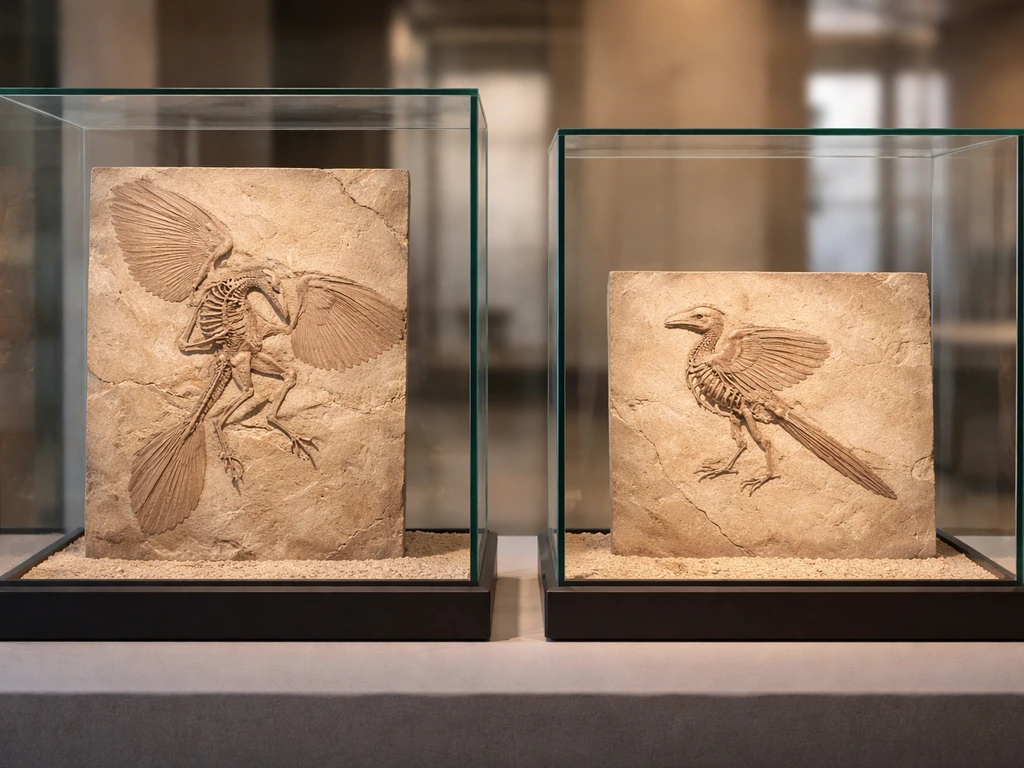
The answer depends on how you define 'bird,' which is genuinely a scientific debate, not just a semantic one. If you use Archaeopteryx as the benchmark, and most researchers do, following the Biological Reviews framing that Archaeopteryx is the first known member of the bird clade, then birds appear around 150 million years ago, in the Late Jurassic Tithonian stage. Archaeopteryx fossils from the Solnhofen limestone of Bavaria are dated to approximately 150.8 to 148.5 million years ago.
If you use crown-group birds (Neornithes, meaning the common ancestor of all living birds plus all its descendants) as your definition, the story shifts significantly. The oldest neornithine fossils are contested, but most of the clearly documented modern bird lineages appear in the Paleocene and Eocene, after the K–Pg extinction. The absence of clear crown-bird fossils from the Mesozoic is one reason scientists generally argue that modern bird orders diversified in the Cenozoic rather than deep in the Cretaceous.
How scientists actually date these fossils
The precision of these dates comes primarily from radiometric dating, especially uranium-lead (U–Pb) zircon geochronology. Zircon crystals form in volcanic ash layers and incorporate uranium that decays to lead at a known rate. When volcanic ash layers are interbedded with fossil-bearing sediments, as they are in the Jehol Biota, scientists can date the ash and bracket the age of the fossils between layers. The Yixian Formation has been dated this way to within less than two million years of precision. Secondary methods include biostratigraphy (using known index fossils to correlate rock layers) and magnetostratigraphy (tracking reversals in Earth's magnetic field recorded in rocks).
Extinct vs. living birds: what survived the K–Pg and why lineages split
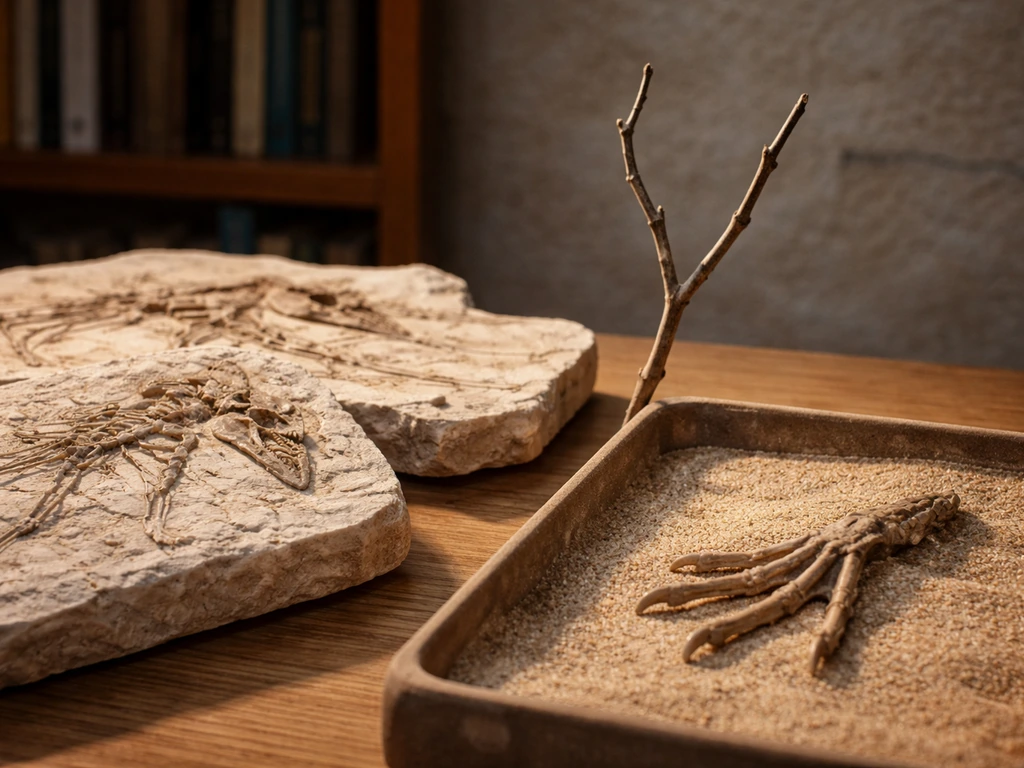
The end-Cretaceous mass extinction 66 million years ago was catastrophic for birds, not a clean handoff. Two major Mesozoic bird groups, the enantiornithines (a hugely diverse group with reversed shoulder joints) and many archaic ornithurines, went extinct at or near the K–Pg boundary. These weren't rare, marginal lineages; enantiornithines were the dominant birds of the Mesozoic in terms of diversity. Their extinction represents a massive loss of avian diversity that's easy to underestimate.
What survived were members of Neornithes, the crown birds. The leading hypothesis for why neornithines pulled through when enantiornithines didn't involves a mix of factors: smaller body size on average, generalist diets (especially seed-eating, which gave access to food sources that persisted after the initial extinction), ground-nesting habits in some lineages, and possibly life-history traits like faster maturation. No single factor explains survival cleanly, and ongoing research continues to refine the picture.
After the K–Pg, with non-avian dinosaurs gone and ecological roles suddenly vacated, neornithine birds radiated explosively. The Paleocene and Eocene saw the establishment of most modern bird orders. This is also when flightless lineages like the ratites diversified across the southern landmasses, a pattern connected to both continental drift and the opening of new ecological niches. The bird extinction timeline is therefore not just about the K–Pg event, it's about what happened in the tens of millions of years afterward as some lineages thrived and others, like the massive elephant birds and moas, eventually disappeared.
Common misconceptions worth correcting
A few persistent misunderstandings tend to distort people's mental model of this transition, and it's worth addressing them directly. If you have heard claims about an erosion bird called Zaza, it helps to separate viral rumors from what actual paleontology supports is the erosion bird zaza real.
- Birds are not descended from dinosaurs — they ARE dinosaurs. The theropod lineage didn't end; it continues in every living bird. When you look at a crow or a chicken, you're looking at a living theropod.
- Feathered dinosaurs are not the same as birds. Finding feathers on Velociraptor or Microraptor doesn't make them birds. Feathers evolved in multiple non-bird dinosaur lineages; they're a shared maniraptoran trait, not a bird-defining one.
- The transition was not a straight line from 'dinosaur' to 'bird.' It was a branching tree. Many feathered, bird-like lineages existed simultaneously and went extinct without producing modern birds. Microraptor was not an ancestor of modern birds — it was an evolutionary cousin that represents a different experimental branch.
- Archaeopteryx was not the first feathered dinosaur. Animals like Anchiornis and Xiaotingia had similar or more complex feathering and are roughly contemporary or slightly older. Archaeopteryx is treated as a reference point for 'first bird' partly for historical reasons and partly because its combination of features clearly bridges both sides of the transition.
- Modern flightless birds are not primitive. Ostriches, emus, and kiwis descended from flying ancestors. Flightlessness is a secondary adaptation, not a preserved ancient state.
- The K–Pg extinction was not when birds 'became birds.' True birds existed for at least 85 million years before that event. The K–Pg is when most of them went extinct, and when the surviving lineage — the neornithines — radiated into the diversity we see today.
Where to go from here
If the timeline above sparked specific questions, there's a lot more to explore. The broader bird extinction timeline picks up where this article leaves off, tracing what happened to bird diversity from the K–Pg through to historic extinctions like the dodo and moa. If you are wondering whether the erosion bird is extinct, the best answer depends on which species you mean, since “erosion bird” is not a standard scientific name bird extinction timeline.
The bird extinction timeline also explains which lineages vanished and which survived through major environmental upheavals. If you're curious about the fossil evidence specifically, the question of whether bird fossils are actually common (they're rarer than you might expect, for reasons connected to the fragility of bird bones) is worth digging into. If you are wondering, “are there bird fossils,” the short answer is yes, but they are often rarer than people expect whether bird fossils are actually common.
If you are struggling with a cobblemon fossilized bird not working, check the item’s NBT and ensure the Pokémon and mod versions match the update you installed. If you’re playing Pokémon Shield, you can find ways to obtain fossilized birds in-game, depending on the version events and fossil restoration options available to you fossilized bird in Pokémon Shield. If you need a step-by-step guide, see how to get fossilized bird in Pokemon Shield and what choices affect your outcome fossilized birds in-game.
And if you're interested in what living flightless birds can tell us about the evolutionary history covered here, the kiwi, cassowary, and ostrich each carry their own piece of that story.
The core takeaway is this: the dinosaur-to-bird transition is not a mystery or a matter of opinion. It's one of the most thoroughly documented evolutionary transitions in the fossil record, anchored by precise radiometric dates, detailed anatomical comparisons, and an ever-growing catalog of feathered dinosaur fossils. The timeline runs from roughly 230 million years ago (first theropods) through 150 million years ago (first birds) to 66 million years ago (mass extinction and neornithine survival) and into the present day. Every living bird is part of that unbroken line.
FAQ
If birds are living dinosaurs, what is the most precise evolutionary boundary between “non-avian dinosaur” and “bird”?
The boundary depends on your definition. Many researchers use Archaeopteryx as the first known bird clade member, but others emphasize crown-group birds (Neornithes). In practice, paleontologists look for a specific combination of features, especially the advanced flight-feather attachment and a more bird-like shoulder and tail skeleton, rather than a single trait appearing overnight.
Why does the timeline look so long, from early theropods to modern bird groups, even though “birds” appear around 150 million years ago?
“First true birds” marks one branching point, not the end of experimentation. After ~150 million years ago, many close relatives with different feather and locomotion strategies coexisted. The modern orders then expand mainly later, especially after the K–Pg event, when surviving lineages diversified into more ecological roles.
How can multiple feather types exist if feathers “evolved before birds”? Doesn’t that conflict with the idea of a single bird lineage?
It does not conflict, because “feathers before birds” means feathers appeared in more than one paravian branch. Different lineages could independently evolve feather complexity at different times for insulation, display, or aerodynamic control. The bird lineage then consolidated and refined the specific suite that supports sustained flight.
What’s the difference between being “flight-capable” and “capable of powered flight,” and where does the evidence land for early paravians?
Flight-capable can include gliding or controlled aerial descent, where aerodynamic surfaces and body posture help, without sustained flapping flight. Powered flight requires additional anatomical and physiological integration, such as strong flight muscle attachment and efficient respiratory and wing mechanics. The fossil record suggests gliding or wing-assisted behaviors appeared earlier and powered flight emerged later in more derived forms.
Were all feathered non-avian dinosaurs on the direct line to modern birds?
No. Many feathered dinosaurs were evolutionary cousins, some closely related and others more distant within theropods. The key point is phylogenetic placement using shared derived traits, which shows the bird lineage is nested within maniraptoran paravians, but not every feathered paravian is a predecessor.
Why is it so hard to find a clean “missing link” fossil between dinosaurs and birds?
Because the transition is a branching process with many coexisting lineages, and fossilization of small, lightweight bodies is uneven. Bird-like skeleton traits are also relatively delicate, and many localities are biased toward certain depositional environments. So you usually get mosaics of traits across multiple specimens and sites, not a single perfect intermediate.
How do scientists date fossils in the Jehol Biota so precisely, and what can still go wrong?
The strongest approach uses radiometric dating of volcanic ash layers with zircon minerals, then brackets fossil horizons between dated layers. Uncertainty can still come from remobilization during later geological events, miscorrelation between layers, or reworking of sediments. That is why researchers also cross-check using additional stratigraphic tools like magnetostratigraphy and index fossils.
If enantiornithines were dominant in the Mesozoic, why did they go extinct while neornithines survived?
The best-supported view is multifactorial. Smaller size, more general diets tied to resources that persisted, flexible nesting strategies like ground nesting in some lines, and potentially faster life-history development likely improved survival odds. The exact combination probably varied by lineage, so no single universal “reason” has fully closed the case.
Were flightless birds after the K–Pg “primitive survivors,” or did flightlessness evolve after flight?
Most evidence points to flightlessness evolving multiple times after flight had already evolved in birds. Ratites are nested within living birds and descended from flying ancestors, with different lineages losing flight secondarily, often when ecological opportunities and geography favored it.
Why do some sources claim different dates for the start of “birds,” and which date should I use for a dinosaur-bird evolution timeline?
The date changes with the definition: Archaeopteryx-based “first birds” is around the Late Jurassic, while crown-group birds (Neornithes) are generally placed later, mostly in the Paleocene and Eocene. A good compromise for a timeline is to show both: an early-bird clade milestone and a modern-bird diversification milestone, clearly labeled by definition.
How rare are bird fossils compared to other dinosaurs, and does that affect how complete the timeline is?
They are often rarer than expected because bird skeletons are light and many elements are fragile, plus preservation conditions for small bones are limited. That incompleteness does not negate the overall pattern, but it means some intervals have fewer specimens, so researchers rely heavily on trait-based phylogenies and multiple fossil sites to fill gaps.
What should I check if I’m trying to interpret a fossil of an early bird incorrectly as a “direct ancestor”?
Check whether the specimen is being placed within the bird clade (Aves) or within a broader paravian or maniraptoran group. Also verify whether the fossil is described as a specific node on the tree or just shares traits. A specimen can be very bird-like yet still fall outside the direct ancestry once phylogenetic uncertainty is accounted for.