The osprey blank" rel="noopener noreferrer">lives on every continent except Antarctica, making it one of the most widely distributed birds of prey on Earth. That said, where any individual osprey lives depends heavily on the season, its latitude, and how close it is to fish-rich water. Some ospreys are permanent residents in places like southern Florida; others breed as far north as Alaska or Scotland and then travel thousands of miles to spend the winter in West Africa or South America. Understanding that range, and what pulls ospreys to specific spots within it, is the key to knowing where to find them. To compare a different kind of range question, see where does the umbrella bird live as an example of how another bird’s distribution can differ from the osprey.
Where Does the Osprey Bird Live Habitat and Range

The osprey's basic range: year-round residents vs seasonal visitors
Ospreys are classified as "resident to long-distance migrant," which means the species as a whole covers a huge range, but individual birds may or may not migrate depending on where they live. The dividing line is roughly latitude. In North America, populations below about 30°N tend to stay put year-round. In Europe, the cutoff sits a bit higher, around 38 to 40°N. Populations above those thresholds are typically migratory, heading south as fish-bearing waters freeze or become inaccessible in winter.
Most ospreys that breed across the northern United States and Canada migrate to Central and South America for winter. British ospreys, which breed mainly in Scotland and the north of England, funnel south through Europe and cross into West Africa, with most ending up in countries like Senegal and Gambia, though a small fraction winter in Spain or Portugal. Meanwhile, ospreys in southern Florida or coastal Australia may not migrate at all. So "where does the osprey live" has two honest answers: almost everywhere near water globally, and specifically wherever the fish are accessible right now.
Habitat preferences: it always comes back to fish and open water
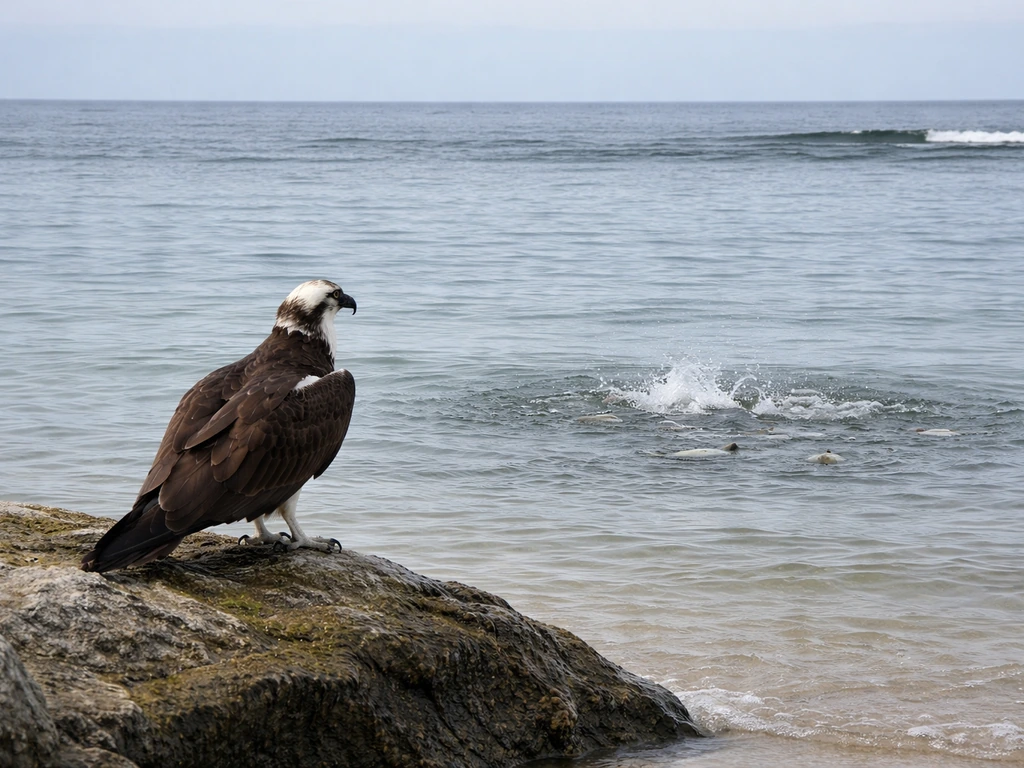
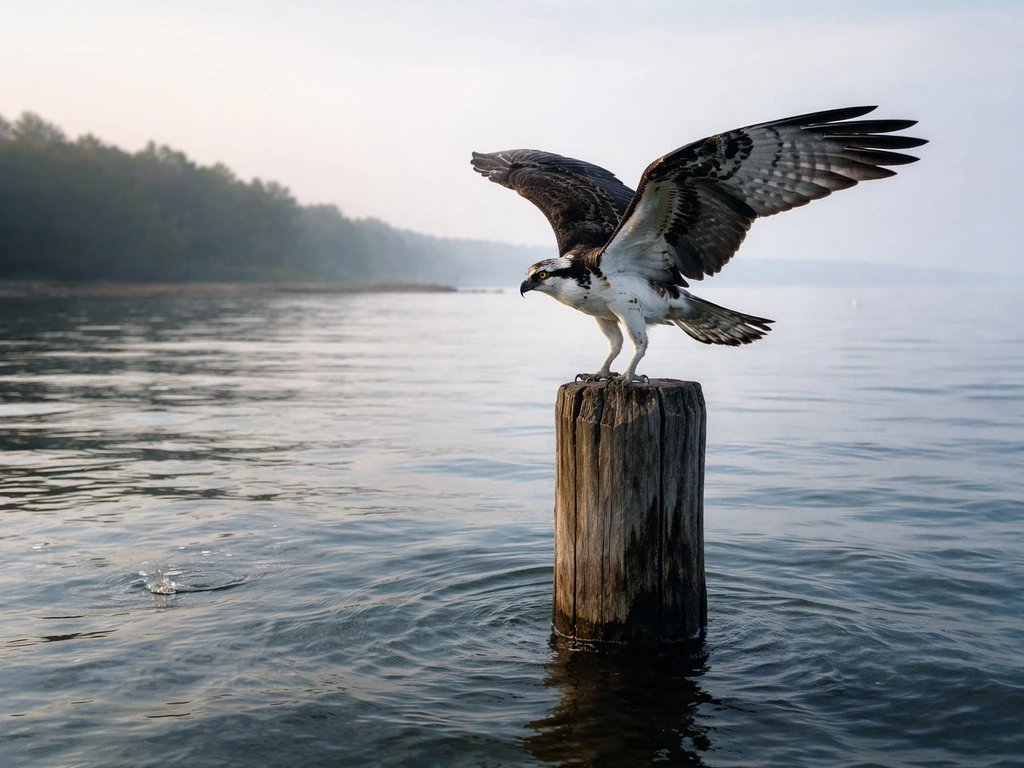
Ospreys are dietary specialists. They eat fish almost exclusively, which means their habitat choice is driven entirely by where fish are catchable. You'll find them along coastlines, bays, estuaries, mangroves, coastal wetlands, lagoons, tidal reefs, large rivers, lakes, reservoirs, and freshwater marshes. The common thread is shallow or surface-visible water where fish can be spotted from the air and seized in a plunge dive. Ospreys do use deeper water, but only where fish school near the surface.
There's a hard rule around nesting: a viable nest site must have an adequate supply of accessible fish within roughly 12 miles. That's not a soft preference, it's a functional ceiling. If fish aren't reachable within that radius, the location doesn't work as a breeding site, no matter how good the nest platform looks. This constraint is why osprey populations cluster so predictably along productive coastlines and around large inland lakes and rivers, rather than spreading uniformly across the landscape.
Nesting site requirements
Beyond water access, ospreys need elevated, open nest sites that are relatively free from ground predators and have enough canopy clearance for easy flight approach. In natural settings, they favor the tops of large trees, often conifers, and especially trees with a dead or broken crown that gives them an open platform. In practice, they've adapted readily to man-made structures. Utility poles, channel markers, cell towers, sports field light poles, and purpose-built nesting platforms all work well. A breeding pair even established a nest on a light pole next to athletic facilities at Cornell University, a good illustration of how little ospreys mind human infrastructure as long as the site is tall and open.
Conservation managers who install artificial nest platforms follow specific siting guidelines: place the platform in open water or open ground at least 100 feet from tall trees, position it within a mile of open water, and avoid overhead canopy that would block flight paths. That practical formula mirrors exactly what ospreys are looking for on their own.
Breeding vs wintering locations: the migration picture

In breeding season, ospreys push into higher latitudes where long summer days give them extended fishing time and competition from other predators is lower. Breeding birds span from Alaska and northern Canada across the northern U.S., through Britain and Scandinavia into northern Asia. Once the breeding season ends and ice begins to threaten fish access, northern birds head south on routes that satellite-tracking studies have mapped in detail. North American ospreys largely funnel through the Gulf Coast and Central America into South America. European ospreys take an Iberian route into West Africa.
Wintering grounds are chosen by the same logic as breeding grounds: productive, warm, fish-rich water. South American river systems, West African coastal lagoons, and the Caribbean all fit that profile. Some populations, particularly those in tropical and subtropical zones, never leave. The result is that at any time of year, somewhere on Earth ospreys are actively nesting or fishing, which is part of what makes them such a conservation success story compared to many of the species covered on this site.
Where ospreys live by region
| Region | Presence Type | Key Notes |
|---|---|---|
| Northern North America (Canada, Alaska) | Breeding only (seasonal) | Migratory; winters in Central and South America |
| Central and Southern U.S. | Breeding + some year-round | Year-round residents in coastal south; migratory further north |
| Southern Florida | Year-round resident | One of the most reliably non-migratory U.S. populations |
| Central America and Caribbean | Wintering + some year-round | Major wintering destination for North American migrants |
| South America | Wintering + some resident | Receives large numbers of North American migrants in winter |
| Britain and Northern Europe | Breeding only (summer visitor) | Migratory; winters mainly in West Africa |
| Southern Europe (Spain, Portugal) | Small wintering fraction + passage | Some British birds winter here; others pass through |
| West Africa (Senegal, Gambia) | Wintering | Primary wintering ground for most British and European ospreys |
| Australia and Southeast Asia | Year-round resident | Non-migratory populations; present along coasts and rivers |
| Sub-Saharan Africa | Year-round resident + wintering | Resident populations alongside European winter migrants |
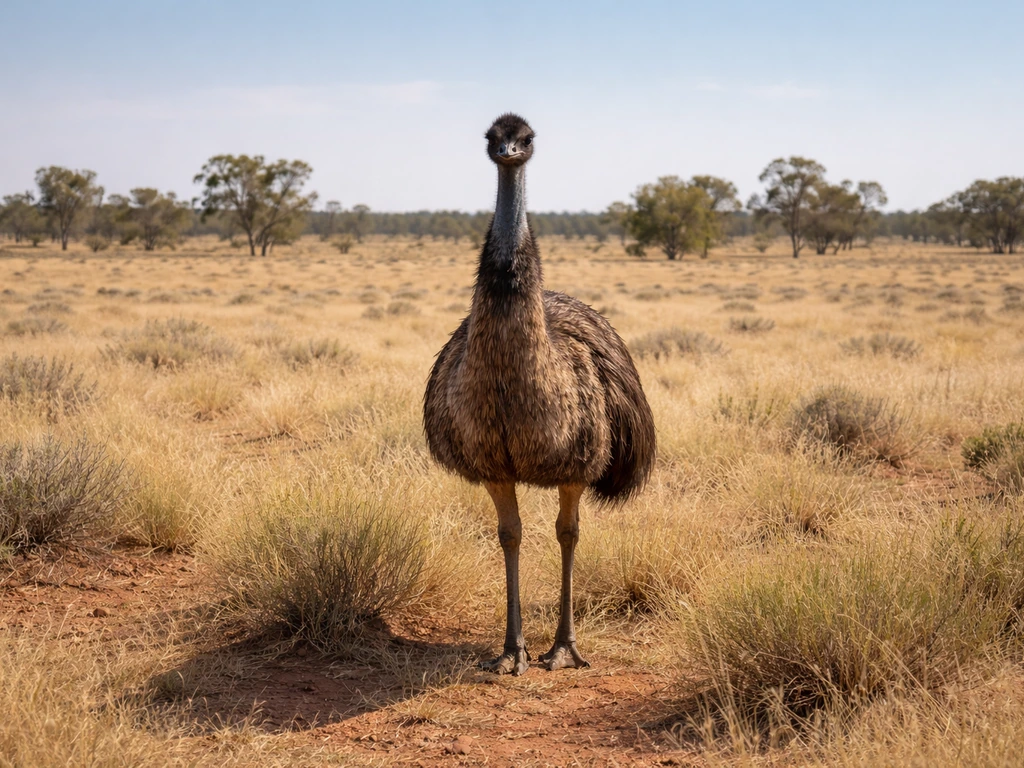
This global spread is genuinely unusual for a bird of prey. For comparison, thinking about where other wide-ranging birds live, species like the emu are essentially locked to one continent, while vultures, though globally distributed, are split into entirely separate Old World and New World families. In comparison, vultures live in many places worldwide depending on the species, ranging from grasslands and deserts to mountains and coastal areas. You might wonder where the emu bird lives, but unlike the osprey it is limited to specific regions of the Southern Hemisphere. The emu bird is found across parts of the Southern Hemisphere, especially in Australia and nearby regions where the emu bird lives. A common question is whether emu are real birds. Ospreys are a true cosmopolitan, the same species (Pandion haliaetus) fishing in a Scottish loch, a Florida estuary, and a West African lagoon.
Nesting behavior and how territory ties to location
Ospreys are site-faithful. A pair that successfully raises chicks at a location will return to that same nest year after year, adding sticks and material until some nests become enormous structures weighing hundreds of pounds. That fidelity means nest locations, once established, tend to be stable landmarks in the landscape. Wildlife managers in Washington State recommend maintaining a 201-meter buffer around active nests to minimize disturbance, which gives you a sense of how seriously nest-site integrity is taken.
Territory for an osprey is essentially defined by the nest plus the foraging radius around it. There's no elaborate defended territory in the way some raptors maintain exclusive hunting grounds. What matters is that the nest is secure and fish are reachable. Two osprey pairs can fish the same lake if the nest sites are spaced far enough apart and the water is productive enough to support both. This relatively flexible territorial structure is part of why osprey populations have rebounded so well after the DDT-era declines, especially when nest platforms were added near productive water bodies.
How to find an osprey near you today
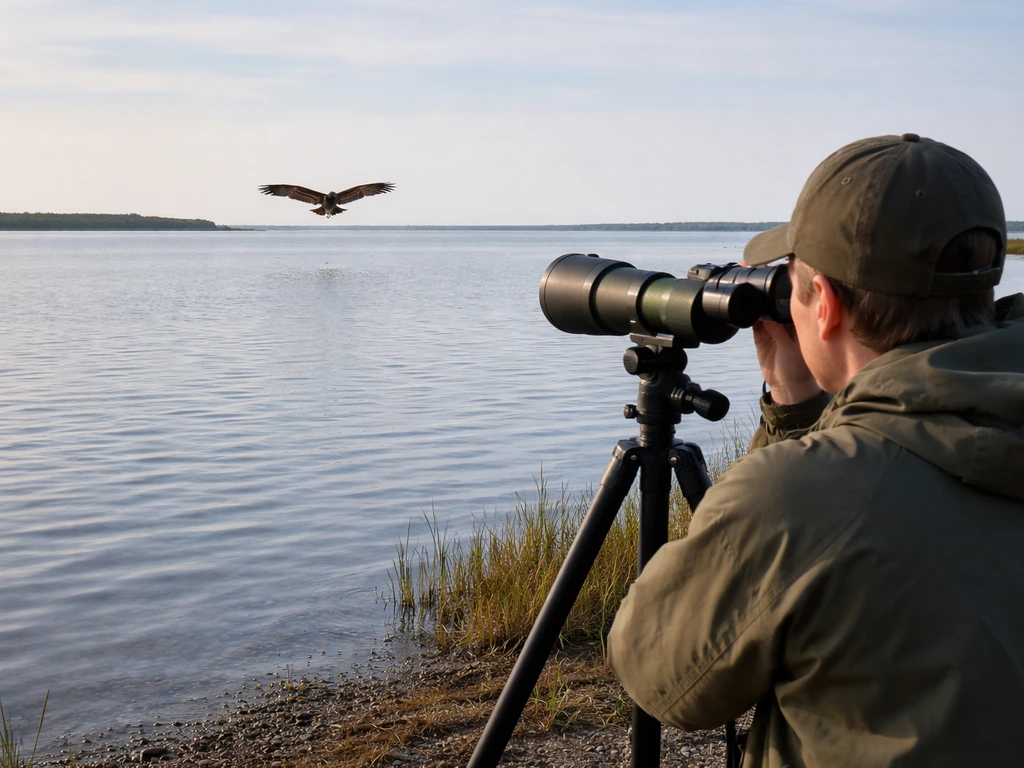
If you want to spot an osprey, start with a map of productive water near you: large lakes, reservoirs, tidal estuaries, river mouths, and coastal bays are your best bets. Spring and summer (roughly April through August in the northern hemisphere) are peak times at breeding sites. In the southern U.S. and other warm-climate areas, ospreys are present year-round.
Look up first, not just at the water. Ospreys hunt by hovering 30 to 100 feet over the surface, then folding and plunging feet-first to grab a fish. That hover-then-plunge sequence is distinctive and visible from a long distance. In flight, look for the long angled wings, the dark wrist patch on the underwing, and the white belly and head with a dark eye stripe (the "bandit mask"). Even if the bird is far away, the wing shape and that belly pattern narrow it down fast.
- Find a productive water body within your area: lake, large river, tidal bay, estuary, or coastal marsh.
- Check for tall, open elevated structures nearby: dead tree tops, channel marker poles, light towers, or purpose-built platforms with large stick nests.
- Visit in morning hours when ospreys are most actively fishing.
- Scan the sky above the water for a hovering bird with long, bent wings before it plunges.
- Listen for the osprey's high, whistled alarm calls around nest sites, especially if you're near a known nest.
- Use eBird's recent sightings map (filter by osprey in your county) to find exact locations where other birders have spotted them this week.
If you're in Britain, the RSPB's Loch Garten reserve in Scotland is a classic starting point during summer. In the U.S., the Chesapeake Bay region, coastal Maine, and the Great Lakes shoreline host some of the densest breeding populations. Florida's Gulf Coast offers year-round sightings. The pattern everywhere is the same: follow productive water, look for elevated open nesting structures, and watch the sky above shallow fishing areas. Ospreys aren't hiding, they're just tied to places where fish are close to the surface and the view from the nest is clear.
FAQ
Do ospreys always migrate, or can they be year-round residents?
Yes, but it depends on latitude and local winter conditions. In areas where fish remain accessible under open water, some ospreys stay resident year-round (for example, parts of southern Florida or other warm coastal zones). In colder regions, the same species typically migrates when fish-bearing waters freeze or become difficult to access.
If an area has plenty of fish, how far away can the fish be from an osprey nest?
A nest can look perfect but still fail if fish are not reachable. The practical breeding requirement is accessible fish within about 12 miles of the nest site. If food access drops, pairs may skip breeding or choose a different location next season even if the platform itself is stable.
Do ospreys hunt only in shallow water, or do they also hunt in deep lakes?
They are most often found where fish are catchable near the surface, so shoreline and shallow, fish-visible water are best. Deeper water is used when prey species move up or school near the surface, but you will generally see hunting activity over water where fish can be spotted from above.
How close can people safely approach an active osprey nest?
To reduce disturbance at active nests, managers often use buffers, not just distance in general. For instance, a common recommendation is to maintain a buffer on the order of hundreds of feet from active nests to avoid flushing birds off fishing grounds and interrupting chick care.
Can ospreys live far inland, or do they only live near the coast?
You may see ospreys far from coasts if there is suitable water structure, such as large rivers, reservoirs, or inland lakes with regular fish availability near the surface. They do not require the ocean, they require accessible fish and an elevated, open perch or nest platform.
What are common mistakes when trying to spot ospreys in the wild?
Common spotting mistakes include looking only at open ocean (fish are often not catchable from the air) or scanning at the wrong height. Ospreys frequently hover 30 to 100 feet above the surface and plunge feet-first, so slow, steady sky scanning over shallow, fish-rich water is more effective than searching treelines.
Do ospreys reuse the same nest site every year, or do they build new nests?
Osprey nests often reappear at the same location year after year, and nests can become large stick structures over time. If you find a platform on a utility pole, tree, or tower near productive water, it is worth returning to check whether it remains active during the breeding season.
Do ospreys defend exclusive hunting territories like some other raptors?
Territory is less about aggressive defense and more about nest security plus a workable foraging radius. If water is productive enough and nest sites are spaced appropriately, multiple pairs can hunt in the same general water body without constant exclusion behavior.
How can I tell whether the osprey I see in winter is migrating or staying locally?
If you see an osprey in winter near open water, it may indicate local resident behavior or partial migration. Look for fish-rich areas that remain unfrozen, such as sheltered bays, river mouths, or stretches of open water where prey is still available near the surface.
What makes an artificial osprey nest platform likely to succeed?
Artificial nest platforms tend to work best when placed where flight approach is easy and fish access is reliable. If you are evaluating a site, focus on elevation and openness for takeoff and landing, avoid overhead canopy that blocks approach, and confirm it is within about a mile of open water and far from tall obstructing trees.