
Goliath bird-eaters live in the tropical rainforests of northern South America, specifically in Suriname, Guyana, French Guiana, southern Venezuela, and northern Brazil. They spend most of their lives on or just below the forest floor, retreating into burrows in the damp soil of the Amazon and coastal rainforest zones. If you're trying to pin down exactly where they're found in the wild, those five countries are your starting point, with the bulk of confirmed field records concentrated in French Guiana and the Guiana Shield region.
Where Do Goliath Bird Eaters Live Habitat and Range

Maya Hennessy
24 Apr 2026
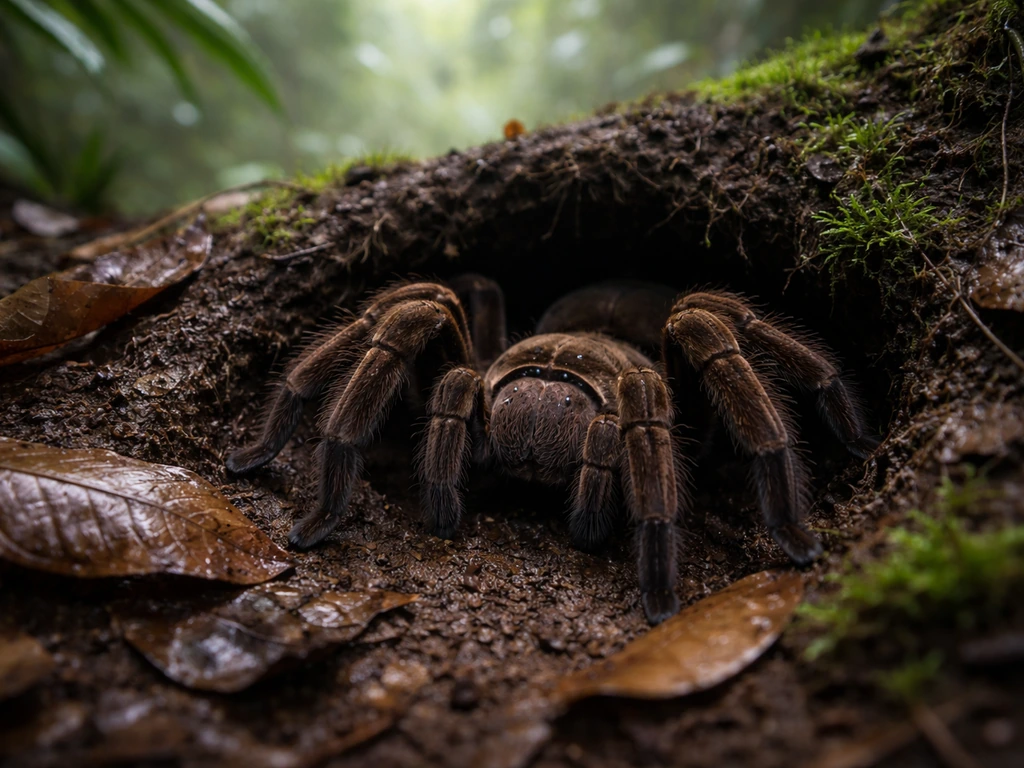
First things first: a goliath bird-eater is not a bird
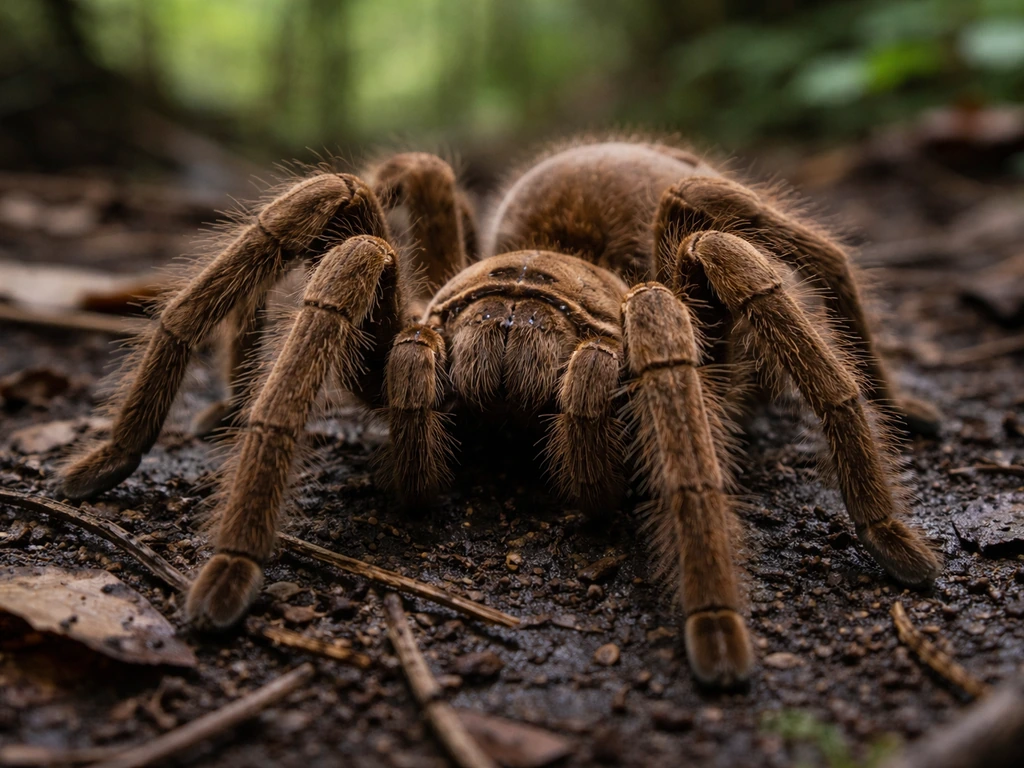
If you landed here from a search expecting something feathered, it's worth a quick clarification. The goliath bird-eater (Theraphosa blondi) is the world's largest tarantula by mass, not a bird species. It earned its name from an 18th-century engraving that showed a specimen eating a hummingbird, and the dramatic label stuck. In practice, birds are rarely on the menu. The species belongs to the family Theraphosidae and was formally described by Latreille in 1804 from specimens collected in Cayenne, French Guiana. You'll sometimes see it listed under older synonyms like Theraphosa blondii or Theraphosa leblondi, but Theraphosa blondi is the accepted name across GBIF, NCBI, and Britannica today.
This site is primarily focused on birds, including extinct species, endangered birds, and remarkable flightless birds like the cassowary and kiwi. The goliath bird-eater fits naturally into that world of natural history and conservation science, even though it's an arachnid. Understanding where a species lives and why that habitat matters is the same core question whether you're tracking a tarantula or a critically endangered bird.
The geographic range: which countries and regions
The confirmed wild range of Theraphosa blondi covers five countries and territories in northern South America. Guinness World Records and peer-reviewed arachnology literature agree on the same core list: Suriname, Guyana, French Guiana, southern Venezuela, and northern Brazil. These countries share a broad ecological zone anchored by the Amazon basin and the Guiana Highlands, which provides the warm, humid, densely forested conditions the species depends on.
French Guiana has particularly strong documentation. The type specimen described by Latreille in 1804 came from Cayenne, the capital of French Guiana, and more recent photographic and field records (including CNRS-documented images from Saut Pararé in French Guiana) reinforce this region as a core part of the range. The Journal of Arachnology references the original Mygale de Le Blond description as anchoring the species' identity to that location. In Brazil, the species appears in the northern Amazonian states rather than being distributed across the whole country.
| Country/Territory | Part of Range | Notes |
|---|---|---|
| French Guiana | Core | Type specimen locality (Cayenne); strong field documentation |
| Suriname | Core | Confirmed in Amazon/coastal rainforest zone |
| Guyana | Core | Part of Guiana Shield range |
| Northern Brazil | Southern edge | Northern Amazonian states only |
| Southern Venezuela | Northern edge | Rainforest-adjacent areas near the Guiana Highlands |
What the habitat actually looks like
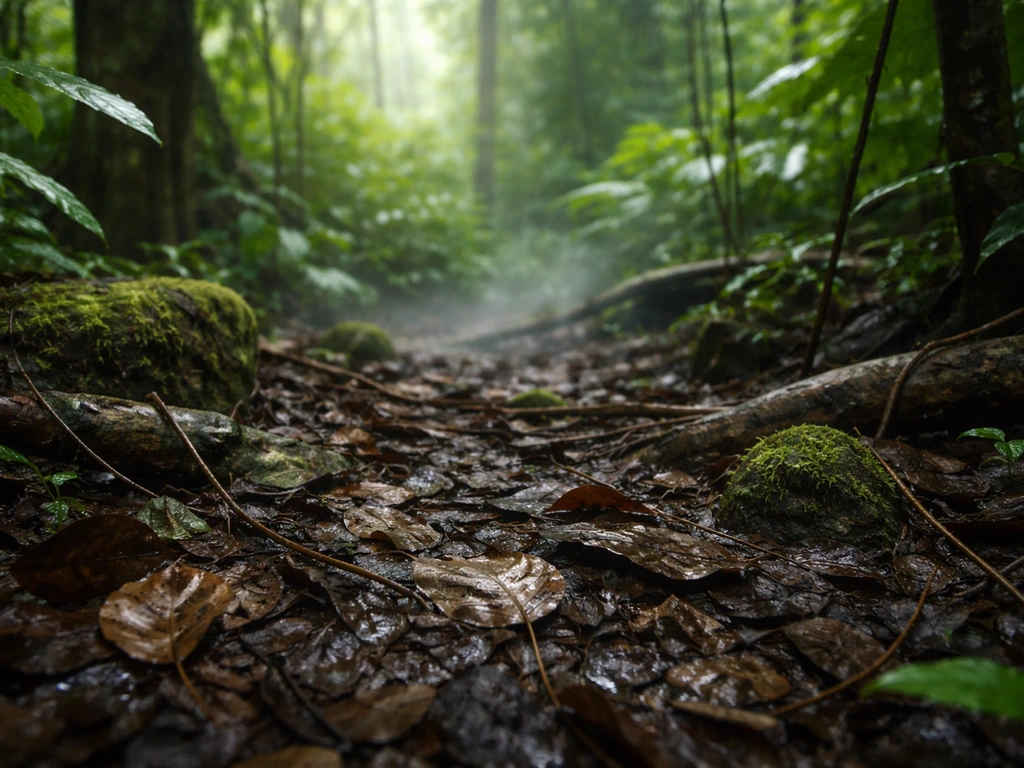
Knowing the countries is only half the picture. Within those countries, goliath bird-eaters occupy a pretty specific niche: the floor layer of humid tropical rainforest. They are not found in savannas, open scrubland, or dry forest. The habitat needs to be warm year-round (think lowland equatorial climate), consistently wet, and dense enough to provide thick leaf litter, rotting logs, and soft soil for burrowing.
Elevation matters too. These are lowland forest animals. The core range sits at relatively low altitudes, consistent with the Amazon basin and coastal rainforest zones rather than highland or montane forests. The forest floor in these zones stays damp even during drier seasonal periods, which suits a species that needs moist substrate both for burrowing and for keeping its book lungs functional.
- Forest type: lowland humid tropical rainforest (Amazon and Guiana coastal rainforest)
- Climate: warm and wet year-round, high humidity
- Elevation: primarily lowland, not montane or highland forest
- Ground cover: thick leaf litter, soft moist soil, rotting wood
- Shelter: self-dug burrows or repurposed natural cavities in the forest floor
Where exactly within the forest: burrows and daily movement
Inside that habitat, a goliath bird-eater spends the vast majority of its time in or very near its burrow. According to National Geographic, these spiders don't build elaborate webs to catch prey. Instead, they dig or adopt burrows under the forest floor and use them as both a refuge and a base for ambush hunting. The burrow entrance is often lined with silk strands, which serve as a tripwire detection system for passing prey rather than a full web trap.
When they do roam, it happens at night and typically stays within a short radius of the burrow. They hunt by sensing vibrations and ambushing invertebrates, small rodents, frogs, and lizards that wander close enough. The name suggests birds are a regular meal, but documented bird predation in the wild is actually rare. The point is that finding one of these in the wild means looking at ground level, in intact rainforest, near the kinds of soft-soil areas where burrowing is practical. Clearing, agriculture, or heavily disturbed forest effectively removes the microhabitat they need.
How scientists determined this range
The range we have today comes from a combination of museum specimen records, field observations, and aggregated occurrence data. The original type specimen from Cayenne (1804) established the species' identity and gave the first confirmed locality. Over the following two centuries, records accumulated through natural history collections and field surveys across the five-country range.
GBIF (the Global Biodiversity Information Facility) aggregates these records into a searchable occurrence database for Theraphosa blondi. It's worth knowing that GBIF records vary in quality: some come from museum specimens with precise locality data, others from citizen science observations, and some carry validation flags like continent or country mismatches. GBIF itself documents this data-quality issue openly, noting when a record's basis is flagged as invalid or geographically inconsistent. This matters because the pet trade has introduced T. blondi to many parts of the world, and escaped or released individuals could generate occurrence points far outside the species' actual wild range.
The peer-reviewed literature, particularly studies on Brazilian Theraphosidae toxicology published through PMC, consistently names the same five countries and ties the species to Amazon rainforest occurrence. That convergence between museum records, field papers, and aggregated databases gives reasonably high confidence in the range as described, even though IUCN notes that range maps for some species are withheld or incomplete when distribution data isn't sufficient for a full assessment.
How to verify the range yourself today
If you want to dig into the actual occurrence data rather than just take a summary at face value, three resources are worth bookmarking.
- GBIF (gbif.org): Search for 'Theraphosa blondi' and open the species page. Click the 'Occurrences' or map tab to see plotted locality records. Pay attention to the 'Basis of Record' field for each point: records labeled as 'HumanObservation' or 'PreservedSpecimen' with matching country/continent data are your most reliable range evidence. Discard or question any points flagged with coordinate or country mismatches.
- iNaturalist (inaturalist.org): Look up 'Goliath Birdeater' in the guide taxa or observation search. Community observations here are georeferenced and often include photos, making it easier to distinguish genuine wild encounters from captive or pet-trade sightings. Filter by 'wild' status to reduce noise.
- IUCN Red List (iucnredlist.org): Search for Theraphosa blondi. If a full range map is available, it reflects the IUCN assessment team's interpretation of the best available data. If the map is absent or marked as uncertain, the IUCN's supporting information page explains why, which itself tells you something meaningful about the limits of current knowledge.
When using any of these tools, the key distinction to make is between wild range records (field observations, museum specimens from natural localities) and pet-trade or captive records. Theraphosa blondi is widely kept in captivity worldwide, and stray records from Europe, North America, or Asia almost certainly reflect the pet trade rather than natural range expansion. Filtering by 'wild' or checking the locality notes is essential if you're trying to understand where the species genuinely lives, not just where it's been sold.
Why habitat range matters beyond curiosity
Knowing exactly where a species lives is the foundation of any conservation assessment, whether you're tracking a tarantula or a flightless bird facing extinction. For a species tied entirely to intact lowland Amazon and Guiana rainforest, any reduction in that forest directly shrinks the viable range. Deforestation in northern Brazil, agricultural expansion, and land-use change in Suriname and Venezuela all chip away at the habitat type the goliath bird-eater depends on.
It's the same logic that applies to species like the cassowary, which requires intact rainforest in Australia and New Guinea and faces pressure from exactly the same kind of habitat fragmentation. If you're curious about cassowaries in particular, you may also want to know how tall is a cassowary bird. If you're wondering why the cassowary is considered so dangerous, much of it comes down to its powerful build and its behavior when threatened.
The goliath bird-eater isn't currently listed as endangered in the same formal way as many bird species on this site, but its range dependency on a single, increasingly pressured biome means its long-term security is tied directly to Amazon conservation. That's a story that resonates across taxa, from the world's largest spider to the world's most dangerous birds. When people ask what is the most dangerous bird in Australia, they usually mean the risks posed by powerful, highly territorial species such as birds of prey. If you're also asking what the biggest predatory bird is, the answer depends on which part of the world and which hunting style you mean, but it typically comes from large raptors like eagles and hawks the world's most dangerous birds.
FAQ
Are goliath bird-eaters found anywhere outside the five South American countries you listed?
In the wild, credible records are concentrated in Suriname, Guyana, French Guiana, southern Venezuela, and northern Brazil, especially lowland rainforest zones. Reports from other continents are often linked to escaped or released captive pets, so it is best to verify locality notes and whether the record is flagged as wild or captive.
Do goliath bird-eaters live at higher elevations in the Guiana Highlands or Andes foothills?
They are primarily lowland forest floor animals, where soils stay moist year-round. While scattered localities could theoretically occur at the upper edge of lowland habitat, montane and drier high-elevation forests generally do not provide the consistently damp substrate they need for burrowing.
What is the best way to confirm a sighting is truly in their natural habitat?
Look for ground-level conditions, not just a tarantula match. Confirmation comes from intact humid rainforest with thick leaf litter, rotting logs, and soft, damp soil, and ideally from a locality description that places the animal in one of the known wild-range regions.
Why do online maps sometimes show goliath bird-eaters far from northern South America?
Many distribution points are derived from occurrence databases that include both museum and non-wild records. Because the species is widely kept as a pet, some points reflect captive animals, releases, or misidentified localities, so filters or validation flags (and checking basis of record) are crucial.
How specific is their habitat requirement, are they able to live in plantations or degraded forest?
They are strongly associated with the forest floor microhabitat of humid lowland rainforest. Clearing, agriculture, and heavily disturbed areas remove the damp soil and cover that make burrowing and lung maintenance viable, so presence in plantations is uncommon unless there is substantial intact leaf-litter habitat.
Do they ever live aboveground, for example in fallen logs or on vegetation?
They spend most time in or immediately adjacent to burrows, but brief aboveground activity can occur, especially at night. Still, the key requirement is proximity to a functional burrow and moist soil conditions, so occasional movement does not mean they establish habitat away from the forest floor.
If I find one near my house or in a different country, what should I assume?
Assume it is likely an escaped or released captive unless you have strong evidence tying the animal to local humid rainforest microhabitat and a locality that matches the established wild region. Without that context, the most common explanation is pet trade or accidental release.
What would be a practical field clue that you are near a goliath bird-eater burrow?
The most useful clue is finding burrow-level signs in damp leaf litter on the rainforest floor, especially near soft soil where they can dig or adopt burrows. Because they do not rely on large aerial webs, repeated ground-level activity near a specific spot is more informative than looking for web structures.
Do season and rainfall affect where they are active within their range?
Their burrows are used as a stable refuge, and they rely on moist substrate for burrowing and respiratory needs. In seasonal periods that still keep the forest floor damp, activity can continue, but prolonged dry conditions and dry leaf-litter layers reduce suitable microhabitat near burrows.