
The dodo bird is not alive today. Raphus cucullatus has been listed as Extinct on the IUCN Red List, and every credible natural history institution in the world treats it the same way. The last confirmed sighting was recorded in 1662 by a Dutch sailor named Volkert Evertsz, and a 2003 statistical analysis published in Nature estimated the actual extinction date was closer to 1690. That's over 330 years ago. If you saw a viral video, a social media post, or a headline claiming a living dodo was spotted somewhere, it's a hoax. That said, there is genuinely interesting and current dodo science happening right now, and that's worth knowing about.
Dodo Bird News Today: Is the Dodo Alive?

Maya Hennessy
3 May 2026
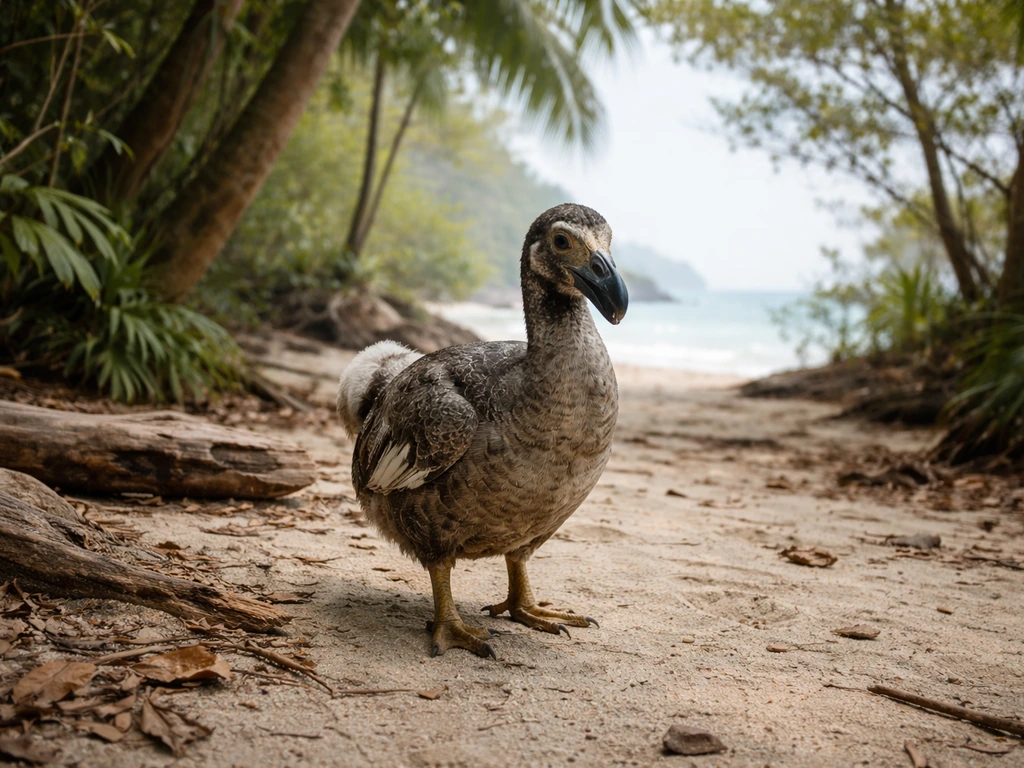
Is the dodo still alive? The direct answer
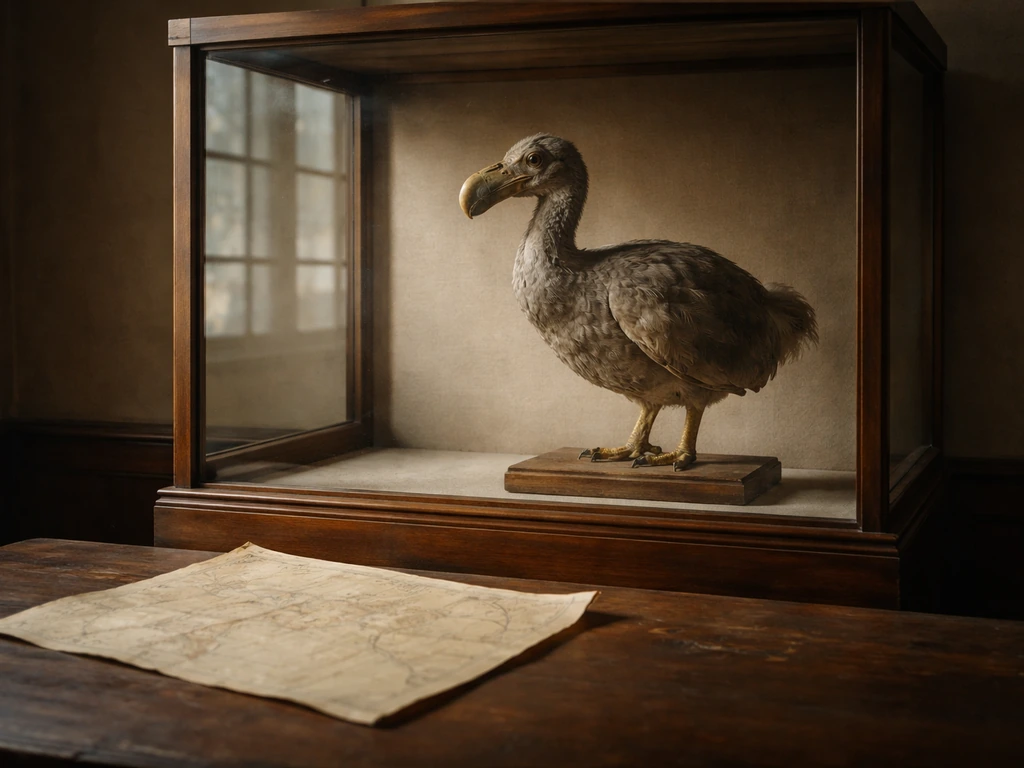
No. The dodo became extinct in the 17th century, less than 80 years after Dutch sailors first encountered the species on Mauritius around 1600, according to the American Museum of Natural History. The IUCN Red List classification for Raphus cucullatus is Extinct, full stop. Institutions like the Natural History Museum in London and the Oxford University Museum of Natural History hold physical dodo specimens, most famously the "Oxford Dodo" (specimen OUMNH.ZC.11605), which is studied as a relic of an extinct species, not a clue to a living population. BirdLife International's species factsheet for the dodo reflects the same extinct classification. There is no credible scientific evidence of a living dodo anywhere on Earth.
Why the dodo went extinct (and what the science actually says)
The popular story is that the dodo was simply hunted to death because it was too dumb to run away from humans. The real picture is more complicated and more instructive. A 2017 paper in Scientific Reports used bone histology on dodo specimens to shed new light on the species' ecology and life history, and it frames extinction clearly as the result of anthropogenic activities broadly, not just direct hunting.
The actual extinction drivers were a combination of factors that all arrived together when Europeans settled Mauritius. Habitat destruction through deforestation removed the forest floor environment the dodo depended on. Direct hunting by sailors and settlers did take place. But the research points especially hard at introduced invasive mammals: pigs, rats, monkeys, and deer brought to the island destroyed dodo nests and eggs at a scale that hunting alone could not explain. Island species like the dodo evolved with no land predators, so they had no behavioral defenses against mammals raiding ground nests. The IUCN's own guidance on invasive species management on islands explains this vulnerability well: island isolation means native species simply never developed the adaptations to cope with introduced predators and competitors.
The dodo was also flightless, which matters a lot here. Because Mauritius had no ground predators, flightlessness was actually a smart evolutionary trade-off, letting the bird invest energy elsewhere. National Geographic has noted that island bird populations worldwide tend to evolve toward flightlessness when predators are absent, and the dodo is the textbook case of how that same adaptation becomes a fatal liability the moment humans and their animals arrive. The IPBES's biodiversity-loss framework identifies habitat conversion, direct exploitation, and invasive alien species as the three main drivers of extinction, and the dodo's story checks all three boxes simultaneously.
Where 'dodo alive today' confusion usually comes from

Every few years, a viral video or post circulates claiming someone spotted a living dodo. AFP Factuel, the French fact-checking arm of Agence France-Presse, directly investigated a viral claim that a living dodo had been seen on the island of Réunion and concluded it was a hoax. These hoaxes are often what people are really reacting to when they look for a dodo bird verdict. Snopes documented another viral claim alleging the US government was hiding the last living dodo, noting that different versions of the video even disagreed on the name of the alleged finder and showed clearly inconsistent footage.
These hoaxes tend to spread for a few predictable reasons. The dodo is culturally famous, so people want to believe the story. Réunion and Mauritius are real Indian Ocean islands associated with the dodo's range, which makes location-based claims feel plausible to people who don't know the geographic details. And frankly, living flightless birds like the kagu, the cassowary, and the kiwi do exist and occasionally get misidentified or misrepresented in low-quality footage. A slow-moving, large, ground-dwelling bird filmed at an odd angle in tropical vegetation can look unfamiliar enough to fool someone who doesn't know their birds. Like many flightless birds, a dodo would likely have been limited in speed, which is why people often ask how fast it could run slow-moving.
There's also a subtler source of confusion: legitimate scientific news about the dodo. Genomics work, CT scanning projects, and museum research generate real headlines about the dodo that can be misread by people hoping to find a "dodo is alive" angle. In 2020, Oxford University announced a project to sequence the whole genome of extinct flightless birds, explicitly including the dodo and the Rodrigues solitaire. That's real and exciting science, but it's about reconstructing extinct DNA, not finding living animals.
How to verify what you see online
When you encounter a claim about the dodo being alive, or any dramatic extinction-related news story, here's a practical way to filter signal from noise.
- Check the IUCN Red List directly at iucnredlist.org. Search for Raphus cucullatus. The status page won't have changed to "Least Concern" overnight.
- Look for institutional backing. Real dodo research comes from universities, natural history museums, and peer-reviewed journals like Nature, Scientific Reports, or Historical Biology. If a claim has none of those, be skeptical.
- Find the original specimen or source. The Oxford Dodo (OUMNH.ZC.11605) is a real, catalogued, physically verifiable specimen with provenance going back to the Tradescant collection. Authoritative science works with documented physical evidence, not blurry videos.
- Check fact-checking sites. AFP Factuel, Snopes, and similar organizations have already debunked the most widely shared living-dodo hoaxes. A quick search will usually surface their work.
- Ask whether the story references CT scans, genome sequencing, or bone histology. Legitimate recent dodo research tends to involve exactly those methods, such as the 2020 X-ray micro-CT scanning of the Oxford Dodo specimen published in Historical Biology, or the mitochondrial genome work summarized in Genome Biology. Those are the real news items worth reading.
- Notice whether the claim requires believing every major natural history museum and conservation body on Earth got it wrong simultaneously. That's an extraordinary claim needing extraordinary evidence.
What's actually new in dodo science right now
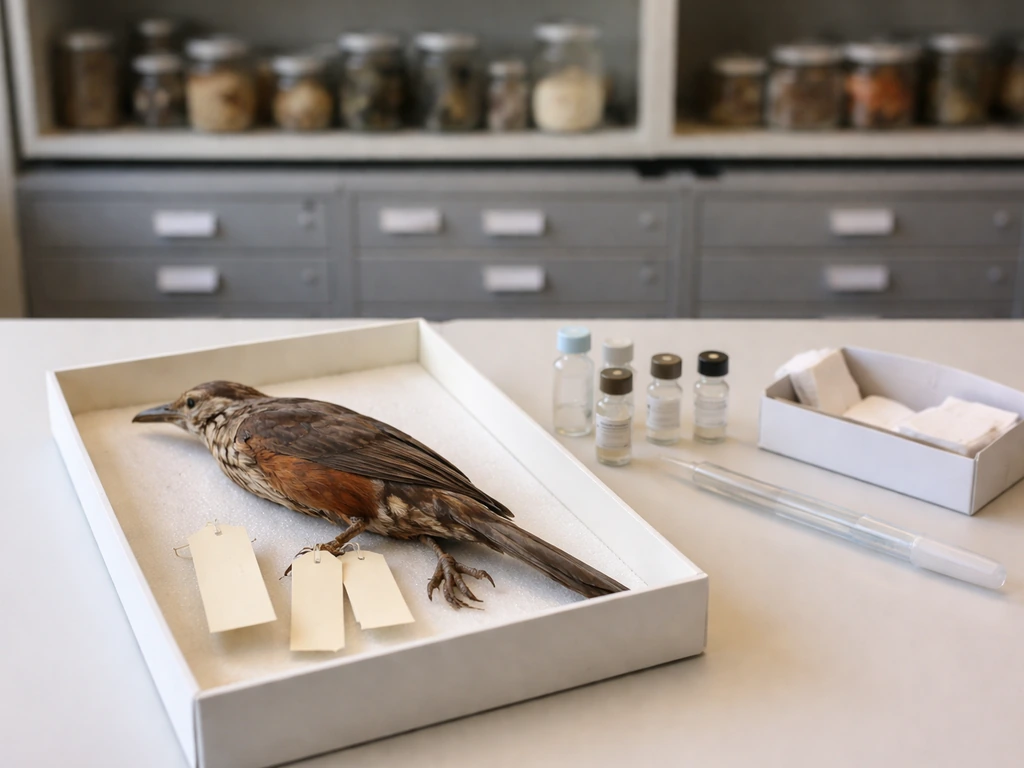
The genuinely exciting dodo news is all about what we can learn from specimens and ancient DNA, not living animals. The Oxford University Museum of Natural History has been using X-ray micro-CT scanning and 3D reconstruction to analyze the Oxford Dodo's skull and body in unprecedented detail, with a 2020 Historical Biology paper reporting on that scanning work and what it reveals about specimen history and anatomy. Separately, the question of whether the dodo was shot (rather than simply dying of natural causes) has been investigated using the same CT technology, and the museum has produced accessible audio content walking through that forensic work.
On the genetics side, the 2020 Oxford genome-sequencing project for extinct flightless birds, including the dodo, represents a serious scientific effort to reconstruct the dodo's complete genetic blueprint from museum specimens. Work on mitochondrial genomes from dodo and related pigeon and dove taxa has already helped clarify the dodo's evolutionary relationships. A 2021 Historical Biology paper also applied quantitative image analysis to historical illustrations of the dodo (the "Walghvogel" representations) to understand how accurate old depictions really were. None of this brings the dodo back to life, but it deepens our understanding of what the animal actually was.
The dodo's place in conservation education today
The dodo isn't just a historical curiosity. It's one of the clearest case studies we have for how island species collapse when humans arrive with habitat disruption and invasive animals in tow. That lesson applies directly to flightless birds alive right now. The kiwi in New Zealand, the cassowary in Australia and Papua New Guinea, the flightless rail species scattered across Pacific islands: all of them face versions of the same pressures that killed the dodo. Introduced predators, habitat fragmentation, and direct human disturbance are ongoing threats to flightless birds worldwide.
Understanding why the dodo went extinct makes you a more informed reader when you encounter conservation news about any of these species. The dodo's story also illustrates why island biodiversity is so fragile and why organizations like the IUCN put so much emphasis on invasive species management specifically in island contexts. When you read about conservation efforts for the kiwi or the kakapo, you're reading about the lessons applied from cases exactly like the dodo.
Similar birds people confuse with the dodo
Part of why the "living dodo" hoax works is that people aren't always sure what the dodo actually looked like or how it compares to other birds. Here's a quick comparison of the dodo against species it gets confused with or compared to most often. If you are comparing it to other flightless birds, this dodo bird vs ostrich comparison highlights the key differences in size, habitat, and behavior. If you're wondering what a dodo bird vs chicken comparison would look like, the key takeaway is that the dodo is extinct and any “living” claim is misinformation.
| Species | Status | Size | Where found | Why confused with dodo |
|---|---|---|---|---|
| Dodo (Raphus cucullatus) | Extinct (17th century) | ~1 meter tall, ~10–18 kg | Mauritius (Indian Ocean) | It's the reference point |
| Rodrigues Solitaire (Pezophaps solitaria) | Extinct (18th century) | Slightly taller, leaner build | Rodrigues Island (Indian Ocean) | Close relative, same Indian Ocean region, also extinct flightless bird |
| Nicobar Pigeon (Caloenas nicobarica) | Near Threatened, alive | ~40 cm, much smaller | Southeast Asia to Pacific islands | Closest living relative of the dodo; used in genetic studies |
| Cassowary (Casuarius spp.) | Vulnerable/Least Concern | Up to 1.8 meters, ~60 kg | Australia, New Guinea | Large flightless bird, occasionally misidentified in viral footage |
| Kiwi (Apteryx spp.) | Endangered to Vulnerable | ~35–65 cm, 1.3–3.3 kg | New Zealand | Famous flightless island bird, shares conservation parallels |
| Kagu (Rhynochetos jubatus) | Endangered | ~55 cm, ~1 kg | New Caledonia | Rare flightless-adjacent island bird, unfamiliar to most people |
The Nicobar pigeon is worth calling out specifically because it keeps appearing in dodo genetics research as the dodo's closest living relative. It looks nothing like the dodo (it's a shimmering, colorful pigeon), but it's the species researchers turn to when they want a living reference point for comparative genomics. The Rodrigues solitaire is also worth knowing about because it's nearly always mentioned alongside the dodo in scientific literature, went extinct for very similar reasons, and is sometimes the subject of the same "alive today" style confusion.
The bottom line on dodo bird news
The dodo is extinct, has been for over 300 years, and every credible scientific institution confirms that. The real news around the dodo is genuinely fascinating: whole genome sequencing, CT-scanned museum specimens, iconographic analysis of historical illustrations, and the ongoing conservation lessons the dodo's extinction teaches us about protecting the flightless birds still alive today. If you're following dodo science, look for work coming out of the Oxford University Museum of Natural History, Nature-family journals, and institutions like the AMNH. If a claim comes from a viral video with no institutional backing and no specimen evidence, treat it as a hoax until proven otherwise because every time so far, that's exactly what it has been.
FAQ
How can I tell the difference between real dodo research updates and “dodo is alive” clickbait?
Check whether the claim names museum specimens, CT scanning, ancient DNA, or specific institutions doing reconstruction work. If it only offers a vague sighting location, blurry video, or an anonymous witness with no chain of custody, treat it as misinformation. Genuine dodo science typically discusses specimens, genomes, or imaging results rather than field sightings.
Could a misidentification explain a “living dodo” story, even if it is still wrong?
Yes. Large ground birds that are slow, flightless, or uncommon to viewers (for example, cassowary or kiwi in touristic footage) can be misrepresented as “dodo” when the footage is low quality or angles hide key features. A strong hoax often relies on people not knowing that the dodo was a pigeon relative and not a generic “bird that ran at people.”
What would credible evidence of a living dodo need to include?
You would expect verified physical or high-resolution photographic evidence, clear locality data with permits, and ideally independent confirmation by recognized authorities. For living-assertion claims, credible reports would also include diagnostic traits visible to experts, not just long-distance video in dense vegetation.
Why are “last living dodo” videos inconsistent when they surface online?
Many versions use reused or altered footage, different narration, or different alleged finder details, which creates contradictions across posts. If the same clip is repackaged over time with different backstories, that pattern strongly indicates fabrication rather than a new field discovery.
Is it possible that the dodo’s extinction date is wrong by a lot, meaning it could have survived longer than people say?
The broad conclusion of extinction is consistent across institutions, but estimates of timing can shift depending on which evidence is modeled. The article’s point is that even with later statistical modeling, it still places extinction centuries ago, far beyond the timeframe needed for modern living reports.
Do conservation lessons from the dodo apply only to Mauritius, or to other islands too?
They generalize well to other islands with flightless or ground-nesting birds. The key risk pattern is habitat loss plus introduced mammals that raid nests or eggs. So “island species collapse” logic applies to many Pacific and Indian Ocean conservation contexts where invasive predators are present.
Could “dodo” in headlines refer to something else, like a different animal with the same common name?
Sometimes, yes. Some places and websites loosely use “dodo” for unrelated birds or for fictional framing. If the article does not clearly specify the scientific name Raphus cucullatus or dodo-specific traits, do not assume it is actually about the extinct species discussed in scientific literature.
What is the best way to respond if someone claims they saw a living dodo on Réunion or Mauritius?
Ask for verifiable details: exact coordinates, who documented it, and what diagnostic characteristics were observed. Then point out that reputable fact-checking has examined specific viral sightings and found them to be hoaxes. Use the requirement of institutional backing and tangible evidence as the filter.
If dodo DNA work is happening, does that make de-extinction more realistic?
It makes reconstruction and evolutionary study more detailed, not a living animal. Current genome and CT imaging efforts focus on learning anatomy, relationships, and specimen history, but the article’s core point is that these methods do not produce a surviving population in the wild.
Are there any “real” dodo storylines that sound like survival but are actually about history?
Yes. For example, debates about how individuals died (hunted versus other causes) can sound like they are about ongoing existence, but they are forensic questions applied to museum material. Those studies typically use non-destructive imaging on preserved specimens, not field encounters.