
The ostrich is not an endangered bird. The common ostrich (Struthio camelus) is currently classified as Least Concern on the IUCN Red List, which is the globally accepted benchmark for conservation status. That said, "Least Concern" does not mean everything is fine across the board. The IUCN also flags the overall population trend as decreasing, and certain subspecies and regional populations are in genuinely serious trouble. So the honest answer is: globally, no, the ostrich is not endangered, but the picture gets more complicated when you zoom in.
Is Ostrich an Endangered Bird? Current Status and Risks

Maya Hennessy
28 Apr 2026
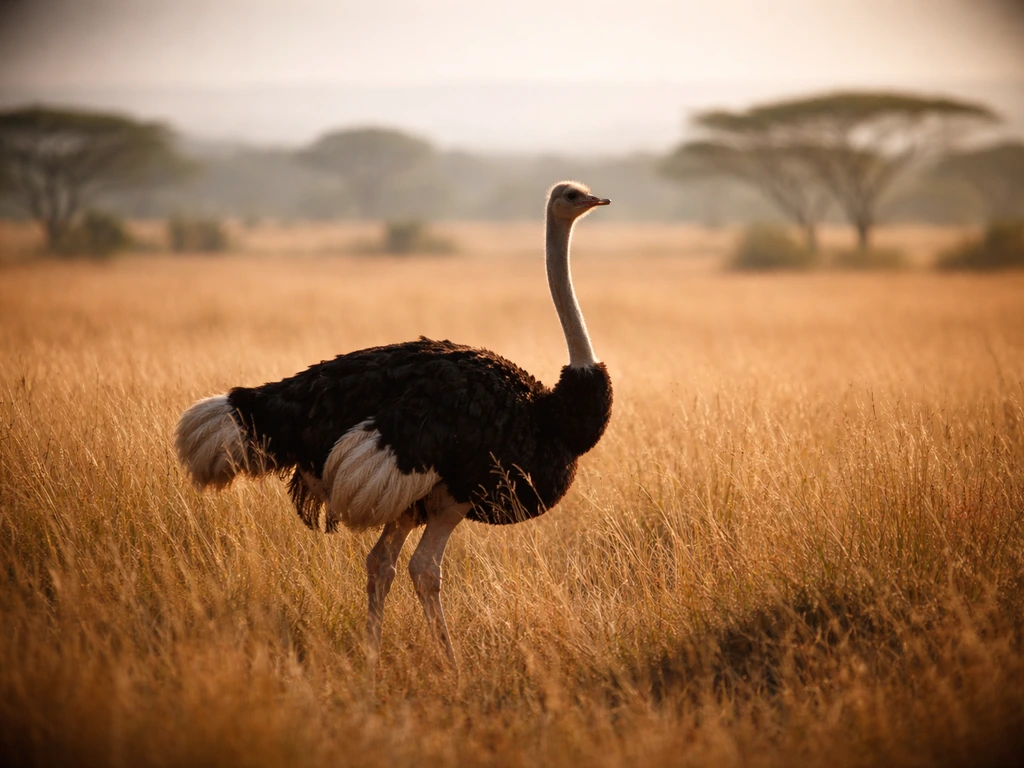
What the current conservation status actually says
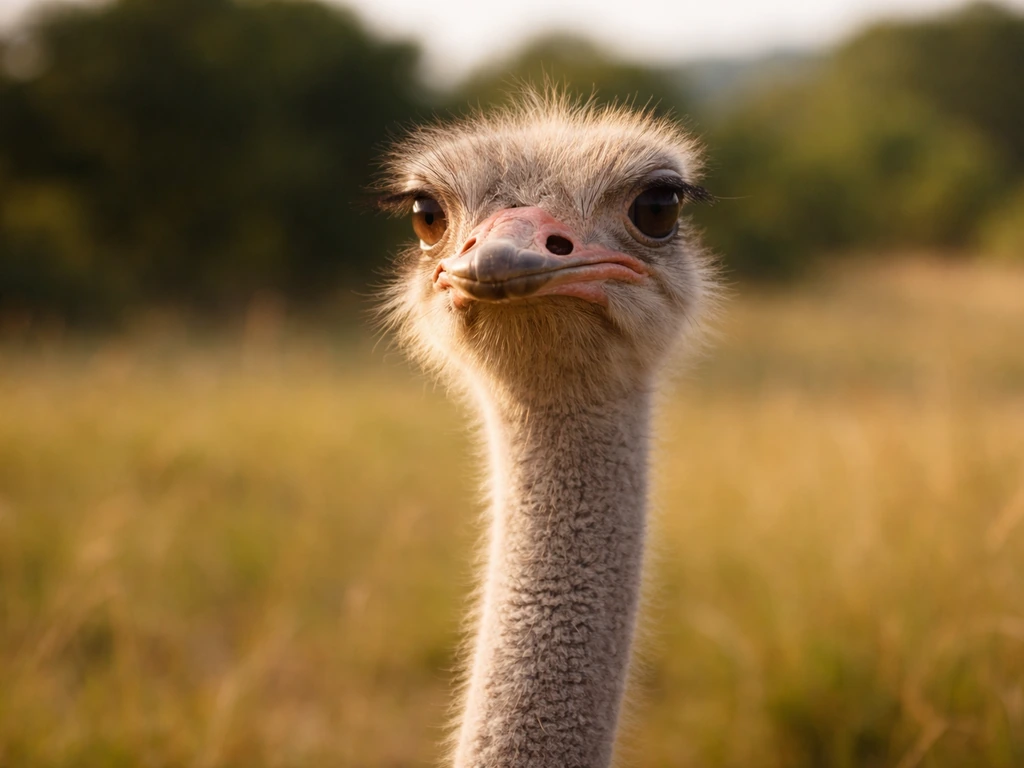
The IUCN Red List classifies the common ostrich (Struthio camelus) as Least Concern (LC). This is the lowest-risk category on the Red List's scale, sitting well below the three "threatened" categories: Vulnerable (VU), Endangered (EN), and Critically Endangered (CR). Least Concern means the species does not currently meet the thresholds for any of those higher-risk designations based on population size, decline rate, or range contraction.
However, the IUCN notes a decreasing population trend for Struthio camelus. A species can be Least Concern today and trend toward a worse category over time if pressures aren't addressed. The key threats flagged in ostrich assessment notes include hunting, egg collecting, and habitat degradation. That combination, especially in parts of Africa and the Middle East, has already pushed some populations to the edge.
On the trade side, CITES lists Struthio camelus under Appendix I, but only for specific populations in defined countries (listed since July 29, 1983). CITES’ taxon page for Struthio camelus specifies Appendix I for populations in Algeria, Burkina Faso, Cameroon, Central African Republic, Chad, Mali, Mauritania, Morocco, Niger, Nigeria, Senegal, and Sudan, with a listing date of 29/07/1983. Appendix I is the highest level of CITES protection, restricting commercial international trade. The catch is that this doesn't apply to all ostrich populations globally, just those specific ones. The rest fall outside Appendix I, reflecting the broader Least Concern global picture.
What "endangered" actually means (and where the confusion comes from)
This is worth unpacking because "endangered" gets used loosely in everyday conversation. On the IUCN Red List, "Endangered" (EN) is a specific category with specific numerical criteria, such as a population reduction of at least 50% over 10 years, or fewer than 2,500 mature individuals in the wild. So, an endangered bird is one that meets the IUCN criteria for the Endangered category (EN) rather than just facing threats in a general sense what is an endangered bird. It is not a general word meaning "at risk." The IUCN formally defines "threatened" as the combined group of Critically Endangered, Endangered, and Vulnerable. Everything below that, including Near Threatened (NT) and Least Concern (LC), is not technically threatened under their framework.
People often conflate "threatened" and "endangered" as if they mean the same thing, which leads to confusion when reading news headlines or conservation reports. A species described as "facing threats" (hunting pressure, habitat loss) is not automatically classified as Endangered. Ostriches face real threats, but the global population is large enough that those threats haven't pushed it into a threatened category yet.
Another source of confusion is mixing up global status with local or regional status. A species can be Least Concern globally while being functionally extinct in parts of its former range. That's precisely what's happened with ostriches in parts of North Africa, the Middle East, and the Arabian Peninsula.
Why ostriches face real pressure, even without an endangered label
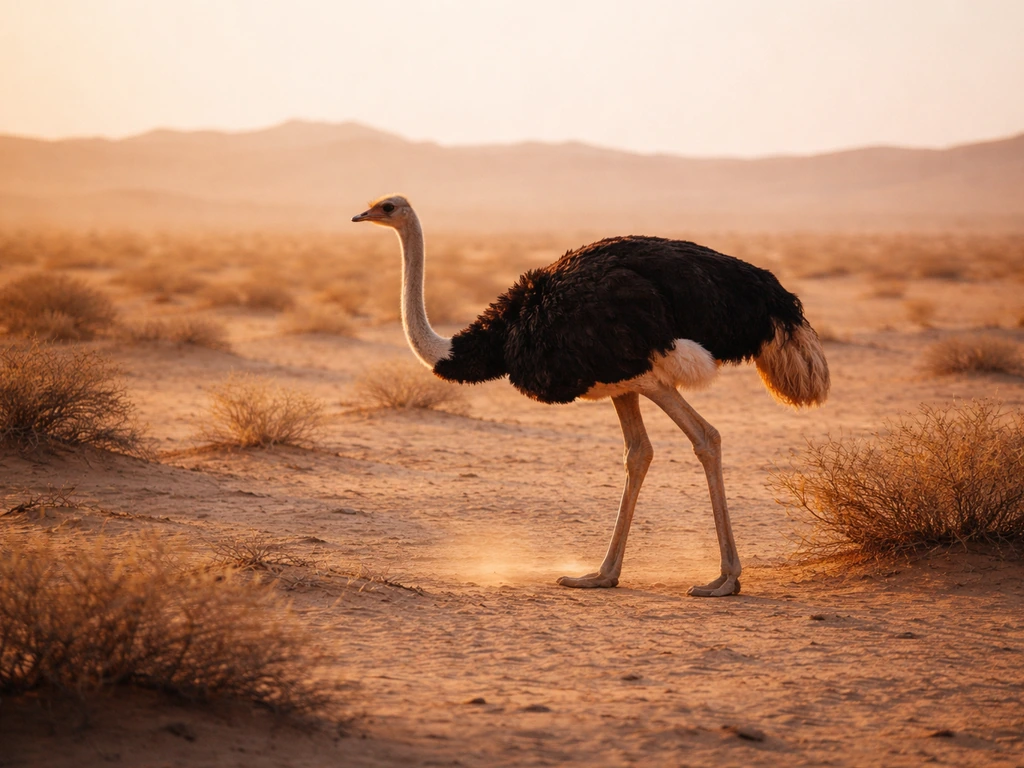
The global Least Concern status can obscure some genuinely alarming regional stories. The Arabian ostrich (Struthio camelus syriacus), a subspecies, is classified as Extinct in the Wild. It no longer exists outside captivity across its former range in the Arabian Peninsula and parts of the Middle East. Reintroduction efforts have been attempted, including work in Saudi Arabia's Mahazat as-Sayd Protected Area, but as of today, this subspecies has been effectively lost from nature.
In West Africa, things are also stark. The red-necked ostrich (Struthio camelus camelus) in Niger's Aïr and Ténéré National Nature Reserve was estimated at roughly 1,600 individuals in 1990, and research published in the Oryx journal documented a dramatic subsequent decline. The killdeer bird is not endangered in the same way some species are classified as Endangered on the IUCN Red List is the killdeer bird endangered. Hunting, poaching for feathers and eggs, and habitat degradation have all driven that fall. Reintroduction planning and protected area management have been attempted, but the numbers tell a difficult story.
The Somali ostrich (Struthio molybdophanes), which is now recognized as a separate species from the common ostrich, faces decline across much of its range due to hunting (for feathers and eggs), persecution, and trade-linked pressures. The U.S. Fish & Wildlife Service maintains a species page for Struthio molybdophanes that you can use to track its U.S. regulatory context separately from the common ostrich.
So the practical takeaway here is: global Least Concern status reflects the species as a whole, but it doesn't protect individual populations or subspecies from local collapse. Hunting pressure and habitat loss are real, they're documented, and they're actively shrinking the ostrich's range even as the overall species avoids an endangered classification.
Ostriches among other flightless birds: how do they compare?
The ostrich sits at the more fortunate end of the spectrum among flightless birds. It's worth putting this in context because several of its flightless relatives are in far worse shape globally, not just regionally.
| Species | IUCN Status | Main Threats | Wild Population Trend |
|---|---|---|---|
| Common Ostrich (Struthio camelus) | Least Concern | Hunting, habitat loss, egg collecting | Decreasing |
| Somali Ostrich (Struthio molybdophanes) | Vulnerable | Hunting, persecution, trade | Decreasing |
| Southern Cassowary (Casuarius casuarius) | Least Concern | Habitat loss, vehicle strikes, hunting | Decreasing |
| Emu (Dromaius novaehollandiae) | Least Concern | Hunting, habitat pressure (historically) | Stable/variable |
| North Island Brown Kiwi (Apteryx mantelli) | Vulnerable | Predation by invasive mammals, habitat loss | Increasing (with intervention) |
| Arabian Ostrich (Struthio camelus syriacus) | Extinct in the Wild | Hunting (historical), habitat loss | Functionally zero |
The kiwi is a useful comparison point. New Zealand's kiwi species, particularly the North Island Brown Kiwi, are Vulnerable and deeply dependent on intensive conservation management to avoid further decline. Without predator control programs and active intervention, kiwi numbers fall fast. The ostrich doesn't require that level of intervention at a global scale, which reflects both its larger population and its hardier habitat adaptability. If you're exploring how different flightless birds sit on the risk spectrum, looking at what drives the most endangered birds in places like New Zealand offers a sharp contrast to the ostrich's situation. If you want to dig deeper, it also helps to look at specific species that are classified as Critically Endangered or Endangered to understand what “most endangered” really means most endangered birds. If you want a closer look at New Zealand specifically, what is the most endangered bird in New Zealand is a useful question for understanding local conservation risk.
The cassowary, another large flightless bird, shares some regional pressure patterns with the ostrich, including habitat loss and hunting, but its smaller global population and more restricted range keep it in a more precarious position in some assessments. These comparisons matter because they show that "flightless" is not itself a conservation curse, but it does tend to correlate with vulnerability to human pressure, simply because flightless birds can't escape threats easily.
How to verify the latest ostrich status today

Conservation statuses can change. The IUCN updates the Red List multiple times per year and aims to reassess species every 5 to 10 years depending on available data and concern level. The IUCN Red List reassesses species regularly, with reassessment goals of at least every 10 years and every 5 years if possible. That means the Least Concern listing for the common ostrich could be revised if population data shifts significantly. Here's how to check the current status yourself:
- Go to the IUCN Red List website (iucnredlist.org) and search for "Struthio camelus." The species page will show the current category, population trend, threats, and the date of the most recent assessment. Look at both the global status and any notes on subspecies.
- Check BirdLife International's species factsheet for the ostrich. BirdLife is the official Red List Authority for birds, meaning they conduct and review the assessments. Their factsheets often include more detailed range maps and threat breakdowns than the top-level IUCN page.
- For trade context, visit the CITES species database (speciesplus.net or cites.org) and search Struthio camelus. This will show current Appendix listings and any population-specific annotations, which is important for understanding legal trade controls.
- For U.S.-specific context, the U.S. Fish & Wildlife Service maintains species account pages for both Struthio camelus camelus (red-necked ostrich) and Struthio molybdophanes (Somali ostrich), useful if you're interested in how U.S. regulations apply.
- When reading any third-party summary (including conservation news sites or wildlife charities), cross-reference the IUCN category stated and the date of that assessment. Outdated summaries sometimes cite older statuses.
One thing to look for specifically: the IUCN assessment page includes a "Population" section that describes both the estimated number and the trend direction. For the ostrich, the decreasing trend is the key detail that makes this more than a simple "they're fine" story. Population trend combined with documented threats gives you a much more honest picture than the category label alone.
What conservation helps and what you can actually do
Even for a Least Concern species, there are meaningful actions being taken and meaningful ways to support them. The interventions that matter most for ostriches right now track closely with the documented threats.
- Anti-poaching and hunting regulation: The biggest driver of regional ostrich decline is uncontrolled hunting and egg collection. Supporting organizations that fund ranger patrols and anti-poaching operations in the Sahel and East Africa directly addresses the primary threat.
- Protected area management: Ostriches need large, intact savanna and semi-arid habitats. National parks and nature reserves in range countries, like Niger's Aïr and Ténéré, are critical buffers. Advocacy for properly funded protected areas matters here.
- Reintroduction programs: For locally extinct populations, reintroduction into protected areas (as has been attempted in Saudi Arabia for the red-necked ostrich) is the only realistic recovery pathway. These programs require long-term investment and careful carrying-capacity assessments.
- Reducing demand for ostrich products from unsustainable wild sources: Ostrich feathers, eggs, and leather drive poaching in some regions. Choosing products from certified farmed sources (where applicable) reduces pressure on wild populations.
- Supporting CITES enforcement: The Appendix I listing for specific ostrich populations exists for a reason. Reporting suspected illegal trade and supporting CITES compliance in consumer countries helps keep those protections meaningful.
- Staying informed and sharing accurate information: One of the most useful things anyone can do is correct the misinformation that circulates about conservation status. Sharing accurate, source-backed information, rather than vague claims that ostriches are or aren't endangered, contributes to better public understanding of what conservation categories actually mean.
If you want to dig deeper into the broader context of which bird species are truly on the edge globally, looking at what defines the most endangered birds in the world, or specifically which species have crossed into Critically Endangered territory, gives a useful frame for appreciating where the ostrich sits on that risk ladder. The ostrich's story is not a crisis today, but it's also not a success story. If you're also curious about the broader big-picture question of what is the #1 most endangered bird, that comparison helps put the ostrich's situation into perspective. You might also be wondering which endangered bird species is found in the Thar Desert, where local conditions can drive very different outcomes than the global picture. It's a species holding on with a declining trend, regional extinctions already locked in, and ongoing pressure that conservation investment can still influence.
FAQ
If ostrich is not endangered, why do people say it is “at risk”?
It depends on what you mean by “endangered.” On the IUCN Red List, the common ostrich (Struthio camelus) is Least Concern globally, but the species is still flagged with a decreasing population trend. That means it is not currently in an IUCN threatened category (Vulnerable, Endangered, Critically Endangered), even though pressures like hunting and habitat loss are ongoing.
Does CITES mean all ostrich trade is banned or heavily restricted?
Not all trade restrictions apply to every ostrich population. CITES Appendix I is applied only to specific Struthio camelus populations in defined countries, while other populations fall outside that highest trade listing. So an ostrich’s ability to be exported or commercially traded can vary by where the birds come from, not just by the species name alone.
Can an ostrich be extinct in parts of the world while the species is Least Concern?
Yes. A subspecies or regional population can go extinct even when the overall species is categorized as Least Concern. The Arabian ostrich (Struthio camelus syriacus) is listed as Extinct in the Wild, which shows how local collapse can be hidden by a reassuring global label.
Do different ostrich species (or subspecies) have the same status and protection rules?
Be careful with classification changes. The Somali ostrich (now recognized as Struthio molybdophanes) is treated as a separate species from the common ostrich, so you cannot assume they share the same status or regulatory treatment. U.S. regulations also track the separate species, which can affect permits and reporting requirements.
What does “decreasing population trend” mean if the ostrich is still Least Concern?
Population “decreasing” does not always translate into a threatened category immediately. IUCN categories rely on thresholds tied to decline rate, population size, and range contraction. A species can have declines and still remain below the numerical cutoff for Endangered or Vulnerable, at least for now.
Where on the IUCN Red List should I look to understand ostrich risk beyond the category?
Yes, if you are looking for the most accurate conservation picture. Use the IUCN assessment for the taxon you care about, then check the “Population” section (estimated numbers and trend) rather than relying only on the category label. That is where you will see whether declines are recent, severe, or continuing.
What’s the difference between “endangered” and “threatened” in IUCN terms?
The term “endangered” in everyday language is often broader than the IUCN definition. Under IUCN, “Endangered” (EN) is a specific category with specific criteria, while “threatened” usually refers to the combined set of Critically Endangered, Endangered, and Vulnerable. So “facing threats” does not automatically mean “Endangered” in the technical sense.
Can protected areas or conservation programs reverse ostrich declines fast enough to change the status?
It is possible to see local recovery in protected areas even while the overall population trend is still declining. However, recovery is not guaranteed, and it typically requires sustained pressure reduction (for example, enforcement against egg collecting and hunting, plus habitat management) over multiple breeding cycles.
Are flightless birds generally more endangered than flight-capable birds?
Do not assume “flightless bird” means the same risk level. Flightlessness can correlate with vulnerability to human pressure because animals cannot disperse quickly to avoid threats, but risk still varies by species, habitat, and the intensity of hunting and trade in different regions.
Next Articles
What Is the Most Endangered Bird in the World?
Answer what is the most endangered bird, using IUCN criteria, then verify latest status and population context.
Is the Dodo Bird Still Alive? What Evidence Shows Today
Learn if any dodos could exist today, why scientists say they are extinct, and how to judge sightings reliably.
Does Dodo Bird Still Exist? Answer and Extinction Facts
No, dodo birds are extinct. Learn when, why, where they lived, and how evidence confirms it.