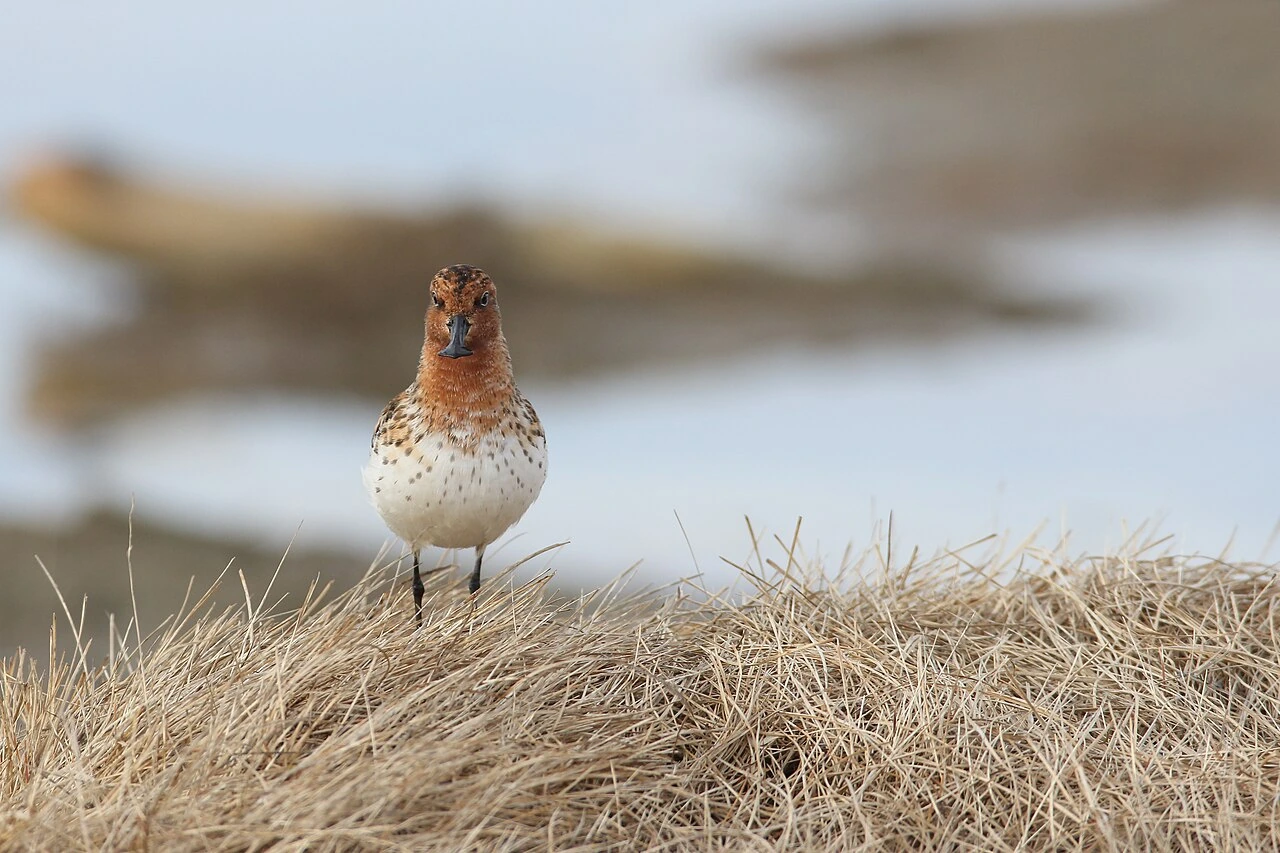
The Spoon-billed Sandpiper is currently one of the strongest candidates for the world's most endangered bird, with a wild population estimated at fewer than 300 mature individuals and a continuing sharp decline. The Regent Honeyeater, the Stresemann's Bristlefront, and a handful of other Critically Endangered species are in similarly dire straits. No single bird holds an official "most endangered" title, but using the IUCN Red List as your guide, a species with fewer than 50 mature individuals qualifies under Criterion D, the most severe population threshold in conservation science, and several birds are at or below that mark right now.
What Is the Most Endangered Bird in the World?

Maya Hennessy
27 Apr 2026
How "most endangered" is actually defined
The clearest and most scientifically grounded way to rank endangered birds is through the IUCN Red List, which uses a structured set of quantitative criteria rather than gut feelings or media attention. BirdLife DataZone’s 2024 annual update states that blank" rel="noopener noreferrer">BirdLife International is the official Red List Authority for birds and assesses and documents global extinction risk for 11,000+ bird species for the IUCN Red List. blank" rel="noopener noreferrer">BirdLife International acts as the official Red List Authority for birds, meaning they carry out or coordinate every bird assessment against IUCN standards. The top category before a species is declared extinct is Critically Endangered (CR), and to land there, a species has to meet at least one of five criteria labeled A through E.
Here is what those thresholds actually mean in practice:
| Criterion | What it measures | CR threshold |
|---|---|---|
| A | Population reduction over time | ≥80–90% decline in 10 years or 3 generations |
| B | Geographic range size | Extent of occurrence under 100 km², severely fragmented or at 1 location |
| C | Small population + ongoing decline | Fewer than 250 mature individuals with continued decline |
| D | Very small population size | Fewer than 50 mature individuals |
| E | Quantitative extinction probability | ≥50% chance of extinction within 10 years or 3 generations |
Within the CR category, there is also a special flag worth knowing: CR(PE) means "Critically Endangered, Possibly Extinct." A bird tagged this way is likely already gone from the wild, but researchers cannot yet confirm it. This sits just below the formal EX (Extinct) and EW (Extinct in the Wild) categories. So when you see a species listed as CR(PE), you are looking at something that may have already crossed the line, making it arguably even more urgent than a standard CR listing.
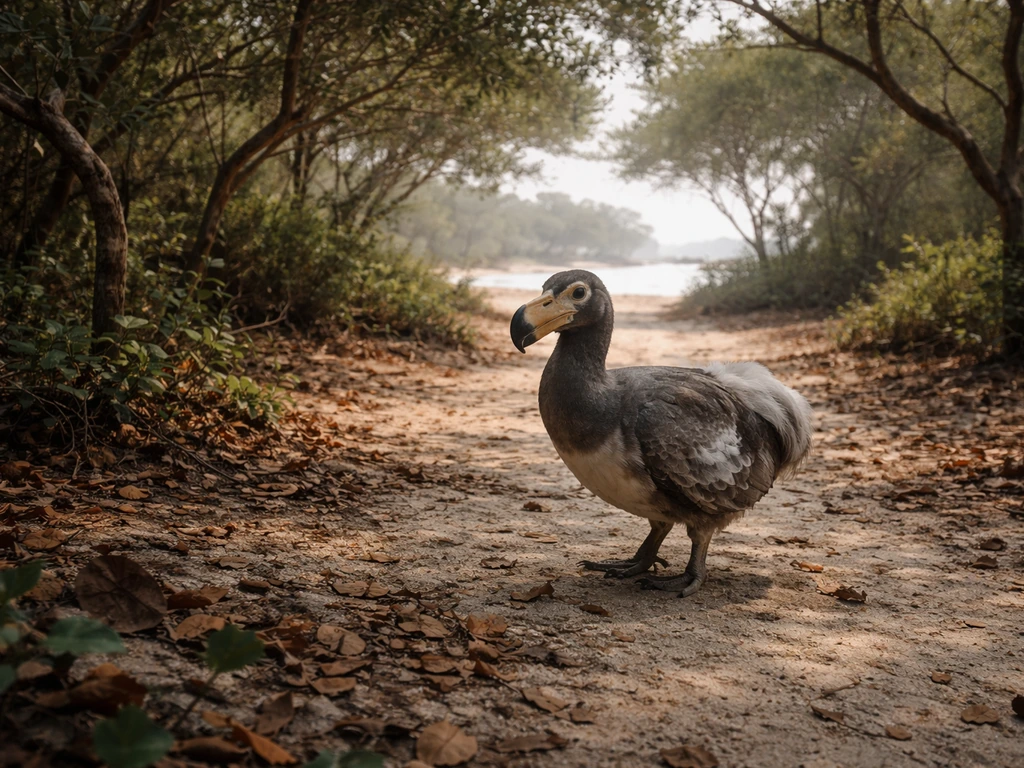
One important distinction for anyone coming to this question from an interest in extinct birds: species like the dodo or the moa are not endangered, they are extinct. They belong to the EX category, which is separate from CR. The conversation about "most endangered" applies only to species still confirmed alive in the wild. You can also ask whether an ostrich is an endangered bird by checking its latest assessment on the IUCN Red List is ostrich an endangered bird. If you want a quick definition of what qualifies as an endangered bird, start with the IUCN Red List criteria. That line matters, because conservation resources and attention need to focus on birds that still have a chance.
The top contenders right now
Several bird species are currently fighting for survival at the very edge of the CR threshold. Each has a strong case for being called the world's most endangered bird depending on which criterion you weight most heavily. If you are trying to pinpoint what is the #1 most endangered bird, these contenders are the ones most often compared side by side in IUCN-based discussions.
Spoon-billed Sandpiper
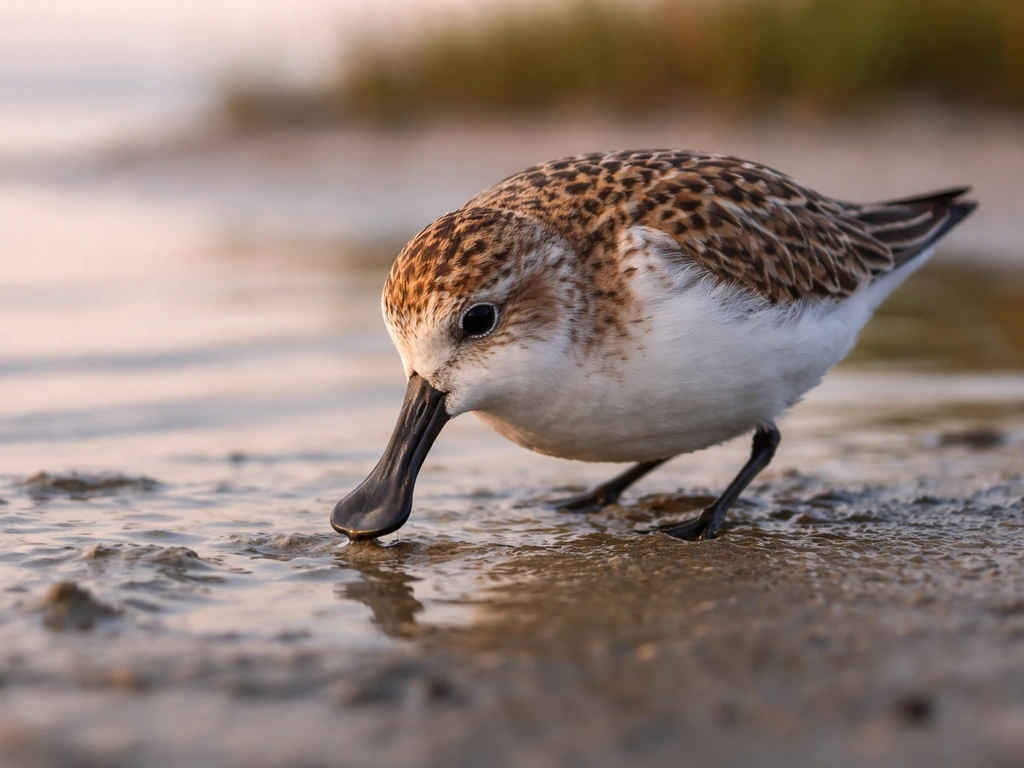
The Spoon-billed Sandpiper (Calidris pygmaea) is a tiny shorebird with a spatula-shaped bill that breeds in the Russian Far East and winters across coastal Southeast Asia. Its population has crashed dramatically, with estimates in recent years putting the number of breeding pairs at around 100 to 150, meaning fewer than 300 mature individuals total. That places it firmly in CR under Criteria A, C, and D. It is among the birds most frequently cited by ornithologists when the question of "most endangered" comes up.
Regent Honeyeater
Australia's Regent Honeyeater (Anthochaera phrygia) has declined so sharply that wild birds are now losing their songs, because young males have almost no older males to learn from. The wild population is estimated at fewer than 300 individuals and falling. A captive breeding program exists, but the species' range has contracted dramatically across southeastern Australia.
Stresemann's Bristlefront
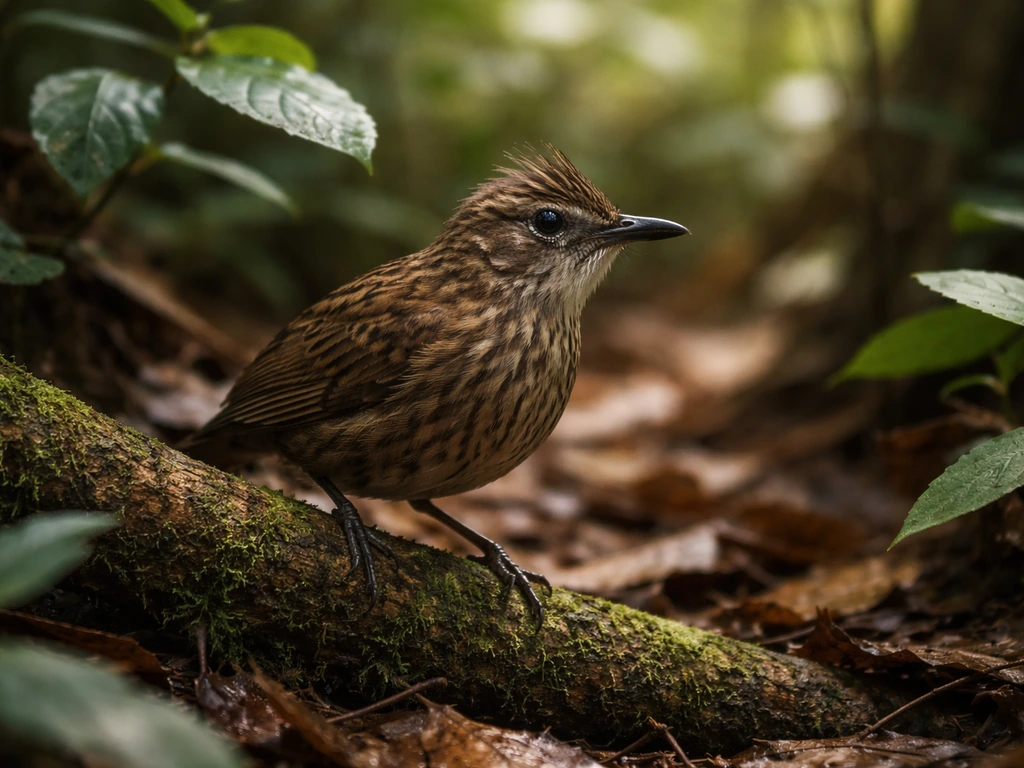
Brazil's Stresemann's Bristlefront (Merulaxis stresemanni) may have the smallest confirmed wild population of any bird in the world. For years it was feared extinct entirely. A single female was rediscovered in 2018 in Bahia state, and the total known wild population is believed to be in the single digits. It meets CR Criterion D with numbers that may be below 50, and some assessments place it in CR(PE) territory.
Other species in the running
- Ruppell's Vulture (Gyps rueppelli): Critically Endangered with rapid population collapse driven by poisoning across Africa.
- Philippine Eagle (Pithecophaga jefferyi): Fewer than 800 individuals remain, with ongoing habitat destruction in Mindanao.
- California Condor (Gymnogyps californianus): Once down to 27 individuals in the wild, now recovering but still CR with just over 500 birds total.
- Kakapo (Strigops habroptilus): A flightless New Zealand parrot with fewer than 250 individuals, though active management has stabilized numbers.
- New Caledonian Owlet-nightjar (Aegotheles savesi): Possibly fewer than 50 individuals, rarely observed, and listed as CR.
New Zealand has its own cluster of critically endangered birds worth calling out separately. For a New Zealand-specific answer, you can look at the Kakapo and other endemic Critically Endangered birds that are often discussed as possible candidates. The Kakapo and several other endemic species sit at the extreme end of the CR spectrum, which connects closely to questions about what the most endangered bird in New Zealand is specifically.
Why these birds are at the edge

The causes are not random. The same pressures show up again and again across the world's most endangered birds, and understanding them helps explain why recovery is so hard.
Habitat loss is the biggest driver
For the Regent Honeyeater, deforestation of box-ironbark woodland in southeastern Australia removed the flowering trees the species depends on for nectar. For the Stresemann's Bristlefront, Atlantic Forest clearance in Brazil reduced the bird's range to a fragment of what it once was. For the Philippine Eagle, large-scale logging on Mindanao has cut the bird's territory down to isolated forest patches. In nearly every case, the habitat shrank faster than the population could adapt.
Invasive species and hunting
Island species are especially vulnerable to invasive predators. Rats, cats, and stoats have driven many Pacific and New Zealand birds to near-extinction by raiding nests and killing adults. The Kakapo, a flightless bird with no evolved defenses against mammalian predators, was decimated by introduced stoats before intensive management stepped in. For the Spoon-billed Sandpiper, hunting pressure along its East Asian flyway, particularly the trapping of shorebirds during migration, has added direct mortality on top of habitat loss.
Small population dynamics
Once a bird population drops below a critical threshold, a separate set of problems kicks in. Genetic diversity shrinks, making the population less resilient to disease. Mate-finding becomes harder. The Regent Honeyeater's song-loss problem is a direct consequence of this: when there are not enough experienced males in the wild, cultural knowledge disappears from the population. These cascading effects make recovery exponentially harder the lower the numbers fall.
Where these birds live today
Each of the leading contenders occupies a very specific and shrinking slice of the planet.
| Species | Breeding/core range | Primary local threat |
|---|---|---|
| Spoon-billed Sandpiper | Breeds in Chukotka (Russia), winters in Myanmar, Bangladesh, South China coast | Coastal wetland reclamation, hunting on migration |
| Regent Honeyeater | Southeastern Australia (NSW, Victoria) | Woodland clearing, loss of flowering eucalypts |
| Stresemann's Bristlefront | Bahia state, Atlantic Forest, Brazil | Deforestation, agricultural expansion |
| Kakapo | Managed island sanctuaries in New Zealand (Codfish, Anchor, Little Barrier) | Historically invasive predators; now managed but tiny range |
| Philippine Eagle | Mindanao and a few other Philippine islands | Logging, hunting, human encroachment |
What stands out is that none of these birds occupies a large, stable territory. The Spoon-billed Sandpiper migrates thousands of kilometers but its breeding ground is confined to a narrow coastal strip in Chukotka. The Stresemann's Bristlefront may be limited to a single forest reserve. Range restriction alone, even without other threats, can push a species toward extinction simply because one storm, one disease outbreak, or one land-use decision can wipe out the entire remaining habitat.
What conservation is actually doing
The good news, and there is some, is that active conservation is making measurable differences for several of these species. The bad news is that it requires sustained, expensive effort with no guarantee of success.
Captive breeding and reintroduction

The Spoon-billed Sandpiper recovery program captures wild eggs from Russia, raises chicks in captivity at WWT Slimbridge in the UK and partner facilities in Russia, and releases birds to boost wild numbers. The Regent Honeyeater captive population at Australian zoos has become a genetic backup as researchers work to reintroduce birds with recovered songs. The Kakapo is managed almost entirely through individual monitoring: every bird has a name, a transmitter, and a dedicated team tracking its health and reproduction across predator-free island sanctuaries.
Habitat protection and restoration
For the Stresemann's Bristlefront, Brazilian conservation organization Aquasis purchased land in Bahia to protect the last known habitat. For the Regent Honeyeater, tree-planting programs aim to restore flowering woodland corridors in New South Wales and Victoria. For the Philippine Eagle, the Philippine Eagle Foundation runs breeding programs and lobbies for forest protection on Mindanao.
International flyway agreements
The Spoon-billed Sandpiper's survival depends on cooperation across multiple countries along the East Asian-Australasian Flyway. Agreements to protect intertidal mudflats in South Korea, China, and Southeast Asia have been a key conservation battleground, because losing a single critical stopover site can break the migration chain entirely.
Predator control
New Zealand's island eradication programs, removing rats, stoats, and cats from offshore islands, represent some of the most successful conservation interventions in history. The Kakapo population has grown from 51 individuals in 1995 to over 240 as of recent counts, entirely because of predator-free sanctuaries and intensive management. It shows what is possible when resources are committed consistently over decades.
How to check the current status yourself
Conservation status changes. A species listed as CR today might be downlisted to Endangered if a recovery program succeeds, or upgraded to CR(PE) if surveys find fewer individuals than expected. Here is exactly how to check the most current picture.
- Go to iucnredlist.org and use the search bar to look up any species by common or scientific name. Each species page shows its current Red List category, the criteria it meets, the population estimate, key threats, and the date of the last assessment.
- Check the BirdLife DataZone at datazone.birdlife.org. Since BirdLife is the Red List Authority for birds, their database often has more detailed bird-specific information and is updated in sync with IUCN assessments.
- Look at the assessment date on each species page. IUCN Red List assessments are reviewed on a rolling schedule, not all at once. A bird's status may not have been reassessed for several years, so note when the last review happened.
- For real-time population updates on high-profile species like the Kakapo or Spoon-billed Sandpiper, check the dedicated recovery program websites: the Kakapo Recovery Programme publishes individual bird counts, and the Spoon-billed Sandpiper Task Force publishes annual survey results.
- Cross-reference with the State of the World's Birds report published by BirdLife International. Updated periodically, it gives a global-level overview of which species are declining fastest and which interventions are showing results.
- Filter IUCN Red List searches by Class: Aves and Status: Critically Endangered to see the full current list of CR bird species. Sorting by population size or applying the CR(PE) filter will surface the most extreme cases.
One thing to keep in mind: the question of which bird is the absolute most endangered can shift with every new assessment cycle. The Spoon-billed Sandpiper might be at 150 breeding pairs today and 120 next year. The Stresemann's Bristlefront might have a small population confirmed or might slip into CR(PE) status. Treating the IUCN Red List as a living document, not a fixed answer, is the right approach. Check the date on the assessment, and go back to the source regularly if you are following a particular species. The killdeer bird endangered status depends on the latest IUCN assessment and regional trends is the killdeer bird endangered.
If you are exploring this topic more broadly, it is also worth looking into how specific regions define their most endangered birds. If you are wondering which endangered bird species is found in the Thar Desert, you will need to look at the local IUCN assessments for that region. The picture in New Zealand is particularly stark given its concentration of unique flightless and island-endemic species, and it illustrates how geography and evolutionary history combine to create specific extinction hotspots. Similarly, questions about declining populations more generally connect to the bigger picture of how conservation science tracks and responds to species-level collapse in real time.
FAQ
How can the “most endangered bird” change from year to year if IUCN is the standard?
If you want a single “most endangered” pick, use the most recent IUCN assessment date for each candidate and compare their highest category plus criteria met. A bird can move into or out of CR(PE) as new surveys confirm or fail to confirm remaining individuals, so the winner can change between assessment cycles.
Why is it hard to name one bird as #1 when several are Critically Endangered?
IUCN is built to be consistent across species, but different criteria emphasize different problems (for example, rapid declines, very small numbers, or very restricted range). Two birds can both be Critically Endangered, one driven mainly by population decline and another driven mainly by being confined to a tiny area, so there is no universally objective way to rank them without choosing what you value most.
What does CR(PE) mean compared to a standard Critically Endangered listing?
No. Critically Endangered covers multiple severity mechanisms, and “CR(PE)” is specifically about a likely disappearance in the wild, without proof. A CR(PE) species can still be extant in some places, while a non-CR(PE) CR species may have more confirmed live individuals, so look at both the label and the population estimate when comparing.
Is the “mature individuals” count the only factor in deciding how endangered a bird is?
Don’t treat “fewer than X mature individuals” as the whole story. IUCN also considers decline trends, number of locations, and geographic restriction. A species with the same rough population size can have different extinction risk depending on whether those individuals are concentrated in one shrinking patch or spread across many sites.
Does “endangered bird” always mean Critically Endangered?
Distinguish “endangered bird” from “Critically Endangered.” “Endangered” is a separate IUCN category below Critically Endangered, and many of the birds discussed as leading candidates for “most endangered” are in CR, not the Endangered category. If you see a site mixing terms, confirm the exact IUCN category shown for the species.
Can a bird be stable in one region but still be the most endangered overall?
Yes, a species can be globally Critically Endangered while being locally more stable in part of its range, or vice versa. For “most endangered bird” questions, you generally want the global IUCN assessment, but regional declines can change outcomes for conservation priorities even when the global number changes slowly.
Why do some birds depend on conservation across multiple countries rather than only their breeding range?
For flyway species, a recovery program can be limited by weak protection at a single stopover site, even if breeding habitat improves. When comparing candidates, check whether threats are cross-border and whether key habitats are secured along the route, not just at the nesting area.
How should I interpret very low numbers if surveys might be incomplete?
When surveys are uncertain, the IUCN process may use the best available evidence but can later update status after better fieldwork. If you are seeing a “possibly extinct” or unexpectedly low number, check whether the assessment notes data gaps or inferred declines rather than confirmed counts.
How do the IUCN criteria affect what conservation actions are needed?
If your goal is learning “what qualifies as most endangered,” use the IUCN category ranking first, then the criterion. Criterion D is about extremely small population size, but other criteria can reflect rapid declines or severe fragmentation, which may call for different conservation actions.
What should I check in the latest IUCN assessment to understand if a bird is improving or getting worse?
If you want the practical next step, pick one contender and compare its most recent assessment entry to its prior one. Look for changes in category, changes in population estimate, and any notes about threat abatement or new survey results, since those are the drivers behind downlisting or upgrades to CR(PE).
Next Article
Is the Dodo Bird Still Alive? What Evidence Shows Today
Learn if any dodos could exist today, why scientists say they are extinct, and how to judge sightings reliably.