
Thousands of bird species are currently classified as endangered worldwide, but the one that matters most to you depends on where you are, what you've seen, and what you're trying to protect. The most talked-about endangered birds right now include the kakapo of New Zealand (fewer than 250 individuals alive), the California condor (a recovered but still-endangered raptor with around 500 birds in the wild), the Spix's macaw (functionally extinct in the wild, with reintroduction ongoing), and iconic flightless birds like the kiwi and cassowary. If you've heard a bird name and want to verify whether it's actually endangered, or you've spotted something unusual and want to know if it's a species of concern, this guide will get you there fast.
What Bird Is Endangered? Identify Species by Location

Maya Hennessy
25 Apr 2026
What 'endangered' actually means (and how to check a bird's status)
In conservation science, 'endangered' is not a loose term for 'in trouble.' It's a precise legal and scientific category. The IUCN Red List, the global standard for assessing species status, places species into one of several categories: Least Concern, Near Threatened, Vulnerable, Endangered (EN), Critically Endangered (CR), Extinct in the Wild, and Extinct. The IUCN Red List Categories and Criteria are intended to classify species at high risk of global extinction. When people say a bird is 'endangered,' they usually mean it falls into the EN or CR category, though sometimes they use the word loosely to cover all three threatened tiers (Vulnerable, Endangered, Critically Endangered).
A species earns the Endangered label by meeting at least one of five quantitative criteria, labeled A through E. You only need to hit one. The most commonly triggered are: Criterion A, which flags a population decline of 50% or more over 10 years or three generations (whichever is longer, up to 100 years); Criterion B, which covers restricted geographic range, specifically an extent of occurrence under 5,000 km² or an area of occupancy under 500 km², combined with fragmentation or continuing decline; and Criterion C, which applies when fewer than 2,500 mature individuals remain and the population is still declining. These aren't arbitrary numbers. They're calibrated to predict meaningful extinction risk within a defined time horizon.
To verify a specific bird's status, go directly to the IUCN Red List at iucnredlist.org and search by common or scientific name. Each listing shows two key dates: when the assessment was completed and when it was published on the site. That matters because a 2015 assessment for a fast-declining species may already be outdated. Always check the publication year. For birds in the United States, the U.S. Fish and Wildlife Service Endangered Species list is a parallel authority. For U.S. species, IPaC (U.S. Fish and Wildlife Service) provides a “Listing status” endpoint that defines listing statuses used by the agency Fish and Wildlife Service Endangered Species list. For Australian species, the Department of Climate Change, Energy, the Environment and Water maintains the EPBC Act list. Each country with significant biodiversity typically has its own national list that may differ from the IUCN's global one.
Narrowing it down: how to figure out which endangered bird you mean

If you're asking 'what bird is endangered' because you've seen something unusual, or because you heard a species mentioned and want to know more, the fastest way to get a specific answer is to narrow by three things: region, habitat, and what the bird looks like or sounds like.
Start with your region
Endangered birds are not evenly distributed. Island ecosystems, particularly in the Pacific, the Caribbean, and the Indian Ocean, have the highest concentrations of threatened species. Continental hotspots include the Atlantic Forest of Brazil, the Eastern Himalayas, and parts of sub-Saharan Africa. If you're in New Zealand and you heard a nocturnal call that sounded almost frog-like, you may be thinking of a kiwi. If you're in Hawaii and spotted a bright red bird with a curved bill in native forest above 1,500 meters, that's almost certainly an 'i'iwi (Drepanis coccinea), now listed as Threatened under U.S. law. Location alone eliminates hundreds of irrelevant species.
Then use habitat

Habitat type is the second filter. Old-growth tropical forest species are different from coastal wetland species, which are different from high-altitude grassland birds. The Philippine eagle (Pithecophaga jefferyi), for instance, is an Endangered raptor found only in the old-growth forests of Mindanao and a few other Philippine islands. If you're in the Philippines, near forest, and saw a massive eagle with a lion-like mane of feathers, you've likely spotted one of the rarest raptors alive. Conversely, if you're near an urban area and a bird seems common, it's unlikely to be endangered, though there are exceptions like the black-footed albatross, which nests on remote Pacific islands but is occasionally seen offshore from the U.S. West Coast.
Heard a bird name and not sure if it's endangered?
Readers sometimes land on a general question because they've heard a specific name. Many people also ask whether the endangered status of the bird commonly known as Martinez's bird has been confirmed by the IUCN Red List is martinez bird endangered. It's worth knowing that many commonly encountered birds are not endangered. Blue jays, sparrows, crows, and peacocks, for example, are not globally threatened species, though some regional populations face pressure. Blue jays are generally not considered endangered, though local populations can face pressures. The maleo, a striking megapode from Sulawesi, is genuinely Endangered. The secretary bird of Africa is listed as Endangered on the IUCN Red List as of recent assessments. The maya bird (a name used for the Eurasian tree sparrow in the Philippines) has a stable global population despite local concerns. If you're wondering whether the maya bird is endangered, check its latest listing details on the IUCN Red List is maya bird endangered. When in doubt, search the IUCN Red List directly.
The most well-known endangered birds, region by region
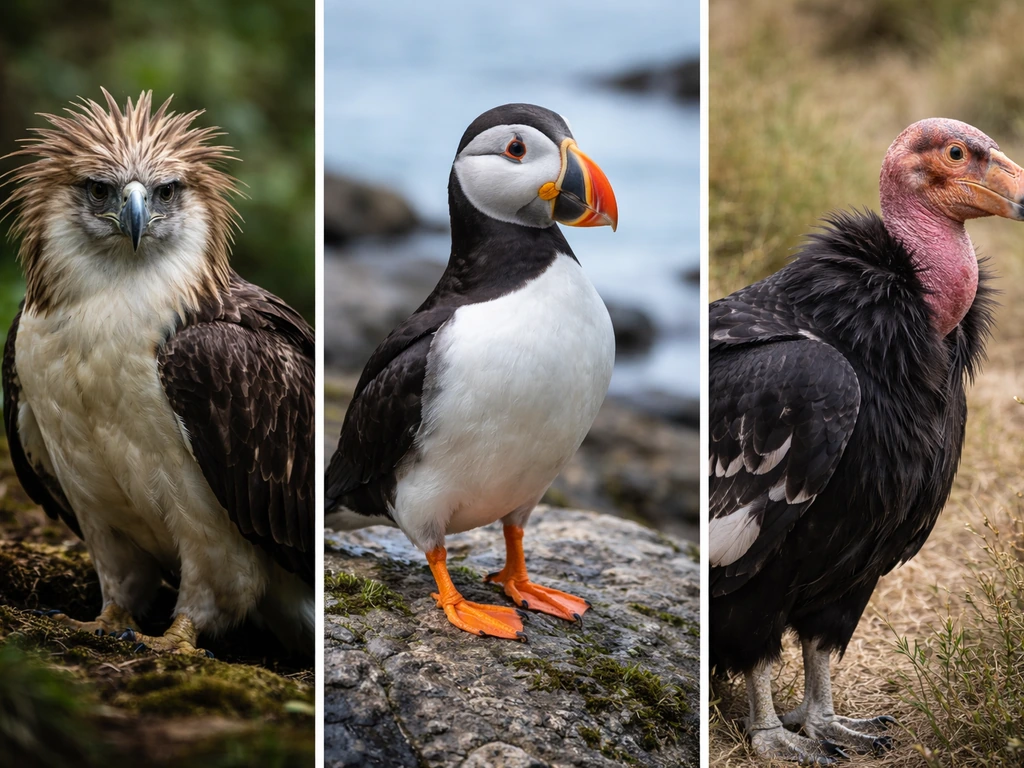
Here's a practical quick-ID guide to some of the most frequently cited endangered birds by region. These are species that come up most often in conservation conversations, wildlife sightings, or news coverage.
| Region | Species | Key ID Traits | IUCN Status |
|---|---|---|---|
| New Zealand | Kiwi (multiple species, e.g., North Island brown kiwi) | Flightless, nocturnal, long bill, roughly chicken-sized, no visible tail | Vulnerable to Endangered depending on species |
| New Zealand | Kakapo | Large, flightless, moss-green parrot; nocturnal; musty sweet smell; booming call | Critically Endangered (~250 individuals) |
| South America (Brazil) | Spix's Macaw | Small, all-blue macaw; sky-blue head, darker blue wings and tail | Extinct in the Wild (reintroduction ongoing) |
| North America | California Condor | Massive black vulture; 9-foot wingspan; bald orange-red head in adults; white wing patches | Critically Endangered (~500 in wild) |
| Philippines | Philippine Eagle | Very large raptor; brown-and-white plumage; shaggy brown-and-white nape crest; pale eyes | Critically Endangered |
| Hawaii (USA) | 'I'iwi (Scarlet Honeycreeper) | Bright scarlet body; black wings and tail; long curved salmon-pink bill | Threatened (U.S. law); Vulnerable (IUCN) |
| Africa | Secretary Bird | Tall, long-legged raptor; grey-and-black plumage; distinctive crest feathers behind head | Endangered (IUCN) |
| Sulawesi (Indonesia) | Maleo | Medium-sized megapode; black back, salmon-pink belly; large yellow-orange casque on head | Endangered (IUCN) |
| Australia / New Guinea | Southern Cassowary | Flightless; black plumage; vivid blue and red neck; tall brown casque on head | Vulnerable (IUCN); higher risk locally |
| Siberia / East Asia | Siberian Crane | Large white crane; red face mask; long red bill; black wingtips visible in flight | Critically Endangered |
| Indian Ocean (Rodrigues) | Rodrigues Warbler | Small, brown-buff insectivore; endemic to Rodrigues Island; secretive forest bird | Endangered (IUCN) |
These aren't exhaustive lists, but they represent the species most likely to come up when people ask about endangered birds in a given part of the world. If the bird you're thinking about isn't here, the IUCN Red List search is your best next step.
Endangered flightless birds: why this group is hit hardest
Flightless birds are disproportionately represented among the world's most threatened species, and the reasons are almost tragically logical. Flight is a survival superpower. It lets birds escape predators, cross barriers, colonize new habitats, and find food across large distances. Take flight away, and you strip out most of those escape options.
Many flightless birds evolved on islands where there were no land predators for millions of years. They lost flight because it was energetically expensive and unnecessary. The moa of New Zealand, the dodo of Mauritius, and the elephant birds of Madagascar all followed this path, and all are now extinct, wiped out by a combination of human hunting and introduced predators within a few centuries of human arrival. The birds still alive today, like the kiwi, kakapo, and cassowary, are essentially living on borrowed time unless active intervention continues.
The kakapo is the clearest example. It's the world's heaviest parrot, completely flightless, and reproduces slowly, with females only breeding in years when certain fruit trees produce a large crop (masting years). That might be once every two to five years. A slow-reproducing, flightless bird with no natural predator avoidance behaviors is catastrophically vulnerable to rats, stoats, and cats. By the 1990s, the kakapo population had fallen to around 50 individuals. Today it sits at roughly 250, entirely because of intensive management on predator-free offshore islands.
The kiwi faces similar pressures. All five kiwi species are native to New Zealand, and all are threatened to some degree, ranging from Vulnerable to Endangered. Stoats kill an estimated 95% of kiwi chicks before they reach adulthood in unmanaged mainland areas. Without predator trapping programs and predator-free sanctuaries, mainland kiwi populations would collapse within decades.
The southern cassowary in Australia and New Guinea is Vulnerable globally and faces additional local pressures in Queensland, where road strikes and habitat clearing are the primary killers. Unlike the kiwi, the cassowary does have defenses (a powerful kick and a sharp casque), but those don't help against cars or chainsaws.
What's actually driving birds to endangerment
No single threat explains the global crisis in bird populations. Most endangered species are being squeezed by two or more pressures at once, which is why recovery is so difficult.
Habitat loss
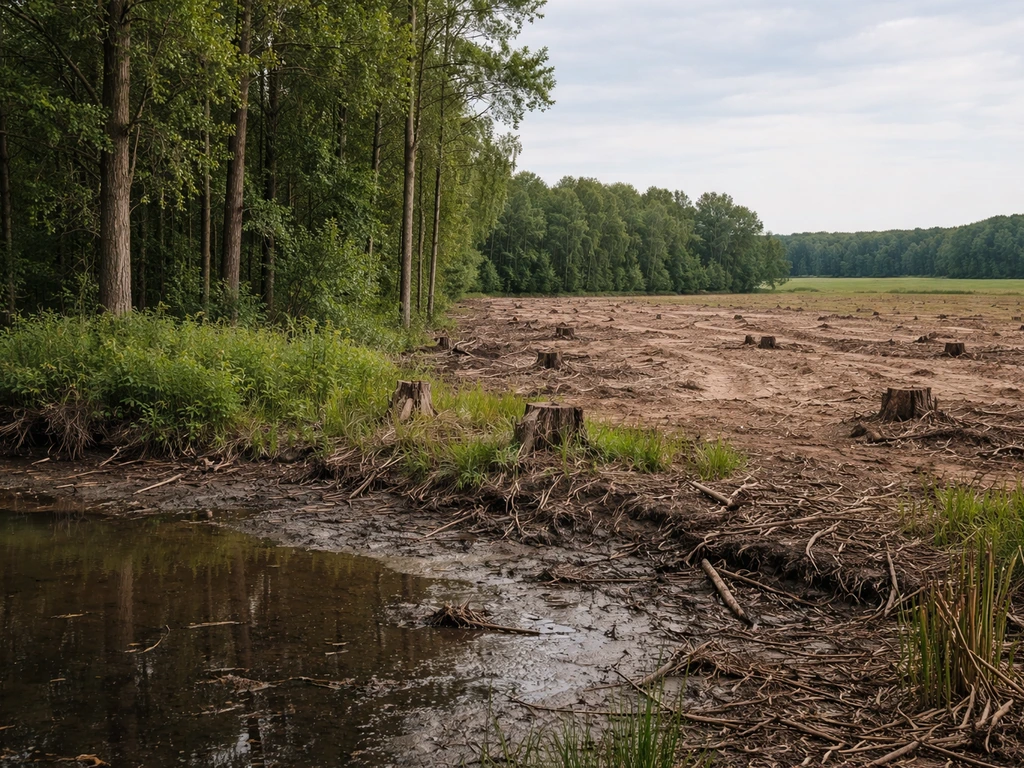
This is the biggest driver by far. Deforestation, agricultural expansion, urban sprawl, and wetland drainage have destroyed or degraded the habitats that birds depend on. The Philippine eagle needs roughly 100 square kilometers of contiguous old-growth forest per breeding pair. When that forest is fragmented into patches, the eagle can't survive. Brazil's Atlantic Forest has been reduced to about 12% of its original extent, which is why so many of its endemic bird species, including the Spix's macaw, are gone or nearly gone from the wild.
Invasive predators
On islands especially, introduced mammals have been devastating. Rats, cats, stoats, mongoose, and pigs prey directly on birds and their eggs. This is the primary reason New Zealand's flightless birds are so endangered. Hawaii has lost more bird species to extinction than any other U.S. state, driven largely by introduced rats, mongooses, and mosquitoes (which carry avian malaria). The 'i'iwi's decline is directly linked to the spread of avian malaria into higher-elevation forests as temperatures rise.
Climate change
Climate change is accelerating the risk for species that were already struggling. Rising temperatures are pushing avian malaria into the last high-altitude refuges for Hawaiian honeycreepers. Warming oceans are disrupting the fish stocks that seabirds like the black-footed albatross depend on. For Arctic-breeding species like the Siberian crane, shifts in tundra conditions affect nesting success. Climate change rarely acts alone but amplifies every other threat.
Hunting, poaching, and the wildlife trade
Illegal hunting and capture for the pet trade remain serious threats for parrots, raptors, and shorebirds. The Spix's macaw was pushed to extinction in the wild almost entirely by trapping for the pet trade. The maleo is also threatened partly by egg collection, as its eggs are considered a delicacy in parts of Sulawesi. Even species not directly targeted by hunters can be killed as bycatch in fisheries, like albatrosses caught on longline hooks.
Pollution and disease
Lead poisoning from spent ammunition is still a significant cause of death in California condors, which scavenge carcasses containing lead shot. Plastic ingestion kills seabirds at alarming rates. Avian influenza (H5N1 and related strains) has caused mass mortality events in several already-threatened species. These threats are harder to see than a clearcut forest but no less damaging.
How to check status, report sightings, and actually help
Authoritative sources to bookmark

- IUCN Red List (iucnredlist.org): the global standard; search any species by common or scientific name and check both the assessment date and publication date to confirm recency
- BirdLife International (birdlife.org): the official Red List authority for birds; provides species factsheets, range maps, and threat summaries
- U.S. Fish and Wildlife Service ECOS database (ecos.fws.gov): for species listed under the U.S. Endangered Species Act
- Australian Department of Climate Change, Energy, the Environment and Water: maintains the EPBC Act threatened species list
- eBird (ebird.org): Cornell Lab of Ornithology's citizen-science database; useful for checking recent sightings by location and identifying what you've seen
How to report a sighting responsibly
If you think you've spotted an endangered bird, document it carefully without disturbing the animal. Take photos or video from a distance. Note the exact location (GPS coordinates if possible), date, time, habitat type, and any behavior you observed. In most countries, rare bird sightings should be reported to the national birdwatching society (e.g., BirdLife Australia, the British Trust for Ornithology, or the American Birding Association) and logged on eBird. For species under national protection laws, some countries have formal reporting obligations, and your local wildlife agency can direct you.
What you can do to support conservation
- Support predator control programs: organizations like Predator Free New Zealand and island restoration groups run by Island Conservation directly protect flightless and island birds
- Donate to species-specific recovery programs: the Kakapo Recovery Programme, the California Condor Recovery Program, and the Philippine Eagle Foundation are transparent about how funds are used
- Participate in citizen science: eBird data is used in real peer-reviewed conservation research; submitting regular checklists from your area genuinely contributes to population trend analysis
- Advocate for protected areas: many endangered birds live in habitats that are not yet fully protected; contacting local representatives about land-use decisions has a measurable impact
- Reduce lead ammunition use if you hunt: switching to copper or other non-lead alternatives directly reduces condor mortality
- Reduce plastic waste and choose sustainable seafood: both reduce mortality for seabirds including albatrosses and petrels
The good news is that bird conservation has some genuine success stories. The California condor dropped to just 27 individuals in 1987 and now numbers over 500. The kakapo has more than quadrupled from its 1990s low. These recoveries required intensive human effort and sustained funding, but they happened. Knowing which bird you're worried about, and understanding why it's threatened, is always the first step toward doing something useful about it.
FAQ
If someone says a bird is “endangered,” how can I tell whether they mean IUCN Endangered (EN) or a more general, loose use of the term?
Check what label they used, EN or CR versus broader phrases like “threatened.” In the IUCN system, “Endangered” is a specific category, EN, and “Critically Endangered” is CR. If the bird’s status is “Threatened” in general, it may actually include multiple categories (Vulnerable, Endangered, Critically Endangered), so confirm the exact category on the IUCN Red List entry.
What should I do if the IUCN Red List shows an old assessment year for the bird I’m worried about?
Treat an older assessment as a baseline, not the current situation. Use the IUCN entry to see the assessment and publication dates, then check whether there is a newer national listing (for example, the U.S. Fish and Wildlife Service or your country’s equivalent). If the bird’s range is shifting quickly, newer local data can matter more than a decade-old global assessment.
Can a bird be “not endangered” globally but still be in serious trouble where I live?
Yes. Global status can hide regional declines. A species may be Least Concern overall, while a particular local population is declining due to habitat loss, pollution, or hunting pressures in that region. The practical approach is to check both global status (IUCN) and any local or national protections, then look for region-specific risk assessments if available.
If I can’t identify the exact species, how do I still figure out whether what I saw might be endangered?
Work from uncertainty toward narrowing: use location (country, region), habitat type, and visible traits or calls to get to a likely species group. Then verify candidates on the IUCN Red List, not just the single closest match. If you’re unsure between similar species, the right move is to record a careful description and submit it to a local birding or reporting platform for confirmation.
Do endangered birds always have obvious features that make them easy to recognize?
No. Many threatened birds look ordinary, and some are hard to distinguish from similar non-threatened species. For example, behavior and timing can be critical (nocturnal calls, nesting season, flight pattern). That is why “location plus habitat plus call” is more reliable than appearance alone, especially when you are comparing close look-alikes.
Should I report my sighting immediately, even if I’m not sure the bird is endangered?
Report quickly if you have clear documentation, especially for rare or unusual observations. A photo or video, GPS location, and a short note about behavior make verification much faster. Even if the bird turns out not to be endangered, your report can still help confirm distributions and timing, which are useful for future conservation assessments.
What details matter most when I document a rare or possibly endangered bird sighting?
Prioritize non-intrusive evidence: exact location (ideally GPS), date and time, habitat type, and what the bird was doing (feeding, calling, nesting behavior). Avoid crowding or attempting to lure the bird closer. If sound is involved, note the call timing and direction, and capture audio when possible for later identification.
Are flightless birds more likely to be endangered, and why does that matter for identification?
They often are, because reduced dispersal and escape ability makes them more vulnerable to predators and habitat fragmentation, especially on islands. For identification, this doesn’t mean every flightless bird is endangered, but if you’re seeing a rare flightless species in an island or predator-introduced area, it raises the urgency to verify status and report using the strongest documentation you can provide.
What is the best next step if I want to answer “what bird is endangered” for my specific area?
Start with your region, then list likely species that match your habitat and season, and check each candidate’s IUCN category. After that, cross-check with your country’s legal protection list because national categories can differ from global status. If you tell me your location and what bird traits or sounds you observed, I can suggest the most likely candidates to verify.
Is it safe to approach an endangered bird to get a better photo or confirm identification?
Generally no. Keep a respectful distance, avoid blocking movement paths, and do not search for nests or disturb roosting sites. If the bird appears stressed or changes behavior due to your presence, back off. For conservation-sensitive species, non-disturbance is more important than getting perfect identification.
Next Articles
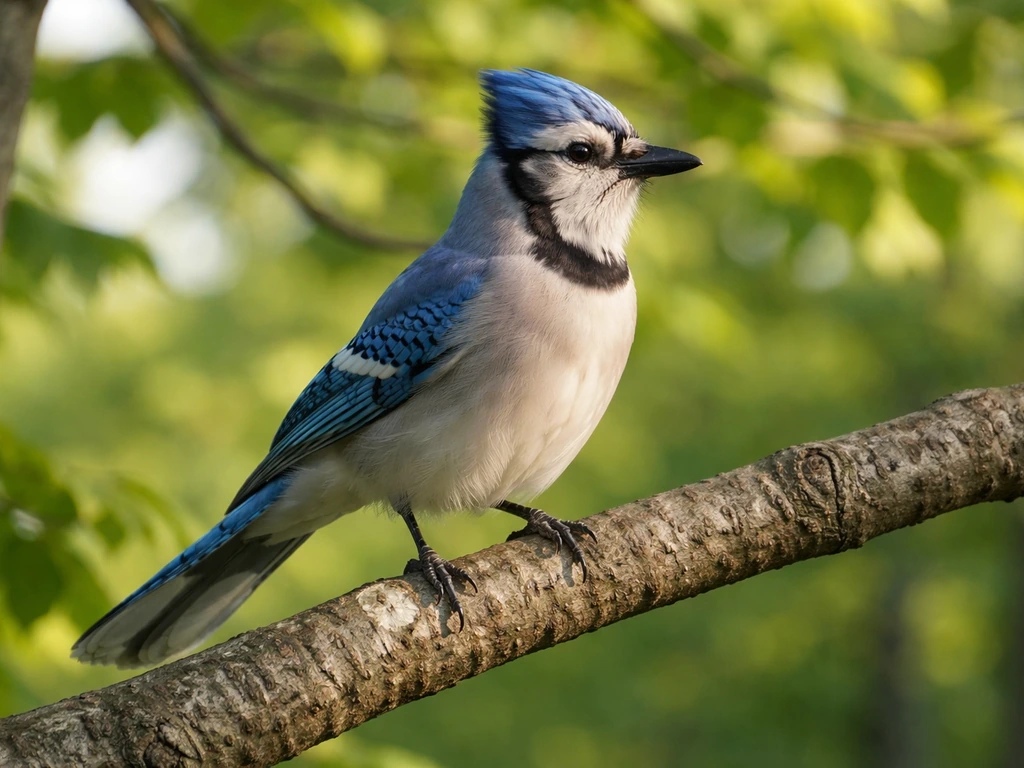
Are Blue Jay Birds Endangered? Status, Trends, and How to Help
Find out if blue jays are endangered, their population trend and key threats, plus simple ways to help.
Is the Dodo Bird Still Alive? What Evidence Shows Today
Learn if any dodos could exist today, why scientists say they are extinct, and how to judge sightings reliably.
Does Dodo Bird Still Exist? Answer and Extinction Facts
No, dodo birds are extinct. Learn when, why, where they lived, and how evidence confirms it.