Hunting, capturing, selling, or eating ortolan is illegal across most of Europe and in many other countries because the bird is a protected wild species under wildlife law. In the EU, the Birds Directive (Directive 2009/147/EC) bans killing, capturing, keeping, selling, or trading any wild bird not explicitly listed as huntable.
Why Is Ortolan Bird Illegal? Laws, Ethics, and What to Do

Maya Hennessy
19 May 2026
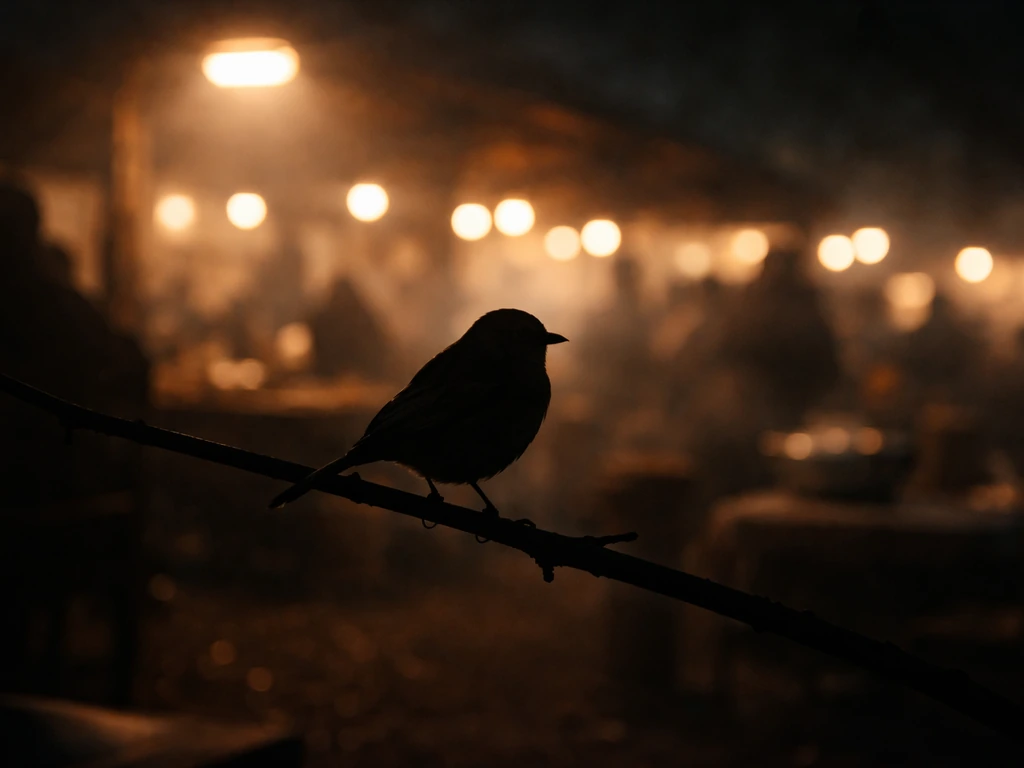
Ortolan bunting (Emberiza hortulana) is not on that huntable list, so every step of the traditional ortolan ritual, from trapping it during migration to drowning it in brandy and roasting it, breaks the law. In the UK, the Wildlife and Countryside Act 1981 similarly makes it illegal to sell, possess for sale, or transport a protected wild bird. In the US, the Migratory Bird Treaty Act covers comparable protections for birds within its scope.
The short version: ortolan is not a farm animal. It is a wild, protected bird, and the law treats it that way.
What the ortolan actually is, and why anyone hunts it

The ortolan bunting is a small songbird, roughly the size of a sparrow, that breeds across Europe and central Asia and winters in sub-Saharan Africa. It migrates through southwestern France and the Iberian Peninsula each autumn, and that migration route is precisely why it ended up at the center of one of food culture's most controversial traditions.
That kind of controversy is also why people search for what killed the elephant bird, another species affected by unsustainable human pressure controversial traditions. In France, particularly in the Landes and Gascony regions, catching ortolans during their southward migration became a deeply embedded culinary ritual. The birds were trapped in large numbers, blinded (to disorient them and encourage feeding), confined in tiny dark cages, and force-fed millet until their body weight roughly doubled in fat.
They were then drowned in Armagnac brandy and roasted whole. Diners traditionally ate them hidden under a linen napkin, ostensibly to trap the aroma, though the gesture also became associated with concealing the act from God. That cultural weight, and the association with French gastronomy at its most extravagant, is exactly what made ortolan so hard to ban and so difficult to stamp out even after protection laws passed.
The demand has always been niche but intense. Estimates from the early 1990s put illegal capture in France alone at around 50,000 birds per year. Research published in Science Advances in 2019 used migration connectivity data to demonstrate that this level of hunting was biologically unsustainable for a population already in decline, and the researchers concluded there was sufficient scientific evidence to justify a full ban on ortolan hunting and consumption practices. That research matters because it moved the debate from cultural preference to measurable population harm.
Why ortolan hunting is banned: the actual laws
The legal foundation in Europe is Article 6 of the EU Birds Directive, which sets up a general protection system for all wild bird species naturally occurring in the EU. It prohibits killing or capturing birds, keeping them (including those for which hunting is otherwise banned), selling them, transporting them for sale, and offering them for sale, whether alive or dead, along with any recognizable parts or derivatives. The only exception is for species listed on Annex II of the Directive, which identifies species that may be hunted under a sustainable framework. Ortolan bunting does not appear on Annex II. That means any member state allowing ortolan hunting is automatically in breach of EU law.
France is the clearest example of how a country can end up on the wrong side of this. The European Commission formally referred France to the Court of Justice of the EU over its failure to stop illegal ortolan hunting. Despite national legislation that technically protects the bird, enforcement gaps allowed the practice to continue at scale. A 2024 study mapping illegal trapping sites found 230 active trapping locations operating between 2011 and 2018, which gives a sense of how persistent the problem has been even decades after the legal ban.
Beyond the EU Birds Directive, the EU also enforces wildlife trade rules through Council Regulation (EC) No 338/97, which implements CITES obligations across all member states. This covers imports, exports, re-exports, and internal trade. While ortolan bunting is not currently listed on a CITES Appendix, EU trade regulations can still apply to specimens moving across borders, particularly when combined with national-level protections.
In the UK post-Brexit, the Wildlife and Countryside Act 1981 is the primary framework, and it makes selling, possessing for sale, or transporting a wild bird for sale illegal unless the bird is specifically excluded. In the US, the Migratory Bird Treaty Act (MBTA) prohibits taking, possessing, importing, exporting, transporting, selling, purchasing, bartering, or offering for sale any protected migratory bird or its parts without a [valid permit](https://www. law. cornell.
edu/cfr/text/50/21. 10).
The cruelty problem: why animal welfare makes this worse

Wildlife law is one pillar of the ban. Animal welfare is another. The traditional ortolan preparation method involves a sequence of deliberate suffering: blinding, confinement in a small dark cage, force-feeding, and finally drowning in alcohol. Each stage causes measurable distress to a wild animal.
BirdLife International has documented this process explicitly, and it is a significant part of why ortolan has attracted persistent NGO and advocacy attention well beyond standard poaching cases. Many other illegal wildlife trades involve killing animals quickly; ortolan preparation is designed to involve prolonged physical manipulation before death. That distinction matters both legally (some jurisdictions have specific animal cruelty statutes on top of wildlife protection laws) and in terms of public and political will to enforce the ban.
What the population data actually shows
Ortolan bunting is not currently classified as extinct or critically endangered, but its population trajectory is genuinely concerning. The IUCN lists it as Emberiza hortulana with a declining population trend. Declines are driven by a combination of agricultural intensification (which reduces insect and seed availability on breeding grounds), habitat loss along migration routes, and the sustained pressure of illegal trapping and hunting.
Research published in Oryx synthesized evidence on the causes of ortolan decline and specifically identified illegal trapping and the fattening practice as factors that compound natural population stress. The Science Advances study went further, using stable isotope and migration connectivity analysis to show that the birds being killed in France were drawn from populations that could not sustain that level of removal.
This connects ortolan to a broader pattern that appears with other species covered here: the tipping point between stable and declining is often reached before anyone notices, and by the time population data flags a crisis, the cause has been operating for decades. The ortolan's situation is not as acute as birds that have already gone extinct, but the combination of habitat pressure and illegal harvest is a well-documented path toward irreversible decline. The auwo bird is the related extinction question many people ask, so it is worth checking the latest conservation status before assuming is the auwo bird extinct. Conservation science treats it as a serious concern precisely because the mechanisms driving decline are understood and preventable.
Where ortolan is illegal, and how to check your own country's rules

The short version is: if you are in the EU, ortolan is protected under the Birds Directive and illegal to hunt, capture, keep, buy, sell, or trade. If you are in the UK, it is protected under the Wildlife and Countryside Act 1981. If you are in the US, the MBTA framework applies to migratory birds, and importing or purchasing ortolan would fall under federal prohibition. Many other countries have equivalent national wildlife protection laws.
| Region/Country | Primary Law | Ortolan Status | Key Prohibition |
|---|---|---|---|
| European Union (all member states) | EU Birds Directive 2009/147/EC | Protected wild bird (not on huntable Annex II list) | Killing, capturing, keeping, selling, trading, transport for sale |
| France (specific note) | Birds Directive + national law | Legally protected; historically under-enforced | All capture, fattening, sale, and consumption illegal |
| United Kingdom | Wildlife and Countryside Act 1981 | Protected wild bird | Sale, possession for sale, transport for sale illegal |
| United States | Migratory Bird Treaty Act (MBTA) | Covered as migratory species under treaty framework | Take, possession, import, export, sale, purchase, barter prohibited without permit |
| Other countries | National wildlife/conservation law (varies) | Check national species protection lists | Varies; importing/exporting may also trigger EU/CITES regs |
If you are outside these regions and want to verify ortolan's status in your country, the practical steps are: check your national wildlife agency's protected species list, check whether your country has ratified the African-Eurasian Migratory Waterbirds Agreement (AEWA) or the Convention on Migratory Species (CMS), which cover songbirds including buntings, and check the current CITES appendices document to see whether ortolan appears (as of the 2023 CITES appendices, verify any updates since then through the CITES official database). If you are importing or exporting a bird or its parts across borders, the UK government's CITES permit check tool is a practical starting point even if you are dealing with a non-CITES-listed species, because it walks you through the questions that determine what documentation is required.
What to actually do if you encounter ortolan today
Watch for mislabeling and deceptive sourcing
One of the real-world complications with ortolan is that it sometimes appears on menus or in markets under vague descriptions, regional names, or framed as a historical dish rather than a current offering. If a restaurant in France, Spain, or Portugal describes a small roasted songbird prepared in the traditional style, or uses terms like 'bruant ortolan' or similar regional names without clear provenance documentation, treat that as a significant red flag. Research using stable isotope analysis has specifically been used to distinguish captive-raised from wild-caught birds in ortolan cases, which tells you how seriously enforcement agencies take the sourcing question. The burden of proof in wildlife crime cases often falls on possession: if you have an ortolan and cannot prove it was legally obtained, you may be liable.
Verify before you buy, eat, or import
- Check the protected species list for the country where you are (your national wildlife or environment agency publishes these).
- If you are in the EU, any wild bird not on Annex II of the Birds Directive is protected by default. You do not need to find ortolan specifically named to confirm it is illegal.
- If you are importing or exporting anything involving a wild bird, use the CITES permit check process (available via UK gov or your country's CITES management authority) to determine what documentation is required.
- Ask for provenance documentation if a vendor claims a bird product is legal. Legal captive-bred birds under specific exemptions require paperwork. No paperwork means you should not buy it.
- If you are at a restaurant and uncertain whether a dish involves a protected species, decline it. You cannot verify sourcing in the moment, and 'I didn't know' is not a reliable legal defense in wildlife crime cases.
How to report suspected ortolan trade
If you believe you have encountered illegal ortolan trade, whether at a restaurant, a market, an online listing, or through an import, report it to your national law enforcement authority for wildlife crime. In the EU, member states are required to provide effective criminal penalties for Birds Directive violations, and national police forces or environment ministries handle these reports. In the UK, the National Wildlife Crime Unit (NWCU) handles wildlife crime reporting, and the RSPB also accepts tip-offs.
In the US, the US Fish and Wildlife Service Law Enforcement handles MBTA violations. CITES also directs the public to report illegal CITES-related trade to the relevant national enforcement agencies in the country where the trade is happening. Document what you can (photographs, location, business name, dates) before reporting.
The ortolan's story sits at the intersection of cultural tradition, wildlife law, animal welfare, and conservation science, which is exactly why it generates the intense debate it does. It is not a theoretical question: there are 230 documented active illegal trapping sites mapped in France alone between 2011 and 2018, and the population is declining.
The comparison to birds like the Hawaiian mamo, the huia, or the o'o, all of which are now gone in part because harvest pressure was not controlled in time, is not alarmist. If you are wondering when the huia bird went extinct, researchers generally place its final years in the early 20th century due to habitat loss and heavy collecting the Hawaiian mamo, the huia, or the o'o.
It is just what the evidence shows happens when a wild bird with a declining population faces sustained, uncontrolled hunting pressure. The ortolan is not extinct yet. That is still a reason to act, not a reason to wait.
FAQ
Is it illegal just to eat ortolan, or is owning it also a problem?
In most places, it is illegal beyond eating. If you possess an ortolan (or even parts like carcasses or recognizable derivatives) without proof of legal sourcing, that can trigger wildlife crime rules, especially if you acquired it through a restaurant, market, or import channel that cannot document lawful origin.
What if a restaurant says the ortolan was “historical” or “captive raised”?
Authorities generally require documentation, not claims. If the bird does not come from a legal, permitted supply chain, marketing it as traditional or old-fashioned does not make the act lawful. In enforcement cases, sourcing documentation matters, and vague menu language can be treated as a red flag.
Can airlines or couriers legally transport ortolan as “food” or “souvenirs”?
Transportation for commercial purposes is a common violation trigger. Even if a person is not hunting or selling, moving the bird across borders (or within a country) can be illegal unless you have the specific permits and paperwork required for wildlife products in that jurisdiction.
Does the ban apply to buying “parts” like feathers, carcasses, or dried items?
Yes, in many legal frameworks the restrictions extend to identifiable parts and derivatives. The key issue is whether the item is still recognized as being from a protected wild bird, not whether it is whole and intact.
What if someone catches a bird accidentally, for example in a garden or on a migration trip?
If it is ortolan or another protected wild bird, you should not keep it. Contact the relevant wildlife authority for guidance on rescue and transfer, because keeping it even temporarily can be treated as possession of a protected species.
Is there any situation where hunting or trade could be legal in an EU country?
Only if the species is explicitly authorized under the relevant EU hunting framework. For the ortolan bunting, the species is not listed as huntable under the EU Birds Directive system described in the article, so national “local permission” cannot override the directive.
How does CITES matter if ortolan is not listed on the CITES appendices?
Even when a species is not on CITES, other rules can still apply. In the EU, internal wildlife protection laws can restrict trade and movement, and in some cases you may still face documentation requirements or enforcement actions based on national protected-species status.
What paperwork would typically be expected if someone tries to import or export any wild bird product?
Expect species verification, lawful-source proof, and any required permits for protected wildlife movement in that country. If you cannot provide chain-of-custody documents showing legal acquisition, you are at much higher risk of liability even if the seller claims it is legitimate.
Is providing the bird to a chef or sending it to a buyer also illegal, even if I never eat it?
Usually yes. Many wildlife laws prohibit offering for sale, transporting for sale, keeping for sale, and dealing with protected birds or products, so involvement in transfer, preparation for sale, or facilitating the transaction can count as participation.
If I report illegal ortolan trade, what details actually help investigators?
Time, location, and identity of the seller or venue are crucial. Photographs of the bird or dish, menu text, dates, prices, and any observed packaging or supplier claims improve chances of follow-up, and it helps to report to the enforcement unit responsible for wildlife crime in that country.
Could ortolan status in my country differ from EU, UK, or US rules?
It can. Some countries adopt similar protections through national wildlife lists or agreements covering migratory songbirds, but enforcement scope and definitions vary. The safest approach is to check your national protected-species register and confirm whether international migratory bird agreements apply to your specific region.
Is buying ortolan online or through social media marketplaces always treated the same as buying locally?
Generally, no matter the channel, the legal exposure depends on possession, purchase, and import or transport status. If the listing cannot provide proof of lawful origin, the transaction still risks being treated as illegal wildlife trade under possession and procurement rules.