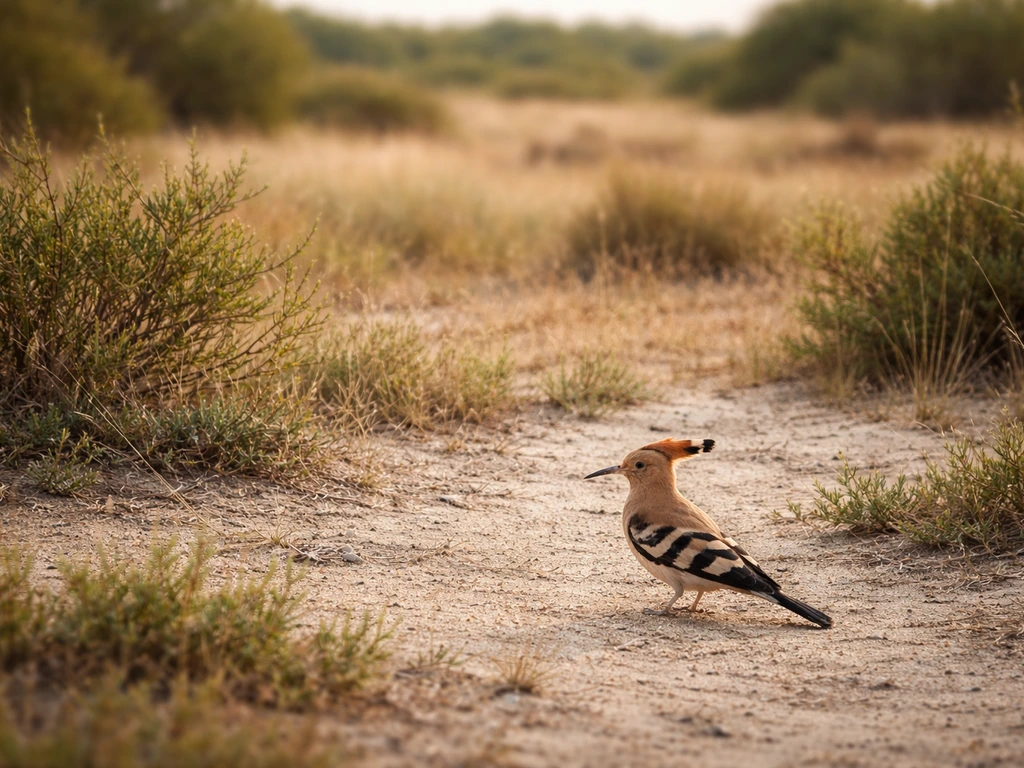
The hoopoe (Upupa epops) lives across a sweeping band of the Old World, from western Europe and sub-Saharan Africa through the Middle East and South Asia all the way to southeastern Asia. It's not a rare or endangered bird globally (it sits at Least Concern on the IUCN Red List), but where you'll actually find one depends heavily on the season and the specific type of open, sun-baked landscape you're standing in.
Where Does the Hoopoe Bird Live Habitat, Range, Seasons

Maya Hennessy
5 May 2026
Where hoopoes live today
The common hoopoe has one of the broadest ranges of any bird in the Afro-Eurasian landmass. Its breeding range stretches across most of continental Europe (from Iberia and North Africa up through France, Germany, and into Poland and the Baltic states), the entire Mediterranean basin, the Middle East, Central Asia, the Indian subcontinent, and much of East and Southeast Asia including China and parts of Japan. Resident populations hold year-round territories across sub-Saharan Africa, the Indian subcontinent, and parts of Southeast Asia, while the European and Central Asian populations are migratory, spending winters south of the breeding grounds.
BirdLife International's range modeling, which layers known occurrence data against IUCN-coded habitat classifications, puts the hoopoe's extent of occurrence across tens of millions of square kilometers. In Europe specifically, the 2021 European Red List of Birds records the population trend as stable, which is actually reassuring given how much farmland and orchard habitat has changed across the continent in recent decades.
Habitats hoopoes actually prefer
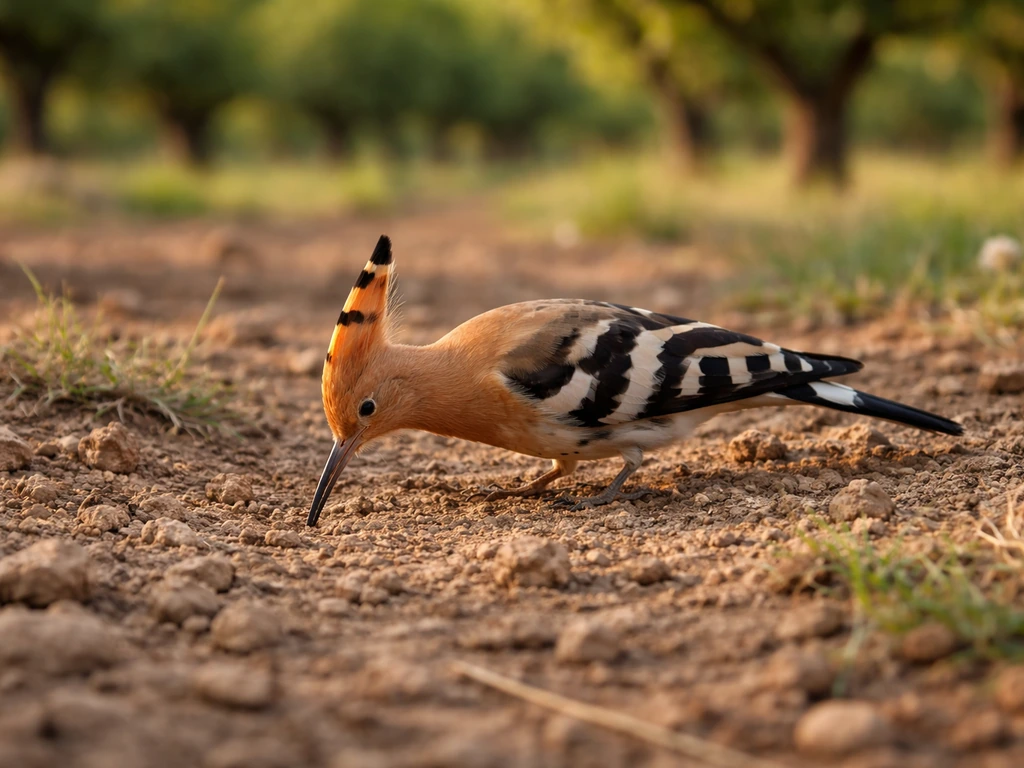
The hoopoe is a ground-feeding specialist, and that single fact explains almost everything about where it lives. It needs two things in close proximity: open or semi-open ground it can probe with its long, curved bill, and a cavity somewhere nearby for nesting. That combination points you toward specific landscapes rather than dense forests or open water.
eBird's species profile sums up the foraging habitat well: heathland, farmland, orchards, and grassy lawns. To that list you can add olive groves, vineyards, savanna edges, lightly grazed meadows, and the margins of cultivated fields. The common thread is exposed or sparsely vegetated soil where the bird can insert its bill to pull out beetle larvae, mole crickets, and other large invertebrates. Tall grass or thick ground cover makes foraging impossible for a hoopoe, so heavily overgrown or intensively cropped fields with no bare margins are essentially useless to it.
- Traditional orchards and olive groves with short grass or bare soil between trees
- Lightly grazed pastures and meadows adjacent to woodland edges
- Heathland with patches of bare ground
- Farmland margins, especially where soil is regularly disturbed
- Village gardens, parks, and grassy lawns in warmer climates
- Savanna and open woodland in Africa
- Scrubby hillsides in Mediterranean and semi-arid regions
What hoopoes avoid is just as telling. They don't use dense closed-canopy forest, wetlands, or alpine zones. They are birds of warm, open, edge-heavy country, which is why they've historically done well in traditional agricultural landscapes that mix cultivated land with old trees.
Regional breakdown: where to find them by area

| Region | Presence type | Best season to look |
|---|---|---|
| Western Europe (France, Spain, Portugal, Italy) | Breeding summer visitor | April to August |
| Central & Eastern Europe (Germany, Poland, Balkans) | Breeding summer visitor | April to September |
| UK & Ireland | Passage migrant (rare) | April and September |
| North Africa (Morocco, Tunisia, Egypt) | Year-round resident and passage migrant | All year; peaks in spring/autumn |
| Sub-Saharan Africa | Year-round resident | All year |
| Middle East (Israel, Jordan, Arabian Peninsula) | Resident and passage migrant | All year; busy in spring |
| Indian subcontinent | Year-round resident | All year |
| Central Asia (Kazakhstan, Uzbekistan) | Breeding summer visitor | April to September |
| China and East Asia | Breeding summer visitor and partial resident in south | Spring and summer in north; all year in south |
| Southeast Asia | Year-round resident in most areas | All year |
In Europe, Spain and Portugal hold some of the continent's densest hoopoe populations, partly because traditional Iberian farming practices, especially dehesa (open oak woodland grazed by livestock) and old olive groves, match the hoopoe's habitat requirements almost perfectly. France and Italy also have strong breeding populations wherever traditional orchards and vineyards survive. Further east, hoopoes breed right across the steppe belt of Central Asia wherever scattered trees provide nesting cavities near open feeding ground.
In Africa, the hoopoe is genuinely widespread and resident across the savanna belt from West Africa to the Horn and south into southern Africa. The species is much more familiar to everyday people across Africa and Asia than it is to Northern European birders, who only see it on passage or occasionally as a rare summer breeder.
Nesting and roosting: the microhabitats that matter most
Hoopoes are cavity nesters. They don't excavate their own holes (unlike woodpeckers), so they depend on finding ready-made openings in trees, rock faces, earthen banks, or walls. A nest is typically a hole with a narrow entrance that the female can just fit through, and they're notoriously unfussy about tidiness inside, allowing the nest chamber to accumulate droppings and the distinctive secretion from the uropygial gland that gives the nest its pungent smell.
Research from Poland documented hoopoe nests in natural tree cavities, old woodpecker holes, and installed nest boxes, with cavity entrance heights averaging around 4.3 meters above the ground (though recorded anywhere from ground level up to 12.5 meters). In Spain, studies found birds readily adopting nest boxes placed on trees and buildings, confirming that the species is flexible about the structure itself as long as the entrance dimensions and surrounding habitat are right.
Outside the breeding season, hoopoes roost in similar cavity types or in dense shrubby cover, though they're less tied to specific roost sites than to the foraging landscape. In Africa and South Asia where they're resident year-round, the same pair or individual may use the same garden or orchard edge for months, making them easier to locate consistently than the migratory European birds.
How the hoopoe moves through the seasons
The hoopoe's seasonal story splits roughly along latitude. Birds breeding in Europe and Central Asia are long-distance migrants. They arrive on breeding grounds in Europe from late March onward, with most territories occupied by April and May. By August and September, European birds begin moving south toward wintering grounds in tropical Africa and South Asia. Some Central Asian breeders winter in the Indian subcontinent.
In the UK, where hoopoes don't breed regularly, the BTO reports passage birds showing up most reliably in April (spring) and again in September (autumn), with sightings concentrated in southwest England as birds cross the Channel. These are overshoot birds in spring and returning migrants in autumn rather than resident breeders. Up to around 100 hoopoes can show up in spring in the UK as overshoot migrants heading north to the south coast of England, often seen solo.
In sub-Saharan Africa, the Indian subcontinent, and Southeast Asia, hoopoes are non-migratory residents. The birds you see in India or Kenya in December are the same birds that were there in June. There are some local movements within Africa tied to rainfall and the shifting availability of insect prey in the soil, but these aren't the long seasonal migrations seen in European birds. If you're wondering where the potoo bird lives instead, its range and habitat differ from hoopoes quite a bit.
How to actually find a hoopoe
If you're in Europe, your best shot is a warm, sunny day in April or May in a traditional agricultural landscape: an old orchard, an olive grove, a vineyard edge, or a pasture with scattered mature trees. In Hawaii, the common myna bird is another common city and garden species you may come across, so keep an eye out if you're birdwatching there common myna bird hawaii.
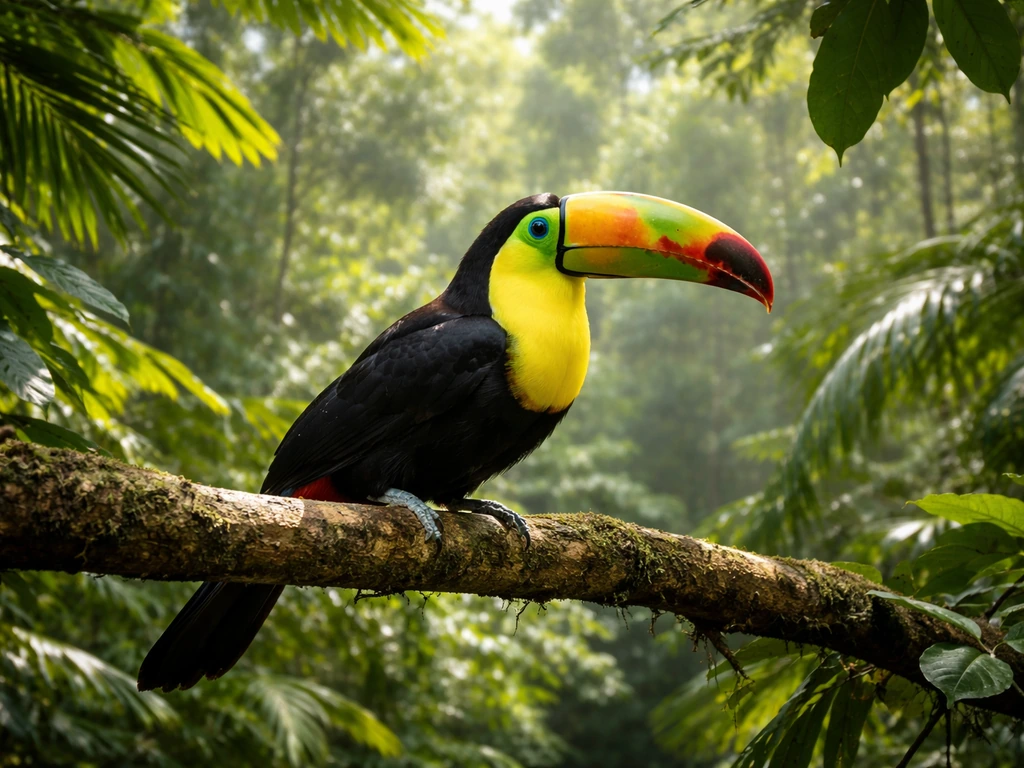
If you are also curious about other birds, you can read where the toucan bird lives and how its habitat differs from a hoopoe’s where does the toucan bird live. Listen for the soft, repetitive 'hoo-poo-poo' call, which carries well and is often your first clue before you see the bird. Hoopoes feed slowly, probing methodically across the ground, and their pinkish-brown body with bold black-and-white barred wings makes them unmistakable once you get a clear look.
If you're in the UK specifically, check headlands and coastal grassland in April and September. Southwest England, especially coastal Cornwall and Dorset, sees the highest numbers. eBird and local birding apps will show real-time sightings, which is genuinely the fastest way to find where birds have been reported nearby in the last few days.
If you're in Africa or South Asia, the job is easier. Hoopoes turn up reliably in hotel gardens, city parks with lawns, rural farmland edges, and savanna clearings. They're habituated to human presence in many areas and will feed within a few meters of people if undisturbed.
- Use eBird or local birding apps to check recent sightings in your area before heading out
- Target semi-open habitats with short grass or bare soil near old trees, orchards, or stone walls
- Listen for the diagnostic 'hoo-poo-poo' call, especially in early morning
- In Europe, focus on late April to early June for peak breeding season presence
- In the UK, prioritize southwest coastal sites in April and September for passage birds
- Look at ground level first, since foraging birds walk slowly and probe the soil
- Check cavity-rich trees and old stone buildings for nesting pairs once you've located a territory
The hoopoe's global conservation status is currently stable, rated Least Concern by the IUCN, which is worth knowing when putting its distribution in context alongside genuinely threatened species. If you're curious about how the hoopoe's status compares to birds facing real extinction pressure, the article covering whether the hoopoe is endangered goes deeper into what's driving local population declines in parts of Europe even while the global picture looks secure. For now, the practical answer is: if you're in the right semi-open landscape at the right time of year, finding a hoopoe is less a matter of luck than of knowing where to stand and what to listen for.
FAQ
Do hoopoes live in dense forests or thick wetlands?
Usually no. Hoopoes avoid closed-canopy forest, wetlands, and alpine conditions because they need exposed or sparsely vegetated ground to probe for invertebrates. If the ground is hidden under tall grass or dense leaf litter, you are far less likely to find them even if cavities are nearby.
What kind of nesting sites do hoopoes use if there are no natural holes?
They often use man-made options. Hoopoes can take nest boxes and small openings in walls or buildings as long as the entrance size and surrounding area let the bird access nearby feeding ground. In areas with limited trees, the presence of suitable cavities in farm structures can still support breeding.
Where should I look on a farmland landscape, near fields or near trees?
Look for edges where open feeding ground meets potential cavities. Hoopoes need both in close proximity, so the most productive spots are pasture or orchard margins, vineyard edges, olive groves, and dehesa-type country with scattered mature trees, rather than the center of a field or a deep woodland interior.
How can I tell a hoopoe habitat from a similar-looking area for birdwatching purposes?
Use a simple ground-cover check. If you can’t reasonably see bare soil or thin grass where the bill could probe, the area is probably unsuitable. Also scan for cavity opportunities like old trunks, rock faces, earthen banks, or walls before investing time in one spot.
Why might I see hoopoes in one village or park but not the next even if both have lawns?
Cavity availability and mowing or overgrowth timing can make the difference. If one location has maintained lawns with bare patches plus nearby nesting cavities (trees, walls, sheds), hoopoes may stay. A park that is consistently overgrown or lacks suitable openings often won’t attract them.
Are hoopoes in Europe the same birds year-round, or do they relocate completely?
For most of continental Europe and Central Asia, they are seasonal migrants. Birds breed in spring and move south for winter in late summer or early autumn. However, migration timing and stopover choices can vary by year, so you may see different individuals from week to week.
When is the best time to see hoopoes in the UK if they do not breed there?
Expect passage rather than resident birds. The most reliable windows are April and September, with sightings concentrated in the southwest, especially coastal areas. If you are trying for a specific day, focus on headlands and coastal grassland where birds tend to cross the Channel.
Do resident hoopoes in Africa or South Asia move around a lot with seasons?
They are generally non-migratory, meaning you can often find the same areas across months. That said, there can be local movement linked to rainfall and insect availability in the soil, so after long dry spells they may shift to more consistently productive ground within the same broader region.
What should I do if I hear the hoopoe call but can’t see the bird?
Assume it is foraging on bare or sparsely vegetated ground near an edge. Hoopoes feed slowly by probing, so watch the ground at the margins of orchards, fields, or lawns, and use the call to narrow your search area rather than looking straight up or into dense cover.
Do nest boxes always work for hoopoes, and how high should they be?
They often work, but placement details matter. Studies show entrance heights can average around a few meters above ground, with real records spanning from ground level up to much higher sites. The safest approach is to install boxes on stable structures that face suitable open feeding habitat nearby.
Next Article
Where Does the Toucan Bird Live? Native Range and Habitat
Find where toucans live in the Americas and which forests they inhabit, including how climate and altitude shape sightin