Toucans live in the Neotropical region of Central and South America, from southern Mexico down through the Amazon Basin and into northern Argentina. That's the short answer. But "toucan" actually covers a whole family of birds, Ramphastidae, with 50 species spread across a surprisingly wide range of habitats, elevations, and forest types. If you're trying to figure out where a specific toucan lives, or whether what you saw was actually a toucan at all, this guide will walk you through everything you need to know.
Where Does the Toucan Bird Live? Native Range and Habitat

Maya Hennessy
17 Apr 2026
Natural range and habitats
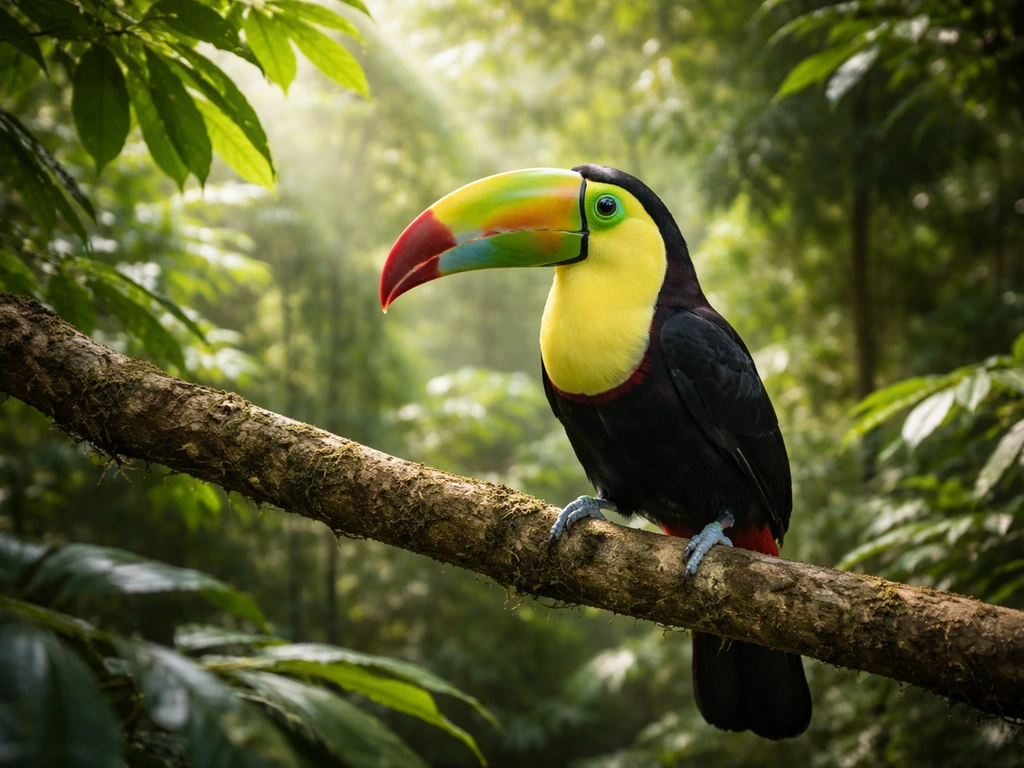
The toucan family (Ramphastidae) is entirely native to the Americas. Their range runs from the tropical lowlands of southern Mexico, through Central America, and across nearly the whole of South America east of the Andes, with several species also pushing into Andean foothills and montane forests. eBird range maps define a species’ range as the areas where it is estimated to occur within at least one week during each season their range runs from the tropical lowlands of southern Mexico through Central America and across nearly the whole of South America east of the Andes. Brazil holds the largest share of toucan diversity, but you'll also find native species in Colombia, Ecuador, Peru, Bolivia, Venezuela, Paraguay, Argentina, and most countries in between.
Within that broad geography, toucans are forest birds at heart. They're closely tied to tree canopies where fruit is available, because fruit makes up the bulk of their diet. BirdLife International flags them as important seed dispersers, meaning they eat fruit and deposit seeds across the forest, helping fruit trees regenerate across their native range. That ecological role makes their habitat relationship a two-way street: the forest shapes where toucans live, and toucans help shape the forest in return.
Of the 50 recognized species in Ramphastidae, 11 are currently classified as globally threatened or Near Threatened, according to BirdLife's assessments. Habitat loss, primarily deforestation in the Amazon and Atlantic Forest, is the main pressure driving those numbers.
Where toucans are found by region
Breaking the range down by region makes it easier to know what to expect where you're traveling or where you spotted a bird.
| Region | Presence | Notable Species |
|---|---|---|
| Southern Mexico & Central America | Yes, several species | Keel-billed toucan, Collared aracari |
| Colombia & Venezuela | High diversity | Channel-billed toucan, multiple toucanets |
| Amazon Basin (Brazil, Peru, Bolivia) | Highest diversity | Toco toucan, many Ramphastos spp. |
| Atlantic Forest (SE Brazil) | Moderate diversity | Red-breasted toucan, Spot-billed toucanet |
| Andean foothills (Ecuador, Peru, Bolivia) | Montane species present | Emerald toucanets, Plate-billed mountain toucan |
| Paraguay & Northern Argentina | Yes, lower diversity | Toco toucan reaches here |
| Caribbean islands / North America | Not native | Any sighting is an escaped pet or zoo bird |
The toco toucan (Ramphastos toco) is the species most people picture when they think "toucan," with that enormous orange-yellow bill. It's native to Argentina, Brazil, Bolivia, Paraguay, Peru, French Guiana, Suriname, and several other Neotropical countries. It's also one of the most habitat-flexible toucans, which is part of why it's so well known.
If you're researching whether a toucan-type bird could have appeared somewhere unusual, like Hawaii, it's worth keeping in mind how introduced and invasive species can complicate bird distribution data. The common myna bird in Hawaii is a good example of how a non-native species can establish itself far outside its natural range, and toucans have occasionally shown up in Florida and other U.S. states as escaped pets, though they have no established wild population there.
Climate and forest types toucans prefer
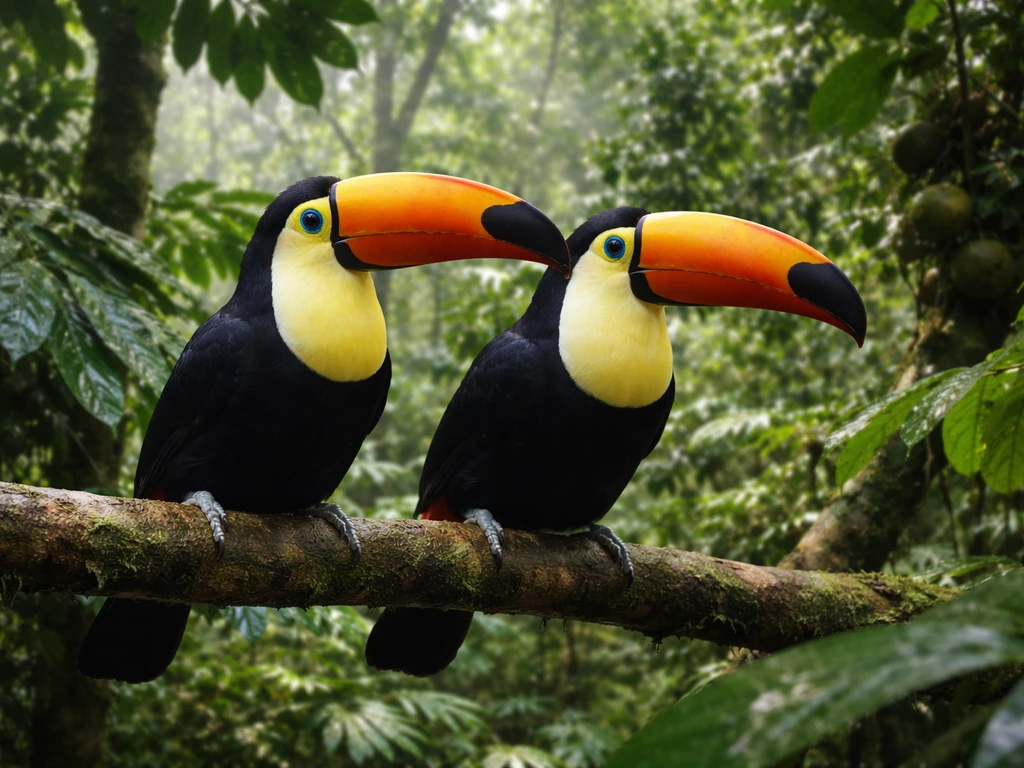
Most toucans thrive in humid tropical and subtropical forests. Think dense, multi-layered rainforest with year-round fruit availability. The Amazon Basin is the core of this habitat type, and it's where you find the greatest number of toucan species packed into a single region. But "tropical forest" isn't the only setting toucans use.
The toco toucan is a good example of the flexibility some species show. It occupies a wide variety of habitats across much of the Neotropical region, including forest edges, gallery forests along rivers, open woodland, and even palm groves and gardens in rural areas. It's less tied to dense closed-canopy rainforest than many of its relatives, which explains why its range extends so far south into Argentina and Paraguay where the climate is drier and the forest more fragmented.
In contrast, many smaller toucans and toucanets prefer more specific forest types. The red-breasted toucan (Ramphastos dicolorus), for instance, is primarily associated with subtropical and tropical montane forests in the Atlantic Forest region of southeastern Brazil. These habitat preferences are worth knowing when you're trying to narrow down which species you might be looking at based on location and environment.
Just as the potoo bird occupies a specific niche in tropical forest ecosystems, each toucan species is adapted to a particular slice of the Neotropical environment. A species found in lowland Amazonian rainforest won't necessarily appear in Atlantic montane forest, even if both habitats are in Brazil.
Altitudes and daily habitat use
Elevation matters a lot when pinning down where a toucan lives. The family spans an impressive altitude range across different species. The toco toucan is mostly a lowland bird but has been recorded up to around 1,750 meters near the Andes. The red-breasted toucan can push up to about 2,070 meters, though sightings at that elevation are uncommon. At the high end of the family, the northern emerald toucanet (Aulacorhynchus prasinus) ranges from near sea level up to at least 3,000 meters, making it one of the most altitude-tolerant members of the family.
Within their daily routines, toucans spend most of their active hours in the forest canopy and subcanopy, moving between fruiting trees. They nest in tree cavities, either natural hollows or old woodpecker holes. This is worth knowing because a toucan sighting in dense, canopy-level vegetation is typical behavior, while a bird found consistently on the ground would be unusual and worth a second look at identification.
A useful comparison: the hoopoe bird also uses tree cavities for nesting, but it's an Old World species found across Europe, Asia, and Africa, with completely different habitat preferences overall. That kind of geographic and behavioral contrast helps sharpen what makes toucan habitat use distinctive.
How to identify local "toucan" species vs lookalikes
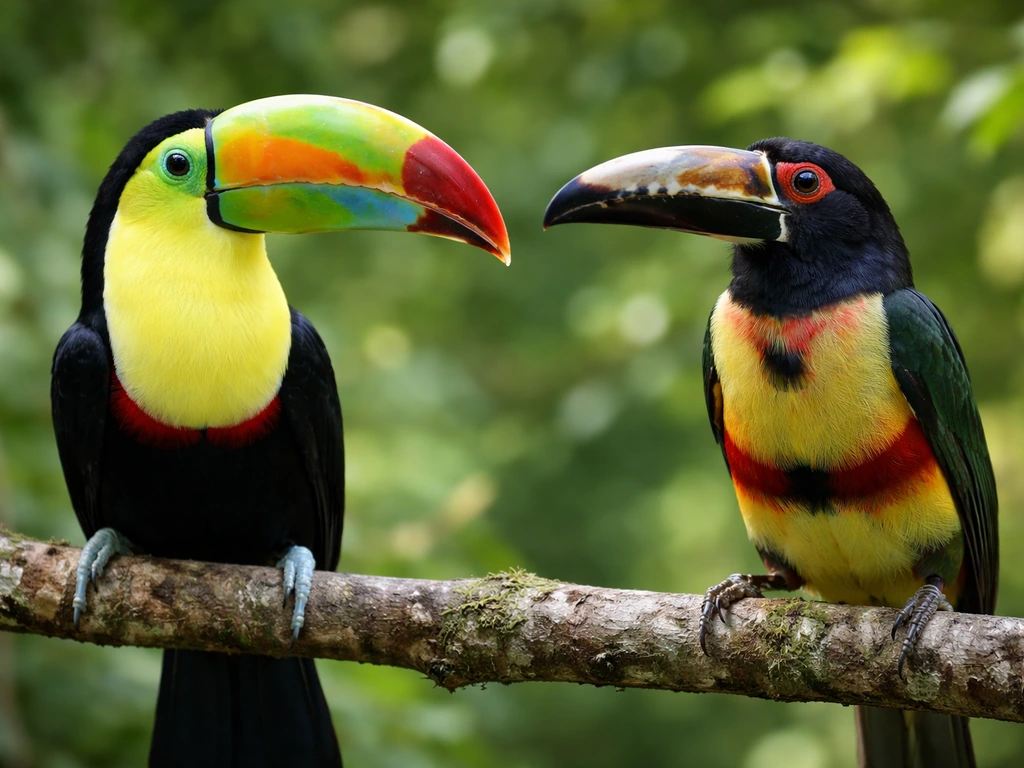
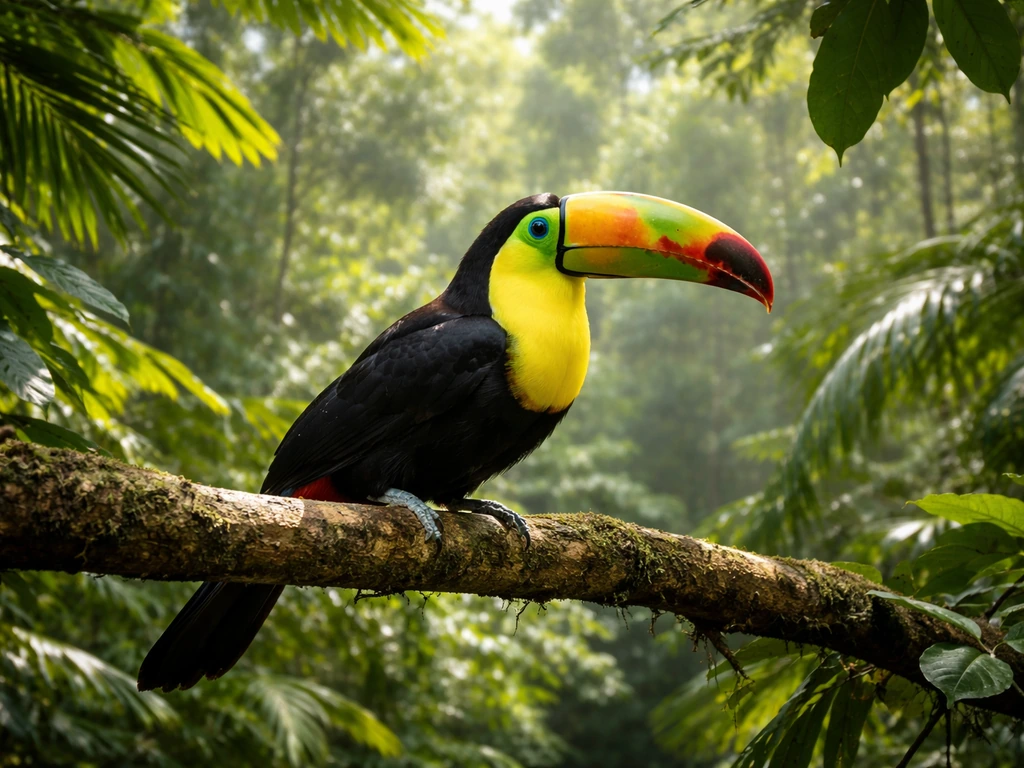
The oversized, colorful bill is the feature that makes toucans instantly recognizable, but within the family there's a lot of variation. The main groups to know are the large toucans (genus Ramphastos), the aracaris (genus Pteroglossus), and the toucanets (genera Aulacorhynchus and Selenidera). All have that signature large bill relative to body size, but they differ significantly in size, coloring, and the habitats they prefer.
Outside the family, the main confusion birds are toucans' distant relatives and lookalikes from other regions. The hornbills of Africa and Asia have similarly shaped, sometimes colorful bills and are often mistaken for toucans by people unfamiliar with both groups. They're not related, though. Hornbills are Old World birds, and if you're in Africa or Southeast Asia looking at a large-billed colorful bird, it's a hornbill, not a toucan. Some woodpeckers also get misidentified as small toucans when only a partial view is possible.
CITES maintains an identification guide that covers toucans, aracaris, and toucanets within Ramphastidae, and it documents the diagnostic features used to distinguish them, which is especially useful if you're trying to confirm a species in a trade or captivity context. The key traits to focus on in the field are bill coloration pattern, throat color, body size, and the color of the bare skin around the eye.
It's also worth noting that conservation status varies across the family. Not every toucan faces the same level of risk. Understanding whether a bird is endangered is a separate question from simply identifying the species, but it matters when you're interpreting sightings or researching a particular toucan's status.
Practical ID tips by feature
- Large toucans (Ramphastos spp.): mostly black body, white or yellow throat patch, large multicolored bill, 45-65 cm long
- Aracaris (Pteroglossus spp.): slender, banded belly, smaller bill, more elongated build, often 30-45 cm
- Toucanets (Aulacorhynchus spp.): mostly green, smaller bill, forest interior birds, often at higher elevations
- Hornbills (lookalikes, Old World only): similar bill shape but found only in Africa/Asia, many have a casque on top of the bill
- Toucans always have three toes forward, one back (zygodactyl feet), which is visible in perched birds at close range
Quick answer + next steps to confirm sightings
Toucans live in the Neotropical Americas, from southern Mexico through Central America and across South America, with the highest diversity in the Amazon Basin and Atlantic Forest regions of Brazil. The U.S. Fish & Wildlife Service offers a species summary page for toucans (Ramphastidae) through its wildlife species program. They are forest birds, primarily canopy frugivores, and they nest in tree cavities. No toucan species is native to North America, Europe, Africa, Asia, or Australia. Any toucan outside of the Neotropics is either a captive, escaped pet, or zoo bird.
If you want to confirm a specific sighting or narrow down which toucan species you saw, here are the most practical next steps:
- Note the country and specific habitat (lowland rainforest, forest edge, montane forest, open woodland) where you saw the bird, since habitat narrows species possibilities significantly.
- Record the elevation if possible. A toucan at 2,500 m is almost certainly a toucanet species, not a large Ramphastos toucan.
- Use eBird's range maps to check which species are recorded in your exact location and season. eBird defines range boundaries as areas where a species is estimated to occur in at least one week per season, so current data is reliable.
- Use the Merlin Bird ID app from Cornell Lab. Merlin's Photo ID feature uses machine-learning models and runs on your mobile device, letting you upload a photo along with your location and date to auto-identify the species from among hundreds of supported birds.
- If you're outside the Neotropics entirely, check whether there are any known captive bird escapes in your area before concluding you've seen a wild toucan.
- Cross-check your identification against BirdLife or Birds of the World range data, which use IUCN 2024 Red List boundaries for the most current and authoritative range information.
The combination of location, elevation, habitat type, and a photo run through Merlin will resolve most toucan identification questions quickly. For deeper research into a specific species, the Birds of the World database (Cornell Lab) organizes all 50 Ramphastidae species with full range, behavior, and status data, and it's the most comprehensive single resource available for getting into the details of where exactly each toucan lives and why.
FAQ
Do toucans live in deserts or arid regions within their range?
Most toucans are tied to forest canopies where fruit is available, so true desert habitats are uncommon. Some species can use fragmented woodland, river gallery forest, and other tree-rich patches, which may look “dry,” but there is still usually nearby habitat with regular fruiting trees.
Where would I most likely spot a toucan in the daytime, canopy vs. ground?
They are most often seen in the canopy and subcanopy, moving between fruiting trees. A toucan consistently on the ground is unusual and may indicate a misidentification or a bird that is only briefly descending to forage or scavenge.
How does elevation change which toucan I might see?
Elevation helps narrow species because different toucans tolerate different upper limits. Even within the same country, a bird seen at a high-elevation forest edge may be a different species than one at lowland rainforest, so note the altitude and the type of forest (lowland vs montane) at your sighting.
If toucans are mostly frugivores, do they ever live where fruit is seasonal?
Yes, but you will usually find them where fruiting trees are available year-round or where forest composition provides enough food during lean seasons. In highly seasonal areas, toucans may concentrate around certain fruiting sites rather than occupying every part of the landscape uniformly.
Are toucans found in savannas or open grassland?
Only indirectly. Toucan presence in more open landscapes usually depends on nearby forest patches such as gallery forests along rivers, tree lines, or woodland remnants. If there is no substantial tree cover, sightings are unlikely.
Do toucans migrate, and does that affect where they live?
Toucans are generally not described as long-distance seasonal migrants. Distribution is more strongly shaped by habitat type, availability of fruiting trees, and local forest fragmentation, so a “missing” toucan is more often a habitat issue than a migration issue.
Could a toucan live in my country outside the Neotropics if there are no native toucans?
In most cases, no. Outside the Neotropics, toucan-type birds are typically captive escapes or zoo birds without an established wild breeding population. Occasional sightings can happen, but stable populations require suitable habitat and a breeding setup.
What’s the safest way to distinguish toucans from hornbills or woodpeckers?
Use multiple traits at once, not just the bill. Check overall body proportions, bill coloration pattern, throat color, and the bare skin around the eye. Partial views are common in the field, so compare size and facial skin details before concluding it is a toucan.
If I find a “toucan nest,” what should I look for?
Toucan nesting commonly involves tree cavities, natural hollows, or old woodpecker holes. If you see a cavity with toucan activity at the canopy level, that supports the identification, while nests on the ground or open cup nests are less consistent with typical toucan nesting.
Next Article
Is the Dodo Bird Still Alive? What Evidence Shows Today
Learn if any dodos could exist today, why scientists say they are extinct, and how to judge sightings reliably.