
Bird extinctions have been happening for millions of years, but the rate accelerated sharply around 1500 CE when European expansion began spreading humans, rats, and pigs into island ecosystems that had never seen them before. That post-1500 wave is the one most people mean when they talk about a bird extinction timeline, and it is also the one with the clearest documented evidence. But the full picture stretches from the Cretaceous mass extinction that wiped out non-avian dinosaurs all the way to species declared extinct within living memory, and understanding that entire arc is what makes extinction timelines genuinely useful rather than just sad lists of lost birds. Researchers studying the dinosaur bird evolution timeline use fossils and phylogenetics to place major transition points in context.
Bird Extinction Timeline: Events, Evidence, and Causes

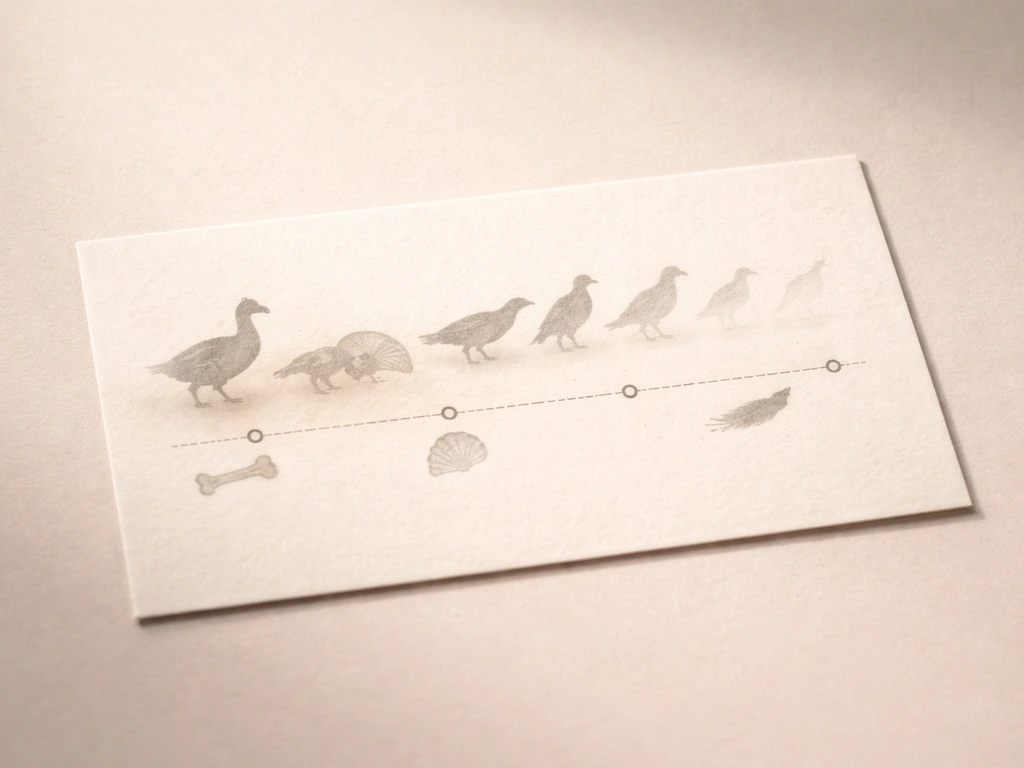
What a bird extinction timeline actually means (and what to expect)
An extinction timeline is not simply a list of dates. It is a record of when species disappeared, how confident scientists are in those dates, and what evidence supports each entry. That last part matters more than most people realize. Claims online about a specific “erosion bird” being real should be checked against credible extinction listings and verified sightings That last part matters more. The IUCN, which maintains the global standard for extinction classification, requires "no reasonable doubt that the last individual has died" before a species gets the Extinct (EX) label. That bar is deliberately high because the IUCN also acknowledges it is "extremely rare" for anyone to actually witness the death of the last individual of a species. What you usually get instead is a "year last seen" that marks when reliable observation stopped, which is not the same as confirmed death.
The IUCN Red List displays that "year last seen" specifically for taxa assessed as Extinct, Extinct in the Wild, and Critically Endangered species flagged as Possibly Extinct. When you read a timeline entry that says a bird went extinct in, say, 1914, you are almost always looking at the last confirmed sighting, not a witnessed death. Build that uncertainty into how you read every date on a bird extinction timeline, especially for species that disappeared before the era of systematic wildlife surveys.
For prehistoric birds, the uncertainty widens even further. Dates derived from fossil records carry error margins of thousands to tens of thousands of years. For historically documented birds, written accounts and museum specimen dates can pin things down to within a few decades. For modern species lost since roughly 1900, we sometimes have precise last-sighting records down to a specific day. So a good extinction timeline is really three overlapping timelines stitched together by different types of evidence.
The big picture: major eras and extinction waves

Looking at bird extinction across all of Earth history, a few distinct waves stand out. Each one had a different primary driver, a different geographic footprint, and a different quality of evidence.
| Era / Wave | Approximate Timing | Primary Driver | Estimated Bird Losses | Evidence Quality |
|---|---|---|---|---|
| Cretaceous Mass Extinction | ~66 million years ago | Asteroid impact, volcanism, climate shift | All non-avian dinosaurs; most early birds | Fossil record (moderate) |
| Pleistocene megafauna collapse | ~50,000–10,000 years ago | Climate change + early human hunting | Large flightless birds (moa, elephant bird, terror birds) | Fossil + radiocarbon dating |
| Pacific island wave | ~3,500–700 years ago | Polynesian settlement, introduced rats and pigs | Estimated 1,000+ species (mostly island rails, pigeons) | Archaeological bone deposits |
| Post-1500 CE colonial wave | 1500 CE–1900 CE | European colonization, introduced predators, hunting | Hundreds of species (dodo, great auk, Labrador duck) | Historical records, museum specimens |
| Modern era losses | 1900 CE–present | Habitat destruction, invasives, climate change, trade | ~160+ species confirmed extinct since 1500 CE (IUCN) | Systematic survey data, DNA, photography |
The Cretaceous event gets the most dramatic coverage, but from a practical conservation standpoint the Polynesian and post-1500 CE waves are far more instructive because their causes are human, their mechanisms are documented, and they are still unfolding. The modern era has not ended. Species are being lost right now, which is exactly why knowing how to read historical extinction timelines has direct relevance to birds alive today.
How scientists pin down extinction dates
Three main lines of evidence feed into any bird extinction timeline, and each one has different strengths and blind spots.
The fossil record
Fossils tell us a species existed up to a certain point in geological time. If you are also looking for a fossilized bird in Pokemon Shield, the game’s Fossil and revival mechanics give you a parallel idea of how fossils translate into usable species fossil records. If you are wondering whether there are bird fossils that capture extinction events, the fossil record can answer that, at least in geological time are there bird fossils. Radiocarbon dating (useful back to about 50,000 years) and other radiometric methods assign ages to the sediment layers where bones are found. The problem is the "last appearance datum" in the fossil record almost always predates true extinction by some margin, since fossilization is rare and patchy. When paleontologists find the youngest fossil of a species, the animal likely survived for longer than that date suggests. This is the Signor-Lipps effect, and it means fossil-based extinction dates for prehistoric birds tend to be underestimates of how recently those species actually vanished. For species like the moa and elephant bird, refined radiocarbon dating of many specimens from multiple sites has progressively pushed extinction dates more recently than earlier estimates suggested.
Historical accounts and museum specimens

For birds lost in the last 500 years, written records become crucial. Sailors' logs, natural history journals, colonial administration records, and Indigenous oral histories all preserve information about when a species was last observed and where. Museum specimens with collection dates provide hard lower bounds: if a specimen exists from 1870, the species was alive in 1870. Egg collections, taxidermy mounts, and even feathers in historical trade goods have been used to refine extinction dates. For the passenger pigeon, the last individual Martha died in captivity at the Cincinnati Zoo on September 1, 1914, making it one of the most precisely dated extinctions on record.
Modern surveys and the "Possibly Extinct" flag
For species that have not been reliably seen in recent decades, systematic survey work and the IUCN's Possibly Extinct category fill the gap. A species does not get a confirmed Extinct status instantly after observations stop. Researchers conduct targeted surveys, interview local communities, and analyze camera-trap and acoustic-monitoring data before upgrading a classification. Some species believed extinct have been rediscovered (the black-browed babbler in Indonesia, for example, was not seen for 170 years before turning up in 2020). This means a "year last seen" on a Red List entry should always be read as the best available estimate, not a final verdict, unless accompanied by thorough modern survey confirmation.
Case timelines: the dodo, moa, and a few others worth knowing
Walking through specific species shows how the evidence types above actually combine in practice.
Dodo (Raphus cucullatus)
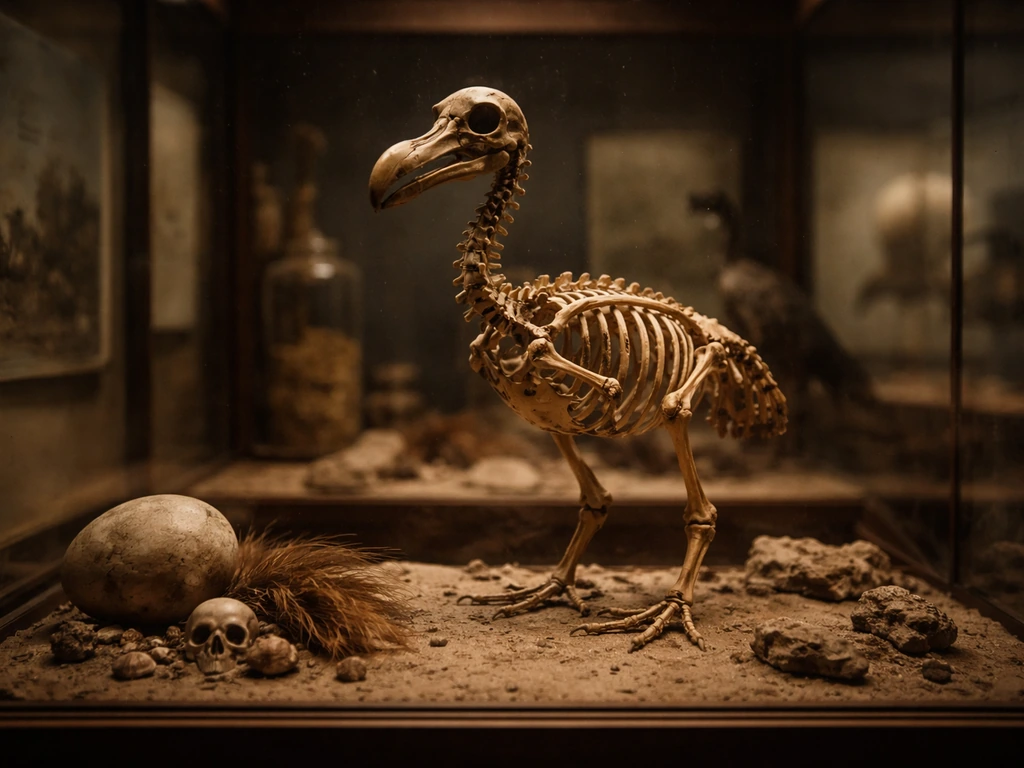
The dodo lived on the island of Mauritius in the Indian Ocean and was unknown to science until Dutch sailors arrived in 1598. From that first encounter to extinction took less than 80 years. For a long time the accepted extinction date was around 1662, based on a mariner's account of a lone bird. More recent analysis of historical records by researchers including David Roberts and Julian Hume pushed the most defensible last-sighting date to 1662 but acknowledged the species may have persisted in remote areas until the 1680s. The primary killers were introduced pigs, rats, and cats that destroyed nests, combined with direct hunting by sailors. The dodo's fearlessness around humans, which evolved in the absence of terrestrial predators, became lethal once predators arrived. The dodo is now one of the most studied extinction cases precisely because its timeline is comparatively short and well-documented, making it a useful baseline for understanding island extinction dynamics.
Moa (various Dinornithiformes species)
New Zealand had nine species of moa, ranging from turkey-sized to the massive South Island giant moa standing roughly 3.6 meters tall. Radiocarbon dating of moa bones from archaeological sites shows that Polynesian settlers (Maori ancestors) arrived in New Zealand around 1280 CE. By around 1400 CE, all moa species were gone. That is a complete wipeout of nine large flightless bird species in roughly 100 to 150 years. The cause was primarily overhunting combined with habitat clearance for agriculture, a pattern remarkably similar to what happened to elephant birds in Madagascar around the same period. Archaeological middens containing thousands of moa bones confirm that these birds were intensively hunted for food and their eggs collected. The moa's extinction also triggered secondary collapse: the Haast's eagle, the world's largest known eagle, which preyed almost exclusively on moa, went extinct shortly after its prey disappeared.
Great Auk (Pinguinus impennis)
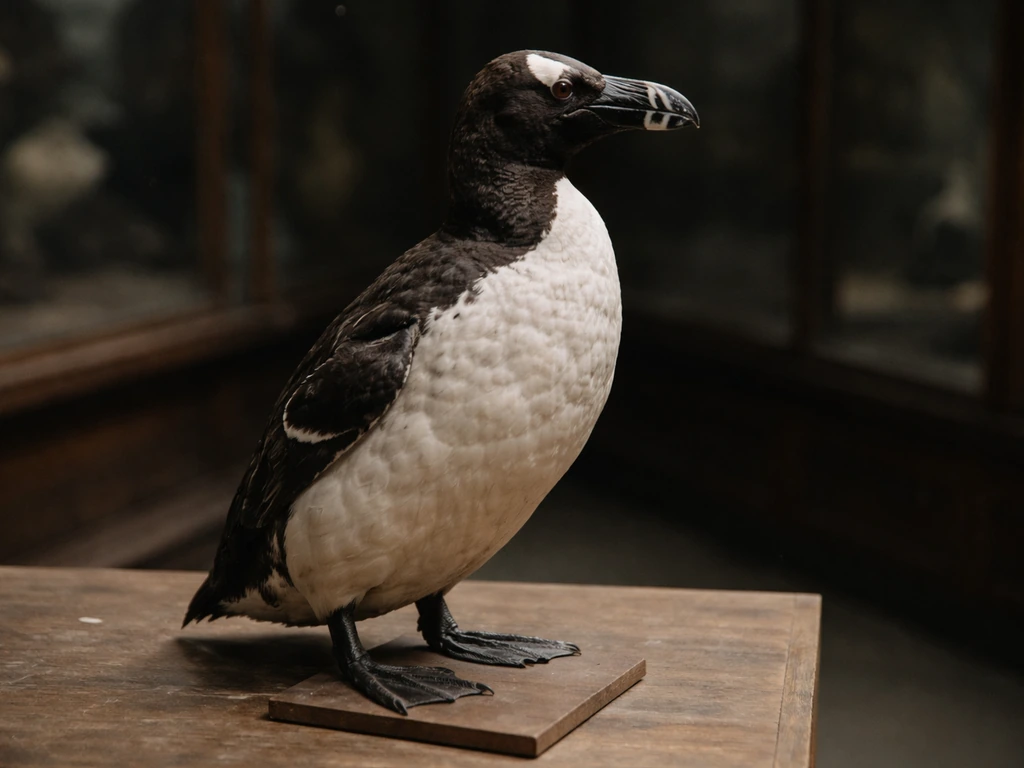
The great auk was a large flightless seabird of the North Atlantic, not related to penguins despite looking similar. By the early 19th century, populations had been heavily reduced by hunting for feathers, meat, and oil. The last confirmed individuals were two birds killed on Eldey Island off Iceland on June 3, 1844, by collectors who strangled them and broke the egg they were incubating. That precision is possible because the event was documented by eyewitness accounts from the hunters themselves. The great auk's timeline illustrates how well-documented 19th-century extinctions can be, and also how the final blow was sometimes delivered deliberately by collectors trying to obtain specimens of a bird everyone already knew was nearly gone.
Passenger Pigeon (Ectopistes migratorius)
The passenger pigeon may be the most instructive extinction timeline of all because it involved a species that was once genuinely superabundant. Flocks numbered in the billions in North America as recently as the mid-19th century. Industrial-scale hunting and forest clearance drove a collapse so rapid it astonished contemporary observers. By the 1890s the species was functionally extinct in the wild. Martha, the last individual, died in captivity on September 1, 1914. The passenger pigeon's story shows that sheer population size is no guarantee against extinction once the rate of killing exceeds the rate of reproduction.
Causes that appear over and over across the timeline
Looking across the entire bird extinction timeline from prehistoric to modern, a handful of causes appear so repeatedly they deserve to be treated as the primary framework for understanding why birds go extinct.
- Human hunting and collection: Direct killing for food, feathers, sport, or specimen collection drove many island and large-bodied bird extinctions, from moa to great auk to passenger pigeon. Birds that evolved without human predators had no fear response and were easy targets.
- Introduced predators and competitors: Rats, cats, pigs, mongoose, stoats, and dogs introduced by both Polynesian and European settlers destroyed nests and preyed on adults across island systems globally. This is still the leading cause of seabird and ground-nesting bird losses on islands today.
- Habitat destruction and fragmentation: Forest clearance, wetland drainage, and agricultural conversion reduce carrying capacity and isolate populations. Fragmented populations are more vulnerable to stochastic events and cannot recover from hunting pressure the way large connected populations can.
- Climate shifts: Long-term climate change altered habitats and food availability, contributing to prehistoric megafauna collapse and now increasingly threatening specialist species adapted to narrow climate envelopes. Many montane bird species are being pushed upslope with nowhere left to go.
- Cascading ecosystem collapse: The moa/Haast's eagle example is not unique. When a keystone species disappears, dependent species follow. Frugivorous birds that disperse seeds for specific trees, pollinator birds with co-evolved flowers, and apex predators that regulate prey populations all create dependency chains that amplify single-species losses.
What changes across different eras is the relative weight of each cause, not the causes themselves. Prehistoric extinctions leaned more on climate with early human hunting added. Post-1500 CE extinctions lean heavily on introduced species and direct persecution. Modern losses are dominated by habitat destruction and climate change, with invasive species still playing a major role on islands.
Why flightless birds and island species cluster on the timeline
If you scan any bird extinction timeline, you will notice that flightless birds and island endemics appear far out of proportion to their share of total bird diversity. This is not coincidence. Flightlessness evolves on islands precisely because island environments historically lacked mammalian predators, making the energy cost of maintaining flight muscles unnecessary. Birds like the dodo, moa, kiwi, kakapo, and the dozens of extinct island rails were essentially optimized for an environment without ground-level threats. When humans and their introduced animals arrived, those evolutionary adaptations became liabilities overnight.
Islands also concentrate extinction risk for demographic reasons. Island populations are small by definition, which makes them more susceptible to inbreeding, disease, and random bad luck (a severe storm wiping out an entire breeding colony, for example). They are also geographically bounded, so there is no reservoir population elsewhere to recolonize after a local collapse. A mainland species can absorb regional extirpation and recover from adjacent areas. An island endemic that disappears from its one island is gone from the world.
The Pacific island extinction wave between roughly 3,500 and 700 years ago may have eliminated more than 1,000 bird species, most of them small island rails and pigeons known only from archaeological bone deposits. Many of these species were never formally described by science before their extinction, which means the bird extinction timeline almost certainly undercounts total losses by a substantial margin. Researchers like David Steadman, who has done extensive work on Pacific avifauna from fossil and subfossil records, estimate the true loss figure could be double or triple what formal records show.
Living flightless birds like the kiwi, cassowary, and kakapo represent the surviving end of a much larger group, and their conservation timelines are essentially running against the same pressures that eliminated their relatives. The kiwi, for instance, faces ongoing predation from introduced stoats, cats, and dogs in New Zealand, the same island where every moa species vanished within 150 years of human arrival.
What the timeline tells us about birds alive today

The practical value of a bird extinction timeline is that it lets you identify which currently living species are sitting in the highest-risk categories based on historical pattern matching. A flightless bird living on an island with introduced predators? That combination has driven extinction repeatedly. A species with a tiny, fragmented range that depends on a single forest type being cleared for agriculture? The historical pattern is not encouraging. A bird with a naturally small population that is also being traded in the wildlife market? Multiple extinction drivers compounding simultaneously.
The IUCN Red List is the most practical tool for converting timeline knowledge into current-species assessment. For any bird you are concerned about, the Red List entry will show current population trend, year last seen if applicable, and the specific threats assessed as driving decline. The Critically Endangered (Possibly Extinct) flag is particularly worth watching: these are species that may already be gone but where surveys have not yet confirmed it. In discussions online, claims like “is the erosion bird real” are often tied to whether a species might be extinct but not yet confirmed Possibly Extinct. Checking those entries periodically gives you a real-time sense of which species are hovering at the edge.
Practical next steps if you want to go deeper
- Start with the IUCN Red List (iucnredlist.org) and filter for birds assessed as Extinct or Critically Endangered (Possibly Extinct). The "year last seen" field tells you immediately how recently each species was confirmed alive.
- Cross-reference BirdLife International's species factsheets, which often contain more narrative detail on extinction timelines, specific threat histories, and survey records than the Red List entry alone.
- For prehistoric extinctions, look into Steadman's "Extinction and Biogeography of Tropical Pacific Birds" for the most thorough treatment of the Polynesian extinction wave, and peer-reviewed radiocarbon dating studies for moa and elephant bird for how prehistoric dates are refined over time.
- When evaluating current endangered species, apply the historical pattern checklist: Is it flightless or near-flightless? Is it an island endemic? Does it have introduced predators in its range? Is its habitat being actively cleared? Multiple yes answers place a species in a historically well-documented danger zone.
- For species declared extinct within the last 50 years, check whether targeted surveys have been conducted recently. Some "extinct" species have been rediscovered, and citizen science platforms like eBird occasionally generate credible reports that prompt formal re-evaluation.
- Follow the IUCN Red List updates, which are published multiple times per year, to track reclassifications. Species move between Critically Endangered, Possibly Extinct, and Extinct as new survey data comes in, and those movements are the clearest real-time signal of where the extinction timeline is heading next.
The bird extinction timeline is not a closed historical document. It is an ongoing record, and the entries being written right now will depend on decisions made in the next few decades about habitat protection, invasive species management, and climate policy. Understanding the historical pattern is the first step toward changing where the next entries land. If you are asking whether the erosion bird is extinct, the key thing to check is the latest IUCN status and the most recent “last seen” record. If you run into issues like a Cobblemon fossilized bird not working, double-check the update and your mod or datapack version because mechanics can change between releases.
FAQ
When a bird extinction timeline says “extinct in 1914,” does that mean the last bird died in that year?
No. Most “extinct in YEAR” entries are usually “last reliably observed,” because extinction requires no reasonable doubt that the last individual has died. A timeline based only on “year last seen” can therefore look earlier than the actual disappearance in many cases, especially before systematic surveys.
How can I tell on a bird extinction timeline whether the date is certain or still uncertain?
Use the IUCN category as the decision rule. Species marked Extinct (EX) meet the strictest standard, while “Possibly Extinct” means recent surveys did not yet confirm death, so the timeline should be treated as an estimate, not a final endpoint.
Why do fossil-based extinction dates on a bird extinction timeline often look too old?
First check whether the date comes from fossils or from historical observations. Fossil-based “youngest fossil” dates typically predate extinction because preservation is patchy (Signor-Lipps effect), so modern extinction estimates for prehistoric birds often move later after new dating across multiple sites.
Can a bird extinction timeline change for the same species, and why?
Yes, the same species can show shifting dates over time as new specimens, better radiometric methods, or re-interpretations of old records appear. For modern or historically documented birds, additional survey effort, updated field methods, and improved museum metadata can also refine “last seen” years.
If a bird was last seen long ago, does that automatically mean it is truly extinct?
A single “last sighting” is not the same as extinction confirmation. If you want to use timelines to judge risk, prioritize entries with recent targeted survey efforts and explicit threat assessments, because “last seen” might simply reflect limited search effort rather than true disappearance.
What clues in a bird extinction timeline tell me the evidence is strong or weak?
Look for indicators of data type and quality. A timeline derived from many dated specimens across sites is generally more reliable than one based on one or two finds. If dates are given as ranges or come with older methods, treat the extinction timing as less precise.
Could a “local extinction” be mistaken for global extinction on a bird extinction timeline?
For species with subspecies, regional extirpations can be mistaken for global extinction. A timeline may show disappearance in one area while the species persists elsewhere, so confirm whether the source refers to the species as a whole or a particular population.
How can a species be listed as possibly extinct, and still get rediscovered?
Yes. Some “modern extinct” entries are based on incomplete survey coverage, and rediscoveries can happen if the habitat is hard to access or the species is cryptic. That is why “Possibly Extinct” exists and why conservation timelines should assume continued uncertainty until surveys close the case.
Why do flightless island birds show up so often in extinction timelines?
Compare flightless island species risk patterns rather than treating all extinctions as equivalent. Island size, isolation, and predator introduction repeatedly create compounding effects like nest predation plus hunting plus habitat loss, so a timeline helps you spot where multiple drivers are likely stacking.
How should I use a bird extinction timeline to estimate risk for species still living today?
Yes, especially for species with small ranges or those dependent on one habitat type. A timeline pattern may point to risk, but you still need current trend data because management actions or habitat recovery can bend trajectories, while ongoing deforestation can accelerate them.
When using a bird extinction timeline, what current information matters most besides the date?
Check whether the threat list includes invasive predators, habitat conversion, and any ongoing pressure like trade or hunting. Timelines show what previously caused losses, but the current drivers are what determine whether a species’ decline is continuing or has been reduced.
Why are some extinction dates known to exact days, while others are only “last seen” years?
In the post-1900 period, “precise day” dates usually come from documented collections, eyewitness accounts, or captive records, like the final death date of the passenger pigeon in captivity. In contrast, wild “last seen” dates are usually tied to observation logs and may not reflect death on that specific day.
What’s the most common mistake people make when interpreting “last seen” dates on an extinction timeline?
Yes. A species can survive for some time after the last confirmed record if individuals occupy refuges or if the species is naturally rare and missed. That is why absence from records, even for years, is best read as “no reliable observations,” unless corroborated by systematic, repeated surveys.

Get the Fossilized Bird fossil in Pokémon Shield with exact locations, steps, and conversion to its Pokémon.
Is the erosion bird real? Fast checklist to verify claims, spot hoaxes, and confirm the real species or error.
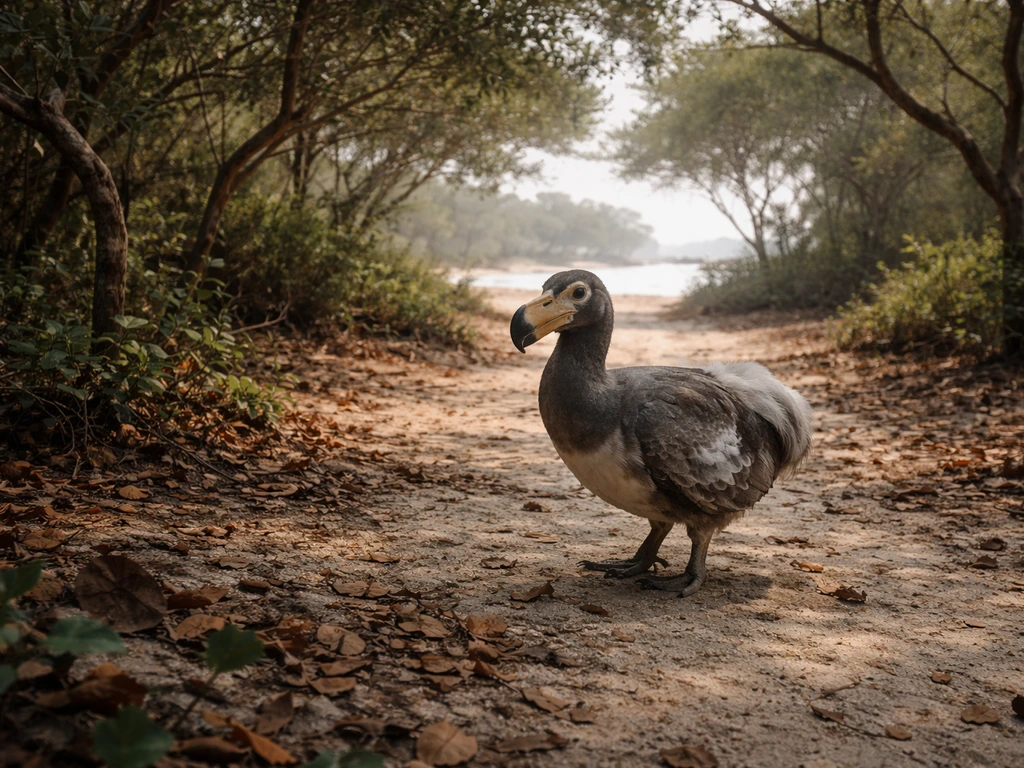
Learn if any dodos could exist today, why scientists say they are extinct, and how to judge sightings reliably.