The cassowary takes the top spot as the most dangerous bird in the world to humans, capable of delivering a single kick that can disembowel a person. But it is far from alone. From the ostrich's bone-crushing leg strike to the harpy eagle's talons that rival a grizzly bear's claws, several bird species pose genuine, documented physical threats to people, and a few others carry serious disease risks that are easy to underestimate. If you are specifically wondering what rare bird can be found in Florida, the answer is different from the species on this danger-focused list rare bird in Florida. Every bird on this list is alive today, with real habitat ranges and real encounter scenarios that travelers, wildlife workers, and even suburban residents run into.
Top 10 Dangerous Birds in the World: Risks and Safety

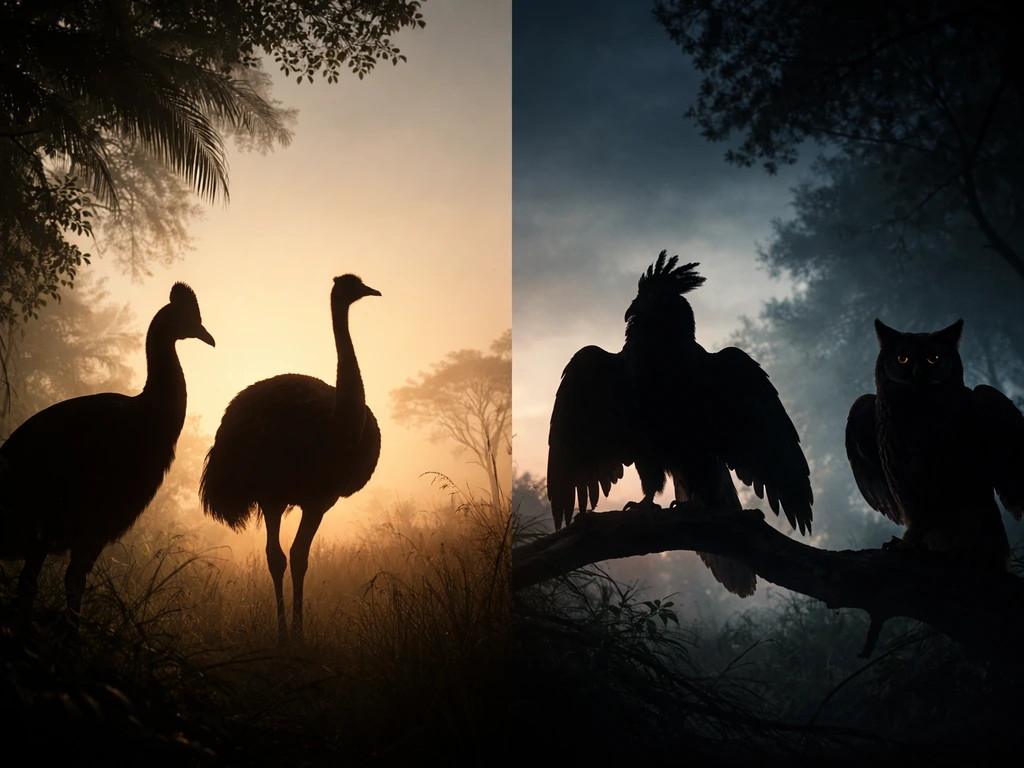
What 'dangerous' actually means when we talk about birds
Danger in the bird world breaks down into a few distinct categories, and it is worth separating them before we rank anything. Physical attack risk is the most obvious: a bird that can slash, stab, kick, or bite hard enough to cause serious injury or death. Then there is disease risk, which is quieter but broader, covering zoonotic pathogens like avian influenza (H5N1), psittacosis, histoplasmosis, and cryptococcosis that birds can transmit to people through droppings, respiratory secretions, or direct contact. The CDC/NIOSH guidance on histoplasmosis also highlights that activities like disturbing large accumulations of bird or bat droppings, including scraping, shoveling, or cleaning, can increase exposure risk large concentrations of them. The CDC flags these risks specifically for people who handle birds or work near large concentrations of them. There is also behavioral danger, meaning species that are not inherently lethal but that will aggressively defend nests, food, or territory in ways that cause real injuries, especially to the face and eyes. This guide covers all three categories but ranks birds primarily on documented harm to people, not on size or intimidating appearance alone.
What this list is not: mythological danger, fictional threat, or vague 'fearsome predator' framing. Every entry here has a documented injury record, a measurable threat mechanism, or a well-established disease vector profile backed by wildlife research and public health agencies.
The top 10 most dangerous birds in the world

Here is the ranked list with quick facts. Detailed profiles follow below.
| Rank | Bird | Primary Danger | Where It Lives | Conservation Status (IUCN) |
|---|---|---|---|---|
| 1 | Southern Cassowary | Slashing kick, disembowelment | Queensland (AU), New Guinea | Vulnerable |
| 2 | Ostrich | Powerful kick, claw slash | Sub-Saharan Africa | Least Concern |
| 3 | Emu | Kick, claw strike | Australia | Least Concern |
| 4 | Harpy Eagle | Talons, crushing grip | Central & South America | Vulnerable |
| 5 | Great Horned Owl | Silent aerial talon strike | Americas (widespread) | Least Concern |
| 6 | African Crowned Eagle | Talons, documented human infant predation | Sub-Saharan Africa | Least Concern |
| 7 | Canada Goose | Aggressive nest defense, physical strike | North America (widespread) | Least Concern |
| 8 | Mute Swan | Wing strikes, drowning risk (water) | Europe, North America | Least Concern |
| 9 | European Starling | Disease vector, flock aggression | Worldwide (invasive) | Least Concern |
| 10 | Herring Gull / Large Gulls | Aerial dive-bomb, beak strikes | Coastal worldwide | Least Concern |
A note on what did not make the cut: the bearded vulture and lammergeier are often cited online, but their direct threat to healthy adult humans is minimal. The shoebill is imposing but attacks on people are rare and not well-documented. The red-tailed hawk gets honorable mention for urban talon strikes but causes relatively minor injuries. The list above reflects the strongest combination of documented attack frequency, injury severity, and realistic encounter probability.
Species profiles: why each bird is dangerous and when you are most likely to meet one
1. Southern Cassowary (Casuarius casuarius)
The cassowary's primary weapon is a dagger-like inner claw, roughly 12 cm (about 5 inches) long, on each foot. It kicks forward with both feet in a jumping strike, and that claw can open deep lacerations in seconds. A Journal of Zoology study analyzing 221 cassowary attack incidents recorded 150 attacks against humans, and critically, about 75% of those attacks involved birds that had previously been fed by people. One death in Florida in 2019 involved a captive cassowary kept on a private property. National Geographic has documented that most wild cassowary attacks happen when birds are defending food, eggs, or chicks, or when they are cornered. They are not randomly aggressive, but they are unpredictable and extremely fast. The cassowary is classified as Vulnerable by the IUCN, which means declining populations ironically concentrate the remaining birds in areas with more human activity, raising the encounter risk even as overall numbers fall.
2. Ostrich (Struthio camelus)
The ostrich is the world's largest living bird, standing up to 2.8 meters and weighing up to 160 kg. Its kick is delivered forward rather than backward (unlike a horse), and the two-toed foot has a single large claw capable of tearing flesh and breaking bones. Adult males are particularly dangerous during breeding season, when they can become highly territorial and will charge without much warning. Ostrich farms in Africa and elsewhere report regular injuries to handlers. In the wild, a healthy adult ostrich can outrun most threats at speeds up to 70 km/h, but when cornered or protecting a nest, it attacks without hesitation. Despite being a formidable animal, ostriches are not endangered; populations are stable across sub-Saharan Africa.
3. Emu (Dromaius novaehollandiae)
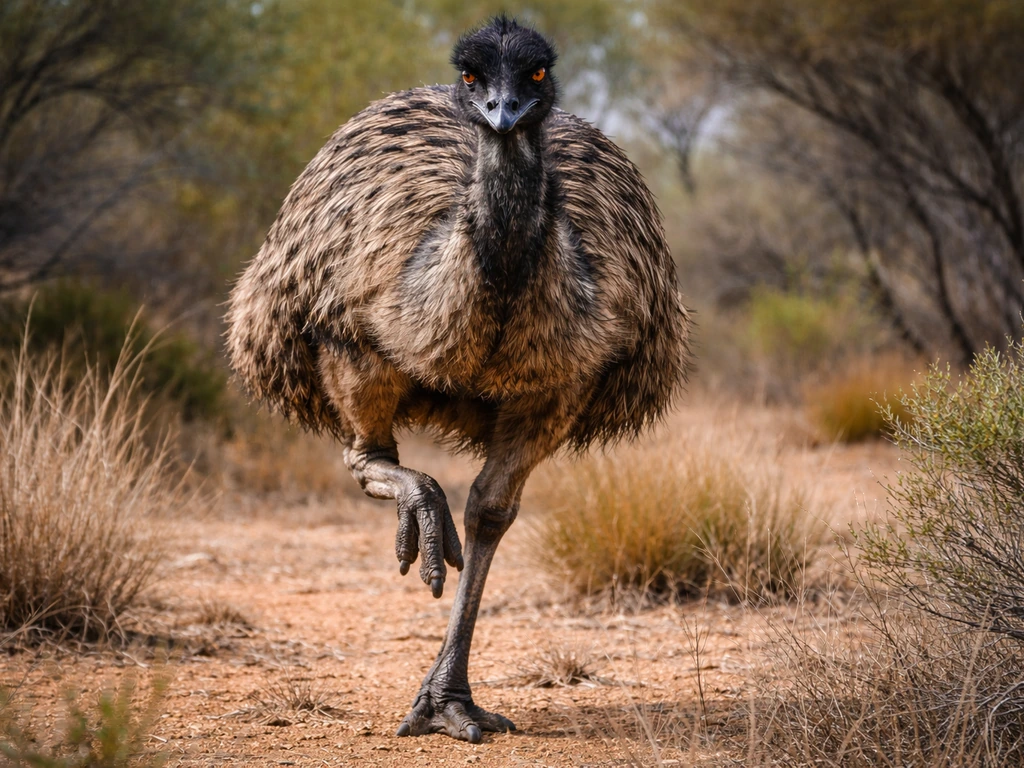
Australia's emu is the second-largest bird by height, reaching about 1.9 meters. Like the cassowary and ostrich, it is flightless and relies on powerful legs for defense. The kick delivers forward slashing blows, and the claws can cause serious lacerations. Emus are generally less aggressive than cassowaries but become dangerous when approached during nesting or when food is involved. The infamous 'Emu War' of 1932, in which Australian soldiers were deployed to cull emus damaging wheat crops and largely failed to make a dent in the population, speaks to how resilient and difficult to deter these birds can be. They are currently listed as Least Concern and remain abundant across Australia's interior.
4. Harpy Eagle (Harpia harpyja)
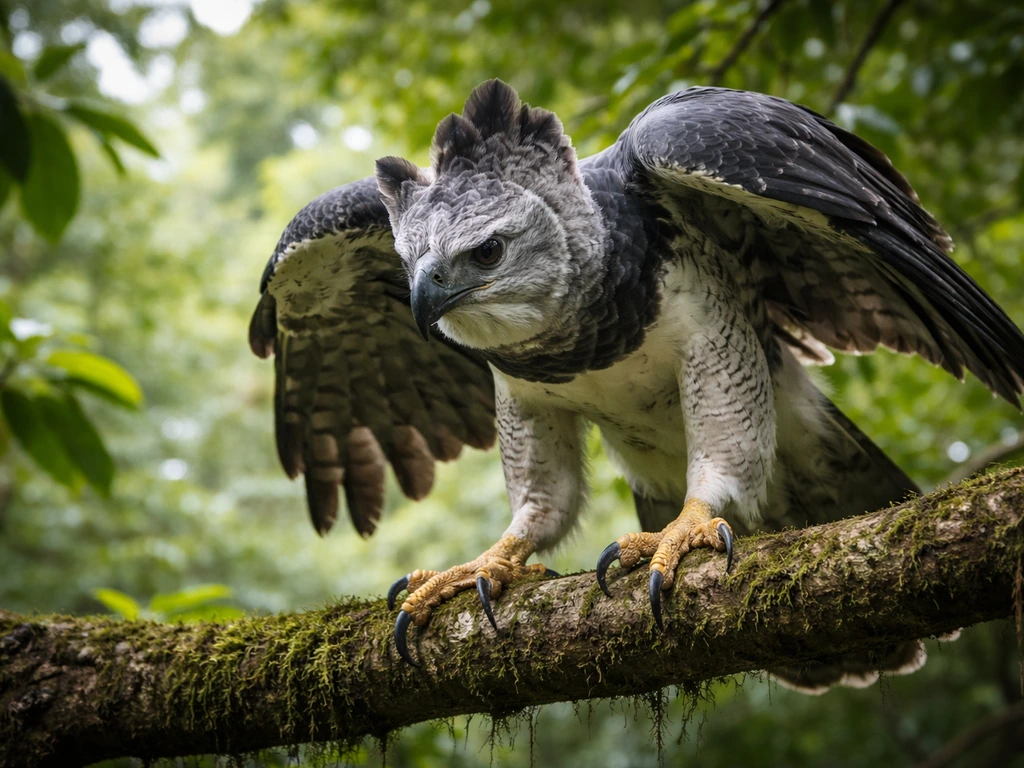
The harpy eagle is the largest and most powerful eagle in the Americas, with talons that can reach up to 13 cm long, comparable to a grizzly bear's claws in terms of gripping force. It does not typically target adult humans, but there are documented cases of serious attacks on people who approached nests or stumbled into nesting territory in dense rainforest. The bird hunts sloths and monkeys by snatching them from branches at speed, and the same grip applied to a human arm or face is deeply damaging. The harpy eagle is classified as Vulnerable, with habitat loss in Central and South American rainforests driving population decline. Fewer birds in smaller forest patches means more encounters at forest edges as human activity expands.
5. Great Horned Owl (Bubo virginianus)
The great horned owl's danger is its silence. It hunts without a sound at night and strikes from behind or above with talons that exert a grip force of around 300 pounds per square inch (psi), enough to puncture a skull. Joggers and hikers in North and South America are regularly attacked, typically from behind when they walk too close to a nest. The owl does not always break off an attack after one strike. It is a sit-and-wait ambush predator, and the combination of stealth, speed, and talon grip makes it disproportionately dangerous relative to its roughly 1.5 kg body weight. It is widespread and not threatened.
6. African Crowned Eagle (Stephanoaetus coronatus)
This eagle is documented by paleoanthropologists as a predator of early hominins, including Australopithecus, based on characteristic talon puncture marks found on fossil skulls. Today, it has been recorded attacking and killing small children in rural sub-Saharan Africa, and livestock attacks are common. It is Africa's most powerful eagle, capable of taking prey several times its own body weight by driving its hind talon into the skull of a monkey or small antelope. Encounters with adults are rare in terms of direct attack, but the risk to children and small livestock in areas where habitat overlaps with human settlements is well established. It is currently Least Concern but faces pressure from forest clearing.
7. Canada Goose (Branta canadensis)
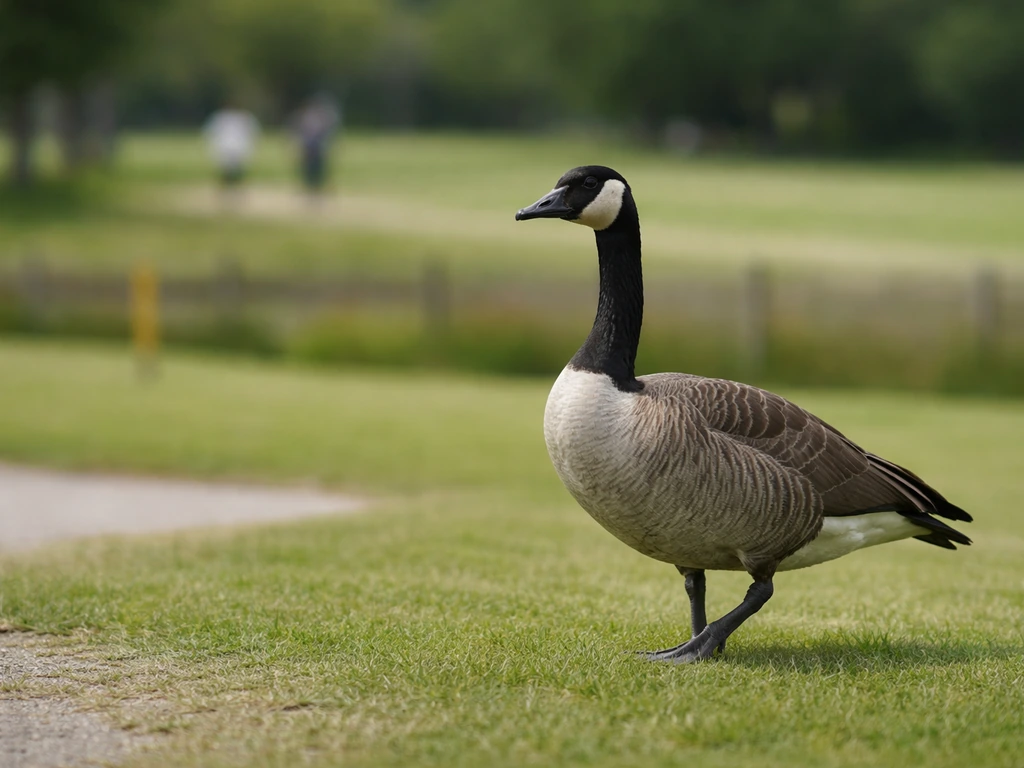
Canada geese are responsible for a huge share of bird-related injuries in North America, largely because they live in close proximity to people in parks, golf courses, and suburban ponds. During nesting season, they are intensely territorial and will chase, bite, and wing-strike anyone who gets too close. The Indiana DNR notes that nest-defense aggression peaks during early rearing and declines as goslings grow old enough to fly. The Missouri Department of Conservation has flagged feeding as a key driver of aggression: fed geese lose their natural wariness of people and form unusually large, dense groups, compounding the problem. Beyond direct attacks, large congregations also create significant disease and sanitation concerns from droppings. At airports, the U.S. Fish and Wildlife Service recognizes Canada geese as one of the harder species to haze or manage in large numbers.
8. Mute Swan (Cygnus olor)
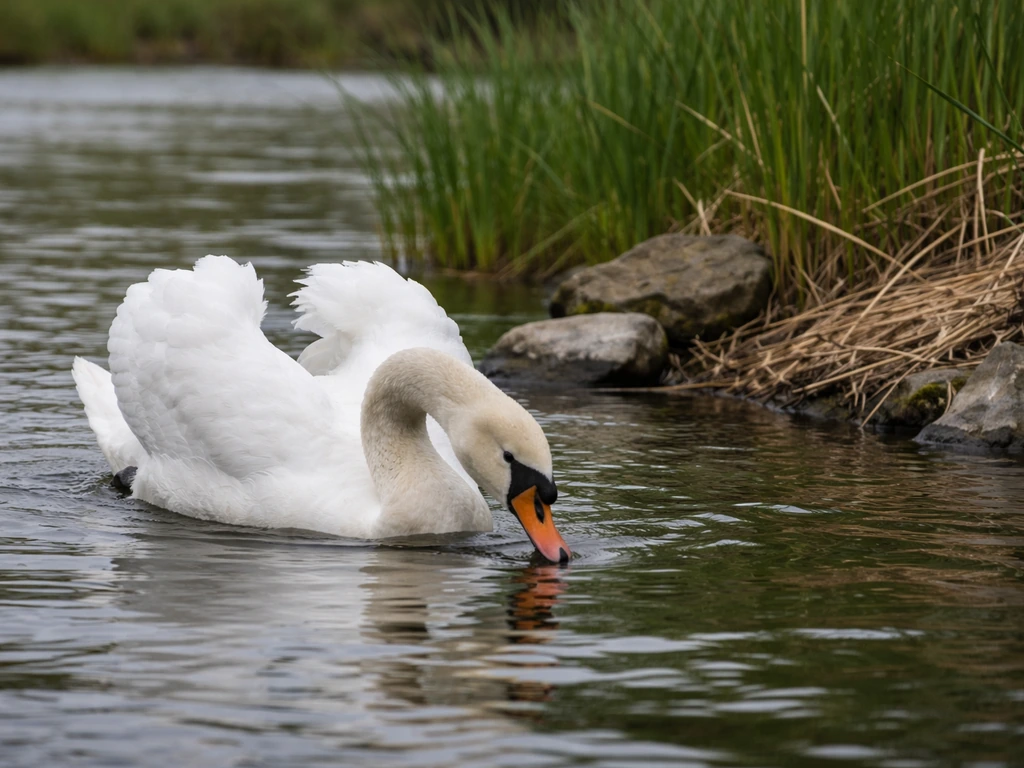
Mute swans are one of the heaviest flying birds in the world, reaching up to 15 kg, and they defend nests with sustained aggression. The danger is especially real on water, where a swan can chase a kayaker or swimmer, use powerful wing beats to knock them off a boat or submerge them, and hold them underwater. There are documented cases of drowning associated with swan attacks, typically when people approached nests by water. On land, wing strikes are painful and can break human wrist bones. They are widespread across Europe and introduced populations are established across North America.
9. European Starling (Sturnus vulgaris)
The starling earns its place not through individual brute force but through scale and disease. Flocks of starlings (called murmurations) can number in the millions, and their droppings carry Histoplasma capsulatum, the fungus responsible for histoplasmosis, a serious lung infection. The CDC specifically notes that workers who contact large accumulations of bird droppings are at elevated risk for histoplasmosis, cryptococcosis, and psittacosis. Starlings also interfere aggressively with native cavity-nesting species, and USFS research confirms they trigger direct physical attacks from other birds in nest competition contexts. Their invasive status across North America, Australia, and elsewhere means habitat overlap with people is essentially universal.
10. Herring Gull and Large Gulls (Larus argentatus and relatives)
Large gulls in coastal urban areas and fishing ports are increasingly bold and aggressive, particularly during nesting season (April through July in the Northern Hemisphere). Dive-bombing attacks on people who walk near rooftop or cliff nests are well-documented across the UK, Ireland, and coastal North America. Beak strikes to the head can break skin and cause significant bleeding. The problem is growing as gull populations adapt to urban food sources and nest on building rooftops, putting nests directly above pedestrian areas. While not a top-tier physical threat to a healthy adult, gull attacks cause real injuries, especially to children and elderly people.
Where these birds live and what that means for travelers
Knowing the geography of risk is half the battle. Here is a practical breakdown of which birds you are likely to encounter based on where you are traveling or living.
| Region | Birds to Watch For | Key Contexts |
|---|---|---|
| Queensland & New Guinea (Australia/PNG) | Southern Cassowary | Rainforest trails, wildlife parks, suburban forest edges |
| Sub-Saharan Africa | Ostrich, African Crowned Eagle | Safari zones, rural villages, open savannah, forest margins |
| Australia (interior & coasts) | Emu | Farmland, outback roadsides, national parks |
| Central & South America (rainforest) | Harpy Eagle | Amazonian forest interior, forest edge near villages |
| North & South America (widespread) | Great Horned Owl, Canada Goose | Parks, suburban green spaces, woodlands, waterways |
| Europe & introduced North America | Mute Swan | Rivers, lakes, canals, park ponds |
| Worldwide (urban, coastal) | European Starling, Herring Gull | Cities, ports, rooftops, waste sites, picnic areas |
If you are traveling to Queensland, Australia, rainforest areas are the high-risk zone for cassowaries. The Wet Tropics region around Mission Beach and the Daintree has the highest cassowary density. In South Africa or East Africa on safari, ostrich encounters are common in open areas and are generally manageable if you keep distance, but captive or semi-wild farms are where most injuries happen. If you are wondering what rare bird can be found in Uganda, turn your attention to the shoebill. This section can also help answer the bigger question of what is the number 1 rarest bird in the world by pointing you to the right species to research next. For harpy eagles in Central America, the risk is essentially zero unless you are a researcher working in primary rainforest with active nests. The everyday risks for most people are the three at the bottom of the list: owls, geese, swans, gulls, and starlings.
How to avoid attacks and reduce your risk
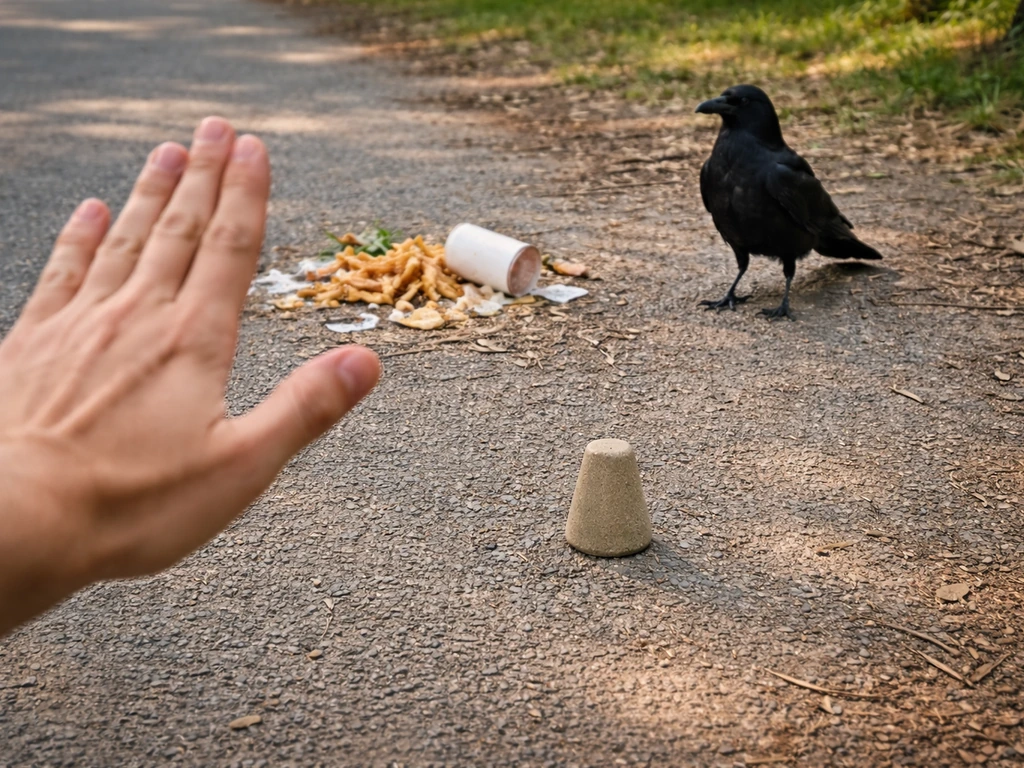
Most bird attacks follow a recognizable escalation. Understanding the warning signs and changing your behavior early almost always de-escalates the situation.
- Never feed wild birds, especially cassowaries, geese, or gulls. Feeding is the single biggest driver of lost fear and increased aggression. The Missouri Department of Conservation and National Geographic both identify prior human feeding as a primary risk factor for cassowary and goose attacks respectively.
- Give wide berth to any bird near a nest or with young nearby. This is the universal trigger for defensive aggression across almost every species on this list. If you see a bird acting agitated, puffing up, hissing, or following you, back away slowly without turning your back.
- On trails in cassowary or eagle country, make moderate noise to avoid surprising birds at close range. Carry a walking stick or trekking pole to create distance if confronted.
- For owls at night: if you are jogging or cycling in wooded areas during spring nesting season, wearing a hat or bike helmet protects the most common strike zone, the back of the head.
- Around geese and swans on water: maintain at least 10 meters from nests. Never approach from the water side of a nest if you are in a kayak or on a paddleboard.
- For disease risk: after any contact with wild birds, their droppings, or materials where birds roost, wash hands with soap and water. The CDC recommends this explicitly. Do not dry-sweep or vacuum large accumulations of bird droppings without respiratory protection, because aerosolized dried material transmits psittacosis and histoplasmosis.
- If you work around large bird congregations or carcasses (poultry workers, wildlife responders, pest control), follow H5N1 avian influenza precautions from the CDC, which include avoiding contact with contaminated litter, bedding, and surfaces.
If you are actually charged by a cassowary or ostrich: do not run. Use any object, a bag, a jacket, a stick, as a visual barrier between you and the bird. Back away without turning around. Climbing a tree or getting behind a solid barrier is the safest exit. Crouching down makes you smaller and potentially less threatening to a defensive bird, but it also reduces your ability to protect your face and torso.
How danger changes depending on the bird's life stage and season
Birds are not uniformly dangerous all year. Seasonal and life-stage variation is critical to understanding when your risk spikes.
- Nesting season is the peak danger window for almost every species here. This is when territorial instincts are at their most intense. For cassowaries, this is June to October in Queensland. For Canada geese, it is March through May across most of North America, with peak aggression in the first weeks after hatching. For great horned owls, nesting begins in January to February in North America.
- Mating season makes male ratites (cassowary, ostrich, emu) and raptors unpredictably aggressive even toward people who are not near nests. Testosterone-driven confrontations with unfamiliar objects or individuals increase during this window.
- Chick-rearing stages extend the danger period: the Indiana DNR notes that Canada goose nest-defense aggression stays elevated until goslings can fly (roughly 10 weeks after hatching), which is a longer window than many people realize.
- Juvenile birds are often less predictable than adults because they are less experienced at reading threats. A young cassowary raised in proximity to humans (a common wildlife rescue scenario) may approach people confidently and then attack without the usual warning escalation.
- Captive or previously fed individuals of any species represent a distinct risk category. As the cassowary data shows, birds habituated to humans through feeding are far more likely to approach and attack than genuinely wild birds.
Conservation status and why it changes the risk picture
Most people assume that a species being endangered means you are less likely to encounter it, and therefore less at risk. That logic only works in some cases. The reality is more layered, and this is where conservation science directly intersects with safety.
The cassowary is a clear example. Its Vulnerable classification under the IUCN Red List framework, which assesses categories based on population trends, geographic range, and quantitative decline measures, reflects a shrinking and increasingly fragmented population. But fragmentation pushes cassowaries into forest edges and smaller habitat patches that overlap heavily with human settlement, tourism infrastructure, and farmland. Fewer birds in smaller areas near people means the rate of human-cassowary encounters does not necessarily drop in proportion to the population decline. It may even increase in high-density remnant patches.
The harpy eagle tells a similar story. As Amazonian deforestation continues, remaining harpy eagle pairs are pushed toward forest margins where they come into closer contact with rural communities. Reported attacks and retaliatory killings of eagles both increase at these margins. Conservation programs that protect and restore forest interior habitat are, in effect, also safety programs that reduce dangerous proximity between humans and raptors.
On the flip side, species that are thriving under human alteration of the landscape, Canada geese, European starlings, herring gulls, represent the opposite dynamic. Their populations expanded because they adapted to urban and suburban environments, which is exactly why their contact rate with people is so high. Managing their numbers and behavior (hazing, egg oiling, habitat modification) is a recognized wildlife management challenge. The U.S. Fish and Wildlife Service specifically notes that Canada geese can be difficult to remove in areas where they aggregate in large numbers.
Extinct birds are not on this list, obviously, but the broader context of the site is worth noting here. Understanding why certain species disappeared, habitat loss, hunting, introduced predators, climate shifts, often reveals the same pressures that today are pushing Vulnerable and Endangered species into closer contact with people. The cassowary, which shares deep evolutionary history with other ratites, some now extinct, is a living reminder of what that trajectory looks like in real time. For those interested in how ancient and endangered bird lineages connect, the story of the top 10 oldest bird species shares several overlapping chapters with the flightless birds on this list. For more context on truly ancient lineages, you can also explore the top 10 oldest bird species.
Practical next steps you can take right now
If you are planning to travel to an area where any of these birds live, or if you already live near them, here is what you can do today to reduce your risk.
- Check the IUCN Red List for the current conservation status and range map of any species you expect to encounter. Range maps will tell you whether a specific location falls within core habitat or a marginal range, which directly affects encounter probability.
- Before visiting rainforest areas in Queensland or New Guinea, read the Queensland Parks and Wildlife Service cassowary encounter guidance. Know what a cassowary warning posture looks like before you are standing in front of one.
- If you are going on safari in sub-Saharan Africa, ask your guide specifically about seasonal behaviors for ostriches and eagles in the areas you will visit. Reputable guides know the nesting calendars.
- If you live in an area with Canada geese, swans, or large gulls and you have children who play near water or open green spaces, brief them on warning body language and on never feeding birds.
- For any work that involves handling birds or cleaning up large accumulations of droppings (pest control, wildlife rehab, farm work), follow CDC guidance on zoonotic disease prevention: use appropriate respiratory protection, wash hands thoroughly, and avoid dry-disturbing droppings.
- If you see a bird showing escalating warning behaviors (hissing, spreading wings, lowering head, following you), treat it as a real threat and back away. Most injuries happen because people underestimate the warning and keep approaching.
The birds on this list are not villains. Every dangerous encounter in the research record can be traced back to a situation where a human got too close to a nest, fed a wild animal and removed its natural caution, or wandered into core habitat without understanding what lives there. That is an entirely solvable problem, and for most of us it takes nothing more than basic awareness and a little respect for the animal's space.
FAQ
If I’m near one of the top 10 dangerous bird in the world, how do I know whether the risk is actually high right now?
Yes. Even if you know which species are in the area, the biggest risk often comes from the situation, not the bird. The danger spikes when you enter nesting territory, approach juveniles, walk near feeding sites, or try to take photos at close range (especially from above or from behind, which some birds use to launch an ambush). Treat the “where you stand” and “how close you get” as more important than the species name.
What warning behaviors should I treat as a sign to back away before a bird attack happens?
Use distance and elevation as your first rules. For nest defense species, keep well beyond the typical “photo distance,” move laterally away rather than stopping close and posing, and avoid looming from above. If a bird repeatedly changes your path, escorts you, or shows stiffness (wing spreading, head bobbing, vocal escalation), increase distance immediately and give it a clear route to retreat.
Is feeding birds a good way to keep them calm, and what’s the safest alternative?
Do not feed wild birds to reduce risk. Feeding is strongly linked with heightened aggression for species like cassowaries and can also create dense congregation sites that raise both attack and disease exposure. If birds are already coming to you because of food, remove attractants (open garbage, pet food outside, baited fishing areas) and switch to secure storage until the birds stop returning.
What’s the safest way to deal with bird droppings if I live near a large flock (for example starlings or geese)?
For disease risk from droppings, avoid dry sweeping or vacuuming that aerosolizes particles. If clean-up is necessary, wear appropriate respiratory protection (at least an N95-style mask), wet the droppings first with a disinfecting solution, let them soak, and dispose of materials carefully. If you have asthma, are immunocompromised, or can’t avoid heavy contamination, use trained custodial staff rather than handling it yourself.
What should I do if I’m actually knocked down or separated from my group during a bird defense event?
Many “danger” situations are over faster than people expect, so plan a simple exit rather than improvising. For a charge, make yourself bigger with a barrier (bag, jacket, stick) and back away slowly without chasing. If you do fall, protect your head and face, and cover your torso with the same barrier if possible, because several species target eyes, beaks, and the face during defensive strikes.
How can I reduce my chances of being charged by large flightless birds like cassowaries, ostriches, or emus?
If you encounter a cassowary, ostrich, or emu, don’t corner it, and don’t assume it will disengage once you back up. Change your position enough to give it space and an obvious route out, use a solid barrier, and keep distance between you and the bird’s escape path. Also avoid jogging close to vegetation edges or trails where they may be protecting food, eggs, or chicks.
Why are geese and swans more dangerous at certain times, and what should I change seasonally?
For Canada geese and swans, time and proximity matter most. Nest defense is especially intense during early rearing, and aggression decreases as young birds mature enough to fly. If you’re near a pond or park, choose routes that keep you away from shoreline nests, and avoid stopping or letting kids linger near the waterline during nesting season.
How do I reduce risk from aggressive urban birds like gulls during nesting season?
If you’re at an airport, waterfront, or rooftop area, treat gulls and similar urban nesters like a “head injury risk,” not a minor annoyance. Wear glasses if you can, avoid looking up and walking directly under nests, and keep a safe buffer from cliffs and building edges during nesting season. Don’t try to shoo gulls at close range, because dive-bombing often escalates when they feel threatened near a nest.
Are children or small pets at higher risk around these dangerous birds, and what changes should families make?
Children and small pets deserve extra caution because some of the documented serious risks involve smaller bodies and face-level strikes. Keep kids close, prevent running, and consider keeping small dogs on short leashes away from shorelines and open nesting areas. If a bird is escalating toward you, pick up small pets and move away promptly rather than trying to “call them back” from close range.
What should I do immediately after a bird-related injury, including when disease risk might be involved?
If a bird attack causes an open wound or puncture, treat it as medical-need first, then report the incident locally. Rinse with clean water, apply pressure if bleeding, and seek urgent care for punctures, deep lacerations, or any eye or face injury. For disease concerns, especially with significant droppings exposure, notify a clinician about the exposure so they can advise on evaluation based on symptoms and risk factors.