The oldest bird species on Earth, measured by the age of their evolutionary lineage, include Palaeognathae members like ostriches, emus, and kiwis (whose lineages split from other birds roughly 80 to 100 million years ago), alongside ancient fossil birds like Vegavis iaai, dated to 66 to 68 million years ago. No single species 'wins' cleanly because 'oldest' means different things depending on whether you're counting fossil age, lineage divergence, or surviving ancient branches. But if you want a ranked, evidence-backed top 10, you'll find it below, with the reasoning spelled out for each one.
Top 10 Oldest Bird Species: Fossil Evidence and Living Survivors

Maya Hennessy
6 May 2026
What 'oldest' actually means for a bird species
This is the part most articles skip, and it's the reason you'll find wildly different 'oldest bird' claims online. There are three distinct, evidence-based ways to define 'oldest' for a bird species, and each gives you a different answer.
- Fossil record age: the physical age of the oldest known specimen assigned to a species or genus, measured by the geological stratum it was found in. This is the most concrete definition, but it's limited by what happens to be preserved and discovered.
- Lineage divergence age: the estimated date when a group's evolutionary lineage split from its nearest common ancestor, calculated from molecular data (DNA comparisons) and calibrated against fossil dates. This can push estimated origins much further back than the oldest known fossil.
- Surviving ancient lineage: a living species whose family or order has changed very little morphologically since ancient times, sometimes called a 'living fossil,' though scientists increasingly avoid that term because all living things are still evolving.
For this article, the ranking blends all three: fossil evidence where it's strong and direct, molecular divergence estimates where fossils are sparse, and morphological conservatism where both support a deep evolutionary origin. Where there's genuine uncertainty, that's noted. Pretending this list is a tidy, settled scoreboard would be dishonest.
How the ranking was built: sources, methods, and honest caveats
The ranking draws on three main evidence streams. First, the physical fossil record, particularly specimens dated via stratigraphy and radiometric dating. Second, molecular clock studies, especially large-scale phylogenomic analyses that use hundreds or thousands of gene sequences to estimate when lineages diverged. Third, peer-reviewed avian phylogenies that place species within the broader bird evolutionary tree.
A critical caveat: molecular divergence dates and fossil dates often disagree. A 2014 study highlighted this 'flying rocks and flying clocks' mismatch, noting that molecular estimates for major bird radiations frequently predate the oldest known fossils by tens of millions of years. This doesn't mean one method is wrong. It usually means the fossil record is incomplete, which is almost always true for birds because bird bones are hollow and fragile. Modern 'total-evidence dating' methods try to reconcile both streams by integrating fossil placement and DNA sequences into a single statistical model, which is the current gold standard.
One more honest caveat: the rankings below are ordered from oldest estimated lineage/fossil age to less old, but the differences between ranks 2 through 8 are often within each other's uncertainty ranges. Think of this as a tier list with soft boundaries rather than a precise scoreboard. The top and bottom entries are the most defensible. The middle ones involve genuine scientific debate.
The top 10 oldest bird species
1. Vegavis iaai (extinct)
Vegavis iaai is the oldest known confirmed member of the modern bird crown group (Neornithes), with fossils dated to approximately 66 to 68 million years ago from Antarctica's Vega Island. This places it firmly in the Cretaceous period, predating the mass extinction event that wiped out non-avian dinosaurs. Its discovery was significant because it proved that at least some modern bird lineages, specifically the waterfowl lineage (Anseriformes), existed alongside dinosaurs. It was a waterfowl-like bird, roughly duck-sized, and could not fly well if at all in the traditional sense. Vegavis iaai holds the top fossil-evidence spot because its identification within Neornithes is well-supported by skeletal analysis.
2. Ostriches (Struthio camelus), living
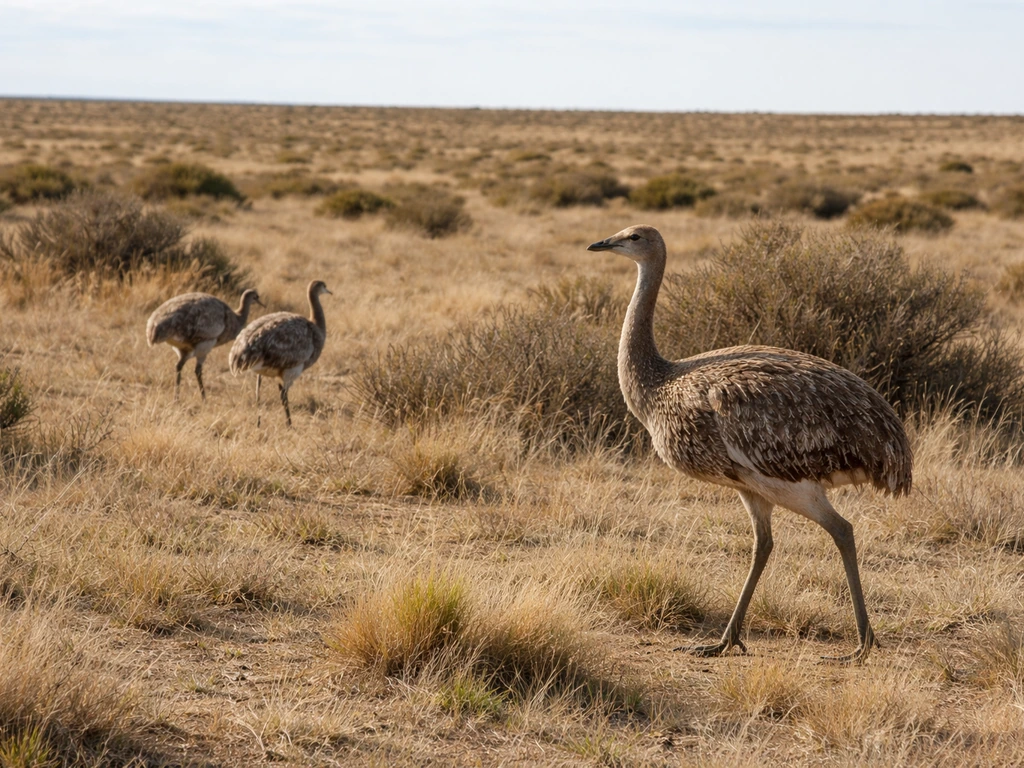
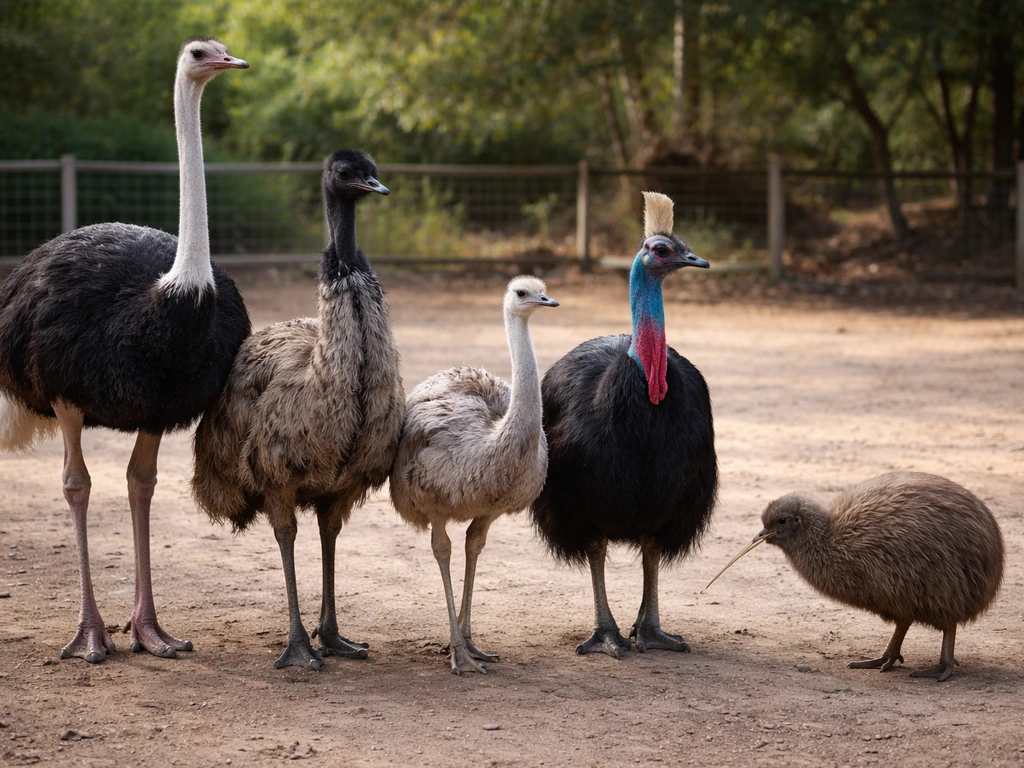
Ostriches belong to the Palaeognathae, the most ancient surviving branch of modern birds. Molecular clock studies consistently place the divergence of Palaeognathae from other birds (Neognathae) at roughly 80 to 100 million years ago, deep in the Cretaceous. Ostriches specifically represent the earliest-diverging lineage within the ratite group, with fossils of close relatives dating back at least 40 million years in Africa and Europe. They are the world's largest living bird, standing up to 2.8 meters tall and weighing up to 156 kg. They are flightless, with vestigial wings, and have a unique two-toed foot adapted for speed on open ground. Today they're native to Africa's savannas and are classified as Least Concern by the IUCN, though wild populations face pressure from habitat conversion and hunting in some regions.
3. Rheas (Rhea americana and Pterocnemia pennata), living
Rheas are South American ratites whose lineage diverged from the ostrich lineage somewhere between 70 and 90 million years ago, according to molecular estimates. They're large, flightless birds resembling small ostriches, standing about 1.5 meters tall and native to grasslands, shrublands, and open woodlands across South America. The greater rhea (Rhea americana) is listed as Near Threatened by the IUCN, while the lesser rhea (Pterocnemia pennata) is listed as Least Concern but faces regional pressure. National Geographic reports that the greater rhea (Rhea americana) is classified as Near Threatened on the IUCN Red List listed as Near Threatened by the IUCN. Their ancient lineage makes them one of the best living windows into what early ratite birds may have looked like and how they behaved.
4. Emus (Dromaius novaehollandiae), living
Emus are Australia's largest native bird and the second-largest living bird by height, reaching up to 1.9 meters. Their lineage, within the Casuariiformes, diverged from other ratites approximately 80 million years ago based on molecular clock estimates, though the oldest emu-specific fossils are around 25 million years old. They are flightless with tiny vestigial wings, and like other ratites they retain features of the primitive palate structure (the 'palaeognath' palate) that defines this ancient group. Emus are currently listed as Least Concern by the IUCN, but the island subspecies Dromaius novaehollandiae diemenensis (Tasmanian emu) went extinct around 1850, and two other island subspecies also disappeared after European colonization.
5. Cassowaries (Casuarius species), living
Cassowaries share the Casuariiformes order with emus and carry the same deep lineage age of roughly 80 million years. There are three living species: the southern cassowary (Casuarius casuarius), the dwarf cassowary (Casuarius bennetti), and the northern cassowary (Casuarius unappendiculatus). They live in the tropical rainforests of New Guinea and northeastern Australia. The southern cassowary is often cited as one of the world's most dangerous birds due to its powerful legs and dagger-like inner claw, capable of inflicting serious wounds. All three species are listed as Least Concern to Vulnerable by the IUCN, with habitat loss and vehicle strikes being the primary threats. The southern cassowary in Australia is listed as Endangered at the national level.
6. Kiwis (Apteryx species), living
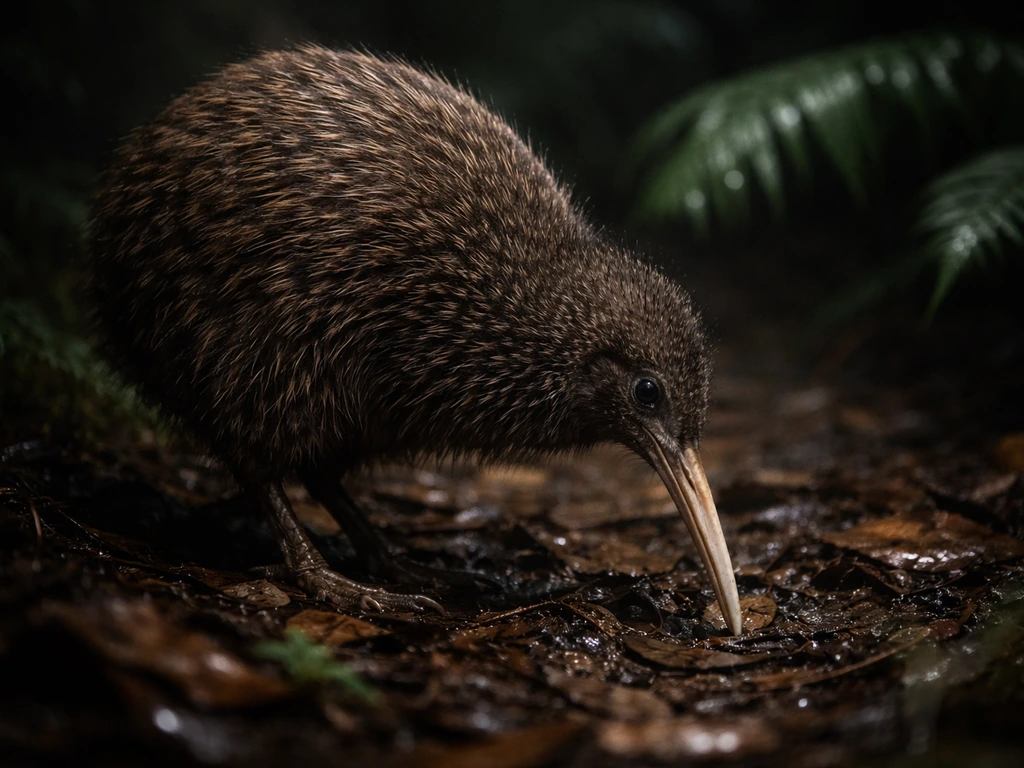
Kiwis are New Zealand's most iconic birds and the smallest living ratites, standing about 45 cm tall. Their lineage diverged from other ratites approximately 62 to 75 million years ago, making them another member of this deep Palaeognathae branch. What makes kiwis especially remarkable is how bird-like they are in the wrong direction: they have hair-like feathers, whiskers, nostrils at the tip of their beak (unique among birds), and they lay the largest egg relative to body size of any bird species. There are five recognized species, all native to New Zealand, and all are threatened to some degree: the Okarito kiwi (Apteryx rowi) and the northern brown kiwi (Apteryx mantelli) are both listed as Vulnerable, while the little spotted kiwi (Apteryx owenii) is Near Threatened. blank" rel="noopener noreferrer">Wikimedia Commons’ taxon/category pages include IUCN category tags for Apteryx mantelli (Endangered) and Apteryx owenii (Near Threatened). Introduced predators, especially stoats, rats, and dogs, are the primary threats. Like other ratites, kiwis are flightless with only vestigial wings hidden beneath their feathers.
7. Moa (Dinornithiformes), extinct
The moa of New Zealand were a group of large to giant flightless birds whose lineage is estimated to have diverged from other ratites around 80 million years ago. There were at least nine species, ranging from the turkey-sized Anomalopteryx didiformis to the giant Dinornis robustus, which stood up to 3.6 meters tall and is among the tallest birds ever known. Moa went extinct around 1440 CE following Polynesian settlement of New Zealand, almost entirely due to hunting and habitat clearance. Their fossils are well-preserved in cave deposits and swamps across both New Zealand islands, making them one of the best-documented recent extinctions in the palaeontological record. Interestingly, moa had no wings at all, not even vestigial ones, which is unique among ratites.
8. Tinamous (Tinamiformes), living
Tinamous are the only flying members of Palaeognathae, which makes them phylogenetically fascinating. Their lineage is estimated to have diverged from other palaeognaths around 75 to 80 million years ago. They are ground-dwelling birds native to Central and South America, secretive and rarely seen, with about 47 species spread across forests, grasslands, and shrublands. Genetically, they nest deep within the ratite tree, meaning that 'flight' in tinamous is likely a retained ancestral trait rather than a re-evolved one, which reshuffled our understanding of ratite evolution significantly when confirmed around 2014. Conservation status varies widely by species: several are listed as Vulnerable or Endangered due to hunting pressure and habitat loss.
9. Ducks and geese lineage (Anseriformes), living representatives
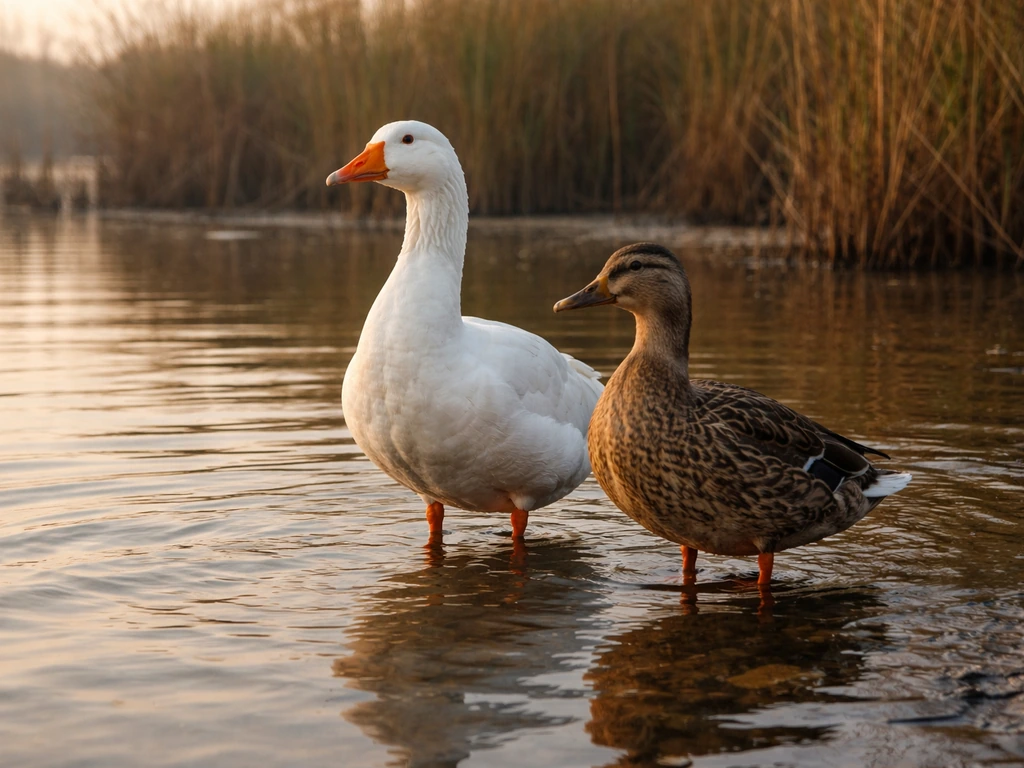
The Anseriformes (waterfowl) lineage is one of the two most ancient surviving orders of modern birds, along with Galliformes (chickens, turkeys, pheasants). Molecular estimates place the origin of Anseriformes at roughly 75 to 80 million years ago, and Vegavis iaai (entry 1 on this list) is a direct fossil representative of this lineage from 66 to 68 million years ago. Living representatives include familiar species like mallards, Canada geese, and swans, but the most ancient-looking living members are the screamers (Anhimidae) of South America and the Magpie Goose (Anseranas semipalmata) of Australia and New Guinea, both of which diverged earliest within the order. The Magpie Goose in particular retains primitive features not seen in other living waterfowl.
10. Chickens and turkeys lineage (Galliformes), living representatives
Galliformes shares the 'oldest surviving orders' title with Anseriformes, with molecular estimates placing their divergence from the common ancestor of all modern birds at approximately 75 to 80 million years ago. The most ancient-looking living representative is arguably the Hoatzin (Opisthocomus hoazin) of South America, though its placement is debated and it is now usually assigned to its own order, Opisthocomiformes. Within true Galliformes, the Malleefowl (Leipoa ocellata) of Australia and the Megapodes (mound-builders) represent some of the earliest-diverging lineages. Many Galliformes species are familiar game birds, but several, like the Malay peacock-pheasant and the Palawan peacock-pheasant, are now Vulnerable due to forest loss in Southeast Asia.
A quick reference summary of the top 10
| Rank | Species/Group | Status | Estimated Lineage Age | Region |
|---|---|---|---|---|
| 1 | Vegavis iaai | Extinct | 66–68 million years (fossil) | Antarctica |
| 2 | Ostrich (Struthio camelus) | Living — Least Concern | ~80–100 million years (molecular) | Africa |
| 3 | Rheas (Rhea spp.) | Living — Near Threatened/LC | ~70–90 million years (molecular) | South America |
| 4 | Emu (Dromaius novaehollandiae) | Living — Least Concern | ~80 million years (molecular) | Australia |
| 5 | Cassowaries (Casuarius spp.) | Living — LC to Vulnerable | ~80 million years (molecular) | New Guinea, Australia |
| 6 | Kiwis (Apteryx spp.) | Living — Near Threatened to Vulnerable | ~62–75 million years (molecular) | New Zealand |
| 7 | Moa (Dinornithiformes) | Extinct (~1440 CE) | ~80 million years (molecular) | New Zealand |
| 8 | Tinamous (Tinamiformes) | Living — varies by species | ~75–80 million years (molecular) | Central/South America |
| 9 | Anseriformes (Magpie Goose, screamers) | Living — varies | ~75–80 million years (molecular) | Worldwide |
| 10 | Galliformes (megapodes, Hoatzin) | Living — varies | ~75–80 million years (molecular) | Worldwide |
Where each species fits in the bird family tree
All ten entries fall into one of two major divisions of modern birds. Entries 2 through 8 belong to Palaeognathae, the more ancient of the two main groups, defined by a distinctive palate structure and including all ratites plus tinamous. Entries 9 and 10 belong to Neognathae, which contains over 99 percent of living bird species but whose oldest orders (Anseriformes and Galliformes) still trace back nearly 80 million years.
The Palaeognathae-Neognathae split itself is estimated at around 80 to 100 million years ago. Within Palaeognathae, the ratites (ostriches, rheas, emus, cassowaries, kiwis, moa, and elephant birds) form a group once thought to be united by their flightlessness, but modern genomic analyses have shown that flightlessness evolved independently multiple times within this group, rather than being inherited from a single flightless ancestor. Tinamous, which can fly, are nested within the ratite tree, which means the shared ancestor of ratites and tinamous was probably capable of flight, and different ratite lineages lost flight separately.
Vegavis iaai sits outside this Palaeognathae group entirely. It belongs to Anseriformes, placing it in Neognathae. Its significance is that it's the oldest fossil directly assignable to a modern bird order, anchoring the molecular clock estimates with hard physical evidence. Without Vegavis, we'd be relying entirely on molecular extrapolation for Cretaceous origins of modern birds.
Extinct vs living 'old' species: how to read this list
Vegavis iaai and the moa are both on this list, but they mean very different things. Vegavis is old because its fossil is physically ancient, from rock laid down 66 to 68 million years ago. The moa are old because their lineage traces back approximately 80 million years, but the actual birds we call 'moa' lived until roughly 600 years ago. Their lineage is ancient; the animals themselves were recent. This is a critical distinction.
For the living species on this list, like ostriches, kiwis, and emus, the situation is similar to the moa case. The individual ostriches alive today are not 80 million years old. Their evolutionary lineage, the unbroken chain of ancestor-to-descendant populations, stretches back that far. Think of it like tracing your own family tree: you're not thousands of years old, but your genetic lineage is.
The phrase 'living fossil' gets thrown around for birds like the Hoatzin and tinamous, but scientists prefer 'early-diverging lineage' or 'morphologically conservative lineage.' Every living species is equally 'modern' in the sense that it has been evolving continuously. What makes these groups special is that their basic body plan, skeletal structure, and ecological niche have changed relatively little compared to the dramatic diversification seen in more recently-diverging bird groups like songbirds or parrots.
Conservation status and threats for living species on the list
Of the eight living species or groups on this list, none is entirely in the clear. Some face serious threats right now.
| Species/Group | IUCN Status | Primary Threats |
|---|---|---|
| Ostrich | Least Concern | Habitat conversion, hunting, egg collection in some regions |
| Greater Rhea | Near Threatened | Agricultural expansion, hunting, egg collection |
| Lesser Rhea | Least Concern (regional pressure) | Overhunting, habitat loss in Patagonia |
| Emu | Least Concern (island subspecies extinct) | Vehicle strikes, predation of eggs; island forms wiped out post-colonization |
| Southern Cassowary (Australia) | Endangered (national) | Vehicle strikes, habitat fragmentation, dog attacks |
| Kiwi (various species) | Near Threatened to Vulnerable | Introduced predators (stoats, rats, dogs), habitat loss |
| Tinamous (select species) | Vulnerable to Endangered (species-specific) | Hunting, deforestation in Central and South America |
| Magpie Goose | Least Concern | Wetland drainage, hunting pressure historically |
The kiwi situation is worth emphasizing. New Zealand's kiwi conservation programs are among the most intensive in the world, involving predator-proof sanctuaries, Operation Nest Egg (a program that hatches eggs in captivity and releases chicks once they're large enough to defend themselves), and ongoing trapping of invasive predators. Without active intervention, several kiwi species would almost certainly be on a path toward extinction. Their ancient lineage, 60 to 75 million years deep, makes that prospect particularly sobering.
The cassowary story is a useful reminder that being enormous and dangerous does not protect a species from human-caused threats. The cassowary story is a useful reminder that being enormous and dangerous does not protect a species from human-caused threats, and it also connects to lists like the top 10 dangerous bird in the world world's most dangerous birds. Vehicle collisions on roads through Queensland's tropical rainforests kill cassowaries regularly, and habitat fragmentation means populations are increasingly isolated. If you're interested in how 'dangerous' relates to survival, the cassowary appears in discussions of the world's most dangerous birds, but danger to humans hasn't translated into safety for the bird itself.
How to verify these claims and go further
Bird evolutionary dating is an active research field, and the estimates in this article reflect the current scientific consensus as of 2025 to 2026. If you want to verify or dig deeper, here's how to approach it practically.
- Check the primary literature: Search Google Scholar or PubMed for 'avian divergence times,' 'Palaeognathae phylogeny,' or 'Neornithes Cretaceous origin.' Key papers include Jarvis et al. 2014 (Science, the large-scale bird genome study), Prum et al. 2015 (Nature), and Mitchell et al. 2014 on ratite phylogeny.
- Use the IUCN Red List (iucnredlist.org) for current conservation status of any living species. It's updated regularly and gives detailed threat assessments.
- The Paleobiology Database (paleobiodb.org) lets you search fossil occurrence records including Vegavis and other early bird specimens, with associated stratigraphic ages.
- TimeTree (timetree.org) is a free, peer-reviewed database of species divergence time estimates compiled from published molecular clock studies. You can search any two species and see when they diverged, with source citations.
- For New Zealand species specifically, the New Zealand Birds Online database (nzbirdsonline.org.nz) provides detailed, current natural history accounts for kiwi, moa, and other species.
- For cassowaries and emus in Australia, the Australian Government's Species Profile and Threats Database (SPRAT) provides national-level status and threat assessments.
- Museums with major avian fossil collections, including the American Museum of Natural History, the Natural History Museum (London), and the Smithsonian National Museum of Natural History, publish accessible overviews of their collections and ongoing research.
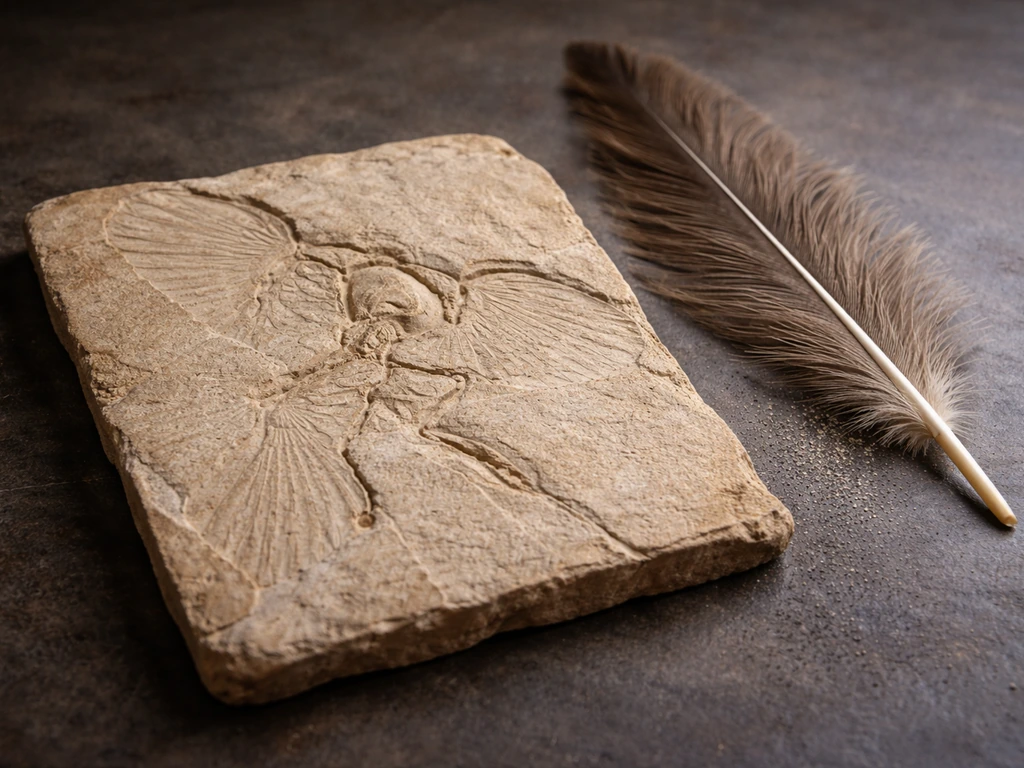
One specific thing to watch for when reading any 'oldest bird' article: check whether the source is talking about the oldest individual bird ever recorded (that would be Wisdom, the Laysan albatross, alive at over 74 years as of 2024, which is a completely different question), the oldest known fossil bird (Archaeopteryx, around 150 million years old, but Archaeopteryx is not a modern bird and sits outside Neornithes), or the oldest lineages within modern birds (which is what this article addresses). Those three questions sound similar but have entirely different answers.
The rarest and most endangered birds in the world often overlap with these ancient lineages, since small populations, island habitats, and slow reproduction rates, all common in ratites and other early-diverging groups, make species especially vulnerable once human pressures arrive. If you're also curious about conservation stakes right now, you may want to explore what is the number 1 rarest bird in the world. In Florida, the rarest bird is often defined by conservation status and local range, which is why official regional lists matter rarest bird in Florida. If you’re also curious about rare species in Africa, you can explore what rare bird can be found in uganda and why it is so hard to spot. Understanding which birds are evolutionarily oldest adds a layer of urgency to conservation: losing a kiwi species isn't just losing one bird, it's losing a lineage 60 to 75 million years in the making, with no close relatives that could fill its ecological and evolutionary role.
FAQ
Why do some websites claim a different “top” species than your list?
No. This article’s framing is about lineage age (when a modern bird group split from its closest relatives) and, for select cases, fossil age that can be assigned to a modern lineage. The oldest individual ever recorded is a separate question, and it produces completely different “winners.”
How reliable is it to rank by fossil age when bird bones are rarely preserved?
Don’t treat fossil-based “oldest” as a species guarantee. Birds have hollow, fragile bones, so absence of fossils often reflects preservation gaps rather than true lineage youth. A good check is whether the fossil has diagnostic features that place it confidently within the target modern group, not just in a vague “bird” category.
If I want to verify a claim, what should I look for in the methods behind “oldest lineage” dates?
Look for whether a study uses calibrated phylogenies and integrates fossil placement (often called total-evidence or fossil-calibrated approaches). If the source relies only on a molecular clock without well-justified calibrations, its divergence dates can drift earlier or later, especially for deep Cretaceous times.
Can the order of ranks change, and how big can that change be?
Expect uncertainty bands. Even when a species has the oldest estimates, ranks in the middle can swap depending on calibration choices, taxon sampling, and how researchers handle conflicting molecular versus fossil signals. That is why this article warns that ranks 2 through 8 have soft boundaries.
Are living “oldest species” actually as old as their lineage estimates?
Use “lineage oldest” for living species, and separate it from “when the species itself evolved.” A living ostrich today is not 80 to 100 million years old, its descendants trace back that far through an unbroken evolutionary lineage.
What’s the most common mistake people make when comparing fossils like Vegavis to recent extinctions like moa?
Yes, “moa vs lineage” is the prime example. The moa lineage is ancient, but the moa themselves existed until about 1440 CE. Many people confuse the age of a lineage with the time span during which the known species population lived.
Why doesn’t Archaeopteryx show up as “oldest modern bird”?
Your best sanity check is to see whether the fossil is confidently assigned to Neornithes (the crown group) or to a different branch of bird evolution. For instance, Archaeopteryx is very old, but it is not a modern crown-group bird, so it does not answer the same “oldest” question.
How should I interpret “top 10 oldest bird species” if I mean the oldest birds overall, not just modern ones?
If you mean “oldest birds still around,” you should focus on crown-group lineages (like Palaeognathae and certain Neognathae orders). If you mean “oldest birds ever,” you’d include much older non-crown fossils and that list becomes totally different. This article is specifically about oldest modern bird lineages plus one anchoring fossil.
Does being evolutionarily “old” correlate with being endangered right now?
If you care about survival today, switch from “deep time” ranking to current conservation status per species. Several entries here include threatened or declining species, and the practical urgency is that losing a deep-diverging lineage can mean losing many millions of years of unique evolutionary history at once.
Can a living bird be globally secure but locally in trouble, affecting how I should read the list?
Yes. A species can be classified as “Least Concern” globally while still having rapidly shrinking island or regional populations. The article hints at this with island subspecies losses, so check whether the assessment is global, regional, and whether local populations are trending differently.
Next Article
What Rare Bird Can Be Found in Uganda? Top Species Guide
Rare Ugandan birds guide: identify 8 threatened species by habitat and season, plus where to confirm sightings responsib