Uganda is home to three rare birds that most serious birders make the trip specifically to find: the Shoebill (Balaeniceps rex), Grauer's Broadbill (Pseudocalyptomena graueri), and Grauer's Swamp Warbler (Bradypterus graueri). All three are genuinely threatened or highly range-restricted, all three can realistically be seen today with the right planning, and each one requires a completely different habitat and strategy to find.
What Rare Bird Can Be Found in Uganda? Top Species Guide

Maya Hennessy
26 Apr 2026
What 'rare' actually means in Uganda's context
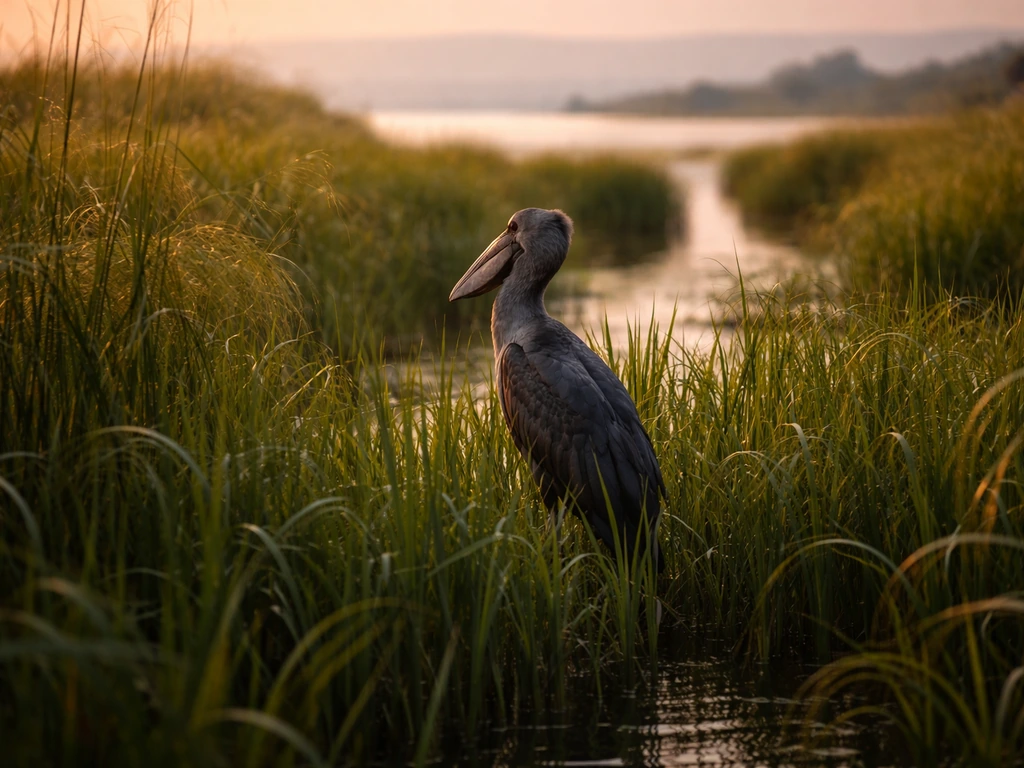
Before diving in, it helps to be precise about the word 'rare,' because it gets used four different ways in birding. A bird can be rare because it's globally threatened (declining population, IUCN Red List status), range-restricted (only exists in a narrow geographic zone like the Albertine Rift), elusive by behavior (cryptic, skulking, or tied to hard-to-access microhabitats), or locally uncommon even though it's common elsewhere. Uganda's top target species tick more than one of those boxes. The Shoebill is globally Vulnerable under IUCN criteria, range-restricted to papyrus-dominated wetlands in central Africa, and notoriously difficult to locate within those wetlands. BirdLife released a Shoebill single-species action plan (ISSAP) in 2014, which notes the species is listed as Vulnerable on the IUCN Red List. Grauer's Broadbill is an Albertine Rift endemic confined to montane forest above 2,100 meters. Grauer's Swamp Warbler is a wetland skulker in high-altitude swamps, also Albertine Rift-specific. If you're trying to verify whether your sighting counts as a 'properly rare' vagrant, Uganda falls under the jurisdiction of the East African Rarities Committee, which assesses vetted records across Kenya, Tanzania, Uganda, Rwanda, and Burundi.
Narrowing it down: where you'll be, what season, what habitat
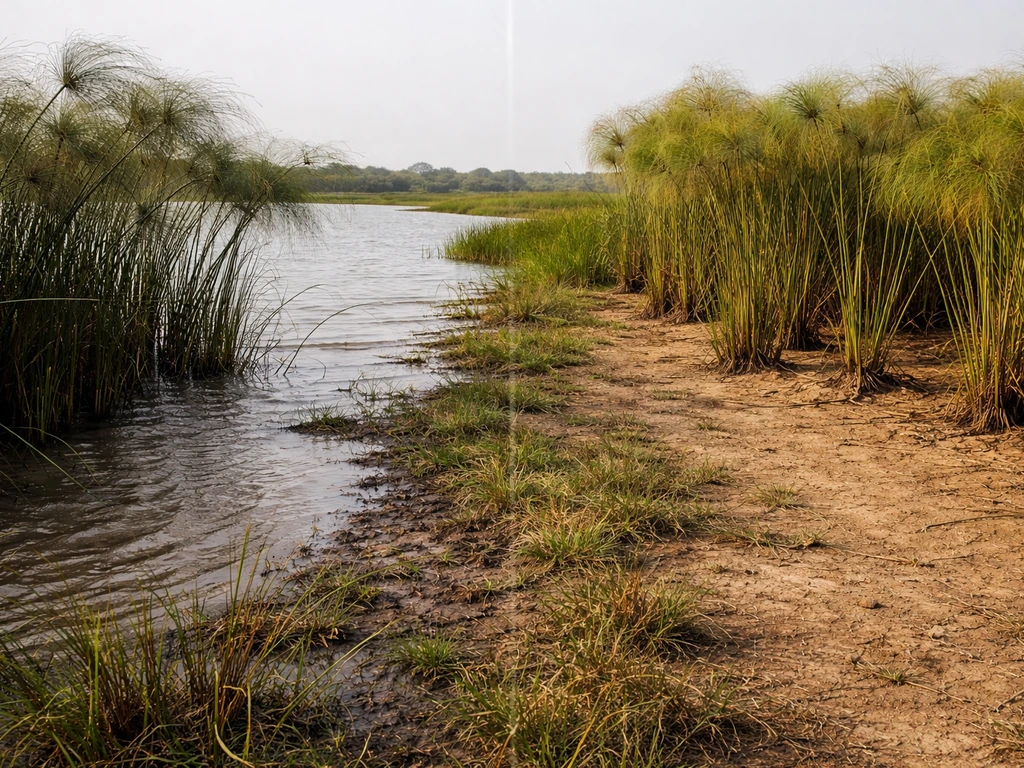
Uganda has two dry seasons (December to February and June to August) and two rainy seasons (March to May and September to November). This matters enormously because surface water availability drives Shoebill movements more than any fixed calendar date. A 2021 Scientific Reports study confirmed this directly: Shoebills shift microhabitats in response to wetland water levels, not simply time of year. In practice, the dry seasons tend to concentrate Shoebills in areas with remaining surface water, making them easier to pin down. For forest species like Grauer's Broadbill, rainfall seasonality matters less since Bwindi's montane forest stays lush year-round, though visibility in the understory is better outside of heavy rain. The habitat question is equally decisive: if you're near Lake Victoria's western shores, target the Shoebill in papyrus wetlands. If you're heading southwest to Bwindi Impenetrable National Park, you're in broadbill and swamp warbler territory.
| Species | Habitat Type | Best Location | Best Season |
|---|---|---|---|
| Shoebill | Papyrus wetlands, shallow marsh | Mabamba Bay (Lake Victoria shore) | Dry seasons (Dec–Feb, Jun–Aug) |
| Grauer's Broadbill | Montane forest, 2,100–2,200 m | Bwindi Impenetrable NP (Mubwindi Swamp Trail) | Year-round; avoid heavy rain |
| Grauer's Swamp Warbler | High-altitude swamp/sedge marsh | Muchuya Swamp (Echuya Forest Reserve), Mubwindi Swamp | Year-round; early morning |
The three high-priority rare birds: what to look and listen for
Shoebill (Balaeniceps rex)
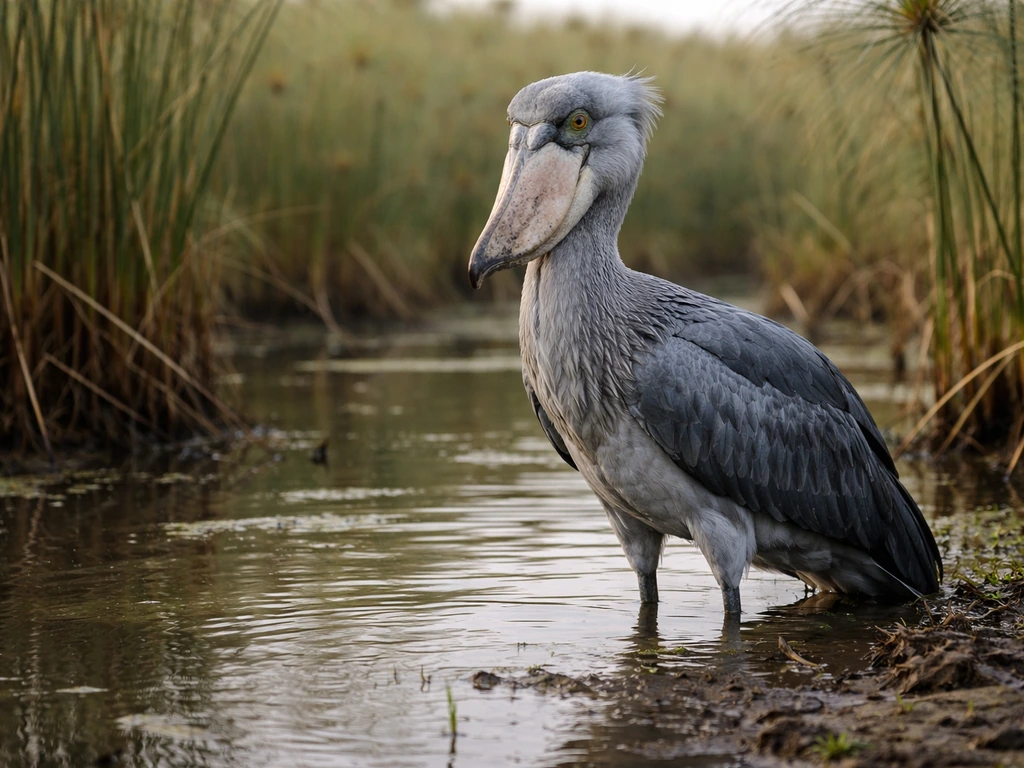
You will not mistake a Shoebill for anything else once you see one. It stands roughly 1.2 meters tall with blue-grey plumage, a massive shoe-shaped bill (hence the name) that can measure up to 23 centimeters long, and an almost prehistoric stillness when it's hunting. It waits motionless in papyrus or standing water for lungfish, eels, and water snakes, then strikes with an explosive lunge. It's not a loud bird, but it makes a distinctive bill-clattering sound (like machine-gun clapping) especially during nest interactions. Behaviorally, look for a large grey shape standing perfectly still in dense papyrus or at the edge of open water. Don't confuse it with the Grey Heron, which is slimmer, has a yellow bill, and has more active hunting movement. The Shoebill's IUCN status is Vulnerable globally; Uganda's national red list records it as Endangered at the national level. UWA's 2019 bird monitoring report specifically flags Mabamba Bay as a confirmed monitoring site for the species.
Grauer's Broadbill (Pseudocalyptomena graueri)
This is one of Africa's most wanted birds, a small, compact bird about 13 centimeters long with vivid turquoise-green plumage on its underparts, a broad flat bill, and a distinctive pale eye ring. In Uganda, it's a rare resident restricted to Bwindi Impenetrable Forest at altitudes of approximately 2,100 to 2,200 meters. It's an Albertine Rift endemic, meaning it exists only in the narrow mountain zone straddling the borders of Uganda, DRC, Rwanda, and Burundi. Its call is a soft, descending whistle, easily missed in dense forest noise. In the field, work the Mubwindi Swamp trail slowly and look into the mid-canopy of the forest edge near swamp vegetation. Pairs have been recorded on this trail, and patience is the only strategy that works. Habitat threats from deforestation make every sighting count.
Grauer's Swamp Warbler (Bradypterus graueri)
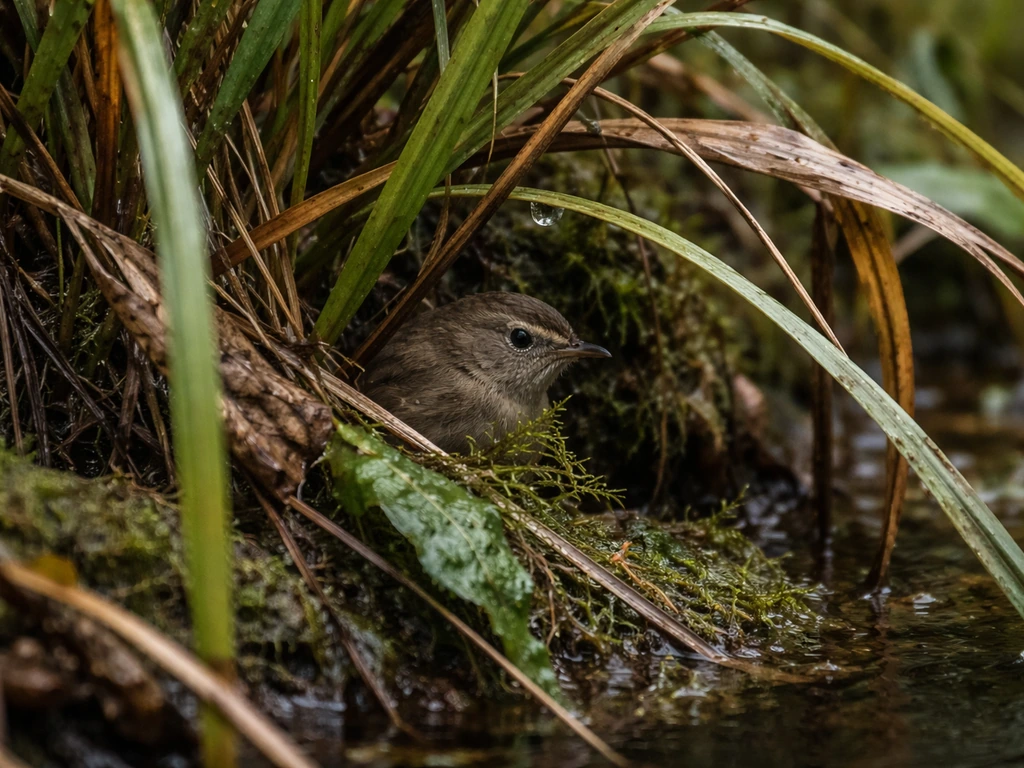
Also called Grauer's Rush Warbler, this small brown skulker is one of the hardest birds to actually see in East Africa. It lives in dense high-altitude swamp vegetation, particularly sedge beds and rush marshes, and tends to stay low and hidden. You'll hear it before you see it: a fast, reeling, cricket-like song delivered from deep inside marsh vegetation. In Uganda, the two most reliable locations are Muchuya Swamp within Echuya Central Forest Reserve (near Kabale in southwest Uganda) and Mubwindi Swamp in Bwindi. It also occurs in Mgahinga National Park. To confirm an ID, look for a plain brown bird with a slightly rufous tone on the back, a long tail often cocked slightly upward, and a pale buff underside. Patience, silence, and arriving before 7 a.m. dramatically improve your chances of getting a visual rather than just a recording of the call.
Best places to look in Uganda
Mabamba Bay is your primary Shoebill destination. It sits on the northwestern shore of Lake Victoria, about 50 kilometers west of Entebbe Airport, making it one of the most accessible world-class birding sites on the continent. The wetland system holds Ramsar designation, is listed as an Important Bird Area by BirdLife, and has active ecotourism infrastructure specifically designed for Shoebill trips. Local boatmen know exactly where the birds are feeding. NatureUganda has been involved in promoting community-based ecotourism here, and arriving with a local guide is both the most effective strategy and the most conservation-positive way to visit.
Bwindi Impenetrable National Park in southwestern Uganda is the site for both Grauer's Broadbill and Grauer's Swamp Warbler. Bwindi is described by experienced Albertine Rift birders as Uganda's premier birding site, hosting a very high proportion of Albertine Rift endemic species. The Mubwindi Swamp trail in the southern sector of the park is the most targeted trail for both species. Echuya Forest Reserve, specifically Muchuya Swamp near Kabale, is the other key location for the swamp warbler and is sometimes included in a southwest Uganda birding itinerary.
Field tips: how to spot and actually confirm what you're seeing
- Arrive at Mabamba Bay at dawn or just after. Shoebills are most active early in the morning and in the late afternoon. Midday heat often sends them deeper into papyrus where they stand motionless and are nearly impossible to spot.
- Hire a local boat guide at Mabamba. They track individual birds and know which channels hold active hunters. Going in without one wastes hours.
- For Bwindi forest species, walk slowly and stop frequently. Grauer's Broadbill responds to patience far more than to playback. Listen for its call at the forest-swamp edge, especially between 6 and 9 a.m.
- For Grauer's Swamp Warbler, stand silently at the edge of the swamp before 7 a.m. and wait. The song is loud and distinctive even if the bird itself stays hidden. Record the call on your phone to help confirm the ID later with a guide or checklist app.
- Photograph everything you can, even a partial view. A clear photo of the bill shape (Shoebill), the turquoise underparts (broadbill), or the rufous-toned back (swamp warbler) is enough for most ID confirmation. Submit sightings to eBird even if you only have audio.
- Cross-check any sighting against the published Albertine Rift endemic checklist and the Uganda national checklist. If something seems off about the ID, contact NatureUganda or a local expert before claiming it as confirmed.
- For potential vagrant rarities (birds not on these key lists), remember that the East African Rarities Committee reviews and vets unusual records across the region. Document carefully: location with GPS if possible, time, behavior, photos, and measurements if the bird is in hand under a licensed researcher.
Why these birds are rare and what's putting them at risk
The Shoebill's global Vulnerable status comes from a combination of wetland drainage and degradation, direct disturbance at nests (including from unmanaged tourism), hunting, and entanglement in fishing gear. Uganda holds one of the species' most reliable populations, but even here the bird is under pressure. The BirdLife DataZone factsheet for the Shoebill notes an important caution: changes in IUCN Red List category can reflect improved knowledge of a species rather than a genuine improvement in its situation. So a status upgrade from Endangered to Vulnerable doesn't necessarily mean the bird is safer; it may simply mean we now have better population data.
Grauer's Broadbill faces deforestation and habitat degradation across the narrow band of Albertine Rift montane forest it depends on. At Bwindi, the species benefits from national park protection, but its extremely low density and altitude specificity (2,100 to 2,200 meters) means any further forest loss hits it disproportionately hard. Grauer's Swamp Warbler is equally habitat-specific: it needs intact high-altitude swamp systems, which are vulnerable to drainage for agriculture, particularly around the densely populated hill country of southwest Uganda near Kabale. These aren't abstract future threats; they're active pressures right now.
Uganda's National Red List records these species separately from global IUCN assessments, and the national-level classifications sometimes differ because local population trends can diverge from global ones. The Shoebill's national status (Endangered in Uganda) is more alarming than its global Vulnerable category, which underlines that Uganda needs to be treated as a critical stronghold, not just one node in a wider range. If you're interested in how habitat loss is driving birds toward extinction globally, these species fit into a much larger pattern, similar to what's happened with range-restricted endemics in other biodiversity hotspots.
How to get reliable, up-to-date sightings before and during your trip
Don't rely on older field reports or even this article alone for on-the-ground confirmation. Bird locations shift, especially Shoebills, which move based on water availability rather than predictable schedules. Here's how to get current intelligence:
- eBird (ebird.org): Search by location (Mabamba Bay, Bwindi Impenetrable NP, Echuya Forest Reserve) and filter for recent reports within the last 30 days. This gives you real birder sightings with dates and GPS coordinates.
- NatureUganda: Uganda's leading conservation and birding organization. They run the country's Important Bird Area program and have staff and partners with current field knowledge. Contact them directly before a trip.
- Uganda Wildlife Authority (UWA): The agency manages national parks including Bwindi and conducts regular bird monitoring. Their ranger stations at key parks often have useful informal intelligence about recent species activity.
- African Bird Club: Maintains Uganda country pages with checklist resources and context on which species records are properly documented vs. provisional.
- Local specialist guides: For Bwindi, guides based in Buhoma or Ruhija who specialize in Albertine Rift endemics will know the current status of Grauer's Broadbill sightings on the Mubwindi trail better than any remote database. For Mabamba, the community boatmen are the most reliable real-time source.
- Birding tour operator trip reports: Search for recent trip reports from operators who specialize in Uganda or East Africa birding. These are often publicly available, detailed, and recent, and they cover exactly the sites and species discussed here.
Uganda's rare birds sit at the intersection of conservation urgency and genuine accessibility. If you're trying to answer the bigger question, this guide explains what is the number 1 rarest bird in the world. The destination topic is mentioned as a related option in Uganda's broader “rarest bird” context what is the rarest bird in florida. The Shoebill, in particular, is one of those species that consistently tops lists of the world's most distinctive birds, and unlike some other globally threatened species, it can realistically be seen in a single morning at Mabamba Bay with local help. If you want a broader look at perilous wildlife, check out the top 10 dangerous bird in the world tops lists of the world's most distinctive birds. If you want to extend that curiosity, this guide to the top 10 oldest bird species is a great next read for bird-history context. That combination of rarity, threat, and achievable encounter is what makes Uganda one of Africa's most compelling birding destinations right now. If you want to understand how range-restricted species like these fit into the global picture of endangered birds and extinction risk, they belong in the same conversation as the rarest birds in other regions and the broader question of what makes a bird species irreplaceable.
FAQ
What rare bird in Uganda can I reliably see without specialized gear?
For most visitors, the most reliable option is Shoebill at Mabamba Bay, because local boatmen lead the boat to productive papyrus feeding areas and you can scan with standard binoculars. A strong flashlight is still useful near dawn for spotting bill-claps or silhouettes on the water edge, but you usually do not need scopes or camera traps.
If I arrive in Uganda during the rainy seasons, will I miss the Shoebill entirely?
You are less likely to get a clean view, not guaranteed to miss. Rain can disperse Shoebills within wetland systems by changing surface water and prey access, so the productive microhabitat changes. Plan for flexible timing, and rely on a current local guide to tell you where the remaining standing water is today.
Are Grauer's Broadbill and Grauer's Swamp Warbler in the same area, and can I do both on one trip?
Yes, but the exact walking strategy differs. Both occur around Bwindi and the targeted southern-sector trail for both species is the Mubwindi Swamp trail, but you may still need separate sessions at different times of day because the warbler is more often detected first by sound from deeper swamp cover.
What time of day gives the best chance to see the Swamp Warbler visually?
Early morning before 7 a.m. tends to improve visual chances, not just recordings. The combination of lower ambient noise and calmer light helps you pick out the plain brown body and faint rufous tone, especially when you arrive early enough to let your presence settle before you try for a photo.
How do I avoid confusing the Shoebill with other large wading birds?
Focus on proportions and behavior: the Shoebill is tall with a very heavy shoe-shaped bill and a prolonged, near-motionless hunt posture in dense papyrus or at the edge of open water. If the bird is actively stalking with a slimmer neck-bill profile, it is less likely to be a Shoebill (for example, Grey Heron patterns usually include more movement and a different bill shape).
Do I need a boat to see the Shoebill at Mabamba Bay?
A boat trip is the practical default, because it lets you reach papyrus edge zones where Shoebills feed and stay at safe viewing distance. However, if water levels are unusually high or low, the guide may change approach routes, so confirm the plan with your boatman based on current conditions rather than assuming the same spot each day.
Can I use old birding trip reports to plan exactly where to go in Uganda?
It is risky to rely on fixed locations from older reports, especially for Shoebill. Even within the same destination, the bird can shift to areas with remaining surface water, so you should treat past sightings as a starting point and then confirm current access and microhabitats with recent local intelligence.
What if I only hear the Grauer's Swamp Warbler and never see it? Does it still count as an identification?
In the field, an audio-only identification can be strong if the call matches and you know you are in the right habitat and elevation, but visual confirmation is more defensible for a rare-bird “life list” entry. If you want the cleanest verification, plan an extra early session to attempt a view of the plain brown bird with pale buff underside and the slightly cocked tail.
How do I ensure my sighting is considered a “proper rare” record in the region?
If you are trying to document a verifiable rare record beyond casual birding, familiarize yourself with the East African Rarities Committee process for vetted sightings across the region. In practice, that means keeping field notes and, ideally, photo or audio evidence with clear location and time, since assessment focuses on reliable documentation.
Is it worth traveling to Uganda if my goal is only one rare bird?
Often yes, especially if you choose Shoebill at Mabamba Bay, where targeted ecotourism and local knowledge make a same-morning encounter realistic. If you instead aim for both Albertine Rift forest endemics, budget more time and accept lower encounter frequency because both broadbill and swamp warbler are low-density and habitat-locked.
Next Articles
Top 10 Dangerous Birds in the World: Risks and Safety
Ranked top 10 dangerous birds, why they’re risky to people, where they live, and safety tips by species.
Is the Dodo Bird Still Alive? What Evidence Shows Today
Learn if any dodos could exist today, why scientists say they are extinct, and how to judge sightings reliably.
Does Dodo Bird Still Exist? Answer and Extinction Facts
No, dodo birds are extinct. Learn when, why, where they lived, and how evidence confirms it.