The biggest predatory bird alive today is the Andean condor (Vultur gryphus) by combined size metrics, with a wingspan reaching around 3.3 meters and a body weight up to roughly 15 kg. If you narrow 'biggest' to the most powerful active hunter (rather than a scavenging raptor), Steller's sea eagle takes that crown, weighing up to 9 kg with a wingspan of 2.2–2.45 meters. And if you open the question to all of natural history, the extinct Argentavis magnificens blows every living species out of the water, with an estimated mass of 70–72 kg and a wingspan of around 7 meters.
What Is the Biggest Predatory Bird? Live and Extinct

Maya Hennessy
1 May 2026

What 'predatory bird' and 'biggest' actually mean
Before you can crown a winner, you need to agree on the rules. 'Predatory bird' (or raptor, or bird of prey) is broader than most people assume. Merriam-Webster defines a raptor as any carnivorous bird 'such as a hawk, eagle, owl, or vulture.' U.S. federal code (16 USC § 460iii-1) explicitly includes eagles, falcons, owls, hawks, and other birds of prey in the same legal category. BirdLife International lists owls (order Strigiformes) as a major bird-of-prey grouping alongside diurnal raptors. So yes, owls count, vultures count, and terror birds from the fossil record absolutely count if predatory ecology is your filter.
Then there's what 'biggest' means, and this is where the debate gets real. Four distinct measurements matter here, and they often produce different champions: body mass (weight in kilograms), body length (beak tip to tail tip in centimeters), wingspan (wingtip to wingtip in meters), and hunting power (the combination of grip strength, prey size, and hunting niche). A bird can top one list and rank much lower on another.
| Metric | Living Winner | All-Time Winner |
|---|---|---|
| Wingspan | Andean condor (~3.3 m) | Argentavis magnificens (~7 m) |
| Body mass | Andean condor (~15 kg) | Argentavis magnificens (~70–72 kg) |
| Body length | Andean condor (~130 cm) | Kelenken / large phorusrhacids |
| Active hunting power | Steller's sea eagle / Harpy eagle | Kelenken (terror bird) |
The main contenders: living raptors vs extinct mega-predators
There are two very different pools to draw from. Living raptors are well-documented, with verified museum specimens, field measurements, and genetic records. Extinct mega-predators are reconstructed from fossil bones, so their size estimates carry uncertainty, sometimes wide uncertainty. Both groups deserve a place in this conversation, especially on a site that takes extinct birds seriously.
Living contenders

- Andean condor (Vultur gryphus): Guinness World Records names it the world's largest living bird of prey. Wingspan up to ~3.3 m, weight up to ~15 kg. It is a scavenger by primary feeding strategy, which is why some ornithologists prefer to call the Steller's sea eagle the 'largest hunting raptor.'
- Steller's sea eagle (Haliaeetus pelagicus): Guinness frames it as the largest eagle. Wingspan 2.2–2.45 m, weight 5–9 kg. It actively hunts large fish and is native to coastal northeast Asia, making it a true apex predator in its habitat.
- Harpy eagle (Harpia harpyja): Body length up to 89–104 cm, wingspan up to ~2 m. Arguably the most powerful eagle by grip strength and prey size, hunting monkeys and sloths in South American rainforests.
- Great gray owl (Strix nebulosa): The longest owl by body measurement, with a wingspan of 137–153 cm. Surprisingly, it weighs far less than it looks, because its thick plumage creates the illusion of bulk.
- Eurasian eagle-owl (Bubo bubo): The heaviest owl, with large specimens approaching 4 kg and wingspan potentially reaching 2 m. It's probably the most powerful owl alive, capable of taking prey as large as young deer.
- Blakiston's fish owl (Ketupa blakistoni): Rivals the eagle-owl for the title of world's largest owl by overall measurements. Found in riverine forests of Russia, China, and Japan, it is critically endangered in parts of its range.
Extinct contenders
- Argentavis magnificens (late Miocene, Argentina): A teratorn estimated at 70–72 kg with a ~7 m wingspan. Peer-reviewed aerodynamic modeling confirms it was almost certainly the largest flying bird ever. Whether it actively hunted or mostly scavenged is debated, but its predatory anatomy is clear.
- Teratornis merriami (Pleistocene, North America): A smaller relative of Argentavis but still massive, with a wingspan estimated around 11–12 feet (~3.4–3.7 m). Fossils are well-represented in the La Brea Tar Pits.
- Kelenken guillermoi (Miocene, Argentina): The largest known phorusrhacid, or 'terror bird.' Its skull alone is the largest ever recorded for any bird. Phorusrhacids were flightless but unambiguously active predators, using their massive hooked beaks to dispatch prey, a behavior confirmed by CT-scan modeling of their skull mechanics.
- Titanis walleri (Pliocene–Pleistocene, North America): Another terror bird that made it into North America before the Great American Biotic Interchange closed. Its exact size remains debated, but it was a formidable ground predator.
Why each contender can legitimately claim 'the biggest'
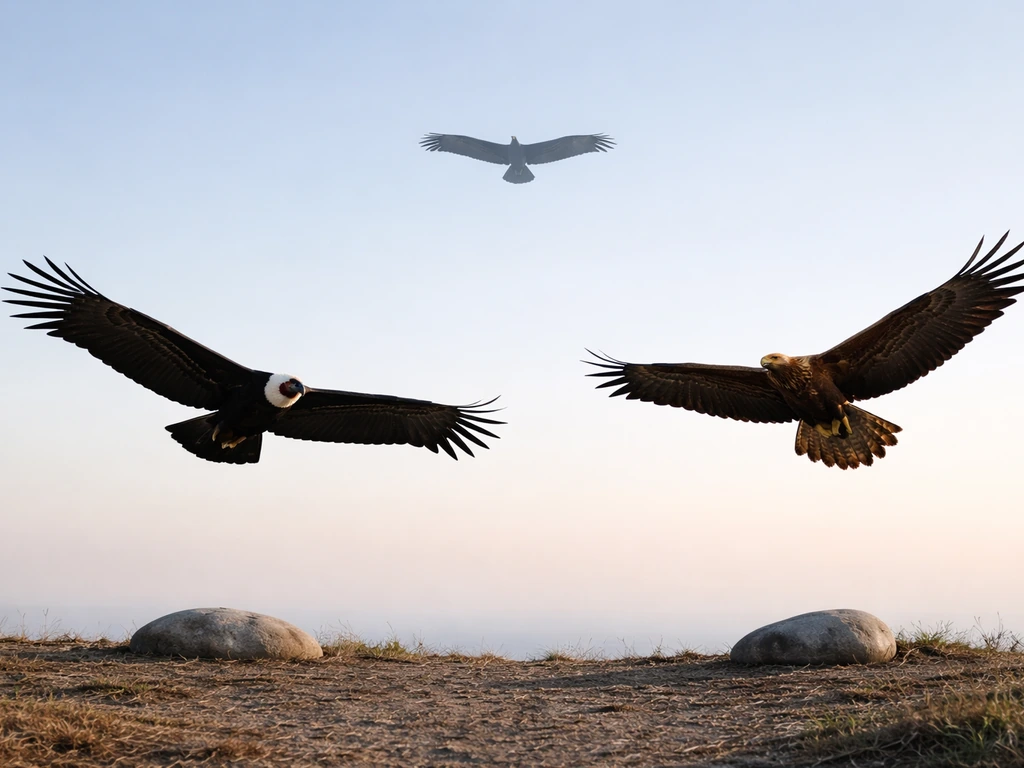
The Andean condor wins on wingspan and mass among living birds, and Guinness backs that framing. But if you disqualify scavengers and want the biggest active-hunting bird alive, Steller's sea eagle or the harpy eagle is a more defensible answer. The Los Angeles Zoo reports that a large harpy eagle typically weighs about 10, 20 lb (about 4. 5, 9 kg) and has a wingspan of about 7 ft (about 2.
13 m) Steller's sea eagle or the harpy eagle. The harpy eagle's prey relative to its body size arguably makes it the most formidable living avian predator, even if raw measurements don't put it at the top. Among owls, the Eurasian eagle-owl and Blakiston's fish owl trade places depending on which specimen and which measurement you use.
The great gray owl looks the biggest but is actually one of the lightest 'large' owls, a fact worth flagging because internet sources often confuse visual size with biological size.
Among extinct species, Argentavis takes the wingspan and mass crown for flying birds. But Kelenken and the broader phorusrhacid family are the most credible 'biggest predatory bird' candidates if you define predatory strictly as 'actively hunts and kills prey.' These terror birds were dedicated terrestrial hunters during a period when large mammalian predators hadn't yet colonized South America. Smithsonian researchers have noted that some terror birds may have been at least 10 percent larger than Kelenken based on recent finds, meaning the true upper size limit of that lineage is still being worked out.
The biggest living predatory birds, up close
Andean condor
The Andean condor ranges along the entire length of the Andes and down into Patagonia. It is a conservation-dependent species: populations declined sharply through the 20th century due to lead poisoning (from feeding on hunter-shot carcasses), habitat loss, and persecution. Captive breeding programs, particularly in the U.S. and Colombia, have helped stabilize numbers. Its sheer size, up to 3.blank" rel="noopener noreferrer">3 m wingspan and 15 kg, makes it the undisputed record-holder among living raptors by raw measurement.
Steller's sea eagle
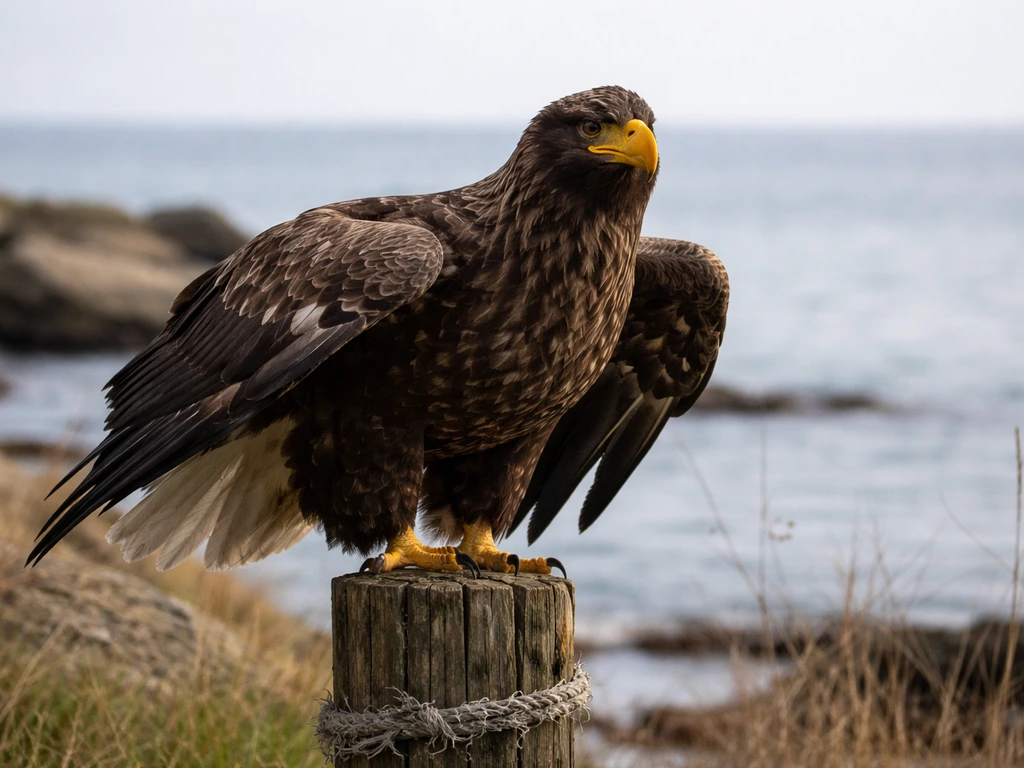
Steller's sea eagle is the heavyweight champion among eagles, with the largest recorded individuals pushing 9 kg. It hunts along the coasts and river systems of Kamchatka, the Sea of Okhotsk shoreline, and parts of Japan during winter. Where do goliath bird eaters live? Goliath bird-eating tarantulas are found in parts of West and Central Africa, which is a helpful comparison when you are thinking about where very large predators spend their time. The species is considered vulnerable, with fewer than 4,000 individuals remaining. Its dependence on salmon and other large fish makes it sensitive to overfishing and river degradation, issues that connect it to the same conservation pressures facing large predatory birds globally.
Harpy eagle
At up to 104 cm long with a wingspan reaching 2 m, the harpy eagle is the apex aerial predator of the Amazon and Central American rainforests. It hunts monkeys, sloths, and large lizards using extraordinary talons that can reportedly exert crushing forces comparable to a large dog's bite. Deforestation is its primary threat, and it is listed as vulnerable by the IUCN.
The cassowary, which sits in a related conversation about dangerous and large birds, is similarly threatened by habitat destruction in its range, a pattern you see repeatedly among the world's largest birds. If you're also curious about how tall a cassowary bird is, that species is a different kind of large, ground-dwelling bird to compare how tall is a cassowary bird.
The cassowary is often considered dangerous because it can deliver powerful kicks and may chase people when it feels threatened.
Eagle-owls and fish owls

Among owls, the Eurasian eagle-owl is the mass champion, with large females reaching nearly 4 kg and a wingspan that can approach 2 m in the biggest specimens. It hunts across an enormous range, from Western Europe to East Asia, taking prey ranging from beetles to small deer. Blakiston's fish owl competes for the 'world's largest owl' title, particularly by overall body dimensions, but it is endangered in Russia and critically threatened in parts of China due to old-growth forest loss and river pollution. Both owls are nocturnal hunters, which PBS Nature and BirdLife International explicitly classify within the broader 'bird of prey' category.
Extinct giants that make living raptors look modest
Argentavis magnificens, which lived approximately 6 million years ago in what is now Argentina, is the benchmark for all-time largest flying predatory bird. A peer-reviewed aerodynamics study published in the Proceedings of the National Academy of Sciences estimated its mass at 70–72 kg and wingspan at approximately 7 meters. For scale, that's roughly the wingspan of a small commuter aircraft. Guinness World Records cites fossil evidence of a wingspan potentially exceeding 6 meters and a mass around 80 kg for the largest specimen framing. Whether Argentavis actively hunted or primarily scavenged (like a giant condor) remains an open scientific question, but its anatomy is clearly predatory.
The phorusrhacids, or terror birds, are the more unambiguous predators of the extinct world. Kelenken guillermoi, described from Miocene deposits in Patagonia, had a skull measuring roughly 71 cm, the largest known skull of any bird. CT-scanning of terror bird skulls has revealed biomechanical evidence that they used a hatchet-like striking motion with their beaks rather than tearing like modern raptors. These were dedicated pursuit predators, and the largest species could have stood around 3 meters tall. They went extinct only a few million years ago, likely outcompeted after the land bridge between North and South America allowed placental carnivores to enter their range.
Teratornis merriami bridges the gap between the prehistoric giants and the modern era. Its remains are common in the La Brea Tar Pits, meaning it coexisted with early humans in North America. The National Park Service cites its wingspan at around 11–12 feet, which overlaps with the lower end of Andean condor-relative scaling. It vanished in the end-Pleistocene megafaunal extinction, the same event that erased most large North American animals.
How to verify any 'biggest' claim and pick the right answer for your question
The internet is full of conflicting claims about the biggest predatory bird because different sources use different metrics without stating which one. Here's a practical checklist for evaluating any claim you encounter.
- Check which measurement is being used. Wingspan, body length, and body mass rarely produce the same winner. A credible source will specify units (meters, kilograms, centimeters) rather than just saying 'the largest.'
- Check whether the source means living or all-time. Guinness World Records entries are usually explicit about this. If a source doesn't clarify, assume it means living species unless it references fossils.
- Check the definition of 'predatory.' If the source counts vultures and condors, the Andean condor usually wins by mass and wingspan. If it restricts to active hunters, Steller's sea eagle or harpy eagle takes the living title, and Kelenken takes the all-time active-predator crown.
- Cross-reference with Cornell Lab's All About Birds for living species measurements (they publish standardized wingspan and mass ranges), Britannica for overview comparisons, and peer-reviewed sources (particularly PNAS or similar journals) for extinct species estimates.
- For extinct species, treat size estimates as ranges, not fixed numbers. Fossil records are incomplete, and Smithsonian researchers have noted that the true upper size of some extinct lineages is still being revised upward as new specimens are found.
- If the source is a trivia site or general encyclopedia without citations, verify the key number against at least one of the above before repeating it.
The clearest single answer for most people asking this question is: the Andean condor is the biggest living predatory bird by wingspan and mass (Guinness-verified), the Steller's sea eagle is the biggest active-hunting eagle, the Eurasian eagle-owl or Blakiston's fish owl is the biggest living owl, and Argentavis magnificens is the biggest predatory bird in all of natural history if you include flying species, while Kelenken is the biggest if you want a dedicated ground-hunting predator. At the end of that comparison, the Andean condor is the biggest living predatory bird by wingspan and mass, the Steller's sea eagle is the biggest active-hunting eagle, and the Eurasian eagle-owl or Blakiston's fish owl is the biggest living owl, while Argentavis magnificens is the biggest predatory bird in all of natural history if you include flying species, while Kelenken is the biggest if you want a dedicated ground-hunting predator, which is helpful context when you are instead asking what is the most dangerous bird in australia. Pick the definition that matches your question, and you'll have an answer that holds up to scrutiny.
FAQ
If I mean “biggest” in terms of how hard it can kill prey, which bird should I look at first?
Start with hunting specialists rather than scavengers. Among living birds, that generally points to eagles (like Steller’s sea eagle) or formidable owl hunters, while the harpy eagle is often the standout for prey relative to body size. For extinct birds, “terror birds” (phorusrhacids) are usually the safest choice when you define predatory as actively catching and killing.
Does an owl automatically count as a predatory bird even though it doesn’t hunt in the day?
Yes. The key is diet and hunting behavior, not time of day. Many classifications group owls with raptors/birds of prey, even though their hunting is nocturnal and their anatomy differs from hawks and eagles.
Why do some sources claim a different “biggest predatory bird” than the condor?
Most discrepancies come from using a single metric without telling you which one. Wingspan, body mass, body length, and “predatory power” (niche plus killing style) can produce different winners, and visuals can mislead you. The article’s checklist is the quick way to verify you are comparing the same category and measurement.
Is the Andean condor truly a “predator,” or is it mainly a scavenger?
The condor is often primarily described as a scavenger, so if your definition requires active hunting, it becomes a weaker fit. That’s why Steller’s sea eagle becomes the more defensible answer when you restrict to active hunting.
How reliable are size estimates for extinct giants like Argentavis and Kelenken?
They are based on fossils, so there is uncertainty. Researchers estimate body mass and wingspan from bone measurements, and individual fossils can represent only part of the true size range. For that reason, claims like “up to 80 kg” should be treated as upper-bounds for the largest specimens, not a guaranteed maximum.
Are the “largest owl” rankings consistent across countries and field guides?
They can vary because the contenders trade places depending on whether you are comparing mass, wingspan, or overall dimensions, and because adult sizes differ by region and sex. If you want the most comparable answer, specify whether you mean mass (usually heaviest females) or wingspan (largest individuals).
Which measurement is best if I want a real-world sense of scale and flight capacity?
For flying birds, wingspan is the most intuitive measure for scale, but mass helps for flight performance context. A bird can have a very large wingspan yet be relatively light, or be heavy with a shorter wingspan, so checking both gives you a more accurate sense of “how big” it likely was in the air.
What’s the easiest way to avoid mixing up “predatory birds” with other big dangerous birds like cassowaries?
Use taxonomy plus lifestyle. Cassowaries are large, powerful, and dangerous ground birds, but they are not birds of prey. If you mean raptors or vultures, you should stick to carnivorous aerial or hunting bird lineages rather than flightless ratites.
Could a bird that’s technically smaller than the condor still be the bigger threat to animals?
Yes, because danger depends on hunting method and prey choice, not only size. A smaller predator that specializes in catching large prey relative to its own body weight, or that has extremely strong grasping talons or beak mechanics, can be more threatening on a per-encounter basis.