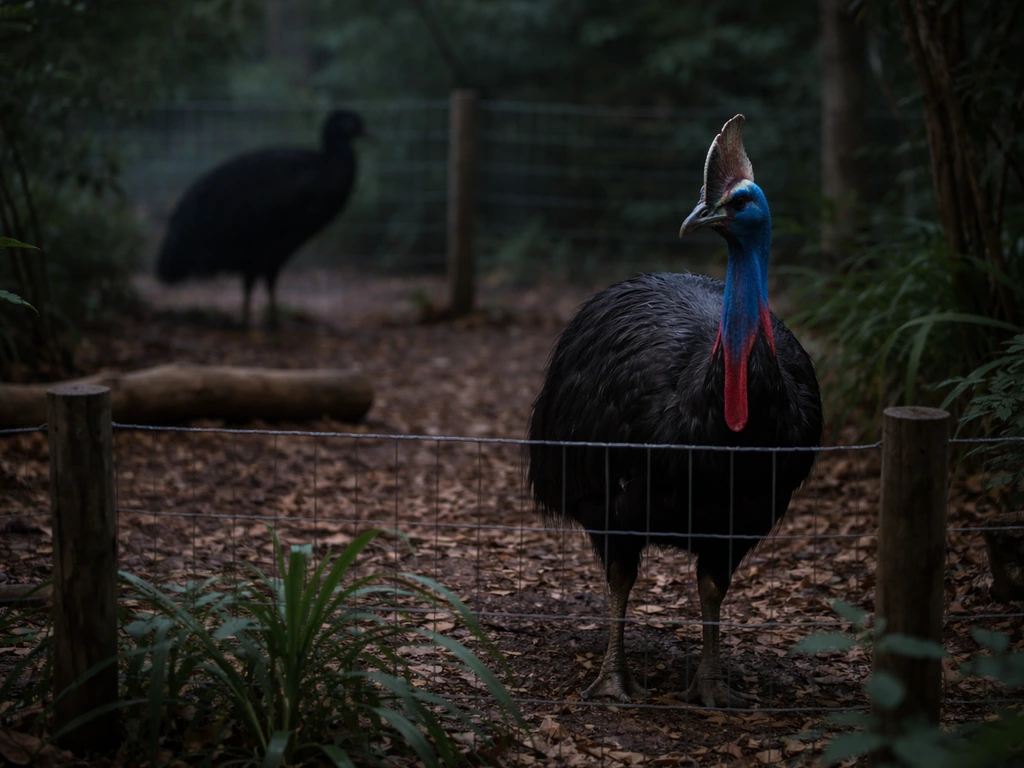
Yes, the cassowary genuinely earns the title of most dangerous bird to humans, though the full answer is a bit more nuanced than a simple ranking. What makes it dangerous isn't just one thing: it's the combination of a powerful body, a dagger-like claw that can open up a serious wound in a single kick, and a behavioral pattern that puts it in close contact with people far more often than most other large birds. When you factor in how frequently cassowary encounters lead to real injuries, and how severe those injuries can be, the cassowary stands out. But context matters, and comparing it honestly to birds like the ostrich or emu tells a richer story.
Why Is the Cassowary the Most Dangerous Bird?

Maya Hennessy
25 Apr 2026
Cassowary temperament: what makes this bird tick
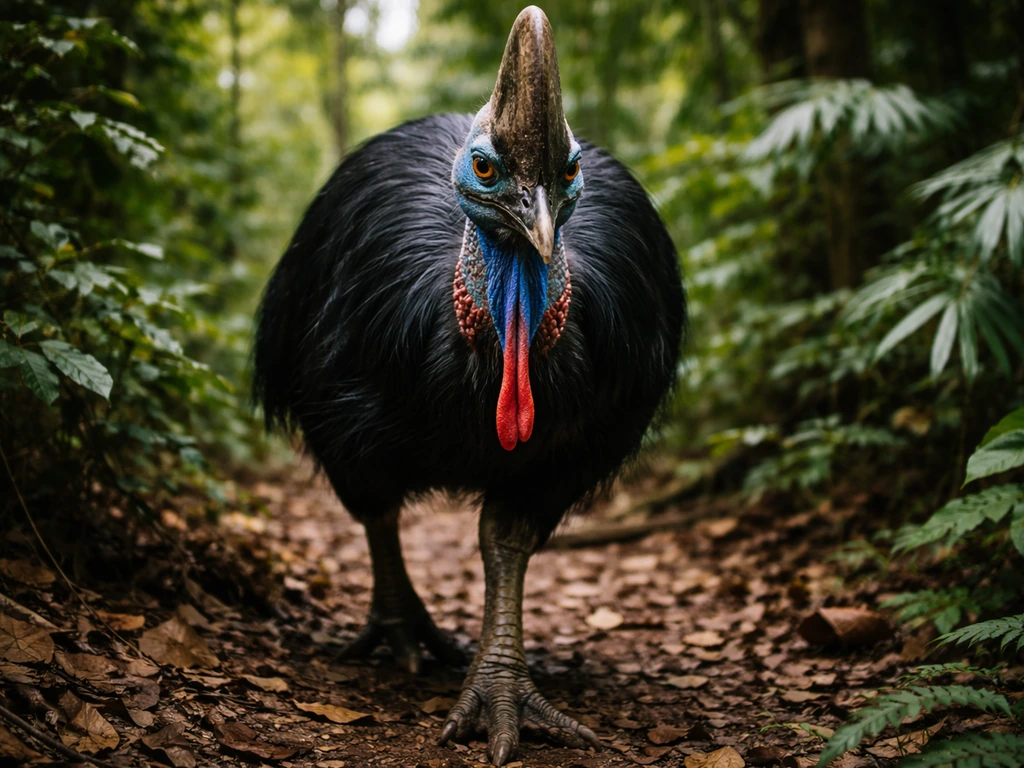
Cassowaries are not naturally aggressive the way a territorial dog or a cornered predator might be. In the wild, they are shy, solitary birds that spend most of their time moving quietly through rainforest understory. The danger isn't that they hunt people or go looking for a fight. The problem is that they are large, fast, and defensive, and they share fragmented habitat with a lot of humans in northeastern Queensland. When people enter that equation, things can go wrong quickly.
The biggest behavioral driver of cassowary attacks isn't aggression for its own sake. Research on Southern cassowary incidents in Queensland found that 73% of documented attacks involved birds that were expecting or soliciting food from humans. In other words, cassowaries that had been fed by people, or had learned to associate humans with food, were responsible for the vast majority of incidents.
That changes how you think about the danger: it isn't a wild predator stalking you, it's often a bird that's been inadvertently trained by people to approach, and then reacts defensively when a person gets too close or doesn't produce food. Feeding cassowaries has been made illegal in Queensland partly for this reason, because a food-conditioned cassowary is genuinely more dangerous to the next person who walks past.
Outside food-conditioning, cassowaries also show heightened defensiveness when guarding chicks or eggs. Males incubate the eggs and raise the chicks alone, and during that period they become noticeably more willing to charge. Breeding cycles, particularly around the period after eggs are laid, can increase the likelihood of an aggressive response if a person wanders too close to a nest. This is worth knowing if you're hiking through cassowary habitat in northern Queensland's wet tropics.
The anatomy behind the danger: claws, body, and that helmet
The Southern cassowary is a massive bird. Cassowaries are also remarkably tall birds, so understanding their typical height helps put their size and risk into perspective. Adults can reach around 1.5 to 1.8 meters tall and weigh up to 70 kilograms or more, making it one of the heaviest birds alive today. If you're curious about the full height comparison, it's worth noting just how much the cassowary's size overlaps with that of the emu and ostrich, the other large ratites that occasionally come up in conversations about dangerous birds. But the cassowary's real weapon isn't its bulk.
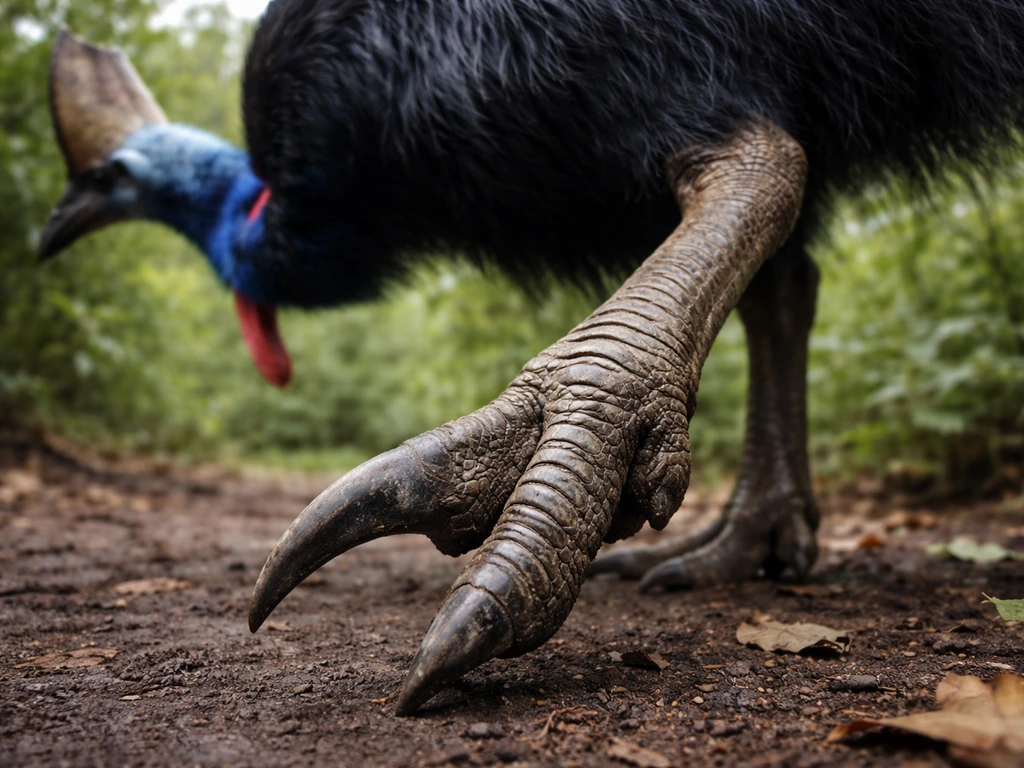
The inner toe on each foot carries a long, straight, compressed claw that functions essentially like a dagger. AAFS 2021 pathology/biology material describes the cassowary’s medial claw as “dagger-like,” nearly 13 cm in length, and as a primary weapon [“dagger-like” medial claw](https://www. aafs. org/sites/default/files/media/documents/AAFS-2021-H65.
pdf). Morphological studies place this claw at roughly 10 to 12 centimeters in typical adults, with some sources reporting lengths closer to 18 centimeters in larger individuals. During an attack, the cassowary delivers a powerful forward kick, driving that claw into whatever is in front of it. Medical and pathology analyses describe this as sharp-force trauma capable of producing deep penetrating lacerations.
The bird can also stomp, barge with its body, and peck. A sustained attack involving all three is genuinely life-threatening.
The casque, that bony helmet-like growth on top of the cassowary's head, looks intimidating but isn't a weapon. Research published in Scientific Reports identified its main function as a thermal regulation structure, essentially acting as a heat-exchange surface to help the bird manage body temperature in a hot rainforest environment. It's striking and distinctive, but if you're thinking about the anatomy relevant to danger, it's the legs and feet that matter.
How attacks actually happen
Understanding how a cassowary attack unfolds helps you avoid one. Cassowary encounters typically escalate through a predictable sequence: the bird approaches (or is approached), distances close, the bird feels threatened or expects a food reward it isn't getting, and then it charges and kicks. The risk isn't a sneak attack from a distance. It happens when a person is already close enough for the bird to reach them, which is why the moment of approach, whether by the human or the bird, is the critical window.
The situations that push encounters into dangerous territory follow a consistent pattern. Food-conditioned birds approach people on trails and roadsides expecting to be fed; when they aren't, or when someone gets too close trying to photograph them, the bird's response can escalate fast. Cassowaries move through predictable corridors in the landscape, which is why Queensland roads in the Wet Tropics region post bright yellow "Recent Cassowary Crossing" signs. These aren't just conservation notices. They're a practical warning that birds actively use those routes and encounters there are genuinely likely.
Nesting season adds another layer. A male guarding chicks is operating with a different threat threshold than a lone bird moving through the forest. Cornering any cassowary, whether against a fence, a building, or a dead end on a trail, dramatically increases the chance of an attack because the bird has no option to disengage and move away. Queensland's own worksite management procedures for areas in cassowary habitat actually instruct workers to stop activity and wait for the bird to leave on its own rather than trying to move it. That logic applies equally to hikers and tourists.
Cassowary vs other dangerous birds: how does it compare?
The "most dangerous bird" label gets debated, and the honest answer is that it depends on what metric you're using. If you're measuring confirmed human fatalities from bird attacks, the ostrich actually has documented kills in South Africa, where it lives alongside large human populations and is farmed commercially. Ostriches can kick forward with tremendous force and are larger overall than cassowaries. The emu is a third large flightless bird in this comparison, and while emus can be aggressive and cause serious injuries, the frequency and severity of documented attacks is lower than for either cassowaries or ostriches.
| Bird | Body weight | Primary weapon | Human encounter frequency | Documented fatalities |
|---|---|---|---|---|
| Southern Cassowary | Up to 70 kg | Inner-toe dagger claw (10–18 cm) | High (habitat overlap with tourists, food conditioning) | Rare but documented |
| Ostrich | Up to 130 kg | Forward kick with blunt claws | Moderate (farming, safari regions) | Documented in South Africa |
| Emu | Up to 60 kg | Forward kick | Moderate (farming, outback encounters) | Rare, serious injury possible |
| Large raptors (eagles, etc.) | Up to 8–9 kg | Talons, beak | Low (wild encounters) | Extremely rare, injuries possible |
Where the cassowary earns its reputation is in the combination of factors: a highly specialized and genuinely blade-like claw that causes sharp-force trauma rather than blunt impact, a behavioral tendency (often human-caused) to approach people closely, and a habitat that puts it directly in the path of tourist activity in Queensland's Wet Tropics. Ostriches may be bigger and emus more numerous in Australia, but neither has quite the same concentration of close-range, claw-driven injury risk. The cassowary is also an endangered species, which adds conservation weight to every human encounter. If you're interested in how Australia's most dangerous birds compare more broadly, the cassowary and its emu relative sit in a category of their own among the continent's birds.
What a cassowary attack can actually do to you
The injuries from a cassowary attack range from serious to potentially fatal, and the mechanism is what makes them different from most other bird encounters. The inner-toe claw is designed, through evolution, for exactly what happens during a defensive kick: it penetrates deeply. A single kick can open a long, deep laceration on a leg, torso, or anywhere the claw connects. Pathology documentation describes this as sharp-force trauma, meaning the injuries look more like stab wounds than blunt-force bruising. When a bird kicks repeatedly, barges with its body weight, and pecks, the cumulative injury load can be lethal.
Cassowary-related human deaths are rare but real. They are not a theoretical risk constructed from worst-case scenarios. Case histories from Queensland document serious injuries and at least one well-documented fatality. Most injuries that people survive still require hospital treatment: deep lacerations, puncture wounds, and the kind of damage that doesn't get sorted out with a bandage. This is a bird whose defensive response can cause the same class of injury as a blade weapon.
How to stay safe around cassowaries
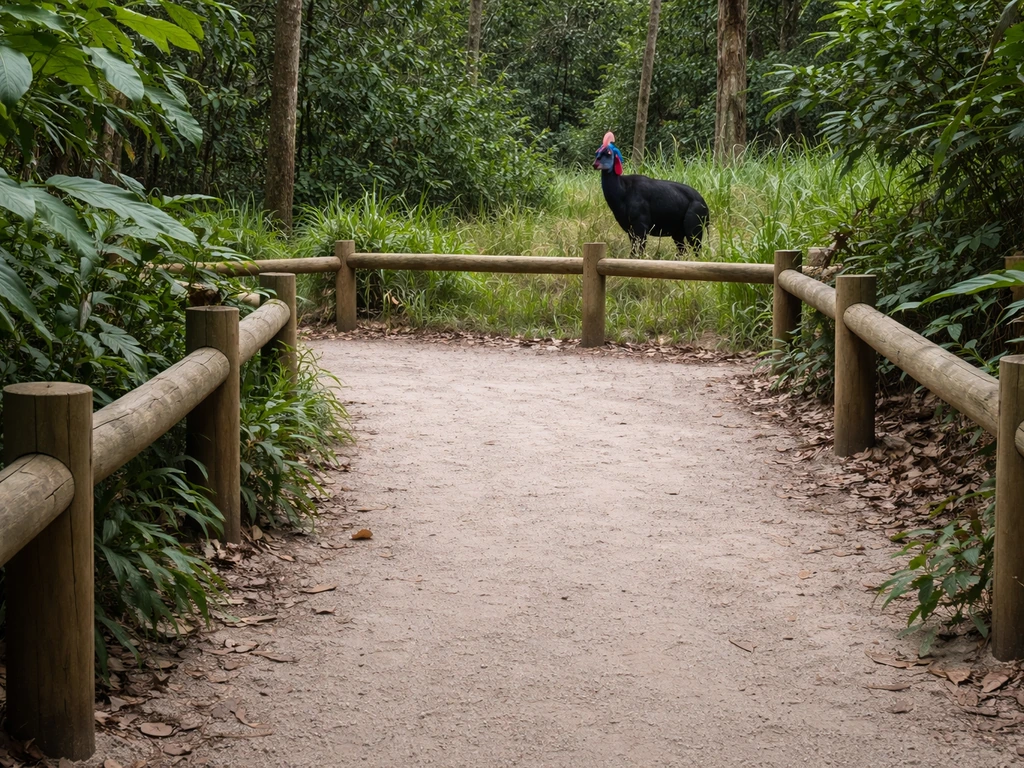
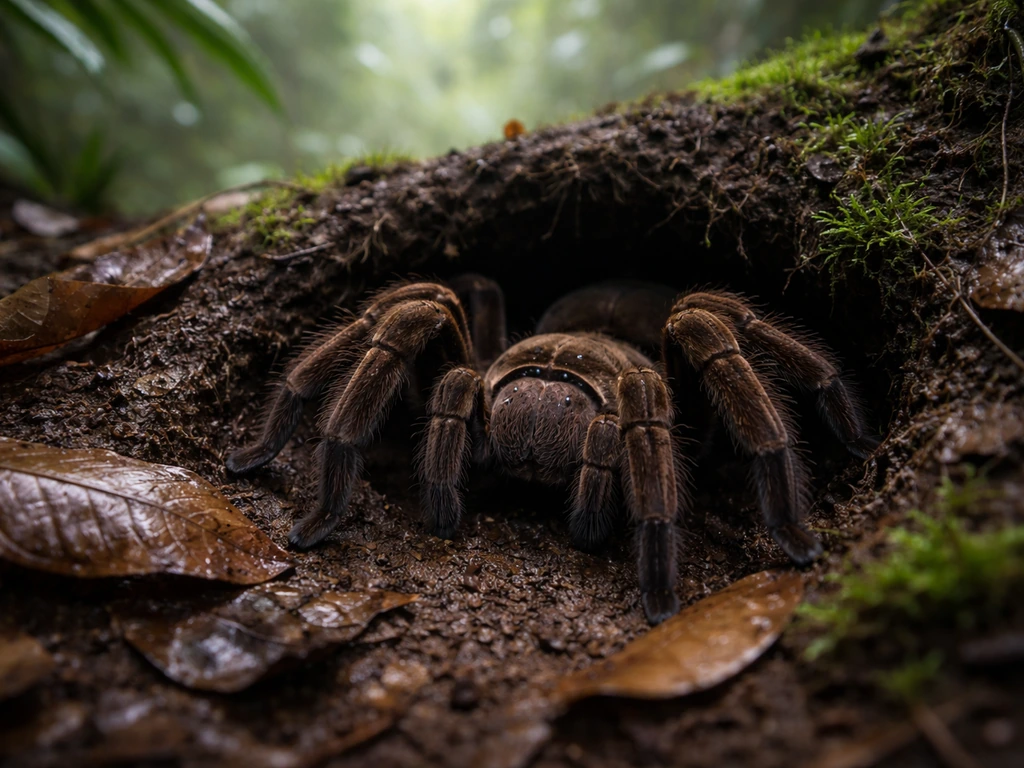
If you live in or are visiting cassowary habitat in northeastern Queensland, the practical safety advice is straightforward, and most of it comes down to blank" rel="noopener noreferrer">respecting the bird's space and not doing the things that make encounters dangerous in the first place. If you are trying to answer what is the biggest predatory bird, it's worth comparing different threats and hunting styles across major large birds. If you're also wondering where goliath bird eaters live, they occur in parts of northern South America, where they spend time in forest and shrub habitats where do goliath bird eaters live.
- Never feed a cassowary. It's illegal in Queensland, it's dangerous to you, and it's harmful to the bird. A food-conditioned cassowary is more likely to approach the next person and more likely to attack when the expected food doesn't appear.
- Keep your distance. If a cassowary approaches you on a trail or road, back away slowly and give it a clear exit route. Don't corner it, don't crowd it, and don't try to shoo it away with sudden movements.
- Don't approach for photos. The "just one more step closer" instinct in the presence of a spectacular wild animal is exactly how distances collapse to unsafe levels. Use a long lens or simply accept the image you can get from a respectful distance.
- Pay attention to cassowary crossing signs. The bright yellow signs in Queensland's Wet Tropics indicate active bird movement corridors. Slow down on roads, watch the roadside, and be prepared to stop.
- If a cassowary charges, put something between you and the bird. A tree, a backpack, a large stick held in front of you. The goal is to give the bird a surface to redirect toward rather than your legs or torso.
- During breeding season, be especially cautious in known habitat. Males guarding chicks are more defensive. If you see a cassowary with juveniles, treat it as a significantly elevated risk situation and increase your distance.
- If you're working in cassowary habitat, follow Queensland's management guidance: stop work and wait for the bird to leave on its own. Don't attempt to herd or move it.
- Report injured or unusually bold cassowaries to Queensland's wildlife authorities. An injured bird or one showing extreme food-conditioning behavior represents a risk to people and a conservation concern for the bird itself.
The cassowary is an extraordinary animal and one that's genuinely at risk: it's listed as endangered, facing ongoing pressure from habitat loss, vehicle strikes, and dog attacks. The goal with every human encounter isn't just avoiding injury to yourself, it's also not contributing to the conditions that get cassowaries killed or habituated to people in ways that ultimately end badly for the bird. Respecting the distance and not feeding are the two things that matter most, both for your safety and for the cassowary's survival in the wild areas it still calls home.
FAQ
What should I do in the moment if a cassowary is blocking a trail or road?
Don’t try to “shoo” a cassowary away at close range. The safer move is to stop, back away slowly if you have space, and give it a clear route to leave. If it is already between you and the trail exit, wait rather than moving closer, because cornering-like situations remove the bird’s ability to disengage.
Is it dangerous only if I feed cassowaries, or can accidental food still raise the risk?
Feeding is the biggest preventable risk factor. Cassowaries can learn to approach people because humans provide food, and the article notes most documented attacks involved birds expecting or soliciting food. If you dropped food or accidentally attracted one, keep distance and leave the area so the bird doesn’t keep associating you with rewards.
Why are people with cameras at risk, even if the bird seems calm?
Yes. Even without aggression, a cassowary can strike defensively when it feels threatened or when people get too close while photographing it. The critical window is when distances become short enough for a forward kick, so changing your position to get a better shot can increase danger quickly.
Does the risk change in nesting season, and what distance should hikers use then?
Nesting season matters because males can shift into a higher-threat posture while guarding eggs or chicks. The article also emphasizes that cornering increases risk, so in breeding periods keep extra distance, avoid getting between the bird and the likely escape route, and don’t try to move around “behind” it to get past.
How close is too close to a cassowary?
Approach distance is safest when you can keep the bird off your path and prevent it from getting into striking range. Practical rule: increase your distance early, because cassowary encounters can escalate quickly once close, and the bird may charge if it expects food or feels you are pressing it.
What about leashed dogs, can they be kept near cassowaries safely?
Do not attempt to lure, touch, or herd the bird, and don’t put dogs on a leash in a way that tightens their tension toward the cassowary. Dogs can trigger chasing behavior and increase the likelihood of a defensive kick, while also creating stress that makes the bird more likely to move toward people expecting interaction.
Will making noise or wearing bright clothes prevent a cassowary attack?
Wearing bright clothing and staying loud can help avoid surprising the bird from behind, but it doesn’t replace the main safety requirement, keep distance. Cassowaries are more about defensive response than surprise hunting, so your best protection is giving it space and not letting it approach you on trails or roadsides.
If the cassowary approaches me, how do I react to avoid escalation?
If a cassowary starts moving toward you, the most useful step is to create separation and avoid backing into a dead end. The article highlights that escalation happens when the bird feels threatened or expects food it isn’t getting, so don’t run toward the bird or block its route, instead step away and wait for it to pass or leave.
Do warning signs like “Recent Cassowary Crossing” indicate an immediate threat, or general risk?
Cassowaries can be more dangerous when they are habituated by repeated human contact, which is why signs and official site guidance exist. Areas with “recent cassowary crossing” warnings indicate active routes, so treat them like higher-risk corridors and do not stop to watch from the road edge or trail narrowing points.
If someone is kicked by a cassowary, what kind of medical response is appropriate?
If you get injured, treat it as serious even if bleeding seems manageable. The article describes deep sharp-force lacerations and puncture-type trauma from the inner-toe claw, and surviving injuries often still require hospital care, so seek urgent medical evaluation rather than relying on wound bandaging alone.
Next Article
Where Do Goliath Bird Eaters Live Habitat and Range
Find where goliath bird-eating tarantulas live: their wild range, forest habitats, climate, and altitudes.