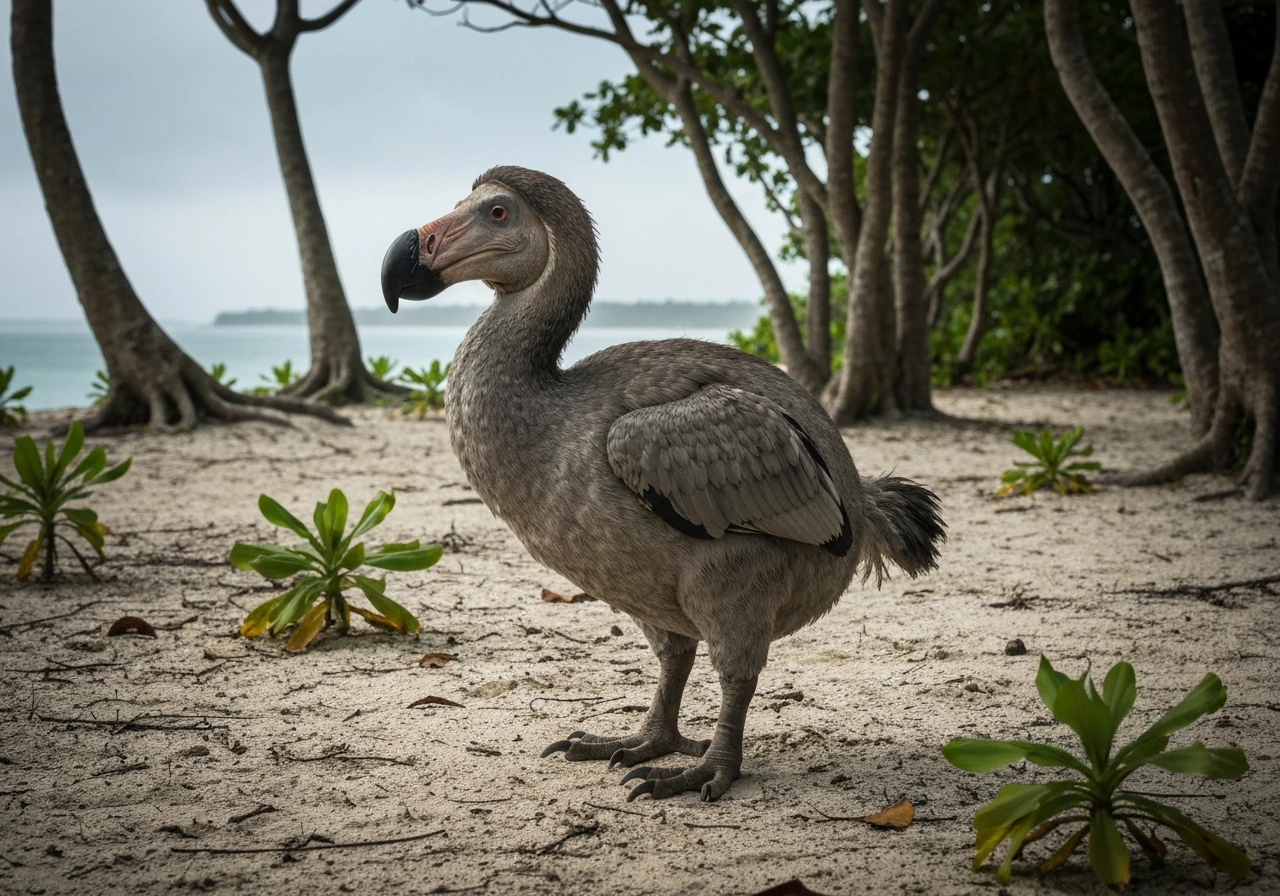
Yes, the dodo bird was absolutely real. It was a living, breathing species called Raphus cucullatus, a flightless bird that lived on the island of Mauritius in the Indian Ocean. It is not a myth, not a legend, and not a cartoonish invention. It existed, it was documented by eyewitnesses, its bones have been dug up and studied in laboratories, and its extinction is one of the most well-recorded cases in natural history.
Was the Dodo Bird Real? Evidence, Extinction, and Facts

Maya Hennessy
27 Apr 2026
What exactly was the dodo bird?
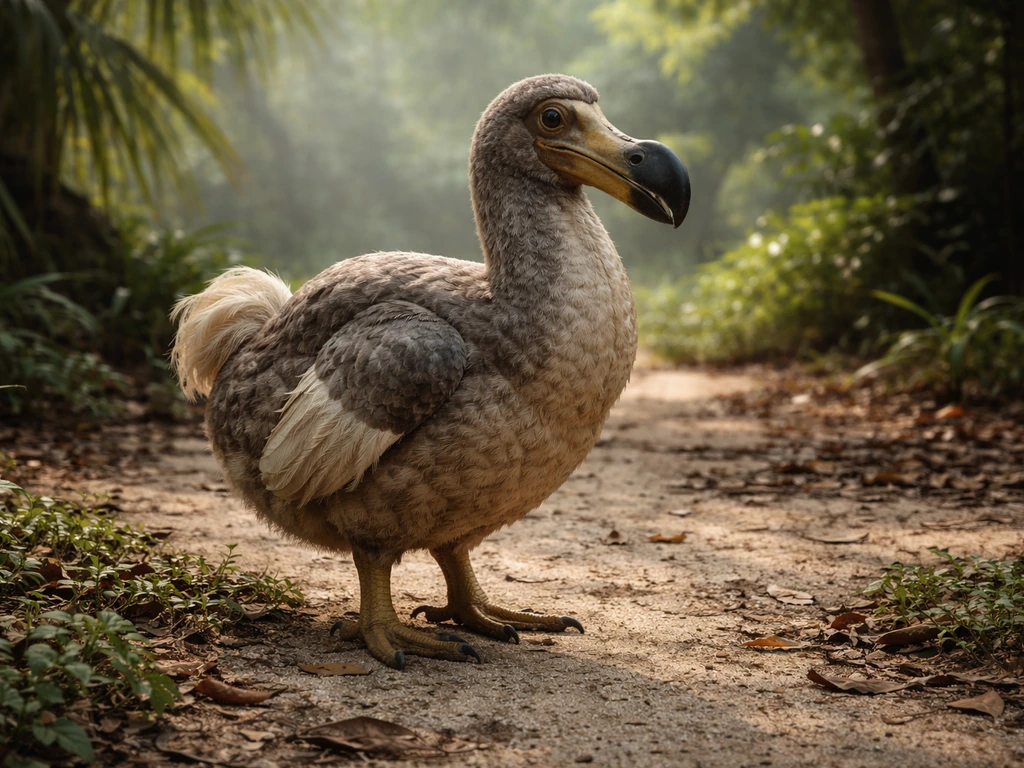
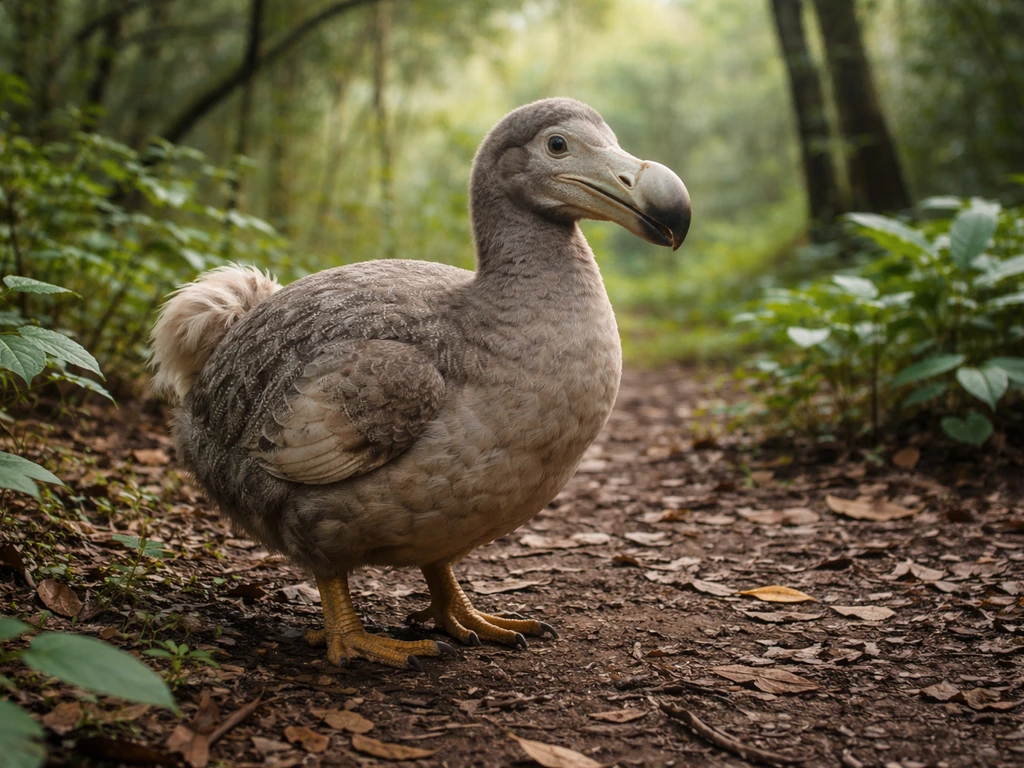
The dodo (Raphus cucullatus) was a large flightless bird endemic to Mauritius, a small island about 1,200 miles off the southeastern coast of Africa in the Indian Ocean. It belonged to the family Columbidae, which means it was actually a distant relative of modern pigeons and doves, though you would never guess that from looking at it. The dodo (Raphus cucullatus) is classified in the [pigeon and dove family Columbidae](https://en. wikipedia.
org/wiki/Dodo). The dodo stood roughly 3 feet tall, weighed somewhere between 20 and 40 pounds, and had a large hooked bill, stubby useless wings, and heavy legs. It could not fly at all. Despite the name confusion, a dodo is not a dinosaur because it is a bird, not a reptile is a dodo bird a dinosaur.
Because Mauritius had no natural land predators when the dodo evolved, the bird had no reason to develop flight or fear. It nested on the ground, foraged for fallen fruit and seeds, and went about its life completely unbothered. That fearlessness turned out to be catastrophic once humans arrived. The dodo had no behavioral toolkit for dealing with predators, which is part of why it disappeared so quickly after contact with the outside world.
Like most large birds, the dodo is not known as a predator, so the real danger to humans was indirect, not that it could actively kill you killed you. While it was not a hunter that could actively attack people, the dodo bird's main danger to humans came from how quickly humans and their animals changed its ecosystem is the dodo bird dangerous to humans.
The evidence that proves the dodo was real
If you are skeptical, the evidence is genuinely overwhelming. It comes from multiple independent sources spanning centuries.
Historical eyewitness records
Dutch sailors first documented the dodo when they reached Mauritius in 1598. Over the following decades, numerous sailors, naturalists, and traders left written accounts and illustrations of the bird. These records are consistent in describing a large, flightless, fearless bird on Mauritius.
The last confirmed sighting in the wild was recorded in 1662, and statistical reconstructions published in Nature place the actual extinction at around 1690, meaning small numbers may have survived in remote areas for a few more decades after that final confirmed record.
A PubMed-indexed study (2003) commonly dates the dodo’s extinction to the last confirmed sighting in 1662 (Volkert Evertsz), but it also estimates extinction around 1690 using statistical methods [statistical reconstructions published in Nature place the actual extinction at around 1690](https://pubmed. ncbi. nlm. nih.
gov/14628039/).
Physical specimens in museums
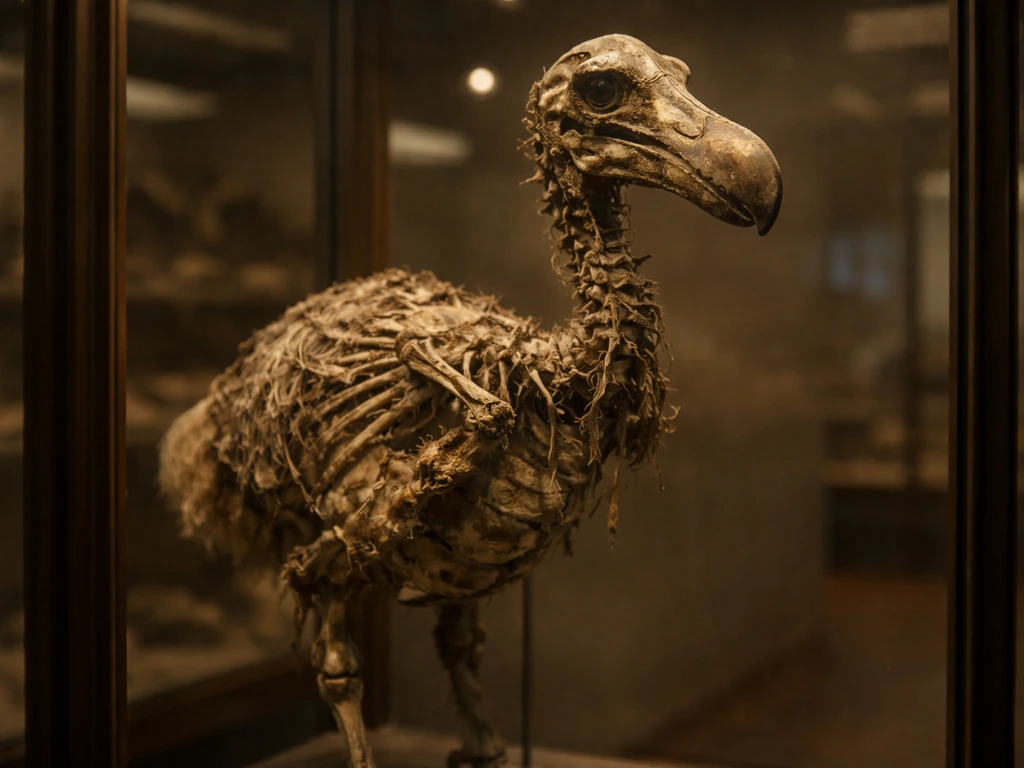
Real bones, real tissue. The Oxford University Museum of Natural History holds what is known as the Oxford Dodo, considered the only surviving dodo specimen that still retains soft tissue, specifically a desiccated head and foot. Dodo bones and skeletal remains have also been recovered from multiple sites on Mauritius. These specimens have been examined, measured, and classified by scientists across multiple institutions over many generations.
Modern scientific analysis
It does not stop at old bones. A 2017 study published in Scientific Reports used bone histology (the microscopic examination of bone tissue structure) to investigate the dodo's life history and ecology. Researchers were able to infer things like its growth rate and breeding season from the internal structure of its bones. That kind of analysis is only possible with real, physical remains from a real animal. The science confirms the eyewitness accounts and the museum specimens all point to the same species.
Why the dodo went extinct

The popular story is that sailors hunted the dodo to death because it was so easy to catch. That is part of the story, but the full picture is more complicated and, honestly, more instructive.
A 2015 review published in a Taylor and Francis journal examined the dodo's entire ecosystem and concluded that introduced species were likely the primary driver of extinction, not direct hunting alone. When Dutch settlers colonized Mauritius, they brought with them goats, pigs, crab-eating macaques, and black rats. These animals destroyed the dodo's habitat and, crucially, competed for food and preyed on dodo eggs and chicks. A ground-nesting bird with no fear of predators and no evolved defenses had absolutely no chance against rats and pigs raiding its nests systematically. Direct hunting by humans added pressure, but the introduced animals essentially dismantled the conditions the dodo needed to survive and reproduce.
This pattern, where a flightless island bird is wiped out by a combination of human activity and the animals humans bring with them, repeats across history. It is a sobering reminder that extinction is rarely just one thing.
Common myths and confusion about the dodo
The dodo has accumulated a lot of cultural baggage over the centuries, and some of it is genuinely misleading.
- "The dodo is just a legend." No. The documentary record goes back to 1598 and includes multiple independent sources. Physical specimens exist in museums today.
- "The dodo was too stupid to survive." This framing is unfair. The dodo had no evolved instinct to flee from humans or other predators because nothing on Mauritius had ever threatened it. That is not stupidity, it is the result of isolation. Whether the dodo was smart or not in other ways is a genuinely interesting question worth exploring separately.
- "It went extinct purely because sailors ate them all." Introduced species, particularly rats, pigs, and macaques destroying nests and eggs, played a large role alongside direct hunting.
- "The dodo was a dinosaur." It was not. The dodo was a bird, a modern bird, related to pigeons. Birds descended from theropod dinosaurs, but the dodo was no closer to a dinosaur than any other living bird.
- "No one knows what the dodo really looked like." We actually have a reasonably detailed picture from contemporary paintings, sketches, written descriptions, and skeletal remains. Early paintings may have exaggerated its bulk (some captive birds were overfed), but the general appearance is well established.
The dodo fits a much bigger pattern
One of the most useful ways to understand the dodo's story is to place it alongside other extinct flightless birds. The dodo is not an anomaly. Some people wonder whether a dodo bird is a mammal, but it is actually a bird dodo is a dodo bird a mammal. It is one example in a clear, recurring pattern of large flightless birds disappearing after humans arrived in previously isolated environments.
| Bird | Location | Approximate extinction | Primary causes |
|---|---|---|---|
| Dodo (Raphus cucullatus) | Mauritius, Indian Ocean | Around 1690 | Hunting, introduced predators and competitors, habitat loss |
| Moa (multiple species) | New Zealand | Around 1400 CE | Hunting by Polynesian settlers, habitat clearance |
| Elephant bird (Aepyornis maximus) | Madagascar | Around 1000-1200 CE | Hunting, habitat destruction by human settlers |
| Rodrigues solitaire (Pezophaps solitaria) | Rodrigues Island, Indian Ocean | Around 1760s | Hunting, introduced animals |
The moa case is particularly striking. Research published in Nature Communications found that Polynesians exterminated viable moa populations in New Zealand within fewer than 150 years of arrival, through hunting and habitat clearance. An extremely low-density human population was enough to tip the balance. The dodo's story follows the same logic: geographic isolation, no evolved fear of humans, and then rapid collapse once people and their animals arrived.
This broader context matters because it reframes the dodo from a punchline into a case study. These were real animals that filled real ecological roles, and their disappearances left gaps that are still felt in those island ecosystems today.
Where to go from here
If this got you curious, there is a lot more worth exploring. The dodo raises questions that go well beyond its own species. Could the dodo fly, and when did it lose that ability? Could the dodo bird fly, and what do scientists say about its wings? Was it actually intelligent enough to navigate its environment in ways we have underestimated? How did it defend itself, if at all? And how does it compare to other famous extinct and endangered flightless birds like the kiwi and cassowary, which are still alive today but face serious threats?
This site covers all of those threads. You can dig into the biology, behavior, and extinction science of the dodo in more depth, explore comparisons with the moa and elephant bird, or look at modern endangered flightless birds to understand what conservation lessons we can draw from past extinctions. The dodo's story is a starting point, not the whole picture.
FAQ
Where did the name “dodo” come from, and does it matter for whether the bird was real?
The term “dodo” is believed to have come from older European words or sound associations, which is why you sometimes see spelling variations in historical records. The origin of the name does not affect the core evidence, since multiple independent descriptions and physical specimens identify the same distinct flightless bird species from Mauritius.
Was the dodo a single species, or could some records have mixed up similar birds?
Researchers generally treat Raphus cucullatus as a single well-defined species from Mauritius based on consistent anatomical details in historical accounts and recovered remains. However, early illustrations and descriptions varied in quality, so scientists rely most heavily on physical bones and measurements to avoid mixing it up with other island birds.
Could the dodo have survived longer than the commonly cited timeline if some were in remote areas?
Small numbers might have persisted after the last confirmed wild sighting, especially in harder-to-reach habitats, but the overall extinction window remains relatively tight. The evidence supporting an extinction “around the late 1600s” is based on how sightings taper off in records, plus ecological changes once humans and introduced animals arrived.
Did people actually hunt dodos for food, or was hunting mostly incidental?
Hunting likely happened, but the article emphasizes that introduced animals like rats, pigs, and crab-eating macaques were probably the dominant cause. If the main problem is ground-nest predation and competition, even moderate direct hunting will accelerate collapse, because adults cannot reproduce fast enough to offset nest losses.
What evidence is strongest for “it was real,” bones or eyewitness accounts?
Eyewitness accounts and illustrations are useful because they document the bird’s appearance and behavior while it was still relatively recent in time. Physical remains are strongest for proving identity, and studies that use bone tissue properties add further confirmation that the specimens match the described ecology of a flightless, ground-nesting bird.
How do scientists know the dodo was flightless, rather than just “rarely flying”?
Flightlessness is inferred from skeletal anatomy, including wing structure that lacks the functional features needed for powered flight. Even if a bird could technically glide in rare situations, the consistent structure across specimens indicates it was not adapted for sustained flying.
Is it true that dodos were fearless, and does that mean they would not react to anything?
The “fearlessness” idea refers to the lack of evolved anti-predator behavior on a predator-poor island, including limited responses to large new threats. That does not mean the dodo would never move, defend, or behave cautiously, but it did lack effective defenses against novel predators and nest-raiders introduced by humans.
Could the Oxford Dodo specimen still be used for science if it contains only soft tissue in a preserved form?
Yes, it can still provide valuable anatomical information because preserved soft tissue and associated structures help confirm details about head and feet. At the same time, scientists treat it as a single specimen, so broader conclusions typically depend on additional bone finds and population-level patterns from other remains.
Why do comparisons to moa and other extinct flightless birds help, and when can they mislead?
Comparisons help because they show a repeated mechanism, isolated flightless birds collapsing after human arrival and the introduction of new predators or habitat disruption. They can mislead if readers assume every extinction followed the same mix of causes, so researchers look for differences in local ecology, human population pressure, and the specific introduced species involved.
Next Article
Could the Dodo Bird Fly? Evidence, Biology, and Why Not
Could the dodo bird fly? Evidence shows it was flightless, explaining anatomy, comparisons, and island evolution why