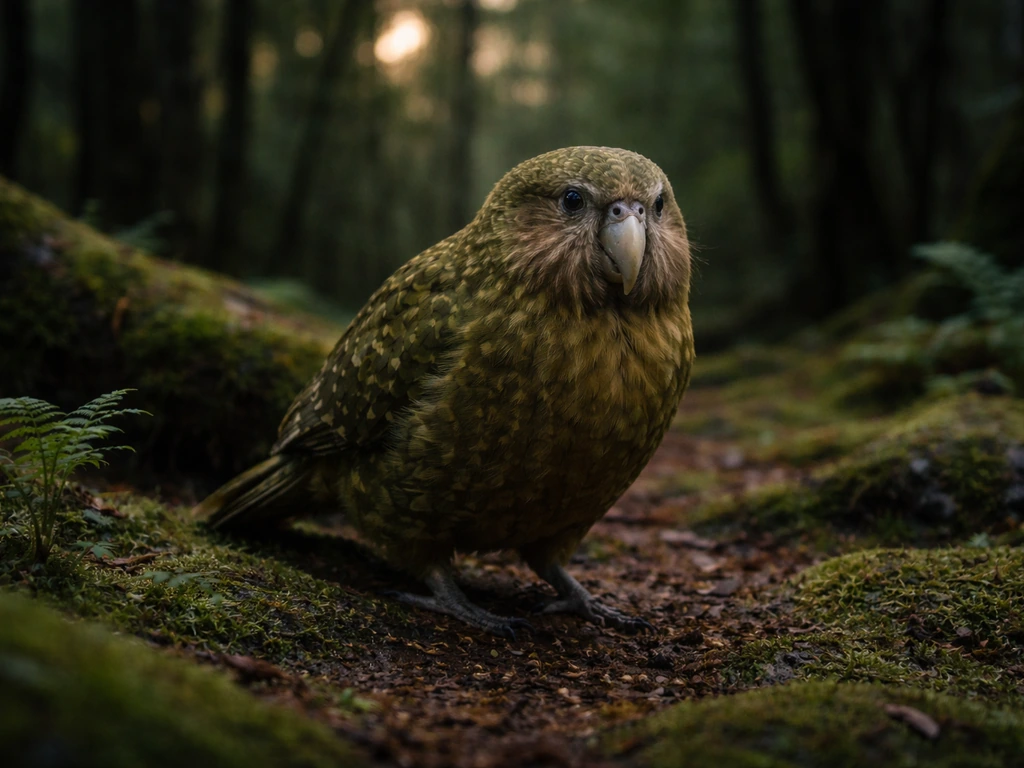
If you want a single, well-supported answer: the kākāpō (Strigops habroptilus), a flightless, ground-dwelling parrot from New Zealand, is the most frequently cited #1 most endangered bird in the world. It holds a Critically Endangered classification on the IUCN Red List, has a wild population of roughly 250 individuals (all on managed offshore islands), and would almost certainly be extinct without an intensive, decades-long recovery programme. No other bird combines such a tiny population, extreme vulnerability, and near-total dependence on human intervention to survive. However, the answer to which endangered bird species is found in the Thar Desert depends on the specific desert habitat and recent sightings.
What Is the #1 Most Endangered Bird on the IUCN List

Maya Hennessy
12 May 2026
What "#1 most endangered" actually means

There is no single, official global leaderboard that ranks birds from most to least endangered with a number one spot. When people search for the #1 most endangered bird, they are usually looking for the species closest to extinction right now, but the answer depends heavily on which framework you use and how you define "closest."
The gold standard for measuring extinction risk is the IUCN Red List of Threatened Species. The IUCN assesses every species against blank" rel="noopener noreferrer">five criteria (A through E) covering population decline, geographic range, population size, and statistical extinction probability. The highest risk categories are Vulnerable (VU), Endangered (EN), Critically Endangered (CR), Extinct in the Wild (EW), and Extinct (EX). A Critically Endangered designation means a species faces an "extremely high risk of extinction in the wild" based on the best available evidence at the time of assessment. If you are specifically trying to answer what is the most endangered bird in New Zealand right now, it helps to start with how the IUCN defines and uses Critically Endangered designations.
Within the CR category, the IUCN also uses tags like CR(PE) (Possibly Extinct) for species that are likely already gone but haven't been confirmed. So technically, a CR(PE) species is in a worse position than a plain CR species. In common usage, though, most conservation media and organisations present a shortlist of "most endangered" birds rather than crowning a single species as number one. That shortlist almost always includes the kākāpō alongside species like the Spix's macaw (functionally extinct in the wild), the Cebu flowerpecker, and the Kakapo. The kākāpō consistently rises to the top because it combines a confirmed wild population count, a known catastrophic vulnerability profile, and a charismatic enough profile to attract serious research attention.
The kākāpō: why this bird keeps claiming the top spot
The kākāpō is extraordinary in ways that make its situation both fascinating and alarming. It is the world's heaviest parrot, entirely flightless, nocturnal, and has a lifespan that can exceed 90 years. It also has one of the slowest reproduction rates of any bird: females only breed during mast years, when certain trees (especially rimu) produce a massive fruit crop, which can be every two to four years or longer. In non-mast years, breeding essentially doesn't happen.
That combination of traits (flightlessness, slow reproduction, ground-nesting behaviour, and evolutionary naivety toward mammalian predators) made the kākāpō devastatingly vulnerable when humans arrived in New Zealand and introduced rats, stoats, and cats. By the late 20th century the species had collapsed to fewer than 50 known individuals. The New Zealand Department of Conservation (DOC) formed its Kākāpō Recovery Programme in 1995, and every single bird alive is individually named, monitored, and managed.
As of the 2024-2025 season, the population sits at close to 250 individuals, all living on four predator-free offshore islands. That number sounds more hopeful than it is: 250 is still a dangerously small gene pool, and the population remains entirely dependent on intensive human management to survive. In April 2026, a record-breaking breeding season was reported, with 256 eggs laid and 105 chicks hatched, with around 95 chicks surviving as of mid-April 2026. Those numbers generated genuine excitement in conservation circles, and rightly so. But they also illustrate how precarious things remain: the entire global wild population bred at a volume that produced roughly 100 new birds.
Population trend, threats, and where kākāpō live
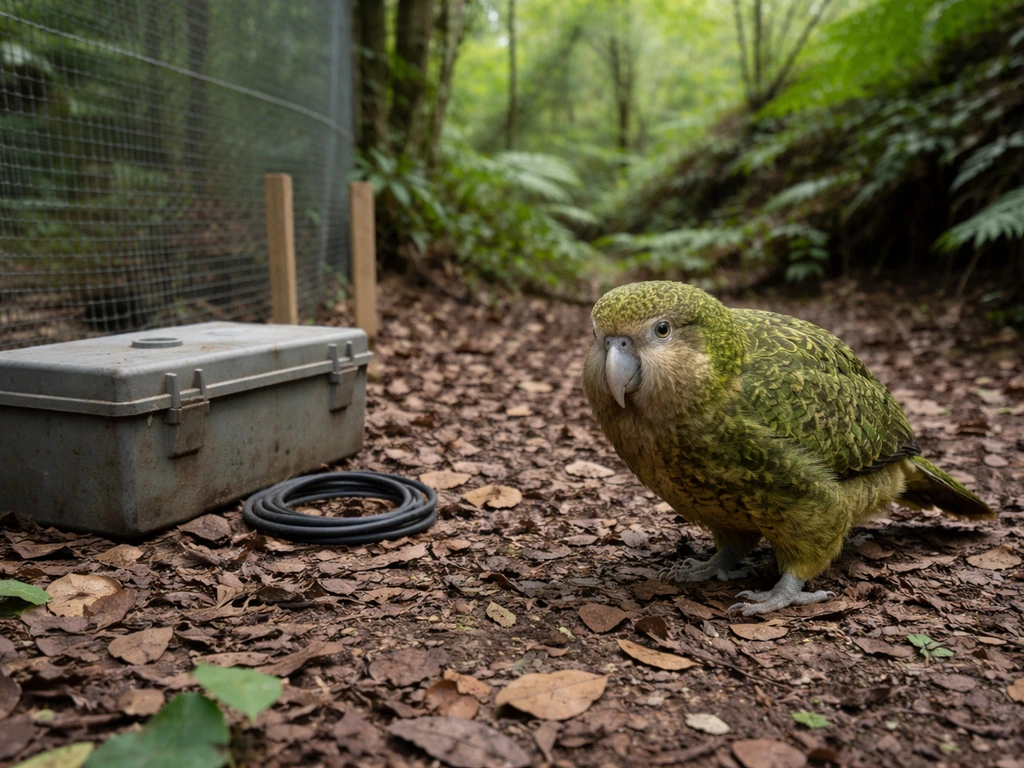
The trend is actually improving, which is one reason conservation scientists get cautiously optimistic about the kākāpō. Since 1990, intensive management has increased the population more than fourfold. Between 2016 and 2023 alone, the population doubled, largely driven by successful mast events in 2016, 2019, and 2022 that triggered breeding seasons. DOC's translocation strategy (moving birds to Whenua Hou/Codfish Island and other predator-free sanctuaries) and individual-level husbandry (hand-rearing chicks, managing fertility, and treating disease) have been central to that recovery.
Despite the improvement, the threats have not gone away. DOC identifies the primary ongoing risks as infertility, disease, and critically low genetic diversity. With only around 250 individuals in the entire world, inbreeding is a serious concern, and a single disease outbreak or a predator breach on one of the sanctuary islands could be catastrophic. The species' entire wild range is now artificial: without the predator-free islands maintained by conservation staff, kākāpō would be extinct in the wild. That level of dependence on managed habitat is precisely what keeps the species at the very top of global endangered lists.
| Factor | Detail |
|---|---|
| IUCN Status | Critically Endangered (CR) |
| Current population (2024-2025) | ~250 individuals |
| Population trend | Increasing (quadrupled since 1990) |
| Wild range | 4 predator-free offshore islands, New Zealand |
| Main threats | Low genetic diversity, infertility, disease, predator risk |
| Breeding frequency | Mast-year dependent (every 2-4+ years) |
| Recovery programme start | 1995 (DOC Kākāpō Recovery Programme) |
| 2026 breeding season outcome | 105 chicks hatched from 256 eggs; ~95 surviving as of April 2026 |
How the ranking actually gets determined
The IUCN doesn't publish a ranked list of birds sorted by extinction risk from worst to best. Instead, it assigns each species to a category based on quantitative criteria. Criteria A through E cover things like how much a population has declined over three generations or ten years (whichever is longer, up to 100 years into the future for projections), the size of the geographic range (measured as extent of occurrence and area of occupancy), absolute population size, and modelled extinction probability. A species qualifies as Critically Endangered if it meets the threshold for any one of those criteria.
That means two species can both be CR but have very different situations. One might have a tiny range but a stable population; another might have a large range but a collapsing population. Neither is strictly "more endangered" by the IUCN framework; they simply meet CR thresholds for different reasons. When people ask for the #1 most endangered, they are often really asking: which species has the fewest individuals, or which is most likely to disappear in my lifetime? Those questions can produce different answers.
Data gaps also complicate things. The IUCN explicitly warns that Data Deficient species (classified DD) may be threatened but lack enough information for a formal assessment. Some little-known bird species could theoretically be in worse shape than the kākāpō but simply haven't been studied enough to confirm it. This is one reason the kākāpō is so often cited as the top example: it is one of the most thoroughly monitored birds on Earth, so the case for its status is airtight. Finally, assessments have time-lags. Status can change between assessment cycles, so a species ranked CR today might be downlisted to EN (positive) or upgraded to EW (devastating) in the next cycle.
It's also worth noting that different sources nominate different birds as "most endangered" depending on the metric they prioritise. Some highlight the Spix's macaw (last confirmed wild individual was spotted decades ago, making it functionally extinct in the wild despite a captive population). Others point to the po'ouli, which is considered CR(PE) (Possibly Extinct). Guinness World Records has cited various species as the rarest based on confirmed wild individuals.
None of these are wrong; they're just answering slightly different versions of the question. For a well-rounded picture of which species top these different framings, it's useful to look at the broader conversation around what is the most endangered bird globally. If you want to understand what makes an endangered bird qualify for that label, start with the IUCN criteria and extinction risk categories what is the most endangered bird globally.
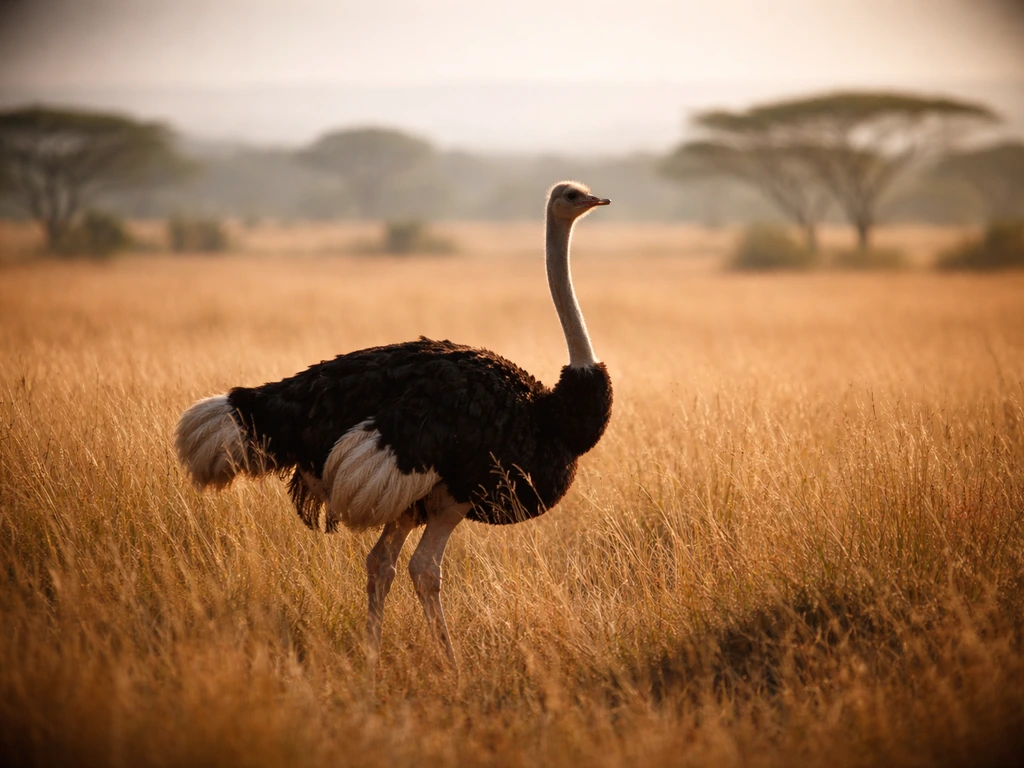
That said, other birds can also be critically threatened, so it helps to check the specific IUCN status for is ostrich an endangered bird.
Where to get the latest, most accurate status updates

Conservation statuses change, sometimes quickly. The most reliable place to check a species' current IUCN status is directly on the IUCN Red List website (iucnredlist.org). Each species page includes its current category, the criteria it meets, population size and trend, threats, and the date of the last assessment. For the kākāpō specifically, DOC's Kākāpō Recovery pages are updated with population counts and breeding season outcomes, often more frequently than the IUCN cycle allows.
- IUCN Red List (iucnredlist.org): the primary global reference for conservation status, criteria, and population data for any species
- New Zealand Department of Conservation (doc.govt.nz/kākāpō): annual population updates, breeding season reports, and recovery programme news
- BirdLife International (birdlife.org): the IUCN Red List Authority for birds, publishing its own assessments and state of the world's birds reports
- Cornell Lab of Ornithology (allaboutbirds.org / ebird.org): useful for range maps and citizen science sighting data, especially for less-monitored species
- IFAW and WWF conservation pages: useful for accessible summaries of the most endangered birds lists, though these are media-facing rather than primary data sources
Because IUCN assessments are updated on rolling cycles and not all species are reassessed every year, there can be a genuine time-lag between what's happening in the field and what the official status reflects. For rapidly changing situations (a sudden disease outbreak, a new predator incursion, or a successful breeding boom like the kākāpō's 2026 season), news from DOC or BirdLife will be more current than the Red List entry.
What you can actually do to help
Knowing the #1 most endangered bird is one thing; doing something useful with that knowledge is another. Here are practical actions that genuinely make a difference, whether you're a committed conservationist or someone who just found out the kākāpō exists and wants to help.
Support the recovery programmes directly
DOC's Kākāpō Recovery Programme accepts public donations and has a "Friend of the Kākāpō" programme where you can adopt a named bird and receive updates on their progress. The programme is genuinely underfunded relative to what it costs to manage 250 birds on remote islands year-round. Organisations like BirdLife International fund bird conservation globally, including species you've probably never heard of that are in equally desperate situations. The American Bird Conservancy and the Royal Forest and Bird Protection Society of New Zealand are also credible, effective donation targets.
Participate in citizen science
For species beyond the kākāpō, citizen science is one of the most scalable tools available. Platforms like eBird (run by Cornell Lab of Ornithology) let birders worldwide submit sighting data that feeds directly into population models and range assessments. In New Zealand, the New Zealand Bird Atlas project does the same thing at a national level. Your observations of common birds matter too: robust baseline data makes it easier to detect when a population starts declining. Submitting even a handful of sightings per year contributes to the data that underpins IUCN assessments.
Practise responsible birdwatching
If you ever visit New Zealand and hope to see a kākāpō (access to the sanctuary islands is strictly controlled and not generally open to tourists), respect the restrictions entirely. For endangered birds you can encounter in the wild elsewhere, follow established birdwatching ethics: stay on marked trails, don't play recordings near nesting sites, keep a respectful distance, and never share precise GPS coordinates of nests for rare species publicly. The flushing of a nesting pair from a vulnerable site by well-meaning but careless wildlife tourism is a real and documented problem.
Advocate for habitat protection
Most of the birds on endangered lists are there because of habitat loss, not because of direct persecution. Supporting organisations that work on land protection, rewilding, and invasive species control addresses the root cause. In New Zealand, predator control programmes (trapping stoats and rats in forests) benefit dozens of native bird species beyond the kākāpō. If you live somewhere with critical bird habitat, local land trusts and conservation easements are worth investigating. Political engagement on biodiversity policy, at even a local level, has outsized long-term impact.
The kākāpō's story is one of the more hopeful chapters in endangered bird conservation: a species that went from under 50 individuals to nearly 250, with a blank" rel="noopener noreferrer">record breeding season in 2026, because people decided it was worth saving and put sustained effort into doing so. That outcome isn't inevitable for every species, but it shows what focused, science-based conservation can achieve. The population of any endangered bird is still decreasing for most species on the list, which is why attention and resources matter now rather than later.
FAQ
Is there an official global #1 ranking of endangered birds by the IUCN?
No. The IUCN does not rank species with a single “worst bird” position. The “#1” idea is usually based on comparisons people make across different metrics like absolute population size, confirmed wild individuals, or immediacy of risk, which can change depending on the method.
Could a Data Deficient bird be more endangered than the kākāpō right now?
Data Deficient (DD) species can be highly risky, but they cannot be labeled the “most endangered” on IUCN grounds without enough evidence for a formal category. That means the kākāpō often wins “most endangered” discussions not just because it is extremely at risk, but because it is assessed with unusually strong data.
Why do different sources name different birds as the “most endangered”?
You should expect differences. For example, a bird that is “functionally extinct in the wild” may be listed as critically threatened due to captive presence, while another with the tiniest wild population could look worse depending on whether you count only wild individuals or all mature individuals across locations.
If kākāpō numbers improve, can risk still increase because of threats like disease or predator incursions?
Yes, especially for kākāpō because it relies on predator-free islands and managed breeding. If a sanctuary island’s biosecurity fails, or if disease spreads faster than treatment can be delivered, the extinction risk can jump even if the IUCN category does not update immediately.
Why can a great breeding season still be scary for kākāpō conservation?
Mast years can make short-term population changes look dramatic. A single breeding boom can raise chick counts, but overall recovery still depends on long-term adult survival, continued fertility, and preventing bottleneck effects like inbreeding.
How quickly can the IUCN status change, and how should readers interpret delays?
IUCN categories can shift between assessment cycles. If the next assessment cycle shows worse population declines than previously estimated, a species can be upgraded to a higher-risk category, or downlisted if trends stabilize. Time-lags mean what you see in the field may not match the latest published category yet.
What definition should I use to answer “most endangered bird” for my own purposes?
If you want the best “who is most endangered for me?” answer, define your rule first. Do you mean fewest individuals in the wild, highest modeled extinction probability, or “in your lifetime” risk? Each definition can legitimately point to different species even if both are critically threatened.
Should I compare endangered birds using only wild individuals, or include captive populations too?
Be careful comparing birds across countries if you focus only on wild numbers. Some critically threatened species have a small or absent wild population but maintain breeding in captivity, which changes the interpretation compared with species that can only survive through intensive, in-situ management.
Where can I check the most up-to-date IUCN category and details for a specific bird?
If you want to verify the most current status, use the species’ current page on the IUCN Red List and check the “last assessment” date and the specific criteria met. For kākāpō, also review DOC updates for breeding outcomes and island-level management details because those are often more current than IUCN cycle timing.
What’s the safest way to share or act after learning about an endangered bird online?
If you encounter calls to “help” by sharing nest locations, avoid it. For very rare birds, even non-harmful sharing can increase disturbance or lead to poaching risks. The safer alternative is to support accredited conservation organizations or volunteer programs that have permits and strict protocols.
Next Article
Is Ostrich an Endangered Bird? Current Status and Risks
Find out if ostrich is endangered, its real conservation status, key risks, and how to verify it by region.