
No quetzal species is extinct. All five living quetzal species, including the iconic resplendent quetzal, are still surviving in the wild as of 2026. That said, several of them are in serious trouble. The resplendent quetzal is listed as Near Threatened on the IUCN Red List, meaning it is not yet endangered but is declining fast enough to warrant close monitoring. Other cloud-forest quetzals carry similar or slightly more comfortable statuses, but none has been declared extinct, and none is listed as Extinct in the Wild.
Is the Quetzal Bird Extinct? Current Status and How to Check

Maya Hennessy
2 May 2026
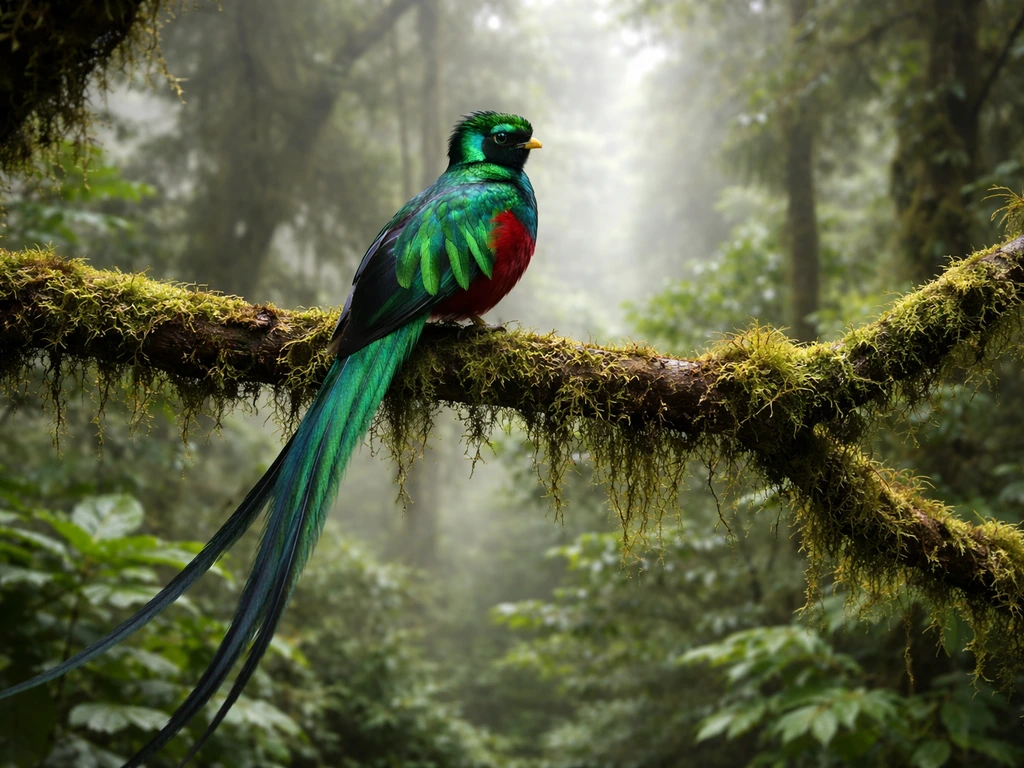
Which quetzal are we actually talking about?
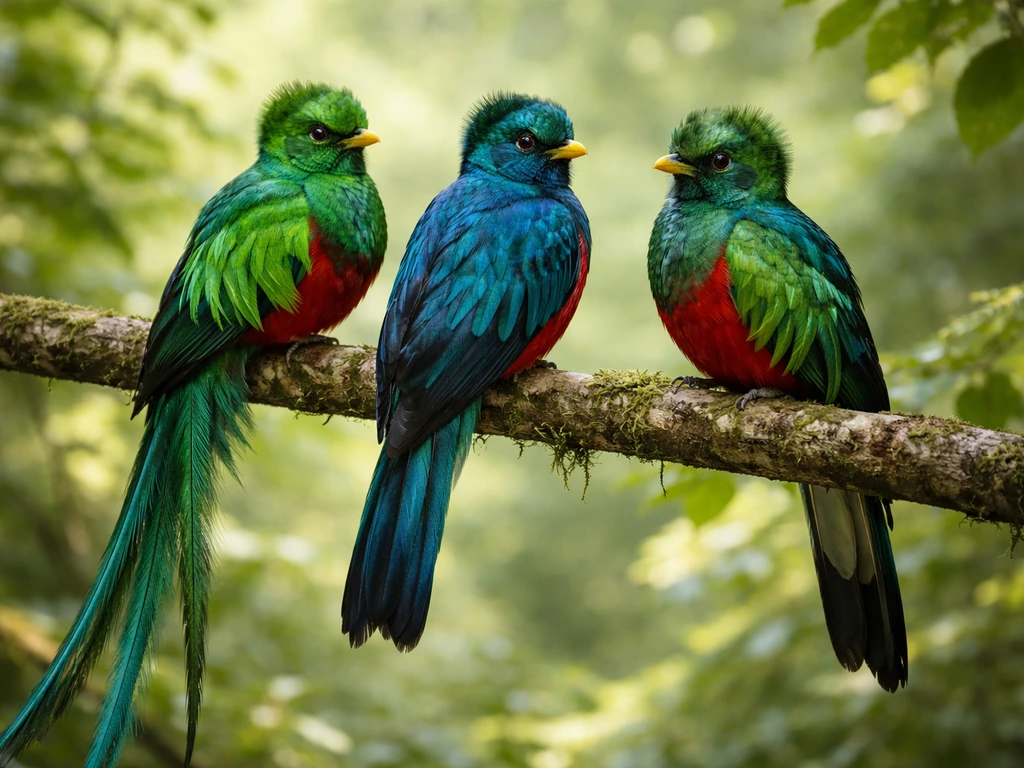
The word 'quetzal' gets applied loosely, which is where confusion starts. There are five recognized species in the genus Pharomachrus, all belonging to the trogon family. When most people search for the quetzal, they mean the resplendent quetzal (Pharomachrus mocinno), the national bird of Guatemala and arguably the most famous bird in the Americas. But there are four others worth knowing:
- Resplendent quetzal (Pharomachrus mocinno) — found from southern Mexico through Panama, two subspecies recognized: P. m. mocinno and P. m. costaricensis
- Crested quetzal (Pharomachrus antisianus) — Andean cloud forests from Venezuela south to Bolivia
- White-tipped quetzal (Pharomachrus fulgidus) — northern Andes and the Sierra Nevada de Santa Marta in Colombia and Venezuela
- Golden-headed quetzal (Pharomachrus auriceps) — Andes from Panama to Bolivia
- Pavonine quetzal (Pharomachrus pavoninus) — lowland Amazon basin, the only quetzal not tied to high-altitude cloud forest
There is also the eared quetzal (Euptilotis neoxenus), sometimes called the eared trogon, which is a closely related but separate genus found in Mexico and occasionally the U.S. Southwest. It sometimes gets swept into quetzal conversations but is a distinct species with its own assessment. For this article, the focus stays on Pharomachrus, especially P. mocinno.
Current conservation status for each species
BirdLife International carries out IUCN Red List assessments for all bird species, and those assessments are what the IUCN publishes as the official category. Here is where each Pharomachrus quetzal stands today:
| Species | Scientific Name | IUCN Red List Status |
|---|---|---|
| Resplendent quetzal | Pharomachrus mocinno | Near Threatened (NT) |
| Crested quetzal | Pharomachrus antisianus | Least Concern (LC) |
| White-tipped quetzal | Pharomachrus fulgidus | Least Concern (LC) |
| Golden-headed quetzal | Pharomachrus auriceps | Least Concern (LC) |
| Pavonine quetzal | Pharomachrus pavoninus | Least Concern (LC) |
The resplendent quetzal is clearly the most at-risk member of the group. Near Threatened means it does not currently meet the thresholds for Vulnerable, Endangered, or Critically Endangered, but assessors believe it is close enough that it needs ongoing scrutiny. The other four species sit at Least Concern for now, though that can shift as forest loss accelerates across their ranges. No subspecies of any quetzal has been formally declared extinct, though isolated populations in heavily deforested areas have likely disappeared locally without making it into the official record.
What 'extinct' actually means in conservation science
This matters because people use the word loosely online, and it leads to real confusion. The IUCN Red List uses a precise framework under version 3.1 of its categories and criteria. A species is listed as Extinct (EX) only when there is 'no reasonable doubt that the last individual has died,' following exhaustive surveys across the known range. A separate category, Extinct in the Wild (EW), applies when a species survives only in captivity or cultivation, with no wild population remaining.
The IUCN also records a 'year last seen' field for any species assessed as EX or EW, which gives you a concrete timestamp to look for when checking a factsheet. IUCN notes that the “last seen” date for Extinct or Extinct in the Wild reflects a time window and that a species can move out of those extinct categories if new evidence shows surviving individuals blank" rel="noopener noreferrer">The IUCN also records a 'year last seen' field for any species assessed as EX or EW, which gives you a concrete timestamp to look for when checking a factsheet.. For quetzals, none of those fields are populated because none of them has reached those categories. What you might find reported on social media or in older articles is local extirpation, meaning a population disappeared from one country or region, which is real and serious but is not the same as global extinction. Reddit discussion includes the idea that IUCN Red List categories are a standardized basis for extinction claims, but there can be time lag and uncertainty that make “extinct” reports feel confusing blank" rel="noopener noreferrer">local extirpation. The closest real match is local extirpation, where birds vanish from parts of their range even though the species is not globally extinct how did the kauai bird go extinct. That is also why questions about whether the cuckoo bird is extinct should be answered using the same IUCN-style, evidence-based approach. For example, claims like “is kagu bird extinct” often confuse global extinction with local disappearances, but the IUCN framework is specific about what qualifies as Extinct local extirpation.
One more term worth knowing: a species can be 'downlisted' out of EX if new evidence of surviving individuals emerges. The IUCN explicitly allows for this, and it has happened with other birds. So even when a species is declared extinct, the story is not always permanently closed.
Why quetzals are declining
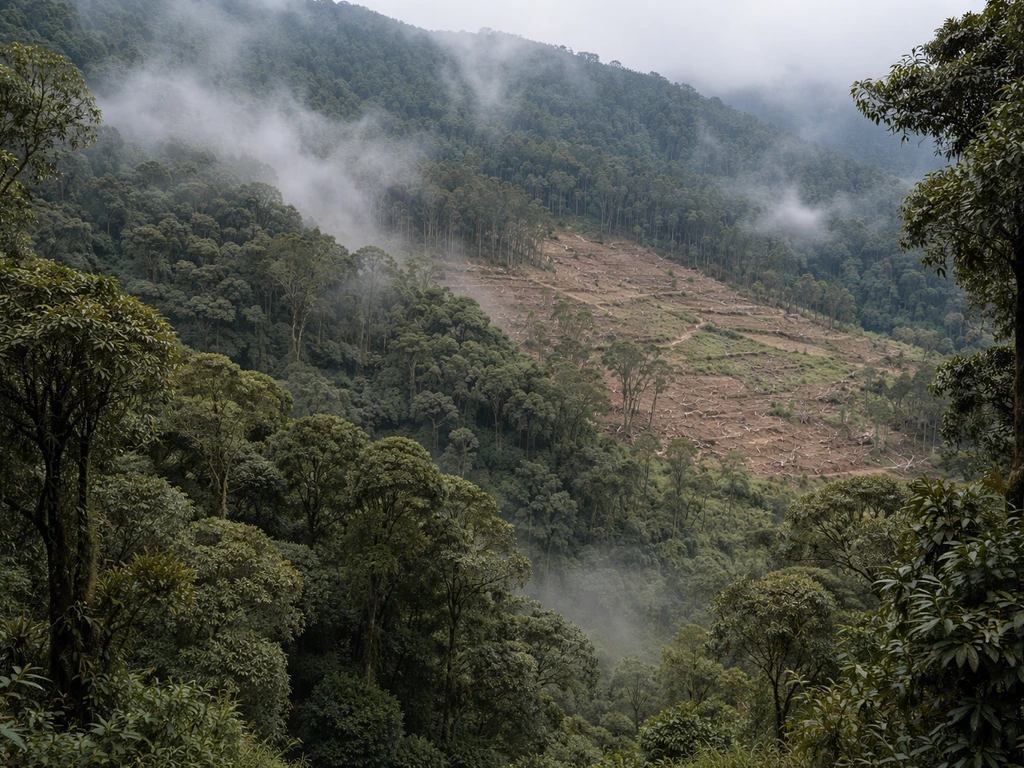
The resplendent quetzal's Near Threatened status is almost entirely driven by habitat loss. Quetzals are obligate cloud-forest birds. BirdLife DataZone describes the resplendent quetzal (Pharomachrus mocinno) as a cloud-forest inhabitant of Central America, linking its habitat to the threats it faces. They need the cool, misty montane forests of Central America sitting between roughly 1,200 and 3,000 meters in elevation, where they find the wild avocados (family Lauraceae) that make up the core of their diet. When those trees go, the quetzals follow.
- Deforestation for agriculture, cattle ranching, and smallholder farming has fragmented cloud-forest habitat across Guatemala, Honduras, El Salvador, and southern Mexico
- Coffee and cardamom plantations have replaced large tracts of primary forest, though shade-grown coffee does provide partial refuge
- Climate change is pushing cloud-forest zones upslope, compressing suitable habitat into smaller and smaller high-altitude patches
- Quetzals have large home ranges and need connectivity between forest patches to breed successfully, so fragmentation hits them harder than many species
- Illegal trapping for the cage-bird trade has historically been a pressure, though it is less significant than habitat loss today
- Nest-site competition is a secondary issue because quetzals rely on tree cavities, often old woodpecker holes, which become scarce in degraded forests
The Andean quetzals face similar pressures across the Andes, where deforestation rates in Colombia, Ecuador, and Peru remain high. Their Least Concern status reflects broader range sizes and more remaining habitat, not an absence of threat.
How to verify the current status yourself
Conservation statuses change over time as new assessments are completed, so it is worth knowing exactly how to check rather than relying on any article, including this one. Here is a simple process:
- Go to the IUCN Red List website at iucnredlist.org and search by scientific name. For the resplendent quetzal, search 'Pharomachrus mocinno.' The species page will show the current category, the year of the last assessment, and the full justification.
- Cross-check on BirdLife DataZone at datazone.birdlife.org. BirdLife's factsheet for each quetzal species includes its own IUCN Red List assessment section with category, criteria codes, and the reasoning behind the listing.
- Look at the U.S. Fish and Wildlife Service species profile for the resplendent quetzal as a secondary cross-reference, especially useful if you are interested in trade protections under CITES (the resplendent quetzal is listed on CITES Appendix I, meaning international commercial trade is prohibited).
- For subspecies or regional population questions, check the notes section in the BirdLife DataZone factsheet. That is where assessors document uncertainty about specific populations.
- If you see a claim that a quetzal is extinct on a website, look for the IUCN category code. EX means globally extinct, EW means extinct in the wild. If neither appears, the claim is not supported by the scientific consensus.
One practical tip: always note the year of the assessment when you read a status. IUCN assessments for individual species are updated on irregular cycles, sometimes every few years, sometimes longer. A status from 2018 may not reflect what assessors know in 2026. The date is displayed on every Red List page.
What conservation efforts are doing for quetzals
The good news is that targeted conservation has had measurable results. Protected areas like the Sierra de las Minas Biosphere Reserve in Guatemala and the Monteverde Cloud Forest Reserve in Costa Rica provide refuges where resplendent quetzal populations are relatively stable and well monitored. Ecotourism built around quetzal watching has also created economic incentives for local communities to protect forest rather than clear it, which is one of the more durable conservation tools available.
Shade-grown coffee certification programs that require a forest canopy have helped maintain partial habitat connectivity in agricultural landscapes, though they are not a substitute for primary forest. Reforestation projects focused on restoring native Lauraceae trees, the wild avocados and related species quetzals depend on, are underway in parts of Guatemala and Honduras. These are slow-payoff projects because quetzals need mature trees with large cavities, but they matter for long-term viability.
There is no active reintroduction program for quetzals in the way you might see with condors or some island birds, partly because captive breeding of quetzals is notoriously difficult. They do not fare well in captivity, which makes conservation of wild habitat the only realistic long-term strategy. That is a useful reminder that the path away from threatened status for quetzals runs through forest protection, not breeding facilities.
How this compares to other birds in the same situation
If you have looked into similar questions about other birds on this site, you will notice a pattern. Birds tied to specific habitats, whether cloud forest, island ecosystems, or wetlands, tend to be the most vulnerable. The kagu of New Caledonia and the kakapo of New Zealand face parallel pressures: habitat destruction combined with a biology that makes recovery slow. If you are wondering, "is the kakapo bird extinct," the answer is similar to what we see with quetzals: extinctions are formally recorded only after exhaustive evidence, not just disappearance from part of a range. The quetzal is in a better position than either of those species right now, but the trajectory for the resplendent quetzal without continued habitat protection is not encouraging.
The broader lesson from studying bird extinctions is that Near Threatened is not a safe place to stay. Many birds that are now extinct spent years in lower-risk categories while forest around them disappeared. The quetzal has time, but that time depends on what happens to cloud forests across Central America over the next few decades.
FAQ
How can I tell if someone is confusing “extinct” with “locally gone” for quetzals?
Check whether the claim refers to one country, one mountain range, or one reserve. Global extinction requires IUCN-style evidence across the entire known range, while disappearance from a portion of the range is usually described as local extirpation. If a post does not specify global status terminology, treat it as unverified.
Is the eared quetzal part of the extinction question when people ask about “the quetzal”?
Usually no. The term “quetzal” is used loosely, but the eared quetzal is a different genus and can have a different conservation assessment than the resplendent quetzal. If you are checking status, confirm you are looking at the exact species name, not just the common label.
What does Near Threatened mean for the resplendent quetzal in practical terms?
Near Threatened means it has not met the thresholds for Vulnerable or worse yet, but it is close and trending downward. A common mistake is to treat Near Threatened as “safe,” instead of assuming the species could move categories if cloud-forest loss continues.
If I can’t find quetzals during a trip, does that mean they are extinct?
Not at all. Quetzals can be rare, seasonal in detectability, and limited to specific elevations and mature forest patches. A better check is whether recent surveys exist for the exact area, rather than general absence during a short visit.
When I look at the IUCN Red List, what detail should I pay attention to besides the category name?
The assessment year. Statuses can be updated on irregular schedules, so a recent-looking category may still reflect older conditions. Also verify the species scientific name (for example, Pharomachrus mocinno) so you are not viewing the wrong species.
Does IUCN have a “last seen” date for quetzals, and what would it indicate?
For quetzals, the “year last seen” field should not appear under Extinct or Extinct in the Wild because no quetzal is listed in those categories. If you see a last-seen timestamp attached to an “extinct” claim in a source, confirm it matches the official category and that it is not a local extinction story being generalized.
Can a species ever be taken back out of “Extinct,” and has that happened before?
Yes. IUCN can downlist out of Extinct if new evidence shows surviving individuals. The key point is that “new evidence” must be credible and tied to the known range, not just informal sightings without verification.
Are reintroduction or captive breeding options realistic for quetzals?
Generally no, at least not on a large scale. The article notes captive breeding is notoriously difficult for quetzals, so conservation efforts rely primarily on protecting and restoring wild cloud-forest habitat, especially mature forest with the native trees they depend on.
What’s the most common cause of confusion between extinction questions and conservation urgency for quetzals?
People often focus on whether a species is labeled extinct, when the more important signal is risk trajectory. Near Threatened can still represent rapid decline, especially when habitat requirements are narrow, like montane cloud forests and specific wild foods.
Next Articles
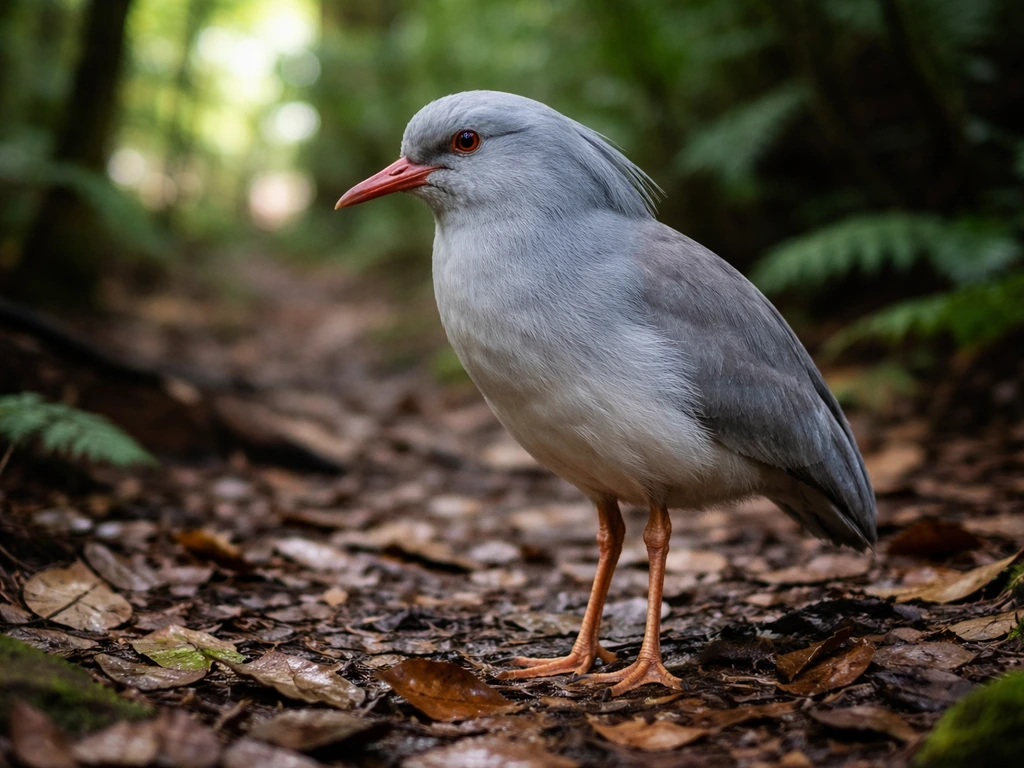
Is Kagu Bird Extinct? Current Status, Evidence, and Recovery
Find out if the kagu bird is extinct in the wild, plus evidence, threats, habitat needs, and conservation updates.
Is the Dodo Bird Still Alive? What Evidence Shows Today
Learn if any dodos could exist today, why scientists say they are extinct, and how to judge sightings reliably.
Does Dodo Bird Still Exist? Answer and Extinction Facts
No, dodo birds are extinct. Learn when, why, where they lived, and how evidence confirms it.