
Yes, kiwi birds are endangered, but the full picture is more nuanced than a single yes or no. Yes, kiwi birds are endangered, but the full picture is more nuanced than a single yes or no are kiwis dangerous bird. Kiwi is not one species but five, and each carries its own conservation status. Some are doing better than others thanks to intensive management, but across the board, kiwi populations are under serious pressure from threats that humans introduced to New Zealand. If you want the short version: the kiwi is one of New Zealand's most at-risk native birds, and without active conservation, several species would be sliding toward extinction right now.
Are Kiwi Birds Endangered? Status and Main Threats Explained

Maya Hennessy
19 Apr 2026
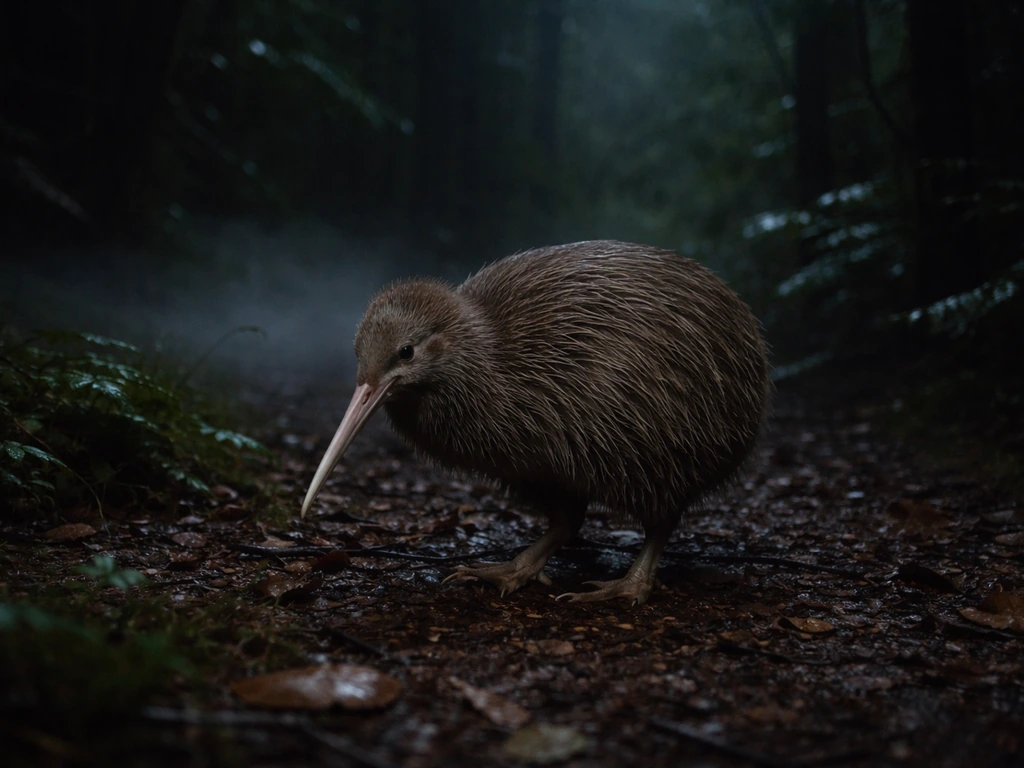
Which kiwi species are endangered (and what the labels actually mean)
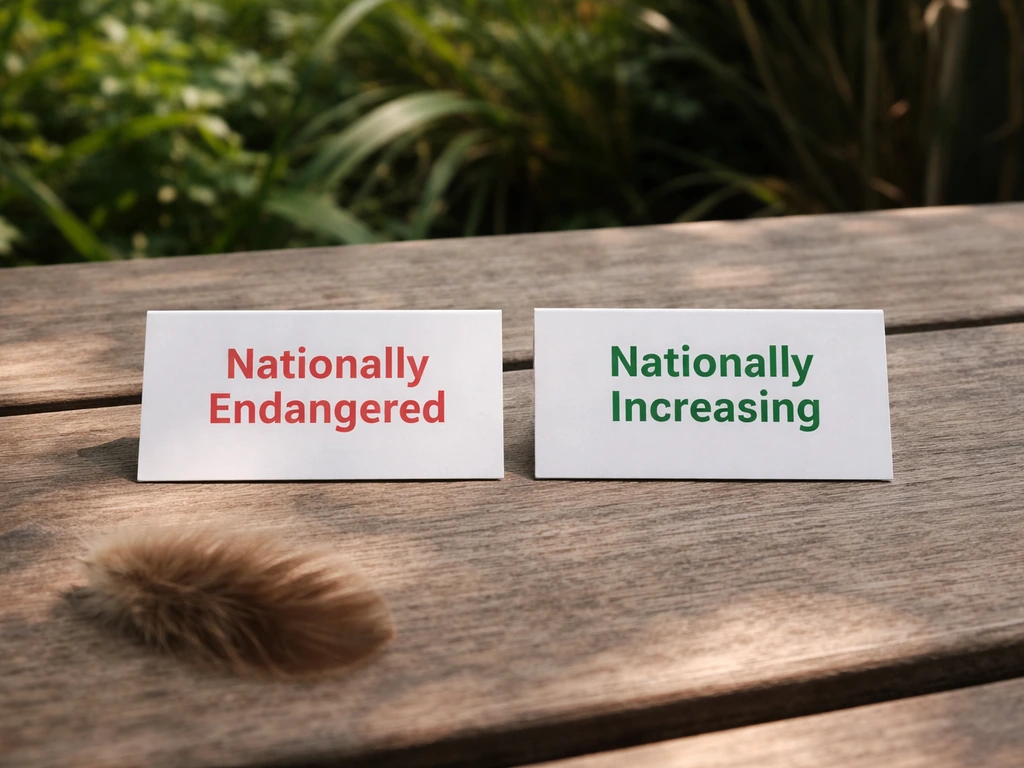
There are five recognized kiwi species, and their conservation statuses range from "Nationally Endangered" to "Nationally Increasing." That variation matters, because it tells you that blanket statements like "kiwi are endangered" need unpacking. Two separate systems are commonly used to classify kiwi: the IUCN Red List (the global standard) and New Zealand's own Department of Conservation (DOC) threat classification, which applies specifically to New Zealand populations. These can differ, so it's worth knowing which one you're reading.
| Species | Common Name | DOC NZ Status | IUCN Status |
|---|---|---|---|
| Apteryx mantelli | Northern Brown Kiwi | Threatened | Endangered |
| Apteryx rowi | Rowi (Okarito Kiwi) | Nationally Endangered | Vulnerable |
| Apteryx haastii | Great Spotted Kiwi / Roroa | Nationally Vulnerable | Vulnerable |
| Apteryx australis | Southern Brown Kiwi (Tokoeka) | Threatened | Vulnerable |
| Apteryx owenii | Little Spotted Kiwi (Kiwi Pukupuku) | Nationally Increasing | Near Threatened |
The Northern Brown Kiwi is the most formally recognized as "Endangered" at the global level, with the IUCN Red List placing it squarely in that category. The Rowi holds the title of rarest of the five species, listed as "Nationally Endangered" by DOC. The Great Spotted Kiwi sits at "Nationally Vulnerable." The Little Spotted Kiwi is a genuine conservation success story in relative terms, now classified as "Nationally Increasing" after breeding programs and island translocations helped numbers recover. It has even been rediscovered on mainland New Zealand after a long absence, which is a remarkable turnaround. That said, "increasing" does not mean safe. The global Near Threatened IUCN tag reflects how fragile that recovery still is.
When you see the word "Endangered" on an IUCN Red List, it means the species faces a very high risk of extinction in the wild if the threats driving its decline are not reduced. "Vulnerable" sits one step below that, meaning high risk rather than very high. "Critically Endangered" is the step above Endangered, the last category before "Extinct in the Wild." Kiwi species currently span vulnerable through endangered on the IUCN scale, which is a serious range.
Why kiwi populations are declining
The core problem is straightforward: kiwi evolved in a predator-free environment and have almost no natural defenses against ground predators. They are flightless, slow-moving at night, nest in burrows, and lay large single eggs that take a long time to hatch. A kiwi bird is not a mammal; it is a flightless bird native to New Zealand. Everything about their biology made perfect sense before humans arrived in New Zealand, and almost nothing about it helps them survive in a landscape now full of introduced mammals.
Unmanaged mainland populations of Northern Brown Kiwi are declining at roughly 2.5% per year. That sounds modest, but compound that over decades and it represents catastrophic population loss. The drivers behind that number are not mysterious, they are well documented: predation, habitat destruction, and to a lesser extent disease and human disturbance.
Predators, habitat loss, hunting, and disease: the four main threats
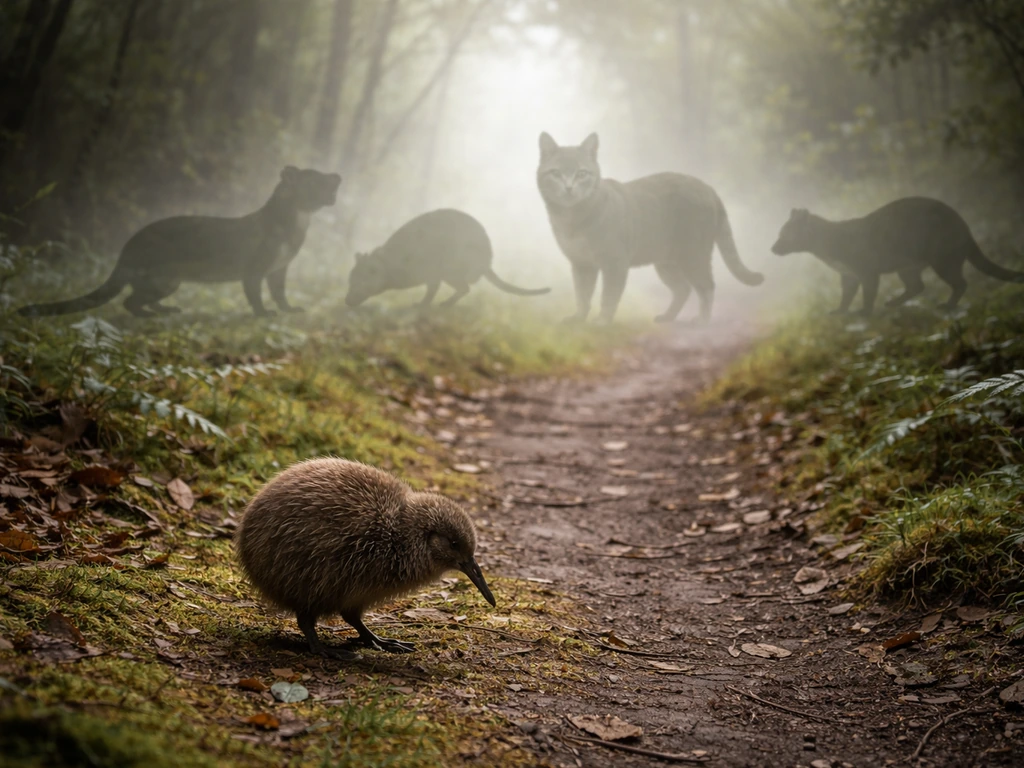
Introduced predators (the biggest driver)
Stoats, rats, cats, dogs, and ferrets are responsible for the majority of kiwi deaths. The threat works differently depending on the age of the kiwi. Young chicks are extremely vulnerable to stoats and other small predators, which can kill them before they reach a size where they can defend themselves. Adults face the bigger threat from dogs and ferrets. A single dog can wipe out a large portion of a local kiwi population in a single night. Stoats also have population explosions (called "mast events") in years when beech forests produce heavy seed crops, because the seed feeds rodents, rodent populations boom, and stoat numbers follow. In those years, predation pressure on kiwi chicks spikes dramatically.
Habitat loss and fragmentation
Kiwi need dense, undisturbed forest with soft soil for burrowing and a supply of invertebrates to eat. Large-scale land clearing for farming and urban development has fragmented that habitat into increasingly small patches. Isolated populations in small forest fragments face double jeopardy: higher predation pressure at the edges of the fragments and reduced genetic diversity over time. The IUCN specifically identifies the clearance of habitat fragments as a key threat to Northern Brown Kiwi alongside predation.
Hunting and historical harvesting
Historically, Maori hunted kiwi for their feathers (used in ceremonial cloaks called kahu kiwi) and for food. After European colonization, hunting pressure continued and increased with the introduction of dogs and trapping. Today, kiwi are fully protected under New Zealand law, and killing one is illegal. That legal protection has been in place for a long time, but historical hunting contributed to the collapse of mainland populations that subsequent predator introductions then finished off in many areas.
Disease
Avian disease is a less prominent but real concern. The IUCN flags the potential impact of avian diseases on Northern Brown Kiwi, though this threat is less studied than predation. Kiwi have been documented contracting diseases from introduced birds and poultry, and their low population density in some areas makes outbreaks harder to monitor. As conservation programs move kiwi around for translocations, disease screening has become a standard part of the process.
Where kiwi live and why location changes everything
All five kiwi species are endemic to New Zealand, meaning they exist nowhere else on Earth. Their ranges, though, vary significantly. Northern Brown Kiwi inhabit Northland, the Coromandel Peninsula, and parts of the eastern North Island. Rowi are confined to the Okarito forest area on the South Island's West Coast, which is one reason they are the rarest species. Great Spotted Kiwi live in the northern and central South Island. Southern Brown Kiwi populations are spread across the South Island and Stewart Island / Rakiura. Little Spotted Kiwi were wiped off the mainland but survive and are growing on offshore islands, particularly Kapiti Island, with recent records back on the mainland.
Location dramatically affects survival odds. Kiwi on predator-free offshore islands like Kapiti Island are thriving compared to unmanaged mainland populations. The mainland is where the 2.5% annual decline happens. Islands provide natural predator barriers, which is why so much of the early recovery work focused on island translocations. The challenge is that islands have limited space, so mainland management has become increasingly important for long-term population growth. It is worth noting that where a kiwi lives directly shapes whether it faces all four of those threats simultaneously or just some of them.
What conservation programs are actually doing right now
Operation Nest Egg

Operation Nest Egg is New Zealand's signature kiwi breeding program and has been running for decades. The approach involves collecting kiwi eggs or very young chicks from the wild, raising them in captivity at specialist kiwi crèche facilities, and releasing them back into the wild once they are large enough (typically around 1,200 grams) to survive stoat predation. Before this program, fewer than 5% of kiwi chicks were surviving on unmanaged mainland sites. With Operation Nest Egg, survival rates for released juveniles are dramatically higher.
Predator control on the mainland
DOC and community groups run extensive trapping and poisoning programs targeting stoats, rats, and possums across kiwi habitat. The 1080 (sodium fluoroacetate) aerial drops that are controversial in some quarters are used specifically in high-predator-pressure years to protect kiwi and other native wildlife. These programs are resource-intensive and need to be sustained year after year to be effective. When funding or effort drops, predator numbers rebound quickly.
Sanctuary zones and fenced ecosanctuaries
Predator-proof fenced sanctuaries have become an important tool. Sites like Zealandia (Karori Wildlife Sanctuary) in Wellington use pest-proof fencing to create safe inland islands where kiwi and other threatened species can live and breed without predator pressure. These areas have seen remarkable recoveries and have allowed kiwi to reestablish in regions where they had been absent for decades.
Community kiwi guardians (Kiwi Guardians / Kiwi Coast)
Volunteer networks like Kiwi Coast in Northland coordinate landowners, iwi (Maori tribal groups), schools, and community members to run trapping lines across private and public land. This kind of distributed effort is critical because kiwi habitat extends far beyond what DOC can manage alone. Community-level trapping has been shown to stabilize and in some places reverse local population declines.
How to help and what to check next
If you want to do something concrete rather than just read about the problem, the options are more accessible than most people realize. You do not need to be in New Zealand to contribute meaningfully.
- Check the DOC website (doc.govt.nz) for current kiwi species status pages. These are updated regularly and reflect both national threat classifications and program updates.
- Check the IUCN Red List (iucnredlist.org) if you want the global conservation status for each species. Search by species name for the most detailed threat assessments.
- Donate directly to Save the Kiwi (savethekiwi.nz), the primary fundraising organization for kiwi conservation in New Zealand. Funds go toward Operation Nest Egg and predator control programs.
- If you are in New Zealand, contact your regional DOC office or local community trapping group to volunteer for trap monitoring. Kiwi Coast and similar networks welcome volunteers with no prior experience.
- If you visit New Zealand and have a dog, keep it on a leash in or near any native bush area. Dog attacks are one of the most preventable causes of kiwi death.
- Spread accurate information. When someone asks whether kiwi are endangered, the honest answer is: yes, most species are, though some populations are recovering thanks to intensive effort.
When you're assessing information sources, a useful filter is to ask: does this source cite DOC or IUCN classifications directly, and does it distinguish between the five species rather than treating kiwi as a single unit? Credible sources will do both. Articles that call kiwi "critically endangered" without specifying which species, or that claim kiwi are nearly extinct with no caveats about island populations, are probably oversimplifying. The truth is more specific, and more hopeful in places, than the worst-case framing suggests.
It is also worth knowing that the legal protection question connects directly to this. Kiwi are fully protected under New Zealand law, and the consequences of harming one are serious. If you are wondering whether it’s halal to eat kiwi bird, note that kiwi are fully protected under New Zealand law, and harming or killing them is illegal kiwi bird halal. Similarly, the kiwi's habitat and the broader questions of where they live and how they interact with their environment are central to understanding why protection efforts look the way they do. If you want a quick breakdown of where the different kiwi species live, see where does a kiwi bird live. The conservation story does not make sense without the ecological one.
The bottom line: kiwi birds are genuinely endangered, some critically so, and the primary cause is human activity, specifically the introduction of predators and the clearance of forest habitat. So, while some kiwi populations are recovering on predator-free islands, kiwi birds are not extinct overall <a data-article-id="CEA0BB7C-9699-4453-B5B5-B5FE358E4294">kiwi birds are genuinely endangered</a>. The good news is that targeted, sustained conservation work is making a measurable difference for certain species and populations. The Little Spotted Kiwi's comeback is real. Operation Nest Egg is working. But the effort has to continue and scale up, because the threats are still very much present on the mainland wherever predator control lapses.
FAQ
Are kiwi birds endangered everywhere, or only in parts of New Zealand?
Yes, but it depends on which of the five species you mean and where they live. For example, some kiwi that are doing better are still vulnerable to sudden setbacks if predator control stops, while island populations can look much more stable than unmanaged mainland sites.
What does it mean if a kiwi is “Nationally Increasing” but still not fully out of danger?
“Nationally Increasing” on the DOC system does not mean the population is safe, it means the monitored trend is improving under conservation pressure. On the IUCN side, a species can still be rated Near Threatened if the global outlook remains fragile.
How can different conservation lists disagree on whether kiwi are endangered?
The biggest practical difference is scope: the IUCN Red List ranks extinction risk at a global level, while DOC threat categories apply to New Zealand populations. If a source only quotes one system, you can get a misleading sense of urgency or recovery.
Does “endangered” mean kiwi are rare in captivity, or rare in the wild?
A safe way to interpret “endangered” is risk in the wild, not captive numbers. Kiwi raised in crèches or fenced sanctuaries can boost survival, but if released juveniles face unprotected mainland predator pressure, wild recruitment can still be poor.
Which threat is worst for kiwi, predators or habitat loss?
In most unmanaged mainland areas, predators are the immediate cause of mortality, with stoats being especially damaging to chicks and dogs or ferrets hitting adults. Habitat loss matters too, but it often works by increasing exposure to predators and shrinking the area where kiwi can breed.
Do kiwi threats change seasonally or year to year?
Predator pressure can swing year to year, especially with stoats following “mast events” when beech forests produce heavy seed crops. That means a year with high rodent abundance can trigger a spike in chick losses, even if predator programs are ongoing.
Why does avian disease matter more during translocation than in the wild year-round?
Disease is usually a secondary concern compared with predation, but it becomes more important during translocations. Conservation teams now routinely screen kiwi before releases because introduced diseases can spread when movements concentrate animals from different populations.
Is it accurate to say kiwi are “nearly extinct” as a single statement?
Yes, and it is an easy mistake to make. A claim that “kiwi are almost extinct” without separating species and island versus mainland populations ignores that some recoveries are real and some declines are ongoing.
What should I look for in an article to judge whether it is giving a reliable kiwi conservation picture?
If you find a report that treats kiwi as one species, take it as a red flag. The five species have different ranges, different management outcomes, and different conservation labels, so lumping them together hides where the biggest risks are.
What should I do if I see a kiwi in the wild, and is it legal to interact with them?
Kiwi are fully protected under New Zealand law, so touching, feeding, or taking a kiwi (or its eggs) is not appropriate and can carry serious legal consequences. If you encounter a kiwi, keep distance and report sightings to the appropriate local conservation or community group rather than attempting contact.
Next Articles
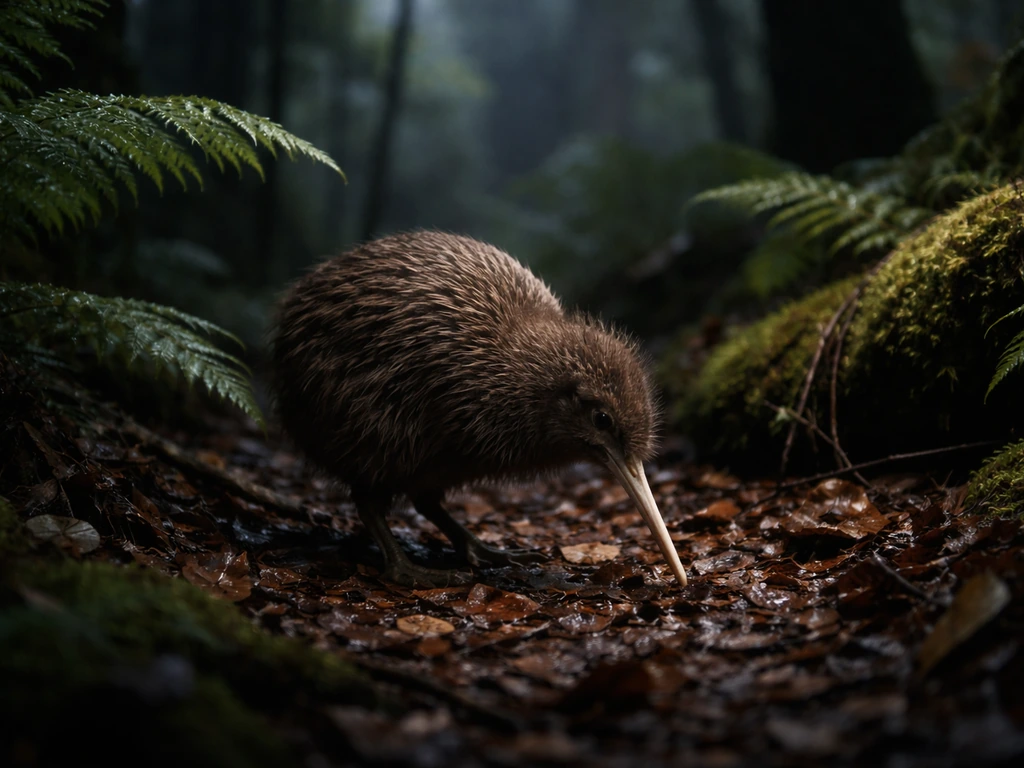
Where Does a Kiwi Bird Live? Habitat and Range Explained
Where kiwi live in New Zealand, habitat types, island ranges, and how predators shrink sightings to sanctuaries.
Where Does the Emu Bird Live? Native Range and Habitat
Where emus live in Australia, preferred habitats, what they avoid, and how rainfall and seasons shift their range.
Where Does Dodo Bird Live Today and Historically
Find where dodo lived: endemic to Mauritius, in island forests and habitats before extinction, plus map directions.