The largest bird to ever live was Vorombe titan, an extinct elephant bird from Madagascar. A landmark 2018 study published in Royal Society Open Science reassigned this title to Vorombe titan after researchers systematically measured museum bones from across the elephant bird family. The best-supported weight estimate puts the average adult at around 642.9 kg, with a documented range of 536 to 732 kg, and some upper-extreme projections reaching as high as 860 kg. That makes it not just the heaviest bird on record, but a genuinely staggering animal, roughly the mass of a grand piano or a large draft horse.
What Was the Largest Bird to Ever Live? Weight and Size

Maya Hennessy
23 May 2026
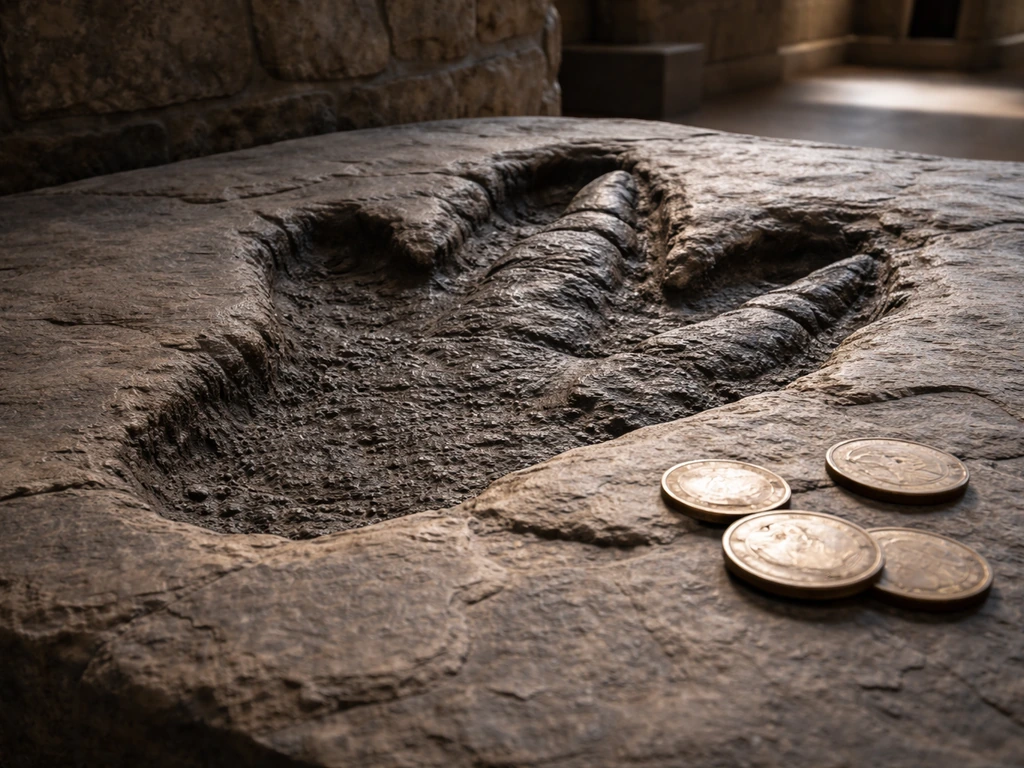
How heavy was Vorombe titan, exactly?
The 2018 Royal Society Open Science paper by Hansford and Turvey is the study to cite here. They derived body mass from least femoral shaft circumference measurements, a standard method in avian paleontology, and arrived at a mean mass of 642.9 kg with a modeled range of 536 to 732 kg. The 860 kg figure that circulates in headlines is an upper-extreme estimate, not the central value, so it is worth understanding the difference. Phys.org’s coverage of the Royal Society Open Science work explains that the widely circulated ~860 kg figure is an upper-extreme estimate rather than the paper’s baseline mean prediction The 860 kg figure that circulates in headlines is an upper-extreme estimate.
These are estimated masses, not measured ones. You cannot weigh a fossil. Instead, scientists apply regression equations to skeletal measurements, producing a predicted mass with built-in uncertainty. The Hansford and Turvey team were careful to flag that their model was trained on living birds, and Vorombe titan falls well outside that size range, so the estimates carry real uncertainty beyond just measurement error. Think of the 642.9 kg figure as the best central estimate, not a guaranteed fact carved in bone.
What does 'largest' actually mean for a bird?

This is where a lot of online confusion starts. 'Largest' can mean heaviest by mass, tallest by height, or longest in overall body dimensions. Once you define what you mean by “largest,” it becomes clear that the biggest extinct bird refers to different species depending on whether you mean mass, height, or body length. These metrics do not always point to the same species, so the answer genuinely depends on what you are measuring.
| Metric | Winner (extinct) | Winner (living) |
|---|---|---|
| Heaviest (body mass) | Vorombe titan (~642.9 kg mean) | Common ostrich (up to ~156.4 kg) |
| Tallest (height) | Dinornis robustus (giant moa, ~3.6 m) | Common ostrich (up to ~2.74 m) |
| Overall bulk/size | Vorombe titan | Common ostrich |
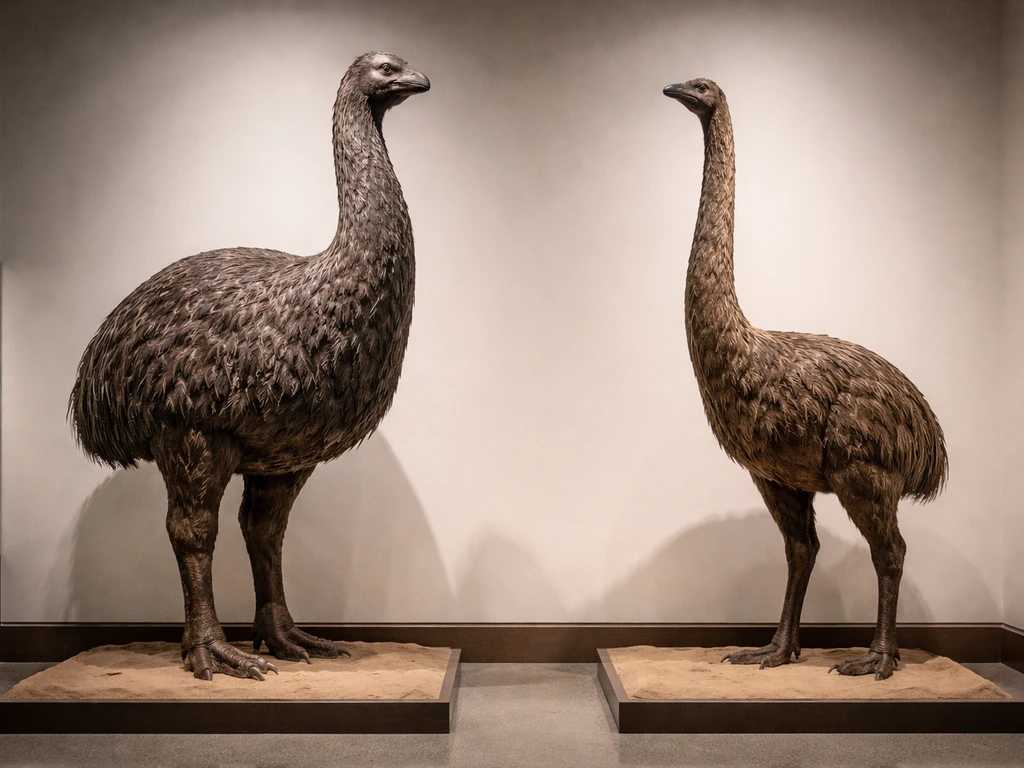
Vorombe titan wins the mass category clearly. The giant moa (Dinornis robustus) of New Zealand edges it out on height, with some estimates placing the tallest individuals around 3.6 m, compared to Vorombe titan's roughly 3 m reconstruction. But height alone does not make an animal 'largest,' and the moa was a much leggier, lighter bird. When scientists use 'largest' in the broadest biological sense, they generally mean overall body mass, which is why Vorombe titan holds the title.
The main contenders and why they keep coming up
Several giant extinct birds have genuinely competed for this title, and the ranking has shifted as new research reanalyzed old bones. Here are the most frequently compared species.
Extinct contenders
- Vorombe titan (Madagascar): Current title-holder for heaviest bird ever. Mean estimated mass of 642.9 kg, range 536 to 732 kg, with upper-extreme projections to ~860 kg. Part of the elephant bird family Aepyornithidae, which went extinct likely within the last millennium after human settlement of Madagascar.
- Aepyornis maximus (Madagascar): The elephant bird species that held the 'largest ever' title for most of the 19th and 20th centuries. Still enormous, but the 2018 RSOS study determined Vorombe titan was a separate and heavier species, reshuffling the rankings.
- Dromornis stirtoni (Australia): A mihirung or 'thunder bird,' sometimes called the heaviest bird ever in older sources. Guinness World Records gives it an average body mass of 584 kg and an upper estimate of 728 kg. Vorombe titan's numbers beat it, but Dromornis is a legitimate contender and a fascinating extinct Australian giant in its own right.
- Dinornis robustus (New Zealand): The giant moa, the tallest bird on record at an estimated ~3.6 m. Surprisingly light relative to its height, likely around 200 to 280 kg. Wins on height, not mass.
- Brontornis burmeisteri (South America): A terror bird reconstructed at about 2.8 m tall with body mass estimates around 350 to 400 kg. Intimidating, but well below Vorombe titan's mass.
Living giants for comparison
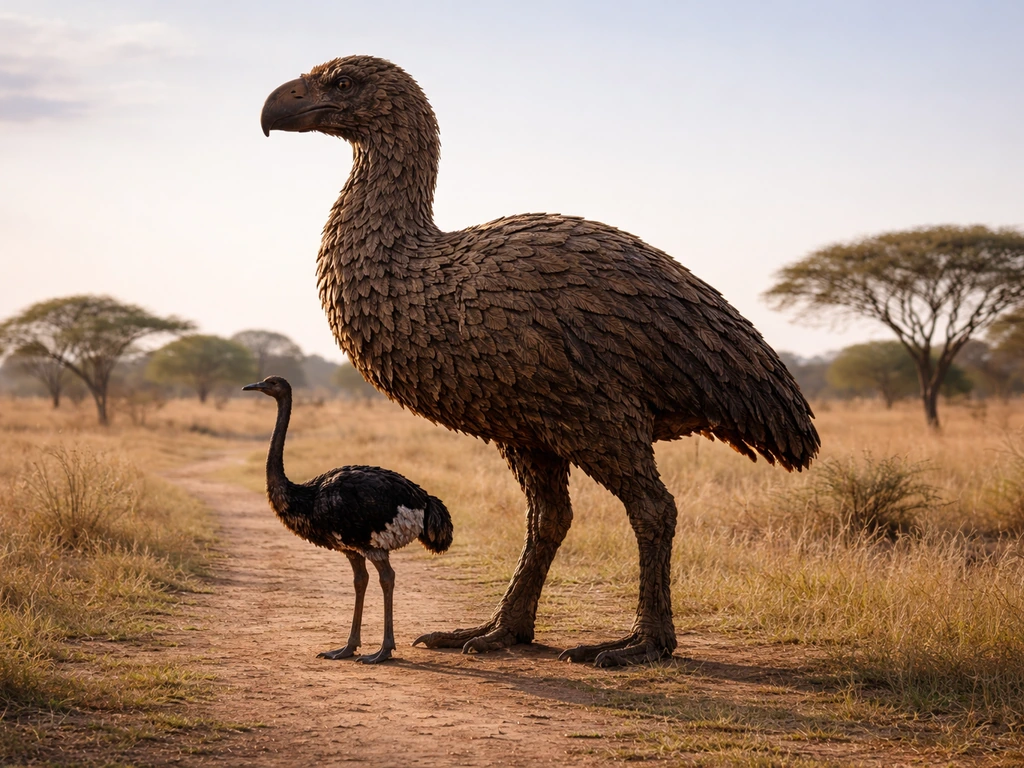
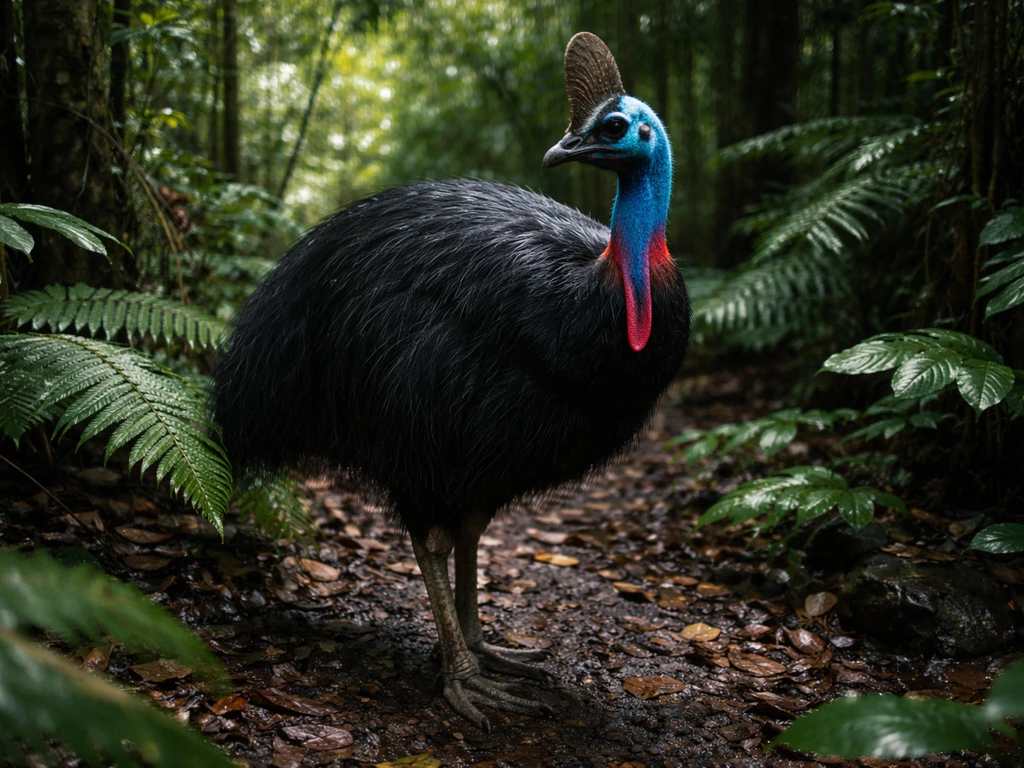
Living birds are not even close to Vorombe titan's mass, but they are worth including for scale. The common ostrich (Struthio camelus) is the heaviest living bird, with record adult males reaching 156.4 kg and up to 2.74 m tall. The emu can top 45 kg. The southern cassowary reaches about 170 cm in height, making it one of the tallest living birds after the ostrich. If you are curious about where cassowaries live and how they compare to other large flightless birds today, that is a natural rabbit hole from here. Cassowaries live in tropical forests and mangrove areas of northern Australia and parts of New Guinea where cassowaries live.
How scientists estimate weight from fossils
Because you cannot weigh a dead animal from millions of years ago, paleontologists use a method called allometric scaling. The idea is that there are reliable mathematical relationships between skeletal measurements and body mass in living animals. You build a regression equation from living species, then plug in measurements from fossil bones to predict what the extinct animal might have weighed.
For birds, the most commonly used proxy is the least shaft circumference of the femur, the thighbone. Femur circumference correlates strongly with body mass because it has to support the animal's weight. One widely cited equation in the literature is the Campbell and Marcus 'heavy-bodied birds' formula: log10(M) = 2.293 × log10(LCf) + 0.110, where M is mass in grams and LCf is the least femur shaft circumference in millimeters. This is exactly the type of calculation behind Vorombe titan's mass estimates.
The honest limitation is that these equations are calibrated on living birds. When you apply them to something as enormous as Vorombe titan, you are extrapolating well beyond the original data range. Responsible studies account for this by reporting prediction intervals, which are the upper and lower bounds of plausible estimates, rather than pretending a single point estimate is precise. This is why you see ranges like 536 to 732 kg rather than just '642.9 kg, end of story.'
Researchers also use other skeletal measurements to cross-check, including femur length, coracoid dimensions, and overall limb bone proportions. Multiple converging lines of evidence give more confidence. And comparative anatomy, looking at muscle attachment sites and bone density, helps reconstruct body shape and fill in gaps where bones are missing.
How to verify claims and avoid common mix-ups

A lot of 'largest bird ever' claims floating around online are outdated, cherry-pick the most dramatic number, or confuse different metrics. Here is how to tell good sources from bad ones.
Estimated vs. measured
For living birds, mass figures should be measured, meaning researchers actually weighed real animals. For extinct birds, mass figures are always estimated via skeletal scaling. If a source gives you a suspiciously precise number for an extinct bird (say, 'exactly 860 kg') without any range or uncertainty, that is a red flag. Credible sources will either give a range or at minimum acknowledge the estimate's uncertainty.
What a reputable source should specify
Any trustworthy claim about extinct bird mass should be traceable to a peer-reviewed methodology. Look for three things: which bones or measurements were used (least femur circumference is common), which regression equation was applied, and what uncertainty range was produced. The 2018 Hansford and Turvey paper in Royal Society Open Science hits all three, which is why it is now the standard reference for Vorombe titan's mass.
Common mix-ups to watch for
- Heaviest vs. tallest: Vorombe titan is heaviest; the giant moa (Dinornis) is tallest. These are different records and different animals.
- Vorombe titan vs. Aepyornis maximus: Many older books and articles still call Aepyornis maximus the largest bird ever. This reflects pre-2018 science. The 2018 RSOS study separated the two as distinct species and placed Vorombe titan above Aepyornis maximus on mass.
- Average vs. upper-extreme estimates: The 860 kg figure for Vorombe titan is an upper-extreme projection, not the central estimate. The mean is 642.9 kg. Both come from the same 2018 paper, so quoting 860 kg is not wrong, but it should be labeled as an extreme rather than a typical value.
- Dromornis as 'largest': Some sources still list Dromornis stirtoni (Australia) as the heaviest bird ever, particularly sources written before 2018 or those not updated after the Hansford and Turvey study. Its 728 kg upper estimate falls below Vorombe titan's modeled range.
- Terror birds and predatory birds: Brontornis and other phorusrhacids often appear on 'biggest birds' lists because they are dramatic, but they are not the largest by mass. They are the largest predatory birds, which is a different category.
Where to check
For the headline title, Guinness World Records updated their 'largest bird ever' entry based on the 2018 RSOS paper, so it is a reasonable quick reference. For deeper verification, the Hansford and Turvey (2018) paper is freely available through PubMed Central as a Royal Society Open Science article. For methodology on how mass estimates are derived from fossils, Field et al. in PLOS ONE is a solid technical reference on skeletal correlates for bird body mass estimation. Natural history museums with elephant bird specimens, particularly the Natural History Museum in London, also publish factsheets that reflect current scientific consensus.
The bottom line: Vorombe titan was the largest bird ever to live, weighing in at a mean estimated mass of around 643 kg, within a well-supported range of 536 to 732 kg. It was a colossal flightless animal from Madagascar, related to other elephant birds, and it went extinct after humans arrived on the island. No living bird comes remotely close to its mass.
When you see other species competing for the title, it usually comes down to using an older source, a different metric like height, or confusing the upper-extreme figure with the average estimate. Armed with that, you should be able to read any 'largest bird ever' claim and know exactly what question to ask. Researchers also track whether other fearsome giants, like the goliath bird-eating spider, are endangered.
Goliath birds are often discussed in terms of whether they belong to the Old World or New World zoogeographic regions.
FAQ
Is Vorombe titan definitely the largest bird in every way, or only by mass?
No, and the key is how “largest” is defined. If you mean heaviest by body mass, Vorombe titan is the best supported. If you mean tallest, the giant moa (Dinornis robustus) is often favored, but it can be lighter and more leggier, so it does not automatically win the overall “largest” comparison.
Why do estimates for extinct birds like Vorombe titan come with ranges instead of one final weight?
The 642.9 kg figure is an estimated mean, not a measurement. For fossil taxa, researchers produce a prediction range (in the cited work, 536 to 732 kg) because regression formulas have uncertainty, and Vorombe titan sits outside the size range of the living birds the models were trained on.
What does the “up to 860 kg” number mean, and should I treat it as the real weight?
Treat “860 kg” as an upper-extreme scenario, not the typical value. Credible summaries explain whether a number is a modeled maximum, an upper confidence bound, or a single-point best estimate, and they should also tell you what bone measurement and regression equation were used.
How can I tell if a source is making up mass estimates for extinct birds?
If an online claim says an extinct bird’s mass was “measured” or “weighed,” that is almost certainly wrong. Fossil animals cannot be weighed, so the only defensible approach is allometric scaling from skeletal correlates, with regression and an uncertainty interval.
What specific details should I look for when verifying an extinct bird mass calculation?
A good check is whether the source tells you the exact measurement used (for example, least femur shaft circumference) and the regression equation applied. Without those two details, you cannot know whether the calculation matches the current consensus for elephant bird mass estimates.
Can two credible papers disagree on Vorombe titan’s weight?
It can, because different skeletal proxies and different regression models can shift the prediction. That is why stronger studies cross-check multiple bones (like femur length and other limb dimensions) and report prediction intervals rather than relying on a single formula.
How much heavier was Vorombe titan than the heaviest living birds?
No living bird comes close to the mass scale of Vorombe titan. The heaviest living birds, like ostriches, are on the order of hundreds of kilograms at most, so even the upper end of living-bird records is far below the elephant bird estimates.
When rankings differ online, how do I avoid comparing apples to oranges?
If you are comparing “largest,” decide on a metric first: mass, height, or overall body length. Then compare species using the same metric, because the winner can change, especially between mass-heavy elephant birds and taller, more lightly built giant moa.
What is the best next step if I want to verify the claim beyond headlines?
The most reliable “largest bird ever” statements for extinct species are the ones that explicitly connect the title to a peer-reviewed mass-estimation method and an uncertainty range. For quick reference, you can use updated reference books, but for verification you want the underlying modeling study and its methods.