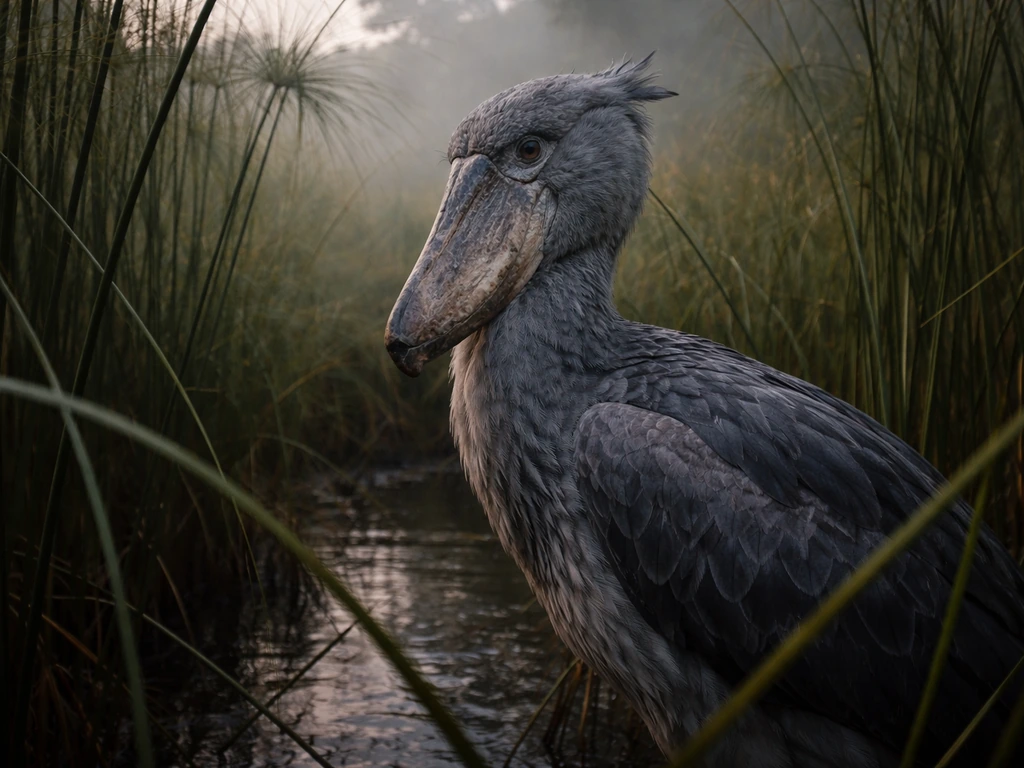
The shoebill bird (Balaeniceps rex) is not extinct. It is alive and living in the wild right now, assessed as Vulnerable (VU) on the IUCN Red List, which means it faces a high risk of extinction in the medium-term future but has not disappeared. With an estimated wild population of around 5,000 to 8,000 individuals, it is rare, declining, and genuinely at risk, but calling it extinct would be flat-out wrong.
Is Shoebill Bird Extinct? Current Status and Evidence

Maya Hennessy
16 May 2026
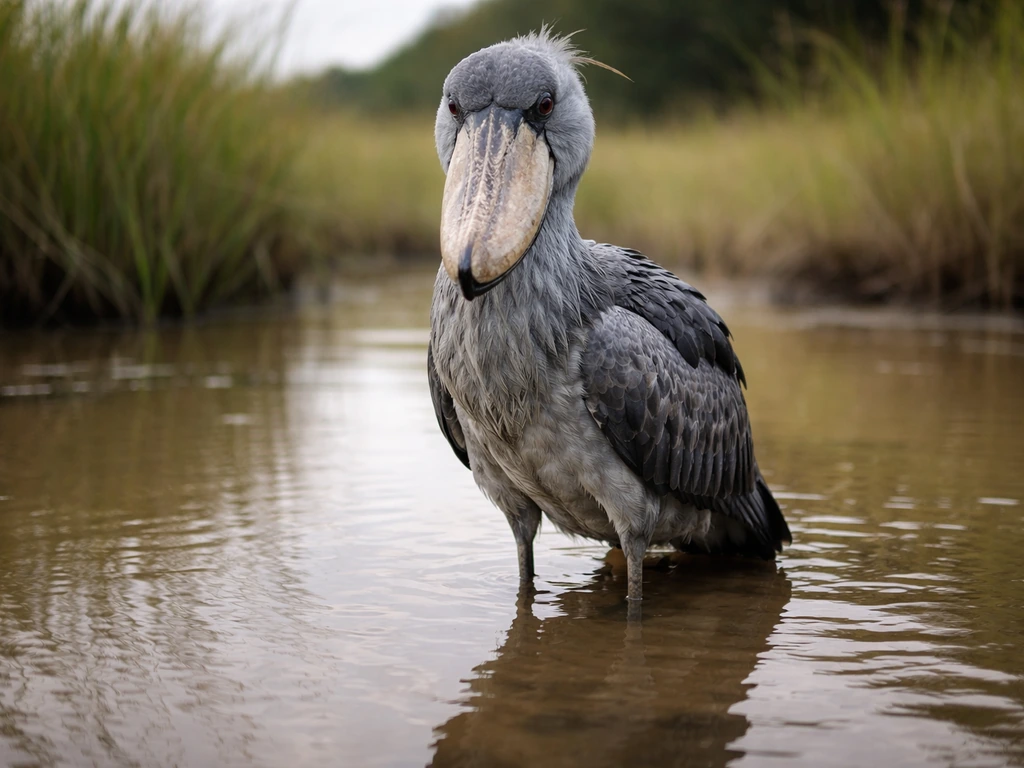
Shoebill basics and where it lives today
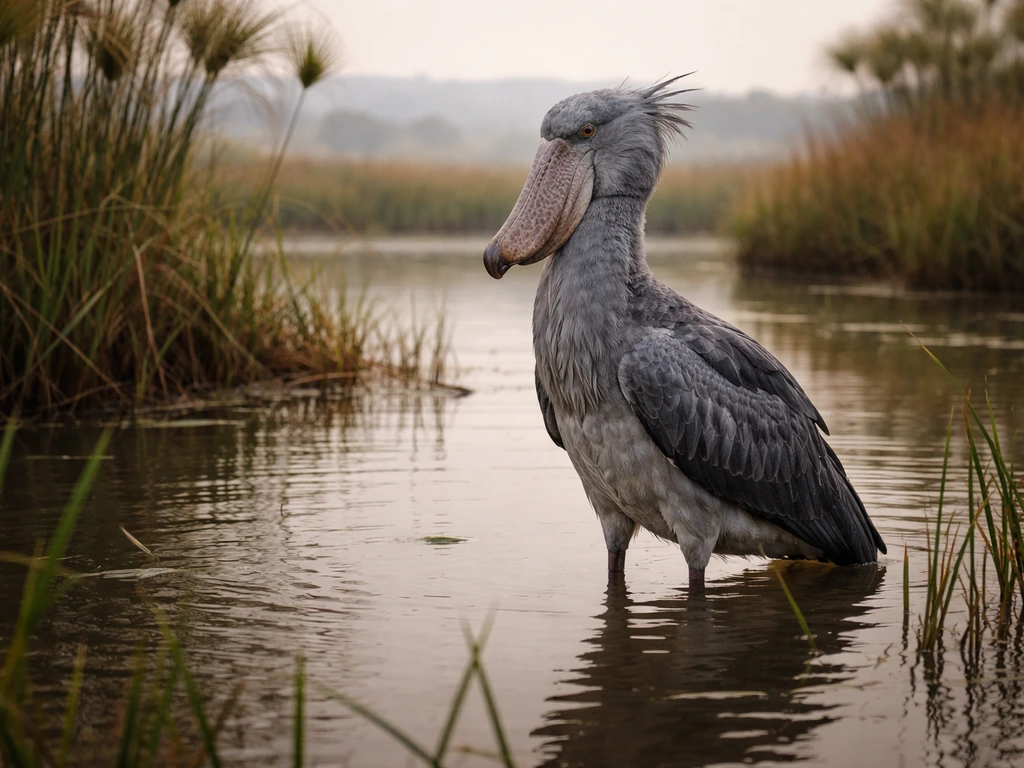
The shoebill is one of those birds that looks like it wandered in from the Cretaceous and forgot to leave. Its enormous, shoe-shaped bill (hence the name) makes it instantly recognizable, and it earns its nickname 'king of the marshes' by stalking prey in dense, waterlogged terrain that most predators would rather avoid. Scientifically it is Balaeniceps rex, a single species with no close living relatives in the typical sense.
Its range is tightly tied to extensive freshwater swamps dominated by papyrus, reeds, and grasses across central and eastern tropical Africa. The main population strongholds are southern Sudan's White Nile and Sudd wetlands, northern Uganda, western Tanzania, and the Bangweulu Swamp of northeastern Zambia. GPS-tagging research published in 2021 in Scientific Reports found that shoebills in the Bangweulu Wetlands stayed in those wetlands year-round and moved less than 3 km per day on 81 percent of tracked days. That kind of site fidelity tells you this bird is genuinely present and behaving normally in these habitats, not drifting through or disappearing.
The Bangweulu Wetlands in Zambia are now one of the most actively monitored shoebill sites in Africa, with African Parks conducting bi-annual aerial surveys of the area. Researchers have also applied habitat suitability modelling alongside those aerial surveys to refine population estimates specifically for Bangweulu, making it one of the better-documented shoebill populations on the continent. If you are wondering where to see shoebills in 2026, Uganda (particularly Mabamba Swamp and Murchison Falls) and the Bangweulu Wetlands remain the most frequently visited sites by birders and researchers alike.
What extinction actually means, and where the shoebill fits
The IUCN Red List is the global standard for classifying extinction risk, and it uses precise definitions worth understanding if you want to interpret species status correctly. Here is how the categories break down from most to least severe:
| IUCN Category | Abbreviation | What it means in plain language |
|---|---|---|
| Extinct | EX | No reasonable doubt the last individual has died |
| Extinct in the Wild | EW | Survives only in captivity or as a naturalized population outside its historical range |
| Critically Endangered | CR | Extremely high risk of extinction in the wild in the immediate future |
| Endangered | EN | Very high risk of extinction in the wild in the near future |
| Vulnerable | VU | High risk of extinction in the wild in the medium-term future |
| Near Threatened | NT | Close to qualifying as threatened but not meeting criteria yet |
| Least Concern | LC | Evaluated and does not meet criteria for higher risk categories |
The shoebill sits at Vulnerable. That is three full categories away from Extinct. It is not even Critically Endangered, which would already represent an extremely high and immediate risk. Vulnerable means the species is genuinely threatened and needs active management to prevent further decline, but it is very much present in the wild. Comparing it to truly extinct birds like the dodo (Raphus cucullatus) or the giant moa, where we have definitive evidence that every individual is gone, makes the gap between 'rare and declining' and 'extinct' very clear.
The distinction between Extinct and Extinct in the Wild is also worth flagging, because readers sometimes conflate the two. A species that is Extinct in the Wild might still have individuals alive in zoos or breeding programs, but no self-sustaining wild population exists. The shoebill is neither of these. It has a wild population, it is reproducing in natural habitat, and researchers are actively tracking individuals in the field.
The evidence that shoebills are still out there
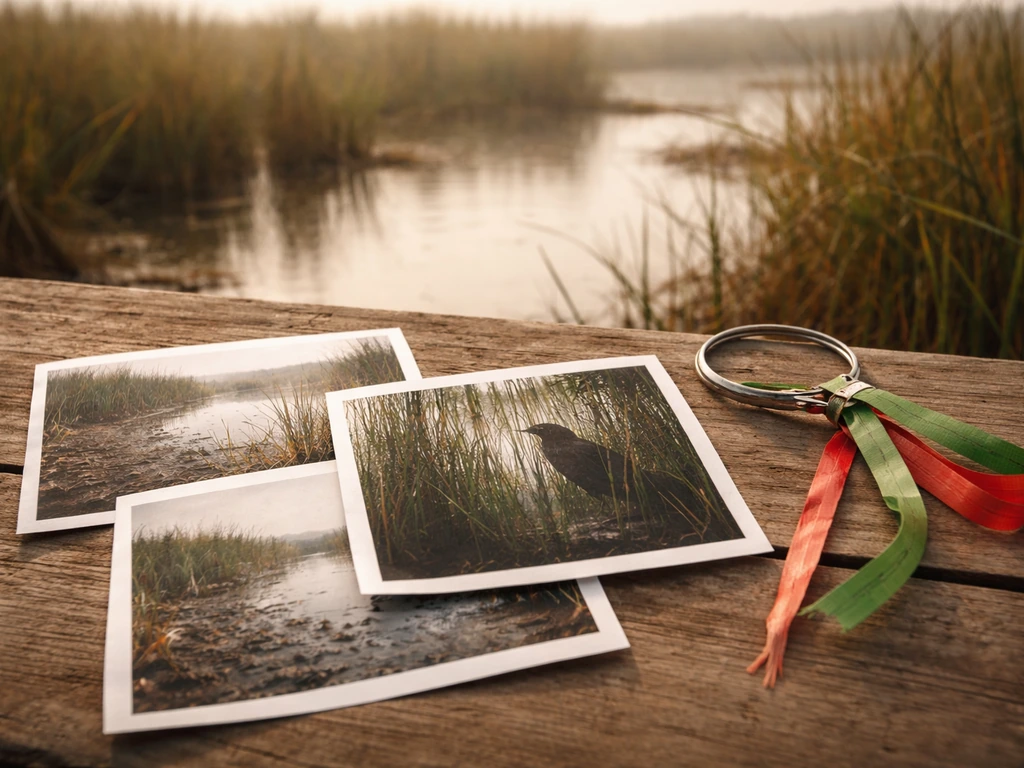
People sometimes assume a bird is extinct simply because it is rarely seen, and the shoebill's secretive marsh habitat makes casual sightings genuinely difficult. But rarity of sightings is not the same as absence. The IUCN Red List FAQs specifically address this, explaining that the 'last seen' concept applies only to EX, EW, and the Possibly Extinct sub-categories, and that absence of recent sightings alone is not sufficient grounds to classify a species as extinct without exhaustive targeted surveys confirming no individuals remain.
For the shoebill, the evidence of continued existence is solid and recent. The GPS telemetry work in Zambia's Bangweulu Wetlands directly tracked living individuals and documented their movement patterns in detail. Aerial survey programs are producing updated population estimates for key sites. BirdLife International's International Single Species Action Plan (ISSAP) for the shoebill, while released in 2014, established a framework that acknowledges an existing wild population of 5,000 to 8,000 birds and sets goals around maintaining range and increasing population size, which only makes sense if there is a population to work with. The population trend is concerning (declining rather than stable), but declining is categorically different from gone.
Why the shoebill is struggling: main threats
Understanding why someone might search 'is the shoebill bird extinct' requires understanding how close to the edge this species feels. If you are specifically asking about the macaw bird and which country it lives in, it helps to identify the macaw species first because countries vary widely by species search 'is the shoebill bird extinct'. Its situation is genuinely precarious, and the threats are well-documented.
- Habitat loss and wetland degradation: The shoebill is entirely dependent on large, intact freshwater swamps with papyrus and reed cover. Drainage for agriculture, changing land use around wetland edges, and altered water regimes from dams and irrigation all chip away at that habitat. Because its distribution is already fragmented, losing even one key swamp can be significant at the population level.
- Disturbance at nest sites: Shoebills nest on the ground in marshes and are extremely sensitive to human disturbance during breeding. Fishing activity, cattle grazing into wetland margins, and even well-intentioned ecotourism can cause nest abandonment if managed poorly.
- Hunting and collection: In some parts of its range, shoebills have been captured for the live bird trade or killed. Although not the dominant threat, it adds pressure to a population that reproduces slowly, typically raising just one chick per nesting attempt.
- Fisheries impacts: Shoebills depend on lungfish and other large fish as their primary prey. Changes in fish populations from overfishing, invasive species, or water quality degradation in key wetlands can reduce food availability and push birds into suboptimal habitat.
- Conflict with fishers: In areas where shoebills and traditional fishing communities overlap, there can be direct competition or antagonism, occasionally resulting in birds being disturbed or harmed.
- Climate-related water level changes: The 2021 GPS telemetry study specifically found that surface water dynamics drove shoebill movements within Bangweulu, suggesting the species is sensitive to hydrological variability. Increasing climate unpredictability in African wetlands adds another layer of risk.
The combination of a small global population, highly fragmented habitat, slow reproduction, and multiple simultaneous pressures is exactly why BirdLife's conservation plan frames the core goal as both maintaining the current range and actively growing the population. There is no buffer. A species at 5,000 to 8,000 individuals spread across isolated swamps cannot absorb continued losses without risk of a rapid status change toward Endangered.
What is being done to protect the shoebill
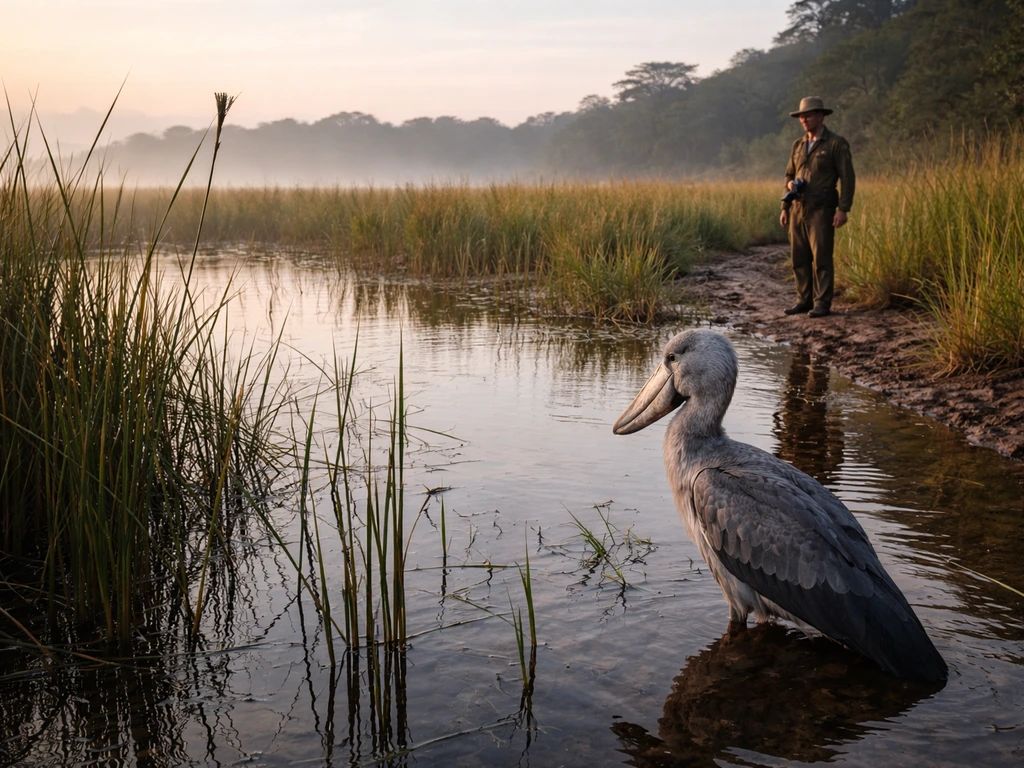
Conservation for the shoebill operates on several fronts, and there are real, active programs underway as of 2026. If you are also thinking about common garden birds, magnolia yellow bird evergreen is another plant term worth checking for the right care and habitat needs is magnolia yellow bird evergreen.
- Protected area management: The Bangweulu Wetlands in Zambia are managed by African Parks in partnership with local communities and the Zambian government, providing one of the strongest institutional protections any key shoebill site currently has. Regular aerial surveys give managers up-to-date data on where birds are and how the population is responding to management changes.
- Scientific monitoring: GPS telemetry programs like the one documented in the 2021 Scientific Reports study are generating fine-scale movement and habitat use data that helps managers identify which parts of a wetland are most critical and when disturbance is most damaging.
- Community engagement: In Uganda and other range states, community-based conservation programs aim to create economic incentives for local people to protect shoebill habitat. Ecotourism around shoebill viewing has become a meaningful income source in some areas around Lake Victoria and the Murchison Falls region.
- Species action planning: BirdLife International's ISSAP provides a coordinated framework for range-state governments and conservation organizations, setting specific targets for population monitoring, threat reduction, and habitat protection across all key sites.
- Habitat suitability modelling: Combining aerial survey data with habitat models allows researchers to identify not just where shoebills are now but where suitable unoccupied habitat might exist, which is important for understanding the population's potential recovery ceiling.
- Reducing nest disturbance: Some protected areas have implemented seasonal fishing restrictions or buffer zones around known nest sites during the breeding season, directly targeting one of the species' most sensitive life stages.
None of this guarantees the shoebill's future, but it does mean the species is not being left to decline without intervention. The trajectory depends heavily on whether wetland habitats across Sudan, Uganda, Tanzania, and Zambia remain intact over the coming decades, which in turn depends on regional water management policy, climate adaptation, and continued investment in protected area governance.
How to check the shoebill's status for yourself
If you want to verify the shoebill's current status or check whether the assessment has been updated since this article was written, the process is straightforward. Start with the IUCN Red List at iucnredlist.org and search for Balaeniceps rex. The fact sheet will show you four key pieces of information: the Red List category (currently Vulnerable), the date assessed (which tells you how current the assessment is), the population trend, and the main threats. If the category has changed since you last checked, the date assessed will tell you when that change was made.
BirdLife International (birdlife.org) is the second source worth bookmarking. BirdLife is the partner organization that conducts the assessments for birds on behalf of IUCN, so their species pages are authoritative and often include more ecological detail than the IUCN summary alone. Searching 'shoebill' on the BirdLife site will take you to their species factsheet, which includes range maps, habitat notes, and links to their conservation planning documents.
When reading any source about the shoebill or any other at-risk species, watch for these red flags that suggest the information may be unreliable: no date on the article, confusion between Vulnerable and Endangered (they are different), or claims that the shoebill is extinct or 'nearly extinct' without citing a specific IUCN assessment. This is a different story from the hooded pitohui, where toxicity is tied to a specific species rather than extinction status. Vulnerable is serious, but it is not the same as the end. The shoebill is a living species with a real population, active field research, and ongoing conservation programs working in its favor. If you meant macaw bird where do they live, those species vary by type, but most live in tropical forests and warm river basins.
One final note: if you are exploring the broader topic of extinct and endangered birds, the shoebill makes an interesting case study precisely because it occupies that uncomfortable middle ground, rare enough to worry about, present enough to save. If you are also curious about the morepork bird, it is a different species with its own conservation status and habits extinct and endangered birds. That contrast with genuinely extinct species (where no amount of conservation effort can help) is what makes the Vulnerable category so important to understand. The window to act for the shoebill is open. Whether it stays open depends on what happens in the swamps of central Africa over the next few decades.
FAQ
How can the shoebill be “not extinct” if people rarely see it?
Rarity of sightings is common for shoebills because they live in dense, waterlogged swamp habitat and are visually unobtrusive. The “not extinct” conclusion comes from targeted field work (surveys and tracking), not from casual reports, so absence of birders’ sightings alone would not be enough to change its status.
What does “Vulnerable” actually imply for how likely extinction is soon?
Vulnerable means the species faces a high risk of extinction in the medium-term, but it does not indicate the bird is in the immediate “going extinct this year or next” category. It also implies that conservation actions and habitat protection can realistically improve outcomes, unlike true extinction cases.
Could the shoebill ever be classified as “Extinct in the Wild” even if it exists now?
Yes, in theory. If all remaining self-sustaining populations in natural wetlands collapsed, but small numbers survived only in captivity or managed settings, the classification could shift toward Extinct in the Wild. That would require evidence of failed breeding and no reproduction in habitat, not just fewer sightings.
Do aerial surveys and habitat modeling give the same confidence as GPS tracking?
They answer related but different questions. GPS telemetry confirms movement and presence of tagged individuals (strong evidence of continued existence), while aerial surveys and habitat modeling help estimate population size and distribution across broader areas. Using both reduces the risk of over- or underestimating numbers from one method alone.
Why is the shoebill hard to confirm during a short trip or one season?
Shoebills are closely tied to specific freshwater swamp conditions, and their behavior can vary by time of year (including breeding periods and water levels). A short visit in the wrong season, or to the wrong micro-habitat, can miss them even when the species is present nearby.
Where should I look if I want the most up-to-date extinction risk, beyond the article?
Check the IUCN Red List page for the date assessed and the population trend, then compare it with BirdLife’s species factsheet. The date assessed matters because category changes can occur between review cycles even when the overall situation seems “the same.”
What are common mistakes when people search “is the shoebill bird extinct”?
The biggest mistakes are confusing “Vulnerable” with “Endangered,” assuming “nearly extinct” means “almost extinct,” and treating the absence of recent news coverage as proof of extinction. Reliable updates should tie back to an identified IUCN assessment and an assessment date.
If the shoebill population is declining, what is the most likely reason people might worry about extinction next?
Declining numbers plus habitat fragmentation creates a low-margin situation. Because shoebills depend on extensive swamp wetlands, ongoing wetland loss or degradation, altered water regimes, and reduced breeding success can compound over time, increasing the risk that it could shift to a more severe threat category.
Next Article
Where Does the Shoebill Bird Live? Range and Habitat Guide
Where the shoebill lives in Africa, its wetland habitat needs, and how to read range vs occasional sightings today.