You can significantly reduce koel bird activity around your home in Singapore by removing the food sources, nesting contexts, and shelter conditions that draw them in. That means managing fruiting trees, working with your Town Council to prune dense canopy and discourage house crow nests nearby, and adding physical deterrents like bird netting over crops and balcony plants. The koel is protected under Singapore law, so 'getting rid of' it means making your space less attractive, not harming it. If you are wondering whether a morepork bird behaves similarly to the koel around homes, it helps to understand each species' habits and legal protections in Singapore.
Koel Bird: How to Get Rid of Koel Birds in Singapore

Maya Hennessy
21 May 2026
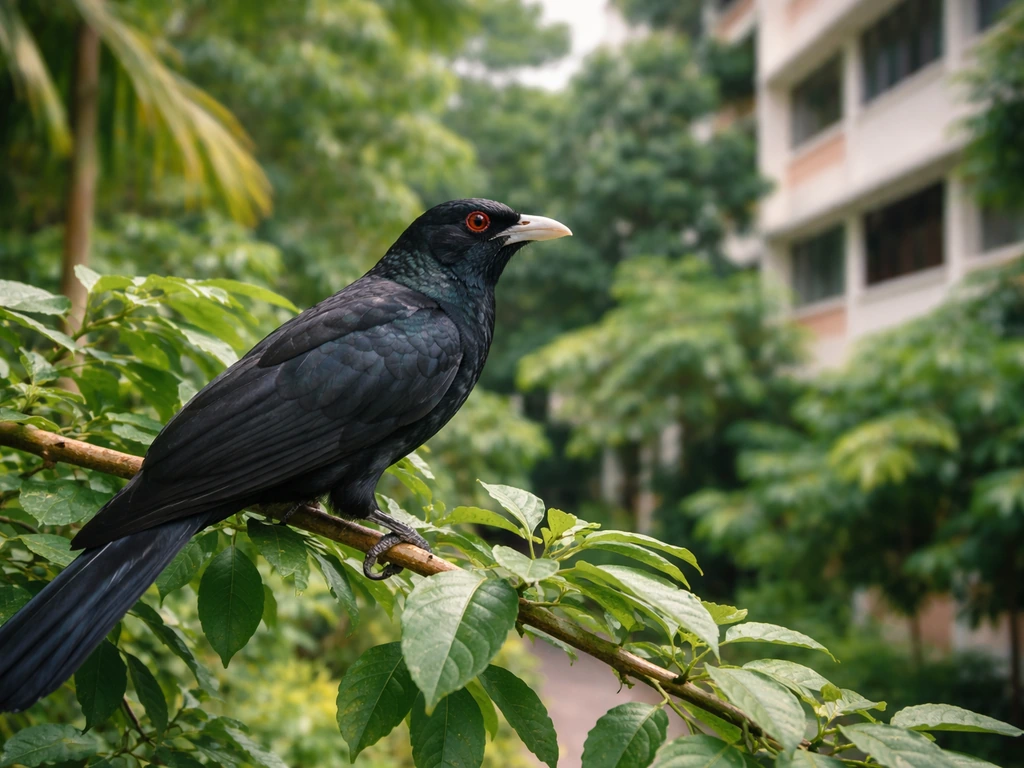
Koel bird in Singapore: what it is and why it keeps coming back
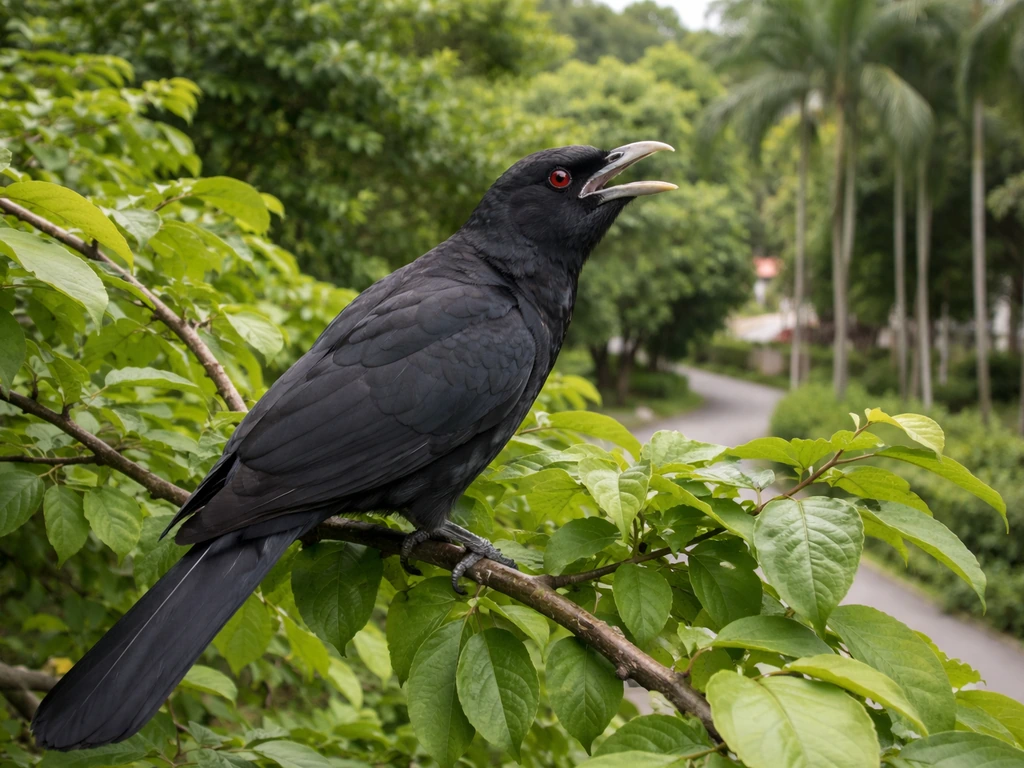
The Asian koel (Eudynamys scolopaceus) is a large member of the cuckoo family, and if you live in Singapore you have almost certainly heard one before you ever saw one. NParks describes it as a bird that is 'more often heard than seen,' and that reputation is well earned. The male's rising, repetitive call (koo-OOO, koo-OOO, climbing in pitch and volume) is one of the most recognizable sounds in Singapore's residential landscape, especially in the early morning hours. If you are also curious about other storks, you may want to look up where does the shoebill bird live as a comparison to this species' habitat needs.
What makes the koel particularly relevant to Singapore residents is its breeding behavior. It is a brood parasite, meaning it does not raise its own chicks. Instead, the female sneaks into an unattended house crow nest, removes one egg, and lays her own in its place. The crow unwittingly raises the koel chick. Because house crows are common across Singapore's HDB estates, parks, and commercial areas, koels follow them closely. NParks notes the koel breeds roughly every three months throughout the year, cycling with the house crow's own breeding calendar. That is why the calls seem to spike periodically and then ease off, only to start again a few months later.
Koels are also drawn to urban Singapore by food. They eat fruit and insects, and Singapore's lush, year-round fruiting landscape (papaya, figs, and a wide range of fruiting garden shrubs and trees) provides a reliable buffet. If you have fruiting trees or dense garden planting, you are essentially providing two of the three things a koel needs: food and shelter. The third thing, the house crow nest it parasitizes, is often nearby without you having any say in it. Understanding this triangle, food plus shelter plus crow host, is the foundation of any deterrence plan that actually works.
Identify what's attracting the koel to your space
Before adding any deterrents, spend a few minutes doing a simple audit of your balcony, garden, or building surroundings. Koels are purposeful visitors. They are there because something specific is offering them value.
- Fruiting trees and plants: Papaya is a documented favorite, but koels will visit fig trees, berry-producing shrubs, and many common Singapore garden fruit species. If you have ripe or ripening fruit accessible in an open canopy, that is likely the primary draw.
- Dense tree canopy: Thick, unpruned tree cover near your home gives koels (and house crows) sheltered roosting space. Koels are secretive birds that prefer to feed and rest under cover.
- House crow activity: If you regularly see or hear crows around your building or estate, koels will follow. Watch for active crow nests in trees near your block.
- Standing water: Like most birds, koels are attracted to accessible water for drinking and bathing. Open containers, clogged drains, and birdbaths all qualify.
- Insects: Dense planting and overripe fruit attract insects, which are part of the koel's diet. Managing fruit waste and overripe produce reduces this secondary food source.
- Open waste bins: Bins that attract insects and small food scraps near trees create an environment that benefits koels indirectly.
The single most useful thing you can do at this stage is identify whether the koel is visiting primarily to feed (likely if you have fruiting plants), to roost in nearby canopy, or simply passing through because crow nests are in the area. Your deterrence approach will differ depending on the answer.
Humane deterrents that actually work today
The good news is that koels, like most wild birds, are responsive to environmental changes. They are cautious, and their visits are driven by opportunity. Remove or complicate that opportunity and they will move on. Here are the main categories of deterrent and how well each works in the Singapore context.
Visual deterrents
Reflective tape, old CDs hung in trees, and predator silhouettes (hawk or owl cutouts) can startle koels, especially when first introduced. These work best when placed directly near fruiting plants or known perching spots. The catch is that koels, like most intelligent birds, habituate quickly. Rotate and move visual deterrents every few days to maintain some effect. Static, never-moved deterrents lose effectiveness within a week or two.
Noise deterrents
Wind chimes and motion-activated noise devices can discourage landing, especially on balconies. Again, the key is variation and movement. A single wind chime in a fixed position will stop deterring a habituated bird within days. Clapping, sudden movement, or gentle sprays of water when you spot the koel feeding are short-term manual deterrents that reinforce the message that your space is not a safe feeding spot. Be consistent: if the bird is interrupted every time it visits, it will eventually seek easier feeding elsewhere.
Access control
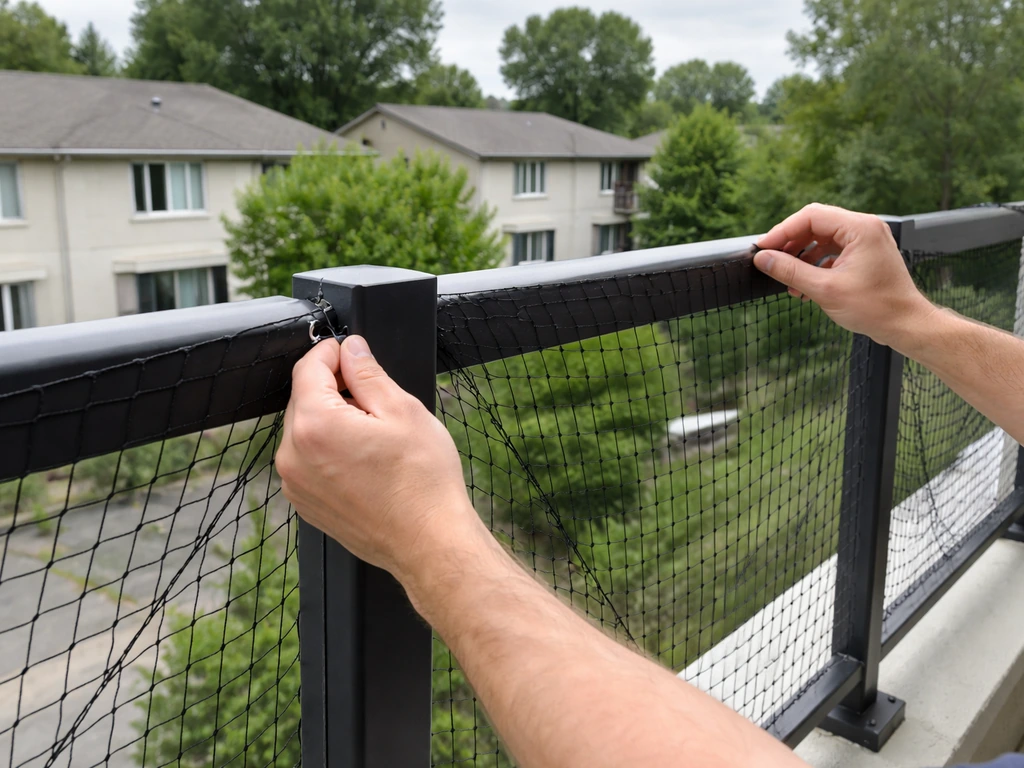
This is the most reliable category. Physically limiting the koel's ability to reach food or roost points is more effective than any scare tactic. On balconies, balcony netting or screens (the kind used for pigeon exclusion) prevent entry entirely. In gardens, covering fruiting plants directly is the most dependable method. Access control works because it addresses the root motivation rather than just startling the bird temporarily.
Protect your plants and fruit trees: netting, barriers, and smart tree management
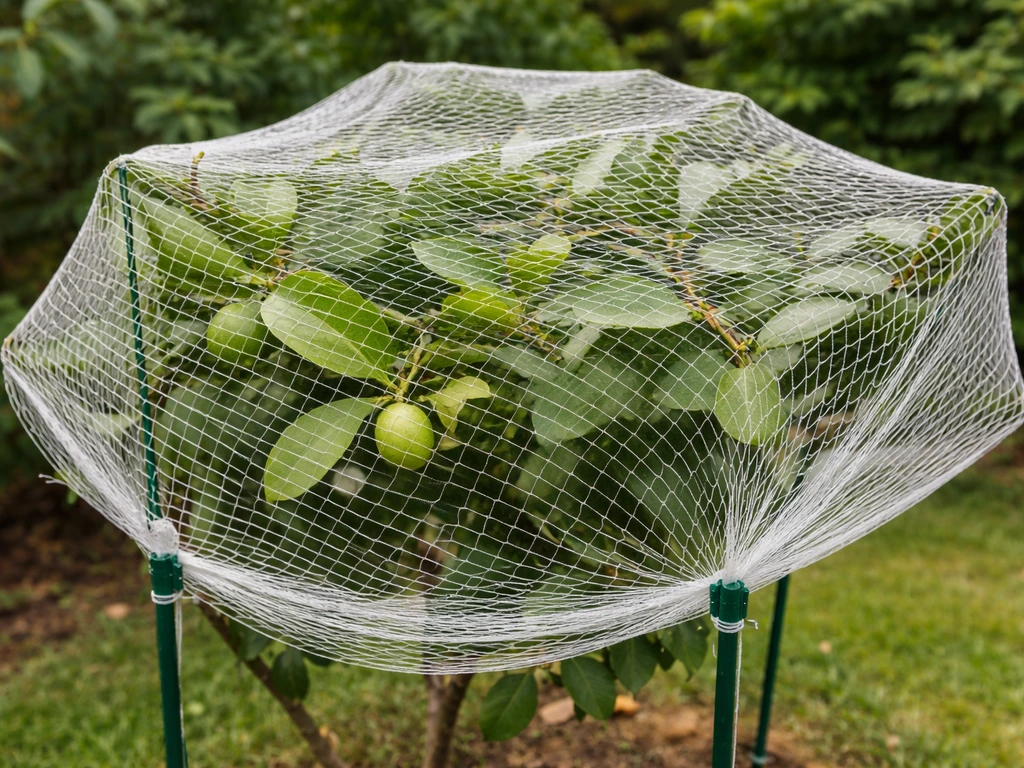
Bird netting is the most practical and humane physical barrier available to Singapore gardeners. If you have magnolia yellow bird evergreens, netting them correctly can help protect the flowers and fruit while keeping koels from feeding and roosting nearby is magnolia yellow bird evergreen. NParks' GardeningSG guidance confirms that correctly sized bird netting is large enough for most insects to pass through while still protecting crops from birds, making it a non-harmful exclusion tool rather than a trap. The key phrase there is 'correctly sized and installed.'
For safety, use netting with a mesh diameter of less than 2mm wherever possible. Larger gaps can trap a bird's leg, wing, or head, causing injury or death, which defeats the purpose entirely and may create legal issues under Singapore's Animals and Birds Act. Check netting regularly for tears, sagging sections, or gaps at the edges where it meets pots, railings, or tree trunks. A poorly maintained net is worse than no net because it can injure wildlife without actually keeping birds away from the fruit.
For individual fruit (like ripening papaya), you can bag fruits individually using paper bags or fine mesh fruit bags tied at the stem. This is labor-intensive but highly effective for small numbers of plants. For larger trees, draping the entire canopy is more practical than bagging individual fruits, but make sure the netting is taut and anchored at the base so the koel cannot access fruit by landing on the net and reaching through.
Tree pruning is the other major tool. Dense, unpruned canopy near your home gives koels and house crows the covered roosting and perching environment they prefer. Regular pruning opens the canopy, reduces shelter value, and makes trees less attractive as staging areas. NParks actively works with Town Councils and building management to do exactly this in residential areas. If you manage a private garden, consider regular trimming of large fruiting or shade trees near your home. If the dense trees are on common property (HDB void deck gardens, estate landscaping), escalate the request to your Town Council.
What to do when it keeps returning: escalation and coordination
If you have applied deterrents consistently for two to three weeks and the koel is still visiting regularly, the issue is likely structural: there is a persistent food source, a crow nest very close by, or shelter that you cannot address on your own. At this point, escalation makes sense.
- Contact your Town Council (for HDB estates) or building management (for private condominiums): NParks works directly with Town Councils and premise managements to arrange professional tree pruning and crow nest removal in residential areas. This is the most impactful single action for persistent koel problems, because removing or disrupting nearby crow nests removes the koel's host and breeding anchor in your area.
- Call NParks Animal Response Centre (1800 476 1600): NParks ARC handles wildlife concerns and can provide specific advisory or coordinate with relevant teams. They are the first point of contact for official guidance.
- Contact ACRES (9783 7782): The Animal Concerns Research and Education Society provides community wildlife helpline support and can advise on humane management options for urban wildlife situations.
- Coordinate with neighbors: If a fruiting tree or crow nesting site is on a neighbor's property, the problem cannot be solved from your side alone. A polite conversation, with reference to NParks advisory materials if helpful, can get more people on board with collective habitat management.
- Document the pattern: Keep brief notes on when the koel visits, what it is doing (feeding, perching, calling), and which specific trees or spots it uses. This helps Town Council or NParks staff prioritize and target their interventions.
It is worth knowing that the koel's call intensity follows its breeding cycle, roughly every three months. If deterrents are in place but the problem still peaks periodically, that timing is likely the breeding season spike rather than a deterrence failure. Increase your monitoring and reinforce deterrents during those periods specifically.
What not to do: legal limits and humane boundaries
It is tempting, especially after a 4am wake-up call for the fourth morning in a row, to look for more drastic solutions. Here is what you need to know about the legal and ethical lines in Singapore.
- Do not attempt to trap, catch, or remove the koel: Under the Wildlife Act, removing most species of wild animal from the wild is against the law in Singapore. The Asian koel is a wild animal and is protected. Trapping it without authorization is illegal regardless of how disruptive it is.
- Do not use glue traps: Glue traps are indiscriminate and cruel. They cause severe distress and physical injury to any bird (or other animal) that contacts them. NEA guidelines on glue traps explicitly flag birds as non-target animals at risk of harm. Deploying glue traps to catch a koel would be both illegal and inhumane.
- Do not destroy eggs or active nests: Interfering with active nests is prohibited. In the koel's case, because it uses crow nests, targeting crow nests yourself without authorization can also create legal complications.
- Do not use poison: Poison is illegal for controlling wild birds in Singapore and poses a massive risk to non-target species, including pets and other garden wildlife.
- Do not use high-powered laser pointers or bright lights directed at birds: Disorienting or injuring a bird with directed light sources is considered cruelty under the Animals and Birds Act.
- Avoid netting with mesh larger than 2mm or netting that is not regularly maintained: Even well-intentioned netting becomes a hazard if birds can get tangled in it. This can cause injury to species you are not targeting at all.
The Animals and Birds Act (Chapter 7) is Singapore's primary legislative framework for the prevention of cruelty and management of animals and birds. If you are also trying to understand which country koels are found in, that broader range context can help explain why local rules and bird protection policies, like Singapore’s Animals and Birds Act, matter. Violations can carry serious penalties. When in doubt about whether a deterrence method is legal, blank" rel="noopener noreferrer">call NParks ARC at 1800 476 1600 before acting.
Why deterrence works (and why some methods fail): the biology behind it
Understanding a little bit of koel biology makes it much easier to see why some deterrents are effective long-term and others are just temporary frustration. For example, the question of poisonous birds often comes up with the hooded pitohui and how rare that kind of poisoning is in Singapore’s urban birdlife. The Asian koel is a smart, cautious, and opportunistic bird.
A common question is whether the koel is actually the dumbest bird, but the truth is these birds are smart, cautious, and learn quickly smart, cautious, and opportunistic. It did not evolve to be easy to spot: it feeds under cover, moves quietly between fruiting plants, and avoids open exposure where possible. That natural wariness is actually something you can exploit.
Deterrents that work by making your space feel exposed, unpredictable, or unrewarding are effective because they trigger the koel's avoidance instinct. Netting works because it removes the reward entirely. Pruning works because it removes the cover the koel relies on. Removing crow nests works because it severs the bird's breeding link to your area. What does not work long-term is anything static and predictable: a motionless owl decoy, a wind chime in a fixed location, or a scare that happens only occasionally.
blank" rel="noopener noreferrer">Koels need both fruit and insects in their diet, so reducing either food source reduces the site's value to them. Managing overripe fruit, covering fruiting plants, and keeping the garden tidy enough to limit insect accumulation all chip away at the koel's motivation to keep returning. No single action eliminates visits, but combining three or four of these steps makes your space consistently less rewarding than the next garden over.
Long-term prevention: a seasonal maintenance plan
Because the koel breeds roughly every three months throughout the year, there is no single off-season to relax your guard completely. However, prevention does not need to be exhausting. A light but consistent maintenance routine is more effective than intensive intervention once a problem has already developed.
| Timing | Action | Why it matters |
|---|---|---|
| Every 2 to 3 months (pre-breeding peak) | Check for and report nearby crow nests to Town Council or building management | Crow nest removal before eggs are laid disrupts the koel's breeding anchor in your area |
| Monthly | Inspect and repair all netting: check for tears, gaps at edges, and sagging sections | Damaged netting stops deterring birds and starts injuring them |
| Weekly during fruiting periods | Harvest ripe fruit promptly; bag individual fruits or cover the canopy | Accessible ripe fruit is the single biggest koel attractant in a home garden |
| Monthly | Rotate or reposition visual deterrents (reflective tape, decoys) | Koels habituate to static deterrents quickly; movement and novelty maintain the effect |
| Quarterly | Review tree pruning needs and request professional pruning for common-area trees if needed | Dense unpruned canopy provides shelter; regular pruning keeps the space less attractive to roosting birds |
| Ongoing | Eliminate standing water in containers, drains, and plant saucers | Water sources attract birds and insects; removing them reduces multiple attractants simultaneously |
| After any koel sighting | Note the time, location, and behavior in a simple log | Pattern documentation helps prioritize future interventions and supports any Town Council or NParks request |
One thing worth keeping in mind: the koel is not the problem in any ecological sense. It is a functioning part of Singapore's urban biodiversity, and its fruit-eating behavior actually helps with seed dispersal in the urban greenery that NParks has deliberately cultivated across the city. The challenge is specifically about managing where it feeds, roosts, and calls relative to where you sleep and live.
Macaws are native to the Americas and typically live in tropical rainforests, savannas, and woodlands where suitable nesting trees are available macaw bird where do they live. A prevention plan that makes your immediate space less rewarding, without harming the bird, is the most sustainable and legally sound approach available to you.
If you are wondering whether the shoebill bird is extinct, it is important to know its current conservation status rather than rely on rumors is shoebill bird extinct.
If deterrents are not making a dent after a month of consistent effort, the most likely explanation is that a structural attractant (a fruiting tree you cannot net, a crow nest out of your control, or a neighbor's open compost pile) is overriding everything else you are doing. That is when the escalation steps above, especially a Town Council or NParks ARC call, become the right move rather than a last resort.
FAQ
Is it legal to move or remove house crow nests so koels stop visiting?
Removing nests is generally not a DIY task, because other birds and related habitats may be protected and removal can create safety risks. The safer path is to report persistent nesting in your building to your Town Council or building management, and ask for guidance that fits the specific site and responsibilities. Avoid handling nests yourself unless you have explicit approval from the relevant authorities.
How can I tell if koels are coming mainly for fruit, insects, or roosting cover?
Do a quick pattern check across one day. If they arrive, feed repeatedly at fruiting spots, then leave, fruit is the main driver. If they appear mostly to perch in dense canopy and you see little feeding away from specific trees, roosting cover is the driver. If their calls are nearby but they only pass through and rarely land, the likely factor is nearby crow-host activity rather than your balcony plants alone.
Will reducing fruiting plants or netting them also cut down mosquitoes and insects?
Not always. Netting and covering fruit can reduce attractants for birds, but insects can still be present depending on watering, soil, and drainage. If insect levels are part of your goal, combine bird exclusion with basic insect controls like removing standing water, covering trash, and managing fallen fruit promptly.
What is the safest way to install bird netting on balconies and prevent bird entrapment?
Use netting with sufficiently small openings (the article notes under 2mm where possible), keep it taut, and ensure there are no sagging loops where a bird could get trapped. Also seal gaps where it meets railings, walls, plant pots, or tree trunks, and inspect frequently for tears or loosened edges, especially after rain and strong winds.
If my neighbor has fruit trees, can their koels still affect me, and what should I do?
Yes. Koels and house crows can use multiple nearby feeding and roosting points, so one household’s deterrence may be outweighed by a neighbor’s unmanaged attractant. Coordinate informally first (ask them to cover or net fruiting areas, clean up fallen fruit), then escalate through Town Council or building management if the attractant is on common property or causes repeated issues across units.
Do koels adapt quickly to visual deterrents like CDs or reflective tape?
They often habituate. Rotate visual deterrents and vary their placement, especially around known perching or feeding points. If you leave the same item in the same spot, the bird typically learns it is not a real threat within days, so a schedule and repositioning plan matters.
Are motion-activated noise devices effective at night in HDB areas?
They can help, but night use can be tricky because of noise disturbance to neighbors and possible regulation concerns. If you use them, aim them so they target landing zones rather than general areas, and consider shorter, targeted periods rather than all-night activation. If your building has noise restrictions, coordinate with management before escalating.
How long should I try deterrents before deciding the problem is structural?
A practical rule is about two to three weeks of consistent application before concluding it is not working. If koels keep returning heavily after that window, the driver is likely persistent food, a very close crow-host nesting link, or shelter you cannot change alone. At that point, escalate to Town Council or NParks ARC.
Can I remove fallen fruit and overripe fruit daily to reduce koel visits?
Yes, and it is one of the easiest high-impact steps. Clear fallen or overripe fruit promptly, secure rubbish properly, and avoid leaving fruit trays or compost exposed. Koels can still visit if shelter and crow-host factors remain, but removing the “easy payoff” often reduces visit frequency.
What should I do if koels are calling intensely during breeding seasons even though I’m deterring them?
Expect periodic spikes and plan extra reinforcement around those windows. Increase monitoring and make sure exclusion barriers remain intact and clean (netting unbroken, fruit covered). If the calls spike but you see no feeding or landing attempts, deterrence may be working, but breeding cycles can still increase nearby activity.
Is using poison, traps, or harming koels ever an option in Singapore?
No. The article highlights that koels are protected and that harming or illegally removing them can lead to serious legal penalties. Focus on reducing opportunities (food, roosting cover, and crow-host access) using humane, preventive methods, and seek advice from NParks ARC when you are unsure about legality.
If I have fruit trees that cannot be netted fully, what are my best alternatives?
For small quantities, bag individual fruits using fine mesh to block access at the stem. If full canopy netting is not possible, prioritize making landing and reach paths difficult (taut barriers, tighter exclusion around the highest-yield branches, and consistent pruning to reduce cover). The goal is to remove the “reach and reward” route, not only scare the bird.
Next Article
Is Magnolia Yellow Bird Evergreen? How to Check and Care
Learn if Magnolia Yellow Bird is evergreen in your zone and how to check leaves, plus care tips for winter.