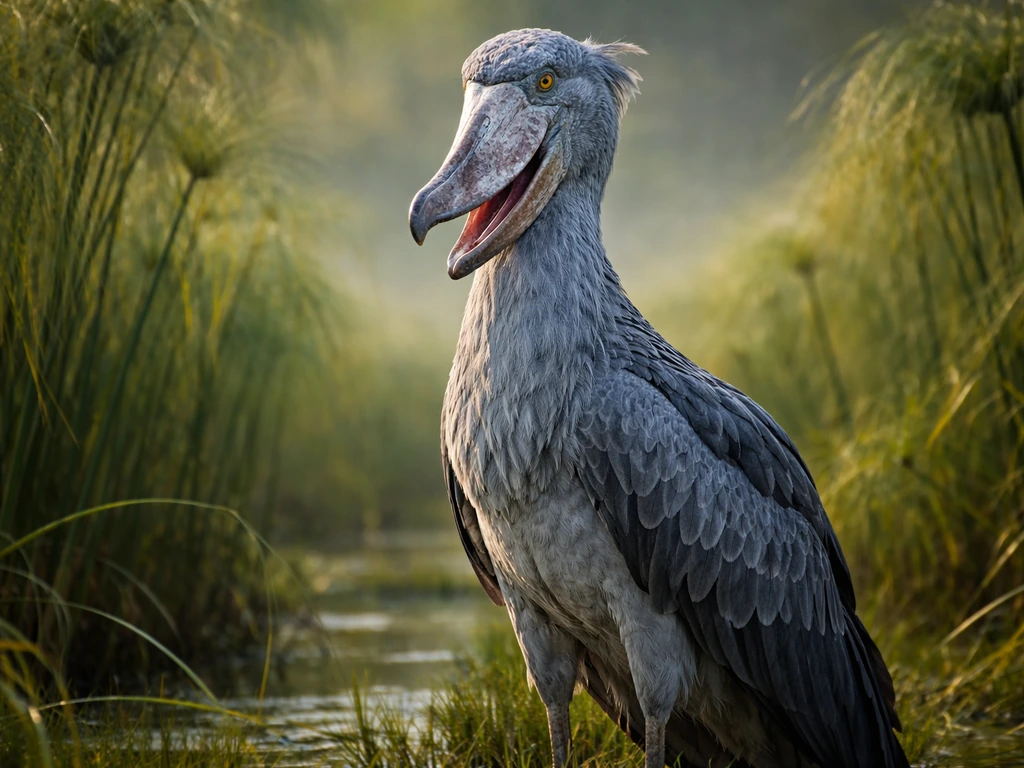
Before anything else: if you landed here searching for a 'Yellow Bird' bird species, you're in the right neighborhood but the wrong aisle. A macaw bird is native to specific regions in Central and South America, so its country of origin depends on the macaw species you mean macaw bird which country. This site covers birds, including endangered and extinct ones, but 'Magnolia Yellow Bird' is actually a popular garden tree cultivar, not a bird. However, the shoebill bird is not extinct, so you should not rely on that wording when searching for it is shoebill bird extinct. It's an easy mix-up given the name. If you meant the morepork bird instead of the Yellow Bird magnolia, that is a completely different species with different habitat and behavior what is a morepork bird. Now, to answer the real question directly: Magnolia 'Yellow Bird' is deciduous, not evergreen. Every major horticultural authority, from Monrovia and NC State Extension to the Morton Arboretum, classifies it explicitly as deciduous. It drops its leaves in autumn, goes bare through winter, and leafs out again in spring. There is no climate zone where it behaves as a true evergreen.
Is Magnolia Yellow Bird Evergreen? How to Check and Care

What 'evergreen' actually means for magnolias
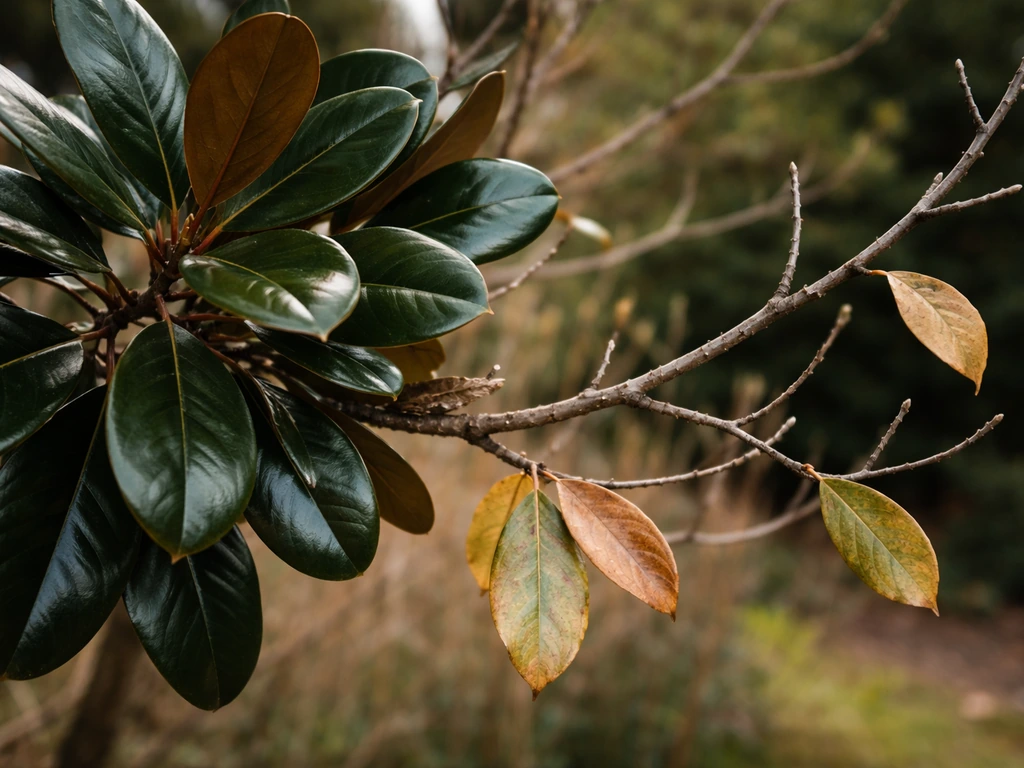
Magnolia is a big genus and it genuinely contains both evergreen and deciduous species, which is why the question is completely reasonable. The Southern magnolia (Magnolia grandiflora), that classic large-leaved tree you see across the American South, is evergreen and holds its glossy leaves year-round. Some other magnolia species are described as 'semi-evergreen,' meaning they hold foliage in mild winters but drop it in harder freezes. That variability creates real confusion at the nursery. When people ask whether a magnolia is evergreen, they often assume the answer might be 'it depends on your climate.' For 'Yellow Bird,' though, there is no 'it depends.' The deciduous habit is baked into its genetics.
Which 'Yellow Bird' magnolia you likely have
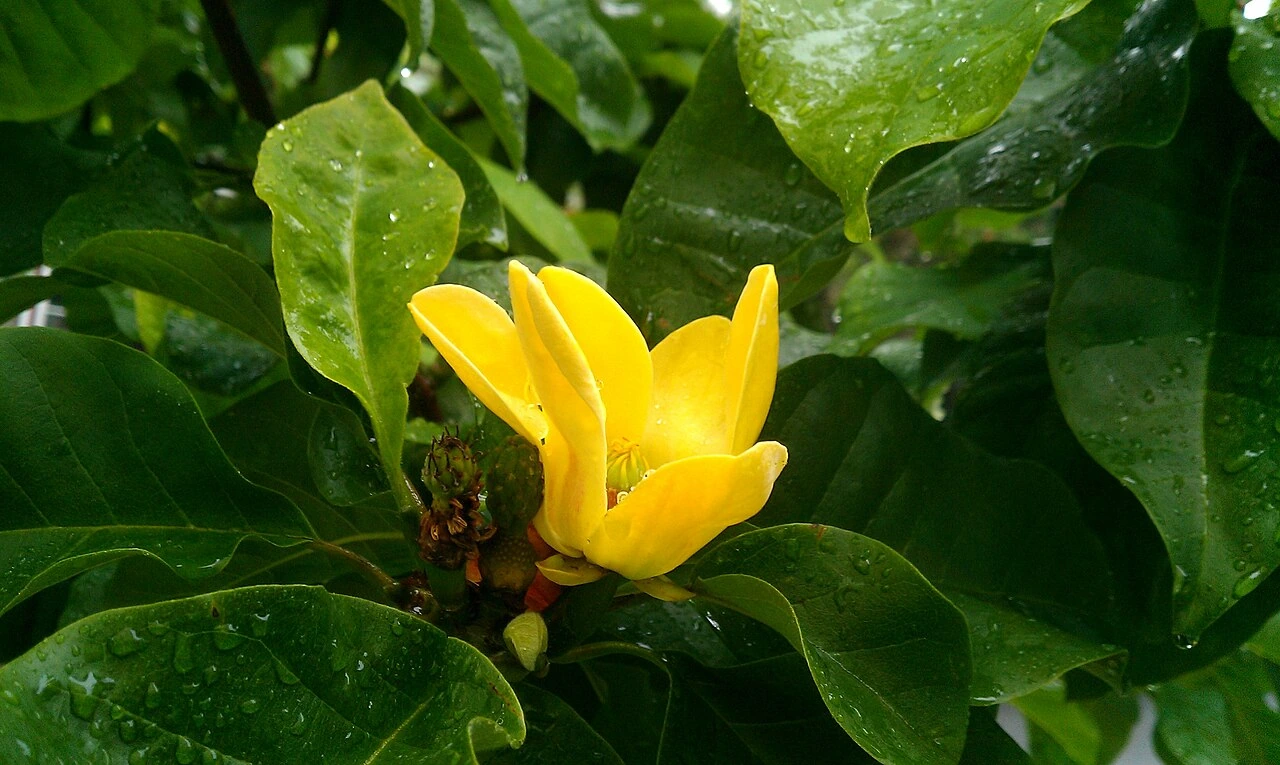
The cultivar sold almost universally under the name 'Yellow Bird' is Magnolia x brooklynensis 'Yellow Bird.' It was bred at the Brooklyn Botanic Garden as a hybrid between Magnolia acuminata var. subcordata and Magnolia x brooklynensis 'Evamaria.' You may also see it labeled 'Magnolia acuminata Yellow Bird' on older tags, because it was previously classified under that name before the brooklynensis hybrid designation stuck. Both names refer to the same plant. The key traits: bright, clear yellow tulip-shaped flowers in late spring (typically May to June), appearing as the leaves are already developing rather than on bare branches. That flowering-after-leaf-set timing is itself a clue to its deciduous nature. The tree grows upright, reaches roughly 6 to 10 meters at maturity, and the foliage turns golden-brown in fall before dropping.
One reason the evergreen question comes up is that nurseries sometimes sell multiple 'yellow-flowered' magnolia cultivars side by side, and some shoppers conflate them. If someone bought a magnolia with yellow flowers and an imprecise label, they might genuinely be unsure what they have. The confirmation steps below will help you sort it out.
Leaf behavior through the seasons
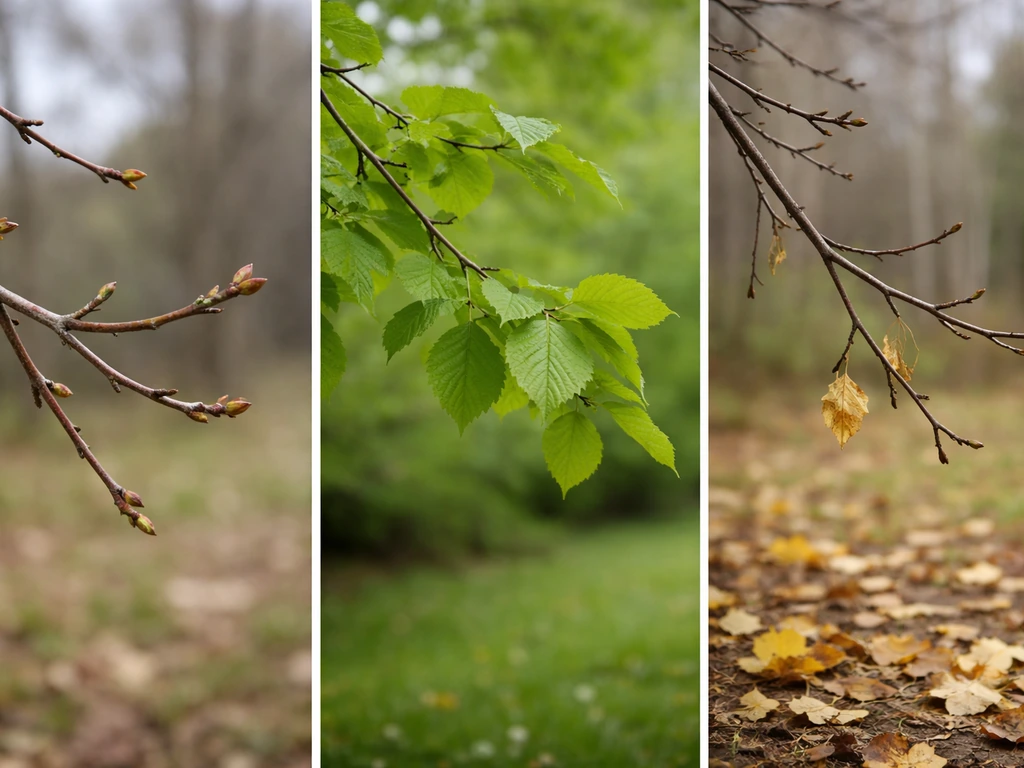
Here is what 'Yellow Bird' actually does across a full year, so you know what is normal and what is not.
| Season | Expected Leaf Behavior | Notes |
|---|---|---|
| Early spring | Bare branches; buds swelling | Flowers appear as leaves begin to emerge, not before |
| Late spring / early summer | Full leaf-out; deep green foliage up to 20 cm long | Flowers present simultaneously with developing leaves |
| Summer | Fully leafed; dense canopy | Normal watering and growth period |
| Autumn | Foliage turns golden-brown | Leaf drop begins; this is completely normal |
| Winter | Fully bare | Dormant; no leaves retained regardless of climate zone |
This is not semi-evergreen behavior. 'Yellow Bird' does not hedge its bets and hold some leaves in mild winters. Texas A&M Extension notes that magnolias generally begin dropping leaves in November and continue until early spring, with timing influenced by both genetic and physiological factors. For 'Yellow Bird,' the genetics point firmly toward full dormancy.
Climate and hardiness: what your zone changes (and what it doesn't)
Magnolia 'Yellow Bird' is rated hardy in USDA zones 4 through 8, which is notably tough for a magnolia. It handles winters that dip well below freezing without dying back to the roots. What your climate zone does NOT change is whether the plant is evergreen. In zone 8 (mild winters, rare frost) and zone 4 (serious subzero cold), 'Yellow Bird' still drops its leaves in autumn. The difference between zones is how smoothly it transitions in and out of dormancy, and whether flower buds survive late cold snaps.
One real climate-related advantage of 'Yellow Bird' is that its late-spring flowering timing (blooming after leaf set) means the flowers are much less vulnerable to late frosts than early-blooming magnolias like the star or saucer types. In colder zones (4 and 5), buds and flowers of early-blooming magnolias routinely get killed by a May freeze. 'Yellow Bird' largely sidesteps that problem. If you're in zone 4 and your plant looks dead all winter, that is dormancy, not damage.
How to confirm your specific plant today
Check the label or tag
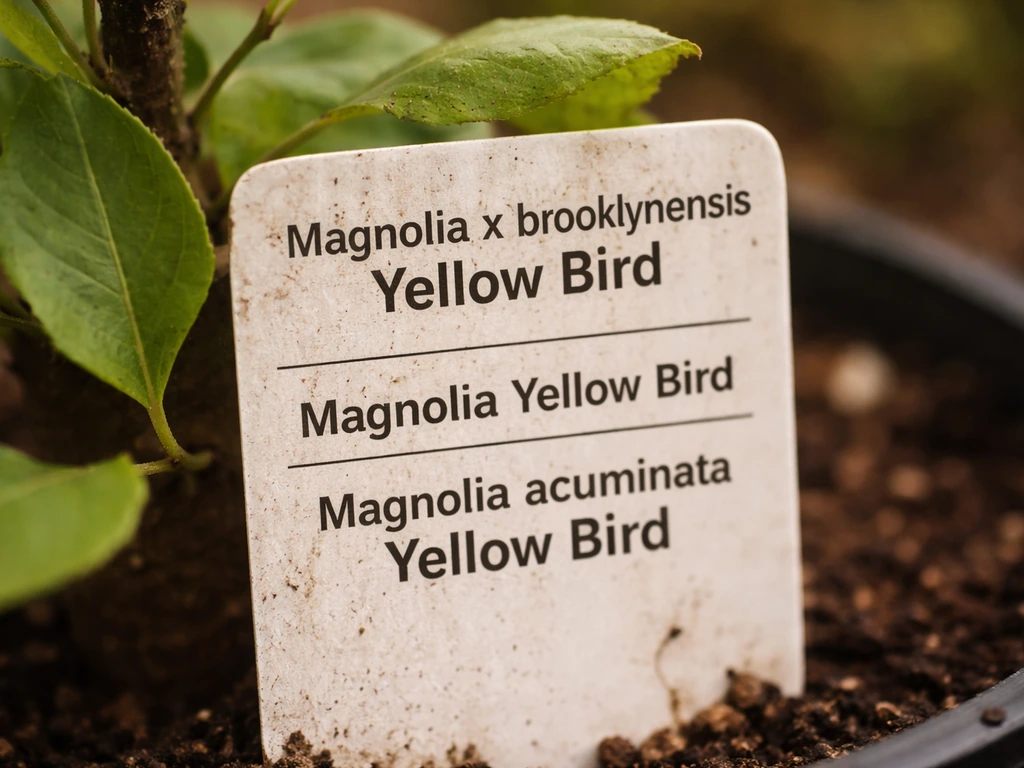
If you still have the nursery tag, look for any of these names: 'Magnolia x brooklynensis Yellow Bird,' 'Magnolia Yellow Bird,' or the older alias 'Magnolia acuminata Yellow Bird.' All three refer to the same cultivar. Monrovia and Chrishaven both list the plant with explicit 'Deciduous' classification on their product pages, so if your tag matches their labeling format, you can confirm both identity and leaf behavior at once.
Visual checks you can do right now
- If it's currently late spring or summer (like right now in May 2026): the tree should be fully leafed with large, oval, deep green leaves up to 20 cm long. If you also see or recently saw bright yellow tulip-shaped flowers, you almost certainly have 'Yellow Bird.'
- Check whether flowers appeared on bare branches or alongside emerging leaves. 'Yellow Bird' blooms as leaves develop, unlike saucer or star magnolias that flower before any leaves appear.
- In autumn, note whether leaves turn golden-brown before dropping. A clean, full autumn leaf drop confirms deciduous status.
- If it's winter and the plant is bare with visible buds, that is normal dormancy, not a dead or diseased plant.
- Measure a mature leaf: 'Yellow Bird' foliage is described as large, up to 20 cm. Smaller or differently shaped leaves may point to a different cultivar.
Cross-reference the botanical name
If you bought the plant from a named nursery, search 'Magnolia x brooklynensis Yellow Bird' on either the Missouri Botanical Garden Plant Finder or the NC State Extension Gardener Plant Toolbox. Both have clear entries with photos, leaf descriptions, and the deciduous classification explicitly stated. Comparing your plant's leaf shape, flower color, and bloom timing against those reference photos is the fastest way to confirm identity without needing a specialist.
Keeping your 'Yellow Bird' healthy year-round
Soil and water
NC State Extension and Gardenia.net both describe the ideal soil as moist, humus-rich, slightly acidic, and well-drained. Once established, 'Yellow Bird' handles occasional dry periods reasonably well, but during the first two to three years after planting (and during summer heat) it needs occasional deep watering rather than frequent shallow sprinkles. Deep watering encourages roots to grow down and find their own moisture, which builds long-term drought resilience. Avoid waterlogged soil, which can stress the roots and make the plant more vulnerable to disease.
Sun exposure
Full sun to part shade works well. Full sun encourages the best flowering. Part shade is acceptable, especially in hotter zone 7 and 8 climates where afternoon shade reduces heat stress. Avoid deep shade, which will reduce flowering significantly.
Mulch
A 5 to 10 cm layer of organic mulch around the root zone (keeping it pulled back from the trunk itself) does two important things: it retains soil moisture through summer, and it insulates roots against temperature swings in winter. NC State Extension notes that mulching helps reduce soil heat loss, which matters most for newly planted specimens in colder zones. Replenish mulch in late autumn before the ground freezes.
Wind protection
Site the tree in a location sheltered from cold, dry winds if you can. Gardenia.net specifically flags cold wind as a risk to buds and flowers. OSU Extension explains that winter wind desiccates plant tissue by pulling moisture out faster than roots can replace it. For a deciduous plant like 'Yellow Bird' this matters less in winter (no leaves to desiccate) than for evergreen magnolias, but spring flower buds emerging during a late cold snap are still vulnerable. A fence, building, or windbreak planting on the prevailing wind side gives meaningful protection.
Winter protection for new plantings
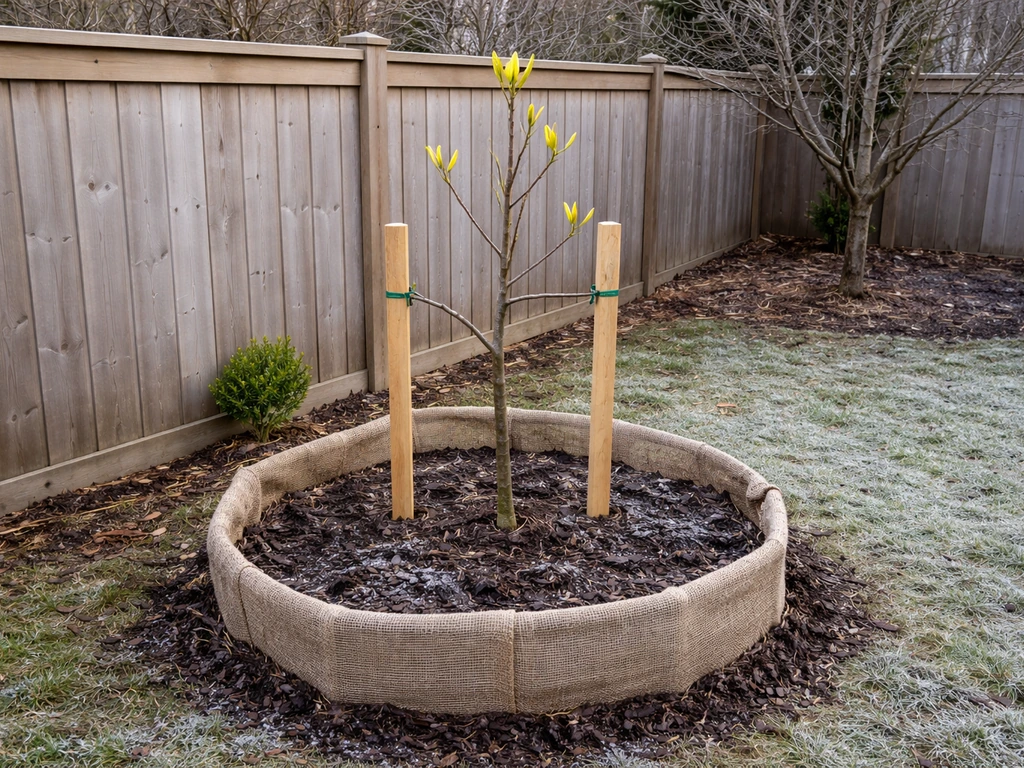
Established 'Yellow Bird' trees in zones 5 through 8 need very little winter intervention. Newly planted trees (first two winters) benefit from extra mulch and, in zone 4 or 5, a burlap wrap around the trunk to prevent frost cracking. Purdue Extension notes that water-stressed plants are more susceptible to cold damage, so make sure your tree goes into winter well-watered after the last summer drought, not parched.
Why your 'Yellow Bird' might be dropping leaves unexpectedly
Because the plant is deciduous, autumn leaf drop is always normal. But if you're seeing leaf drop outside of autumn, or the drop seems excessive or accompanied by other symptoms, here are the most common causes and what to do about them.
| Cause | What you'll see | What to do |
|---|---|---|
| Transplant shock | Leaf drop or wilting shortly after planting or repotting; bare root plants especially vulnerable | Water deeply and consistently; mulch the root zone; avoid fertilizing until established |
| Summer drought stress | Leaves yellowing and dropping in mid-summer | Deep watering weekly during dry spells; check that mulch layer is intact |
| Late spring frost damage | Blackened or wilted new leaves or flowers after a cold night | Remove damaged material; plant will usually recover and releaf; shelter from wind next year |
| Waterlogged soil | General decline, yellowing leaves, possible root rot | Improve drainage; reduce watering frequency; check soil texture |
| Normal autumn drop | Golden-brown leaves falling from October onward | Nothing to do; this is correct deciduous behavior |
| Cold damage to buds (zone 4–5) | Buds blackened after a sharp freeze before hardening off | Prune damaged buds in spring; consider wind shelter for next season; timing usually resolves itself |
K-State Extension points out that a sharp temperature drop before plants have fully hardened off in autumn can prevent the normal abscission layer from forming, leading to leaves dropping abruptly rather than gradually. This looks alarming but is usually not a sign of a sick tree. Kansas winters and similar cold-zone climates see this fairly often with deciduous ornamentals. The tree recovers normally the following spring.
One more thing worth knowing: cold damage symptoms often do not show up immediately. NC State Extension warns that bud and stem damage from a hard freeze may only become visible weeks later as temperatures warm and the tissue begins to collapse. If your 'Yellow Bird' looks fine after a late cold snap and then shows problems a month later, the freeze was likely the original cause even if the timing seems disconnected.
The bottom line is straightforward: Magnolia 'Yellow Bird' is deciduous, full stop. If you are wondering whether "Yellow Bird" is the dumbest bird, it is not a bird at all, but a deciduous magnolia cultivar. Bare branches in winter are not a problem, they are the plant doing exactly what it should. If you want a yellow-flowering magnolia that holds its leaves year-round, you'd need to look at a different species entirely, and even then, fully evergreen yellow-blooming magnolias are rare. You might also hear about the hooded pitohui, a poisonous bird species sometimes brought up in discussions about toxic animals. For most home gardens in zones 4 through 8, 'Yellow Bird' is one of the toughest, most reliable choices in the magnolia world, even if it does take a seasonal nap every year. Macaw birds live in tropical regions of Central and South America, including rainforests, savannas, and mangrove areas. If you are dealing with bird droppings from a koel bird in Singapore, the best approach is to block access points and use deterrents that match the local behavior patterns koel bird how to get rid of singapore. In contrast, the shoebill bird is a different animal altogether, and its habitat is the wetlands of East Africa.
FAQ
If my Magnolia “Yellow Bird” still has some leaves in late fall, does that mean it is evergreen or diseased?
Usually it just means leaf drop is delayed, not that it is evergreen. “Yellow Bird” is deciduous, so any remaining foliage should fall as winter hardens. If leaves are stuck while twigs look healthy, wait for normal dormancy, but if leaves are yellowing and dropping repeatedly outside autumn, that can point to stress (especially inconsistent watering in the first 1 to 3 years).
Can “Yellow Bird” be trained as a small tree or multi-stem, and does that affect whether it stays evergreen?
Yes, you can shape it as a smaller ornamental tree or allow multiple stems, but pruning will not change its deciduous nature. To avoid sacrificing flowers, limit major pruning to after flowering or during dormancy, and remove only dead or crossing branches earlier, since magnolias form flower buds ahead of the bloom season.
How can I tell whether a “Yellow Bird” I bought is actually the right cultivar if the tag is missing or unclear?
Use bloom timing plus flower and leaf cues. “Yellow Bird” typically blooms after leaves are developing (often May to June), with bright yellow tulip-shaped flowers. A mismatch that blooms heavily on bare branches early in spring is a sign you likely have a different yellow-flowering magnolia cultivar or species.
My “Yellow Bird” looks bare right after planting, is it dying or just dormant?
Dormancy is normal, especially in cold zones. The better check is whether you see swelling buds or new growth as temperatures warm, and whether the trunk and larger branches remain firm rather than soft or peeling. In the first year or two, also avoid letting the root ball dry out completely, since a stressed plant may appear “dead” longer even if it is still alive.
Will “Yellow Bird” drop leaves early if the weather warms up and then suddenly freezes again?
It can, because warm spells followed by cold snaps can disrupt normal hardening off. Even then, early or abrupt drop is usually still part of the deciduous cycle or cold stress timing, not true evergreen behavior. Watch for recovery signs in spring, and do not assume it is evergreen just because you briefly saw foliage during a warm period.
What’s the best way to mulch for frost protection without harming the tree?
Keep mulch a few inches away from the trunk, and use an even 5 to 10 cm layer over the root zone. Piling mulch directly against the trunk can trap moisture and promote rot. For zone 4 and 5, top up mulch in late autumn and consider trunk wrapping only for newly planted trees, then remove the wrap before sustained warm weather to prevent overheating.
If flowers are fewer than expected, does that mean it’s not evergreen or that it’s unhealthy?
Fewer flowers is more often a sun or bud-damage issue, not a deciduous versus evergreen problem. Because “Yellow Bird” blooms after leaf set, it is generally less prone to late frost loss than early-blooming magnolias, but winter wind desiccation, late cold snaps, and insufficient sun (deep shade) can still reduce bloom.
Is leaf drop ever a red flag for “Yellow Bird,” or is autumn drop always normal?
Autumn leaf drop is normal, but leaf loss outside the fall window can be a warning. Excessive drop, leaf browning, or leaf drop paired with wilting can indicate root stress from poor drainage, overwatering, or drought. If symptoms persist into late spring, reassess watering and soil drainage rather than assuming it is normal shedding.
Citations
Magnolia ‘Yellow Bird’ is listed with the hybrid parentage “M. acuminata x M. brooklynensis ‘Evamaria’ ” and marketing classification as “Deciduous / evergreen: deciduous.”
https://www.magnoliastore.com/en/magnolia-yellow-bird
Chicago Botanic Garden lists “Magnolia x brooklynensis ‘Yellow Bird’” as a plant with hardiness zone “4–8.”
https://www.chicagobotanic.org/plant-information/plant-finder/magnolia-x-brooklynensis-yellow-bird-yellow-bird-magnolia
NC State Extension identifies ‘Yellow Bird’ and notes it was “Previously known as: Magnolia acuminata ‘Yellow Bird’,” and explicitly lists leaf behavior as “Leaf Type: Deciduous.”
https://plants.ces.ncsu.edu/plants/magnolia-x-brooklynensis-yellow-bird/
Gardenia.net describes ‘Magnolia ‘Yellow Bird’’ as an “upright… deciduous shrub or tree,” with foliage that turns “golden-brown in fall.”
https://www.gardenia.net/plant/magnolia-yellow-bird
Missouri Botanical Garden’s Plant Finder describes ‘Yellow Bird’ as part of the Brooklyn Botanic Garden releases and states it is “a cross between M. acuminata var. subcordata and M. x brooklynensis ‘Evamaria’.”
https://www.missouribotanicalgarden.org/PlantFinder/PlantFinderDetails.aspx?bt=4&taxonid=260535
NC State Extension lists the ‘Yellow Bird’ plant habit/size and repeats “Deciduous” leaf characteristics; it also states the bright yellow flowers in late spring are “not subject to damage to late drops in temperature like other magnolias.”
https://plants.ces.ncsu.edu/plants/magnolia-x-brooklynensis-yellow-bird/
Monrovia lists “Deciduous/Evergreen | Deciduous” for “Yellow Bird Magnolia.”
https://www.monrovia.com/yellow-bird-magnolia.html
Texas Plant Disease Handbook states: “Magnolia will begin dropping leaves in November and continue until early spring,” and notes the degree depends on “genetic as well as physiological factors.”
https://plantdiseasehandbook.tamu.edu/landscaping/trees/magnolia/
Wisconsin Extension explains winter burn occurs when evergreens are “marginally hardy” and details the mechanism as plants not being prepared for freezing temperatures; it also notes similar cold injury can occur when temperatures drop sharply at sunset and warmed foliage rapidly cools and freezes.
https://hort.extension.wisc.edu/articles/winter-burn/
OSU Extension describes winter injury/burn as occurring when “winter winds dry out the leaves of evergreen plants,” and highlights desiccation as the injury mechanism.
https://extension.okstate.edu/programs/digital-diagnostics/plant-diseases/winter-desiccation-injury-of-evergreen-shrubs-and-trees
NC State Extension discusses winter injury in nursery crops and notes that “Shade also protects the leaves of evergreens from sun and wind, reducing water loss on bright, cold days.”
https://content.ces.ncsu.edu/publication/preparing-nursery-plants-for-winter
NC State Extension states that as dormancy/acclimation progresses, plant processes affect cell membranes and energy storage and describes that at a given temperature “flower buds may die while leaf buds remain unharmed” (a relevant horticultural distinction for magnolias experiencing cold snaps).
https://content.ces.ncsu.edu/publication/preparing-nursery-plants-for-winter
Morton Arboretum’s magnolia overview states “Foliage Deciduous (seasonally loses leaves)” and lists example hardiness zones for the genus that include zone 5 through 9; it also includes an entry for “Yellow Bird magnolia (Magnolia ‘Yellow Bird’).”
https://mortonarb.org/plant-and-protect/trees-and-plants/magnolia/
NC State Extension states ‘Yellow Bird’ is “Deciduous” and describes the flowering timing as “late spring,” with the yellow flowers appearing as the plant is developing foliage (implying the seasonal leaf cycle is synchronized rather than evergreen).
https://plants.ces.ncsu.edu/plants/magnolia-x-brooklynensis-yellow-bird/
Chrishaven Trees lists “Zone: 5 thru 8” and notes bloom timing “Blooms after leaf set in May-June,” i.e., leaves are present at bloom time and the plant follows a seasonal deciduous leaf cycle.
https://www.chrishaventrees.com/product/magnolia-yellow-bird/
Baumschule LvE describes the cultivar foliage and seasonal behavior as “Large, up to 20 cm long, deciduous,” and provides flowering timing (late April to mid-May) tied to leaf sprouting.
https://www.lve-baumschule.com/magnolia-yellow-bird/6996450
NC State Extension explicitly provides the cultivar name and a historical alias: it says ‘Yellow Bird’ was “Previously known as: Magnolia acuminata ‘Yellow Bird’.” This helps match labels/tags that may show different botanical names.
https://plants.ces.ncsu.edu/plants/magnolia-x-brooklynensis-yellow-bird/
Magnoliastore markets it specifically as “Magnolia ‘Yellow Bird’” and lists the hybrid formula (M. acuminata × M. brooklynensis ‘Evamaria’) while also labeling it “deciduous,” which gardeners can use to confirm tag/label alignment with hybrid identity and leaf behavior claims.
https://www.magnoliastore.com/en/magnolia-yellow-bird
Monrovia’s product listing includes explicit leaf habit classification “Deciduous/Evergreen: Deciduous,” which is a direct confirmation method when comparing plant tags to nursery classifications.
https://www.monrovia.com/yellow-bird-magnolia.html
NC State Extension lists care-relevant establishment info for ‘Yellow Bird’: “prefers moist, humus-rich, slightly acidic soil in full sun to part shade” and indicates once established it’s “somewhat drought tolerant” but still needs “occasional deep watering during the summer months.”
https://plants.ces.ncsu.edu/plants/magnolia-x-brooklynensis-yellow-bird/
Gardenia.net recommends ‘Yellow Bird’ for “consistently moist, slightly acidic, organically rich, well-drained soils,” and advises providing a “site sheltered from cold, dry winds,” noting that cold winds may damage buds and flowers and late frosts may damage flower buds.
https://www.gardenia.net/plant/magnolia-yellow-bird
Chrishaven lists it for hardiness “Zone: 5 thru 8” and ties the growth/phenology to leaf development (“Blooms after leaf set in May-June”), which is relevant when troubleshooting whether leaf loss is normal seasonal behavior versus winter injury.
https://www.chrishaventrees.com/product/magnolia-yellow-bird/
NC State Extension (winter protection pdf) notes “Mulching helps reduce heat loss of the soil” and discusses that cold damage may not be apparent immediately, with leaf and bud/stem damage becoming visible later.
https://nurserycrops.ces.ncsu.edu/wp-content/uploads/2021/05/Winter-protection-of-ornamental-plants.pdf?fwd=no
Purdue Extension notes that “Plants suffering from water stress may be more susceptible to injury from other causes such as the weather, insects, or disease,” and states “Bare root trees and shrubs are most susceptible to transplant shock.”
https://www.extension.purdue.edu/extmedia/BP/BP-31.html
K-State Extension’s winter-damage document explains that extreme cold or a sharp temperature drop before plants harden off can cause damage, including mechanisms like “snap in the fall” preventing an abscission layer from forming.
https://hnr.k-state.edu/extension/horticulture-resource-center/common-pest-problems/documents/Trees%20-%20Winter%20Damage.pdf
Is Shoebill the Dumbest Bird? Evidence on Its Intelligence
Evidence-based take on shoebill intelligence, hunting strategy, care, and why it is not the dumbest bird.