
Yes, bird fossils absolutely exist, and there are more kinds than most people expect. Scientists have found bird bones, feather impressions, carbonized soft-tissue films, footprints, and even whole bird body parts preserved in amber. The record is thinner than it is for, say, dinosaurs or marine reptiles, but it is rich enough to trace bird evolution from feathered dinosaur ancestors in the Jurassic all the way to the subfossil bones of the dodo, which was still alive just a few centuries ago.
Are There Bird Fossils? Evidence, Types, and Where to Find Them

Maya Hennessy
28 May 2026
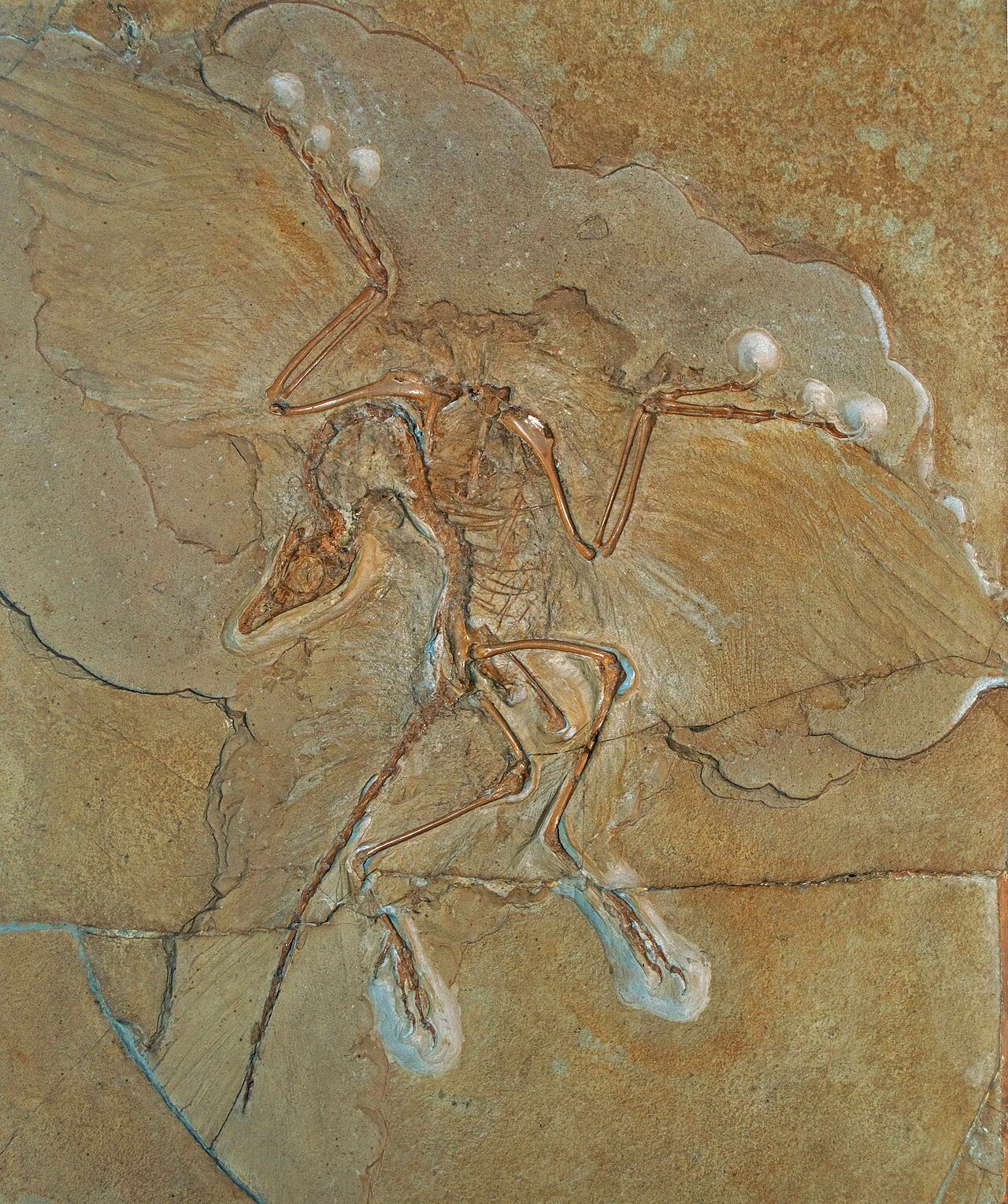
What counts as a bird fossil
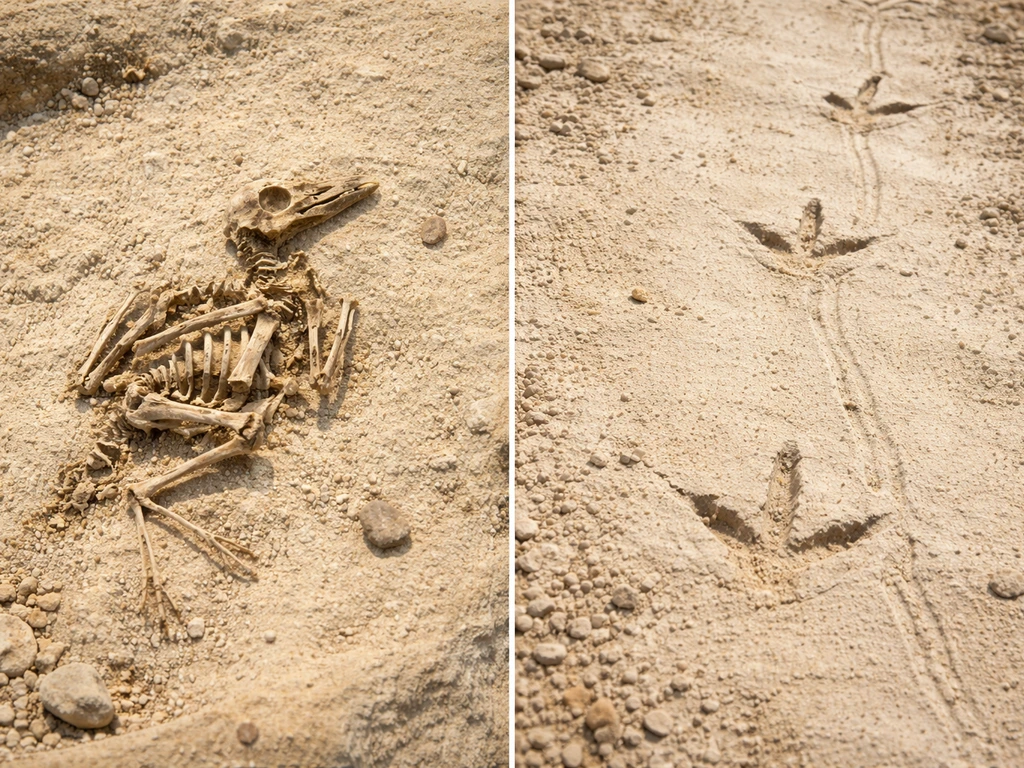
The word fossil covers more ground than most people realize, and that matters a lot for birds. There are two main categories: body fossils and trace fossils. Body fossils are physical remains of the animal itself, which for birds usually means bones or teeth (some early birds had teeth). Trace fossils are the indirect evidence an animal left behind, such as footprints, track ways, and burrow impressions. Birds leave both.
Beyond those two basic buckets, birds also show up in a third category: impressions and compressions. When a bird's body was buried rapidly in fine-grained sediment, pressure and chemical changes could carbonize soft tissues and leave behind a thin film of the original material. This is how we get feather impressions. In exceptional cases, carbonization captures enough detail to see individual feather barbs and even color-producing structures called melanosomes, which are tiny organelles that researchers can study under high-powered imaging to reconstruct what color the bird's feathers actually were.
The rarest and most spectacular preservation happens in amber. Burmese amber from Myanmar's Hukawng Valley has produced actual bird wings and feathered body parts from around 99 million years ago, with feather structure so well preserved that researchers used X-ray imaging to confirm the specimens belong to enantiornithines, an entire extinct lineage of birds that shared the Cretaceous world with dinosaurs.
| Fossil Type | What It Preserves | How Common for Birds |
|---|---|---|
| Body fossil (bones) | Skeleton, skull, furcula (wishbone) | Uncommon but found at key sites |
| Impression / compression | Feather outlines, skin, soft-tissue films | Rare; requires rapid burial in fine sediment |
| Carbonized film | Feather barbs, feather microstructure | Very rare; exceptional deposits only |
| Trace fossil (footprints) | Behavior, gait, foot anatomy | Occasional; found in lakeside and mudflat deposits |
| Amber inclusion | Feathers, wing segments, full body parts | Extremely rare; limited to amber-producing regions |
Why bird fossils are genuinely hard to find
The honest answer is that birds are biologically bad candidates for fossilization. Their skeletons are lightweight by design, with hollow, thin-walled bones that are an evolutionary adaptation for flight. That same lightness means less bone mass to survive burial, decay, and millions of years of geological change. When a bird dies in the open, those delicate bones scatter, dry out, and break down quickly. Scavengers and insects accelerate the process. Unless conditions are just right, there is simply nothing left to fossilize.
There is also a preservation bias problem. A bird's body needs to be transported to a depositional environment, such as the bottom of a calm lake or a lagoon, and buried fast enough to outrace decomposition. Most birds die in places where that never happens. The ones we do find in the fossil record are almost certainly a wildly unrepresentative sample of the birds that were actually alive at any given time in history. Researchers studying the completeness of the Mesozoic bird fossil record have documented how taphonomic and sampling bias affects which groups we even know about, which complicates attempts to draw a full picture of early avian evolution.
Feathers add another layer of difficulty. Keratin, the protein that feathers are made of, is more durable than many soft tissues but still degrades readily under natural conditions. Experiments on feather breakdown show that normal decay processes can destroy keratin's chemical signature before burial even begins. Even when feather impressions survive, diagenetic changes, meaning chemical transformations during fossilization, can alter melanosome structure and make color reconstruction tricky. Scientists now use taphonomic experiments and synchrotron chemical imaging to test whether what they are seeing is genuine biological signal or an artifact of preservation chemistry.
Famous examples: early birds and iconic extinct species
Archaeopteryx: the classic transitional fossil
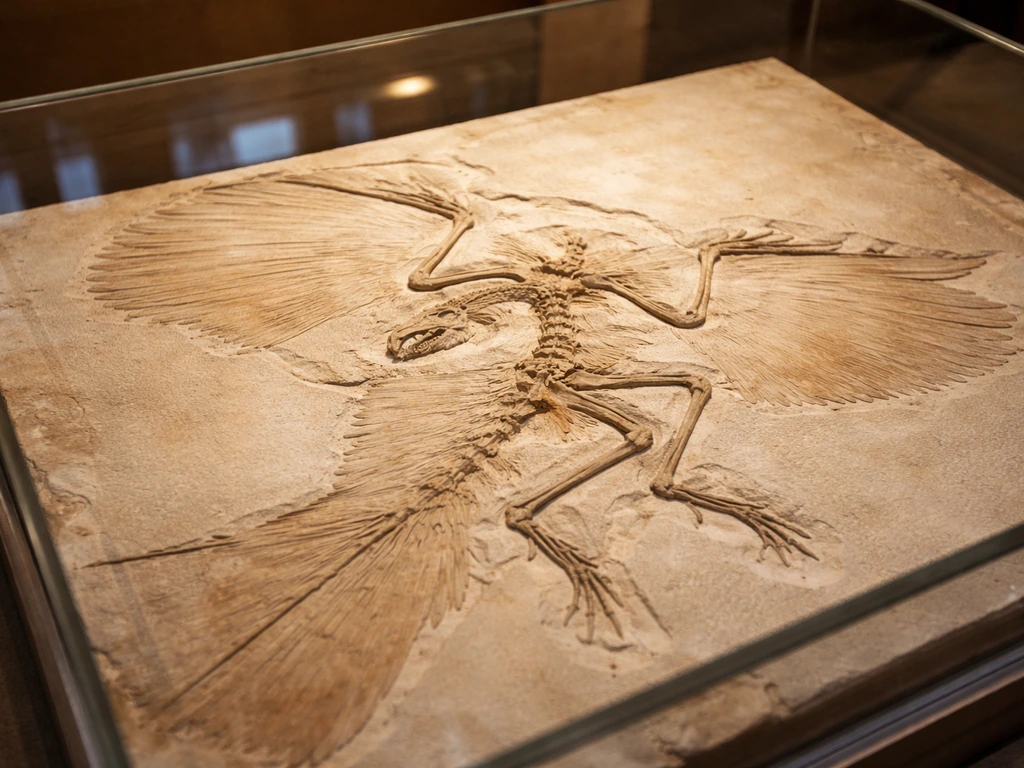
No discussion of bird fossils starts anywhere other than Archaeopteryx. If you are wondering is the erosion bird extinct, the answer depends on how and where the species was last documented and evaluated by researchers. Found in the Late Jurassic Solnhofen limestone of Bavaria, Germany, the most famous specimen (now in London) was unearthed in 1861 near Langenaltheim. Solnhofen is a Konservat-Lagerstätte, meaning a deposit so exceptional it preserves soft tissues that would normally vanish.
That is why we know Archaeopteryx had feathers: the fine-grained limestone captured feather impressions in extraordinary detail. More recently, synchrotron X-ray fluorescence imaging revealed that Archaeopteryx feather material has a distinct chemical signature compared to the surrounding rock, confirming that what we are seeing is remnant feather body fossil material, not just a surface impression.
Archaeopteryx sits at one of the most important junctions in the bird evolution timeline, a creature with bird-like feathers but also teeth and a bony tail, which made it a landmark in understanding how dinosaurs and birds are connected.
The Jehol Biota: early Cretaceous birds in abundance
If Solnhofen gives us the single most famous bird fossil, China's Jehol Biota gives us the richest Mesozoic bird collection in the world. Preserved in the Yixian and Jiufotang formations of western Liaoning (roughly 130 to 120 million years old), the Jehol deposits capture an entire Lower Cretaceous ecosystem in extraordinary detail.
Nature also documents that major Lagerstätten such as the Jehol Biota preserve exceptional soft-tissue fossils across birds and non-avian dinosaurs, supporting details of feathered ancestors major Lagerstätten such as the Jehol Biota preserve soft tissues across birds and non-avian dinosaurs. Volcanic pyroclastic flows are thought to be responsible for the rapid burial and exceptional soft-tissue preservation that defines the Jehol Biota.
Dozens of bird species are known from here, alongside the feathered non-avian dinosaurs that help fill in the evolutionary story connecting theropods to modern birds.
Amber windows into Cretaceous birds
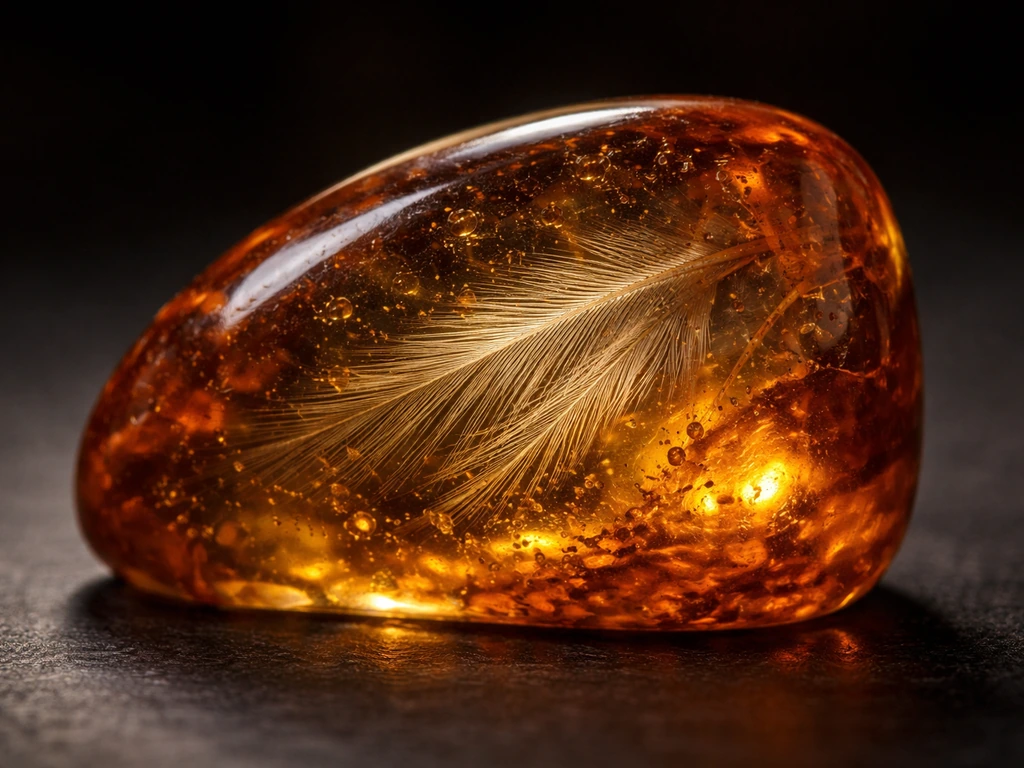
Burmese amber from approximately 99 million years ago has produced some of the most visually striking bird fossils ever found. Researchers have identified wing sections and even baby bird specimens with feather patterns that resemble modern birds, all confirmed via X-ray analysis as belonging to enantiornithines. The detail preserved in amber is extraordinary because the resin encased the material before decay could set in, locking in feather geometry at a nanoscale level that allows direct study of structural coloration.
Iconic extinct birds: dodo, moa, and subfossils
Not all bird fossils come from the deep Mesozoic. Some of the most important and accessible examples are subfossils, meaning bones that have not fully mineralized because they are geologically recent. The dodo is the best-known case. Subfossil dodo bones have been recovered from Mauritius, particularly from a swamp site called Mare aux Songes, where ongoing excavations continue to produce new material. These bones are recent enough to also yield ancient DNA in some cases. Similarly, the giant moa of New Zealand is known from subfossil bones, eggs, and even preserved feathers and soft tissue fragments in dry cave deposits, giving researchers a far more complete picture of a bird that went extinct only around 600 years ago.
Where to look in the fossil record
Bird fossils cluster in a handful of exceptional preservation settings worldwide. The Late Jurassic Solnhofen limestone in Germany is the oldest of the major sites and produced Archaeopteryx. The Lower Cretaceous Jehol Biota in China is the richest Mesozoic bird locality. Burmese amber from Myanmar spans the mid-Cretaceous at around 99 million years ago. In the United States, Florissant Fossil Beds National Monument in Colorado has produced Eocene-era feather impressions, though vertebrate fossils there are described as rare because the environmental conditions were not ideal for preserving bird remains even when the site was otherwise exceptional.
- Solnhofen Limestone, Bavaria, Germany (Late Jurassic, ~150 million years): Archaeopteryx and other Tithonian fauna
- Jehol Biota, Liaoning Province, China (Early Cretaceous, ~130–120 million years): dozens of bird and feathered dinosaur species with soft-tissue preservation
- Burmese Amber, Hukawng Valley, Myanmar (mid-Cretaceous, ~99 million years): enantiornithine wings, feathers, and body parts preserved in resin
- Florissant Fossil Beds NM, Colorado, USA (Eocene, ~34 million years): occasional feather impressions via carbonization
- Mare aux Songes, Mauritius (Holocene/sub-Recent): dodo subfossil bones
- New Zealand cave deposits (Holocene/sub-Recent): moa bones, feathers, and soft tissue fragments
The pattern across these sites is consistent: exceptional bird fossil preservation requires either extremely fine-grained, anoxic (low-oxygen) sediments that slow decay and allow carbonization, resin entrapment as in amber, or dry cave environments where desiccation does the preserving. Ordinary burial in typical soils or river sediment is almost never enough to save bird material.
How scientists confirm a fossil is a bird
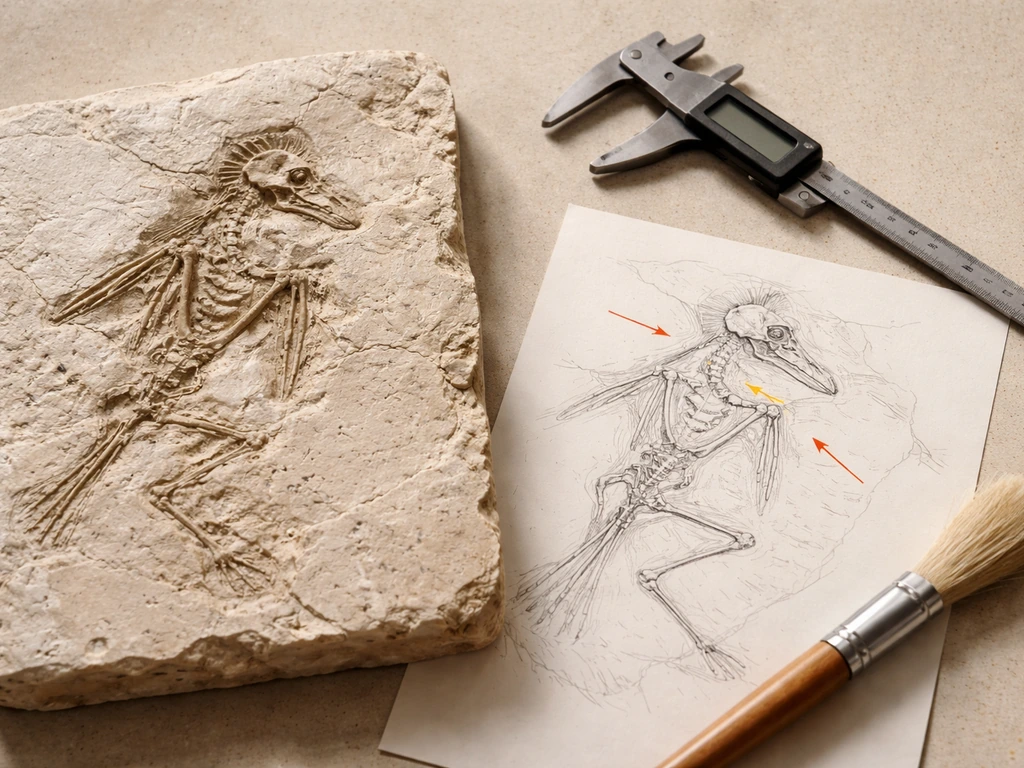
This is where paleontology gets genuinely interesting. You cannot just look at a feather impression and call it a bird, because non-avian dinosaurs also had feathers. Identification relies on a combination of skeletal anatomy and, where available, soft-part evidence. Some online discussions even question whether specific claims about a bird named “Zaza” are real, but those stories are not supported by established paleontology or fossil evidence Zaza bird claims.
The single most diagnostic skeletal feature is the furcula, or wishbone. The furcula is a fused collarbone structure that appears in birds and also in some close theropod dinosaur relatives, and tracking its presence and form across fossils has been central to understanding the theropod-to-bird transition. Other anatomical markers include features of the shoulder girdle, the reduced bony tail (compared to non-avian dinosaurs), and the structure of the foot and hand digits. For early birds, the presence of teeth does not disqualify a specimen since some early birds had teeth, while modern birds do not.
When soft tissue evidence is present, researchers use imaging and chemistry rather than just visual inspection. Synchrotron X-ray fluorescence (SRS-XRF) mapping, the technique used on Archaeopteryx, can detect chemical differences between feather remnants and the surrounding rock matrix, confirming that a feature is biological rather than a geological artifact. For feather color, scientists look for preserved melanosomes and compare their geometry and chemical composition against reference data from modern birds, while running taphonomic experiments to account for diagenetic alteration. Structural coloration in fossil feathers has even been demonstrated by connecting fossil nanostructures to known pigment patterns in living birds.
What fossil evidence tells us about extinction and flightless birds
The bird fossil record does not just answer evolutionary questions. It has direct relevance to understanding extinction and the history of flightless birds, which is central to much of what this site covers.
After the Cretaceous-Paleogene (K-Pg) mass extinction 66 million years ago, which wiped out the non-avian dinosaurs and the enantiornithines, early Paleocene fossils show that crown-group birds (the ancestors of all living birds) diversified rapidly. The transition from a world dominated by Mesozoic bird lineages to a world dominated by the ancestors of modern birds was fast by geological standards, and fossils from the early Paleocene document that rapid radiation.
For flightless birds, the fossil and genomic record together reveal a striking pattern: flight has been lost independently many times across bird lineages. Phylogenomic studies combining fossil-based timing constraints with genomic data support multiple independent flight losses in ratites (the group that includes ostriches, emus, kiwi, cassowaries, and moa). This means flightlessness is not a single ancestral condition but a repeated evolutionary response to particular ecological circumstances, usually island or isolated-continent environments where the pressures that keep birds in the air simply are not there.
Anthropogenic extinctions have actually obscured how widespread the evolution of flightlessness was. Research argues that human-driven losses of flightless species since the Holocene have removed a disproportionate slice of avian diversity, making the fossil and subfossil record for groups like moa, dodo, and others even more important as a baseline. By lining up those human-driven losses with the known fossil and subfossil dates, researchers build a bird extinction timeline for the last few millennia since the Holocene. Without subfossils, we would have almost no evidence that many of these lineages existed at all.
The kiwi is a sharp illustration of this problem. Kiwi have almost no pre-Quaternary fossil record, which makes reconstructing their deep evolutionary history extremely difficult using palaeontology alone. Researchers have had to turn to genome-wide data to infer demographic and evolutionary history going back roughly a million years, and conservation managers work with that uncertainty baked in. The cassowary faces similar challenges: a sparse fossil record means conservation decisions rely heavily on what we can observe in living populations rather than deep-time baselines.
This is exactly why integrating palaeontology with modern conservation is an active and growing research field. Fossil and subfossil evidence provides a deeper-time baseline for what bird diversity and distribution actually looked like before human impacts began, which is essential for setting realistic conservation targets. For endangered birds like the kiwi and cassowary, that baseline matters even when the fossils are frustratingly incomplete.
The bird fossil record, fragmentary as it is, remains one of the most important tools we have for understanding where birds came from and what we stand to lose. If you are troubleshooting why a fossilized bird is not working in Cobblemon, a good place to start is checking which fossilized bird assets and item rules your setup actually loads.
FAQ
Can we get DNA from bird fossils?
Yes, but it is unusual for a bird fossil to preserve DNA. Subfossils from the last few thousand to tens of thousands of years (for example, some dodo bones and other very recent deposits) have the best chance of yielding DNA, while deep-time Mesozoic fossils typically cannot retain it. When DNA is found, it is often fragmented and requires specialized contamination-controlled lab work.
If a fossil has feathers, does it automatically mean it is a bird?
Not necessarily. Many “bird-like” features can occur in non-avian dinosaurs, so experts rely on multiple anatomical signals, not just the presence of feathers. A classic diagnostic clue is the furcula (wishbone), along with shoulder-girdle structure, toe and hand digit anatomy, and (when present) soft-part evidence that matches feather-producing biology.
How can scientists tell whether bird footprints are truly from birds?
You can, but identification is still tricky. Trace fossils like footprints can indicate a bird-like gait, but the maker could be a non-avian dinosaur or a true bird, and track preservation can distort size and toe counts. Researchers often compare trackway measurements (stride, pace angulation, digit proportions) against both modern bird track parameters and the broader non-avian dinosaur footprint record.
Why are feather colors sometimes uncertain in bird fossils?
Not always. A fossil can show feathers or soft-part remains without showing coloration, because color reconstruction depends on well-preserved pigment structures and careful testing for chemical alteration. Even when melanosomes are present, diagenesis can change their appearance, so scientists usually corroborate color interpretations with multiple imaging and chemistry checks.
What conditions make bird feathers more likely to fossilize?
Look for the preservation setting, not the species name on a label. Feathers tend to be preserved best in fine-grained, rapid burial conditions that support carbonization, or in rare contexts like amber resin encapsulation or dry cave desiccation. If the deposit is coarse-grained, oxygen-rich, or slow-burial, even a promising locality may yield mostly bones (or none) for birds.
What is a common mistake people make when interpreting bird fossil photos?
In many collections and museum displays, the specimen age and the deposit context can matter as much as the fossil itself. Without knowing whether the material is body fossil, compression, impression, or trace, it is easy to misinterpret what you are seeing. If you are evaluating a claim, check whether the original description explains the taphonomic pathway and the diagnostic characters used for classification.
How can I assess whether a bird fossil identification seems reliable?
If a specimen is labeled “bird,” it should still have a taxonomic basis, but misidentifications do happen when evidence is incomplete. A good decision aid is to ask whether the furcula and other skeletal markers are reported, whether imaging supports biological tissue versus rock artifacts, and whether the conclusion relies on a single line of evidence (like shape alone) rather than multiple corroborations.
Are there risks of contamination when testing subfossil bird material?
Sometimes. Subfossils can be contaminated by modern DNA or microbial processes, and that can mislead analyses if the workflow is not strict. Researchers mitigate this by using negative controls, sequencing approaches designed for degraded ancient material, and comparing results across labs when feasible.
Can fossils prove a bird was flightless?
Yes, flightlessness can be inferred from fossils, but it is not proven by one trait. A robust argument usually combines skeletal proportions and wing and pectoral anatomy, plus context like island-related ecology when available. The article’s broader point holds here: flightlessness evolved multiple times, so the evolutionary pathway matters, not just whether wings are reduced.
Next Articles

Is the Erosion Bird Extinct? How to Verify the Species
Learn if the erosion bird is extinct by verifying the correct species, evidence standards, and likely causes of decline.
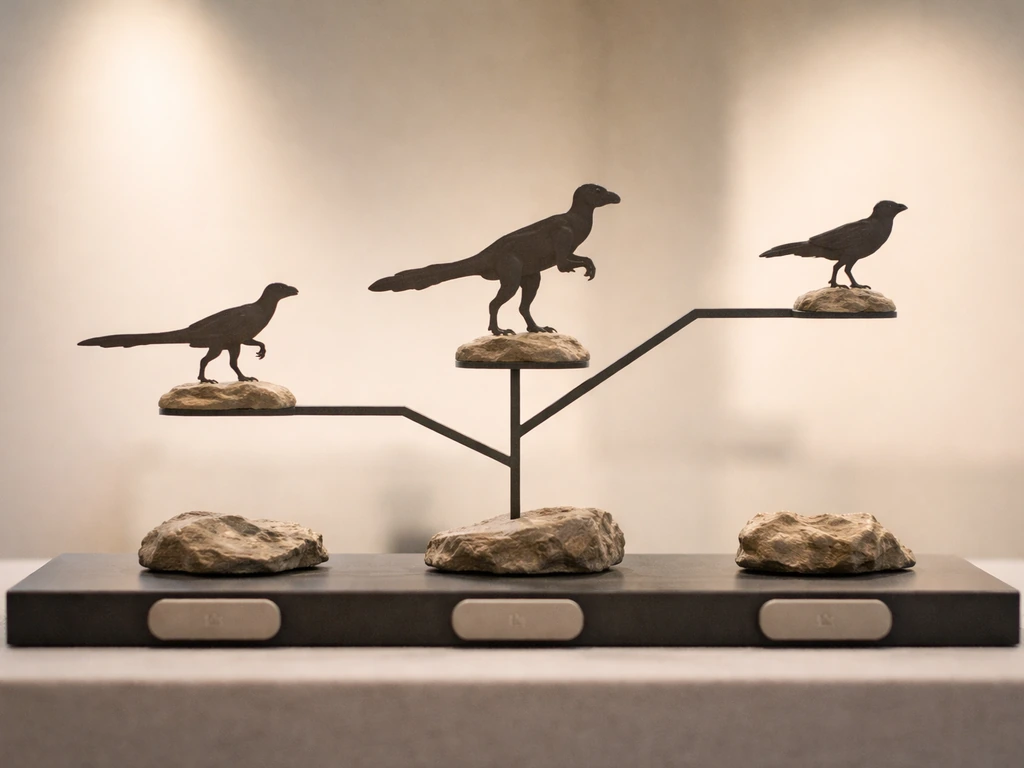
Dinosaur Bird Evolution Timeline: Key Milestones Explained
Clear dinosaur bird evolution timeline: key fossils, traits, dating, and branching points from theropods to true birds.

Fossilized Bird Not Working in Cobblemon Troubleshooting
Fix fossilized bird not working in Cobblemon with quick checks, common causes, and a step-by-step decision tree.