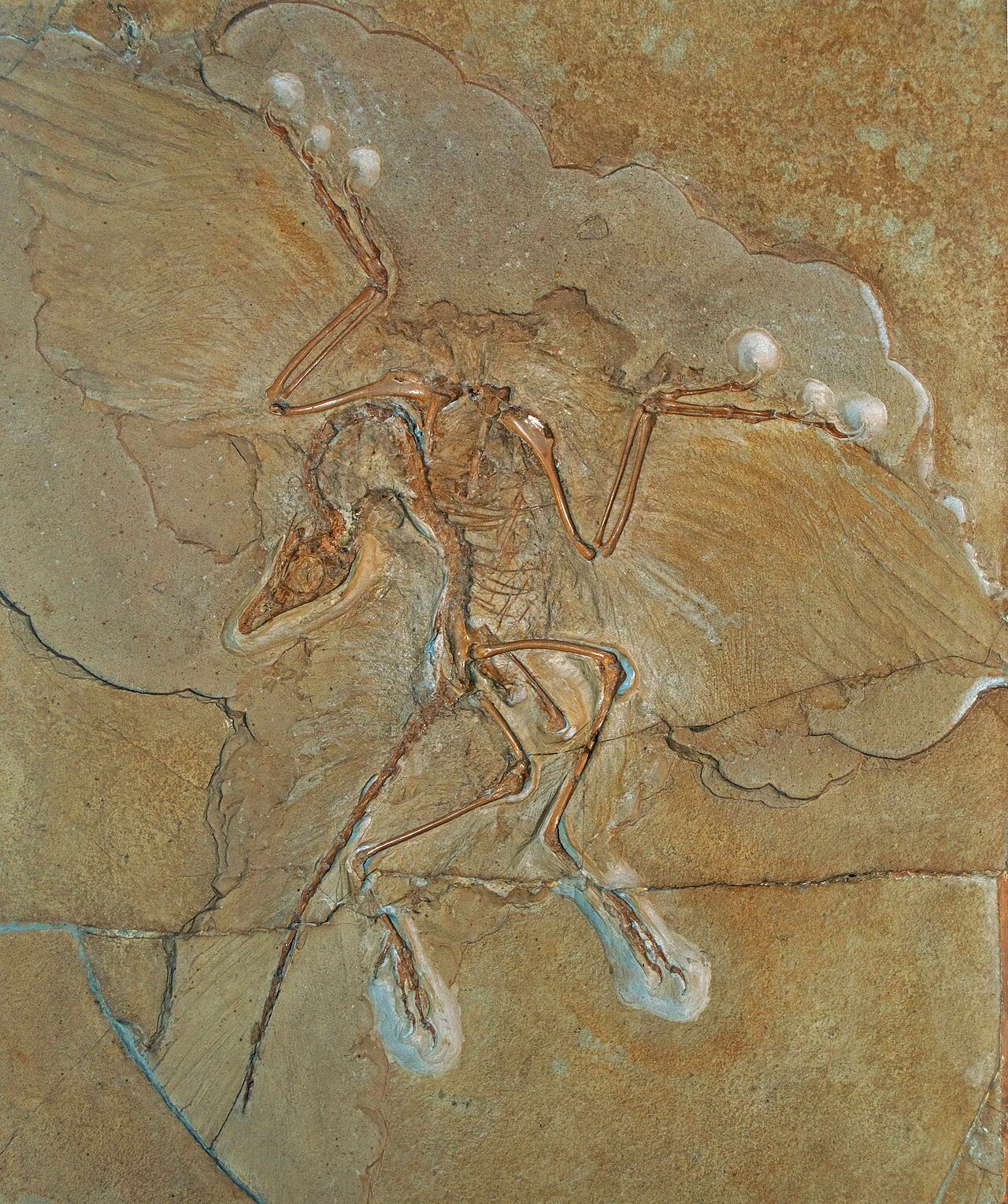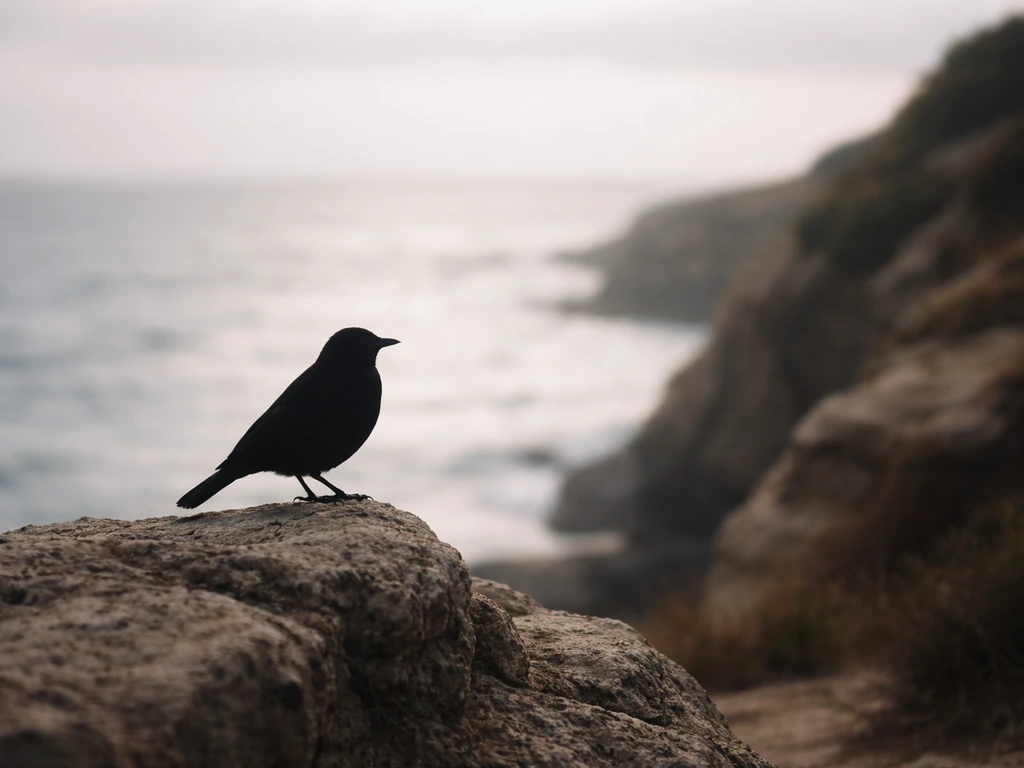
The Erosion Bird Zaza is not a real bird species. There is no accepted scientific name, no taxonomy entry, and no conservation record for anything called the 'Erosion Bird Zaza' in any authoritative ornithological database. The 'Erosion Bird' itself is an AI-generated image that went viral on blank" rel="noopener noreferrer">TikTok in late 2023, depicting a large, unsettling bird-like creature on a snow-covered mountain. 'Zaza' appears to be a fandom or community-generated name attached to the meme after it spread. None of it maps to a real animal. If you are looking for whether the erosion bird is extinct, the evidence instead points to a fictional meme character, not a real species.
Is the Erosion Bird Zaza real? How to verify today

Maya Hennessy
29 May 2026

What 'Erosion Bird Zaza' actually refers to
The Erosion Bird originated as AI-generated artwork posted by TikTok creator @drevfx around September 2023. The videos framed the creature as something 'discovered in the Antarctic mountain range,' using cryptid-style language and captions like 'Opium birds en la Antártida, año 2027' (Opium birds in Antarctica, year 2027). That future-year framing is a clear signal that this was fictional lore, not a biological report.
Daily Dot discusses the Erosion Bird as a viral meme, including quote-style attribution to @drevfx and hashtag caption language that signals fictional framing rather than biological taxonomy viral meme framing and @drevfx attribution. The creature also goes by the name 'Opium Bird,' which is simply a parallel label the same meme community attached to the same AI images.
The name 'Zaza' was added later as fans elaborated on the fictional lore, essentially naming individual 'characters' within the meme universe. blank" rel="noopener noreferrer">Fandom wikis explicitly list the Erosion Bird under 'Fake Birds' and 'Fictional Animals.' Spanish-language tech outlet Androidphoria put it plainly: 'Erosion Bird no es un animal real.' So when you see the phrase 'Erosion Bird Zaza,' you are looking at a fan-named fictional creature built on top of a viral AI art trend, not a discovered or extinct species.
How to verify whether a bird name is real

Whenever a bird name shows up online and you are not sure if it is legitimate, the fastest check is to run it through a handful of authoritative sources. Real bird species, including extinct ones, show up in at least one of these places. If a name produces zero results across all of them, that is a strong signal it is not a recognized species.
- The Cornell Lab of Ornithology's Birds of the World (birdsoftheworld.org): the most comprehensive global checklist for living and recently extinct birds
- The IUCN Red List (iucnredlist.org): covers threatened, extinct, and data-deficient species with full taxonomy and range maps
- Avibase (avibase.bsc-eoc.org): a cross-referenced database of over 10,000 bird species including synonyms, alternative spellings, and historical names
- The Integrated Taxonomic Information System (itis.gov): a North American-led taxonomic authority covering birds worldwide
- The Paleobiology Database (paleobiodb.org): useful specifically for prehistoric or fossil bird species, which is relevant if the claimed bird is described as ancient
Spelling variants and synonym searches matter here too. Real birds frequently have multiple common names and older scientific synonyms. If you search 'Erosion Bird' in any of these databases, you will get no results, because no such taxon exists under that name or any close variant. That absence, confirmed across multiple authoritative sources, is your answer.
Clues from conservation and natural history context
Even setting aside the databases, the natural history framing of the Erosion Bird meme does not hold up to scrutiny. The original videos placed the creature in the Antarctic mountain range with an implied discovery date of 2027. Antarctica is one of the most scientifically monitored environments on the planet. Any large bird-like creature discovered there would generate immediate peer-reviewed documentation, international conservation attention, and news coverage across every major scientific outlet. No such discovery has occurred.
For context, genuinely obscure or newly described bird species typically come with specific details: a discovery year, a research institution, a binomial Latin name like 'Genus species,' a type specimen held in a natural history museum, and a peer-reviewed publication. The Erosion Bird has none of those. It has TikTok videos, AI image generators, and fandom wiki pages. Those are categorically different kinds of evidence.
The bird extinction timeline is also worth considering here. If you want a better historical perspective, you can also look at a dinosaur bird evolution timeline to see how real birds emerged from theropod dinosaurs. You can use a bird extinction timeline to compare what is known from scientific records versus what is circulating online. Most recently documented bird extinctions come with detailed records of the species' last confirmed sighting, habitat range, and contributing factors. No extinction record for anything resembling an 'Erosion Bird' appears in the scientific literature, which aligns with the fact that it was never a real species to begin with.
Why misinformation spreads about obscure and extinct birds

Birds are actually a surprisingly fertile ground for misinformation, and there are a few specific reasons for that. First, there are genuinely thousands of obscure species, many with unfamiliar names, so a fake name can easily pass as plausible. Second, extinct and recently rediscovered species generate real excitement, which creates an emotional opening that hoaxes and AI-generated content exploit. If someone posts an image of a dramatic, unknown-looking bird and says it was 'just discovered,' it matches a template people already find credible.
Autocorrect and spelling drift compound the problem. A genuine species name that gets slightly mangled in a caption or meme caption can start circulating as a new name entirely. Communities then build lore around the corrupted version, and the connection to the original real species (if there even was one) gets lost. With AI image generation now capable of producing photorealistic creatures, the visual barrier to creating a convincing fake species is essentially gone.
The cryptid-style framing used in the Erosion Bird videos is a particularly effective vector. Presenting something as a mysterious creature from a remote location, just barely outside the reach of scientific confirmation, is a classic format for viral fictional content. It borrows the aesthetics of real natural history discovery without any of the actual documentation.
What the phrase might actually be pointing to
If you arrived here because you genuinely thought the Erosion Bird Zaza might be a real species, here are some real birds that share certain visual or conceptual overlaps with what the meme depicts: large, prehistoric-looking, or unusually imposing birds that have actually existed or still exist.
| Real Bird | Why It Might Come to Mind | Status |
|---|---|---|
| Moa (Dinornis robustus) | Massive flightless bird, prehistoric appearance, remote habitat (New Zealand) | Extinct, last confirmed around 1400s |
| Elephant Bird (Aepyornis maximus) | Largest bird to ever live, towering height, isolated island habitat (Madagascar) | Extinct, likely by 1000–1200 CE |
| Shoebill Stork (Balaeniceps rex) | Enormous, strange-looking, almost prehistoric in appearance, living species | Vulnerable, native to East/Central Africa |
| Southern Cassowary (Casuarius casuarius) | Large, dangerous, flightless, visually dramatic | Vulnerable, native to Australia and New Guinea |
| Terror Bird (Phorusrhacidae family) | Ancient giant predatory birds, genuinely discovered via fossils | Extinct, last species died around 2.5 million years ago |
None of these are called 'Erosion Bird' or 'Zaza,' but if the meme sparked a genuine interest in dramatic, large, or extinct birds, those are real species worth exploring. The fossilized bird lineage in particular connects to some fascinating paleontology, and there are separate questions worth digging into around how bird fossils are identified and what the fossil record tells us about early avian evolution.
If you are wondering, “are there bird fossils,” the answer is yes, and the record is essential for understanding how modern birds evolved how bird fossils are identified and what the fossil record tells us. If you are also trying to troubleshoot Cobblemon fossilized bird mechanics, the best starting point is to confirm whether the game item is actually set up correctly and not relying on a nonexistent bird name fossil record.
If you want a Pokemon-specific walkthrough instead, check the steps for fossilized birds in Pokemon Shield and where to find the right fossils fossil record.
Practical next steps to confirm this yourself today

If you want to do your own due diligence and arrive at a confident conclusion, here is a simple workflow you can run through right now.
- Search 'Erosion Bird' on Avibase and Birds of the World: you will get zero results for any recognized taxon, which is your first hard confirmation
- Search 'Zaza bird' on the IUCN Red List: again, no results for any species with that common or scientific name
- Run a Google search filtered to site: scholar.google.com for 'Erosion Bird species': no peer-reviewed papers will appear
- Search Know Your Meme directly for 'Erosion Bird': you will find the full documentation of the meme's origin, creator attribution, and viral spread history, all confirming it is AI-generated content
- Check the Paleobiology Database for any fossil bird with a similar name: nothing will match, ruling out the possibility that it is a prehistoric species with an obscure common name
- If you still want to triple-check: email or post a query to a birding forum like BirdForum.net or the Cornell Lab's eBird community, where ornithologists and serious birders can confirm within hours that this name does not appear in any accepted checklist
Running through that list takes under 15 minutes and leaves you with a documented, source-backed conclusion rather than just someone's word for it. The answer you will land on: no taxonomy entry, no conservation record, no fossil record, origin confirmed as TikTok AI content from late 2023. The Erosion Bird Zaza is not a real bird. But if the idea of genuinely strange, large, and lost birds interests you, the real species in the natural history record are honestly more remarkable than anything an AI image generator has produced so far.
FAQ
How can I tell if someone is mixing the meme name with a real species?
If someone claims Erosion Bird Zaza has a Latin name, a research team, or a museum catalog number, treat that as a red flag unless you can match it to a real species page in at least one major ornithology or taxonomic database. For viral memes, you will usually find only social posts and fandom entries, not binomial nomenclature tied to specimens.
What search terms should I use, and does spelling or synonyms matter?
Search both parts separately and with common variations, for example “erosion bird,” “zaza bird,” “opium bird,” and any altered spellings. Then search for “site:” results only within museum or journal domains. A legitimate species usually surfaces in multiple independent, non-overlapping sources, while a meme name tends to cluster around social platforms and wiki content.
What specific evidence would a real, newly described bird usually have?
Look for a tangible documentation trail: discovery or description year, a binomial Latin name, a type specimen repository (museum/collection), and a peer-reviewed publication. If the only “evidence” is captions, AI images, or “discovered in” claims, that aligns with fictional lore rather than zoological reporting.
Do cryptid-style claims about Antarctica or hidden discoveries ever turn out to be real?
A lot of hoaxes use future dates, exaggerated remoteness, or “scientists can’t confirm yet” framing. Those cues are not proof by themselves, but if the story relies on missing verification while simultaneously offering only AI visuals and cryptid-style narration, it is almost certainly fictional.
Why does the lack of conservation listings matter?
No. In a case like this, “no conservation record” is meaningful because real birds, even obscure ones, typically appear in conservation and checklist systems at some level. When a name generates zero authoritative hits, you are not dealing with a “rare species you just haven’t found,” you are dealing with a non-recognized label.
What should I check if I find newer videos claiming it is “still real”?
If you see the name attached to a “reuploaded” or “updated” video, verify the earliest upload date and the original creator. Meme ecosystems often remix AI imagery across accounts, and the new account rarely provides additional biological or specimen-level details.
Can photorealistic AI wildlife images be enough to prove a species exists?
Be cautious when an image looks photorealistic, because AI art can generate plausible wildlife visuals that bypass normal skepticism. The visual quality is not a reliable signal, so prioritize whether anyone can connect it to specimens, measurements, or published taxonomy.
Is “Zaza” supposed to be part of the official scientific naming?
If “Zaza” is presented as a genus, family, or scientific rank, that is another giveaway. Real taxonomic ranks follow formal conventions, and a single community nickname usually does not map cleanly onto a taxonomic system. You should be able to trace “Zaza” to a properly formed Latin classification if it were real.
What is the fastest reliable workflow to verify a viral bird claim?
For due diligence, use a quick gatekeeping test: does the name return authoritative database pages and specimen-linked records, not just social posts? If the answer is consistently no across authoritative sources, stop there. Continuing to debate the creature’s “story” usually wastes time.
If it is not real, what should I read or explore next that is still about dramatic birds?
If the real goal is “strange and large birds,” you can pivot to species that are genuinely documented (including extinct lineages) and learn from the fossil record or evolutionary history, rather than from a fictional label. That gives you verifiable, educational material instead of an evolving myth.