
No, the dodo bird is not alive. It is extinct, and has been for roughly 350 years. The IUCN Red List classifies Raphus cucullatus as Extinct (EX), which means there is no reasonable doubt that the last individual has died. Every major natural history institution, from the Encyclopaedia Britannica to the UK Natural History Museum to the Animal Diversity Web, says the same thing. There are no living dodos anywhere on Earth, not in the wild, not in captivity, not in some undiscovered corner of Mauritius.
Is the Dodo Bird Still Alive? What Evidence Shows Today

Maya Hennessy
24 Apr 2026
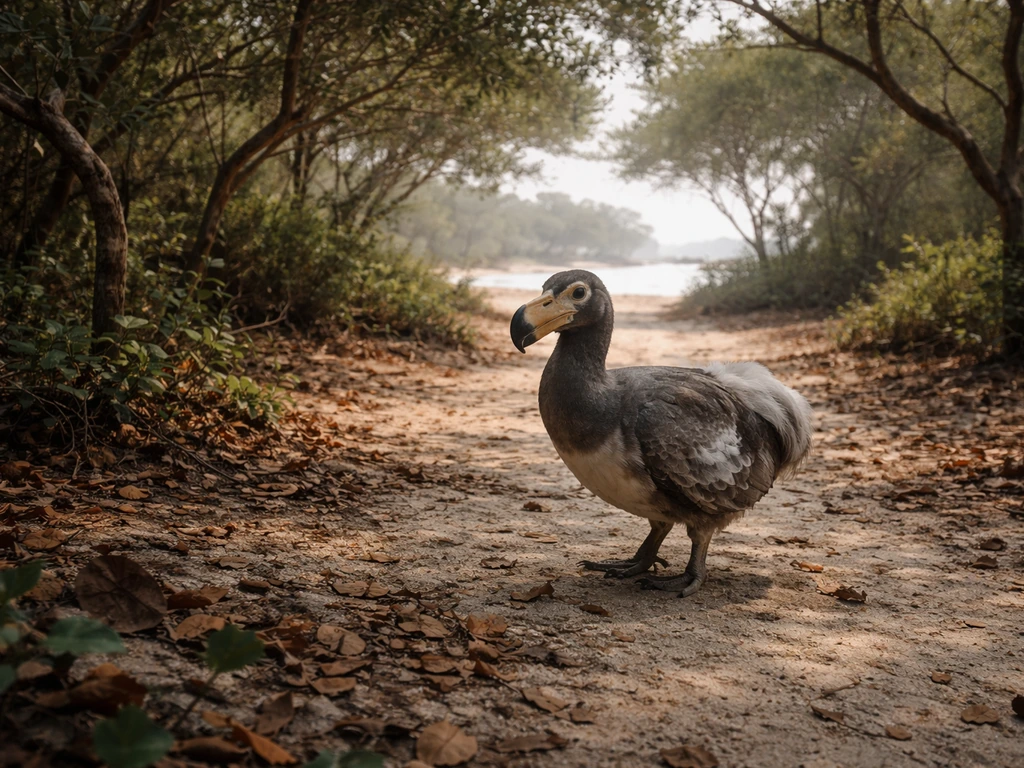
When and how the dodo disappeared
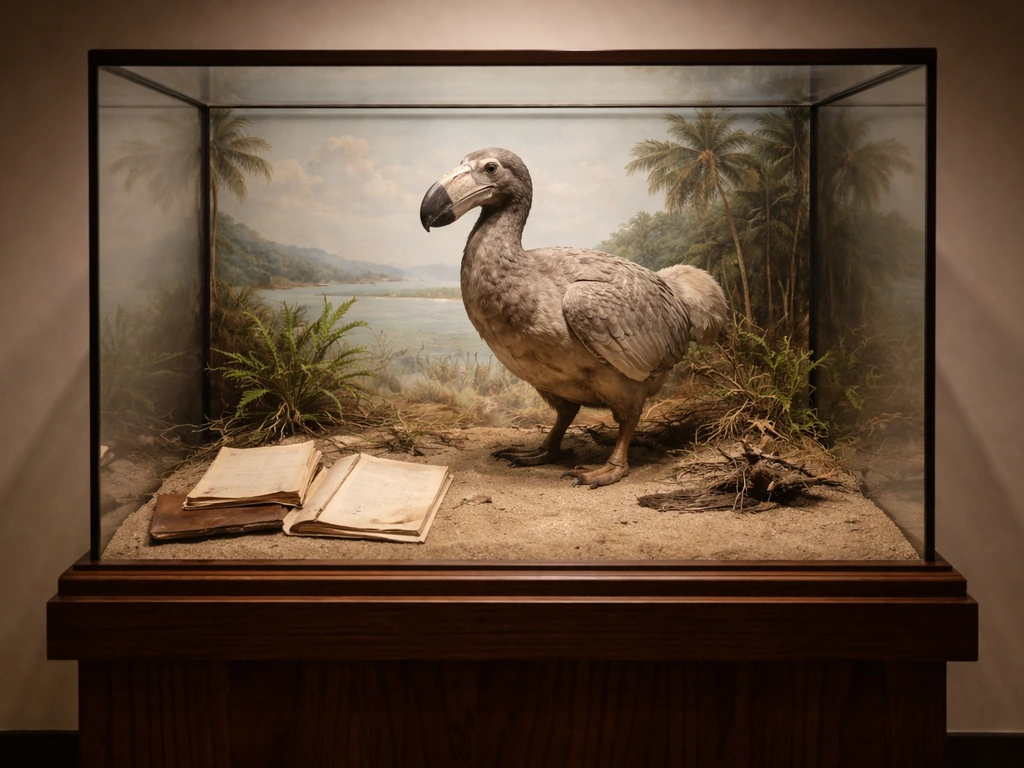
The dodo was endemic to the island of Mauritius in the Indian Ocean. It evolved in isolation, became flightless, and had no natural predators, which meant it had no instinct to fear humans when Dutch sailors first arrived in 1598. That turned out to be fatal. The last confirmed sighting on record dates to 1662, but statistical modeling published in Nature by Roberts and Solow suggests the actual extinction point was closer to 1690, accounting for the probability that small, isolated populations could persist briefly beyond the last documented observation.
A separate Nature study drawing on Dutch diary records tested this timeline further and arrived at a similar window, around the late 17th century. So the precise end date is debated by a few decades, but the conclusion is not: the species was gone before 1700. A Nature writeup cited in the statistical reanalysis places the dodo extinction estimate around 1690, rather than treating the last sighting in 1662 as the end date blank" rel="noopener noreferrer">estimated using statistical methods. Peer-reviewed work published in Scientific Reports in 2017 attributes the extinction directly to anthropogenic causes, meaning human activity drove the dodo to extinction, not natural climate shifts or disease alone.
The pressure came from multiple directions at once. Sailors and settlers hunted dodos directly. Introduced animals, including dogs, pigs, cats, rats, and crab-eating macaques, raided nests and destroyed eggs. Habitat was cleared. The dodo nested on the ground and had no behavioral toolkit for surviving any of this. Bone histology research on dodo remains has helped scientists reconstruct its ecology and growth patterns, confirming a species poorly equipped to recover from that kind of sustained pressure.
The physical record is extensive. The Mare aux Songes swamp on Mauritius is the primary fossil site, a vertebrate concentration lagerstätte where subfossil dodo remains were first excavated in the 19th century and then re-investigated with modern methods after 2005. Later expeditions uncovered extremely rich bonebeds and sub-basins. Dodo remains make up around 7.1% of the mid-Holocene vertebrate bone assemblage at this site. Caves across Mauritius have also yielded isolated dodo bones showing signs consistent with human predation. This is not a species that vanished without leaving a trace. It left an enormous one.
Why the idea of a surviving dodo simply doesn't hold up
Mauritius is a small island, roughly 2,040 square kilometers. It has been densely colonized, farmed, and developed for centuries. There is no forest so remote, no interior so unexplored, that a breeding population of large flightless birds could have gone undetected for 350 years. The dodo stood about a meter tall and weighed somewhere between 10 and 18 kilograms. It was not a small, cryptic creature. It was conspicuous, slow-moving, and approachable enough that sailors were killing them by hand in the 1600s.
Beyond the geography, the ecology of Mauritius has changed so fundamentally since the 17th century that the habitat the dodo evolved in barely exists anymore. Introduced species have reshaped the island's flora and fauna. The Natural History Museum has documented how the dodo's extinction set off a cascade affecting even the island's plant life, with certain tree species losing their primary seed disperser. A surviving dodo population would need to have persisted through centuries of exactly the conditions that caused the extinction in the first place, which is not a reasonable position.
No credible search effort has produced any evidence of living dodos. No photographs, no tracks, no feathers, no DNA from environmental samples, nothing. The IUCN's standard for listing a species as Extinct requires that exhaustive surveys have failed to detect any individuals. The dodo clears that bar by a wide margin.
How to evaluate dodo sighting claims and online misinformation

You will occasionally encounter stories online claiming that dodos were spotted somewhere, or that a living specimen was photographed in a remote location. Here is how to think about those claims clearly.
- Check the source. Is it a peer-reviewed journal, a major natural history museum, or a recognized conservation organization like the IUCN? If the claim is only appearing on social media, clickbait sites, or tabloids, treat it with heavy skepticism.
- Look for verifiable evidence. A genuine rediscovery of any extinct species requires physical specimens, high-quality photographs, video, or ideally genetic material. Blurry images or second-hand accounts are not sufficient.
- Consider the historical context. Some later accounts of dodos eating or interacting with the bird have been interpreted cautiously by historians because they may reflect purchasing meat from settlers or misidentification of other species, not encounters with living wild dodos.
- Distinguish de-extinction news from survival news. Companies like Colossal Biosciences have publicly discussed projects to genetically reconstruct something resembling a dodo. That is a very different thing from a dodo still being alive. Headlines about 'bringing back the dodo' can blur this distinction and generate confusion.
- Ask what population would be needed. A single animal does not constitute a surviving species. A viable breeding population of a large flightless bird on a small, well-surveyed island would have been detected.
The Royal Society has noted that some later historical records of dodo encounters are treated cautiously precisely because of this kind of interpretive ambiguity. Rigor matters. The difference between 'someone claimed to have eaten a dodo' and 'there is a confirmed living population' is enormous.
What proof of a surviving dodo would actually require
If you want to understand what it would genuinely take to overturn the scientific consensus that the dodo is extinct, the bar is high and well-defined. Re:wild, an organization that tracks lost and rediscovered species, is clear that rediscovery requires rigorous scientific documentation, not just a reported sighting.
- A verified physical specimen or high-resolution photographic or video evidence reviewed by taxonomists
- Environmental DNA (eDNA) sampling from water or soil at the claimed location, matched against the dodo's known genetic profile using ancient DNA techniques
- Multiple independent confirmations from qualified researchers, not a single source
- Documentation of a breeding population, not just one individual, since a single animal cannot sustain a species
- Peer-reviewed publication of findings in a recognized scientific journal
Ancient DNA extraction protocols, like those described in Nature Protocols for bone and tooth material, have already given scientists a solid genetic baseline for Raphus cucullatus from subfossil remains. Mitochondrial DNA sequences were produced from dodo subfossil material as early as 2002. This means that if eDNA matching a living dodo were found in Mauritian soil or water, it could in theory be tested against that known sequence. The fact that no such evidence has emerged, despite decades of ecological and archaeological work on Mauritius, is itself significant.
Extinct, endangered, and the birds we almost lost
One useful exercise is to compare the dodo's situation with birds that were thought extinct and then rediscovered. The takahe, a large flightless bird from New Zealand, was considered extinct for 50 years before a surviving population was found in a remote South Island valley in 1948. The Bermuda petrel disappeared for 330 years before being rediscovered in 1951. These cases share something important: they involved remote, rugged, largely inaccessible terrain where small populations could genuinely hide. Mauritius does not offer that. It is a small, populated, well-studied island.
There is also a meaningful difference between extinct and critically endangered. The kakapo, the kiwi, and the cassowary are all large flightless birds that face serious conservation threats today, but they are alive, monitored, and the subject of active recovery programs. The dodo has no such status because there is nothing left to monitor. It sits firmly in the extinct column alongside the moa, the elephant bird, and the great auk.
The questions of whether the dodo could be brought back through de-extinction technology, or whether scientists are actively working on that, are genuinely interesting follow-up threads that go well beyond the survival question. Those projects involve reconstructing the dodo genome from ancient DNA and using a living relative, likely the Nicobar pigeon, as a reference. But that research underscores, rather than undermines, the extinction consensus: you only need to bring back a species that is already gone.
Where to check for updates you can trust
If you want to stay current on the dodo's scientific status or any related conservation news, these are the places worth bookmarking.
| Source | What it covers | Why it's reliable |
|---|---|---|
| IUCN Red List (iucnredlist.org) | Official extinction status and criteria for all assessed species | Global authority on species status, peer-reviewed assessments |
| UK Natural History Museum (nhm.ac.uk) | Dodo ecology, extinction research, island conservation | Leading research institution with original dodo specimens |
| Re:wild (rewild.org) | Lost species tracking, rediscovery documentation standards | Specialist organization focused on extinction and recovery |
| Scientific Reports / Nature journals | Primary research on dodo osteology, genetics, and ecology | Peer-reviewed, the standard for scientific claims |
| Encyclopaedia Britannica | Accessible, fact-checked species summaries | Editorially reviewed, good for confirmed baseline facts |
The bottom line is straightforward. The dodo is extinct. It has been for roughly 350 years. The evidence from fossil sites, historical records, genetic analysis, and ecological research all point in the same direction. No credible claim of a living dodo has ever been substantiated, and the conditions required for a surviving population to have persisted on Mauritius are not plausible. If that changes, the IUCN Red List and peer-reviewed literature will be where you find out first.
FAQ
What would count as a real discovery if someone claims they found a living dodo today?
A credible claim would require documented observations by multiple independent researchers, voucher-grade evidence (clear photos or video, physical specimen only if legally permitted, and precise location data), and ideally confirmatory genetic work that matches known dodo DNA. A single anecdotal sighting without chain-of-custody material would not meet the same evidentiary standard used to declare extinction.
Could eDNA or soil samples prove the dodo still exists even if no one sees a bird?
In principle, yes, but it is difficult. Environmental DNA degrades quickly, and false positives can occur from contamination or transport of older DNA. A convincing result would involve sampling across seasons and sites, strict contamination controls, and genetic matches to the established baseline from subfossil material, plus evidence that DNA is present in a pattern consistent with a living population.
Why are “unconfirmed sightings” so common online, and how should I evaluate them?
Many posts mix together human interaction with local legends, misidentifications of other birds, or distorted retellings of old accounts. The most useful checklist is: does the claim provide verifiable location and date, does it identify a specific observer, and are there physical or genetic data? If the answer is no, it is closer to folklore or rumor than evidence.
What about de-extinction, does that mean the dodo is still alive in some form?
No. De-extinction typically aims to create a functional proxy organism using reconstructed genomes, not to re-locate a surviving wild population. Even if an engineered dodo-like bird were produced, the original Raphus cucullatus would still be extinct, and the work would be better described as “recreation,” not “survival.”
If Mauritius is small, how could a breeding population have hidden for 350 years?
For a large, ground-nesting flightless bird, complete concealment would be unlikely on a densely inhabited island with long-term hunting, farming, and development. Any persistent population should leave repeated signatures over centuries, such as abundant remains, consistent reports from residents and visitors, or repeated sightings that withstand verification.
Could the dodo survive on another island, not Mauritius?
Dodo distribution was limited to Mauritius, and its traits evolved on that specific island. While an unknown off-island population is not impossible in abstract terms, it conflicts with what researchers know about the species’ ecology and where subfossil remains have actually been found. To change the conclusion, you would need both strong field evidence and genetic confirmation from credible samples.
Are there “close relatives” that are sometimes mistaken for dodos?
Yes. Some flightless or bulky birds, as well as misidentified pigeon relatives, can be confused in low-quality photos or brief descriptions. The reliable way to avoid this is to require clear diagnostic features, not just a resemblance claim, and to confirm with expert review and DNA if material exists.
Does the IUCN extinction category automatically mean no individuals ever survived?
For an IUCN classification as Extinct, it means there is no reasonable doubt that the last individual has died, which depends on survey coverage and the type of habitat and detectability. For species like the dodo, the combination of extensive fossil evidence, consistent historical accounts, and lack of any credible modern detections is why the listing is considered robust.
Could climate or habitat change cause the dodo to “vanish” without a human-caused extinction?
Rapid ecosystem disruption alone is not required to explain extinction, because multiple human-driven pressures occurred simultaneously, hunting plus introduced predators and nest destruction. That combination produces a pattern that fits the timing and the biology of a flightless, ground-nesting bird with little fear of humans and limited ability to rebound.
What is the biggest common mistake people make when debating dodo extinction?
They treat a “reported encounter” as equivalent to evidence of a living breeding population. The bar is much higher: you need reproducible documentation and, ideally, genetic or physical confirmation, because the dodo’s size and behavior would have made ongoing survival very hard to conceal.
Next Articles
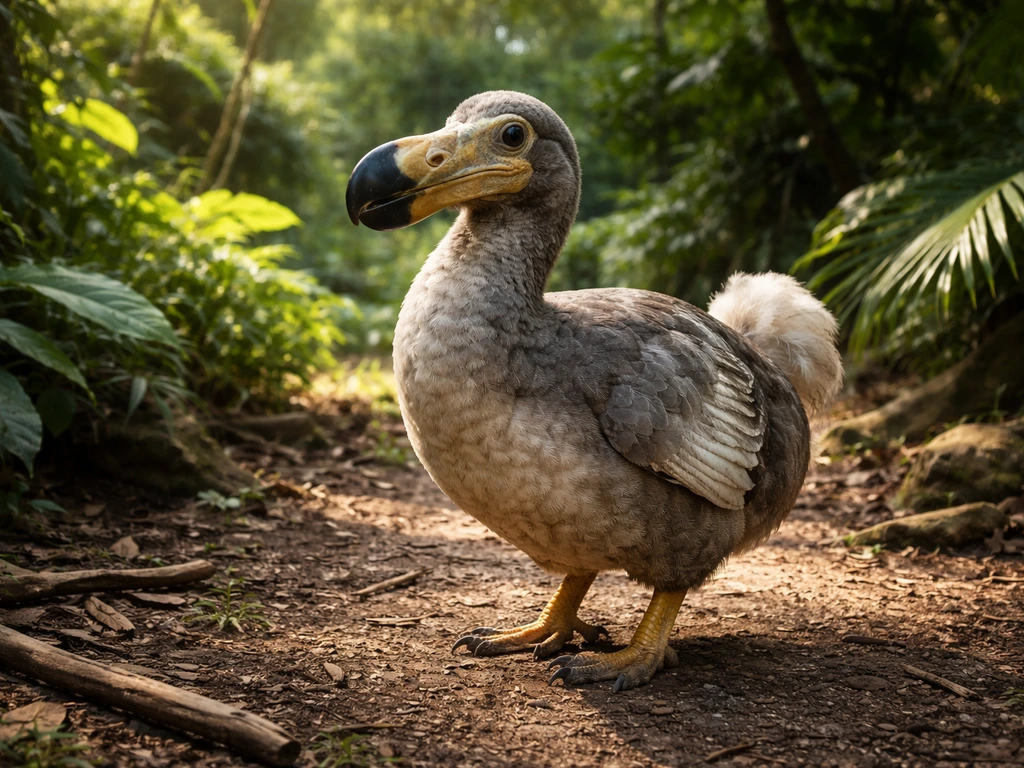
Does Dodo Bird Still Exist? Answer and Extinction Facts
No, dodo birds are extinct. Learn when, why, where they lived, and how evidence confirms it.
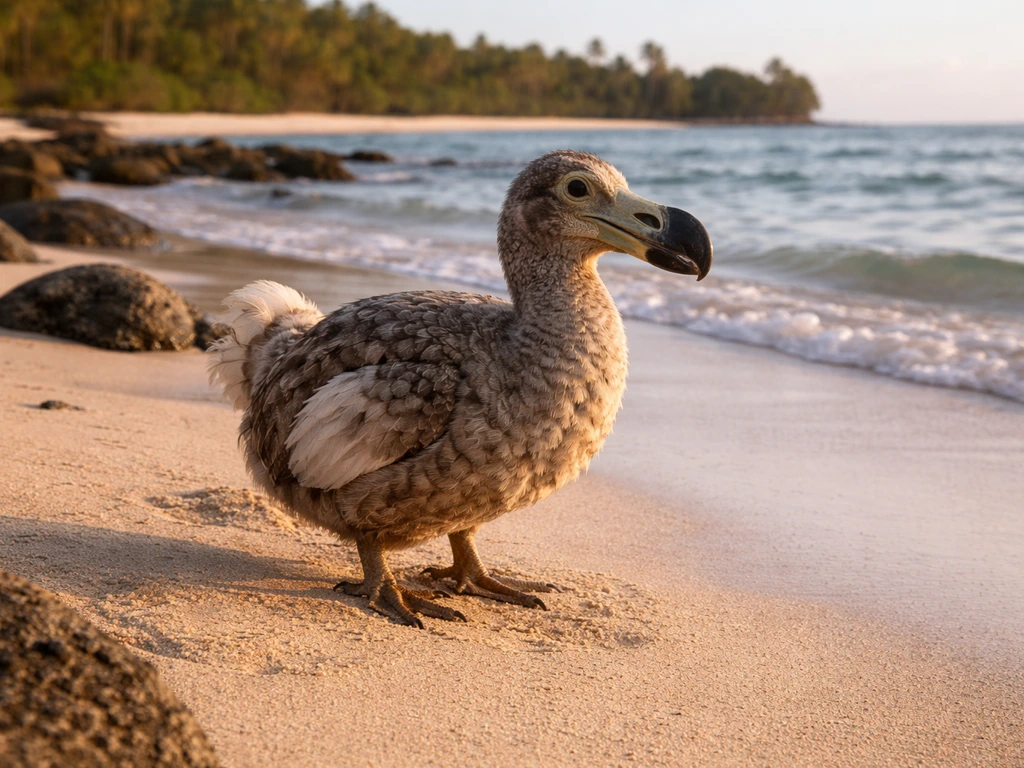
Are Scientists Bringing Back the Dodo Bird? What’s Real
Explains dodo de-extinction reality, the science limits, and why researchers want to revive it or not.
Is the Dodo Bird Coming Back? What De-extinction Can and Can’t Do
Can the dodo really be brought back? Limits of DNA de-extinction, timelines, and what conservation can do now.