Yes, the Shima enaga is a real bird, but it is not an officially recognized species name in scientific taxonomy. "Shima enaga" is a popular Japanese regional nickname for a subspecies of the long-tailed tit (Aegithalos caudatus), specifically the form found on Hokkaido, Japan's northernmost main island. You will not find "Shima enaga" listed as a standalone species in the IOC World Bird List, Clements, or any major taxonomic database, but the bird itself is absolutely real and well-documented.
Is the Shima Enaga Bird Real? Quick Verdict and Facts

Maya Hennessy
29 May 2026
So is "Shima Enaga" a real bird? The direct answer
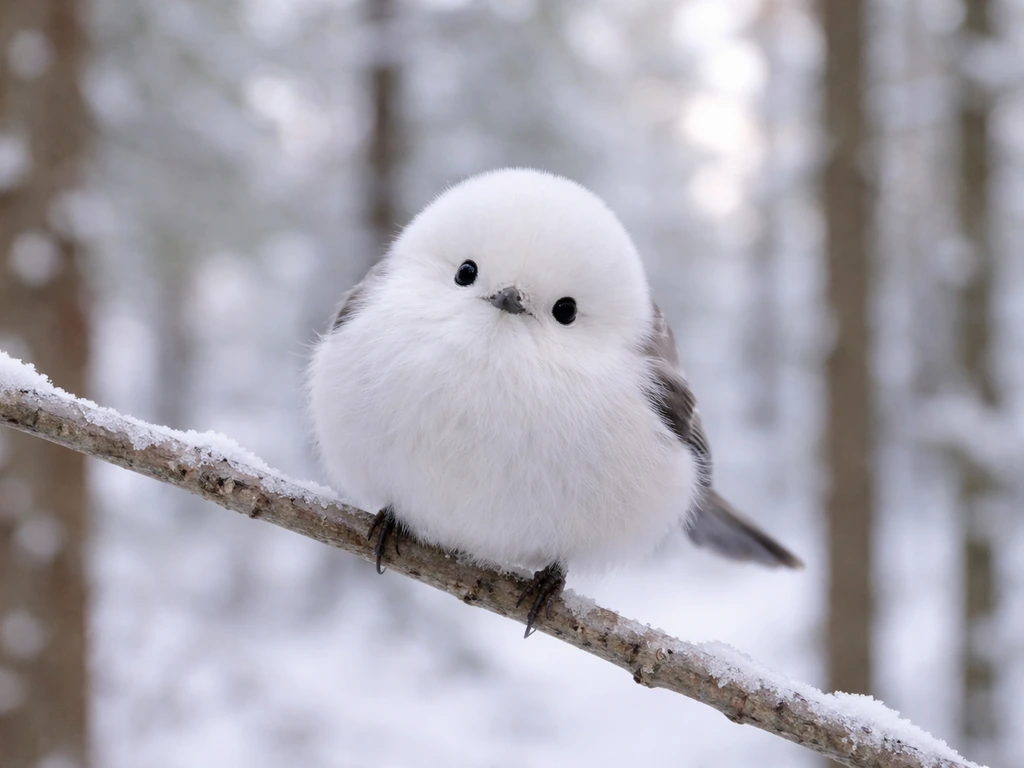
Real bird, unofficial name. That is the cleanest way to put it. The creature you see in viral photos, round and white-faced and almost impossibly fluffy, genuinely exists in nature. It is not a hoax, not a digital composite, and not an AI-generated image (though plenty of those now circulate alongside real photos). What it is not, however, is a species called "Shima enaga" in any formal scientific sense. That name exists in popular usage and Japanese regional culture, not in a peer-reviewed taxonomy list. Think of it like calling a specific regional population of a bird by a local nickname that never made it into the official record.
Where the name "Shima Enaga" actually comes from
The word "enaga" is the standard Japanese common name for the long-tailed tit across Japan, documented in sources like The Japan Times as far back as at least 2004, where the species was listed formally as Aegithalos caudatus with the Japanese name "Enaga." The prefix "shima" in Japanese roughly translates to "island," so "Shima enaga" essentially means the "island enaga" or "island long-tailed tit," a colloquial way of distinguishing the Hokkaido population from long-tailed tits found elsewhere in Japan.
This kind of informal regional naming is common in Japanese bird culture, where local birdwatchers and nature enthusiasts often develop their own terminology for geographically distinct populations before (or instead of) waiting for formal subspecies recognition in international databases. The name spread through Japanese social media, nature photography communities, and wildlife blogs, and once those images hit global platforms, the nickname traveled with them. Avibase and EPPO's Global Database both recognize Aegithalos caudatus and its Japanese forms, but neither lists "Shima enaga" as a formal binomial or IOC-level taxon name.
The real bird: what science actually says
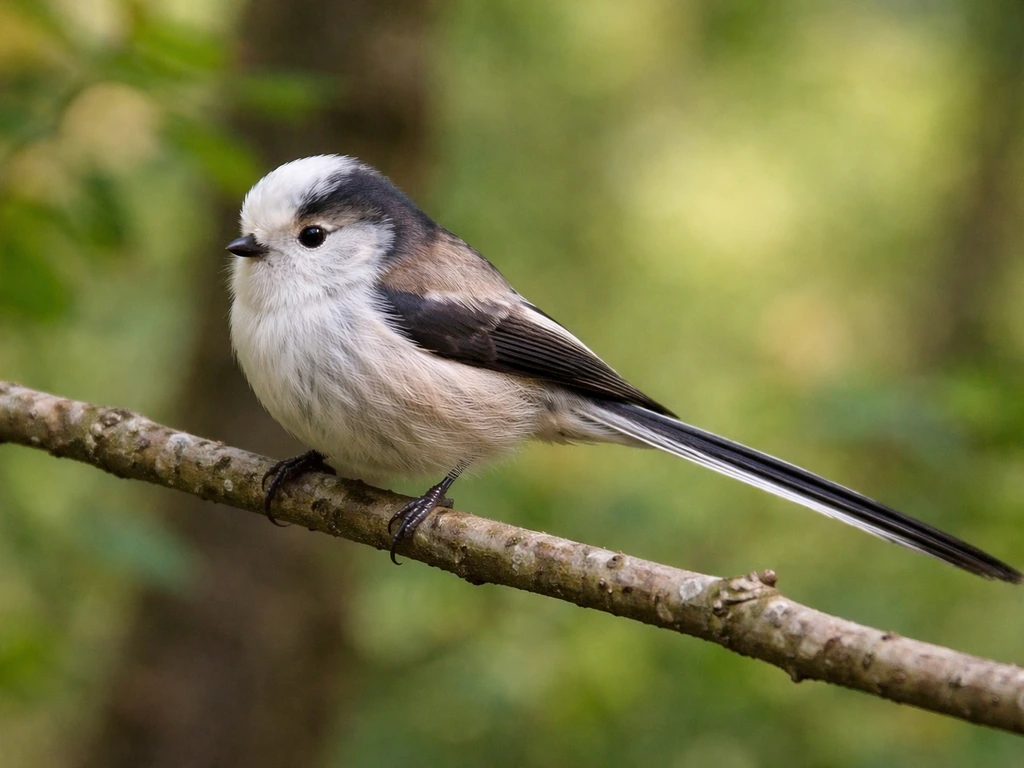
The bird at the center of all this is Aegithalos caudatus, the long-tailed tit. It is a small passerine in the family Aegithalidae, and the Hokkaido subspecies most associated with the "Shima enaga" nickname is Aegithalos caudatus caudatus (sometimes noted as the japonicus form in Avibase's entries). This is the purest white-faced version of the species, which is why it looks so distinctly different from long-tailed tits seen in mainland Europe and much of Asia, where birds typically show dark eyebrow stripes.
| Feature | Detail |
|---|---|
| Scientific name | Aegithalos caudatus (subspecies caudatus/japonicus) |
| Family | Aegithalidae (long-tailed tits) |
| Common name (English) | Long-tailed tit (Northern form) |
| Japanese name | Enaga (エナガ); regionally, Shima enaga for the Hokkaido population |
| Body length | Approximately 13–15 cm, with tail making up roughly half that |
| Weight | Around 7–9 grams |
| Primary range | Hokkaido, Japan; broader species range extends from Europe through Asia |
| Habitat | Deciduous and mixed forests, woodland edges, parks, and gardens |
| Conservation status | Least Concern (IUCN) for the broader species |
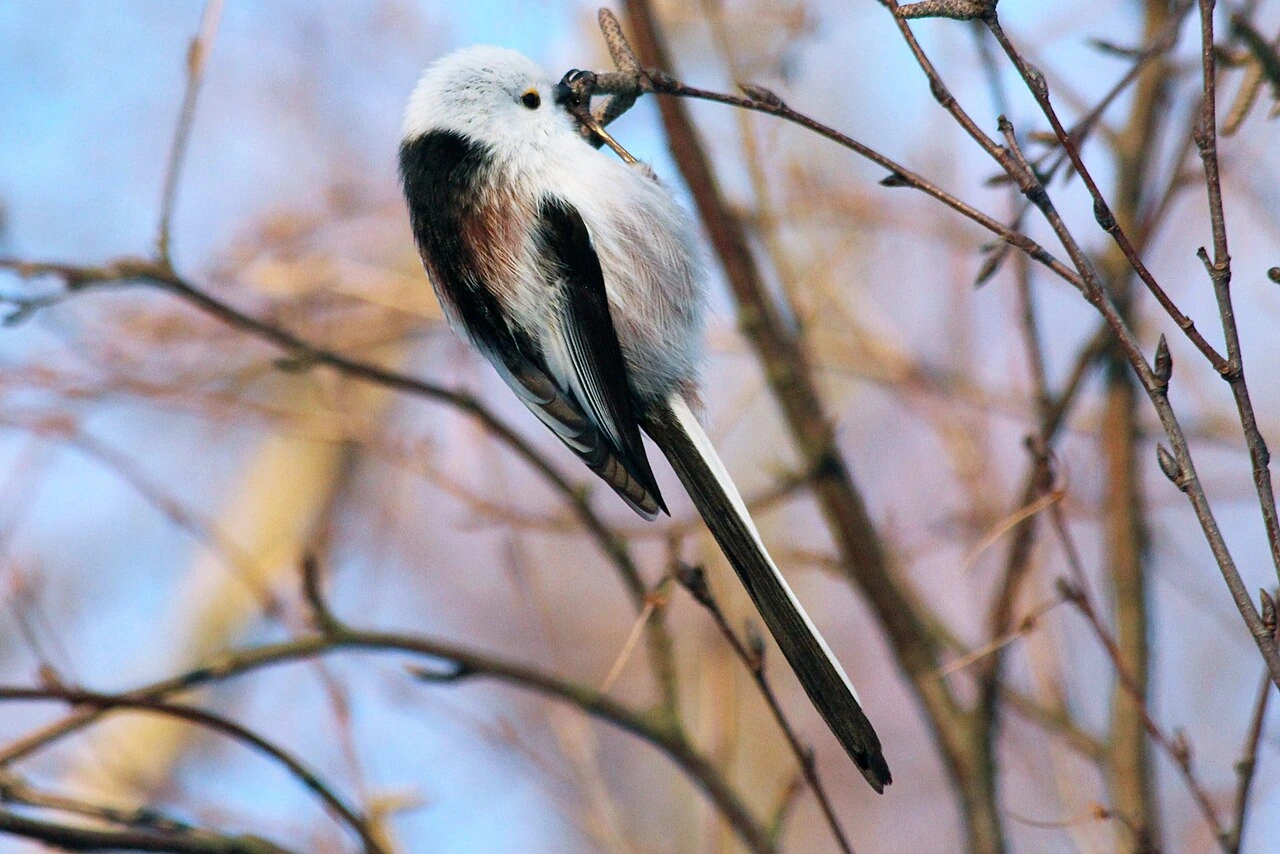
The Hokkaido birds are notable for their almost entirely white heads and faces, lacking the bold dark supercilium (eyebrow stripe) seen in European populations. This gives them their signature snowball-like appearance in winter plumage, especially when they fluff up their feathers against Hokkaido's cold temperatures. They are highly social, traveling in small, energetic flocks through forest canopies and calling constantly with high-pitched contact notes. The long tail is a genuine field mark, disproportionately long relative to the tiny body.
Range and habitat specifics
Within Japan, the long-tailed tit as a species is found from Hokkaido all the way down to Kyushu, as documented in The Japan Times. Although this nickname is tied to Japan, the long-tailed tit family has relatives across parts of Asia, so the “where is surkhab bird found in India” question is about a different species. The "Shima enaga" Hokkaido population favors areas with mature deciduous trees, particularly forests with birch and alder, but these birds are adaptable enough to appear in city parks and suburban green spaces in Sapporo and other Hokkaido cities. If you are also asking about another animal species, like the opium bird, the key is to confirm its correct habitat and geographic range from a reliable wildlife source where opium bird live. That urban tolerance is part of why they have become such beloved photographic subjects. They are resident birds, meaning they do not migrate, so Hokkaido's birding community encounters them year-round.
How to verify photos and claims when you see "Shima enaga" online
If you see a viral post claiming to show a "Shima enaga bird" and you want to know whether it is genuine, run through these checks quickly.
- Search Avibase or the IOC World Bird List for Aegithalos caudatus. Compare the image to verified photos of the caudatus subspecies from Hokkaido. The white face with no dark eyebrow stripe is the key visual feature that distinguishes the Hokkaido birds.
- Run the image through a reverse image search (Google Images or TinEye). Genuine Shima enaga photos will trace back to Japanese wildlife photographers and nature platforms. If the image is AI-generated or a known hoax, reverse search usually surfaces prior discussions.
- Check whether the original source is a Japanese wildlife or photography account, a legitimate birdwatching platform, or an anonymous viral post with no location data. Authentic photos almost always include Hokkaido as the location.
- Look up the species on EPPO's Global Database or Featherbase under Aegithalos caudatus for additional reference imagery and taxonomic confirmation that this is a real, classified species.
- If you are checking a video, look for natural, fluid movement patterns consistent with passerine behavior: quick, bouncy movements, tail bobbing, and flock cohesion. AI-generated bird videos often get fine motor movement and flock dynamics wrong.
The name confusion itself is not a red flag for the content. Just because "Shima enaga" is not a formal taxonomic name does not mean any particular photo is fake. It just means the caption is using a popular nickname rather than a scientific designation, which is entirely normal in casual wildlife photography contexts.
Why this bird gets misidentified and over-mythologized online
Part of the confusion comes from the same visual quality that made the Shima enaga famous in the first place. The Hokkaido long-tailed tit looks, frankly, almost too cute to be real. The round white face, tiny beak, and absurdly fluffy body make it look like a cartoon or a plush toy, and that aesthetic is precisely what drives viral sharing. When something looks that unusual, people naturally ask whether it is real. People also ask is the kodiak bird real when they see unfamiliar animal names online. This is not entirely different from how other Japanese wildlife, like the Japanese dwarf flying squirrel, occasionally cycles through viral rounds of "is this actually real?" questioning.
There is also a naming gap that feeds the uncertainty. Because "Shima enaga" does not appear in standard English-language bird databases as an official species name, English-speaking searchers who try to verify the name hit a wall quickly. They may look for "Shima enaga" in field guides or taxonomy lists, find nothing, and assume the bird is fabricated. In reality, they are just searching by the wrong name. The bird is simply listed under Aegithalos caudatus in every authoritative source. This is similar to how some searchers have questioned the reality of other birds with unfamiliar or informal names, a pattern that comes up across the broader world of unusual bird species.
The viral image cycle has also introduced genuinely fake images into the stream. AI-generated bird images, heavily edited photos, and composite images do circulate alongside authentic Hokkaido wildlife photography, which has compounded the skepticism. The practical checks above help cut through that noise.
Conservation status and natural history: what we know
The long-tailed tit as a species is listed as Least Concern by the IUCN, and the Hokkaido population is not under any immediate threat of extinction. This puts it in a very different position from many birds covered on this site, such as the passenger pigeon or the endangered kiwi. You can read about the passenger pigeon too, since it is one of the famous birds that got misrepresented or confused online. The broad range and adaptability of Aegithalos caudatus across Europe and Asia means the species is not facing the kind of population collapse we associate with island-endemic species or highly specialized habitat specialists.
That said, the Hokkaido population specifically faces the same pressures that affect most wildlife in developed island ecosystems: habitat fragmentation, urban expansion, and the gradual loss of mature deciduous forest. Hokkaido has seen significant land-use change over the past century, and while the "Shima enaga" birds are currently holding their own in mixed urban-forest environments, continued deforestation of primary forest habitats in the region is worth monitoring. These birds depend on the structural complexity of mature woodland for nesting, using spider silk and plant fibers to construct their distinctive oval nests, typically placed in the fork of a tree branch.
The broader long-tailed tit family (Aegithalidae) has a relatively good conservation track record compared to many small passerines, partly because of the species' behavioral flexibility. They are cooperative breeders in some populations, with non-breeding adults helping raise chicks from other nests, which improves overall reproductive success even in years when conditions are difficult. That kind of behavioral resilience is an asset that purely solitary nesters do not have.
What to do if you want to see one
If you are in Japan and want to see a Shima enaga in person, Hokkaido in winter is the prime time and place. The birds are most visible and most photogenic during cold months when they fluff up their plumage for insulation, creating that signature round silhouette. Hokkaido's Maruyama Park in Sapporo is frequently cited by Japanese birdwatchers as an accessible urban site where these birds appear regularly. Early morning is the best time, when the flocks are actively foraging and calling. Bring binoculars for close views and a telephoto lens if you want the kind of photos that go viral.
For remote verification, Avibase is the most reliable starting point to confirm any claim about this bird's taxonomy, and the EPPO Global Database entry for Aegithalos caudatus gives you the formal species framework. Any time you encounter an unusual bird name online and want to quickly confirm whether it is a real species or a colloquial nickname, running it through Avibase or the IOC World Bird List first will save you a lot of time and confusion.
FAQ
If “Shima enaga” is not official, how can I tell that a viral picture shows the real bird?
Yes, the photos are usually of real long-tailed tits, specifically the Hokkaido form that people nickname “Shima enaga.” The safest way to confirm a specific image is to compare the bird’s key field marks, snowball-like white face with minimal eyebrow stripe, and the long tail relative to the tiny body, then check whether the scene matches winter flock behavior in Hokkaido.
What’s the best way to verify the bird’s name when online search results contradict each other?
Search by scientific name first. Look up Aegithalos caudatus (long-tailed tit) and then check for the Japanese form associated with Hokkaido, rather than searching “Shima enaga” alone in English-language lists, since the nickname may not appear in global taxonomy interfaces.
How should I label it in a blog post or my birding notes to avoid spreading misinformation?
The name “shima enaga” is best treated as a regional label, not a formal taxon. If you want accuracy in your notes, write the common English name “long-tailed tit” plus the relevant Hokkaido subspecies label shown in databases, and optionally add “(nicknamed Shima enaga in Japan)” for clarity.
Does “Shima enaga” always mean the same-looking bird, or can different populations get mislabeled?
Usually, “Shima enaga” refers to the Hokkaido population, but different posts sometimes mix it with other long-tailed tit looks. If the bird in the photo shows a clear dark eyebrow stripe like many mainland populations, it may not be the same look associated with the Hokkaido nickname, even if it is still a real long-tailed tit.
How can I tell whether a “Shima enaga” image is real photography versus an AI-generated or heavily edited composite?
If your post is asking “AI-generated or edited?”, check for inconsistencies like unnatural feather clustering, distorted wing or tail geometry, repeated background textures, or faces that look too perfectly smooth and uniform. Also look for metadata or context, when available, and prioritize sources that provide location and date instead of only a caption.
Are these birds only visible in winter, or can I see them at other times of year?
Yes, long-tailed tits are non-migratory, so you can encounter them year-round in Hokkaido, including city parks. What changes is appearance, winter plumage and feather fluffing make them look rounder and whiter, which is why most viral shots are taken in cold months.
If I want to photograph one in Hokkaido, what gear and approach actually work?
Binoculars help for watching the flock’s movement and contact calls, but to reproduce the viral “snowball face” detail you usually need a telephoto lens. For ethical birding, stay at a distance and avoid moving into dense tree cover where small flocks can be startled easily.
Is the Hokkaido “Shima enaga” population under threat, or is it generally doing okay?
A “real bird” can still be harmed by habitat pressure. For Hokkaido specifically, monitor concerns common to developed island regions, habitat fragmentation and loss of mature deciduous forest structure, because nesting depends on suitable woodland and complex branches for building oval nests.