The Surkhab bird found in India is the Ruddy Shelduck, scientific name Tadorna ferruginea. It is a common winter visitor that arrives across India by October and departs by April, with the bulk of sightings spread across northern and central India's wetlands, rivers, and lakes. In Ladakh and parts of Arunachal Pradesh, it also breeds at high-altitude wetlands, making it one of the few waterfowl species in India that wears two hats: summer breeder in the high Himalayas, winter visitor almost everywhere else.
Where Is Surkhab Bird Found in India? Location Guide

Maya Hennessy
19 May 2026
What exactly is the "Surkhab" bird?
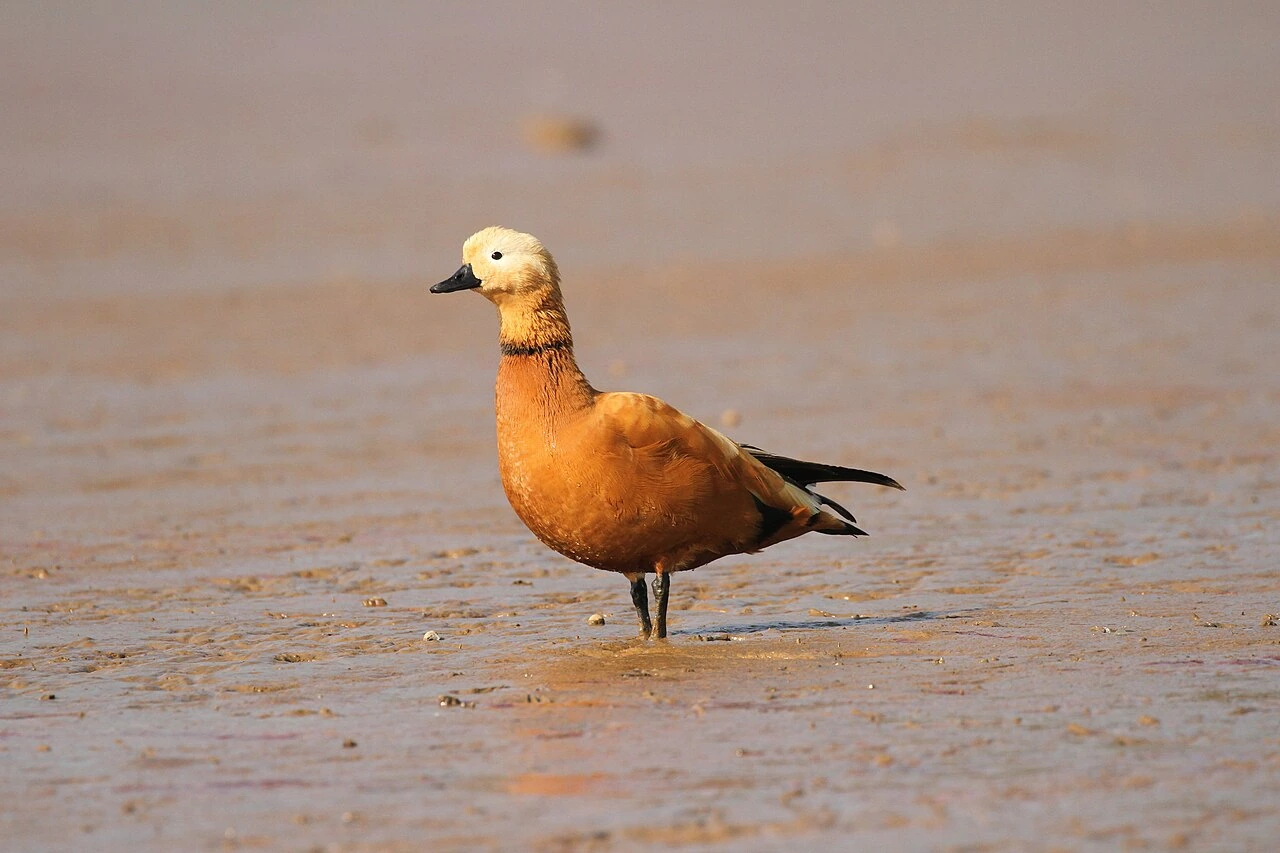
Surkhab is a Hindi and Urdu common name for the Ruddy Shelduck (Tadorna ferruginea), also called the Brahminy Duck in older Indian literature. The name breaks down loosely to mean "red water bird," which is a pretty accurate description once you see one. You will sometimes see it spelled Surkh-aab or Surkhav, and in some regional references it appears alongside the name Chakwa (for the male) and Chakwi (for the female). All of these names point to the same species.
If you have heard the name "Surakav" used in a similar context, that is almost certainly the same bird under a regional pronunciation variant. The scientific name Tadorna ferruginea, first described by Pallas in 1764, is the anchor that cuts through all the naming confusion.
It is worth noting that Surkhab is sometimes misheard or misspelled in ways that could lead you to dead ends. Searches for "Surkhab bird" or "Chakwa bird" in India all resolve to Tadorna ferruginea when cross-referenced against national checklists, including the BNHS Checklist of the Birds of India and SACON ENVIS appendices that map Hindi common names to scientific taxa. The species is also listed as IUCN Least Concern, which tells you it is not currently facing the extinction pressures that many waterfowl species deal with, though its wetland habitats are under ongoing threat.
Where in India is the Surkhab found?
The Ruddy Shelduck winters across India broadly, meaning you can encounter it in most states with decent wetland habitat between October and April. That said, the distribution is not perfectly even. The northern plains, from Punjab and Haryana through Uttar Pradesh, Bihar, and West Bengal, consistently host the largest winter concentrations. Rajasthan is particularly notable: Ranthambhore National Park lists Surkhab/Chakwa as a local-named species, and the state's numerous lakes and reservoirs are reliable wintering spots.
Assam in the northeast is well-documented too, with specific research on the species' home range and habitat use during non-breeding season there. Further south, numbers thin out, but records exist across central and peninsular India. There are even occasional records from Lakshadweep, though these are irregular rather than expected.
In the Himalayan zone, the picture shifts. Ladakh hosts both breeding pairs and migratory birds moving through high-altitude lakes in summer months, with July observations documented. Western Arunachal Pradesh has recorded breeding at wetlands around 4,500 metres elevation. Ramsar documentation specifically notes Ladakh as a migration origin point for this species, underlining its role as both a source population and a wintering destination within India's own borders.
| Region / State | Type of Occurrence | Notes |
|---|---|---|
| Ladakh (J&K / UT) | Resident breeder + migratory passage | High-altitude lakes; breeding and July records documented |
| Arunachal Pradesh (western) | Breeding at high elevation | Recorded nesting near wetlands at ~4,500 m |
| Rajasthan | Winter visitor | Ranthambhore and state lakes; Surkhab/Chakwa named locally |
| Punjab, Haryana, UP, Bihar | Common winter visitor | Northern plains wetlands; arrives October, departs April |
| West Bengal | Winter visitor | River systems and wetlands |
| Assam | Winter visitor / non-breeding season | Dedicated habitat use research exists for this state |
| Central and peninsular India | Winter visitor (scattered) | Lower densities; occurs on larger lakes and reservoirs |
| Lakshadweep | Occasional / irregular | Rare records, not a reliable wintering site |
What habitat does it prefer?
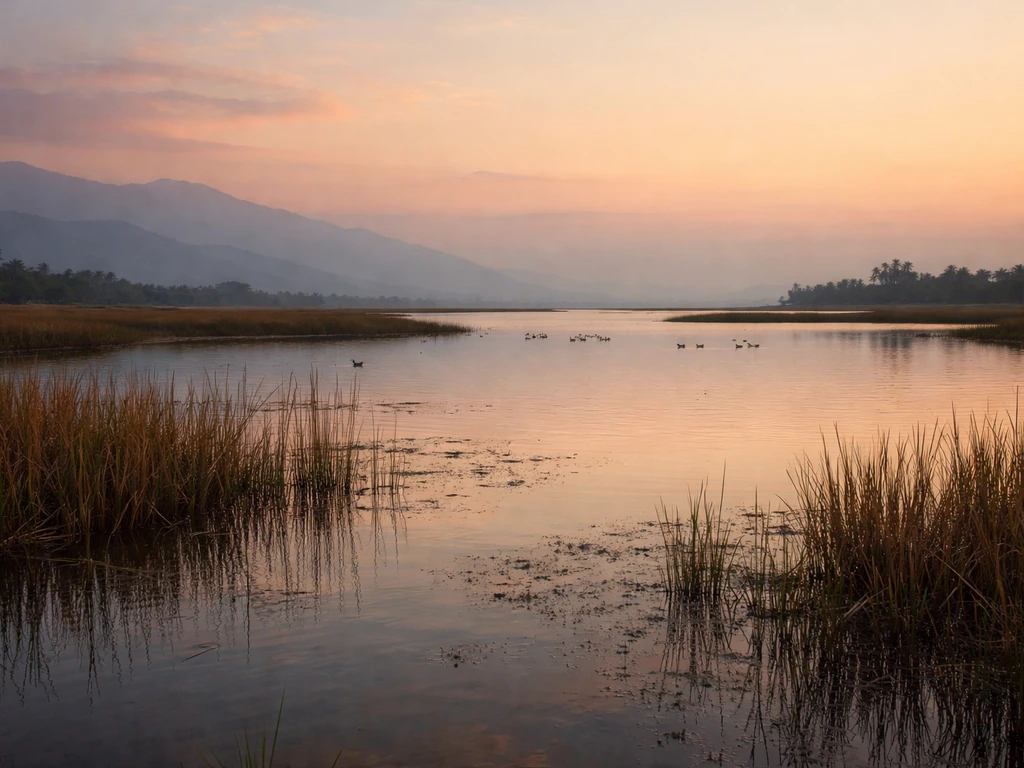
The Ruddy Shelduck is a wetland specialist but a flexible one. In the Himalayas, it uses high-altitude lakes, marshes, and river valleys, sometimes at elevations above 4,000 metres. During winter across the rest of India, it gravitates to large freshwater lakes, reservoirs, slow-moving rivers, and coastal wetlands. It tends to avoid dense vegetation and prefers open water with exposed mud banks or sandy shores nearby, since it spends a lot of time grazing on land as well as feeding in the shallows. You will often see pairs or small flocks rather than huge concentrations, partly because they are territorial on their wintering grounds too.
Elevation-wise, it covers an enormous range within India: from near sea level in the plains and coastal areas all the way to above 4,500 metres in the Himalayan breeding zones. This vertical range is unusual for a single species and is part of what makes it such an interesting subject for anyone studying waterfowl distribution in South Asia.
Is the Surkhab a resident or does it migrate through India?
Both, depending on where you are in India. For the vast majority of the country, the Surkhab is a migratory winter visitor. Its official migration status in Indian ornithological literature is "migratory, winters in the lower elevations throughout India." Breeding populations from Central Asia, Tibet, and the broader Himalayan region fly south and southwest into the Indian subcontinent as temperatures drop, typically arriving by October. They move back out by April. So if you are in Rajasthan, the Gangetic plains, or Assam, any Surkhab you see in May is unusual enough to double-check. Have you seen this bird passenger pigeon passenger pigeon have you seen this bird passenger pigeon.
In Ladakh and the high Himalayas, the dynamic is different. Some birds breed locally and remain through the warmer months, while others are passage migrants moving between Central Asian breeding grounds and Indian wintering areas. This means Ladakh sees the species year-round in small numbers, rather than only in winter. For birders in the rest of India, October through March is your reliable window.
How to confirm you are looking at a Surkhab
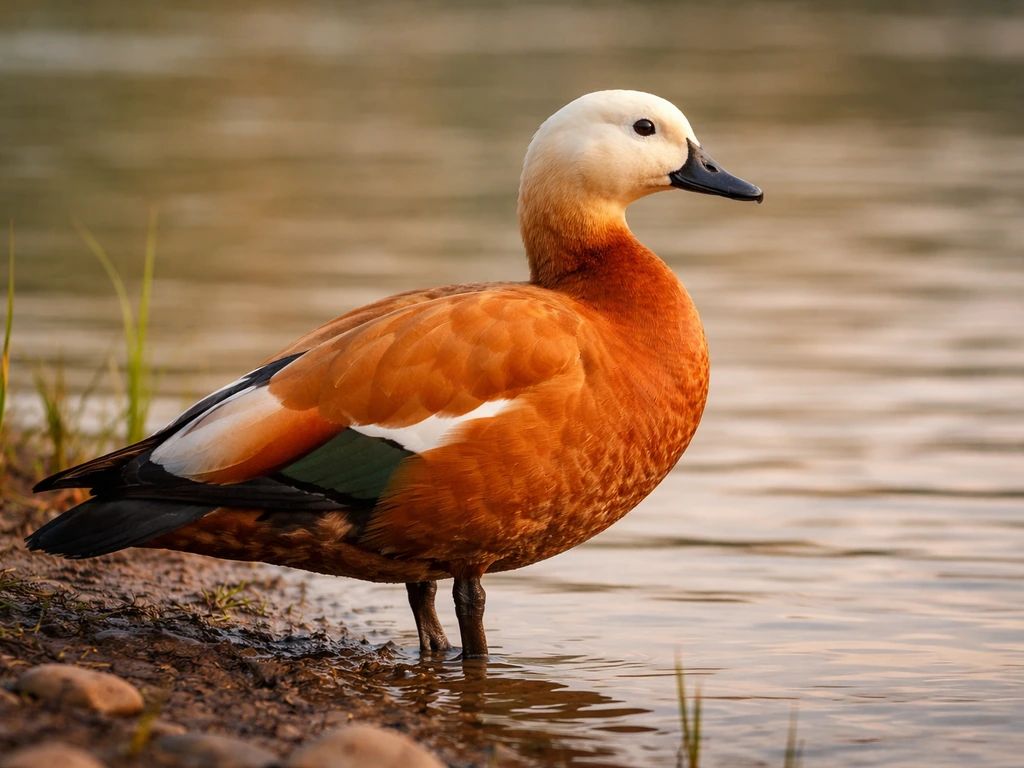
The good news here is that the Ruddy Shelduck is, in the words of Birds of India, "very distinctive" and "cannot be confused with other" species once you know what you are looking at. That said, a quick confirmation checklist is useful if you are new to it.
- Overall colour: rich rusty orange-brown body, almost rust-red in good light. The head is noticeably paler, a buff or cream tone, making the neck/head contrast visible from a distance.
- Size and shape: large, goose-like duck. Noticeably bigger and longer-necked than most dabbling ducks you might see on the same lake.
- Wing pattern in flight: the single most reliable field mark. A bold white forewing patch (formed by both upper and lower wing-coverts) flashes prominently when the bird takes off or flies overhead. Combined with black flight feathers at the wingtip, the contrast is striking.
- Sex difference: males in breeding plumage carry a narrow black neck ring; females lack this ring and often have a whitish face patch. The local names Chakwa (male) and Chakwi (female) track this difference.
- Call: loud, nasal honking and trumpeting notes. The species is vocal before takeoff and in flight, with a sound closer to a goose than a typical duck. If you hear persistent nasal honking from a large orange-brown bird near a wetland, that is a very strong Surkhab signal.
One caution worth flagging: the name "Surkhab" occasionally floats around in informal usage online for other reddish or unusual birds, similar to how names like "opium bird" or "kodiak bird" circulate as folk names with unclear species links. If you are hearing other folk names like the “opium bird,” it helps to cross-check them against the actual species identification details for the Surkhab.
If you see the phrase "kodiak bird" tied to a similar claim, it is best treated as an unverified folk name rather than a documented species. So, is the opium bird real in the way people claim, or is it usually a folk label for something else? If someone shows you a photo of a small reddish bird and calls it a Surkhab, push back gently and match it against the Tadorna ferruginea description above.
The real Surkhab is a large, unmistakable waterfowl, not a small passerine. Because the Surkhab is actually the Ruddy Shelduck, the claim that it might be a different bird is generally not supported is the shima enaga bird real.
Checking records and conservation status
For real-time sighting verification, eBird is the most practical tool available today. Search for "Ruddy Shelduck (Brahminy Duck) Tadorna ferruginea" on eBird and you will get a live map of recent India sightings with dates, locations, and observer notes. eBird's range maps are built from records requiring at least one confirmed week within each season, so if your date and location fall inside the mapped winter range, you have strong corroboration. If your sighting is outside the typical November to March window and away from Ladakh, it is worth submitting it as a notable record.
For authoritative checklist confirmation, the blank" rel="noopener noreferrer">BNHS ENVIS portal hosts the national Checklist of the Birds of India, where Tadorna ferruginea appears as a documented resident/visitor. The SACON ENVIS appendices also map the Ruddy Shelduck/Brahminy Duck pairing to its scientific name in wetland contexts. For conservation status, the IUCN Red List currently categorises the species as Least Concern, and the 2024 Ladakh regional checklist confirms its contemporary presence there. blank" rel="noopener noreferrer">BirdLife International's species account for Tadorna ferruginea is the best starting point for any questions about global population trends or habitat threats.
If you photographed your bird and want a community check, India-specific birding groups on platforms like Facebook ("Birds of India" groups) and the IndianBIRDS journal community are active and quick to respond. Upload your photo with location, date, and any call description, and experienced birders will confirm or redirect within hours. Given how distinctive the Ruddy Shelduck is, a clear photo of that rusty-orange body and white wing patch is almost always enough for an immediate ID.
FAQ
Is the Surkhab (Ruddy Shelduck) found all year in India?
Most of India sees it mainly in the winter window (about October to April). If you want year-round chances, focus on Ladakh and the high Himalayas where some birds breed and remain through warmer months, but even there expect mostly small numbers rather than constant large flocks.
Where should I look first if I’m trying to spot Surkhab in India for the first time?
Start with open freshwater habitat, large lakes, reservoirs, and slow rivers with exposed mud banks or sandy edges. The species often grazes on land as well as feeding in shallow water, so the shoreline zone is usually more productive than deep-water areas.
Which parts of India have the highest chances of winter sightings?
The northern plains tend to hold the biggest winter concentrations, especially across Punjab, Haryana, Uttar Pradesh, Bihar, and West Bengal. Rajasthan is also a standout because its lake and reservoir network regularly supports wintering birds.
I saw a “Surkhab” outside the expected months. Could it still be real?
It can happen, but if your sighting is well outside the typical November to March window (and not in the Ladakh timing context), treat it as a notable or unusual record and verify carefully. Confirm both location and habitat, then check recent confirmed reports for your exact district or nearby wetlands.
Does Surkhab only occur in freshwater wetlands, or do coastal wetlands work too?
While it strongly favors freshwater lakes, reservoirs, and river valleys, there are occasional coastal-wetland records. Even in coastal areas, the key is exposed shores and shallow edges rather than heavily vegetated or fully enclosed waters.
Are there common name mix-ups that could lead to the wrong bird?
Yes. “Surkhab” is tied to Tadorna ferruginea, but informal online usage sometimes attaches the name to different reddish birds. If the bird in question is small like a passerine, it is very unlikely to be Surkhab, since Ruddy Shelducks are large waterfowl.
What should I do if my photo is unclear and I’m unsure between Surkhab and another reddish waterbird?
Use a checklist approach based on size and field marks, not just color. Then corroborate with date and exact habitat using eBird recent sightings for Ruddy Shelduck (Brahminy Duck) to see whether confirmed records exist in your area during that season.
Is it normal to see only pairs or small groups, not huge flocks?
Yes. The species can show territorial behavior on wintering grounds, so you will often find pairs or small flocks instead of massive aggregations. If you see single individuals, it still fits the typical pattern, as long as the habitat looks right.
Can Surkhab breed in India, or is it only a winter visitor?
India has both breeding and wintering components, especially in the Ladakh and high Himalaya zone. Western Arunachal Pradesh has documented breeding at high-elevation wetlands, while much of the rest of India mainly functions as a wintering area.
How can I confirm my sighting quickly and correctly?
Record the exact location (ideally a named wetland or lake), date, and habitat type. Then cross-check against eBird’s live India map for Ruddy Shelduck (Tadorna ferruginea), and if it is outside the common seasonal window, consider submitting it as a notable record with your photo.
Next Article
Where Opium Bird Lives: Identify the Species and Habitat
Learn which species fits where opium bird lives, its exact habitat needs, range by country, and how to verify.