The umbrella bird lives in the tropical forests of South and Central America, depending on which of the three species you mean. The one most people are picturing is the Amazonian umbrellabird (Cephalopterus ornatus), which is found across the Amazon basin and on the eastern slopes of the Andes, spanning countries like Brazil, Colombia, Ecuador, Peru, Bolivia, and Venezuela. If you have seen a completely black bird with a dramatic crest that fans out like an umbrella over its bill, this is almost certainly the species you are after.
Where Does the Umbrella Bird Live? Range and Habitat

Maya Hennessy
29 Apr 2026
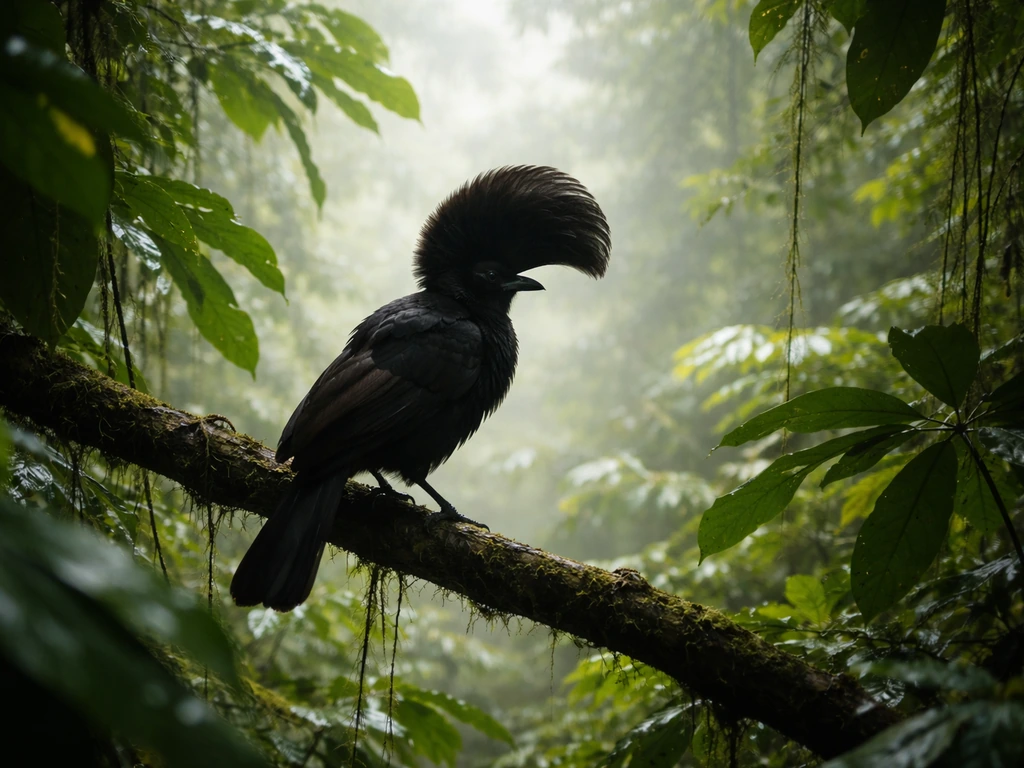
Which bird is actually called the "umbrella bird"?
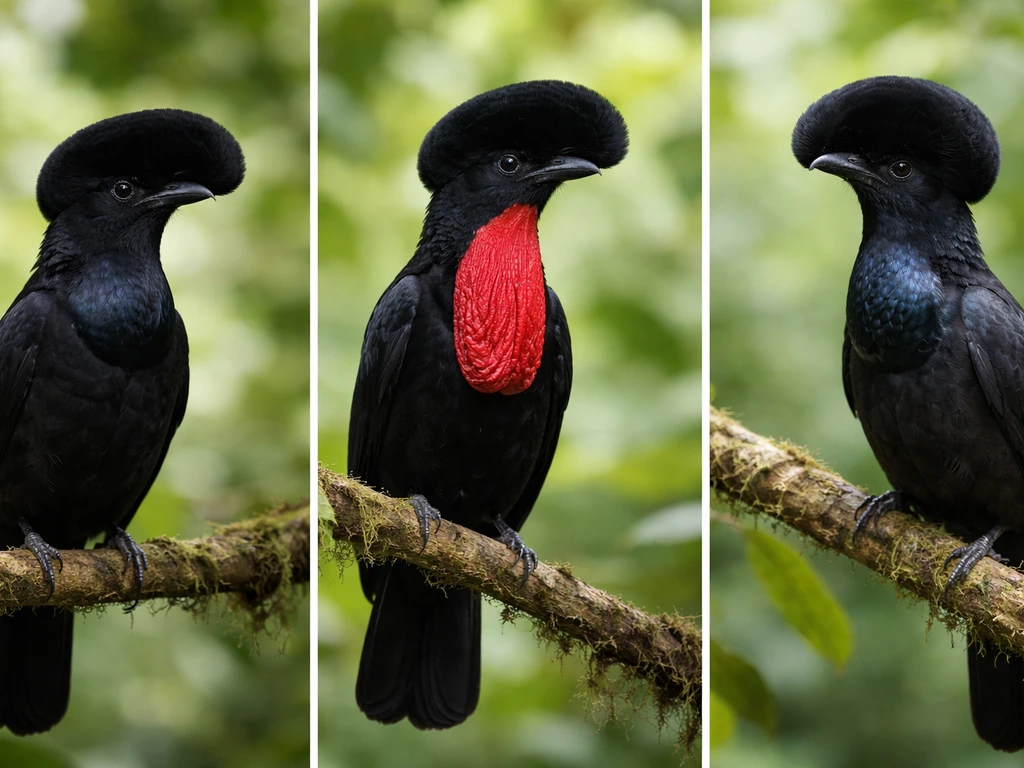
The common name "umbrella bird" or "umbrellabird" covers three species in the genus Cephalopterus, all belonging to the cotinga family. They share the same signature look: an oversized forward-sweeping crest and a fleshy wattle hanging from the throat that the male inflates during display calls. The three species are the Amazonian umbrellabird (Cephalopterus ornatus), the long-wattled umbrellabird (Cephalopterus penduliger), and the bare-necked umbrellabird (Cephalopterus glabricollis). When someone casually says "umbrella bird" in English, they are usually referring to C. ornatus, simply because it has the widest range and appears most often in nature documentaries and field guides.
One quick note on a naming confusion worth clearing up: the Black Heron is sometimes nicknamed the "umbrella bird" in parts of Africa because it spreads its wings over the water like a canopy while hunting. That bird is not a Cephalopterus and has nothing to do with the South American umbrellabirds covered here. If you are on a wildlife reference site looking at range maps and conservation data, you want the cotinga family, not the heron.
Where on the map do umbrella birds actually live?
The Amazonian umbrellabird has one of the broader ranges of the three species. Its core territory is the Amazon basin, that sprawling network of lowland rainforest covering most of northern Brazil and bleeding into neighboring countries. But there is a second, somewhat separate population on the eastern Andean slopes, and scientists are not entirely sure whether these foothill birds are in direct contact with the lowland population or whether the two groups are more isolated from each other than they appear on a flat map.
| Species | Primary Region | Countries | IUCN Status |
|---|---|---|---|
| Amazonian umbrellabird (C. ornatus) | Amazon basin + eastern Andes slopes | Brazil, Colombia, Ecuador, Peru, Bolivia, Venezuela | Least Concern (LC) |
| Long-wattled umbrellabird (C. penduliger) | Western Colombia and Ecuador (Pacific slope) | Colombia, Ecuador | Vulnerable (VU) |
| Bare-necked umbrellabird (C. glabricollis) | Caribbean slope of Costa Rica and Panama | Costa Rica, Panama | Vulnerable (VU) |
So range really depends on the species. The Amazonian covers the most ground. The long-wattled is much more restricted, hugging the Pacific lowlands and foothills on the western side of the Andes in Colombia and Ecuador. The bare-necked is the most northerly, found in the humid Caribbean-slope forests of Costa Rica and Panama. Two of the three are considered Vulnerable by the IUCN, meaning their ranges are under active pressure right now.
Preferred habitats: forest type, elevation, and canopy use
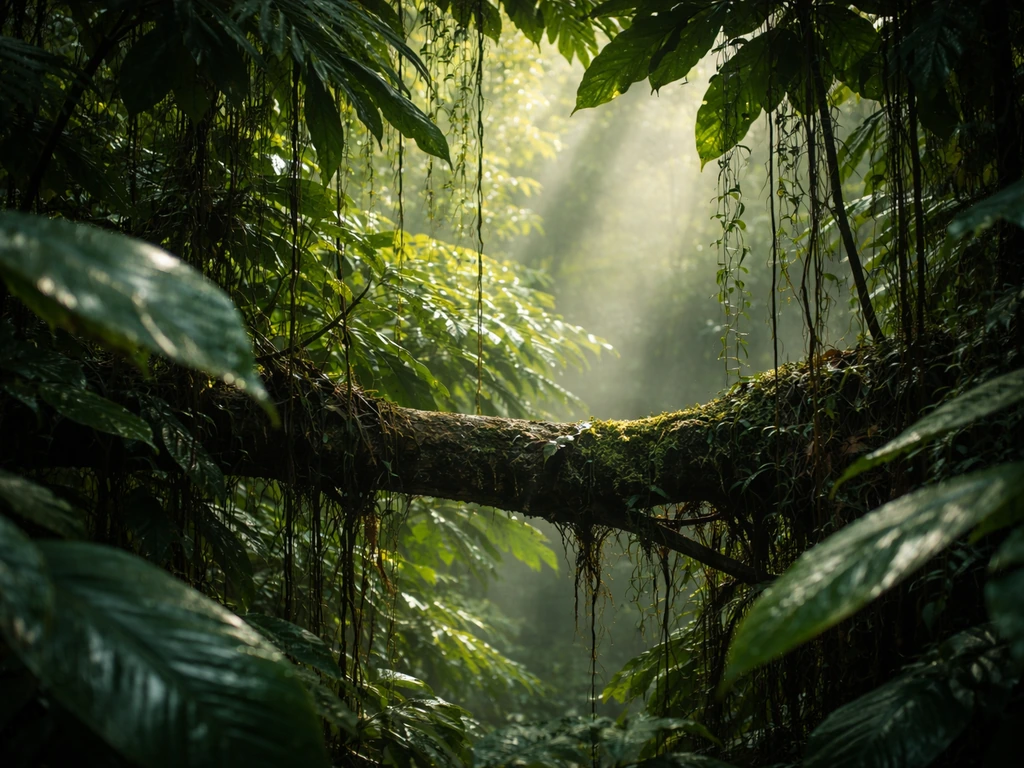
All three species are tropical forest birds, and they are not birds you will stumble across in open country or urban parks. The Amazonian umbrellabird is most at home in tropical lowland evergreen forest and secondary forest, generally below 750 meters in elevation. It favors the edges of rivers, forest clearings, and island habitats within those wet lowland forests, which is a useful detail if you are trying to figure out where to scan.
Foraging for the Amazonian umbrellabird also includes the canopy and areas along river edges and river islands in Amazonia edges of rivers, forest clearings, and island habitats. It spends most of its time in or near the forest canopy rather than in the understory, which makes it easy to miss even in areas where it is present.
The bird is described consistently as secretive and wary. It forages alone or in small groups, usually staying near the upper canopy where the light is filtered and the sight lines are long. If you are in the right forest type and elevation band and you hear a deep, booming call rolling through the canopy, that is your cue to look up and be patient.
- Forest type: tropical lowland evergreen forest, secondary forest
- Elevation band: typically 0 to 750 meters above sea level
- Microhabitat: river edges, forest clearings, forested islands in river systems
- Vertical position: canopy and sub-canopy, rarely the forest floor
- Behavior: secretive and wary, usually found singly or in small groups
Seasonal movement and where breeding fits in
Umbrellabirds are lekking birds, meaning males gather at traditional display sites to compete for females through elaborate posturing, crest spreading, and those resonant booming calls amplified by the inflated wattle. This lekking behavior is the clearest seasonal pattern in their habitat use. During the breeding season, males concentrate at specific display sites within the forest, and these leks can draw birds from a wider surrounding area into a relatively small patch of habitat.
Research on the closely related bare-necked umbrellabird found that birds actually use only about 20 to 30 percent of what looks like suitable habitat. That number matters because it tells you that even in a forest block that looks ideal on a map, umbrellabirds are not evenly spread throughout. They tend to concentrate around established lek sites, riverine edges, and productive fruiting trees. Outside the breeding period, individuals can range more widely through the canopy in search of fruit and large insects. The practical takeaway: your best chance of encountering an Amazonian umbrellabird is near a known lek site during breeding season, not by wandering randomly through suitable forest.
Conservation status and what it means for where they live now
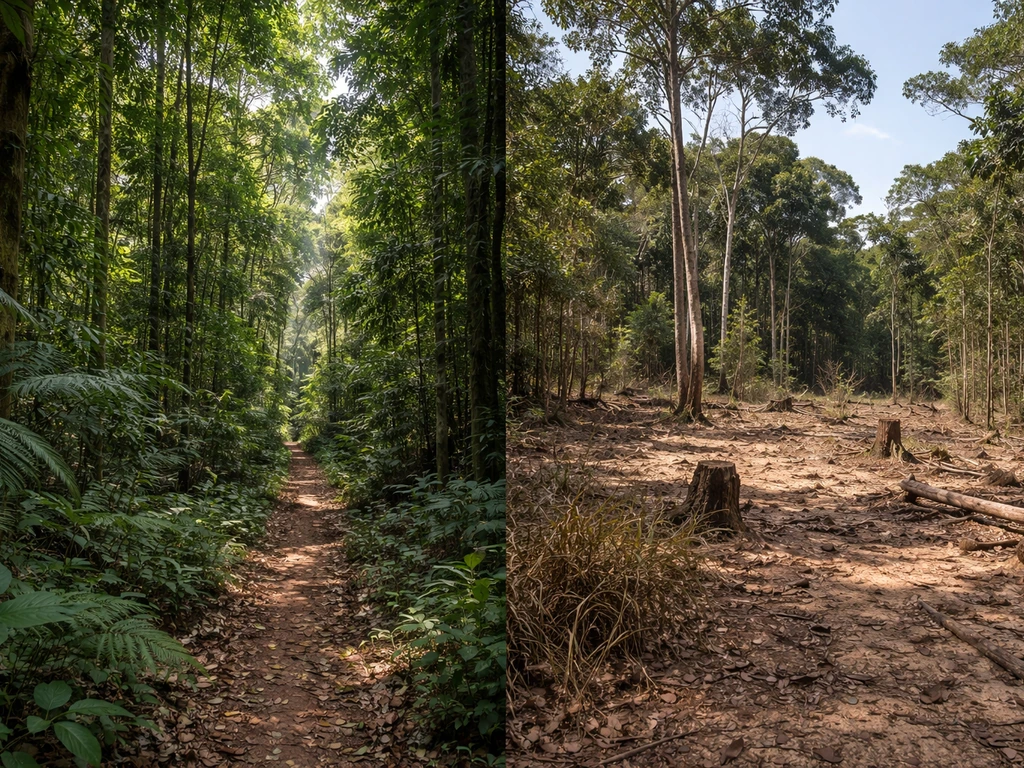
The Amazonian umbrellabird holds a Least Concern designation globally, which sounds reassuring until you look more closely. At the local and regional level, the picture is more complicated. Hunting and overtrapping have driven declines across parts of its range, particularly in the eastern sections. Its apparent stability on a global list reflects the sheer size of the Amazon basin, not that individual populations are all doing well.
The other two species carry a Vulnerable classification, which signals a real and documented shrinkage of range. The long-wattled umbrellabird has lost significant amounts of the Pacific lowland forest in western Colombia and Ecuador to agriculture, logging, and development. A REDI (CEDI-A) document on the nesting biology of the female long-wattled Umbrellabird (Cephalopterus penduliger) in north-western Ecuador reports a nest found in secondary forest near Mindo at about 1,600 m nest findings for a female long-wattled umbrellabird in north-western Ecuador. This is one of the most deforested regions in South America, and the long-wattled umbrellabird's restricted range makes it especially sensitive to habitat loss compared to the Amazonian species, which has far more forest to absorb pressure.
Habitat fragmentation is the underlying problem for all three species. Umbrellabirds need large, connected forest blocks because of their lekking behavior and their reliance on canopy fruit sources across a seasonal cycle. When forest is broken into isolated patches, birds cannot reach traditional lek sites or fruiting areas, breeding success drops, and effective range shrinks even when the species technically still occurs in a region. The range you see on a distribution map today is smaller and patchier than it was a century ago, and that trend is continuing for the more threatened species.
How to confirm you're looking at the right umbrella bird
If you have spotted a large, all-black bird with a crest in Amazonian lowland forest, a few field marks will lock in the identification. The Amazonian umbrellabird's crest fans forward and downward, giving that unmistakable umbrella silhouette over the bill. The wattle on C. ornatus is short, triangular, and bare on its rear surface, which is a key detail that separates it from the long-wattled umbrellabird (C. penduliger), whose wattle is dramatically elongated and feathered along much of its length. The bare-necked umbrellabird (C. glabricollis) has a patch of bare red skin on the throat, making it visually distinct if you are anywhere near Costa Rica or Panama.
For location, the simplest cross-check is eBird's species page for Amazonian Umbrellabird (Cephalopterus ornatus). You can filter by country, region, or hotspot and see recent confirmed sightings with dates, which tells you not just whether the bird occurs somewhere but whether it has been seen there recently and in what season. The U.S. Fish and Wildlife Service also maintains a species profile for C. ornatus that is worth bookmarking as a quick reference for range and identification details.
- Confirm the forest type and elevation: lowland tropical forest below 750 m is your target zone for C. ornatus
- Check the wattle: short and triangular means Amazonian; long and feathered means long-wattled; bare red throat patch means bare-necked
- Use eBird to filter recent sightings by country or region and identify known hotspots and lek sites
- Search for the scientific name Cephalopterus ornatus rather than just "umbrella bird" to avoid the Black Heron confusion
- For the long-wattled or bare-necked species, narrow your search to western Colombia/Ecuador (Pacific slope) or Caribbean-slope forests of Costa Rica and Panama respectively
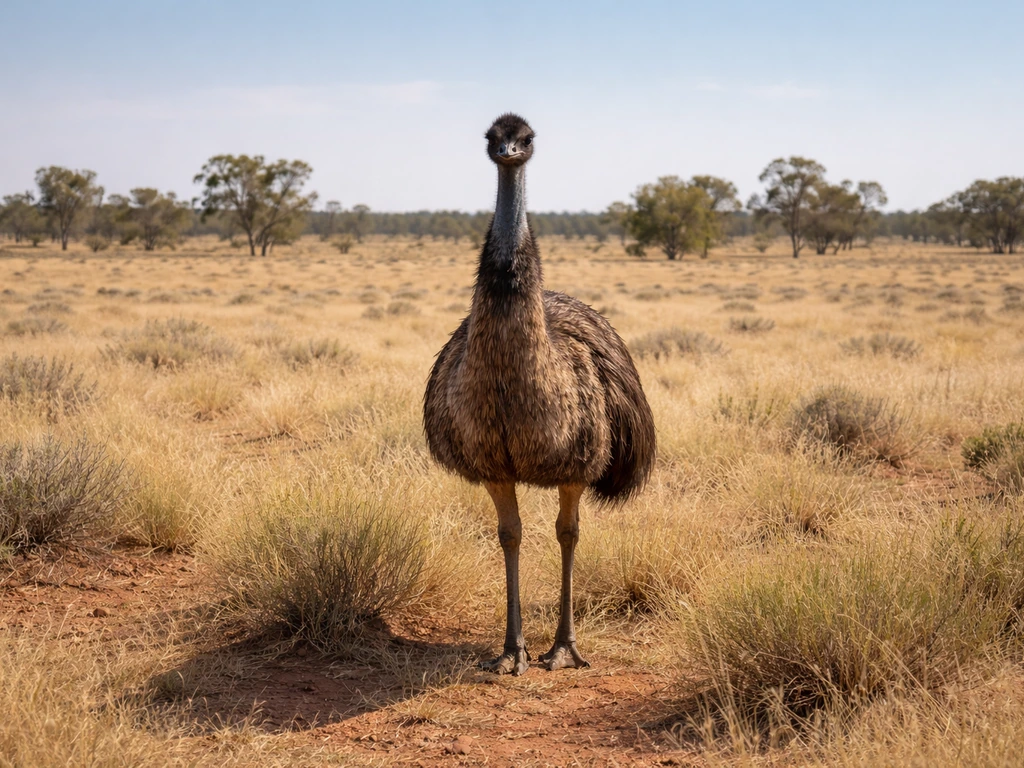
If you are already exploring other large, distinctive birds of the Americas on this site, comparing where umbrella birds live to species like the emu or the osprey gives you a sense of how dramatically different range and habitat requirements can be across bird families. And no, limu emu is not a real bird name in the way umbrella birds are; it is usually just a playful phrase rather than an actual species.
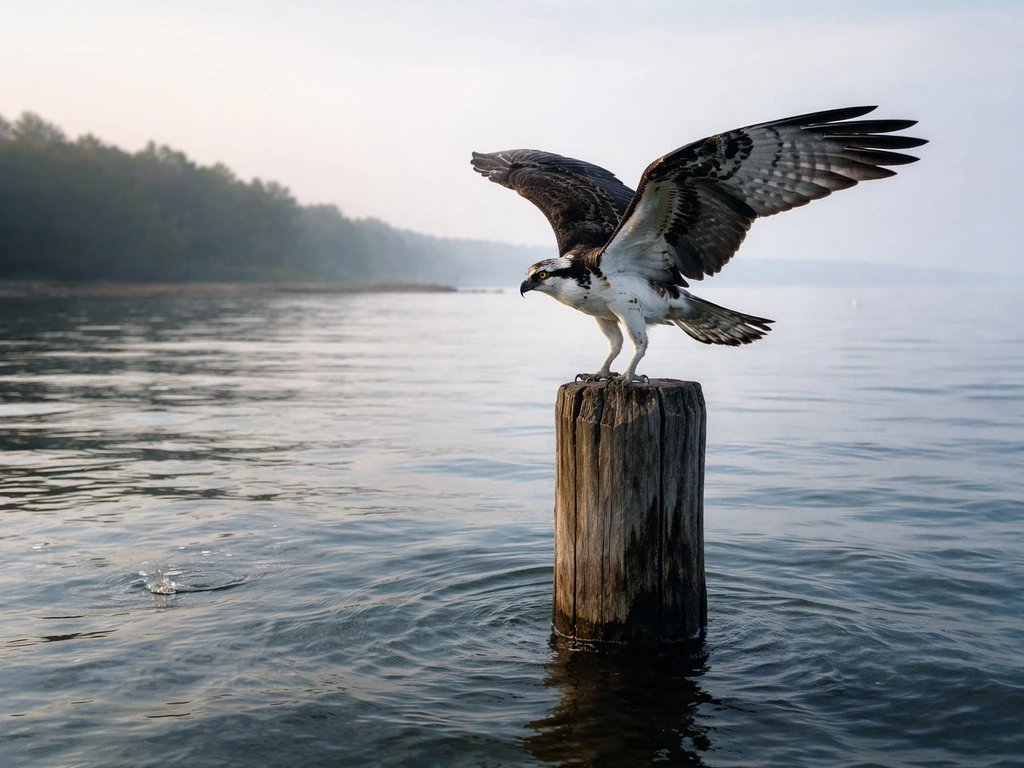
The osprey is found along coastlines, lakes, and rivers, especially where there’s abundant fish to hunt where the osprey lives. If you are wondering where does the emu bird live, those habitat needs are quite different from umbrella birds in the tropics. The umbrella bird's world is a narrow vertical strip of wet tropical canopy, as specialized as any bird you will find.
Learn more about where the emu bird is found and how its range shapes its habitat needs. That specialization is part of what makes habitat loss so consequential for its future range.
FAQ
If I’m trying to pinpoint where umbrella birds live on a map, what elevation and forest type should I focus on?
Most umbrella-bird sightings come from tropical lowland forest, typically below about 750 meters for the Amazonian umbrellabird. If you are checking a location in the Andes or adjacent foothills, prioritize humid, forested slopes and river-edge habitat over higher, cooler zones where these birds are less likely to occur.
Why do I keep finding “suitable forest” but not seeing umbrella birds?
Look for them near forest canopy where light filters through, especially along river edges, clearings, and areas with established fruiting trees. They spend much more time in the upper canopy than in the understory, so a “suitable forest” on the ground can still be a poor place to search if the canopy is broken or you cannot reach sight lines.
Are umbrella birds easier to find in certain seasons, or is it random year-round?
Because they are lekking, the best chance of detection during the breeding season is around known display areas. Outside the breeding period, they may be present but less predictable, since individuals can shift more widely through the canopy while feeding on fruit and insects.
Do umbrella birds occur throughout their whole listed range, or are they clumped?
Presence on a general range map does not mean the birds are evenly distributed. Even in large forest blocks, some species may only use a fraction of what looks appropriate, concentrating around lek sites and productive feeding spots. For field planning, focus on areas near repeated call locations or historically recorded display sites rather than scanning uniformly.
Could the “umbrella bird” name mean a different species in other countries?
For identification and location confidence, do not rely on the name alone. In Africa, the black heron is sometimes called an “umbrella bird,” but it is unrelated and lives in different habitats. If your observation is in South or Central America and the bird shows the umbrella-like crest behavior in canopy, that fits the cotinga genus described in the article.
How does habitat fragmentation change where umbrella birds can actually live?
Yes, fragmentation matters. Even if a forest patch remains “large,” isolated patches can block access to traditional lek sites and seasonal fruiting areas, effectively shrinking the usable habitat. If you are comparing sites, prioritize connected forest corridors or continuous lowland forest rather than isolated remnants.
Which umbrella bird species is most likely where I am (by country or side of the Andes)?
The article describes three Cephalopterus species with different geographic emphases. If you are in Costa Rica or Panama, you should expect the bare-necked species in Caribbean-slope humid forests, while the long-wattled species is tied to Pacific lowlands and foothills in western Colombia and Ecuador.
What’s the best way to find umbrella birds if they’re secretive, especially in dense canopy?
Umbrellabirds are often detected by sound before sight. A deep booming display call in the breeding season is a strong cue to look up and spend time scanning the upper canopy near river edges or clearings where display activity concentrates.
How can I confirm whether umbrella birds still live in a specific place, not just historically?
If you want to verify whether they have been reported recently, use recent checklists that include dates and localities, then narrow to your country and habitat type. Recent seasonal sightings are more useful for planning than older records, especially because deforestation and fragmentation can change local occurrence over time.