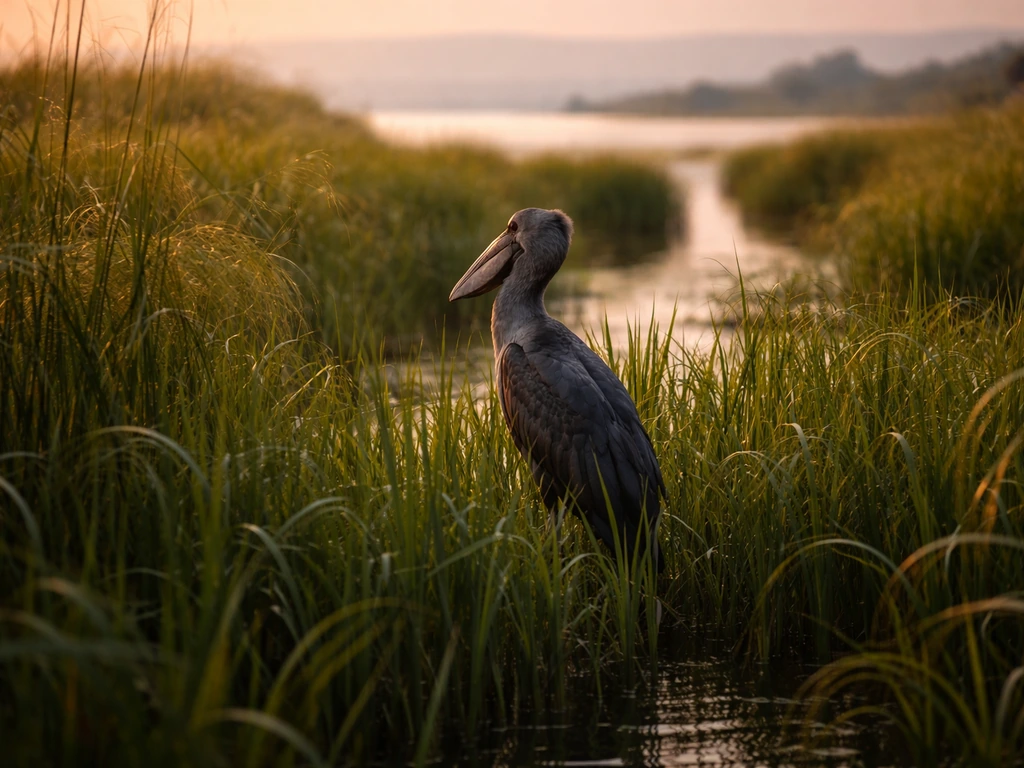
As of May 2026, the Spix's Macaw (Cyanopsitta spixii) and the Regent Honeyeater (Anthochaera phrygia) are among the most credible answers, but the bird with the strongest claim to the #1 spot right now is the Spix's Macaw. With fewer than 300 individuals alive (all in managed breeding programs, none confirmed in the wild), it sits at the absolute edge of existence. That said, depending on how you define 'rarest,' the answer can shift, and a handful of other species make a legitimate case for the title. Here is what the evidence actually says.
What Is the Number 1 Rarest Bird in the World?

Maya Hennessy
17 May 2026
What 'rarest' can mean (and why the #1 answer varies)

The word 'rarest' is doing a lot of heavy lifting in this question. When conservation scientists talk about rarity, they are usually measuring one of several different things, and switching between them changes the answer completely.
- Smallest known population: Total number of mature individuals alive right now, wild or captive.
- Highest IUCN threat category: Critically Endangered (CR) is the top tier before Extinct in the Wild (EW) and Extinct (EX). Some species also carry a CR(PE) flag, meaning 'Possibly Extinct,' for taxa that are likely gone but not yet confirmed.
- Most restricted range: A bird confined to a single small island or forest patch with no other populations anywhere.
- Rarest by observation: Species seen so infrequently that fewer than a handful of confirmed sightings exist in the scientific record.
- Most endangered globally vs. regionally: A bird can be the rarest species in Florida or Uganda while being relatively secure elsewhere in its range.
BirdLife International, which acts as the official IUCN Red List authority for birds, assesses species across all these dimensions: population size and trend, geographic distribution, range fragmentation, and rate of decline. The formal IUCN criteria (labeled A through E) each capture a different face of extinction risk.
IUCN Red List threatened categories are assigned based on one or more of five criteria (A, E), including criteria that incorporate very small populations (Criterion D) and small populations with decline (Criterion C) formal IUCN criteria (labeled A through E).
[Criterion D, for example, flags very small population sizes directly, while Criterion C captures small populations that are also declining. ](https://portals. iucn. org/library/sites/library/files/documents/RL-2001-001-2nd.
pdf) Because of this, a bird with 50 wild individuals in stable habitat may rank differently than a bird with 300 individuals in a captive program but zero confirmed in the wild. 'Rarest' in everyday conversation and 'most endangered' in scientific literature do not always point to the same bird.
The most likely #1 rarest bird today (and the best evidence)
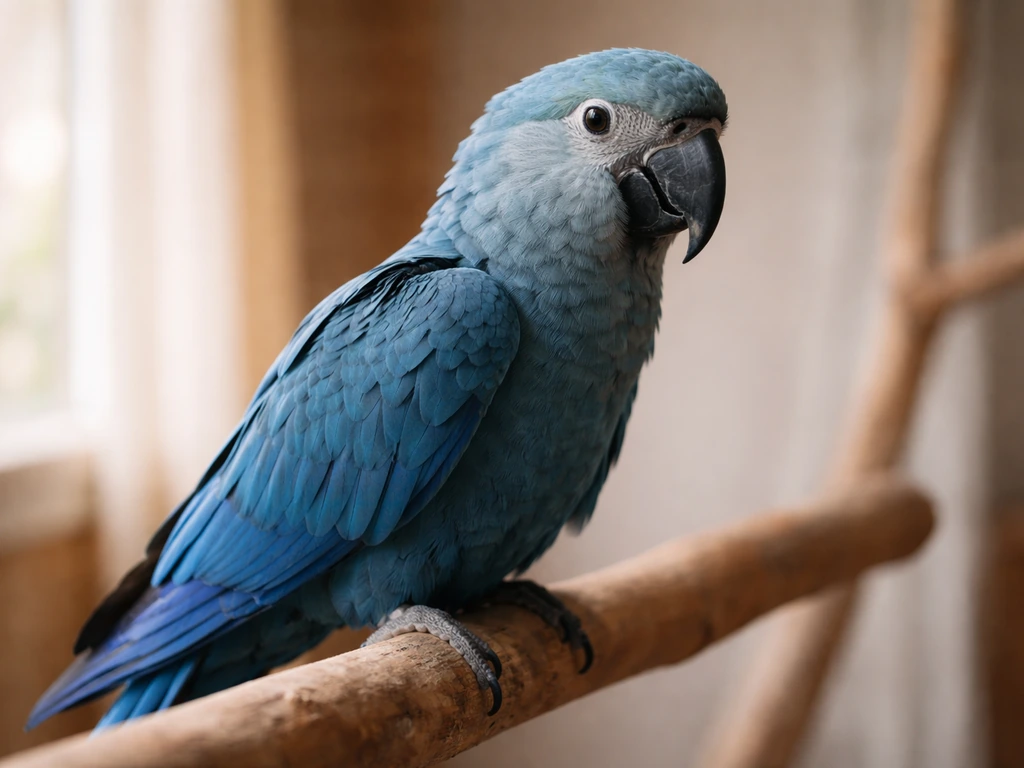
The Spix's Macaw is the most defensible answer for 2026. This small, blue parrot from Brazil was declared Extinct in the Wild in 2000 after the last known wild bird disappeared. What keeps it from being listed as fully Extinct on the IUCN Red List is a managed captive population, which has grown to roughly 250 to 300 birds through coordinated international breeding programs. A reintroduction effort to Caatinga scrub forest in Brazil's Bahia state began in 2022, but confirmed wild establishment is still unverified as of this writing. That combination of zero confirmed wild birds and a tiny managed population with uncertain reintroduction outcomes puts the Spix's Macaw in a uniquely precarious position.
If you want a bird with a confirmed wild population but an equally alarming number, the Regent Honeyeater is a strong contender. Surveys from the last few years estimate fewer than 400 mature individuals remaining in the wild across southeastern Australia, a number low enough that researchers have documented the birds losing their own songs due to lack of exposure to other members of their species. That behavioral collapse is a marker of just how isolated and fragmented these birds have become.
A third candidate worth naming outright is the Strigops habroptilus, better known as the Kakapo, the flightless nocturnal parrot of New Zealand. As of 2025, the total known population sits at around 250 birds, all of them individually named and monitored on predator-free island sanctuaries. The Kakapo is arguably the most intensively managed wild bird on Earth, with every individual tracked by transmitter.
Why that bird is rare: habitat, threats, and population reality
The Spix's Macaw: a case study in cascading collapse
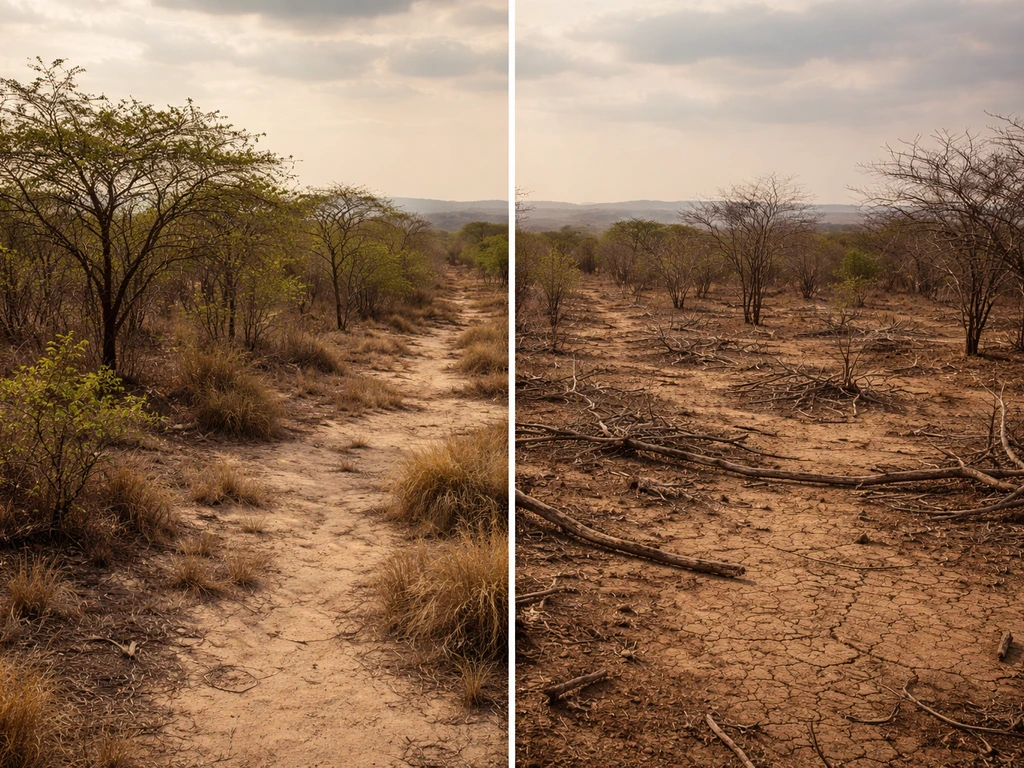
The Spix's Macaw is a textbook example of a species driven to the brink by multiple converging threats rather than any single cause. Its original habitat, the Caatinga dry forest of northeastern Brazil, was cleared extensively for agriculture and cattle ranching through the 20th century. The bird had an extremely specialized diet and nesting dependency on one tree species, the Caraiba tree (Tabebuia aurea), which made it especially vulnerable when that habitat was fragmented.
Illegal trapping for the exotic pet trade in the 1970s and 1980s then removed most of the remaining wild birds before protections could take hold. By the 1990s, a single wild male was the only confirmed individual left, and he was pairing with a Blue-winged Macaw rather than a member of his own species. When he disappeared in October 2000, the wild population was effectively gone.
The captive population that exists today traces back to birds held in private collections worldwide. That lineage, while valuable, is also genetically narrow, and the reintroduction program must account for reduced genetic diversity alongside habitat restoration. The Caatinga itself has suffered from more recent drought stress linked to climate shifts, adding another layer of uncertainty to recovery timelines.
What drives rarity in other top contenders
For the Regent Honeyeater, the story is deforestation of box-ironbark woodland in Victoria and New South Wales, which stripped away the flowering eucalyptus trees the birds depend on for nectar. Loss of habitat connectivity means birds can no longer find mates easily, and populations have fragmented to the point of the song-loss phenomenon mentioned above.
For the Kakapo, the culprit is a familiar one across New Zealand's native birds: introduced predators. Rats, stoats, and cats that arrived with European settlement hunted Kakapo almost to extinction across the main islands. The species also has the slowest reproductive rate of any parrot, breeding only every two to four years during mast fruiting events, which makes recovery painfully slow even under ideal conditions.
Other top candidates people confuse with the #1 spot

Several other species appear regularly in 'rarest bird' searches, and each has a legitimate claim depending on the metric used. Here is a quick comparison of the leading contenders.
| Species | Estimated Population | IUCN Status | Wild or Captive | Primary Threat |
|---|---|---|---|---|
| Spix's Macaw | ~250-300 total | Critically Endangered / Extinct in the Wild | Captive only (reintroduction ongoing) | Habitat loss, illegal trade |
| Kakapo | ~250 known individuals | Critically Endangered | Wild (managed islands) | Introduced predators, slow reproduction |
| Regent Honeyeater | ~400 mature individuals | Critically Endangered | Wild (fragmented) | Habitat loss, behavioral collapse |
| Black-and-white Ruffed Lemur (bird analogy: Jerdon's Courser) | ~50-250 estimated | Critically Endangered | Wild (very restricted) | Habitat disturbance, dam construction |
| Chinese Crested Tern | ~50-100 mature individuals | Critically Endangered | Wild | Egg collection, habitat disturbance |
| Honduran Emerald | <200 estimated | Critically Endangered | Wild (restricted) | Deforestation of dry forest |
The Chinese Crested Tern deserves a special mention because its total wild population may be smaller than the Spix's Macaw's captive count, with estimates sometimes as low as 50 mature individuals. The difference is that no captive safety net exists for the tern, making its wild situation arguably more immediately fragile. Depending on whether you weight 'rarest' toward total numbers or toward wild-only numbers, the tern could claim the top spot.
Jerdon's Courser from India is another species that keeps appearing in these discussions because confirmed sightings are extraordinarily rare, not necessarily because the total population is the smallest, but because the bird is so cryptic and nocturnal that scientific surveys struggle to count it reliably. Rarity by observation is a real phenomenon, and it is worth distinguishing from rarity by population.
How to verify 'rarest' fast using trusted conservation sources
If you want to check the current status of any bird yourself rather than taking any single article's word for it, the process is straightforward. These are the three authoritative sources to go to in order.
- BirdLife International DataZone (datazone.birdlife.org): Start here. BirdLife is the designated Red List authority for all bird species globally. Search by common or scientific name and you will get the current threat category, population estimate, population trend, and the key threats driving the assessment. The DataZone also shows the criteria (A–E) used to assign the category, which tells you exactly why the bird is ranked where it is.
- IUCN Red List (iucnredlist.org): Cross-reference anything from BirdLife here. The IUCN site shows the full assessment history, including previous categories and the date of the most recent assessment. Look for the CR(PE) flag if you are investigating a species that may already be gone, and check 'Last Seen' dates for context.
- Species-specific recovery program reports: For birds like the Kakapo, the New Zealand Department of Conservation publishes annual recovery reports with exact individual counts. For the Spix's Macaw, the ACTP (Association for the Conservation of Threatened Parrots) and the Brazilian Chico Mendes Institute publish reintroduction updates. These primary sources often contain the most current numbers, sometimes more recent than the Red List assessment.
One thing worth understanding when reading these sources: population estimates for cryptic, rare species are almost always ranges with significant uncertainty. When BirdLife says '50-249 mature individuals,' that is not imprecision born of carelessness. It reflects real survey difficulty. A bird with 50 confirmed individuals and a bird with 249 individuals are in very different situations, but the data often cannot resolve the difference. Treat population numbers as informed estimates, not census counts.
Also pay attention to the distinction between 'mature individuals' and total population. Conservation science uses mature individuals (breeding adults) because they represent the actual reproductive potential of the species. A population of 400 total birds might include 150 juveniles, giving an effective breeding population of 250, which is what the Red List number reflects.
What conservation is doing right now (recovery and updates)
Spix's Macaw: reintroduction underway
The most significant recent development for the Spix's Macaw is the active reintroduction program in Brazil's Bahia state. Beginning in 2022, birds from the captive program were released into restored Caatinga habitat near the town of Curaca, which is the species' original range. The program involves habitat restoration, monitoring by GPS transmitters, and supplemental feeding during the adjustment period. Early results showed some birds surviving initial releases, but confirming true wild establishment, meaning birds that are finding natural food, avoiding predators, and potentially breeding without human support, is a longer-term goal that has not yet been fully achieved as of 2026.
Kakapo: intensive individual management

The Kakapo Recovery Programme in New Zealand represents one of the most resource-intensive conservation efforts for any single bird species anywhere. Every bird is individually named, fitted with a transmitter, and monitored through a 24/7 remote sensing network on three predator-free island sanctuaries: Codfish (Whenua Hou), Little Barrier (Hauturu), and Anchor islands. Supplemental feeding is provided during non-mast years to support health. Genetic management is also active, with careful pairing decisions made to maximize diversity across the small population. The population has grown from 51 individuals in 1995 to around 250 in 2025, which represents a genuine conservation success, though the species remains critically endangered.
Regent Honeyeater: captive breeding and song recovery
Taronga Zoo and other Australian institutions maintain a captive breeding program for the Regent Honeyeater, with birds regularly released into restored woodland habitats. One of the most unusual conservation interventions involves teaching captive-raised birds the correct Regent Honeyeater song using recordings, so that released birds can communicate and attract mates in the wild. This kind of cultural conservation is a relatively new field, and the Regent Honeyeater has become one of its flagship cases.
What to take away: how rankings change over time
The #1 rarest bird is not a permanent title. If you are also curious about longevity, you can compare this with a list of the top 10 oldest bird species. Rankings shift as populations recover, as new surveys produce better counts, and as other species decline faster than expected. The Kakapo's population tripling over three decades is proof that conservation intervention genuinely moves the needle. At the same time, a species can slide down the Red List toward extinction faster than anyone anticipated if a disease outbreak, a single severe cyclone, or a predator breach hits an island sanctuary.
IUCN Red List assessments for birds are updated on a rolling basis, and BirdLife International reassesses species regularly as new data comes in. The assessment you read today may be replaced by a new one within 12 to 24 months if a recovery program publishes new survey results. That is not a flaw in the system. It is the system working correctly, updating its picture of reality as the evidence changes.
What this means practically is that if you are researching this question in 2026, the Spix's Macaw and Kakapo are the most defensible answers, but you should check the BirdLife DataZone for the latest assessment before making any claim in writing or a presentation. If the Spix's Macaw reintroduction succeeds and a confirmed wild population is established, its status could be formally downlisted from Extinct in the Wild back to Critically Endangered, which would change how it compares to other candidates. Conversely, if a disease sweeps through the Kakapo island sanctuaries, that population could collapse faster than any previous extinction scenario.
The broader picture is one of constant flux at the edge of extinction. The birds sitting at the very bottom of the population charts are there because of specific, often preventable, human-caused pressures: land clearance, introduced predators, illegal trade, and climate-driven habitat change. If you are specifically looking for dangerous birds, the same species that face extinction risk often highlight the harsh pressures that threaten their survival.
That means the ranking of 'rarest' is partly a reflection of which conservation battles have been won or lost recently. If questions like what rare birds survive in specific regions interest you, regional rarity is its own fascinating thread, distinct from global rankings but equally revealing about how localized pressures shape species survival.
If you are specifically asking about a rare bird in Florida, you will want to apply the same idea but focus on regional species and local habitat pressures rare birds survive in specific regions. The question “what rare bird can be found in Uganda” often points to how local, regional rarity differs from the global rankings discussed above rare birds survive in specific regions.
The most useful thing to walk away with is this: when someone online gives you a single definitive answer to 'the rarest bird in the world,' ask which metric they used and when the data was collected. If they cannot answer both questions, the claim is incomplete. The Spix's Macaw is the best-supported answer for today, but treat that as a living answer, not a fixed fact.
FAQ
Why does the answer to “what is the number 1 rarest bird in the world” change depending on the source?
Because different references use different rarity metrics (total individuals, breeding adults, wild-only counts, and extinction-risk criteria). A bird can look “rarest” by total numbers, yet not top the ranking if you restrict to wild populations or if population trends differ.
Is “rarest bird” the same thing as “most endangered bird” or “on the brink of extinction”?
No. “Rarest” is about low numbers and/or limited distribution, while “most endangered” usually prioritizes extinction risk based on decline rates, geographic range, and fragmentation. Two birds with similar counts can rank differently if one population is declining faster or is more geographically restricted.
If a bird has zero wild individuals, can it still be considered the rarest bird?
It can, depending on the definition. Some rankings treat “rarest” as the species with the smallest effective population overall, even if all individuals are in captivity. If you define rarity as wild birds only, then a reintroduced or captive-only species may be excluded.
What does “mature individuals” mean, and why does it matter for rarity rankings?
It refers to breeding-capable adults. Conservation assessments often use it because it better reflects reproductive potential. A species can have a higher total count but still have a very small breeding population, which makes it appear “rarer” in conservation terms.
How should I interpret population numbers that come as ranges, like “50 to 249 mature individuals”?
Treat them as confidence bounds caused by survey difficulty, not as rough guesses. For cryptic or nocturnal birds, the true number may be closer to either end, and that uncertainty can swap the ranking versus another species.
Can a bird with fewer total birds beat one with more birds in the “#1 rarest” claim?
Yes, if the definition weights wild-only numbers or extinction criteria more heavily. For example, a species might have fewer individuals but be stable, while another has more individuals but is rapidly declining, changing how “rarest” is interpreted in risk terms.
Does captivity always make a species “less rare” or “less threatened”?
Not automatically. Captive populations can represent the only remaining reservoir, but they may be genetically narrow and vulnerable to program collapse, disease, or breeding failures. The wild situation also matters separately, so captivity can improve survival odds without removing rarity concerns.
How do I check the most up-to-date status if I want the real #1 answer in 2026?
Use the latest BirdLife DataZone or the current IUCN assessment date for the species you’re comparing. Rankings can shift within 12 to 24 months due to new surveys, so “latest assessment” is more important than older articles or social posts.
If reintroduction succeeds, will the “rarest bird” ranking automatically update?
It should, but it depends on whether managers can confirm true wild establishment, like natural foraging, predator avoidance, and successful breeding without ongoing support. Until that evidence is strong, assessments may still treat the population as not fully re-established.
What’s the biggest mistake people make when they share “the rarest bird” online?
They give a single definitive bird name without stating the metric used or the assessment timeframe. A correct answer should specify whether the ranking is based on wild-only numbers, total individuals, mature breeding adults, or an extinction-risk framework.
Are there cases where a bird is “rare by observation” rather than “rare by population”?
Yes. Some birds are extremely hard to detect due to behavior (nocturnal, secretive) or survey limitations. That can produce very few sightings even when total population is not as low as people assume, so rarity by detection is not always rarity by population.