No, a dodo bird cannot kill you. Not today, not ever again. The dodo (Raphus cucullatus) has been extinct since around 1690, with the last confirmed sighting recorded in 1662 off the coast of Mauritius. There are no living dodos anywhere on Earth, so there is zero physical risk of being attacked, injured, or killed by one. If you're asking because you're curious about what a dodo would have been like in person, or because you're near a similar flightless bird right now, keep reading. Both questions have genuinely useful answers.
Can a Dodo Bird Kill You? Myth, Reality, and Safety Tips

Maya Hennessy
1 May 2026
Why people keep asking this
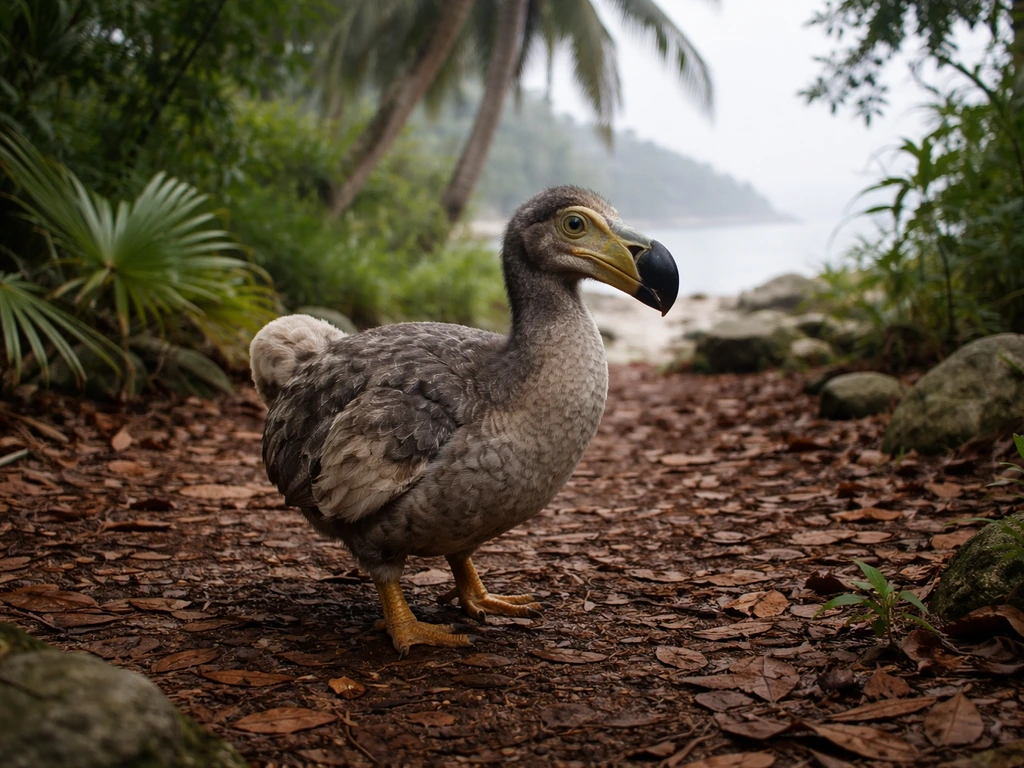
The question comes up more than you'd think, and it's not a silly one. Some people also wonder whether a dodo is a dinosaur, but it is actually a flightless bird is a dodo bird a dinosaur. Pop culture has done a lot of work distorting what the dodo actually was.
So, if you are wondering whether the dodo bird was real, the evidence points to a real extinct species rather than a fictional creature what the dodo actually was. In movies, games, and cartoons, the dodo swings between two extremes: either a bumbling, harmless fool that practically walked into pots, or an oversized, aggressive creature with a menacing beak. Neither version is accurate.
The myth of the harmless idiot dodo is probably the more famous one, but the internet has also fueled curiosity about whether the dodo's large hooked beak could have made it dangerous.
There's also genuine confusion around how we know what we know about dodos. Because the species went extinct before modern scientific documentation, almost everything we understand about dodo behavior, size, and ecology comes from subfossil remains, bone histology, and accounts written by Dutch sailors who weren't exactly trained naturalists. A 2011 review published by MDPI directly examined how misunderstandings and name confusion have distorted dodo accounts over centuries. In short: there's a lot of noise in the historical record, and that uncertainty feeds speculation.
It's also worth noting that questions about whether the dodo was dangerous to humans are closely related to other dodo myths, like whether it could fly or how smart it actually was. Those questions share the same root: we're filling in gaps with imagination because the real animal is gone.
What dodos were actually like
Size and physical traits
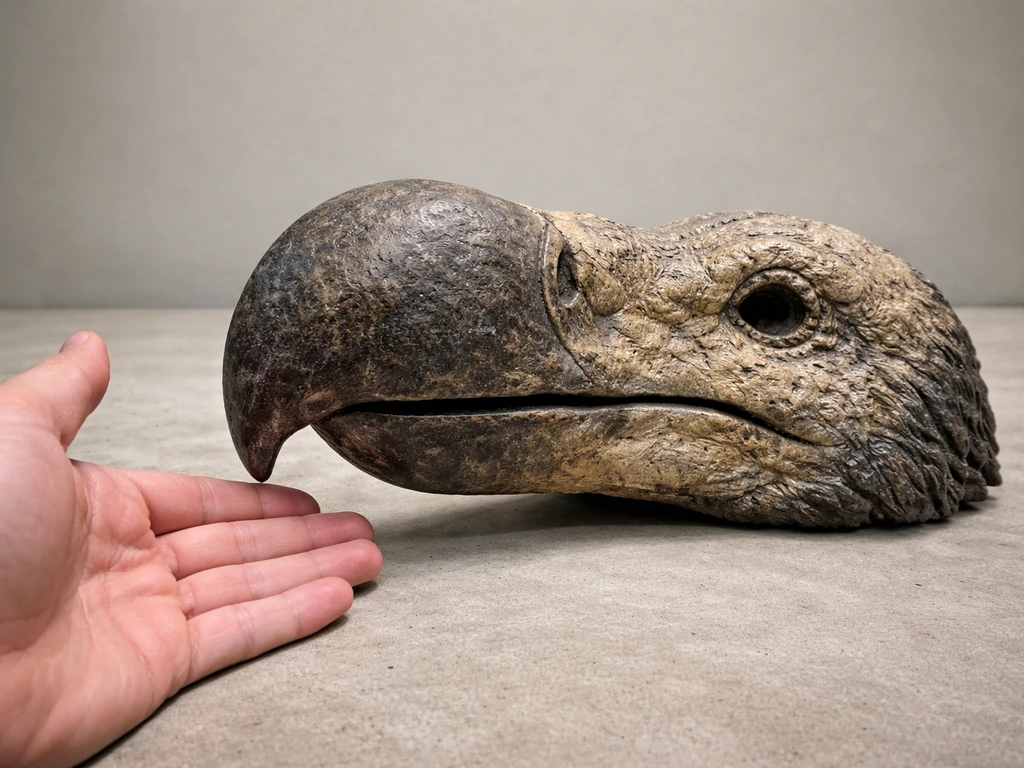
Dodos were large birds. Exactly how large is still debated among researchers because body mass estimates vary significantly depending on which skeletal metrics you use. A 2016 peer-reviewed study in PeerJ used the largest known sample of dodo bones to date and concluded the bird was neither as slim as some early reconstructions suggested nor as rotund as the classic chubby caricature. Most reasonable estimates place adult dodos somewhere in the range of 10 to 18 kilograms (roughly 22 to 40 pounds), which puts them in the size class of a large turkey or a small swan. They stood about a meter tall.
Their most distinctive feature was a large, hooked beak, proportionally substantial compared to the rest of the body. Their wings were tiny and non-functional for flight. They were ground-nesting birds, living entirely on the island of Mauritius in the Indian Ocean, where they evolved in the absence of natural predators. That last point is critical for understanding their behavior.
Behavior and temperament
Because dodos evolved on an island with no native mammalian predators, they had no instinct to flee from threats the way most mainland animals do. Unlike mammals, dodos are birds, not mammals. Dutch sailors who encountered them in the 1600s noted they were easy to approach and kill. This wasn't stupidity, it was the result of living for millennia in an environment where caution around large animals simply wasn't necessary. Bone histology research published in Scientific Reports in 2017 reconstructed dodo life history from subfossil remains, including breeding season timing, but found nothing to suggest the dodo was an aggressive or territorial animal by nature.
Could a dodo have injured a person with its hooked beak if cornered or defending a nest? Possibly. Any bird of that size and beak strength could inflict a painful wound if it felt threatened. If you want to compare that to the broader behavior question, read more about how did the dodo bird defend itself defending itself. But there is no historical or scientific evidence that dodos were aggressive toward humans. The accounts that exist describe them as relatively docile, easy to capture, and not inclined to attack. The realistic risk profile was: low aggression, some potential for defensive biting if harassed, no lethal threat.
The hypothetical: what if a dodo existed today?
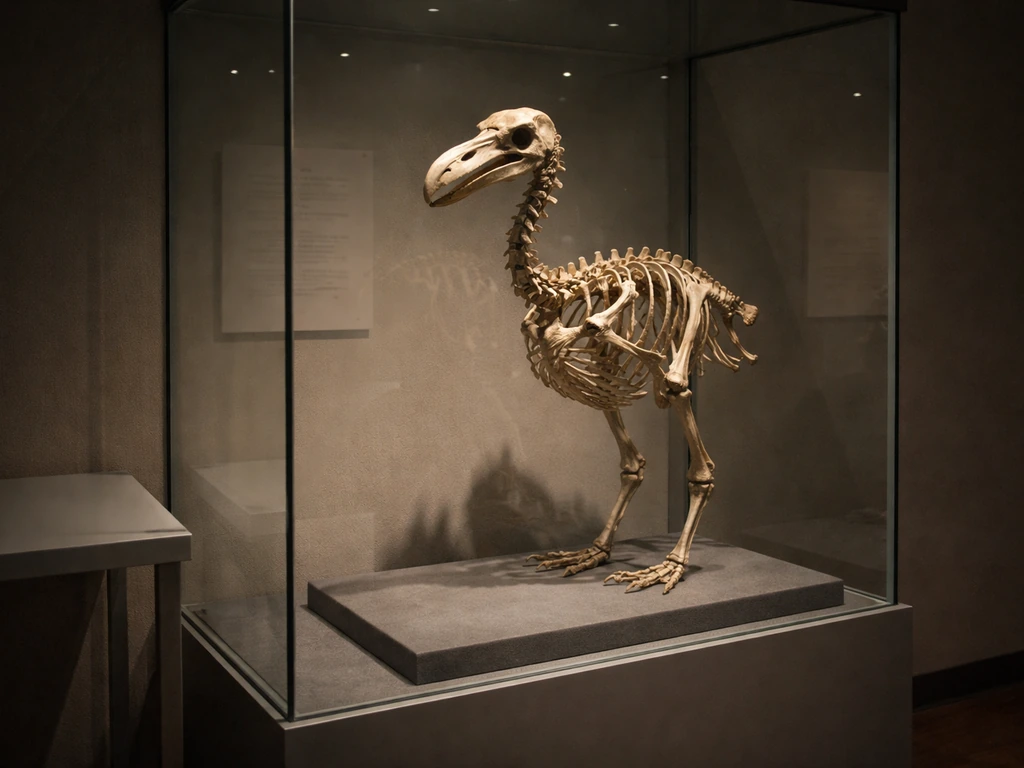
Let's say, hypothetically, de-extinction technology brought back a living dodo tomorrow. Could it kill you? Almost certainly not. A bird in the 10 to 18 kilogram range with no natural weapons beyond its beak, no talons evolved for attack, and a behavioral profile built around docility is not a dangerous animal in any meaningful sense. It would not hunt you. It would not chase you. At worst, an agitated dodo might bite or peck hard enough to break skin, which would be unpleasant but not life-threatening for a healthy adult.
The only scenario in which a museum dodo specimen might pose any physical risk is through its preservation. Historical taxidermy specimens have been documented to contain arsenic compounds from old preservation techniques, and blank" rel="noopener noreferrer">natural history collections can also involve chemical preservatives in fluid-stored specimens. The U.S. National Park Service recommends using gloves when handling such collections and minimizing direct contact. So if you're ever lucky enough to be near a dodo specimen in a museum, the actual risk is trace chemical residue, not a beak.
If you're actually near a flightless bird right now
If the reason you searched this question is because you're near a large flightless bird and want to know how dangerous it actually is, that's a very different situation. Dodos are gone, but their living relatives in terms of ecological role and body type, birds like cassowaries and emus, are very much present and do require real caution.
Cassowaries: the bird that actually can kill you
Cassowaries are the gold standard for dangerous flightless birds. A peer-reviewed study in the Journal of Zoology documented attacks on both humans and domestic animals by southern cassowaries, including serious injuries and fatalities. National Geographic and Guinness World Records both cite cassowaries as responsible for two confirmed human deaths in recorded history: one in 1926 and one in Florida in April 2019 involving a captive bird.
Guinness World Records adds that the April 2019 Florida death was the first confirmed human death attributed to a cassowary in 93 years Guinness World Records both cite cassowaries as responsible for two confirmed human deaths in recorded history. The cassowary's weapon is a dagger-like inner claw on each foot, capable of delivering a disemboweling kick.
Crucially, research shows cassowary aggression toward humans is not random. It is almost always linked to humans feeding them, crowding them, or presenting a perceived threat.
Basic safety around large flightless birds
- Keep your distance. Do not approach a cassowary, emu, rhea, or any large flightless bird you encounter in the wild or in a captive setting without proper training.
- Never feed them. Feeding cassowaries in particular is directly linked to increased aggression and is illegal in parts of Australia.
- Back away slowly if one approaches you. Do not run, as this can trigger a chase response.
- Put something between you and the bird if you feel threatened: a tree, a bag, a piece of equipment. Cassowaries will generally not pursue past an obstacle.
- If you are knocked down by a cassowary, curl up to protect your abdomen and vital organs. The dangerous kick targets the midsection.
- Seek medical attention immediately after any attack, even if wounds look minor. Kicks from large birds can cause internal injuries that aren't immediately visible.
- In Australia, report cassowary encounters to local wildlife authorities. The birds are endangered, and tracking human-wildlife contact helps conservation efforts.
Emus are less dangerous but have documented cases of injuries to humans as well. Any bird standing 1.5 to 1.9 meters tall and weighing up to 60 kilograms deserves basic respect and personal space.
What the dodo's extinction actually teaches us
The dodo went extinct because of humans, not because it was dangerous or defenseless in some uniquely catastrophic way. Hunting, habitat destruction, and the introduction of invasive predators and competitors to Mauritius by European settlers collectively wiped out the species. The last confirmed sighting was in 1662, and statistical modeling published in Nature in 2003 suggests the species may have persisted until around 1690 before disappearing entirely.
The downstream consequences of that extinction are still playing out. Research from the Natural History Museum in London found that 400 years after the dodo's disappearance, around 28 percent of native fruits on Mauritius and 7 percent of seeds are now too large for any remaining frugivore to disperse effectively. The ecological role the dodo played, spreading large seeds across the island, is simply gone. Plants evolved around that relationship are now slowly losing their dispersal pathway toward extinction themselves.
The 'dangerous animal' framing around the dodo is worth examining precisely because it gets the story backwards. Dodo intelligence is hard to infer from bones and historical notes, but most evidence points to a bird that was not especially “smart” in the way people imagine dangerous animal. The dodo was not a threat to humans. Humans were the existential threat to the dodo. Fixating on whether the bird could hurt you distracts from the more important question: what happens to an ecosystem when a species like this disappears, and what are we doing to prevent the same pattern from repeating with the endangered flightless birds that are still here?
Cassowaries, kiwis, and kakapos all face the same basic suite of pressures the dodo faced: habitat loss, introduced predators, and human encroachment. The dodo's story is not just a historical curiosity. It is a case study in how quickly an island species can go from thriving to gone, and how long the ripple effects last.
FAQ
Can a dodo bird kill you if you live in a place where it might still exist?
You cannot, because there are no living dodos anywhere. If you ever “see” one in the real world, it is either a tourist prop, a misidentification, or something else entirely, such as a related flightless bird.
I’m near a flightless bird right now, does the dodo story still matter for personal safety?
If you are near a large flightless bird today, the dodo question is less useful than using a safety rule of thumb: give the animal space, avoid feeding, and do not corner it. Dodos are extinct, so real-world risk comes from living relatives like cassowaries and emus.
Could a dead dodo in a museum hurt me?
Yes, but it changes the risk source. Museum specimens can expose you to residues from historical preservatives, so treat them like chemical-handling items: wash hands after viewing, avoid touching fluid-stored specimens, and follow the exhibit’s handling guidance.
If a dodo could bite, why isn’t that considered a real lethal threat?
The key distinction is intent and injury mechanism. A dodo could theoretically bite or peck if physically harassed, but there is no credible evidence of lethal attacks on humans, and dodos did not hunt or chase.
What should I do if I see a cassowary or emu instead of a dodo?
Start with the simplest risk check: if the bird is alive and on mainland habitats or managed areas, treat it like a potentially defensive animal even if it looks docile. For cassowaries, keep your distance and never approach chicks or retreat paths, since agitation and crowding are common triggers for attacks.
Is a large hooked beak enough to make a dodo dangerous?
No. A “dodo would be dangerous because it had a big beak” is a common mistake. The beak can cause painful wounds in a squeeze or peck scenario, but without evolved predatory weapons or chasing behavior, it does not translate into a meaningful killing threat.
What’s the safest way to respond if a large flightless bird approaches me?
In most situations, the safest move is to increase distance rather than try to film closer. Use barriers if available, keep children and pets behind fences, and avoid sudden movements that could be interpreted as threat or crowding.
If de-extinction brought back a dodo tomorrow, could it behave unpredictably enough to be lethal?
No, since the question assumes a living dodo. Even if de-extinction were possible, the most likely direct risk would still come from defensive pecking or biting only when cornered, not from aggressive pursuit, and any higher risk would depend on how the individual was raised and handled.