
The dodo bird was found on one island and one island only: Mauritius, a small volcanic island in the Indian Ocean roughly 1,200 miles off the southeastern coast of Africa. That is the complete answer to the geographic question. The dodo never lived anywhere else in the wild. It was what scientists call an endemic species, meaning its entire natural range was confined to that single location. Everything else about where it was "found" or "discovered" is really a story about when European sailors first stumbled onto Mauritius and started writing things down.
Where Was the Dodo Bird Found? Mauritius and Discovery Timeline

Maya Hennessy
23 Mar 2026
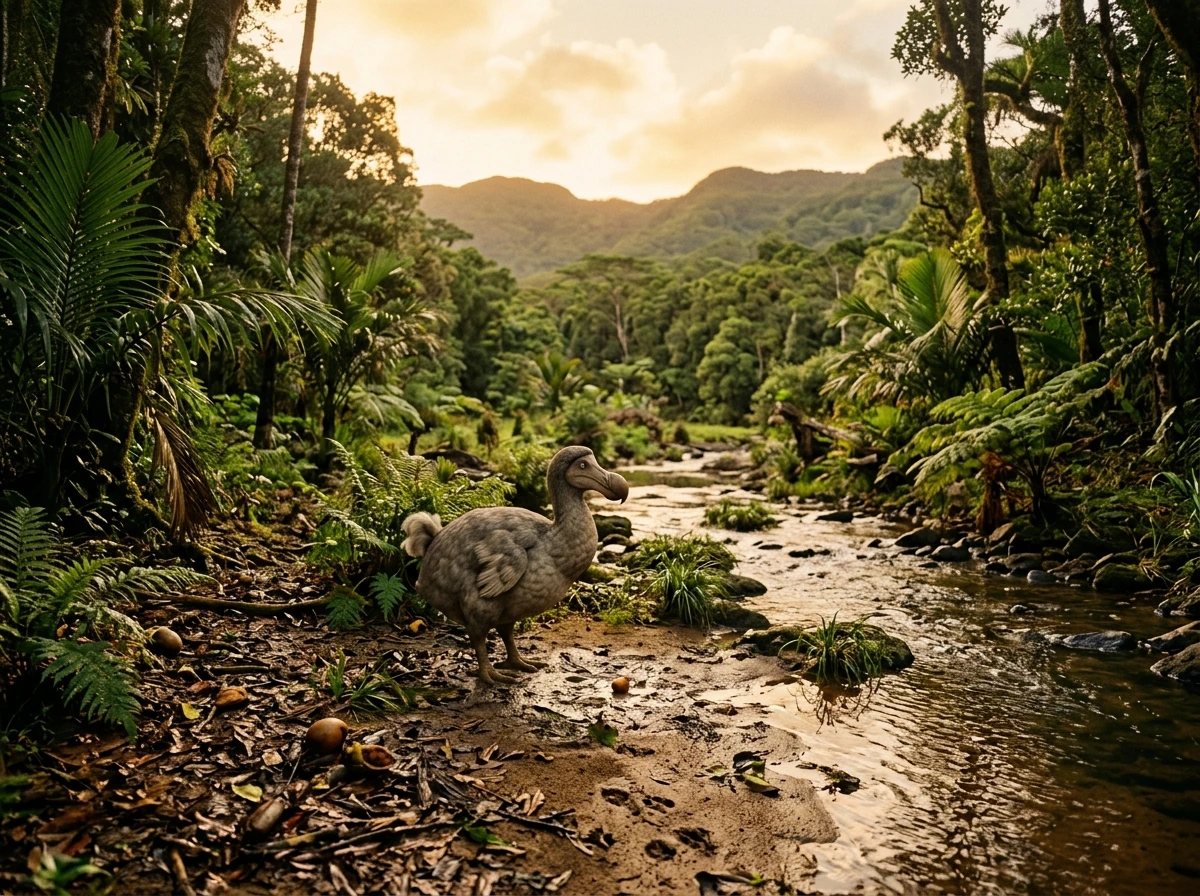
Dodo discovery basics and the first documented records

The earliest credible European accounts of the dodo come from Dutch sailors in 1598. The expedition most closely associated with this first contact is the van Neck and van Warwijck voyage, which stopped at Mauritius and returned with journals describing large, flightless birds that were easy to catch and apparently not afraid of people. One of those early Dutch names for the bird was "walghvoghel," which roughly translates to "disgusting bird" or "tasteless bird" depending on how you interpret it. The name tells you something about how the sailors felt about the meat, but more importantly it anchors the first written record of the dodo's existence firmly in 1598.
A few years later, in 1605, the botanist Carolus Clusius published what became one of the earliest printed European records linking the bird to Mauritius, including an illustration associated with the terms "walch-vogel" and "dodo or dodaers." This is where the name we use today started to solidify in the European scientific and popular imagination. The Natural History Museum in London and the Zoological Journal of the Linnean Society both treat 1598 as the baseline year for European documentation of the species, with subsequent records in the early 1600s filling in more physical and behavioral detail.
Native range: where the dodo actually lived
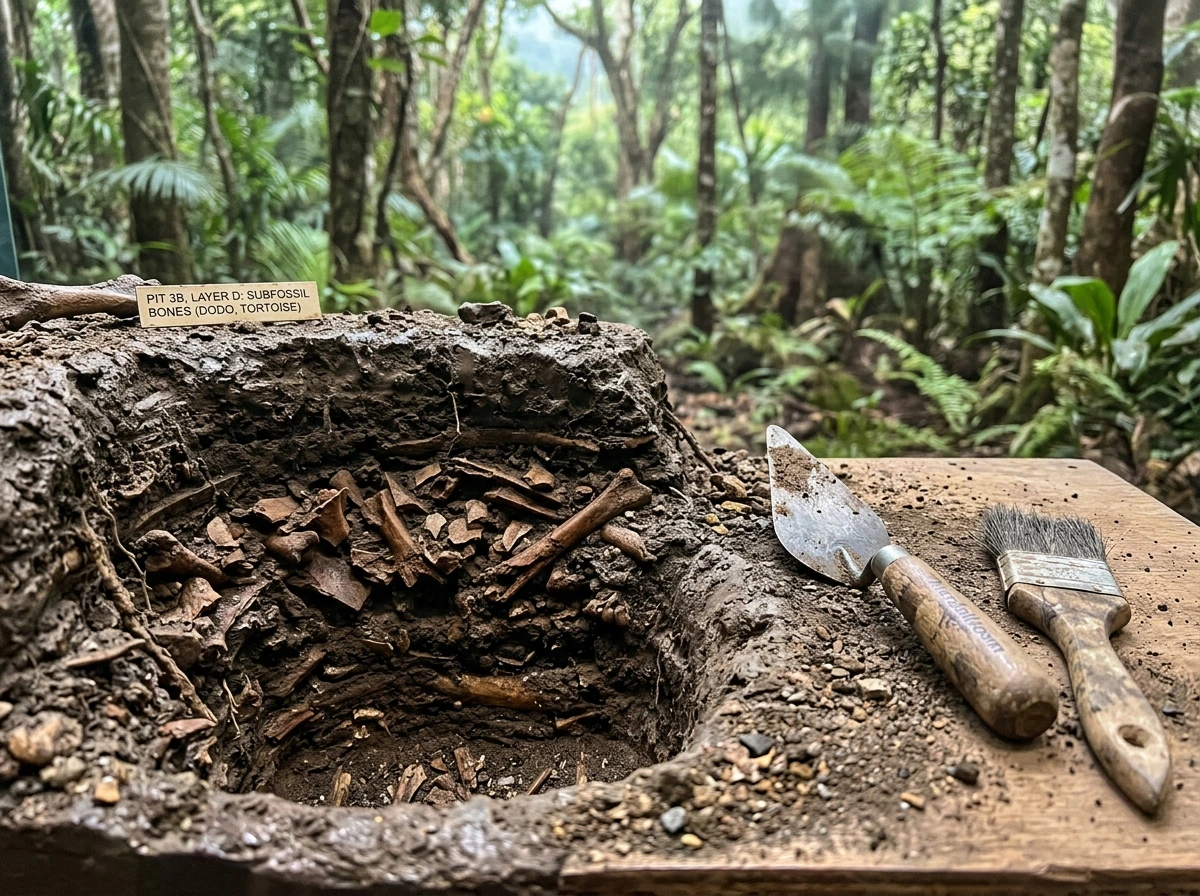
Mauritius sits in the Mascarene Islands group in the southwestern Indian Ocean, and the dodo's habitat was the island's forested lowlands. Subfossil remains, which are bones not yet fully mineralized but old enough to be archaeological evidence, have been found at multiple sites across Mauritius, including the famous Mare aux Songes swamp in the southeast of the island. That swamp has yielded some of the richest concentrations of dodo bones ever found, giving researchers a detailed picture of the bird's physical structure.
The dodo's range did not extend to nearby islands like Réunion or Rodrigues. Those islands had their own related flightless birds: Réunion had what may have been a related species sometimes called the Réunion solitaire, and Rodrigues had the Rodrigues solitaire (Pezophaps solitaria), which was a close relative but a distinct species. If you are researching the broader Mascarene extinction story, those birds are worth knowing about, but they are not the dodo. The dodo is Raphus cucullatus, and Mauritius is its only home.
Origin vs. discovery location: two different questions
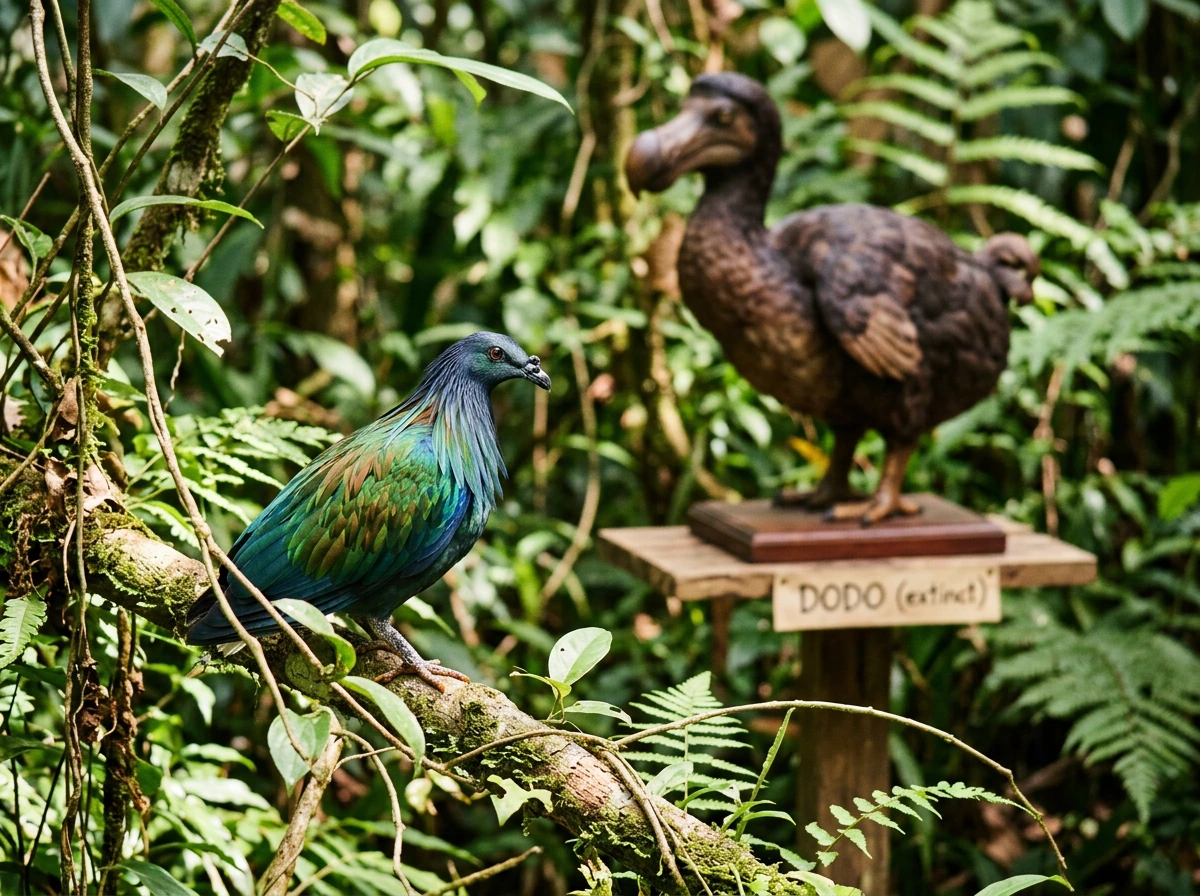
People sometimes ask "where does the dodo come from" and mean something different from "where was it found." The evolutionary origin of the dodo traces back to pigeons. Genetic and anatomical evidence points to the dodo being a highly evolved, flightless descendant of a pigeon ancestor, most likely one that flew from Southeast Asia or South Asia to Mauritius millions of years ago, gradually losing the ability to fly as there were no land predators to threaten it. So the dodo's deep ancestral origin is Asia, but its evolutionary home, the place where it actually lived and became the bird we recognize, is Mauritius. Discovery location and evolutionary origin are two separate things, and it helps to keep them straight. what bird did darwin study
European discovery of the dodo happened on Mauritius in 1598. The dodo's evolutionary story, however, played out over millions of years on that same island. If you were searching for "what happened to the dodo bird", or a quizlet summary of what happened to the dodo, you can start with this timeline and then follow the deeper evidence links. If you want to go deeper on how the dodo evolved from a flying bird into the round, earthbound creature we picture today, that is a fascinating thread covered in more detail in the article on how did the dodo bird evolve.
A quick timeline: from first sighting to last known record
| Year / Period | Event |
|---|---|
| Millions of years ago | Pigeon ancestor colonizes Mauritius; gradual evolution toward flightlessness begins |
| Pre-1598 | Dodo exists on Mauritius with no documented European contact; Malay and Arab sailors may have visited Mauritius earlier but left no detailed dodo records |
| 1598 | Dutch sailors on the van Neck/van Warwijck expedition become the first Europeans to document the dodo on Mauritius; the name "walghvoghel" appears in journals |
| 1605 | Carolus Clusius publishes an early printed European account and illustration, cementing the name "dodo" in scientific literature |
| 1630s–1660s | Increasing Dutch colonization of Mauritius; hunting, habitat destruction, and invasive species introduced by settlers accelerate dodo decline |
| 1662 | The last widely accepted eyewitness account of a live dodo, recorded by Volkert Evertsz, a Dutch sailor shipwrecked on a small islet off Mauritius |
| Late 17th century onward | No confirmed live sightings; subfossil bones, museum specimens, and historical accounts become the only evidence of the species |
The gap between 1598 and 1662 is only about 64 years. That is how quickly a species with no fear of humans, no evolutionary experience with land predators, and a slow reproductive rate could be wiped out once sailors, settlers, rats, pigs, and monkeys arrived on its island. The gap between 1598 and 1662 is only about 64 years. That is how quickly a species with no fear of humans, no evolutionary experience with land predators, and a slow reproductive rate could be wiped out once sailors, settlers, rats, pigs, and monkeys arrived on its island. If you want to dig into the exact extinction date question, the article on when the dodo bird went extinct covers the evidence around that 1662 date and why some researchers push the timeline slightly later.
What we know (and don't know) about dodo reproduction
One question that comes up is: when was the first dodo born, or when did the first dodo hatch? The honest answer is that we have no idea, and that is not a gap in the research, it is just the nature of paleontology. The dodo's evolutionary origin goes back millions of years, long before any written records or even the existence of humans in the Indian Ocean region. There is no "first dodo" moment that we can pin to a date.
What researchers do know about dodo reproduction comes mostly from skeletal evidence and comparisons with living pigeon relatives. The dodo likely laid a single egg per breeding cycle, similar to many large birds. Some analysis of bone growth patterns suggests the birds grew rapidly after hatching, possibly to reach a size where they were harder for predators to kill, though on Mauritius there were no significant land predators until humans arrived. Historical accounts from Dutch sailors mention chicks, but none of those accounts include precise dates or detailed behavioral observations. The reproductive biology of the dodo remains one of the less well-documented aspects of its life history.
As for whether a dodo has hatched recently, that is a different question rooted in de-extinction research. Scientists have recovered dodo DNA from subfossil specimens, and there has been serious scientific discussion about reconstructing the dodo genome, so do we have dodo bird DNA? That work is ongoing and does not mean a live dodo has been produced, but it is worth knowing about. The article on dodo bird DNA covers the current state of that science if you want to follow that thread.
Can you find a dodo bird anywhere today?
No living dodo exists anywhere on Earth. The species has been extinct since at least the late 17th century. What you can find today falls into a few distinct categories, and it helps to know what counts as genuine evidence.
- Subfossil bones: The most abundant physical evidence. Sites like Mare aux Songes in Mauritius have produced large quantities of dodo skeletal material. These bones are held by natural history museums and research institutions worldwide.
- Museum specimens: A small number of preserved soft-tissue specimens exist, including a dried head and foot held at the Oxford University Museum of Natural History, which has been used for DNA extraction. Complete mounted skeletons are rare and assembled from multiple individuals.
- Historical illustrations and accounts: Dutch, Portuguese, and other European records from the 1600s include sketches and written descriptions. The quality varies, but together they give a reasonable picture of the bird's appearance and behavior.
- Genetic material: Researchers have successfully extracted and analyzed dodo DNA from museum specimens. This is not a living dodo, but it is biological material from the actual species.
- Mauritius itself: The island is the only place where the dodo ever lived. Conservation areas and the Mauritius Natural History Museum hold dodo-related collections and information for visitors.
If you come across a claim that a live dodo has been found or that one has hatched in captivity, treat it with serious skepticism. No such event has occurred or been verified by any credible scientific institution as of today. The dodo is one of the most famous extinction cases in natural history precisely because it happened so quickly and so thoroughly.
Why Mauritius and nowhere else
It is worth spending a moment on why the dodo was confined to Mauritius at all. Island endemism like this is common in evolutionary biology. When a species colonizes an isolated island and faces no competition or predation pressure from the mainland, it adapts specifically to that environment over generations. Mauritius had dense forests, abundant fruit, and no land mammals before humans arrived. The dodo filled a niche that required no speed, no flight, and no fear. It was perfectly suited to exactly one place, which is also exactly why it could not survive once that place was disrupted.
This pattern, a flightless endemic bird on an isolated island, shows up repeatedly in extinction history. The moa in New Zealand, the elephant bird in Madagascar, and the dodo in Mauritius all followed a similar path: millions of years of island evolution, then rapid collapse after human contact. Understanding where the dodo was found is really the starting point for understanding why it no longer exists, and that story is one of the clearest lessons in what happens when isolated ecosystems meet the outside world without any buffer.
Where to go from here
If you want to verify any of the dates or claims in this article, the most reliable sources are the Natural History Museum in London, the Oxford University Museum of Natural History, and peer-reviewed papers in journals like the Zoological Journal of the Linnean Society, which has published detailed work on dodo systematics and nomenclature. GBIF (the Global Biodiversity Information Facility) also maintains a species page for Raphus cucullatus with historical record summaries if you want to trace the documentation trail yourself.
The core facts are solid and not seriously disputed: the dodo was endemic to Mauritius, first documented by Dutch sailors in 1598, and almost certainly extinct by the late 1600s. Everything else, the exact extinction date, the details of its reproductive biology, the specifics of its evolutionary origin, lives in a space of ongoing research and careful interpretation of limited evidence. That is what makes it such a compelling subject, and why the questions people ask about it are still worth asking.
FAQ
Was the dodo ever found anywhere besides Mauritius?
No. The dodo is considered an endemic species of Mauritius only, meaning its natural (wild) range was limited to that island and it did not live on nearby islands such as Réunion or Rodrigues.
Why do people mix up the dodo with other “solitaire” birds?
Some related flightless birds lived on nearby Mascarene Islands, which can confuse searches. Réunion had a flightless “solitaire” and Rodrigues had the Rodrigues solitaire, but those are distinct species, not the dodo (Raphus cucullatus).
Does “discovered” in 1598 mean the dodo first appeared then?
When people say the dodo was “discovered” in 1598, they mean first reliable European documentation, not the first time the bird existed. The dodo had been evolving on Mauritius for millions of years before any European records.
Where on Mauritius do scientists actually find dodo remains?
If you mean where to find physical evidence today, the main clues come from subfossil bones found at multiple sites across Mauritius, with Mare aux Songes (southeast Mauritius) being one of the richest concentrations.
When did the first dodo hatch or be born?
You cannot pinpoint a specific “first dodo” birth or hatching date. Reproduction timing and the first eggs are not documented with dates because the species predates humans and the fossil record does not preserve exact calendar events.
How can its origin be Asia but it was found only on Mauritius?
It depends on which “where” you mean. “Where found” refers to its natural habitat and recorded occurrences on Mauritius, while its evolutionary ancestry is tied to pigeon-like ancestors from Asia or nearby regions.
Was the dodo living in swamps like Mare aux Songes?
The dodo was adapted to Mauritius’s lowland forest environments, so it was most likely encountered around forested areas where food was abundant. That is different from the swamp areas where many bones are buried and preserved.
Do fossils tell us how the dodo moved around Mauritius?
Subfossil remains are common enough to show where the species lived across Mauritius, but not enough to reconstruct every movement pattern like daily routes or migration. Researchers rely on skeletal evidence and comparisons to infer general life-history traits.
Could a live dodo still exist or be found somewhere today?
Claims that a live dodo exists, was found recently, or hatched in captivity should be treated as misinformation unless verified by credible scientific institutions with documented evidence. No verified living dodo has been produced or located.
Why was a bird unique to one island so vulnerable once humans arrived?
Even though the bird was “found” on Mauritius in European accounts, the exact human introduction of threats (rats, pigs, monkeys, hunting) is what likely drove collapse. The key takeaway is that the vulnerability came from Mauritius being isolated with no land predators before people arrived.
Next Articles
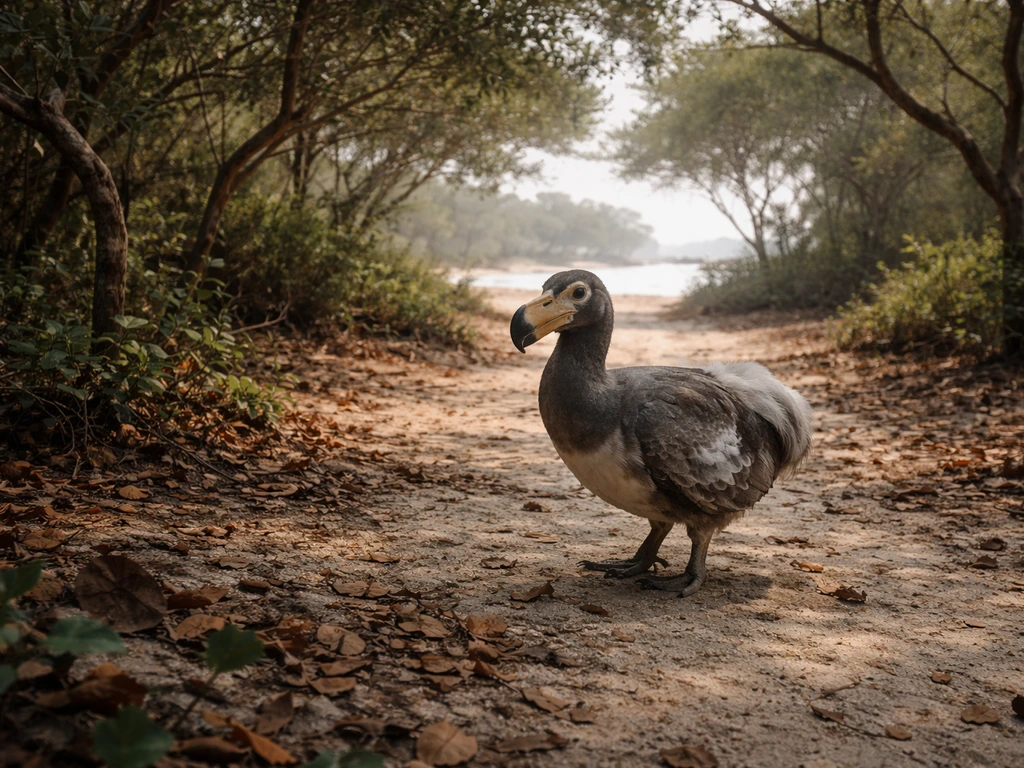
Is the Dodo Bird Still Alive? What Evidence Shows Today
Learn if any dodos could exist today, why scientists say they are extinct, and how to judge sightings reliably.
Does Dodo Bird Still Exist? Answer and Extinction Facts
No, dodo birds are extinct. Learn when, why, where they lived, and how evidence confirms it.
Are Scientists Bringing Back the Dodo Bird? What’s Real
Explains dodo de-extinction reality, the science limits, and why researchers want to revive it or not.