
Yes, the secretary bird is endangered. As of the most recent IUCN assessment (BirdLife International 2020, reflected in 2024 global category listings), Sagittarius serpentarius carries an official status of Endangered (EN) on the IUCN Red List, assessed under criteria A2acde + 3cde + 4acde. That puts it in the same risk bracket as species like the African penguin and the white-backed vulture, well past the 'watch list' stage and into genuinely serious territory.
Is the Secretary Bird Endangered? Status, Threats, Conservation

Maya Hennessy
7 May 2026
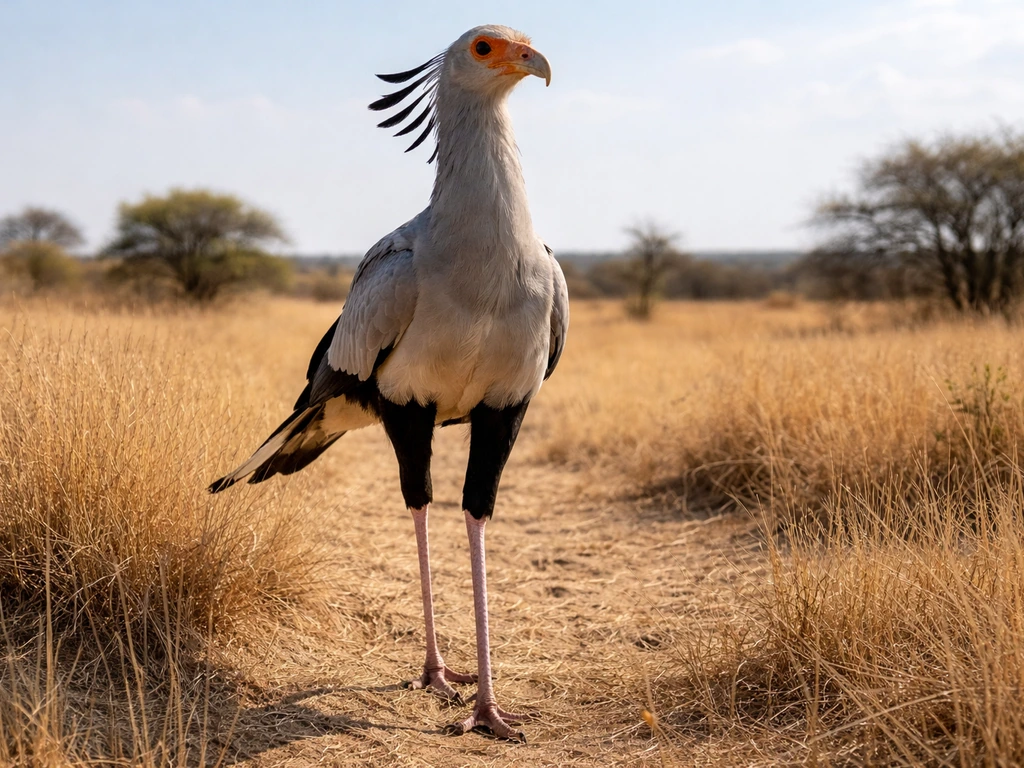
Current conservation status at a glance
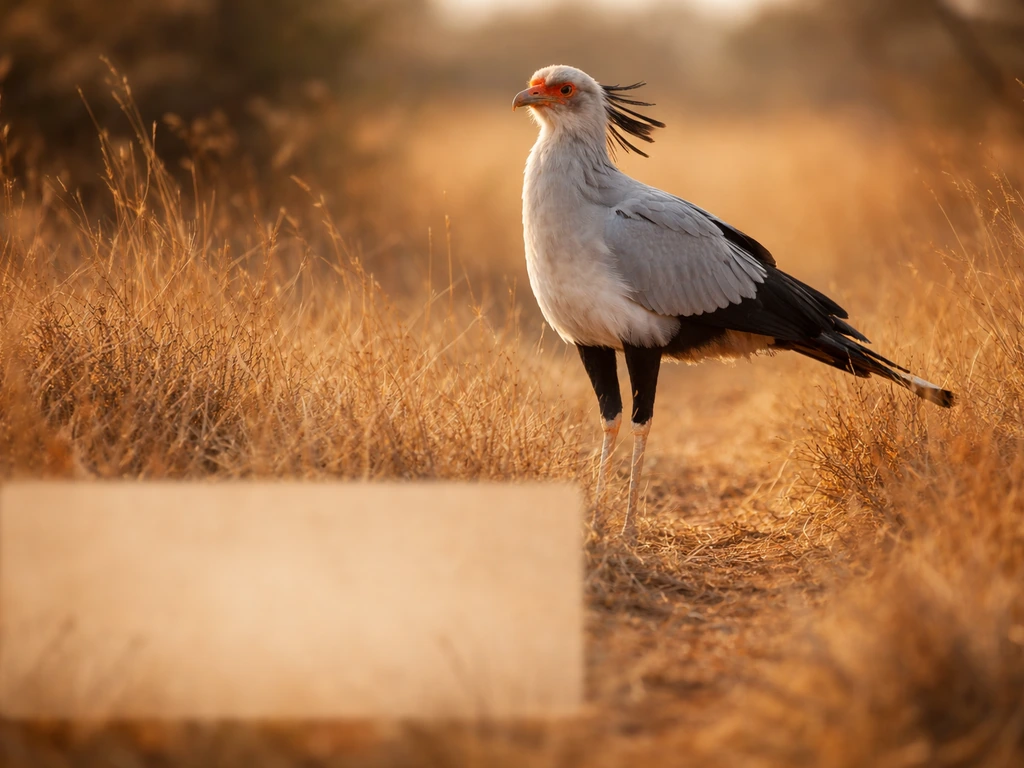
The secretary bird's Endangered listing reflects a population that is declining at a rate significant enough to trigger one of the IUCN's higher alert categories. The global population estimate sits in a frustratingly wide band of roughly 6,700 to 67,000 individuals. That range itself tells you something: this is a bird that is genuinely hard to count, partly because it roams vast open grasslands and partly because systematic survey data from much of its range is sparse. BirdLife South Africa, which tracks the species closely, frames the Endangered classification around sustained habitat deterioration and range contraction rather than a single dramatic collapse event.
| Detail | Secretary Bird (Sagittarius serpentarius) |
|---|---|
| Scientific name | Sagittarius serpentarius |
| IUCN status | Endangered (EN) |
| IUCN criteria | A2acde + 3cde + 4acde |
| Assessment year | BirdLife International 2020 (global category updated 2024) |
| Global population estimate | 6,700 – 67,000 individuals |
| Population trend | Decreasing |
What 'endangered' actually means, and where the secretary bird fits
The IUCN Red List uses a tiered system to rank how close a species is to extinction. From least to most severe, the categories with real concern are: Near Threatened, Vulnerable, Endangered, and Critically Endangered. Endangered is the second-most severe category before a species is considered Critically Endangered or extinct in the wild. It means the evidence points to a high risk of extinction if the pressures driving the decline are not addressed.
The secretary bird lands in Endangered because of the 'A' criteria, which is about population reduction. Specifically, the IUCN criteria codes here (A2acde + 3cde + 4acde) indicate that the observed and projected decline is driven by a combination of reduced habitat quality, reduced area of occupancy, and actual or potential levels of exploitation, all of which are ongoing or suspected to be ongoing. In plain terms: the bird's world is shrinking, the shrinkage is measurable, and the trend is not reversing on its own.
It is worth clearing up a common point of confusion. People sometimes search for whether a bird is 'threatened' or 'endangered' as if those are two separate answers. In conservation science, 'threatened' is actually an umbrella term that covers Vulnerable, Endangered, and Critically Endangered together. So the secretary bird is both threatened and endangered, with 'Endangered' being the specific category within that umbrella.
Where secretary birds live and what they need
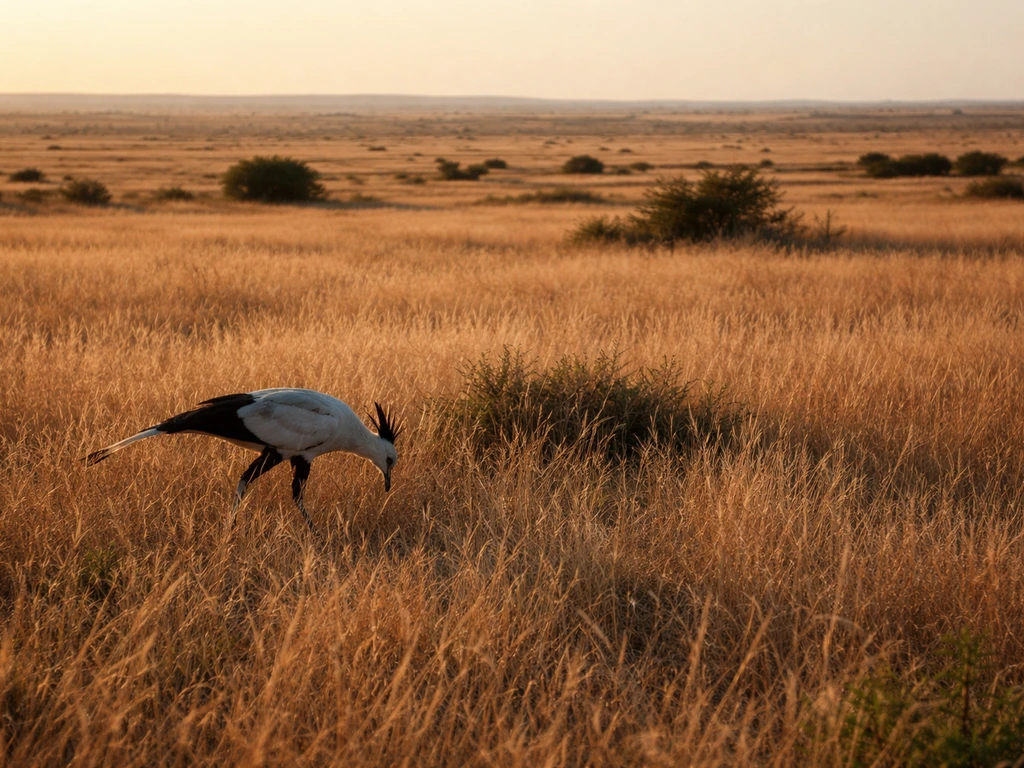
The secretary bird is found across sub-Saharan Africa, from Senegal and Sudan in the north to the Cape provinces of South Africa in the south. It is a bird of open country: grasslands, savanna, and lightly wooded areas where it can walk, hunt, and nest. It is not a forest bird and does not adapt well to dense vegetation or heavily urbanized land. A pair typically occupies a flat-topped acacia tree for nesting and forages across a very large home range, sometimes covering tens of kilometers a day on foot.
That dependence on open, undisturbed grassland is precisely what makes the secretary bird vulnerable. It is not a generalist that can pivot to a new habitat when conditions change. It needs a very specific ecological stage, and that stage is disappearing across much of its range. Countries with significant secretary bird populations include South Africa, Namibia, Botswana, Tanzania, Kenya, and Ethiopia, but even within those countries the bird is absent from or declining in areas where its preferred habitat has been converted or degraded.
The main threats driving the decline
Habitat loss and fragmentation sit at the top of the list. Grasslands across sub-Saharan Africa are being converted to cropland, broken up by fencing, or degraded by overgrazing. Secretary birds need unbroken open ground to hunt effectively. When grassland patches become too small or too isolated, the birds cannot sustain viable territories. This is not a future concern. It is a documented, ongoing process.
- Agricultural expansion: Conversion of grassland to cultivated fields removes foraging habitat and nest sites. In parts of southern Africa, this is the single largest driver of range contraction.
- Overgrazing by livestock: Heavy grazing reduces grass structure and prey availability, making the land functionally unsuitable even when it is not physically converted.
- Land fragmentation and fencing: Secretary birds need large, connected territories. Fences and roads break up movement corridors and can prevent pairs from accessing viable nesting or foraging areas.
- Human persecution: In some farming communities, secretary birds are killed because of a (largely unfounded) belief that they harm livestock or poultry. Deliberate killing remains a documented threat.
- Hunting and trapping: Although not a primary driver, there are documented cases of secretary birds being caught for traditional medicine use in parts of their range.
- Fire regime changes: Inappropriate burning schedules can degrade grassland structure. Secretary birds depend on a mosaic of grass heights for effective hunting.
- Climate pressures: Increasing drought frequency and shifting rainfall patterns in parts of sub-Saharan Africa may reduce prey availability and habitat suitability over longer timescales.
Population trends and what researchers are tracking

The global population trend is listed as decreasing, but the full picture is uneven and hard to pin down precisely. The wide population estimate of 6,700 to 67,000 reflects genuine data gaps. Systematic, range-wide surveys are difficult to conduct for a bird that roams massive distances across remote terrain in multiple countries with varying research capacity.
In South Africa, where survey effort is highest, BirdLife South Africa has tracked significant range contractions. Birds have disappeared from areas where they were historically recorded, particularly in regions experiencing intensive agricultural development. Breeding pair density data from monitored sites shows declines in productivity in some landscapes. Researchers are tracking nest success rates, territory occupancy, and movement ecology using satellite tagging in some study populations. These efforts help identify which habitat features are most critical and where conservation interventions will have the highest payoff.
One of the key things researchers are watching is the interaction between land use change and prey availability. Secretary birds eat a wide range of prey including snakes, lizards, insects, small mammals, and frogs. In heavily grazed or cultivated landscapes, prey communities collapse alongside the vegetation structure, creating a compounding effect: less cover, less prey, fewer birds.
What conservation efforts are underway
Protected areas provide the most secure refuges. National parks and game reserves across southern and East Africa hold some of the healthiest remaining secretary bird populations, including in the Kruger National Park in South Africa, the Serengeti in Tanzania, and the Masai Mara in Kenya. Within these reserves, habitat management and reduced persecution give the birds a meaningful buffer. The challenge is that protected areas alone cannot sustain a species that needs landscape-scale open grassland beyond park boundaries.
Outside protected areas, community education programs are an important tool. Reducing persecution linked to livestock conflict requires changing attitudes, not just enforcing laws. Organizations working in southern Africa have developed outreach programs that explain the secretary bird's actual diet and behavior, which helps address the myth that it poses a meaningful threat to poultry or livestock. This kind of community-level engagement has proven effective for other large raptors and is increasingly being applied to secretary birds.
- Habitat protection and restoration: Maintaining large tracts of intact grassland and savanna, including through land stewardship programs that incentivize landowners to manage their properties in ways compatible with secretary bird ecology.
- Monitoring and research: Satellite tracking programs and long-term nest monitoring provide the data needed to identify where populations are most at risk and what interventions are most effective.
- Anti-persecution campaigns: Education and community outreach to reduce deliberate killing by farmers and herders who perceive secretary birds as a threat.
- Fire management: Working with land managers to implement burning schedules that maintain the open grassland mosaic the species depends on.
- Advocacy for stronger protections: Pushing for the species to receive appropriate legal protections at national and regional levels in range states where enforcement is currently weak.
There are no large-scale captive breeding programs for secretary birds in the way that exist for some Critically Endangered species. The conservation focus is correctly on habitat and in-situ (wild population) management, because the species is not yet at the point where captive breeding is the primary lifeline. Keeping viable wild habitat is the priority, and that is where most NGO and government effort is directed.
How to check the latest status and stay informed
Conservation assessments are periodically updated, so it is always worth checking primary sources rather than relying on any single article (including this one). The two most reliable starting points are the IUCN Red List website (iucnredlist.org) and BirdLife International's data zone (datazone.birdlife.org). Both allow you to search by species name and will show you the current category, the assessment year, the population trend, and the full criteria used to arrive at the classification.
When you check, look at the assessment year to understand how current the data is. The secretary bird's most recent full assessment is from 2020 (with updated global category listings in 2024). If a new assessment is published, you will see the date change and potentially the category or criteria shift if new evidence has come in. BirdLife South Africa's species page is also a strong regional resource, particularly for southern African population data and regional red-list context.
For people with a broader interest in which birds are at risk right now, it is worth knowing that the secretary bird is far from the only grassland raptor under pressure. Many people also ask whether the peacock is endangered, and you can check its latest IUCN category to confirm current status is peacock endangered bird. Many open-country birds across Africa and beyond are facing similar pressures from habitat conversion. If you are curious about how the secretary bird's situation compares to other species tracked on this site, the patterns of decline, habitat loss, and conservation response look remarkably consistent across grassland-dependent birds around the world.
The bottom line
The secretary bird is Endangered, officially and by any reasonable reading of the evidence. If you are also wondering about whether sparrows are endangered, you can check the latest assessments for the exact sparrow species in question is sparrow endangered bird. Blue jay bird status is assessed separately from the secretary bird’s conservation listing The secretary bird is Endangered. It is not at the absolute brink of extinction the way a Critically Endangered species is, but it is in serious trouble, and the trend is moving in the wrong direction. The biggest factors are habitat loss and fragmentation driven by agricultural expansion, compounded by persecution and land use changes across its range in sub-Saharan Africa. Conservation efforts exist and are making a difference in some areas, but they need to scale significantly to reverse a decline that is happening across a wide geographic range. Checking the IUCN Red List and BirdLife International directly will give you the most current numbers as research continues.
FAQ
Is the secretary bird endangered or threatened, which one is correct?
Both. “Threatened” is an umbrella term that includes Vulnerable, Endangered, and Critically Endangered. “Endangered” is the specific IUCN category within that umbrella, so the secretary bird is threatened in general and endangered in particular.
Does “Endangered” mean it is close to extinction right now?
It means there is a high risk of extinction if the decline drivers continue, but it is not the same as Critically Endangered. In practice, Endangered species usually have ongoing population decline, not just a one-time event, and the risk can worsen if habitat pressures accelerate.
Why is the population estimate so wide (6,700 to 67,000), is it just uncertainty or does the bird really vary that much?
It reflects both real geographic differences and limited survey coverage. The wide range is partly because the species ranges over large, remote areas and is difficult to count consistently, so different studies and regions can produce very different estimates.
What evidence type is behind the Endangered listing, is it based on direct counting?
The listing uses IUCN criteria focused on population reduction and decline signals, including habitat and area-of-occupancy changes, not only direct headcounts. For wide-ranging birds, the assessment often combines field observations with measured habitat trends and other decline indicators.
Is the secretary bird endangered because of direct persecution, or is it mostly habitat loss?
Habitat loss and fragmentation are the primary drivers, but persecution and human land use can add pressure. In many regions the main problem is that open hunting ground shrinks and breaks up, which also affects prey availability.
Can the secretary bird survive in farmland and ranchlands if grassland is still present?
Sometimes partially, but it depends on grassland structure and prey. When cultivation or heavy grazing removes cover, reduces prey communities, or isolates patches with fencing, the birds often do poorly because they need large, functional areas of open habitat for hunting and nesting.
Are protected areas sufficient to save the secretary bird?
They provide important refuges, but they usually are not enough on their own. The species also needs suitable open grassland beyond park boundaries, so conservation often requires landscape-scale habitat connectivity and reduced persecution in surrounding lands.
Is there any conservation role for keeping myths from spreading about poultry or livestock threats?
Yes. Community outreach that clarifies diet and behavior can reduce retaliatory killing. Even when enforcement exists, changing attitudes is often critical to lower persecution linked to livestock conflict.
Why are there no major captive breeding programs for secretary birds?
Because the conservation strategy relies mainly on maintaining healthy wild populations and viable habitat. For this species, captive breeding is not yet the primary emergency tool, and the biggest bottleneck is access to large areas of suitable open grassland.
How do I check whether the secretary bird status has changed since the last assessment?
Look at the latest IUCN Red List entry and note the assessment year. If a new assessment has been published, the category and criteria can change, especially if new data tightens population trends or identifies new threats. BirdLife International’s species data zone is also helpful for updates and regional context.
Next Articles

What Bird Is Endangered? Identify Species by Location
Find what bird is endangered near you with range and traits, plus threats, flightless species, and how to verify status.
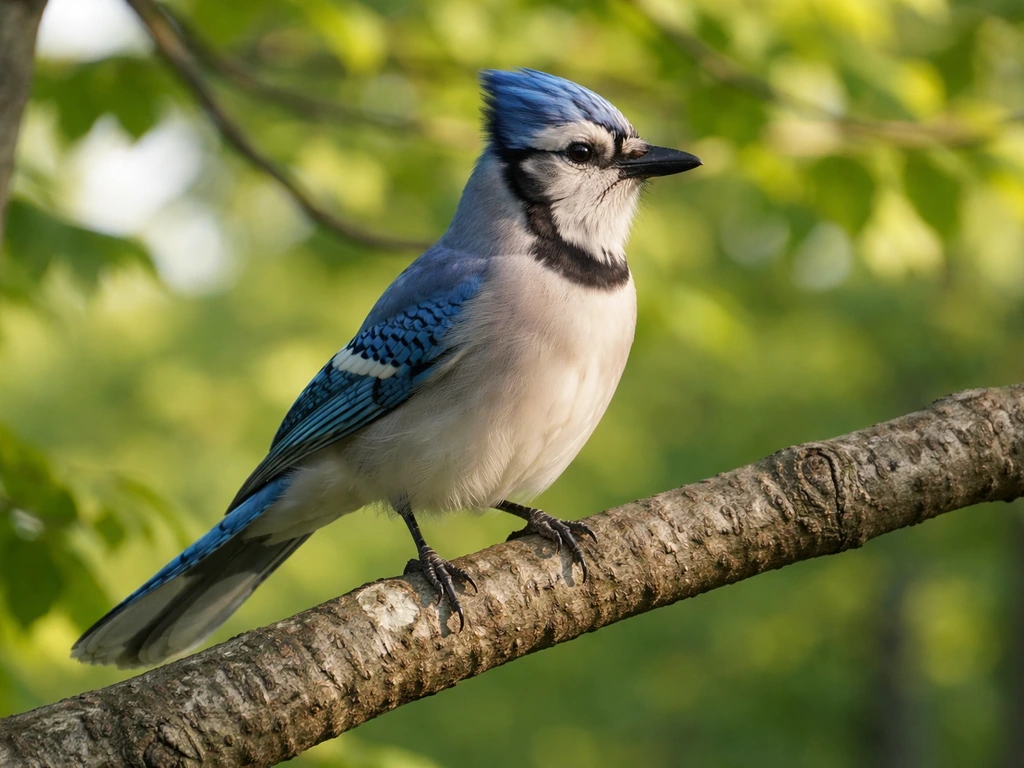
Are Blue Jay Birds Endangered? Status, Trends, and How to Help
Find out if blue jays are endangered, their population trend and key threats, plus simple ways to help.
Is the Dodo Bird Still Alive? What Evidence Shows Today
Learn if any dodos could exist today, why scientists say they are extinct, and how to judge sightings reliably.