An endangered bird is a species formally classified as facing a very high risk of extinction in the wild. A taxon is classified as Endangered (EN) on the IUCN Red List when the best available evidence indicates it meets any of the Endangered criteria (A, E), which corresponds to a very high risk of extinction in the wild blank" rel="noopener noreferrer">Endangered (EN) criteria (A–E). That classification comes from the IUCN Red List, which uses measurable, evidence-based criteria to assign species to specific threat categories. When a bird earns the "Endangered" label, it means scientists have documented population declines, shrinking ranges, or extinction probabilities serious enough to meet strict thresholds, not just a general sense that the bird is struggling.
What Is an Endangered Bird? Definition, Statuses, and How to Verify

What 'endangered' actually means: the conservation status ladder

The IUCN Red List is the global standard for tracking species at risk. It organizes species into categories based on the best available evidence, and "Endangered" (abbreviated EN) sits two steps below the worst. Here is how the full ladder looks, from most secure to most threatened:
| Status | Abbreviation | What it means |
|---|---|---|
| Least Concern | LC | Population is stable; no significant extinction risk right now |
| Near Threatened | NT | Close to qualifying as threatened, or likely to qualify soon |
| Vulnerable | VU | High risk of extinction in the wild |
| Endangered | EN | Very high risk of extinction in the wild |
| Critically Endangered | CR | Extremely high risk of extinction in the wild |
| Extinct in the Wild | EW | Only survives in captivity or as a naturalized population outside its native range |
| Extinct | EX | No reasonable doubt that the last individual has died |
For a bird to be listed as Endangered, it has to meet at least one of five scientific criteria (labeled A through E). Criterion A covers rapid population reduction: a decline of 50% or more over ten years or three generations, whichever is longer. Criterion E uses quantitative modeling to show that the probability of extinction in the wild is at least 20% within 20 years or five generations. These are not soft estimates; they are formal thresholds backed by field data, survey counts, habitat mapping, and genetic analysis.
National governments and regional bodies also publish their own threatened species lists, and a bird's status can differ between them. A species might be Endangered on the IUCN list but only Vulnerable under a country's domestic legislation, or vice versa, depending on what portion of its range falls within that country.
How to check whether a specific bird is endangered
If you want to verify a bird's conservation status today, the fastest and most reliable route is the IUCN Red List at iucnredlist.org. Every assessed species has a dedicated page that shows its current category, population trend (increasing, stable, decreasing, or unknown), key threats, and the date of its last assessment. Because many assessed species are flagged when the population of an endangered bird is decreasing, checking the trend field helps confirm whether the risk is worsening or stabilizing. Assessments are updated on a rolling basis, so the date matters: an assessment from 2012 may not reflect a species' situation in 2026.
Here is a practical checklist for looking up any bird's status:
- Go to iucnredlist.org and search by the bird's common or scientific name.
- Check the category shown (LC, NT, VU, EN, CR, EW, or EX) and the year of the last assessment.
- Look at the population trend arrow. 'Decreasing' with an EN label is the most urgent combination.
- Read the threats section to understand what is driving the risk.
- Cross-reference with your country's national list. In the US, that is the US Fish and Wildlife Service's Endangered Species list. In the UK, it is the RSPB or JNCC Red Lists. Australia uses the EPBC Act list. New Zealand uses the NZ Threat Classification System.
- For birds specifically, BirdLife International partners with the IUCN and maintains detailed species factsheets at birdlife.org, often with more up-to-date field notes than the core IUCN page.
A bird can appear on multiple lists with slightly different statuses. The IUCN list is the gold standard for global context, but national lists carry legal weight in terms of protection and habitat management within that country's borders.
Why birds become endangered: the main drivers
Bird endangerment is almost never caused by a single problem. It usually involves several overlapping pressures that compound each other. Understanding the causes helps you make sense of why conservation efforts work (or struggle) for different species.
Habitat loss and fragmentation
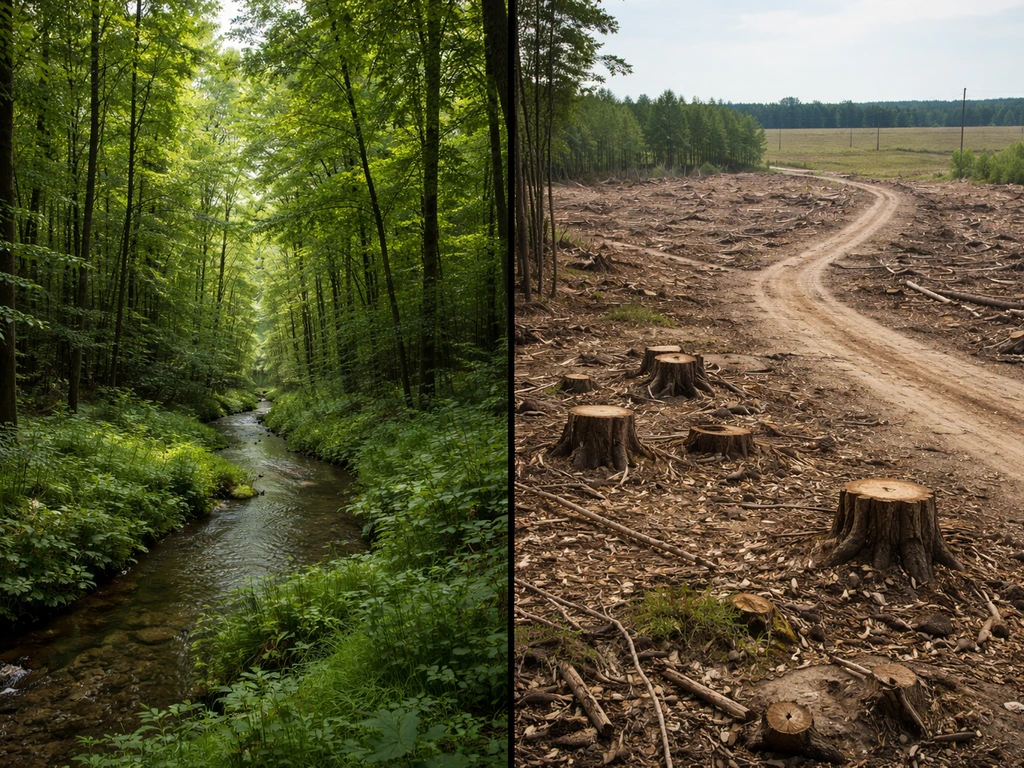
This is the single biggest driver of bird endangerment globally. When forests are cleared for agriculture, wetlands are drained, or grasslands are converted to development, birds lose the nesting, feeding, and sheltering resources they depend on. Fragmentation, where habitat is broken into isolated patches, is especially damaging for species that need large territories or move seasonally. A bird population split across fragments is effectively cut off from genetic exchange, which accelerates decline even when each fragment looks intact.
Introduced predators and diseases
Island birds are particularly vulnerable here. Species that evolved without ground predators, like kiwi in New Zealand, have no behavioral defenses against stoats, rats, and cats. Introduced predators can destroy nesting seasons so completely that breeding populations collapse within a few generations. Avian diseases, especially avian malaria spread by introduced mosquitoes, have wiped out large portions of Hawaiian bird communities. The combination of a new predator and a new disease in the same habitat can be catastrophic.
Climate change
Shifting temperatures and rainfall patterns alter when food sources peak, where suitable habitat exists, and how severe weather events become. Migratory birds face mismatches between their arrival timing and the peak availability of insects or plants they depend on. Coastal and wetland species face habitat loss directly from sea-level rise. For high-altitude species with nowhere to move further upslope, the habitat may simply disappear.
Overexploitation and human disturbance
Hunting, trapping for the pet trade, and egg collection have historically pushed many species toward extinction and continue to threaten others today. Even non-lethal human disturbance can be damaging during the breeding season: repeated flushing of nesting birds reduces reproductive success enough to suppress population growth over years. Collisions with windows, vehicles, and power lines add millions of bird deaths annually, which disproportionately impacts species already struggling with small population sizes.
What endangered birds actually need to survive
The basics sound simple, but the specifics matter enormously. An endangered bird needs enough of the right habitat, safe nesting conditions, adequate food, and freedom from overwhelming predation or disturbance. For many critically endangered species, the bottleneck is one specific factor: a nesting site that has been eliminated, a single food source that is disappearing, or a predator that arrived decades ago and has never been controlled.
- Habitat: sufficient area, the right vegetation type, and connectivity to other populations so genetic exchange can happen.
- Breeding safety: predator control around nest sites, or in some cases active management like nest boxes or predator-proof enclosures.
- Food security: the invertebrates, seeds, or other prey the bird depends on must be present at the right time and in sufficient quantity.
- Legal protection: national and international legislation that restricts hunting, trade, and habitat destruction.
- Population monitoring: regular counts and assessments so managers can detect declines early and respond before numbers drop too low to recover.
Captive breeding programs play a role for species whose wild populations have dropped to critical levels, but they are a last resort rather than a solution. The goal is always to restore wild populations in secure, well-managed habitat.
Real examples of endangered birds around the world

To make these categories concrete, it helps to look at specific species and see how the threats and conservation needs map onto real situations. One example to look at is which endangered bird species is found in the Thar Desert, since desert habitat pressures can vary by region.
| Bird | Region | IUCN Status | Main Threats | Key Conservation Action |
|---|---|---|---|---|
| Kiwi (several species) | New Zealand | Vulnerable to Endangered depending on species | Introduced predators (stoats, dogs, cats) | Predator control programs, Operation Nest Egg captive rearing |
| Kakapo | New Zealand | Critically Endangered | Predation, low reproductive rate | Managed island sanctuaries, intensive monitoring |
| California Condor | North America | Critically Endangered | Lead poisoning, habitat loss, power line collisions | Captive breeding program, lead ammunition bans in some states |
| Philippine Eagle | Philippines | Critically Endangered | Deforestation, hunting | Legal protection, reforestation initiatives |
| Spoon-billed Sandpiper | Asia (migratory) | Critically Endangered | Tidal flat reclamation, hunting | Habitat protection across migration route, captive breeding |
| Regent Honeyeater | Australia | Critically Endangered | Woodland clearing | Tree planting, captive breeding and release |
| Whooping Crane | North America | Endangered | Habitat loss, hunting (historical) | Captive breeding, reintroduction, wetland protection |
The cassowary, a large flightless bird native to the rainforests of northern Australia and New Guinea, occupies a similar space in conservation discussions. Depending on the species, cassowaries range from Least Concern to Vulnerable, with vehicle strikes and habitat clearing in Queensland being major local threats. The kiwi story is one of the more instructive: multiple kiwi species sit at different points on the threat spectrum, which underscores how closely related birds can face very different risk levels depending on their island, the predators present, and how much management is in place.
Endangered vs threatened vs extinct: getting the distinctions right
These terms get used loosely in everyday conversation, but they have precise meanings in conservation science. Getting them straight helps you interpret news coverage and conservation reports accurately.
Under the IUCN system, "threatened" is an umbrella term covering three categories: Vulnerable, Endangered, and Critically Endangered. So every Endangered bird is technically a threatened species, but not every threatened species is Endangered. In US law under the Endangered Species Act, the categories work slightly differently: "threatened" means likely to become endangered in the foreseeable future, while "endangered" means currently in danger of extinction throughout all or a significant portion of its range. Always check which system a source is using.
Extinct means no individual of the species survives anywhere, in the wild or captivity. The dodo is extinct. The moa is extinct. There is no population to recover, no genetic material to breed from in most cases. Extinct in the Wild (EW) is a different and often misunderstood category: the species still exists, but only in managed settings like zoos or botanical gardens, not in any natural habitat. The Guam Rail and the Socorro Dove have been in this category at various points.
"Disappeared" is not a formal IUCN term, but it comes up in natural history contexts in two ways. A species may have disappeared from part of its former range while still existing elsewhere, meaning local extirpation rather than global extinction. Or a species might be "possibly extinct," a tag the IUCN uses when there have been no confirmed records for a long time but the evidence for full extinction is not yet conclusive. Some birds presumed extinct, like the Black-browed Babbler in Borneo, have been rediscovered decades later. Others resurface as rumors that never pan out.
What you can actually do today
Conservation can feel overwhelming when you zoom out to the global scale, but there are genuinely useful actions available to anyone, right now, regardless of where you live.
- Look up a species you care about on the IUCN Red List or BirdLife International. Read the threats section and the population trend. Understanding the specific problem for a specific bird is more useful than general alarm.
- Support organizations running on-the-ground work. BirdLife International, the American Bird Conservancy, the Royal Forest and Bird Protection Society in New Zealand, and similar groups fund habitat protection, predator control, and captive breeding programs directly.
- Make your outdoor space less dangerous for birds. Applying window film or decals to reduce glass collisions, keeping cats indoors, and reducing pesticide use in gardens are all evidence-backed interventions.
- Report sightings of rare or banded birds. eBird (run by Cornell Lab of Ornithology) aggregates citizen observations that feed directly into population assessments. A single confirmed sighting of a rare species in a new location can influence conservation decisions.
- Push back on habitat loss locally. Attending planning meetings, supporting land trusts, and advocating for protected areas in your region contributes to the habitat security that endangered birds need most.
- Stay skeptical of outdated information. Conservation statuses change. A bird listed as Endangered in 2010 may now be Critically Endangered or, in better cases, downlisted to Vulnerable because of successful management. Always check the most recent assessment date.
If you are trying to understand a specific bird, the most practical next step is always to start with the IUCN species page and BirdLife factsheet, then look at what the major regional conservation body in that bird's range is doing about it. You can also check whether is ostrich an endangered bird by looking up its current IUCN category on that species page IUCN species page. That combination gives you the global status, the local context, and the active conservation response, which is everything you need to interpret what that Endangered label actually means for a particular species right now. If you are wondering whether the killdeer bird is the killdeer bird endangered, check its latest IUCN assessment for the current category and population trend.
FAQ
Is an “endangered bird” always going to go extinct soon?
Not necessarily. “Endangered” means a very high extinction risk in the wild based on formal thresholds, but the timeline varies by species. The IUCN page’s population trend field (increasing, decreasing, stable, unknown) is the quickest way to gauge whether the risk appears to be worsening or holding steady.
Why might the same bird have different threat levels in different places?
Different systems can assess different geographic scopes and timeframes. A species may be Endangered globally on IUCN, while another list reflects only the portion of its range inside a country or evaluates a different set of data and assessment dates.
How can I tell if a bird’s IUCN page is out of date?
Check the “last assessment” date on the species page and compare it with any recent news or survey results you find. If the assessment is old, the conservation priority could be different now, especially for species affected by recent habitat loss, storms, or disease outbreaks.
What if a bird is declining, but its IUCN category has not changed yet?
That can happen because categories update only when new evidence and thresholds are met. A decreasing trend with the same category indicates ongoing risk, but it does not confirm a category upgrade or downgrade until the next formal assessment.
Does “endangered” mean the entire bird population is disappearing?
No. “Endangered” refers to extinction risk in the wild, not the immediate disappearance of every local group. Many birds remain present in pockets, sometimes with different local threats, even while the overall species risk remains high.
Can captive breeding make an endangered bird no longer endangered?
Captive breeding alone usually does not remove the species from Endangered status, because the category focuses on extinction risk in the wild. It can support recovery if it leads to restored wild populations in secure habitat, and future assessments will reflect whether the wild risk actually drops.
Are birds protected by law the same as being “Endangered” on the IUCN Red List?
Not always. Legal protection depends on the specific country’s or region’s legislation, which may use different category definitions and criteria. For practical enforcement questions, confirm the bird’s status under local threatened-species or wildlife laws.
What is the difference between “Extinct” and “Extinct in the Wild” for bird conservation?
“Extinct” means no individuals survive anywhere, in the wild or in captivity. “Extinct in the Wild” means the species survives only in managed settings, so reintroduction to natural habitat is the conservation pathway people focus on.
How do I interpret “possibly extinct” or birds that “disappeared” from part of their range?
“Possibly extinct” is used when there are no confirmed records for a long time but extinction is not fully proven. “Disappeared” usually refers to local extirpation (loss from a portion of the range), so the species may still exist elsewhere and could still be assessed as threatened overall.
If I want to help an endangered bird, what is the most effective starting action?
Start with the specific threats named on the IUCN or BirdLife materials for that species, then choose actions that address those threats locally. For example, actions that reduce window collisions, restore native habitat, or support predator management tend to be more species-relevant than generic “save wildlife” activities.