No, cuckoos as a group are not extinct. The family Cuculidae contains around 147 living species found on every continent except Antarctica, and the vast majority of them are doing fine. However, a handful of individual cuckoo species have been confirmed extinct, several more are critically endangered or possibly gone, and some regional cuckoo populations have vanished from places where they once thrived. So the honest answer depends entirely on which specific cuckoo you mean.
Is the Cuckoo Bird Extinct? Species Status, Evidence, Next Steps

Maya Hennessy
7 May 2026
Which 'cuckoo' are people actually asking about?
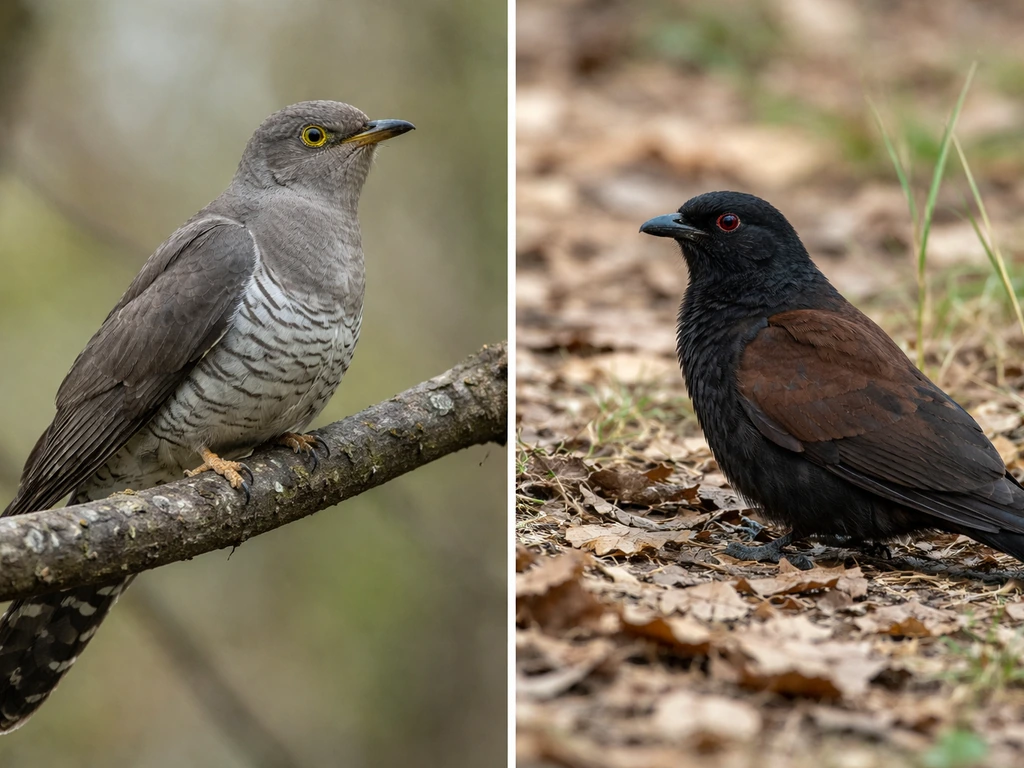
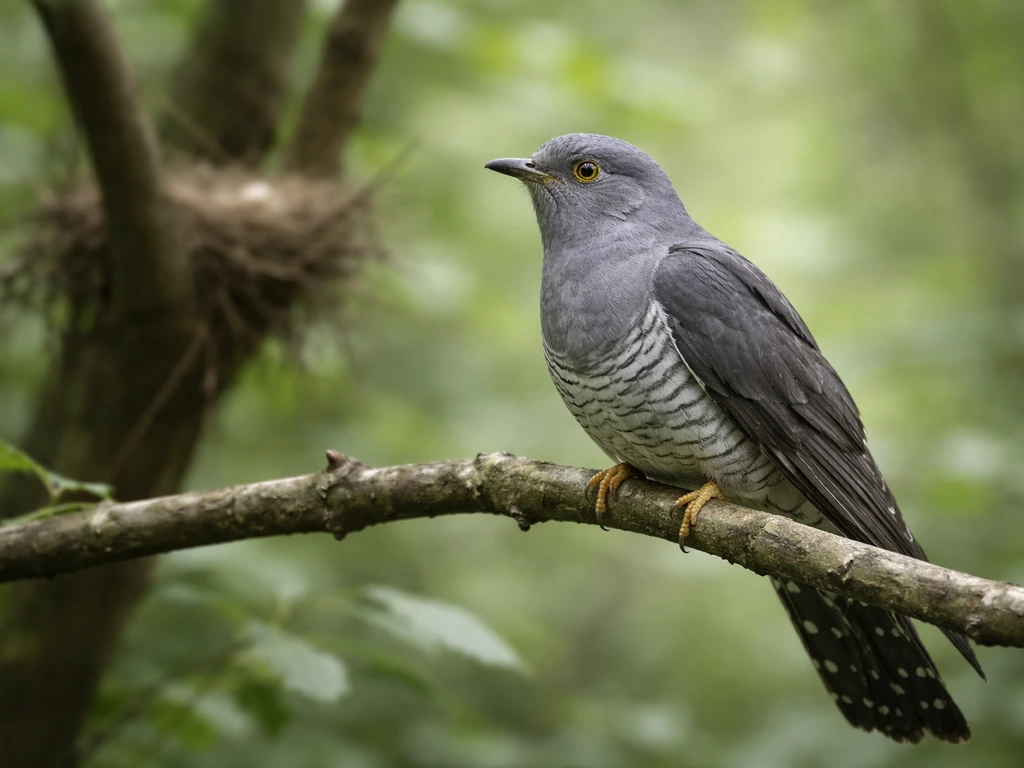
When most English speakers say 'cuckoo bird,' they picture one of two things: the iconic European common cuckoo (Cuculus canorus), famous for its two-note call and brood-parasitism behavior, or a vague cultural image of a cuckoo clock bird. But 'cuckoo' is really shorthand for the entire family Cuculidae, which is a huge and diverse group that includes roadrunners, coucals, anis, malkohas, and ground-cuckoos, not just the classic European species.
This matters because the extinction status of 'the cuckoo bird' is completely different depending on which species you mean. The common cuckoo (Cuculus canorus) is widespread and not at risk. The Delalande's coua (Coua delalandei) of Madagascar, on the other hand, is confirmed extinct. Online articles conflate these all the time, which is why the question 'is the cuckoo bird extinct?' keeps circulating without a clean answer.
- European common cuckoo (Cuculus canorus): the most culturally familiar species, widely distributed across Europe and Asia
- North American yellow-billed and black-billed cuckoos: migratory species native to the Americas
- Roadrunners (Geococcyx): technically in Cuculidae, found in North and Central America
- Coucals (Centropus): large ground-dwelling cuckoos found in Africa, Asia, and Australasia
- Anis (Crotophaga): communal-nesting cuckoos native to tropical Americas
- Couas (Coua): endemic to Madagascar, some extinct, some critically threatened
- Malkohas and ground-cuckoos: forest-dependent species of Southeast Asia and tropical islands
The quick verdict: extinct, endangered, or thriving?
Cuckoos overall are not extinct. The family is alive and widespread. But within that family, at least one species is confirmed extinct (Delalande's coua), and several others have not been reliably recorded in decades and are classified as Extinct or Critically Endangered (Possibly Extinct) by the IUCN Red List. Meanwhile, many other cuckoo species are considered of Least Concern, meaning they are not at serious risk right now. The picture is genuinely mixed, and lumping them all together as 'the cuckoo bird' obscures the real story.
| Status Category | What it means | Cuckoo examples |
|---|---|---|
| Confirmed Extinct | No individuals left; no credible sightings in decades; scientific consensus agrees | Delalande's coua (Coua delalandei), Snail-eating coua (possibly) |
| Critically Endangered / Possibly Extinct | May be extinct but absence not fully confirmed | Some island coucal and ground-cuckoo populations |
| Critically Endangered (living) | Surviving but at extreme risk of extinction | Biak coucal, Sulu coucal |
| Endangered or Vulnerable | Declining significantly; needs active conservation | Several Southeast Asian malkohas and ground-cuckoos |
| Least Concern | Stable or widespread populations | Common cuckoo, yellow-billed cuckoo, greater roadrunner |
What the fossil record and historical records tell us

Cuculidae has a modest fossil record compared to some other bird families, but enough exists to confirm the family has been around for tens of millions of years. Cuckoo-like bird fossils have been found in Eocene deposits in Europe, showing the lineage predates most of the island ecosystems where modern cuckoo extinctions have occurred.
For more recent extinctions, the evidence shifts to historical documents, museum specimens, and subfossil bones. Delalande's coua, the confirmed-extinct Malagasy cuckoo, was collected and described by French naturalists in the early 1800s. Museum specimens exist in Paris and elsewhere, giving scientists physical proof that the species was real and distinct. The last reliable sighting was in the 1830s. After that, nothing. Researchers combing through colonial-era expedition logs, local oral histories, and bone deposits in Malagasy caves have found no evidence the bird persisted past the mid-19th century.
This is exactly how extinction science works: you build a case from museum skins, dated field notes, subfossil evidence, and the absence of records despite targeted searches. It is the same methodology used to confirm extinctions in other bird groups, from the dodo to the Kauai birds of Hawaii. When multiple lines of evidence converge on zero living individuals over a long enough period, the scientific community formally lists the species as extinct.
Where cuckoos still live today
Cuckoos are genuinely global birds. Britannica notes that Cuculidae are found across tropical and temperate zones on all continents except Antarctica, including many oceanic islands. Here is a rough breakdown by region:
| Region | Notable cuckoo species / groups | General status |
|---|---|---|
| Europe & Asia | Common cuckoo (Cuculus canorus), Oriental cuckoo | Widespread; common cuckoo declining in parts of northern Europe |
| Sub-Saharan Africa | Dideric cuckoo, Klaas's cuckoo, multiple coucals | Most species stable |
| Madagascar | Couas (7 living species) | Several threatened; one extinct |
| South & Southeast Asia | Malkohas, ground-cuckoos, several Cuculus species | Several endangered due to forest loss |
| Australasia & Pacific Islands | Channel-billed cuckoo, fan-tailed cuckoo, bronze-cuckoos | Mostly stable; some island populations lost |
| North America | Yellow-billed cuckoo, black-billed cuckoo, roadrunners | Stable overall; western yellow-billed cuckoo population listed as threatened |
| Central & South America | Squirrel cuckoo, striped cuckoo, ground-cuckoos, anis | Mostly stable; some Neotropical forest species declining |
The take-home is that if you're in Europe, North America, Australia, or most of Africa and you see or hear a cuckoo, you're almost certainly looking at a living, non-threatened species. The real extinction risk is concentrated in island populations and specialized forest-interior species, particularly in Southeast Asia and Madagascar.
Species at risk vs. truly extinct cuckoos
This is the most important distinction to get right. 'At risk' and 'extinct' mean very different things, and conflating them is how misinformation spreads online.
Confirmed extinct cuckoo species
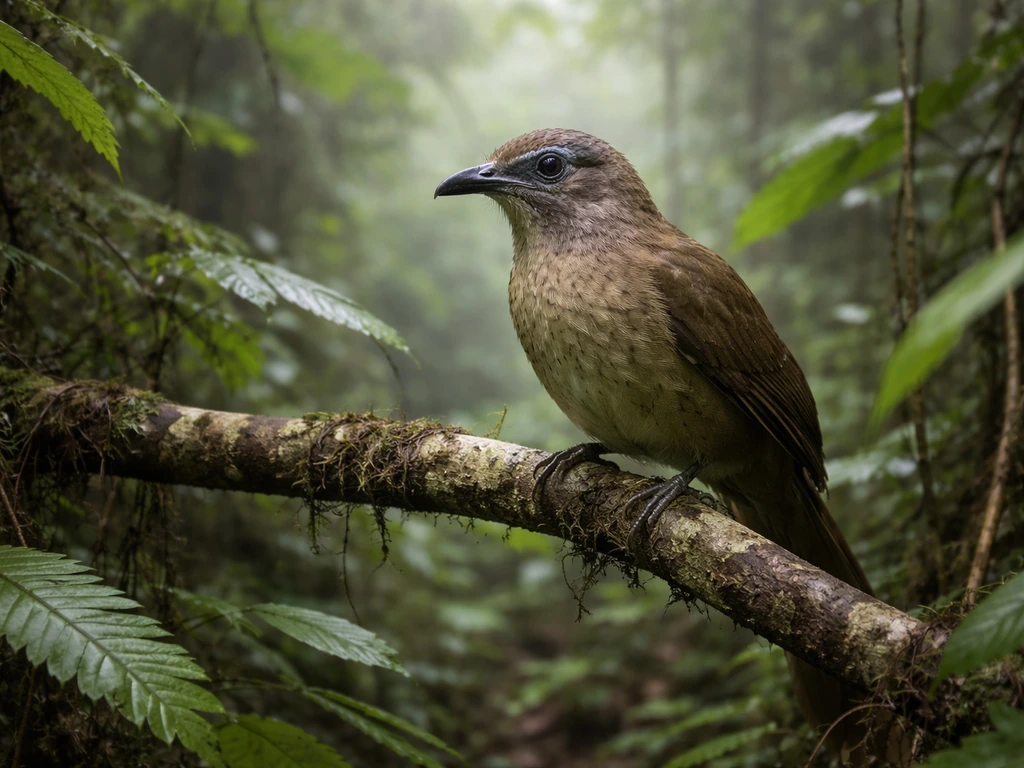
- Delalande's coua (Coua delalandei): endemic to Madagascar; last recorded in the 1830s; confirmed extinct by IUCN
- Snail-eating coua (Coua dephilipporum): some sources list this as possibly a distinct extinct form, though taxonomy is still debated among researchers
Critically endangered and possibly extinct cuckoos
- Biak coucal (Centropus chalybeus): restricted to Biak Island in Indonesia; extremely rare, forest-dependent, and poorly surveyed
- Sulu coucal (Centropus unirufus): found only on the Sulu Archipelago in the Philippines; faces severe habitat pressure and little recent survey data
- Sumatran ground-cuckoo (Carpococcyx viridis): rediscovered in 1997 after 80+ years without a record; still considered Critically Endangered
Endangered but surviving cuckoos
A number of cuckoo species are listed as Endangered or Vulnerable, meaning they are declining but not yet at the brink. These include several coua species in Madagascar, forest-dependent malkohas in Southeast Asia, and the western distinct population segment of the yellow-billed cuckoo in the United States, which is protected under the Endangered Species Act. These birds are in real trouble, but they are not gone.
For comparison, birds in similarly precarious positions in other families, like the kakapo or the kagu, are the subject of intense conservation programs. In contrast, the kakapo is not extinct and is instead the focus of intensive conservation efforts to prevent its numbers from dropping further. The kagu of New Caledonia, for example, has been the focus of intensive conservation work to prevent further losses is kagu bird extinct. Some cuckoo species at equivalent risk levels receive far less public attention simply because 'cuckoo' sounds like a common, familiar bird to most people.
How to verify a specific cuckoo extinction claim
If you've read something online claiming a particular cuckoo species is extinct (or nearly so), here's how to check it yourself using authoritative sources rather than taking any single article's word for it.
- Go to the IUCN Red List (iucnredlist.org) and search the species' scientific name. The Red List gives you the official category (Extinct, Critically Endangered, Endangered, etc.), the date it was last assessed, and a full summary of the evidence behind the listing.
- Check Birds of the World (Cornell Lab of Ornithology) for distribution maps, range descriptions, and links to IUCN data. Cornell's platform organizes Cuculidae systematically and lets you drill into each species.
- Search the Integrated Biodiversity Information Facility (GBIF) for occurrence records. If a species is supposedly extinct but GBIF shows records from recent years, that's a flag to dig deeper.
- Look up museum specimen records via the Smithsonian National Museum of Natural History, the Natural History Museum London, or the Museum National d'Histoire Naturelle in Paris. Physical specimens anchor the historical record.
- For recent news and surveys, search Google Scholar for the species' scientific name plus terms like 'survey,' 'population,' or 'status review.' Peer-reviewed field surveys are more reliable than news articles.
- Cross-check BirdLife International's species factsheets, which often include more narrative detail about survey history and why a species was uplisted or downlisted.
One practical tip: always use the scientific name when searching. 'Cuckoo' returns thousands of unrelated results. Searching 'Coua delalandei' or 'Centropus chalybeus' immediately narrows you to the species in question and cuts through the noise.
Why some cuckoo populations disappeared
The drivers behind cuckoo extinctions and declines are not mysterious. They follow the same playbook as most bird extinctions documented on this site, from the dodo to the Kauai species. For island extinctions and how they happen, see also how did the Kauai bird go extinct the Kauai species. Understanding these causes helps predict where the next losses might come from.
Island ecosystem collapse
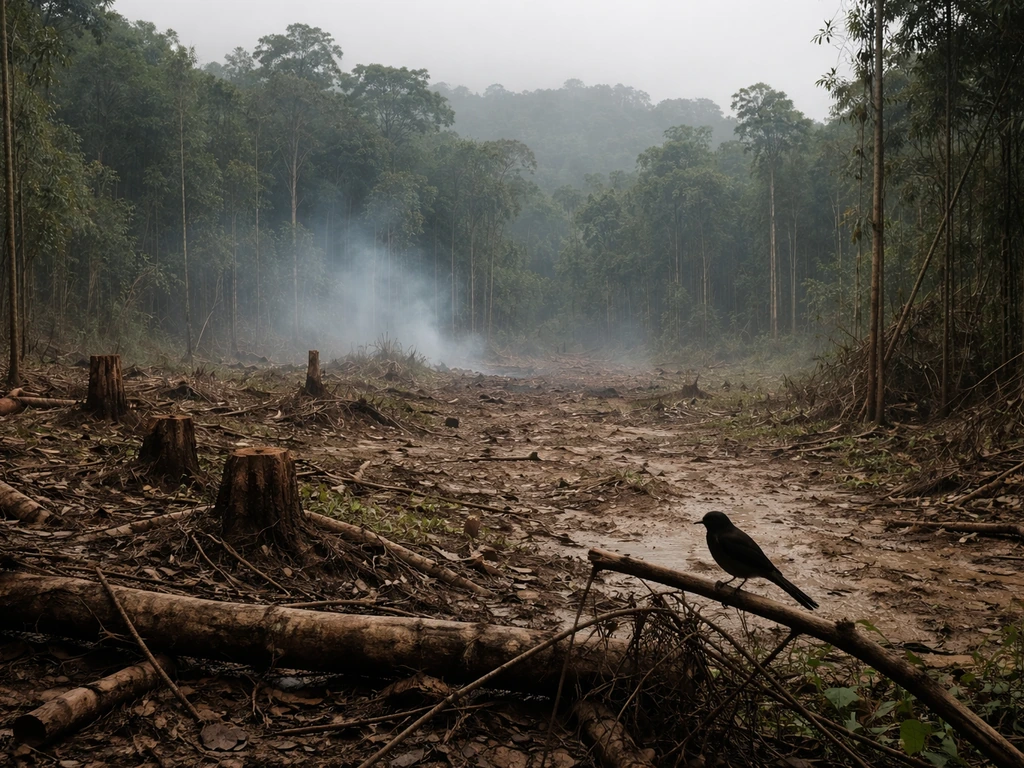
Delalande's coua went extinct on Madagascar because island species are uniquely vulnerable. Island populations are small, geographically confined, and often evolved without mammalian predators. When humans arrived with rats, cats, pigs, and land-clearing, the entire ecological structure the species depended on unraveled rapidly. Madagascar has lost more than 90 percent of its original forest cover, and the coua family as a whole has paid a heavy price.
Habitat loss and deforestation
Many at-risk cuckoo species are forest-interior specialists. They can't persist in fragmented or degraded forest patches the way generalist birds can. The Sumatran ground-cuckoo and various Southeast Asian malkohas are essentially hostage to whatever primary forest is left standing. As logging, agriculture, and palm oil expansion have eaten into those forests, specialist species like these have been squeezed into ever-smaller refugia.
Invasive predators and competitors
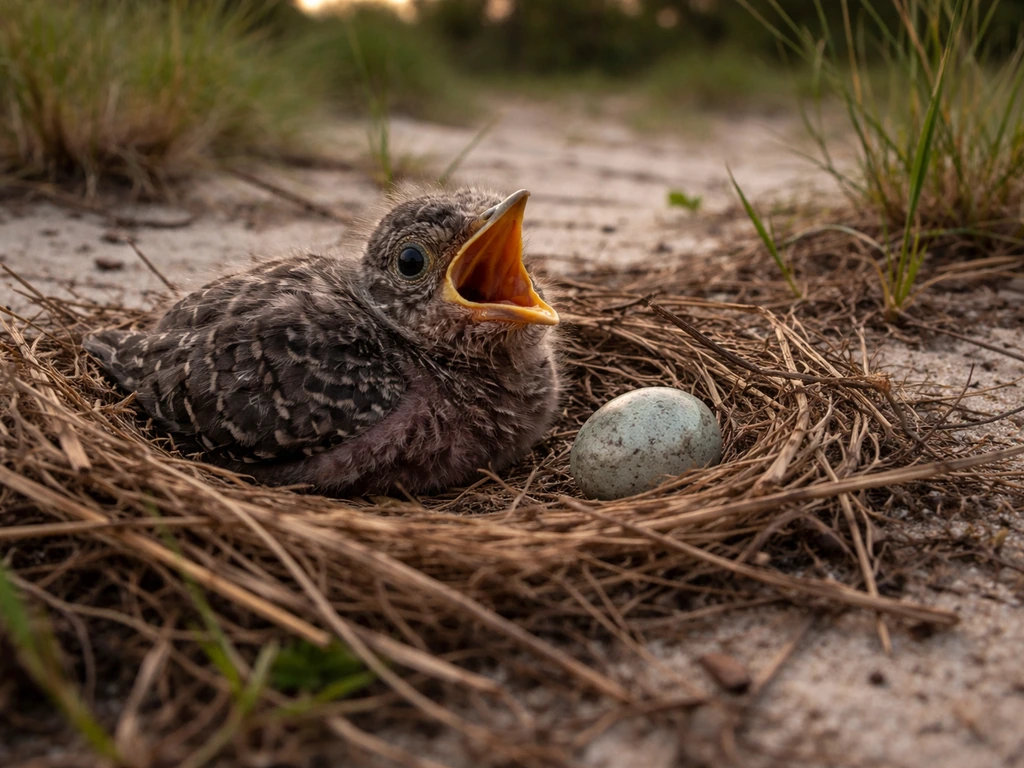
Introduced rats, mongooses, and feral cats have devastated ground-nesting and low-nesting birds across Pacific and Indian Ocean islands. Some coucal populations on small islands were likely extirpated before they could even be formally described. This pattern of predator-driven extinction is well-documented across bird families globally.
Brood-host decline affecting parasitic cuckoos
This one is unique to cuckoos. Many cuckoo species are obligate brood parasites, meaning they cannot reproduce without specific host species to raise their chicks. All About Birds (Cornell Lab of Ornithology) also describes cuckoo brood-parasitism and the dependence on specific host species to raise their chicks blank" rel="noopener noreferrer">obligate brood parasites. If the host bird declines due to habitat loss or other pressures, the cuckoo that depends on it can decline in lockstep, even if the cuckoo's own habitat is still intact. The common cuckoo's decline in parts of northern Europe has been linked partly to declines in its preferred host species like the dunnock and reed warbler.
Climate-driven migratory mismatches
Migratory cuckoos like the common cuckoo and North American species time their arrival to coincide with peak insect abundance and host-bird nesting activity. Climate change is shifting the timing of insect emergence and host nesting, creating phenological mismatches that reduce breeding success. This is a slow-moving driver, but it's increasingly flagged in long-term population studies.
What to do next if you're tracking a cuckoo extinction claim
If you landed here because you read something specific, like a headline claiming 'the cuckoo is going extinct' or a post saying a cuckoo species was recently lost, here's a practical action plan to get to the bottom of it.
- Identify the exact species: Find the scientific name. If the article you read only says 'cuckoo,' it's almost certainly referring to either the common cuckoo (Cuculus canorus) or is being vague in a way that should make you skeptical of the claim.
- Pin down the region: 'Cuckoo going extinct in England' means something very different from 'cuckoo species confirmed extinct in Madagascar.' Cuckoos span every continent, so region changes the story completely.
- Look up the IUCN Red List category for that species. If it says Least Concern or Near Threatened, the 'going extinct' framing is an exaggeration. If it says Critically Endangered or Extinct, the concern is real.
- Check the assessment year: IUCN listings sometimes lag real-world changes by a few years. If a listing is more than 5 years old and the species lives in a fast-changing habitat, look for more recent field surveys in Google Scholar.
- Search for the species on BirdLife International's Datazone. BirdLife maintains some of the most current narrative summaries of individual species threats and conservation actions.
- If you're tracking a population-level disappearance (not a full species extinction), look for national or regional bird monitoring data. In Europe, the European Common Bird Monitoring Scheme tracks population trends. In North America, the North American Breeding Bird Survey is the standard reference.
- Be skeptical of dramatic extinction claims that lack a scientific name, a date, and a source. Conservation journalism is important, but it sometimes overstates local declines as species-level extinctions.
One last thing worth keeping in mind: the question of whether a bird is extinct often lives in a frustrating gray zone, especially for rarely surveyed island species. The IUCN label 'Possibly Extinct' exists precisely because absence of evidence is not always evidence of absence. IUCN’s Red List categories also use the “[Possibly Extinct](https://nrl. iucnredlist.
org/assessment/supporting-information)” label to flag taxa where the last known record and “year last seen” matter for Extinct or Critically Endangered assessments. Targeted surveys have rediscovered species thought gone for decades, including the Sumatran ground-cuckoo after an 80-year gap. So if you're following a story about a cuckoo species that 'might' be extinct, the honest answer may genuinely be 'we don't know yet,' and that's worth sitting with rather than forcing a binary verdict.
Other bird families face the same uncertainty, from the kagu of New Caledonia to the quetzal of Central America, and the cuckoo family is no different in that respect.
The bottom line: cuckoos are very much alive as a family. A small number of species are confirmed gone, a handful more are on the edge, and the rest are carrying on. Knowing which one you mean is the whole game.
FAQ
If I see the claim “the cuckoo bird is extinct,” how can I tell what it actually refers to?
It depends on whether the claim names a specific species. “Cuckoo bird” usually refers to the whole family Cuculidae, which is not extinct, while Delalande’s coua (Coua delalandei) is confirmed extinct. If a post does not provide a scientific name, treat it as unverified until you can match the claim to a species.
What does “possibly extinct” mean for cuckoo species, and why might the verdict change?
For “possibly extinct” species, you need to look for recent field survey results, not just older references. A common mistake is equating “not seen for decades” with “gone,” but some species are rediscovered after extensive targeted searches.
Why can conservation status differ even within the same cuckoo species name?
Use the scientific name and, when available, the correct population context (such as a subspecies or regional distinct population). For example, a “yellow-billed cuckoo” listing can refer to a specific regional DPS, so searching or assuming the status of the entire species can be misleading.
How can I avoid using outdated information when checking whether a cuckoo species is extinct?
Check whether the bird is listed with a formal conservation status category and whether there have been updates. Another common error is relying on a random news repost from years ago, without verifying whether the species has since been downlisted, uplisted, or reassessed based on new surveys.
What kind of evidence actually supports declaring a cuckoo species extinct?
Extinction claims are strongest when they combine dated museum specimens or subfossils with systematic recent surveys that find no living individuals. If an article cites only “no sightings on social media” or a single observer report, that is not the same standard of evidence.
Can a cuckoo be “extinct” in one place but still exist elsewhere?
Yes, but it is often localized. A region may lose a cuckoo population due to habitat change or predators, while the species still survives elsewhere. If a source says “the cuckoo is extinct,” it may be mixing local extirpation with global extinction.
How do host birds affect extinction risk for brood-parasitic cuckoos?
Look for breeding constraints specific to cuckoos, especially for obligate brood parasites. If the host species declines, the cuckoo can follow even if the cuckoo’s own habitat looks intact, so extinction risk might be driven by host conservation gaps.
What’s the best way to search without getting confused by unrelated “cuckoo” results?
Search for “Cuculidae” plus the region you care about, but always confirm the specific taxon’s scientific name afterward. “Cuckoo” can also bring up unrelated animals and even weather or clock references, so broad keyword searches can generate false matches.
Why are island cuckoo populations overrepresented in extinction stories?
If the story involves an island, treat it as higher risk for extinction and extirpation because small populations and introduced predators can eliminate entire lineages quickly. A practical next step is to look at habitat loss indicators and invasive species pressure on that specific island.