Flappy Bird didn't quietly fade away. It was yanked from the App Store and Google Play on February 10, 2014, by its own creator, at the exact moment it was the most downloaded game on the planet. No legal order, no corporate decision, no server failure. The developer simply decided to take it down, and he gave the world 22 hours' notice. Here's the full timeline of what happened, why it happened, and what you can actually do with it today.
What Happened to Flappy Bird and Why It Disappeared

Maya Hennessy
18 Apr 2026
How Flappy Bird became a global phenomenon
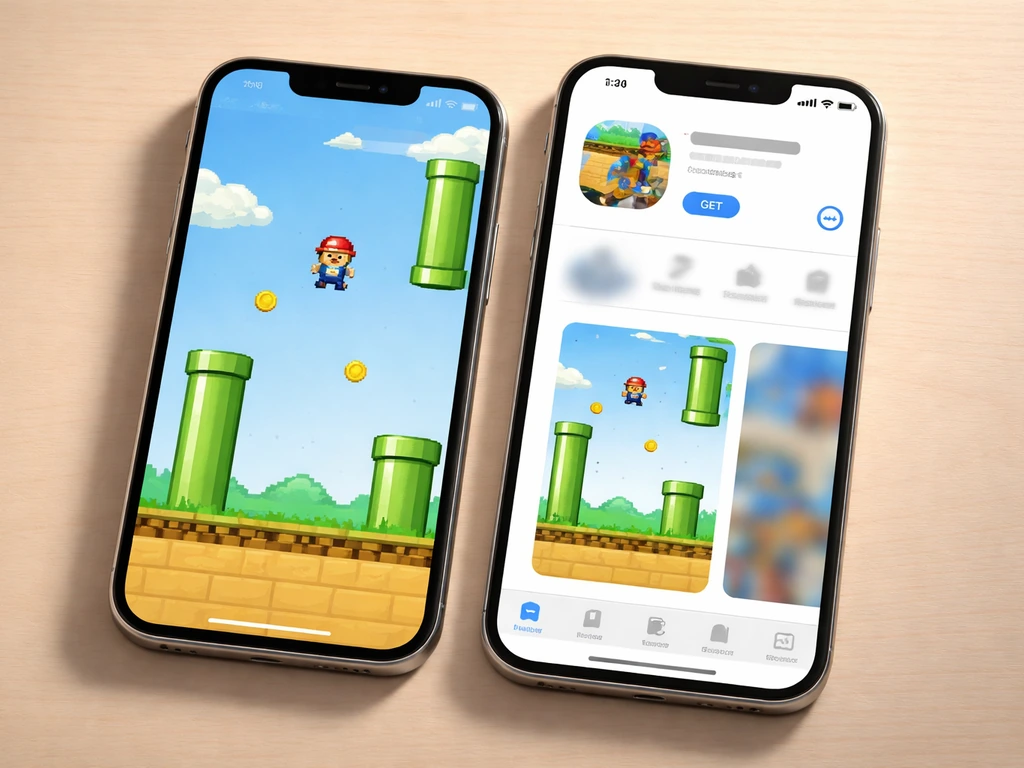
Flappy Bird was released on iOS on May 24, 2013, by Vietnamese developer Dong Nguyen through his studio dotGears. For most of that year, almost nobody noticed it. Then something shifted. By early February 2014, roughly eight months after launch, the game had climbed to the number one download position on the Apple App Store simultaneously in the United States, the United Kingdom, and China. Guinness World Records later recognized it as the first app to be withdrawn from the App Store after reaching that top spot.
By February 4, 2014, Flappy Bird had locked in the number one spot on the iTunes App Store and held it for more than two weeks straight. The premise was brutally simple: tap to keep a pixelated bird airborne between pairs of green pipes. The difficulty was unforgiving by design, and that combination of simplicity and frustration turned it into a social media spectacle. Screenshots of terrible scores flooded Twitter. People filmed their rage-quit moments. The game had no in-app purchases, no elaborate story, and no tutorial. It just was.
The shutdown: what actually happened and when
On February 8, 2014, Nguyen posted a tweet that stopped the internet: 'I am sorry Flappy Bird users, 22 hours from now, I will take Flappy Bird down.' No explanation accompanied the warning, just the countdown. Speculation exploded immediately. Legal threats, health concerns, burnout, a cry for attention. None of those theories were confirmed at the time.
The game was pulled from both the iOS App Store and Google Play on February 9 to 10, 2014. If you had already downloaded it, it kept working on your device. If you hadn't, it was simply gone. Nguyen followed up in a Forbes interview, quoted widely at the time, saying the game 'happened to become an addictive product' and that it had become a problem he hadn't intended to create. He said plainly: 'It's gone forever.'
Ars Technica published a more detailed interview on February 11, 2014, in which Nguyen elaborated that his discomfort stemmed from watching the game consume players' attention in ways that alarmed him. He said Flappy Bird was designed to be played for a few minutes while relaxed, not as an obsession. He also said he had no plans to take down his other games unless he felt they were similarly hurting users.
Why it was really removed (and what it wasn't)

The most persistent rumor at the time was that Nintendo had sent a cease-and-desist letter over the pipe graphics, which looked similar to pipes in Super Mario Bros. That rumor spread fast enough that TIME published an article titled 'Nintendo: We Didn't Kill Flappy Bird.' Nintendo explicitly denied any legal action against Nguyen. GeekWire reported that Nintendo denied involvement and that Nguyen confirmed Nintendo’s denial in a new interview Nintendo explicitly denied any legal action against Nguyen.. There was no lawsuit, no takedown notice, no intellectual property dispute that forced the removal.
The evidence points clearly to one cause: Nguyen's own decision, driven by what he described as guilt over the game's addictive nature. He was earning an estimated $50,000 a day in ad revenue at peak, which he also mentioned as part of what made the situation overwhelming rather than joyful. On r/gaming, players shared first-hand memories and debate about the removal of Flappy Bird, including suspected revenue figures, which adds community texture rather than hard proof ad revenue at peak. The success had become something he didn't want to be responsible for sustaining.
| Claimed Reason | What the Evidence Actually Shows |
|---|---|
| Nintendo legal threat over pipe graphics | Nintendo publicly denied any involvement; no legal action was filed |
| Developer mental health / burnout | Nguyen cited discomfort with fame and pressure, but his stated reason was the game's effect on players, not himself alone |
| App Store policy violation | No policy violation was cited; the removal was voluntary |
| Game was too addictive (Nguyen's stated reason) | Confirmed by multiple contemporaneous interviews; Nguyen said directly it had become a problem for users |
| Copyright claim by another party | No evidence of any third-party copyright or trademark action in 2014 |
What happened after the shutdown
The clone explosion
The vacuum left by Flappy Bird's removal was filled almost instantly. GameDeveloper.com reported that at peak, a new Flappy Bird clone was being uploaded to the App Store every 24 minutes. Engadget covered the same statistic in March 2014. Hundreds of copycat games appeared within weeks, most mimicking the tap-to-flap mechanic almost exactly. App stores briefly became flooded with games using 'Flappy' in their names.
Apple moved to contain the flood. By February 17, 2014, MacRumors reported that Apple had begun rejecting apps with 'Flappy' in the title if they appeared to be trading on the original game's name recognition. One documented example: 'Flappy Bee' was required to change its name to 'Jumpy Bee' before it could be approved. Google took similar enforcement action. Some clones were removed outright for being too close to the original design.
Nguyen's attempted return and what actually came of it
In May 2014, Nguyen told TIME that Flappy Bird would return in August with a multiplayer mode and that he was working to make it 'less stupidly addictive.' TechCrunch confirmed in August 2014 that Flappy Bird did come back, but only as a multiplayer game on Amazon's Fire TV. Ars Technica also reported that “Flappy Birds Family” appeared in the Amazon App Store for Fire TV as a return limited to Fire TV Flappy Bird came back, but only as a multiplayer game on Amazon's Fire TV. It didn't return to iOS or standard Android. That limited release came and went with little fanfare compared to the original's run.
The 2024 revival and the trademark dispute
A decade after the original shutdown, a 'revival' of Flappy Bird began circulating online. TechCrunch reported in September 2024 that Nguyen publicly disavowed it, stating he had 'nothing to do with the revival' and that he 'did not sell anything.' Separately, Ars Technica reported that Nguyen had failed to respond to a trademark notice, which led to a default judgment that canceled his trademark on the name, effectively allowing third parties to use it legally. Android Authority noted a Flappy Bird-related title appeared on the Epic Games Store for Android, emphasizing it lacked cryptocurrency integration (a notable point given that some revival versions had been tied to crypto schemes).
The upshot is this: if you see a 'Flappy Bird' game available for download today, it is almost certainly not from Dong Nguyen. The name no longer belongs to him in any legally protected sense, which means anyone can use it. That makes it genuinely difficult to know what you're getting when you download something calling itself Flappy Bird in 2025 or 2026.
What players can realistically access today
The original Flappy Bird, as Dong Nguyen built it, is not available on the iOS App Store or Google Play. If you are wondering what happened to the What Happened to Flightless Bird Podcast specifically, the most reliable answer is to check the show’s official channels for updates. If you downloaded it before February 2014 and never reset your device, you may still have a copy. Those copies occasionally show up on auction sites, sometimes on old smartphones being sold specifically because the original game is still installed, and they have sold for surprisingly high prices. That market is real but niche.
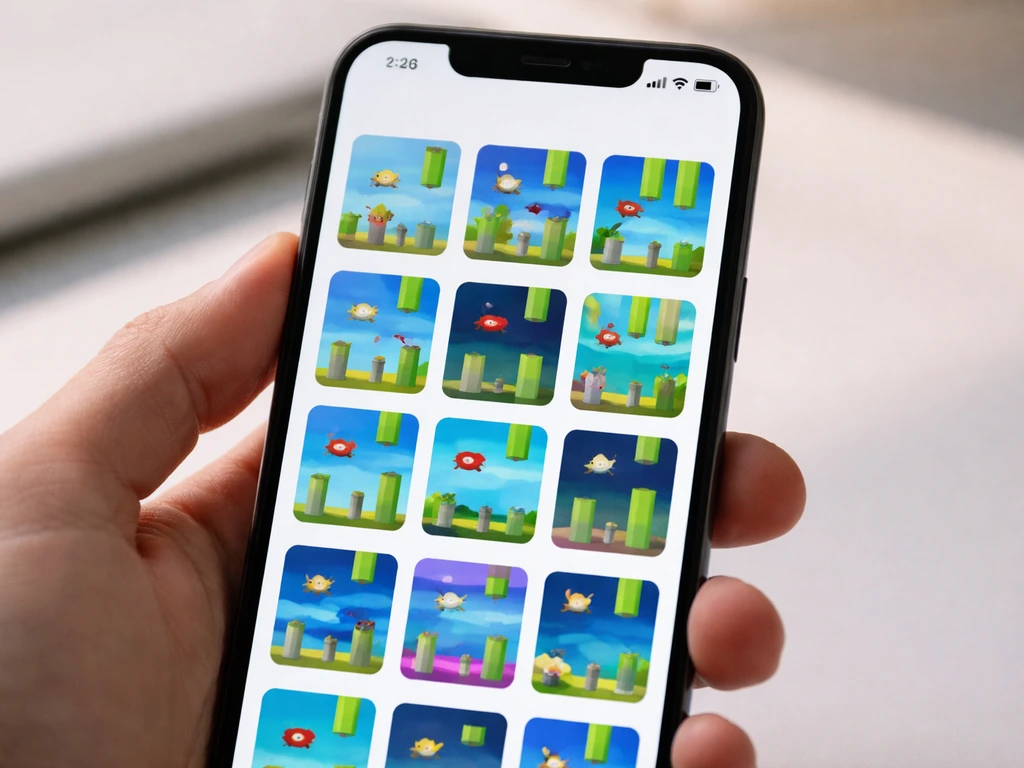
What you can find today are clones and unofficial versions. Some are faithful to the original mechanic, some add features, and some are connected to cryptocurrency or other monetization schemes that have nothing to do with the original game. Given that Nguyen's trademark no longer protects the name, none of the current 'Flappy Bird' titles should be treated as official or endorsed by the original creator unless Nguyen himself says otherwise. As of his September 2024 statement, he had not.
How to verify claims about Flappy Bird and spot misinformation
Because the Flappy Bird story involves a creator who largely stepped away from public life, misinformation has had a long time to take root. The Nintendo legal threat story is a perfect example: it spread fast in 2014, was denied by Nintendo almost immediately, and yet still shows up as fact in casual retellings. Here's a practical approach to checking any claim you read about the game:
- Look for contemporaneous reporting from February 2014. TIME, Ars Technica, Engadget, MacRumors, and TechCrunch all covered the shutdown in real time with direct quotes from Nguyen or official statements from Nintendo. These are your most reliable primary sources.
- Check whether a claim has a named source. Nguyen gave his reason for removal in a Forbes interview, which was widely quoted. If you see a different explanation, ask where it comes from.
- For anything about current availability or recent revivals, check for Nguyen's own statements. His September 2024 disavowal of the revival is on record. If a new version claims to be official, that claim should be verifiable through his own channels.
- Treat 'Flappy Bird is back' headlines with skepticism. Since the trademark lapsed, any developer can legally call their game Flappy Bird. Official does not mean original.
- Guinness World Records documented the original chart performance and removal date, making it a useful cross-reference for basic facts about when the game peaked and when it disappeared.
The Flappy Bird story is, in its own way, a case study in how quickly a thing can rise, disappear, and then be misremembered. The facts are well-documented if you go back to the original reporting. The timeline is clear: released May 2013, peaked February 2014, removed February 10, 2014, briefly returned on Amazon Fire TV in August 2014, and then largely replaced by a landscape of unauthorized clones and revival projects that the original creator has publicly distanced himself from. Anyone who tells you Nintendo killed it or that there's an official new version is working from either a rumor or a marketing claim, not the record.
If you're interested in other famous disappearances in a more natural-history vein, the dynamics here, rapid rise, sudden disappearance, and lingering legacy, echo some of the stories explored elsewhere on this site around birds that vanished from the record, whether through extinction, habitat loss, or simply being lost to documentation. The same idea, that man is not a bird survived the great flood, comes up in old flood-and-survival stories and interpretations. The 'why did it disappear' question turns out to be just as complicated whether you're asking about a game or a species. Why is Big Bird not on Sesame Street is another question people ask when they see a beloved character vanish from the spotlight.
FAQ
If I already had Flappy Bird installed back in 2014, will it still work today?
Usually yes on that same device, but it depends on whether the app was ever removed from your device, whether your OS still supports the old app, and whether you rely on online components (the original was mostly offline). If you’ve never deleted it, check your installed apps list first before assuming you’ve lost access.
Why can’t I redownload the original Flappy Bird from the App Store or Google Play now?
Because it’s not available as a downloadable product from those stores anymore. Even if you owned it historically, many removed apps cannot be reinstalled from the store after certain OS updates, storage cleanup events, or account restrictions. Your best bet is using whatever copy remains on a device you didn’t wipe.
How can I tell whether a “Flappy Bird” game I see in 2025 or 2026 is official or a clone?
Treat anything claiming “official” with suspicion unless it clearly credits Dong Nguyen and matches an explicitly authorized release. Also check for the publisher/developer name, app description wording, and whether it looks like a simple remake versus a branded, original production. The article notes the name is widely usable now, so listings can be misleading.
Are the cryptocurrency “Flappy Bird” games real or scams?
Some exist as legitimate novelty titles, but crypto tie-ins are a common red flag, especially if the description promises rewards, tokens, or “earning” without clear, verifiable mechanics. If a game’s monetization depends on buying crypto or interacting with suspicious wallets, assume it’s unrelated to the original product’s design and prioritize safety.
What happened to Dong Nguyen after he took it down, did he ever fully return to iOS/Android?
He distanced himself from later revival claims and did not bring the original back to iOS or standard Android. The article explains that a limited return happened on Amazon Fire TV in 2014 as a multiplayer version, and later “revival” projects were disavowed by him.
Did Nintendo actually threaten or force the takedown?
The consistent takeaway is that it was not a Nintendo-driven legal takedown. Nintendo denied any action, and the removal timeline aligns with the creator’s own decision and statements rather than a court order. Rumors persisted because similar-looking pipe graphics were easy to misattribute.
How long after the game peaked was it removed?
It was pulled about a week after it was dominating downloads, with the public warning posted on February 8 and takedowns occurring across Feb 9 to Feb 10, 2014. That short window is one reason the event felt abrupt and viral.
Is there a safe way to recover an old copy if I don’t remember whether I deleted it?
Check your device’s installed apps first, then look at your purchased history only if your phone’s store supports it for removed apps. For iPhones, also consider that reinstall options vary by iOS version. Avoid downloading “restored” APKs from random sites if you want the original game, since clones can be packaged with unwanted adware.
Could the original Flappy Bird data be lost if I reset my phone or switch devices?
Yes. If you reset, update in a way that breaks compatibility, or switch devices, you may lose the ability to run the original app unless your new device can still install it from your purchase history or you have the original app package saved. That’s why availability on auction sites often involves old phones kept with the original app intact.