Flappy Bird was removed because its creator, Dong Nguyen, chose to take it down himself. Not because of a lawsuit, not because Apple or Google forced his hand, and not because of any copyright claim from Nintendo (a persistent myth we'll get to). On February 9, 2014, Nguyen pulled the game from both the Apple App Store and Google Play, and the listings disappeared for new users around noon Eastern Time that day. That's the short answer. The longer answer involves a developer who said the game's runaway success was ruining his simple life, and who made a unilateral decision to walk away from roughly $50,000 a day in ad revenue.
Why Flappy Bird Was Removed From the App Stores and More

Maya Hennessy
19 Apr 2026
Removed, deleted, taken down: they all mean the same thing
If you've been searching "why was Flappy Bird removed" or "why was it deleted" or "why was it taken off the App Store," you're asking about the same event. The terminology just depends on whose perspective you're describing it from. Here's a quick breakdown of what each phrase actually means operationally.
| Term | What it means in practice | Who it applies to |
|---|---|---|
| Removed | The developer voluntarily delisted the app from store platforms | Developer (Dong Nguyen) |
| Deleted | Often used loosely to mean the same as removed; the app was not "deleted" from phones already running it | Common user confusion |
| Taken down | Same as removed; the store listing disappeared and new downloads stopped | Platform users trying to find it |
| Taken off the App Store | Specifically describes the Apple App Store delisting, but Google Play was delisted simultaneously | iOS users searching for it |
The important nuance is that the game was never "deleted" from devices that already had it installed. If you had Flappy Bird on your phone on February 9, 2014, it kept working. What stopped was the ability for new users to find it, download it, or for anyone to get it through an official channel they hadn't already used.
The exact timeline of what happened
The removal didn't come out of nowhere. Dong Nguyen announced it publicly on Twitter before he actually pulled the plug, which is part of why there was so much media coverage and why the story spread so fast. Here's how the sequence played out.
- Late January 2014: Flappy Bird becomes a viral phenomenon, hitting the top of app store charts globally and generating an estimated $50,000 per day in in-app advertising revenue.
- Early February 2014: Nguyen begins posting on Twitter about feeling overwhelmed by the game's fame, including messages suggesting he was considering removing it.
- Around February 8, 2014: Nguyen tweets that he will remove Flappy Bird from the App Store within 22 hours, citing his own decision and saying "I cannot take this anymore."
- February 9, 2014 (approximately noon ET): The game disappears from the Apple App Store listing. Google Play delisting happens at essentially the same time. New downloads become impossible through official channels.
- Post-removal: Phones with the game already installed continue to run it normally. The story dominates tech and mainstream news for days.
Coverage from Kotaku, TechCrunch, and 9to5Mac all confirmed the February 9 date and the near-simultaneous removal from both major platforms. This wasn't a phased rollout or a platform-initiated removal process. It was a single developer making a call and following through on it.
What Nguyen actually said about why he did it
Dong Nguyen gave an interview to Forbes shortly after the removal where he was direct: the game had become "an addictive product," and he said he felt guilty about that. TechCrunch reports that Nguyen told Forbes he decided to take down Flappy Bird because it had become “an addictive product. ”.
He described not being able to "take this" anymore, referencing the stress of the spotlight, constant media requests, online harassment, and what he perceived as the game having a negative effect on players' lives. In a February 8, 2014 tweet, Dong Nguyen said he would remove Flappy Bird from app stores in “22 hours” and wrote, “I cannot take this anymore. ” [He described not being able to "take this" anymore](https://www. latimes.
com/business/technology/la-fi-tn-flappy-bird-removed-app-store-developer-tweet-20140208-story. html). He was not, by his own account, responding to any legal threat or platform pressure.
His Twitter posts in the days before the removal support this. The messages read as someone genuinely distressed rather than strategically managing a PR situation. He also made clear in subsequent interviews that the decision was final at that point and was entirely his own.
The Nintendo copyright angle (and why it didn't cause the removal)

Flappy Bird's pipe graphics looked similar to the pipes in Super Mario Bros., and that similarity generated a huge amount of speculation that Nintendo had issued a cease-and-desist or some form of legal pressure. Nintendo never publicly confirmed any legal action, and Nguyen himself denied that legal issues were behind the removal. The visual similarity was real, but the copyright-pressure story remains unconfirmed and contradicts Nguyen's own stated reasons.
What actually changed for iOS and Android users after February 9
For anyone who already had the game installed, the practical impact was almost zero at first. The app kept running on existing devices. What changed immediately was the ability to get it fresh. New iPhones, new Android phones, factory resets, or anyone who hadn't downloaded it before the cutoff date suddenly had no official path to the game. Over time, the impact grew as people upgraded phones and lost the app in the process.
There was one important exception on the Apple side. TechCrunch reported at the time that users who had downloaded Flappy Bird before the delisting should still be able to re-download it through their Apple purchase history, even after the public listing disappeared. This meant that if you had it in your iTunes or App Store purchase history, you technically retained access. That's a standard Apple mechanism for apps that are delisted but not formally revoked, and it applied here.
Google Play's situation was similar in principle but more variable in practice, and the long-term availability through purchase history has become less reliable as the app has aged and compatibility issues have grown with newer Android versions.
Can you still play or reinstall Flappy Bird today?
As of April 2026, there is no official way to download Flappy Bird if you don't already have it through your purchase history. Here's a realistic breakdown of your options.
If you had it before the removal
Check your Apple App Store purchase history under your account. If Flappy Bird appears there, you may be able to re-download it. In practice, this has become hit-or-miss over time because older app builds often lose compatibility with newer iOS versions, and Apple may not serve an old binary that can't run on current hardware. It's worth checking, but don't count on it working perfectly on a current iPhone.
If you never had it
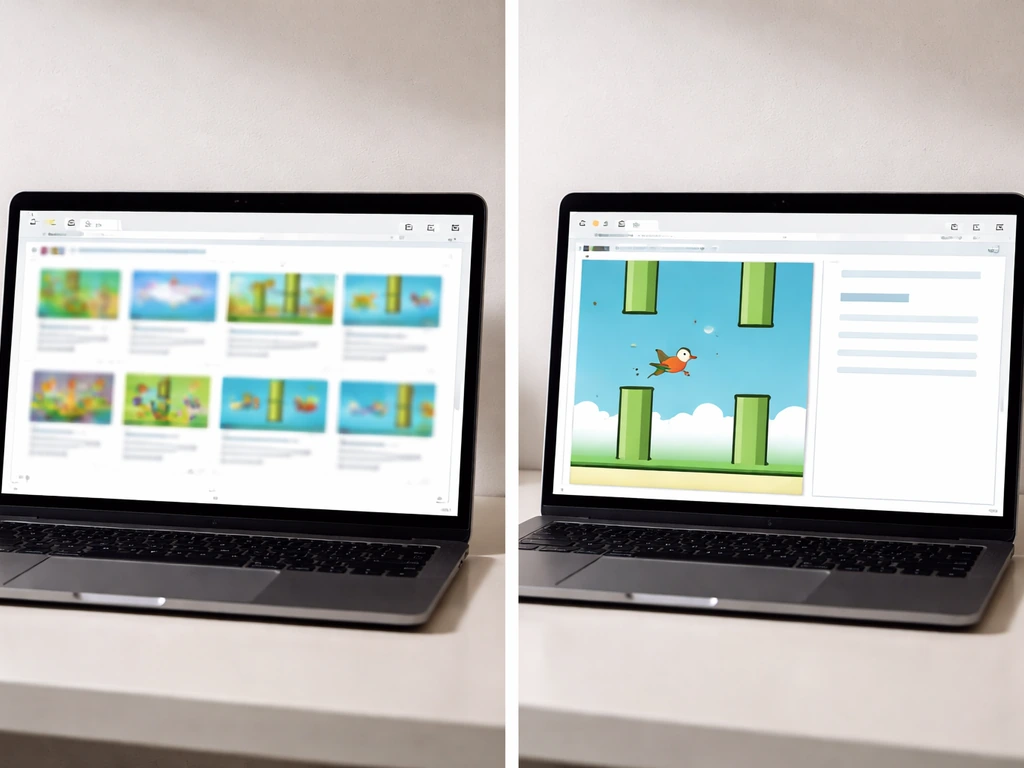
Your options are either unofficial or imperfect. There are browser-based clones and open-source recreations of Flappy Bird's mechanics that you can find through a basic web search. These are not the original game, but they replicate the gameplay reasonably well. On Android, APK files of the original game have circulated online since 2014. Installing an APK from an unofficial source carries real security risks, and there's no way to verify that a circulating APK hasn't been modified to include malware. This route is not recommended unless you know exactly what you're doing and where the file came from.
The "Flappy Bird Family" and official follow-ups
Nguyen did eventually release a revised version called Flappy Bird Family, which appeared exclusively on Amazon Fire TV devices. He has also released other games since 2014. These are legal, official options, though they're not identical to the original Flappy Bird experience and have had limited visibility compared to the original's cultural moment.
Myths worth clearing up before you go any further
A lot of the misinformation around Flappy Bird's removal has stayed in circulation because the story happened fast, people filled gaps with speculation, and many of those early guesses got repeated until they sounded like facts. Here are the most common ones.
- Myth: Nintendo forced the removal with a lawsuit or legal threat. Reality: Nintendo never confirmed any legal action, and Nguyen explicitly cited personal reasons. The pipe similarity was real but the legal pressure story is unconfirmed.
- Myth: Apple or Google removed the game without the developer's consent. Reality: Both platforms delisted the game because Nguyen requested it. Platform-initiated removal would typically involve policy violations, which were never cited here.
- Myth: The game was deleted from all phones that had it installed. Reality: The removal only affected new downloads. Existing installations kept working normally.
- Myth: It was some kind of marketing stunt designed to drive hype. Reality: Nguyen continued giving interviews in the months after that were consistent with genuine burnout and distress. The game never returned to major platforms in its original form, which makes the "stunt" theory hard to sustain.
- Myth: You can safely reinstall it by finding any APK file online. Reality: Unofficial APK files carry real security risks and there's no verification process for them. Many circulating files are modified versions.
If you're trying to figure out what actually happened, the most reliable sources remain the contemporaneous reporting from February 2014, Nguyen's own Forbes interview from that period, and his Twitter posts leading up to the removal. Everything else should be treated with some skepticism, particularly forum posts and YouTube videos that have accumulated years of speculative comments on top of already incomplete original reporting.
The story of Flappy Bird disappearing from app stores has some surface-level parallels to the broader idea of species or things just vanishing from the world, which is part of why it resonates. The phrase “man is not a bird survived the great flood” is often discussed as a mythic or metaphorical idea, not as a literal explanation for app-store removals species or things just vanishing from the world.
But unlike an extinction event driven by complex environmental pressures, this particular disappearance had a very human explanation: one developer, under an enormous amount of pressure, made a choice to walk away. If you're wondering why flappy bird was banned, the key point is that Nguyen voluntarily removed the game himself rather than a formal ban by platforms or lawmakers walk away.
If you want the full timeline, you can start with the February 9, 2014 delisting and then follow how Nguyen explained his decision afterward what happened to flappy bird. If you also meant the What Happened to Flightless Bird Podcast episode, that episode focuses on the same delisting and the reasons behind it. That clarity is actually somewhat unusual when something this popular just stops existing. Most of the time, there isn't that clean of an answer.
Big Bird has not been on Sesame Street because his appearances are controlled through specific licensing and production decisions by the show’s teams Flappy Bird. If you're also trying to understand what happened to flappy bird, the key takeaway is that the removal claims were largely driven by Nguyen's own decisions and fast-spreading speculation rather than any single, proven external factor.
FAQ
If I already downloaded Flappy Bird back in 2014, will it still work after the removal?
On devices that already had Flappy Bird installed, nothing about the app store listing affects its local copy. It can stop working later if the game depends on an operating system version, online services, or ad components that no longer load, but the initial delisting did not automatically uninstall it.
How can I tell if I will be able to re-download it, and what matters about timing?
The key timing question is whether your download was completed before the delisting cutoff. For iOS, checking purchase history is the right first step, but even then an old app version may fail to reinstall on newer iOS because Apple can refuse to serve binaries that cannot run on current hardware.
Does “removed from the app stores” mean the original game was deleted from everyone’s devices?
“Removed” and “delisted” describe what you can access in official stores, not whether the developer technically deleted it everywhere. If a user never downloaded it or their account purchase history lacks the app, they typically cannot get it through legitimate means.
Why do some websites claim they have the real Flappy Bird download, and what’s the safest way to evaluate them?
If a site offers a “re-download link” or claims it is the real official app, treat it as high-risk unless it is literally your store purchase history flow. The most common mistake people make is confusing store listings that are gone with third-party download buttons that are actually modified packages or malware.
What are the realistic expectations for reinstalling on iPhone versus Android?
For iOS, purchase history access is the main legitimate pathway, but it is not guaranteed over time. For Android, availability through purchase history has been inconsistent as compatibility changes, so you may not be able to reinstall even if you previously downloaded it.
If the pipes look like Super Mario Bros., does that mean Nintendo forced the removal?
“Nintendo issue” claims persist because of the visible resemblance, but the most decision-relevant information is what the developer said around the February 9 removal, not later internet arguments. A visual similarity alone is not proof of a cease-and-desist, and Nguyen explicitly denied legal pressure as the driver.
What should I expect if I use a clone or recreation instead of the original?
If your goal is the exact original experience, clones and recreations might feel close but they can differ in controls, physics, level generation, and scoring, and they may include extra content. That makes them fine for casual nostalgia, not for a faithful “same game” purpose.
Is it actually safe to install the circulated APKs of the original game on Android?
Installing an APK from unofficial sources can expose you to tampered files, malicious payloads, or scams. Even if the app seems to run, you cannot easily verify what you installed, and older game packages may not function correctly on modern Android versions.
Is there any official replacement game if I cannot download the original?
If you are looking for an officially released alternative, Nguyen’s “Flappy Bird Family” exists but it is not identical to the original and was released for a specific platform category. Expect a different distribution path and potentially different gameplay tuning.
What sources should I trust when I read claims about why Flappy Bird was removed?
After the removal, the story spread quickly with speculation, so a practical approach is to prioritize primary materials from around February 2014 (developer statements and contemporaneous reporting) and treat older forum claims as unverified unless they match those primary accounts.
Next Articles
What Happened to Flappy Bird and Why It Disappeared
Timeline of what happened to Flappy Bird: why it was removed, clone rise, and where players can find versions today.
Why Flappy Bird Was Banned: Real Reason and Timeline
Flappy Bird removal explained: real reasons, timeline, rumors vs facts, and how to verify availability today.
Is the Dodo Bird Still Alive? What Evidence Shows Today
Learn if any dodos could exist today, why scientists say they are extinct, and how to judge sightings reliably.