
Kiwi birds are not dangerous to humans in any meaningful sense. They are shy, nocturnal, ground-dwelling birds that would far rather disappear into the undergrowth than pick a fight with you. That said, a cornered or startled kiwi can scratch with its sharp claws, and a poorly managed dog encounter can turn tragic fast, though the tragedy is almost always for the kiwi, not the human. The realistic safety picture here is less about protecting yourself from kiwi and much more about protecting kiwi from us.
Are Kiwis Dangerous Birds? Safety Tips and Risks

Maya Hennessy
13 May 2026

Are kiwi birds actually dangerous?

The honest answer is: almost never, and certainly not in the way people imagine. Kiwi are not aggressive hunters, they do not chase people, and they have no venom, no talons the size of a cassowary's, and no bill designed for attack. New Zealand's Department of Conservation describes them as birds that typically avoid humans, and that matches what most people who spend time in kiwi habitat report. A kiwi's instinct when it senses something large nearby is to freeze, crouch, or quietly move away.
Where things get slightly more complicated is in very close encounters, especially if a kiwi feels trapped or is handled without proper training. In those situations, it will use what it has: powerful legs and sharp claws. An untrained person trying to pick up a kiwi could absolutely get scratched badly enough to draw blood. But again, that scenario is uncommon, and it requires you to be doing something you really should not be doing in the first place.
How kiwi behave and when conflicts actually happen
Kiwi are nocturnal and spend their days sheltering in burrows, dense scrub, or forest undergrowth. They come out at night to probe the ground for invertebrates using their long bill, which has nostrils at the tip, a genuinely unusual adaptation. Because they are active when most people are asleep, spontaneous face-to-face encounters are already uncommon.
When conflicts do happen, they almost always follow a predictable pattern. A person (or more often a pet) gets too close too fast. The kiwi, feeling cornered, adopts a defensive posture and may kick out or peck. This is not aggression for the sake of it; it is a prey animal doing the only thing it can when flight (quite literally, since kiwi cannot fly) is not an option. Encounters near kiwi habitat at dawn or dusk, when some kiwi are still active, are slightly more likely, especially in areas like Northland, Coromandel, or the West Coast where wild populations exist.
Kiwi anatomy: what they can actually do
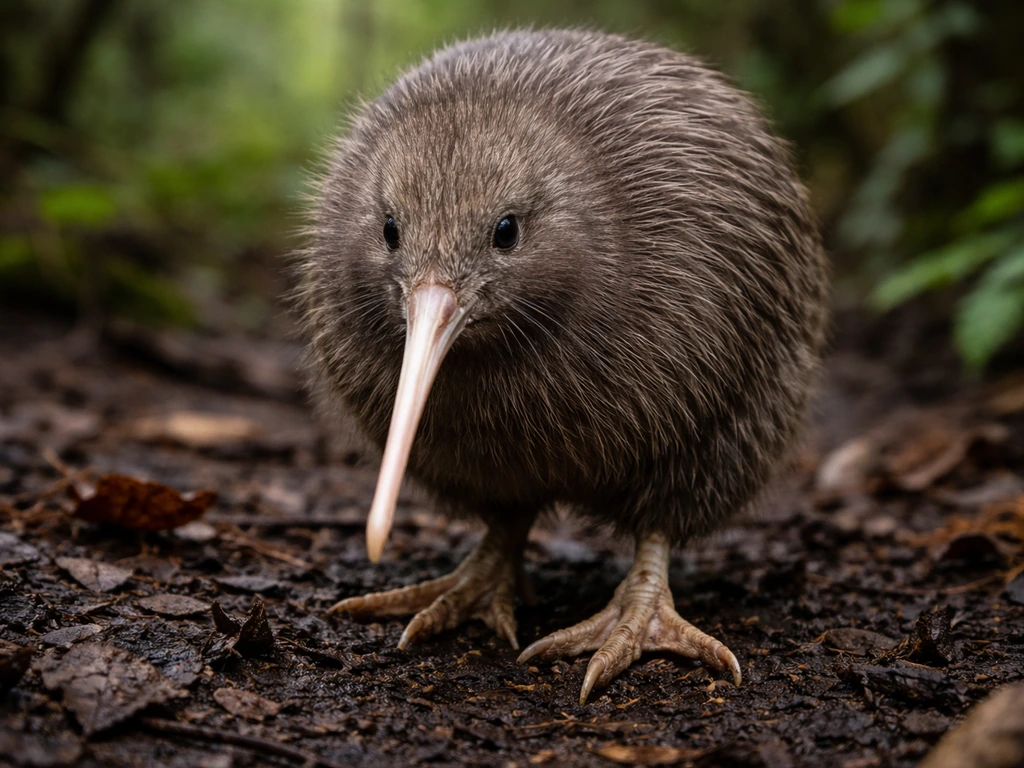
Understanding what a kiwi is built like helps calibrate the risk accurately. Kiwi are compact, roughly the size of a domestic chicken, though some species like the North Island brown kiwi can weigh up to 2.8 kg. Their wings are vestigial, essentially useless for flight or striking, so they bring nothing to a confrontation from that angle. What they do have is a solid, muscular body and exceptionally strong legs relative to their size.
Those legs end in sharp claws, and that is the main physical tool both Save the Kiwi and DOC point to when discussing kiwi defense. A hard kick from a kiwi in a defensive situation can scratch skin, and if you are holding one incorrectly, the claws can cause real lacerations. The bill is long and pointed, primarily adapted for probing soil, but it can also jab if the bird is extremely stressed. Neither of these represents a serious threat to a healthy adult who simply keeps a respectful distance, but they are worth knowing about if you work with kiwi or stumble across an injured one.
What to do if you see a kiwi in the wild or near your home
The best thing you can do when you spot a kiwi is nothing dramatic. Keep your distance, stay quiet, and let it move away on its own terms. If you have a torch or phone light, dim it or angle it away, because bright light stresses nocturnal birds. Do not attempt to approach, corner, or touch it. The bird almost certainly knows you are there already and is making its own risk calculation.
If a kiwi turns up in your garden or near your house, which does happen in some coastal and rural areas of New Zealand, the recommended response from DOC is to contact them or a local kiwi care community group rather than attempting to handle the bird yourself. What you should record before you call: your name and phone number, the exact location (as specific as possible), and the time and date you found it. If the kiwi appears injured or distressed, that information becomes urgent and treatment needs to happen promptly, delays of more than 24 hours after an injury significantly worsen outcomes.
- Keep your distance and stay calm, sudden movement startles kiwi.
- Dim or redirect any artificial light source.
- Do not attempt to touch, pick up, or restrain the bird.
- Note the location, time, and any visible signs of injury.
- Contact DOC or a local kiwi care group immediately if the bird appears hurt or is in immediate danger.
- Keep children and pets well away while you make the call.
Safety around kiwi habitats: kids, pets, and responsible viewing
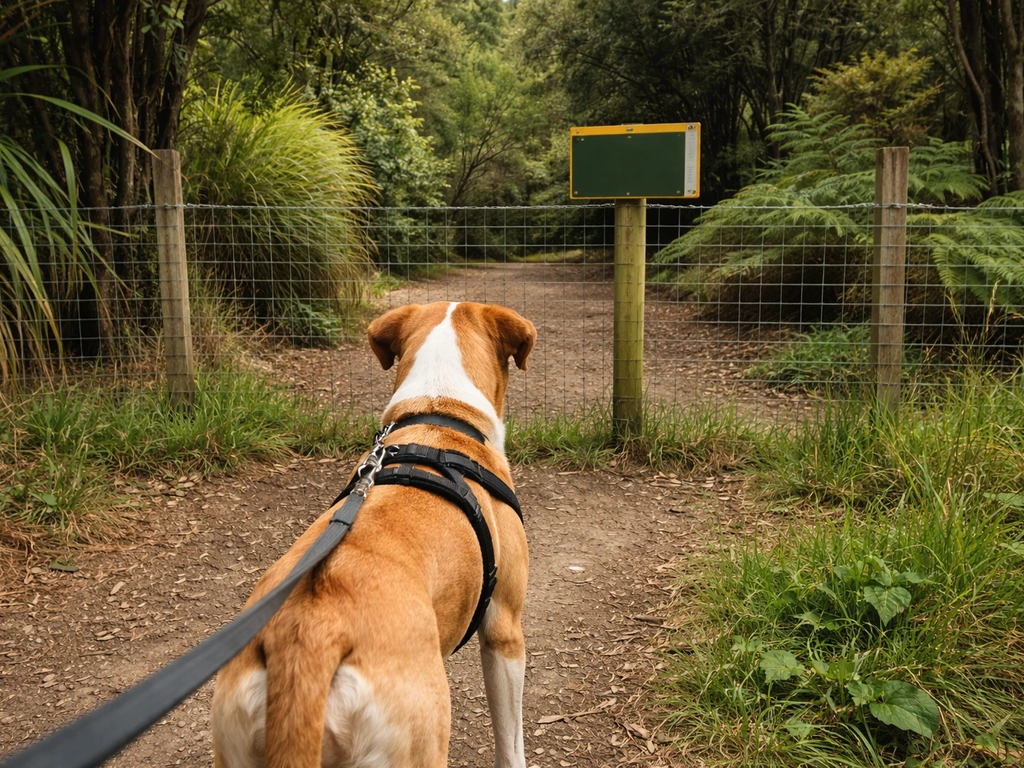
If you are spending time in kiwi country, the clearest safety guidance from DOC is mostly about protecting kiwi from human companions, especially dogs. Dogs are not permitted in kiwi sanctuaries and many conservation areas for good reason: even a small domestic dog can kill a kiwi in seconds. Auckland Zoo documented one case where a dog bite left a kiwi with a fibula fracture and severe soft-tissue damage to the leg. A New Zealand government media release described a monitored kiwi found covered in dog bites in a national park kiwi refuge. These are not edge cases.
Cats are a lesser but still real threat, particularly at night when kiwi are active. DOC recommends keeping cats indoors at night if you live near kiwi habitat. For people wondering about food choices instead, it also helps to understand whether is kiwi bird halal before using or selling anything labeled as kiwi-related keeping cats indoors at night. Kiwi aversion training programs exist to help dogs learn to avoid kiwi by scent, and these have become a meaningful conservation tool in areas where dogs and kiwi share territory.
For children visiting kiwi habitats, the guidance is simple: stay on marked paths, keep voices low, and treat any kiwi sighting as something to watch quietly from a distance rather than approach. Many sanctuaries and nocturnal wildlife houses offer controlled viewing conditions that are both safe for visitors and far less stressful for the birds. That is genuinely the best way to see a kiwi up close.
| Situation | Risk to you | Risk to kiwi | Recommended action |
|---|---|---|---|
| Spotting a kiwi at night from a distance | None | Low if you stay calm | Watch quietly, do not approach |
| Kiwi in your garden | Minimal | Moderate (predators, roads) | Contact DOC or kiwi care group |
| Dog off-leash near kiwi habitat | None to you | Very high | Leash immediately, leave the area |
| Attempting to handle a wild kiwi | Moderate (scratches) | High (stress, injury) | Do not do this, call professionals |
| Child running toward a kiwi | Minimal | Moderate (defensive response) | Calmly redirect the child away |
Kiwi conservation context: they are the ones at risk, not you
There are roughly 70,000 kiwi left in New Zealand, and without active human intervention, that number continues to decline. Kiwi are classified as endangered or vulnerable depending on the species, and all five species face serious ongoing pressure from introduced predators, habitat loss, and vehicle strikes. The question of whether kiwi are dangerous to humans is, in conservation terms, almost the wrong question. If you are also wondering about a kiwi's classification, it is not a mammal is a kiwi bird a mammal. The real story is the other way around.
DOC's April 2026 media release encouraged New Zealanders to report kiwi calls and sightings rather than approach or disturb birds, framing citizen observation as a genuinely useful conservation action. That reflects the broader messaging: kiwi need human help, not human excitement at close range. The bird's status as an endangered species shapes every aspect of how interactions are managed, from strict handling protocols that require permits and training, to the outright ban on routine public handling of captive kiwi. DOC’s Kiwi Best Practice Manual also emphasizes that kiwi should not be regularly taken out just so people can see or touch them blank" rel="noopener noreferrer">from strict handling protocols that require permits and training, to the outright ban on routine public handling of captive kiwi.. In New Zealand, killing a kiwi is illegal and can carry serious penalties, so seek advice and contact the right authorities instead outright ban on routine public handling of captive kiwi. If you are wondering whether kiwi birds are extinct, the answer is no, but they are endangered and need protection is kiwi bird extinct.
Kiwi conservation sits alongside questions that naturally come up when people start learning about these birds: whether they are truly endangered, where exactly they live, and what makes them such an unusual example of flightless bird evolution. Where does a kiwi bird live? Kiwi live in New Zealand, with different species found in different regions and habitats where exactly they live. All of those threads connect back to the same core message: kiwi are fragile survivors of an ancient lineage, and encounters with them deserve care and respect rather than casual curiosity.
When to seek help after a kiwi encounter
If a kiwi has scratched you during an encounter, clean the wound thoroughly with soap and water and apply standard first aid. Kiwi are not known to carry diseases transmissible to humans in the way some other wildlife can, so a scratch from a defensive kiwi is treated like any wildlife scratch: clean it, monitor for signs of infection, and see a doctor if it is deep or becomes inflamed. You do not need emergency care for a superficial scratch.
The situation where you should absolutely seek help quickly is if you find an injured kiwi, whether from a dog attack, vehicle strike, or entrapment. DOC's first aid guidance makes clear that kiwi injuries deteriorate fast and delays in discovery or treatment, sometimes more than 24 hours, dramatically reduce survival chances. In that case, do not wait. Call DOC's emergency wildlife hotline (0800 DOC HOT / 0800 362 468 in New Zealand), give your location clearly, and keep pets and people away from the bird while you wait for help. Do not attempt to transport the bird yourself unless you are specifically instructed to do so and given guidance on how.
- Scratch or minor injury to you: clean with soap and water, monitor for infection, see a doctor if deep.
- Unusually aggressive kiwi behavior: back away calmly, do not provoke further, report the encounter to DOC.
- Injured kiwi found: call 0800 DOC HOT (0800 362 468) immediately, note the location and time, keep distance.
- Dog has attacked a kiwi: remove the dog from the area and call DOC right away, even if the kiwi appears to walk away, internal injuries are common.
- Kiwi in immediate danger (road, water, entrapment): call DOC for guidance before doing anything yourself.
FAQ
If a kiwi seems calm, can it suddenly get aggressive?
No. In normal encounters kiwis freeze, crouch, or slowly move away. The realistic injury risk comes mainly from you getting too close or from a pet/dog interaction, not from the kiwi “attacking” as a strategy.
How close is too close to a kiwi in the wild?
Try to keep at least several meters (more if possible). If it is on a path or in your yard, back away rather than turning your back. Continuing to move closer, blocking its route, or corralling it against a wall increases the chance of a defensive kick or clawing.
Are kiwi dangers bigger for dogs than for people?
Yes, dogs are usually the biggest driver of serious harm. Even a “small” dog can injure a kiwi in seconds, and the kiwi may not have time to escape on the ground. Keep dogs on a leash at all times near kiwi areas and do not let them roam at dawn or dusk.
What’s the best way to reduce risk from cats near kiwi habitat?
Cats can be risky, especially at night when kiwi are active. The practical safeguard is to keep cats indoors overnight during kiwi season and near known habitat, because deterrents are less reliable once a cat is hunting.
What should I do if a kiwi scratch breaks the skin?
If a kiwi scratched you, wash with soap and water, then monitor for redness, swelling, warmth, increasing pain, or pus. Seek medical advice sooner if the cut is deep, the bleeding is difficult to stop, you cannot clean it well, or symptoms worsen over 24 to 48 hours.
What’s the correct response if I find a kiwi injured or trapped?
If you find an injured kiwi, contact the appropriate authority or kiwi care group promptly, and do not transport it yourself unless instructed. Keep people and pets away, note the exact spot and time, and if it is safe, shield it from direct light until help arrives.
Does using a flashlight or phone light make a kiwi more dangerous?
Yes. Bright headlamps and torches can stress nocturnal birds, which can make a defensive reaction more likely in a very close encounter. Use dim lighting, angle it away from the bird, and avoid repeated shining.
Can I pick up a kiwi to move it out of danger?
Avoid. Handling requires training and permits because kiwis are vulnerable, stressed easily, and can injure the handler with claws. If a bird looks distressed in your garden, record details and contact DOC or a local kiwi care organization.
What should I do if a kiwi shows up in my garden repeatedly?
If the kiwi is in a yard, the safest move is usually to give it space and quietly secure pets indoors if needed. For ongoing problems (for example, repeated sightings, signs of injury, or a kiwi trapped by fencing), report it with time and location so responders can advise on the safest next step.
How should families manage kiwi encounters with kids?
Wear sturdy shoes or boots and keep children at your side on marked paths. Teach children not to approach, chase, or try to film from close range, because the risk is mostly from cornering or accidental pet/dog escalation.
Does the endangered status change what I should do near kiwi?
Kiwi are endangered or vulnerable, and that status affects how you should interact. Also, if you see birds near roads, drive slowly and avoid stopping in a way that encourages people or pets to approach, since vehicle strikes are a documented threat.
Is it okay to watch a kiwi at night, and will it keep moving away?
Not usually. If the kiwi is simply standing or probing at night, it is generally avoiding you. Treat it like wildlife, stay back, reduce noise, and let it leave on its own.