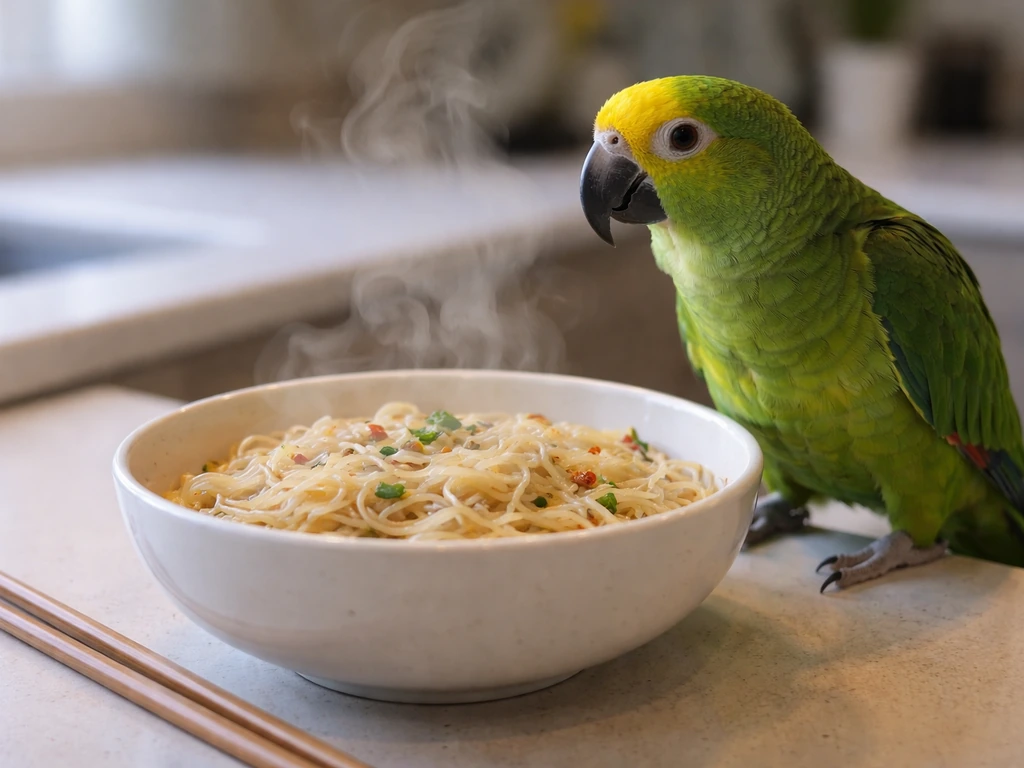
The phrase 'Nick Avocado bird' almost certainly refers to content connected to YouTuber Nikocado Avocado (Nicholas Perry) and his pet birds, not a wildlife species. The most talked-about angle is what happened to his pet parrot, a bird named Kiwi, which according to secondary reports was rehomed in late 2023. Separately, viral rumors that he ate one of his birds (sometimes called 'Mango') have circulated for years, but no credible evidence supports those claims. If you came here wondering about a real kiwi bird and its conservation status, that is a different story entirely, and this article covers both paths so you can find the right answer.
What Happened to Nick Avocado Bird? How to Verify

Maya Hennessy
19 May 2026

Who or what is 'Nick Avocado Bird' anyway?

Nikocado Avocado is the online persona of Nicholas Perry, an American YouTuber who built a massive following around mukbang videos. His main YouTube channel, '@nikocadoavocado,' was created on May 27, 2014, and currently sits at roughly 4.71 million subscribers and over 1 billion views. 'Nick Avocado' is simply a shortened version of that handle. The word 'bird' does not appear anywhere in his official channel name or branding; it shows up because he kept real pet birds (most notably a parrot named Kiwi and one sometimes called Mango) that appeared frequently in his videos.
So when someone types 'what happened to Nick Avocado bird,' they are almost always asking one of three things: what happened to his pet bird, whether a rumor about him harming a bird is true, or, less commonly, whether there is a bird-related account or channel under a similar name. If you specifically mean what happened to Nikocado Avocado's pet bird, this article explains the most common claim and what is known from secondary reports what happened to his pet bird. There is no standalone 'Nick Avocado Bird' account or bird species named after him. The confusion comes from the mix of his nickname and the pet-bird content that made him recognizable early on. Snopes documents a separate blank" rel="noopener noreferrer">“birds aren’t real” internet hoax or satire, illustrating how the word “bird” can show up in misleading viral claims unrelated to wildlife conservation.
Common mix-ups and why this search gets confusing
A few different things get tangled together in this search query, and it helps to separate them clearly before you go looking for sources.
- Pet bird rumors: The most persistent story is that Nikocado Avocado ate or harmed one of his pet birds. This has been framed as fact in comment sections and low-quality recap articles for years, but it is not backed by platform-level evidence or credible journalism.
- Rehoming of Kiwi: Secondary sources (including a Chef's Resource article that addresses this directly) report that his parrot named Kiwi was rehomed in late 2023. This is the most plausible factual event behind the search.
- Confusion with the kiwi bird species: Because 'Kiwi' is also the name of a real endangered flightless bird endemic to New Zealand, some readers land on this question from a conservation angle. That is a genuinely separate topic.
- Channel inactivity rumors: In early 2024, Nikocado Avocado stopped uploading to his main account. After four months, uploads to his secondary account also stopped. In September 2024, he returned with a video called 'Two Steps Ahead,' revealing a 250-plus-pound (114 kg) weight loss and explaining the pause was part of a planned 'social experiment' using pre-recorded content.
- Viral misinformation: The internet has a well-documented habit of attaching 'bird' to misleading claims. The 'Birds Aren't Real' satirical movement is one example of how bird-related rumor culture spreads. Some 'Nick Avocado Bird' searches may stem from a viral clip taken out of context rather than any real event.
How to verify what actually happened

Do not rely on third-party recap sites alone, including the ones you may have already read before landing here. The only trustworthy path is to check primary sources directly and triangulate.
- Go to the official YouTube channel: Search '@nikocadoavocado' on YouTube and look at the channel page directly. Check the About section, the upload history, and the video dates. If content is there and dated recently, the account has not been deleted.
- Check TikTok and Instagram: Nikocado Avocado maintains presences on TikTok, Instagram, and other platforms. Search his handle there to confirm whether a specific post or clip about his birds is still visible or has been removed.
- Use the Wayback Machine: If you suspect a page or profile was deleted, go to web.archive.org and enter the URL of the suspected profile. Compare snapshots from different dates to determine whether the account was deleted, renamed, or had content made private.
- Search reputable news sources: Use Google News with the search terms 'Nikocado Avocado pet bird' or 'Nikocado Avocado parrot Kiwi.' Look for coverage from entertainment news outlets with editorial standards, not aggregator blogs.
- Look for the specific video: If someone told you 'he did something to his bird on camera,' ask for the exact video title or upload date. Vague claims without a specific source are almost always rumors, not documented events.
If you meant the actual kiwi bird: the conservation picture
If your search was genuinely about the kiwi bird as a species rather than a pet named Kiwi, the situation is sobering but not hopeless. Kiwi birds (family Apterygidae) are flightless birds endemic to New Zealand, and their conservation status varies significantly between species. The New Zealand Department of Conservation classifies different kiwi species anywhere from 'Recovering' to 'Nationally Critical.' The Northern Brown Kiwi (Apteryx mantelli) is listed as Endangered on the IUCN Red List.
The population decline has been dramatic. Save the Kiwi estimates the population fell from around 12 million birds historically to fewer than 100,000 by 1998. The drivers behind that collapse are the same ones that push most island-evolved birds toward extinction: habitat loss and fragmentation, and predation by introduced mammals including stoats, ferrets, and cats. Because kiwi evolved in the absence of land predators, their biology makes them particularly vulnerable. They nest on the ground, have a slow reproductive rate, and produce chicks that take years to reach a size where they can survive a stoat attack.
The good news is that targeted conservation work has produced measurable results. Two kiwi species were downlisted from Endangered to Vulnerable in 2017. Wikipedia also summarizes kiwi as flightless birds endemic to New Zealand and notes that conservation efforts have produced some success, including downlisting two species in 2017 to vulnerable blank" rel="noopener noreferrer">Two kiwi species were downlisted from Endangered to Vulnerable in 2017.. New Zealand's Predator Free 2050 program aims to eradicate introduced predators across the country by mid-century, and sanctuary-based management has demonstrated that kiwi populations can recover when predator pressure is removed. Peer-reviewed work published in Bird Conservation International supports the sanctuary model as the most effective current approach.
What makes a bird species 'gone' vs. 'struggling'
Since this site covers extinct and endangered birds, it is worth clarifying what those terms mean in practice. The IUCN uses a structured set of criteria to assign threat categories: Least Concern, Near Threatened, Vulnerable, Endangered, Critically Endangered, Extinct in the Wild, and Extinct. A species is not labeled Extinct until exhaustive surveys over an appropriate time period find no living individuals. Endangered means the species faces a very high risk of extinction in the wild if current threats continue. Kiwi sit in that Endangered to Vulnerable range depending on the species, not Extinct. There is a real difference, and it matters for understanding what conservation interventions are still possible.
What the timeline actually looks like

| Period | What happened | Source type |
|---|---|---|
| 2014 | Nikocado Avocado YouTube channel created; early videos often featured pet birds including a parrot | Platform data (Social Blade) |
| 2022–2023 | Pet bird named Kiwi appeared in various videos; 'did he eat his bird' rumors began circulating in comments and low-quality recap articles | Secondary sources, comment culture |
| Late 2023 | Parrot reportedly rehomed according to secondary reports; no verified primary-source confirmation | Chef's Resource (secondary) |
| Early 2024 | Nikocado Avocado stopped uploading to main channel; secondary channel uploads also paused after roughly four months | GMA Entertainment, Wikipedia |
| September 2024 | Returned with video 'Two Steps Ahead,' revealing a 250-plus-pound weight loss and explaining pre-recorded content strategy; no new information about birds specifically | Wikipedia, GMA Entertainment |
| 2017 (kiwi species) | Two kiwi species downlisted from Endangered to Vulnerable following conservation progress in New Zealand sanctuaries | Wikipedia, IUCN |
Practical next steps to get a real answer today
Here is a source checklist you can work through right now, depending on which version of this question you are actually trying to answer. If your real question is what came first kiwi bird or fruit, start by defining whether you mean biological evolution or the first human use of the term.
| What you want to know | Where to look | What to check |
|---|---|---|
| Is Nikocado Avocado's channel still active? | YouTube: search '@nikocadoavocado' | Upload dates, subscriber count, About section |
| What happened to his pet bird Kiwi? | YouTube search for 'Nikocado Avocado Kiwi bird'; Google News search for 'Nikocado Avocado parrot' | Look for a specific video or news article with a date, not just forum posts |
| Did he eat or harm a bird? | Google News with strict date filtering; Snopes or similar fact-check sites | Look for a primary source (actual video clip with context) not just a claim |
| Was an account deleted or renamed? | Wayback Machine: enter the profile URL and compare snapshots | Look for '404 not found' vs. redirect vs. name change in archived versions |
| Is the kiwi bird actually extinct? | IUCN Red List (iucnredlist.org) | Check species-level listing, population trend, and last assessment date |
| What is the current kiwi conservation status? | New Zealand DOC website; Save the Kiwi (savethekiwi.org) | Population estimates, threat category, active programs |
How to read conflicting results
You will likely find that some sources contradict each other, especially around the pet bird rumors. The rule of thumb is: trust sources with a clear date, a named author, and a link to a primary event (a specific video, an official statement, or a database entry). Dismiss claims that rely on 'sources say' or 'fans reported' without pointing to anything specific. For conservation claims about actual bird species, the IUCN Red List is the gold standard. For platform activity, the platform itself plus the Wayback Machine are the only sources that carry real weight. Everything else is commentary.
One more thing worth knowing: the kiwi bird's story and the 'Kiwi the parrot' story only share a name. The kiwi species is a remarkable, ancient lineage of flightless birds that has survived for millions of years and is now fighting for survival against introduced predators in New Zealand. That is a genuinely important conservation story, and it is worth following separately from whatever is happening on a YouTube channel. If you are comparing a kiwi bird with the fruit, keep in mind that the names come from different origins and refer to completely different things. If you are curious about why kiwi birds cannot fly, how they lost their wings over evolutionary time, or how fast they can actually run, those questions lead somewhere much deeper than a social media search. These are the kind of evolutionary steps explained in detail in guides on how the kiwi bird lost its wings. Their flightlessness comes from evolutionary changes in the kiwi's body and wings, so the species can focus on ground life instead why kiwi birds cannot fly. In general, kiwi speed is modest, and it depends on the species and conditions how fast they can actually run. This is why the answer to does a kiwi bird have wings is that kiwi birds are flightless.
FAQ
How can I confirm what happened to Nikocado Avocado’s pet bird without relying on rumor pages?
Most claims are about Nikocado Avocado’s real parrot (commonly referred to as Kiwi) being rehomed. If you want to verify, look for dated evidence connected to a specific upload, a post on his verified social accounts, or an interview where the bird’s status is directly discussed, not general “fans said” threads.
Is there really a “Nick Avocado Bird” account or a bird species named after him?
There is not an official “Nick Avocado Bird” channel or a bird species with that name. Search results often combine his nickname with clips of his pets, so it helps to include “Kiwi” or “Mango” and filter for primary uploads from the main handle (and then cross-check dates).
Was the rumor that he ate his bird (sometimes called Mango) ever proven?
The “ate one of his birds” story is long-running, but it is usually repeated without documentation. A practical way to judge it is to ask whether the claim points to a specific moment in a video with timestamped context, or an official statement, not just a paraphrased allegation.
If the pet-bird was rehomed, when did it stop appearing in his videos, and how do I map that to reports?
If the rehoming claim is what you mean, the key is the timeline. Rehoming details typically come from around specific periods when the bird stops appearing in content, so compare the last clear footage in his videos with the first time he addresses the bird’s absence (if he ever does).
When people talk about kiwi birds being endangered, is it always the same kiwi species?
For kiwi conservation questions, don’t assume the “kiwi” you see in social media corresponds to a single species. Different kiwi species have different threat levels, so you need the exact species name (for example, Northern Brown Kiwi) to interpret “Endangered” versus “Vulnerable” correctly.
How do I tell the difference between “Extinct,” “Extinct in the Wild,” and “Endangered” for kiwi?
If someone cites “Extinct” for kiwi birds, check whether they are mixing up extinct-in-the-wild with extinct. IUCN uses specific criteria based on exhaustive survey evidence over time, so a sweeping “they’re gone” claim is usually unreliable unless it’s tied to a species and category.
How do I avoid mixing up the kiwi bird story with the kiwi fruit story?
A lot of misunderstandings come from searching “kiwi” and landing on unrelated results like the fruit. To avoid that, include keywords such as “bird species,” “New Zealand,” or a specific taxonomy term (Apteryx), and avoid broad queries that mix biology with mukbang content.
What’s the best way to verify changes to his channel or removed content over time?
If you want to verify platform activity like channel changes or removed videos, use the platform’s own channel history (uploads and playlists) and then check archived snapshots from the Wayback Machine. Don’t trust mirrors or reposts that can be out of sync with the original timeline.
Next Article
What Happened to the Nikocado Avocado Bird Noodle?
Find which bird Nikocado Avocado featured and get the latest update on its fate, with tips to verify sources.