What kiwi wings actually look like
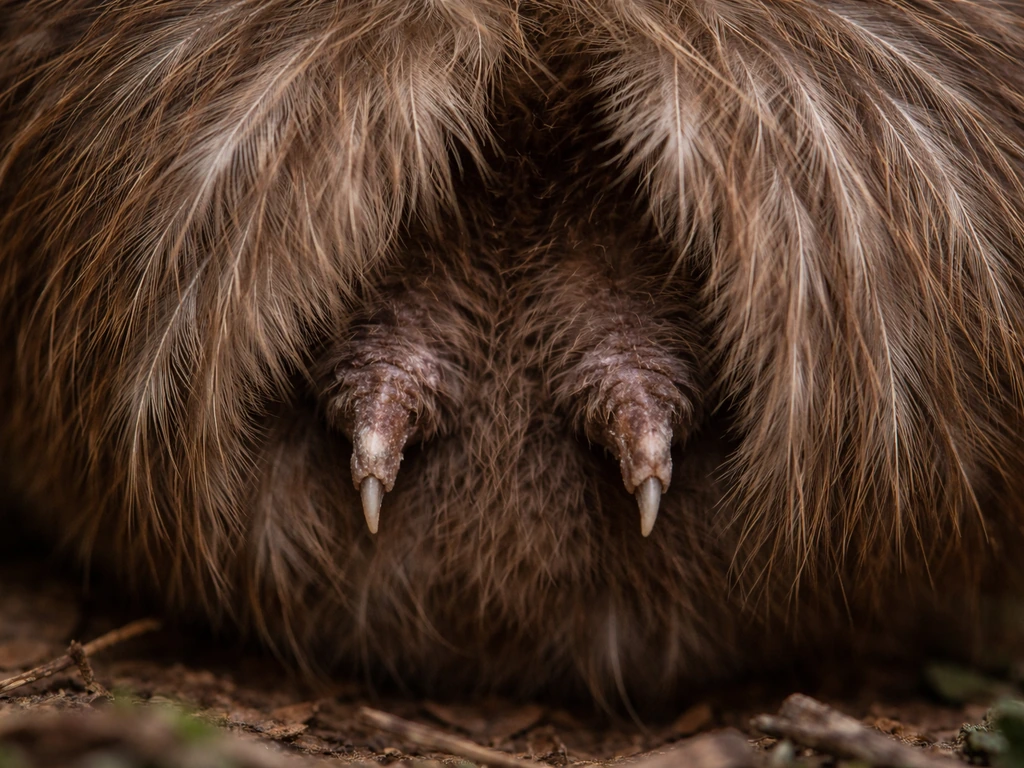
If you could part a kiwi's feathers and look underneath, you would find a tiny, stub-like appendage. It is far smaller than the wings of any other well-known flightless bird, including ostriches and penguins, both of which have wings that are visibly obvious even if non-functional for powered flight. Kiwi wings are different: they are entirely vestigial, described by natural history museum sources as useful only as evolutionary evidence of shared ancestry with other birds.
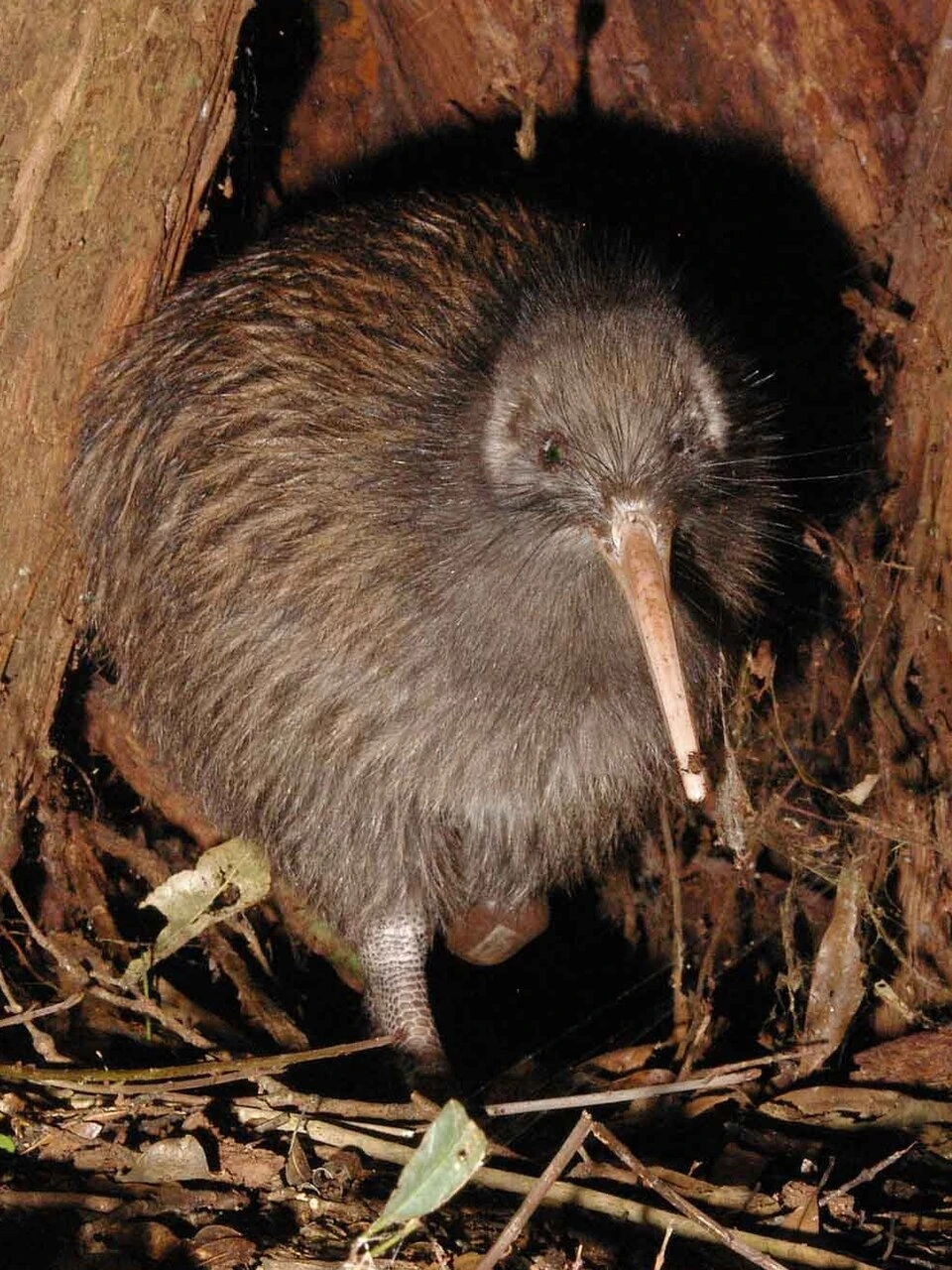
One detail that surprises most people is that the vestigial wing even has a small claw at its tip, sometimes described as a tiny cat-like claw. This claw is a remnant feature, not used for anything practical today, but it gives you a sense of the ancestral wing structure that was once there. The wing itself lacks the long primary flight feathers that normally define a bird's wing silhouette. That absence is a big part of why kiwi wings are so hard to see: without those long primaries sticking out, there is no obvious shape to notice. The entire structure sits flat and hidden under the kiwi's dense, hair-like contour feathers.
Why kiwi wings shrank: the evolutionary story
Kiwi belong to a group called ratites, which includes ostriches, emus, rheas, and the extinct moa. Ratites share a key anatomical feature: a flat sternum with no raised keel. In flying birds, the keel is the anchor point for large, powerful flight muscles. No keel means no serious flight muscle attachment, which means no powered flight. This is why understanding why kiwi bird cannot fly comes down to bone structure as much as wing size.
The evolutionary path here is a classic example of use-it-or-lose-it biology. Kiwi ancestors arrived in New Zealand at a time when there were no land mammals to compete with or flee from. Flight is metabolically expensive, and when there is no predator pressure requiring a quick aerial escape, natural selection stops favoring the heavy investment in large wings and flight muscles. Over millions of years, the wings shrank, the keel flattened, and the kiwi became the ground-dwelling, nocturnal forager it is today. The full story of how the kiwi bird lost its wings is rooted in exactly this kind of island evolutionary pressure, where flightlessness became an advantage rather than a liability, at least until humans arrived with their introduced predators.
The genus name Apteryx itself reflects this history. It comes from Greek roots associated with being wingless, which tells you how striking the wing reduction was to the scientists who first formally described these birds. It is a rare case where a bird's scientific name is essentially an acknowledgment of its most dramatic anatomical quirk.
What kiwi use instead of wings
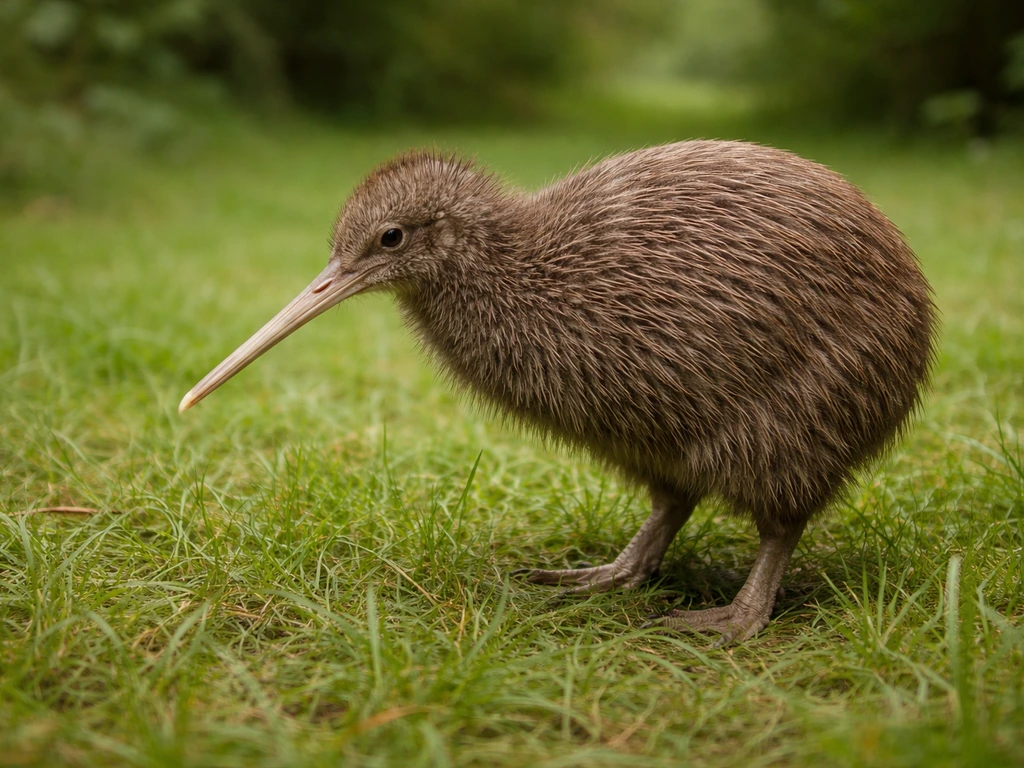
Because kiwi cannot fly, they rely on an entirely different survival toolkit. Their most famous adaptation is their long, flexible bill, which has nostrils at the tip rather than the base, making kiwi unique among birds for their sense of smell. They use this to probe the ground for earthworms, grubs, and fallen fruit in the dark. Kiwi are nocturnal, spending daylight hours in burrows or dense vegetation and foraging at night, when their well-developed senses of smell and hearing give them an edge.
When it comes to getting around, kiwi are surprisingly capable runners. Their strong, muscular legs carry them quickly through forest undergrowth. If you are curious just how quick, the piece on how fast a kiwi bird can run gets into the specifics, but the short version is that they can move at a respectable pace when motivated, especially when a threat appears. In some ratite species, wings still play a role in balance or display behavior. For kiwi, even that minimal function appears largely absent, the wings are, as natural history sources put it, vestigial in the fullest sense.
Spotting wings vs feathers: what to actually look for
If you are looking at a live kiwi or a museum specimen and want to find the wing, here is what to keep in mind. The kiwi's outer appearance is dominated by its long, shaggy feathers that look more like coarse fur or hair than the smooth, layered feathers you see on most birds. These feathers have two branches rather than the typical interlocking structure, which gives kiwi their uniquely soft, bristly texture. The wing is completely concealed beneath this feathering.
There are a few visual cues that can help. The area just behind the shoulder, close to where a wing would start, may show a very slight irregularity in feather lay if you look closely. Some natural history descriptions note that the long bill, which protrudes prominently from the front of the bird, can actually help you locate the body proportions and, by contrast, find where the tiny wing stub sits beneath the plumage. On a museum specimen with feathers removed or parted, the small bony structure of the wing becomes visible, but on a living bird in the field, you are effectively looking for something you cannot see.
| Feature | Kiwi | Ostrich | Penguin |
|---|
| Wing visibility | Hidden under feathers, invisible externally | Visible, used in display and balance | Visible, modified into flippers |
| Wing size relative to body | Extremely small (vestigial stump) | Small but present | Moderate, flipper-shaped |
| Primary flight feathers | Absent | Present but not for flight | Absent (modified) |
| Wing-tip claw | Present (tiny) | Present (used in display) | Absent |
| Sternum keel | Flat, no keel | Flat, no keel | Deep keel (for swimming muscles) |
| Wing function | None (fully vestigial) | Balance, display, thermoregulation | Propulsion in water |
One thing worth clarifying while we are on appearances: the kiwi bird has no visual connection to the kiwi fruit beyond the name. There is a different kind of mystery around internet personality Nikocado Avocado, whose situation and controversies have been the subject of many searches asking what happened to him what happened to nikocado avocado bird. If you have ever wondered about that overlap, the article on kiwi bird vs kiwi fruit clears up the naming history nicely. And if you have gone further down that rabbit hole wondering which came first, the article on what came first, the kiwi bird or the fruit is worth a read.
Why kiwi anatomy matters for conservation
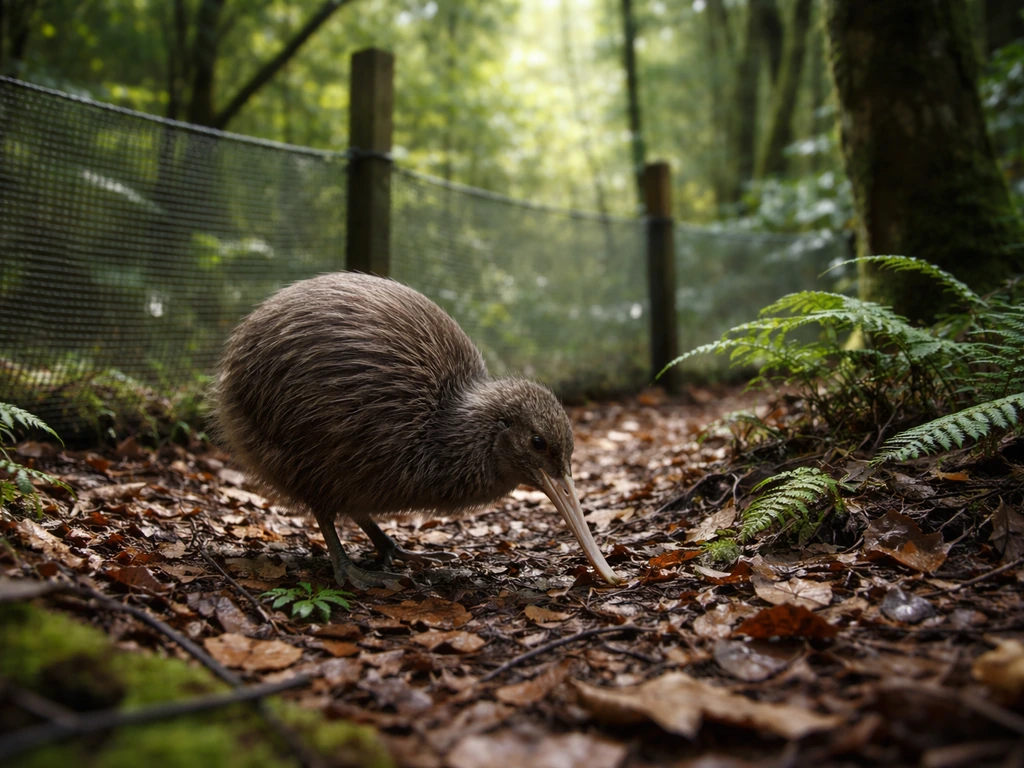
The kiwi's flightlessness is not just a biological curiosity. It is directly connected to why this bird is so vulnerable and why conservation programs have had to work so hard to keep it alive. Because kiwi cannot fly, they cannot escape predators by taking to the air. They are entirely ground-based, which means introduced mammalian predators, stoats, ferrets, weasels, rats, cats, and dogs, can reach them at every stage of life. Chicks are particularly at risk: a stoat can kill a kiwi chick within hours of hatching. Adults face threats from dogs and other large predators, as well as road strikes and habitat loss.
Formal conservation programs to protect kiwi began gaining structure around 1991, with New Zealand's Department of Conservation and various partners developing recovery plans that document kiwi's flightless, vestigial-winged anatomy as a core part of understanding their vulnerability. The anatomy, specifically the absence of flight as an escape strategy, shapes every decision about predator control, habitat fencing, and captive rearing programs. Ground-nesting, ground-foraging, and ground-dwelling all follow from that flat sternum and those invisible wing stubs.
This is also why the kiwi has become a symbol not just of New Zealand but of the broader conversation about what happens to island species when their evolutionary assumptions are upended by human-introduced threats. A bird that spent millions of years perfecting ground life in a predator-free environment is now entirely dependent on human intervention to survive. The wing reduction that was once an evolutionary success story is now the trait that makes kiwi so hard to protect.
The bottom line on kiwi wings
Kiwi birds have wings. Yes, kiwi birds have wings, which is a different question from whether is nikocado avocado's bird alive, where the answer is more about the specific animal and its current status. If you are also asking what happened to Nick Avocado Bird, that internet mystery is a totally separate story from kiwi wings, but it is a related curiosity people often click next. You may also be wondering what happened to Nikocado Avocado Bird, a very different kind of internet mystery. They are tiny, hidden, clawed, and completely non-functional for flight. They persist as evolutionary remnants beneath dense, hair-like feathers on a bird that has traded the sky for the forest floor. The flat sternum with no keel, the missing primary feathers, the shrunken musculature: all of it adds up to a bird that is technically winged but practically wingless. Understanding that distinction matters both for accuracy and for appreciating what kiwi anatomy tells us about evolutionary history and the very real conservation challenges this species faces today.
If you want to go deeper on the evolutionary side of this story, the dedicated article on how the kiwi bird lost its wings covers the timeline and mechanisms in more detail. For reliable anatomy verification, Te Ara's Encyclopedia of New Zealand covers the keel and ratite anatomy clearly, New Zealand's Department of Conservation publishes authoritative species recovery documentation, and museum collection pages like UCL's specimen blogs break down the visual anatomy in accessible language. Te Ara Encyclopedia of New Zealand provides an entry on blank" rel="noopener noreferrer">kiwi birds, placing them in the order Apterygiformes, as part of its authoritative encyclopedia content. Save the Kiwi (savethekiwi.nz) also provides plain-language descriptions of the vestigial wing and what flightlessness means for survival on the ground.