The California condor is not the largest bird in the world, but it is the largest flying bird in North America and one of the largest flying birds on the planet. Whether it ranks as 'world's largest' depends entirely on which measurement you're using: wingspan, body weight, or height. By no single metric does it claim the global top spot, but it comes impressively close in a couple of them, and it beats nearly every other flying bird you can name.
Is the California Condor the Largest Bird in the World?

Maya Hennessy
16 May 2026
What 'largest' actually means (and why it matters)
People use 'largest bird' loosely, but biologists break it into three distinct measurements: wingspan (tip to tip), body mass (weight), and body length or height. A bird that wins on one metric can rank far lower on another. The wandering albatross, for example, has the longest verified wingspan of any living bird at 3.63 m (11 ft 11 in) according to Guinness World Records, but it is nowhere near the heaviest bird. The ostrich is the heaviest and tallest bird alive, topping 150 kg (330 lb) and 2.7 m (9 ft) in height, but it cannot fly. So when someone asks 'is the California condor the largest bird in the world,' the honest answer requires you to pick a category.
The three ways to measure 'biggest'

- Wingspan: the distance from wingtip to wingtip when the wings are fully extended. This is the most visually dramatic measurement and the one most people associate with large raptors.
- Body mass: how much the bird weighs. This is the most ecologically meaningful measurement because it reflects the energy demands on the bird and the prey or carrion it can handle.
- Body length or height: measured from bill tip to tail tip (length) or standing height. Less commonly cited for raptors but important for flightless giants like ostriches and emus.
Where the California condor actually sits
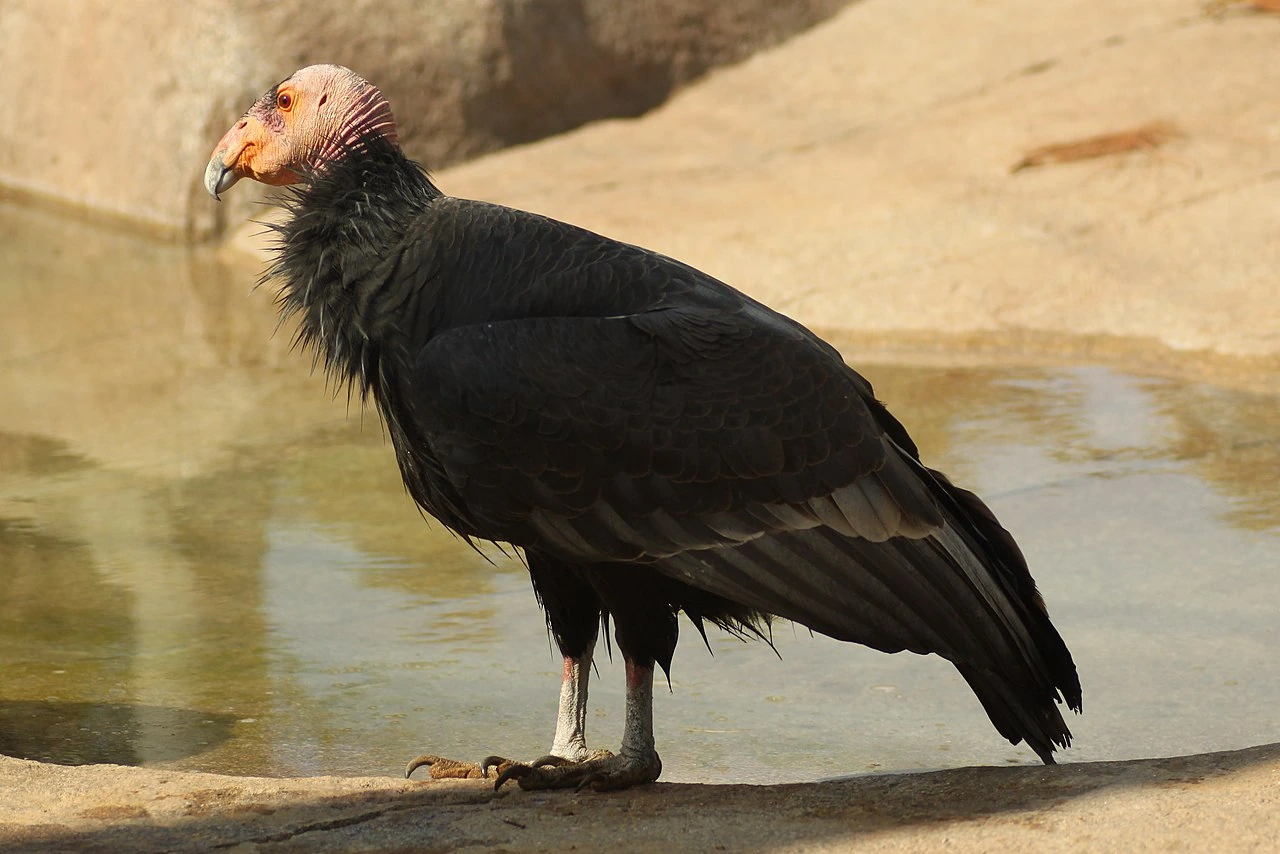
The California condor (Gymnogyps californianus) is a genuinely massive bird. Adults typically weigh between 7 and 11 kg (roughly 17 to 25 lb) and have a wingspan of approximately 2. The Scientific Reports study also reports that the California condor has an average wingspan of about 2.8 m and an average bodyweight of about 8.5 kg. 74 to 3 m (9 to 9.8 ft). The U.S. Fish and Wildlife Service notes that claims of wingspans exceeding 3.4 m (11 ft) appear in the literature, but no wingspan over 3 m (9.8 ft) has been verified. The USFWS also points out that in North America, the California condor is surpassed in body length and weight only by the Trumpeter Swan and the introduced Mute Swan, which are both heavier waterbirds, not raptors.
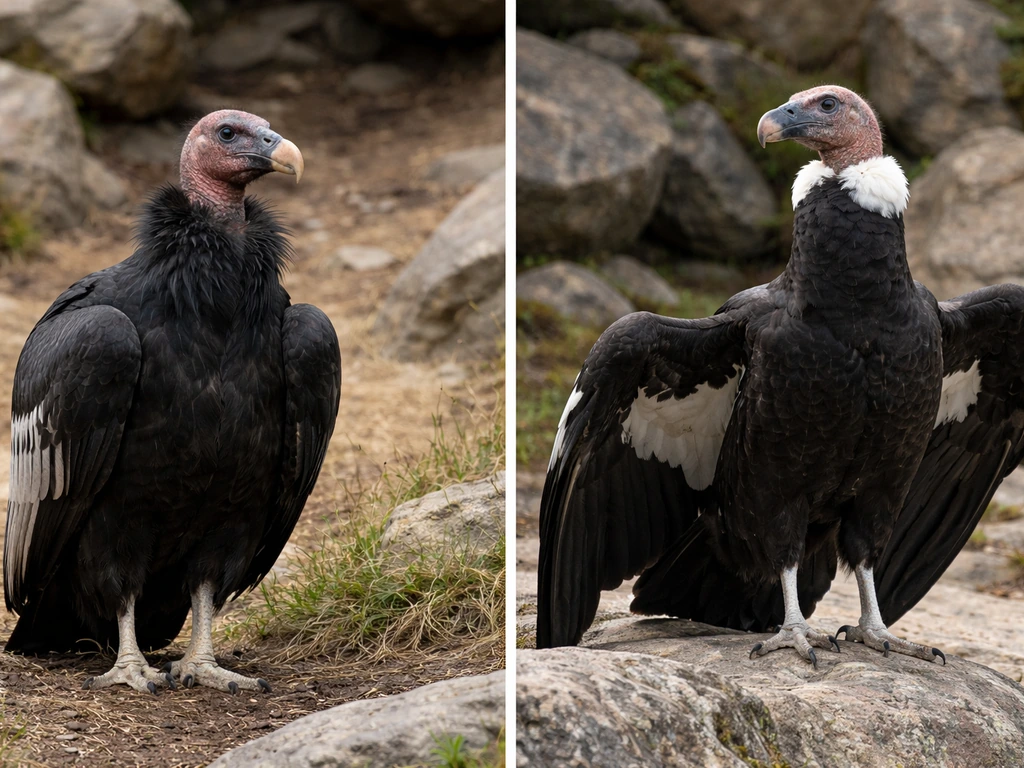
Globally, the condor's closest rival is its South American cousin, the Andean condor (Vultur gryphus). Guinness World Records lists the Andean condor as the heaviest bird of prey, with males averaging 9 to 12 kg (20 to 27 lb) and a wingspan of about 3 m (10 ft). The Andean condor is often brought up when people ask whether it is the largest bird, since it can top the California condor on several size measures. Some peer-reviewed sources put the Andean condor's wingspan at up to 3.2 m and weight at up to 16 kg in large individuals, making it modestly larger than the California condor on average. The California condor is an extraordinary bird, but the Andean condor edges it out by the numbers. If you're curious about how the Andean condor stacks up on its own terms, that comparison is worth exploring separately.
In terms of wingspan, neither condor touches the wandering albatross. And in terms of total body mass, neither touches the flightless heavyweights like the ostrich, emu, or cassowary. The California condor is best described as the largest flying bird in North America and one of the top five heaviest flying birds in the world.
Head-to-head size comparison
| Bird | Wingspan | Body Mass | Body Length | Flight? | Largest claim |
|---|---|---|---|---|---|
| California condor | ~2.74–3 m (9–9.8 ft) | 7–11 kg (17–25 lb) | ~1.19 m (47 in) | Yes | Largest flying bird in North America |
| Andean condor | ~3–3.2 m (10–10.5 ft) | 9–16 kg (20–35 lb) | ~1.0–1.2 m | Yes | Heaviest bird of prey (Guinness) |
| Wandering albatross | up to 3.63 m (11 ft 11 in) | 6–12 kg (13–26 lb) | ~1.07–1.35 m | Yes | Largest wingspan of any living bird (Guinness) |
| Trumpeter swan | ~1.8–2.1 m (6–7 ft) | 7–15 kg (15–33 lb) | ~1.38–1.65 m | Yes | Heaviest flying bird in North America |
| Harpy eagle | ~1.76–2.24 m (5.8–7.3 ft) | 4–9 kg (9–20 lb) | ~0.86–1.07 m | Yes | Heaviest eagle in the Americas |
| Ostrich | N/A (wings vestigial) | 63–145 kg (139–320 lb) | ~2.1–2.8 m tall | No | Heaviest and tallest living bird (world) |
| Emu | N/A (flightless) | 18–60 kg (40–132 lb) | ~1.5–1.9 m tall | No | Second-tallest living bird |
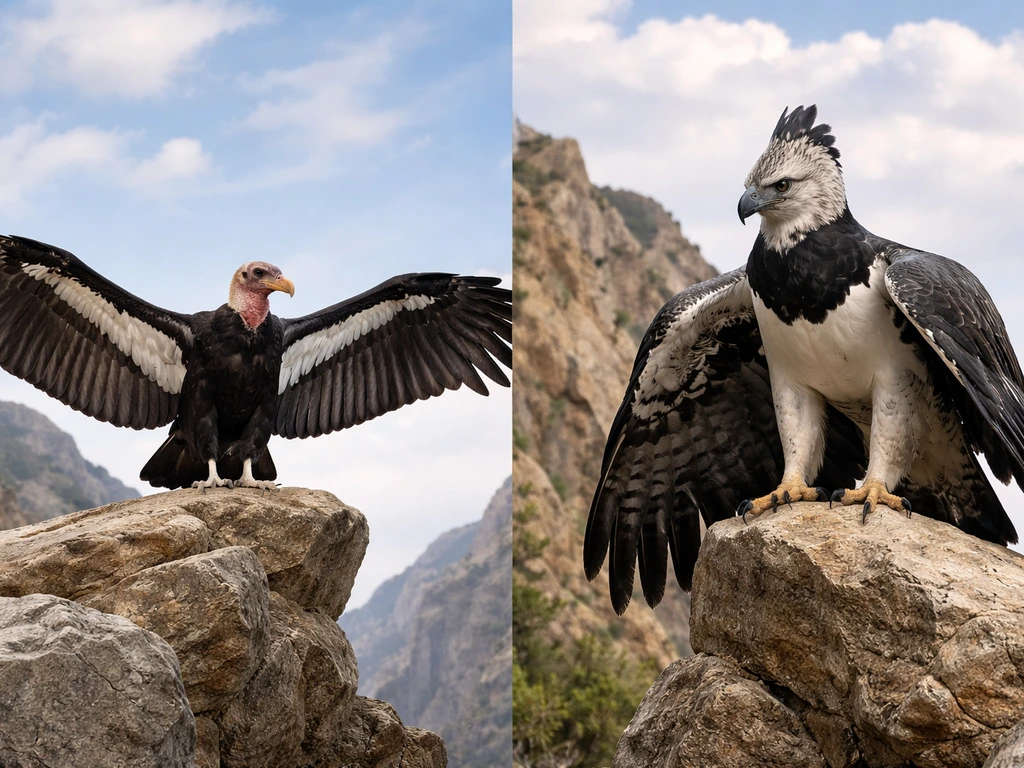
A quick note on the harpy eagle: it often comes up in conversations about the world's largest raptor. It is the most powerful eagle by grip strength and hunting ability, but its wingspan is considerably shorter than either condor. It does not compete for 'largest' by wingspan or mass.
Why the California condor is so big
The California condor's extraordinary size is a direct product of its ecological role. It is an obligate scavenger, meaning it feeds almost entirely on carrion: deer, cattle, marine mammals, and other large carcasses. Finding that kind of food across a rugged landscape of mountains, canyons, and coastlines requires covering enormous distances. USGS research describes the condor as an 'obligate soaring bird' that relies on thermals and ridge updrafts to travel efficiently. A massive wingspan lets it soar for hours without flapping, conserving energy over a territory that can span hundreds of kilometers.
Large body mass matters too. A bigger bird can dominate a carcass against competitors, can go longer between meals (condors can survive weeks without eating), and carries more fat reserves for lean periods. There is no sexual dimorphism in California condors, meaning males and females are the same size, which is unusual for raptors and reflects that both sexes need the same foraging capability rather than specialized hunting roles.
Historically, California condors ranged across North America alongside Pleistocene megafauna like mammoths and giant ground sloths. Those massive animals produced the kind of large carcasses a bird this size needs. The extinction of that megafauna around 10,000 years ago may have contributed to the condor's long-term decline, leaving it increasingly dependent on large domestic livestock and marine mammal carcasses near the California coast.
Myths and mix-ups around 'world's largest bird'
The most common confusion is conflating wingspan with overall size. People see that the California condor has a nearly 10-foot wingspan and assume it must be the largest bird alive. It is an enormous wingspan, but the wandering albatross beats it cleanly. The albatross's size record is well-documented by Guinness and is not really contested.
A related myth is that the California condor and the Andean condor are the same species or interchangeable. They are not. They belong to separate genera: Gymnogyps californianus versus Vultur gryphus. The Andean condor is the heavier of the two on average and has a slightly longer wingspan. The two species are sometimes discussed together because they are close relatives and both face conservation pressures, but their ranges, behavior, and size metrics differ in meaningful ways.
Another persistent error involves wingspan measurement reporting. The NPS's Bryce Canyon page specifically notes that some condor enthusiasts report a 109-inch wingspan to push the bird past a round-number benchmark, but the standard verified figure sits at around 108 inches (2.74 m). The USFWS similarly cautions that reports of wingspans up to 3.4 m exist in the literature but none over 3 m has been formally verified. This kind of number inflation is common with charismatic species and worth knowing about when you're reading casual claims online.
Finally, some people confuse 'largest flying bird' with 'largest bird.' The ostrich is the largest bird, full stop. But it cannot fly. When ornithologists and conservationists say 'largest flying bird in North America,' they are correctly excluding flightless species and geographically limiting the claim. Both qualifiers matter.
Size, survival, and why this bird is critically endangered
Being one of the largest flying birds on Earth does not make the California condor resilient to human pressures. In fact, its size creates vulnerabilities. Despite their impressive stature, are condor birds dangerous to people its size creates vulnerabilities. Large birds have slow reproductive rates: condors raise just one chick every one to two years, which means population recovery is painfully slow. The species was declared Critically Endangered by the IUCN, and by 1987 the entire wild population had collapsed to just 27 individuals, all of which were brought into captivity as part of an emergency breeding program.
The USFWS California Condor Recovery Program has been working to reverse that collapse through captive breeding, releases, and threat management. As of recent USFWS population status reports, the population has grown to around 410 birds. Lead poisoning from spent ammunition in carrion remains the leading cause of death in free-flying condors, with documented fatalities reported annually in USFWS's 2025 California Condor Population Status report. Recovery goals include establishing at least two geographically distinct wild populations of 100 or more individuals each, self-sustaining without human intervention.
The California condor's ecological role as the largest avian scavenger in North America means its presence has real effects on the ecosystems it inhabits, helping recycle nutrients from large carcasses that would otherwise decompose slowly. Losing a bird this size from the landscape would leave a genuine functional gap. Whether you're interested in the condor's size records or its conservation story, those two threads are deeply connected.
Where to verify measurements and dig deeper
If you want authoritative numbers rather than secondhand claims, these are the best places to look.
- U.S. Fish and Wildlife Service (USFWS): The USFWS California Condor species profile and recovery program pages give official size metrics, population counts, and recovery program updates. The 2025 California Condor Population Status PDF (published February 2026) is the most current data available on population size and causes of death.
- U.S. National Park Service (NPS): The NPS California Condor topic pages and the Bryce Canyon NPS condor page include size figures with useful caveats about measurement reliability. Good for cross-checking wingspan claims.
- Guinness World Records: For 'world's largest' claims with verified records, Guinness is the clearest reference. Their heaviest bird of prey and largest wingspan entries are both relevant here and include methodology notes.
- IUCN Red List: For the official conservation status of Gymnogyps californianus (Critically Endangered) and population trend data, the IUCN Red List is the global standard.
- The Peregrine Fund: The Peregrine Fund runs the California condor reintroduction program at several sites and publishes regular updates on wild population numbers and nest monitoring. Their 2025 State of the World's Raptors report includes North American raptor conservation context.
- University of Minnesota Raptor Center: Their California condor species page gives clean, accessible size figures and is useful for quick cross-referencing without parsing lengthy government PDFs.
If you are researching the related question of whether the condor species is extinct, or where condors are found today in regions like Brazil, those are distinct topics worth exploring on their own. If you are researching whether the condor bird is extinct, use conservation status sources like the IUCN and USFWS to confirm the latest findings whether the condor species is extinct. The condor family spans two continents with overlapping but different conservation stories. Understanding the California condor's size in context is one piece of a much larger and genuinely fascinating picture.
FAQ
So what superlative is the most accurate way to describe the California condor?
If you mean “largest flying bird in the world” by wingspan or mass, the California condor does not take the overall top spot. For wingspan, the wandering albatross is longer; for total mass among flying birds, other large birds can surpass it in particular measures depending on sex and reported records. The condor’s best-supported superlative is “largest flying bird in North America” and “one of the top heaviest flying birds,” not absolute global #1.
Why do people give different answers about which bird is the largest?
Yes, because wingspan and mass do not move together. A bird can be long-winged but lighter, or heavy but with a shorter wingspan, so “largest” can change when you switch measurement. This is also why you will sometimes see different answers depending on whether someone is thinking about tip-to-tip reach, scale weight, or body length.
How can I tell whether a “record” wingspan number I see online is reliable?
To compare fairly, use verified measurement ranges for adults and confirm what the source counted. In the condor’s case, reports above 3 m wingspan exist in older or informal literature, but formal verification has not supported wingspans beyond the 3 m mark. If a claim sounds like it was rounded up to a “benchmark number,” treat it as less reliable than a measured range.
Is wingspan the same thing as being the heaviest bird in flight?
Don’t automatically assume the larger wingspan translates into being the “heaviest flying bird.” The condor’s mass is enormous for a raptor, but wingspan records like the wandering albatross reflect different body plans. For weight comparisons, also remember that some species vary by sex, and measurement conditions (captive vs wild, adult vs immature) can affect reported numbers.
Does “largest bird” mean the same thing as “largest flying bird”?
No. The ostrich is the largest bird alive, but it is flightless, so it is excluded from “largest flying bird” comparisons. If your goal is “largest bird in the world regardless of flight,” the answer changes from condor to ostrich.
Are the California condor and Andean condor the same species?
The most common mix-up is conflating the two condor species. The California condor (Gymnogyps californianus) and the Andean condor (Vultur gryphus) are different genera, with differences in average weight and wingspan. Treat them as separate comparisons unless you are intentionally discussing relatives with similar ecology.
Are California condors dangerous to people?
Yes. The condor’s size can make it intimidating, but “dangerous” is context dependent. Treat it as wildlife, keep distance, and never approach nests or feeding sites. In general, the real human risk is accidental disturbance or unsafe behavior rather than active attacks, but local guidance around scavengers should always be followed.
If I’m only comparing North American birds, does the answer about “largest” change?
If you are comparing size across continents, specify the region and category. For example, the article’s North America comparisons mention which larger birds exceed the condor in certain dimensions, but those birds are waterbirds and not raptors. A global comparison also needs clear rules about flight status and which measurement defines “largest.”
Where should I look if I want the most accurate size numbers for the condor?
If your goal is to confirm “largest” claims for research or a fact-check, prioritize agencies or peer-reviewed summaries that state the metric and whether values are verified. For condors specifically, be alert to “round-number inflation” in popular write-ups and confirm whether a measurement has formal verification.
Does the condor’s large size make it more resilient or easier to recover?
Some people ask whether the condor’s world ranking affects its conservation value. It does in practical ways, because its low reproductive rate and long recovery time mean large-bodied scavengers can be slow to rebound after poisoning or habitat disruptions. Size alone does not guarantee resilience, it often correlates with slower population growth.