
No, the shoebill is not the dumbest bird. That label gets thrown around mostly because shoebills look prehistoric, move slowly, and stare at you like they're deciding whether you're worth eating. But that behavior is a finely tuned hunting strategy, not a sign of low intelligence. If anything, calling a shoebill dumb reveals more about how we misread animal behavior than it does about the bird itself.
Is Shoebill the Dumbest Bird? Evidence on Its Intelligence

Maya Hennessy
21 May 2026
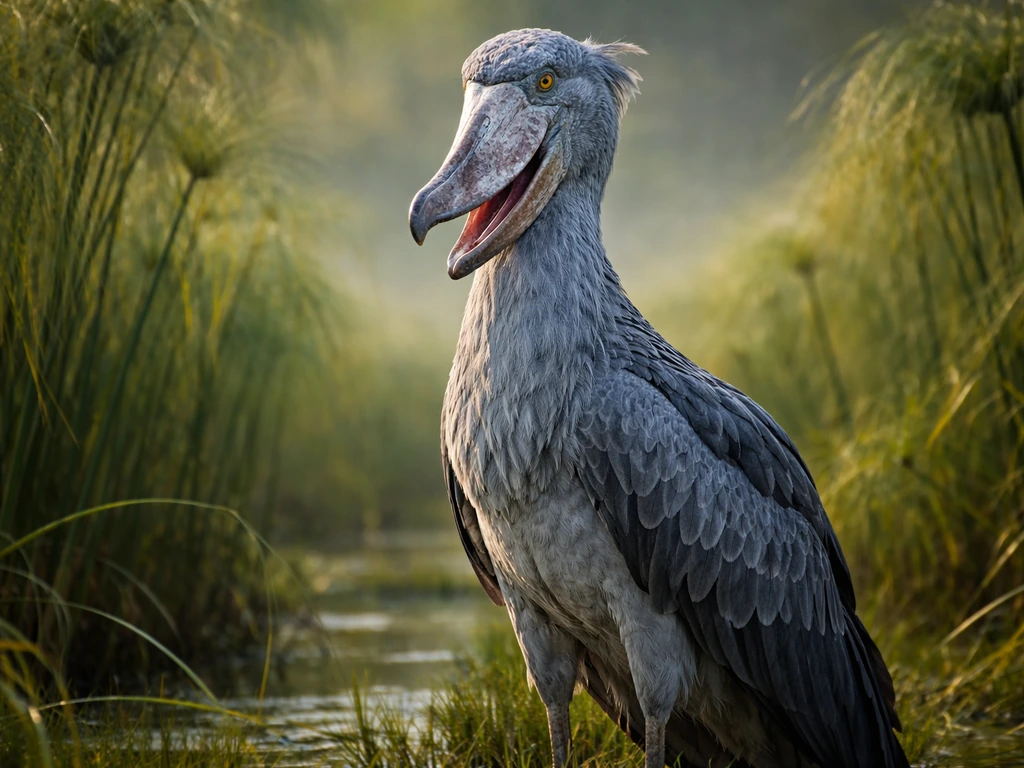
What people actually mean by "dumbest bird"
When someone asks whether a bird is "dumb," they usually mean one of a few things: Is it slow to react? Does it seem unaware of its surroundings? Does it fail at tasks a human finds obvious? The problem is that none of those questions map cleanly onto what scientists actually measure when studying bird cognition.
Avian intelligence research focuses on measurable cognitive domains: inhibitory control, working memory, cognitive flexibility, problem-solving, episodic-like memory, and social learning. A 2021 review in MDPI framed these under executive-function constructs specifically because vague labels like "smart" or "dumb" are too slippery to test. Meanwhile, a Frontiers review on Macphail's Null Hypothesis pointed out that many impressive bird behaviors can be explained by associative learning rather than complex planning, and that even researchers debate where the line falls. The takeaway is that "intelligence" in birds is not one thing. It's a cluster of abilities, and a bird can be extraordinary at some while unremarkable at others.
Rankings like "dumbest" or "smartest" also reflect which species get studied most. Corvids and parrots dominate the literature because they're easy to test in lab settings and produce dramatic results. Birds that are harder to observe, live in remote wetlands, and don't interact easily with humans get studied less, which means their cognitive abilities are underrepresented in rankings. That's a measurement bias problem, not an intelligence problem.
What the shoebill actually is
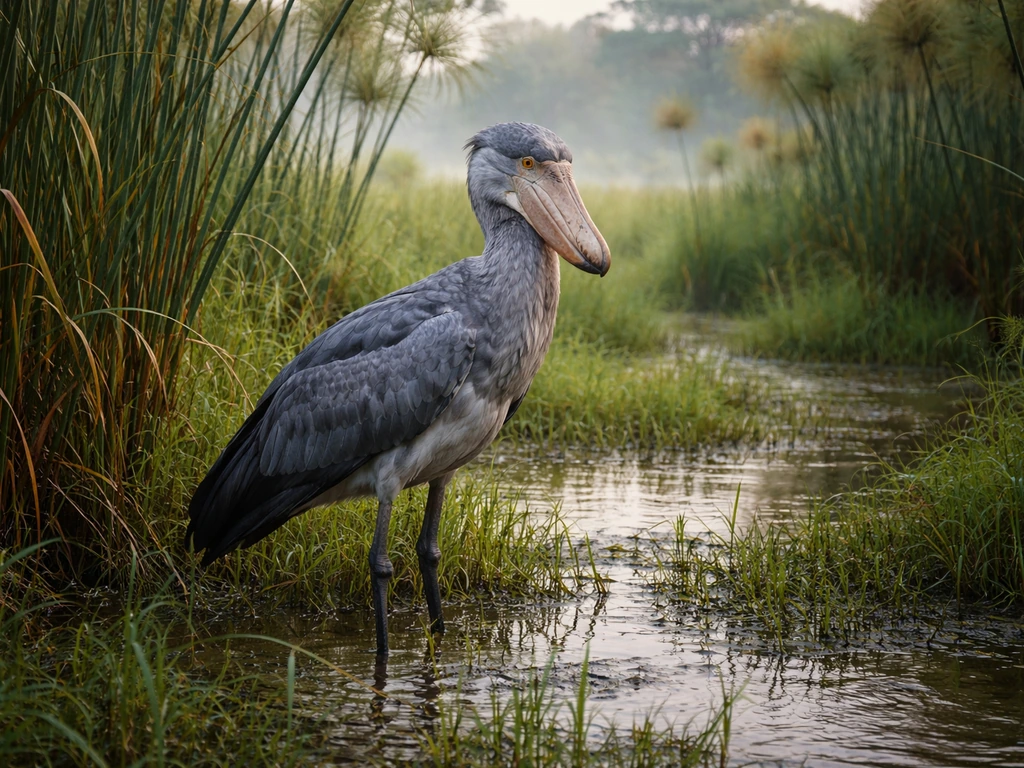
The shoebill (Balaeniceps rex) is a large wading bird found in the tropical freshwater swamps of central and east Africa, with strongholds in South Sudan, Uganda, Zambia, and the Democratic Republic of Congo. It gets its name from its massive, clog-shaped bill, which is one of the most specialized feeding tools in the bird world. That bill is not an accident. It's an adaptation built specifically for catching large, slippery prey like lungfish, which can reach over a meter in length and are notoriously difficult to grip and swallow.
Shoebills prefer papyrus swamps and flooded grasslands with dense aquatic vegetation. They're solitary hunters and cover large territories. Their range overlaps with some of Africa's most threatened wetland habitats, which connects directly to why their population is under pressure today. If you want to understand what the shoebill is adapted to do, you need to start with where it lives and the ecological niche it fills, because that context explains almost every behavior that gets misread as stupidity. Macaws, for example, live in tropical and subtropical forests, woodlands, and savannas across Central and South America where it lives. Shoebills live in tropical freshwater swamps and wetlands across parts of central and east Africa, including places like South Sudan, Uganda, Zambia, and the Democratic Republic of Congo where it lives.
Where shoebill intelligence actually shows up
Hunting strategy
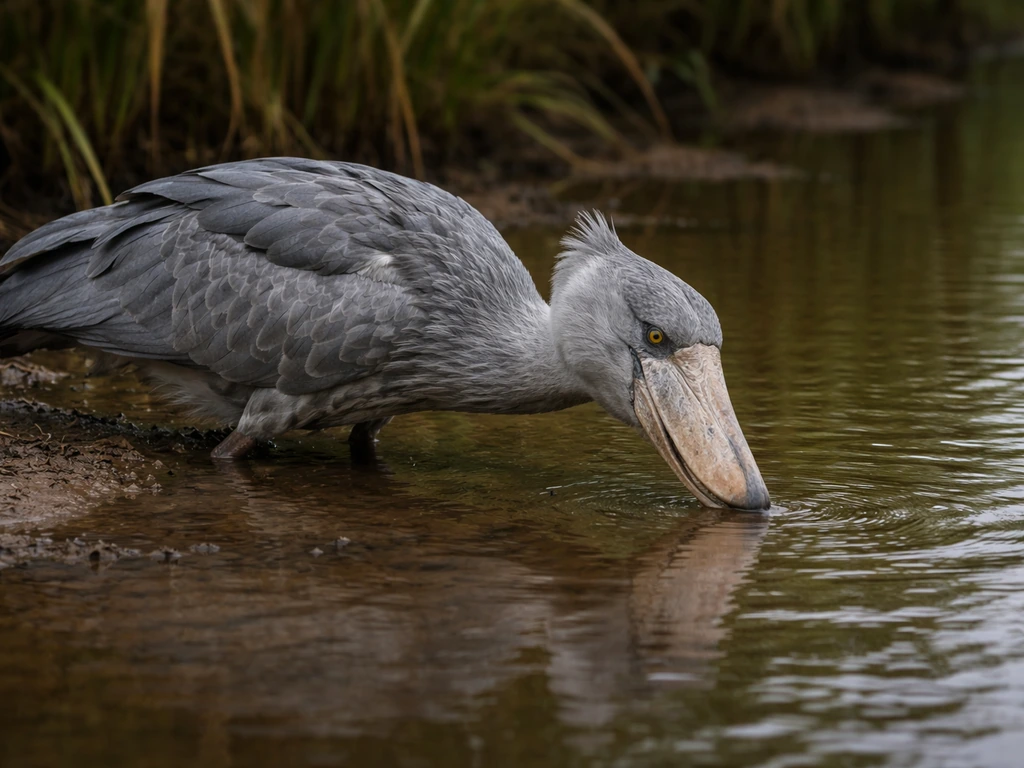
The shoebill is a sit-and-wait predator. It stands motionless for extended periods in shallow water, then lunges forward with a sudden, powerful strike when prey moves within range. This looks lazy or vacant on video, but it's the optimal strategy for catching large, fast-moving fish in murky water. An ambush predator that fidgets wastes energy and spooks prey. The stillness is the skill.
Research published in the journal Ostrich examined shoebill foraging specifically in relation to its habitat and morphology, confirming that its behavior is ecologically matched to its environment rather than being a random or passive response. A more recent study using field behavioral observations in Zambia's Bangweulu Wetlands documented how shoebills adjust their foraging across different habitat types and seasons, showing flexible behavioral responses to changing conditions. That's not what a cognitively rigid animal does.
The bird's pharynx and hyoid bone morphology have also been studied specifically for their functional role in swallowing unusually large prey items. The anatomy is purpose-built for a complex feeding task, which requires precise timing and physical coordination between the strike, the grip, and the swallow.
Parenting and nest behavior
Shoebills are attentive and active parents. Field research in the Bangweulu Wetlands using nest cameras documented nest attendance and prey provisioning in detail. Shoebills typically lay one to two eggs, with incubation lasting around 35 days. Parents coordinate nest attendance, actively provision chicks with prey, and regulate nest temperature in the intense African heat by bringing water to pour over eggs and chicks. Managing a nest through a prolonged incubation period in a remote wetland, while coordinating prey delivery and thermoregulation, requires sustained attention and behavioral coordination. That's not the behavior of an animal running on pure reflex.
Learning and social behavior
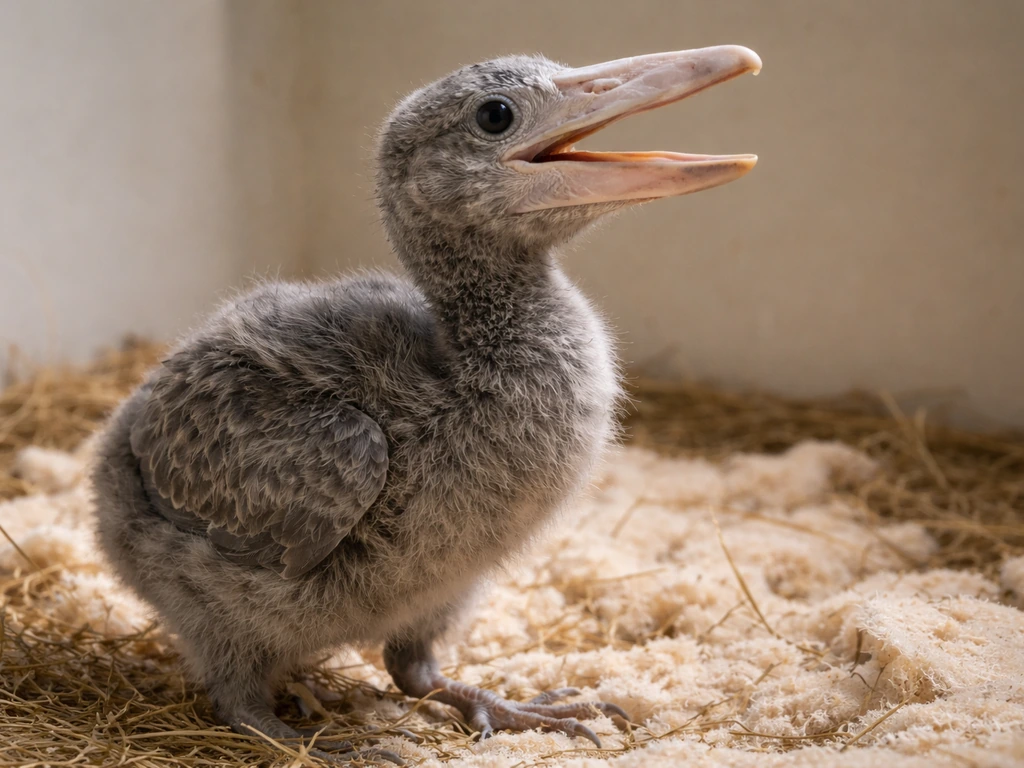
A report from African Parks on a captive-raised shoebill chick showed something interesting: the chick initially became imprinted on humans, directing begging behavior and bill-clapping toward people rather than other shoebills. When an older chick was introduced, the younger bird gradually shifted back toward more natural behavioral patterns. This demonstrates that shoebills are capable of social learning and behavioral adjustment based on experience, which is a basic but meaningful cognitive flexibility. If you have also heard the term morepork bird, it refers to a different nocturnal species with its own distinctive behaviors what is a morepork bird. It also shows that shoebills are far from unresponsive or locked into fixed behavior patterns.
How shoebills compare to other birds
Here's an honest comparison. Corvids (crows, ravens, jays) are widely recognized as cognitively elite. Ravens show planning-like behavior, tool use, and complex social manipulation. Parrots demonstrate strong vocal learning, problem-solving, and long-term memory. Raptors show spatial memory and hunting coordination. Shoebills, by contrast, have not been the subject of extensive cognitive testing, partly because they're rare, solitary, and difficult to study in controlled settings. The macaw bird is found in South America, which is one reason its conservation depends on protecting forest habitats there. But the absence of test data isn't evidence of low intelligence.
| Bird Group | Cognitive Strengths | Testing Availability | Verdict on "Dumb" Label |
|---|---|---|---|
| Corvids (crows, ravens) | Tool use, planning-like behavior, social cognition | High (lab and field studies) | Widely considered most intelligent birds |
| Parrots | Vocal learning, problem-solving, memory | High (captive studies) | Strong cognitive performers |
| Raptors (eagles, hawks) | Spatial memory, hunting coordination | Moderate | Specialized intelligence, not broadly tested |
| Waterbirds (herons, storks) | Ambush hunting, parental coordination | Low | Understudied, not comparable |
| Shoebill | Ambush strategy, seasonal foraging flexibility, parental care, social learning | Very low (rare, remote) | Not dumb; poorly studied and misread |
The honest framing is that shoebills are highly specialized rather than broadly intelligent in the way corvids are. Specialization and general intelligence are different things, and a species can be extraordinarily effective in its niche without excelling at abstract problem-solving tasks. Comparing a shoebill to a raven on a problem-solving task is like judging a cheetah by its swimming speed.
Why the "dumb shoebill" myth spread in the first place
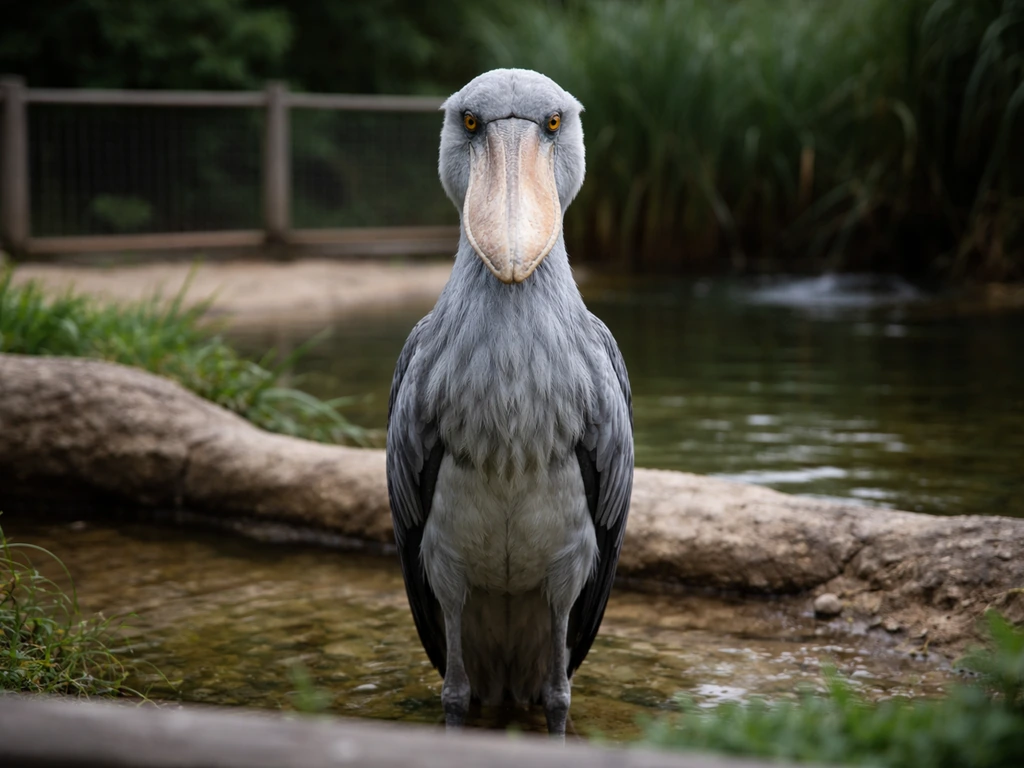
The internet version of the shoebill is mostly a meme. Videos of shoebills staring blankly at zoo visitors, standing still for minutes at a time, or moving with slow, deliberate precision got repackaged as proof that the bird is somehow dim. A few things fueled this:
- Their prehistoric appearance (the shoebill's lineage is ancient, and it looks like it knows it) triggers a gut response that something that old-looking must be primitive
- Ambush hunting requires stillness, and stillness reads as vacant or "slow" to human observers used to active, reactive animals
- Shoebills in captivity sometimes stand near humans without reacting strongly, which gets interpreted as low awareness rather than what it actually is: a predator that doesn't perceive you as prey or threat
- They're rare, poorly studied, and live in remote habitats, so most people's only exposure is short zoo clips or viral videos stripped of ecological context
- Vocalizations are limited, which removes one of the most relatable cues humans use to attribute intelligence to animals
There's also a broader human bias at work. We tend to attribute intelligence to animals that interact with us in ways we recognize, like mimicking speech, solving visible puzzles, or showing obvious curiosity. Shoebills don't perform for us. That's a feature of their ecology, not a limitation of their cognition.
Conservation context: why this matters beyond the meme
The shoebill is classified as Vulnerable on the IUCN Red List, with an estimated global adult population of somewhere between 3,300 and 5,300 individuals, and that number is declining. The shoebill is not extinct; instead, it is listed as Vulnerable due to declining populations from ongoing habitat and hunting pressures is shoebill bird extinct. The threats are serious: habitat destruction and degradation of African wetlands, pollution, nest disturbance by livestock (cattle trampling nests is a documented problem), hunting, and capture for the illegal live bird trade, which carries high mortality during capture, transport, and captivity. If you’re dealing with koel birds in Singapore and want to discourage them humanely, focus on removing attractants and using deterrents that keep them from roosting or nesting near your home.
BirdLife International and EDGE of Existence both flag these threats. Climate change is worsening habitat loss through drought and altered water levels in the wetland systems shoebills depend on. A species already down to a few thousand individuals, breeding slowly (one to two eggs per clutch, long incubation, high parental investment per chick), cannot absorb these pressures easily.
The "dumb bird" myth matters in this context because misconceptions about a species can reduce the perceived urgency of protecting it. If people think of the shoebill as a slow, dim creature that's barely doing anything interesting, it's harder to make the case for its conservation value. The reality is that the shoebill is a highly specialized, ecologically important predator that has been doing something extremely well for a very long time, in a habitat that is now disappearing under multiple simultaneous pressures. Some gardeners also seek a magnolia yellow bird evergreen for its reliable greenery and striking color.
Its behavioral secretiveness, driven partly by threats like nest disturbance and hunting, also limits how often people encounter it in ways that reveal its capabilities. A bird that avoids humans isn't a dumb bird; it's a bird that has learned, over generations, that humans are dangerous.
How to check claims about bird intelligence for yourself
If you've seen a claim online that the shoebill (or any bird) is the "dumbest," here's how to evaluate it before accepting it:
- Ask what definition of intelligence is being used. If the article or video doesn't define it, the claim is already on shaky ground. Look for references to specific cognitive domains: memory, problem-solving, inhibitory control, flexibility.
- Check whether the behavior being labeled "dumb" has an ecological explanation. For shoebills specifically, almost every behavior that looks odd to humans (stillness, slow movement, apparent indifference) has a documented functional explanation rooted in ambush predation and wetland ecology.
- Look for peer-reviewed sources, not just YouTube videos or listicles. Good starting points include the IUCN Red List species page for Balaeniceps rex, BirdLife International's species profile, and journals like Ostrich, Ibis, or broader reviews on avian cognition in Frontiers or MDPI.
- Check conservation organizations directly. African Parks publishes field reports on shoebill behavior from their management programs in Zambia. The International Single Species Action Plan for the Shoebill is a publicly available document that consolidates population, behavior, and threat data.
- Compare across species carefully. Any ranking of bird intelligence is only valid if the same cognitive tasks were tested across the same species under similar conditions. Most rankings online don't meet that standard. Treat them as entertainment, not science.
- If you want to observe shoebill behavior directly, reputable zoos with shoebills (including facilities in Japan and Europe) offer opportunities to watch their foraging and social behavior in person, which is far more informative than viral clips.
The bottom line on the shoebill: it is not dumb. It is specialized, understudied, and radically misread by internet culture. It's a Vulnerable species with a precise hunting strategy, active parental care, demonstrated behavioral flexibility, and the capacity for social learning. The hooded pitohui is also a poisonous bird, showing that toxicity does not require flashy behavior to be real Vulnerable species. The question worth asking isn't how smart the shoebill is compared to a raven. It's whether we're doing enough to protect a bird this ecologically singular before its wetland habitat disappears entirely.
FAQ
Why do people think shoebills are “dumb” just because they stand still?
The label “dumbest bird” usually comes from a single visible behavior, like long stillness, being treated as if it means low cognition. A better test is whether the bird shows context-appropriate adjustments, such as changing hunting tactics with habitat and season, coordinating actions during parenting, or learning from experience in ways that improve outcomes. When you look at those types of behaviors, the “dumb” framing doesn’t hold up.
Do shoebills actually ignore what’s around them in the wild or zoos?
Shoebills are capable of reacting, but their hunting style is built around waiting for prey movement in murky water. If a visitor expects active “performing” behavior, the bird can look unresponsive even when it is focused. Also, in the wild the birds are solitary and avoid contact, so you may never see the short bursts of activity that reveal their skill.
Is it true that there just isn’t enough research on shoebill intelligence to judge them?
“No evidence of high intelligence” is different from “evidence of low intelligence.” Shoebills are hard to test in controlled cognitive experiments because they are rare, remote, and often sensitive to disturbance, so the absence of many lab tasks does not mean they would fail those tasks. What researchers can confirm from field and observational work still suggests flexible behavior, not mental rigidity.
What’s the biggest mistake people make when ranking bird intelligence?
Yes, and it’s a common mistake. Measures like walking speed, reaction time to a human, or how often a bird approaches people do not directly reflect the cognitive domains scientists try to study (such as inhibitory control, learning, and flexibility). A bird can be highly competent at niche-specific tasks while looking “slow” to observers who are using the wrong yardstick.
How should you compare shoebills to corvids or parrots without making it misleading?
For a shoebill, “skills” are often ecological rather than puzzle-based. Their strength appears tied to precision feeding, timing between strike and swallow, and coordinated parental care under difficult conditions. If you want a more meaningful comparison, judge them on domain-relevant behavior rather than on tests built for more social, tool-using, or highly trainable species.
Could habitat and visibility make shoebills seem less intelligent than they are?
The safest explanation is that their environment drives what you notice. Dense aquatic vegetation, low visibility, and the need to ambush prey can make them appear motionless. In addition, stress and disturbance can reduce visible activity, so a “blank” look at a nest site might reflect caution and risk management rather than cognition.
Does the reported social learning in captive-raised chicks prove shoebills are “smart” generally?
Even if a shoebill has learned something about humans, that does not automatically mean it is “friendly” or that it will generalize the learning to other humans or settings. For example, imprinted begging behavior can fade when another bird is introduced, indicating the behavior can be redirected based on experience. So context and experience matter, but the direction of learning can vary.
Why do online videos often look like the same “staring” clip over and over?
Yes. Because they nest infrequently and breeding success can be difficult, you can go long periods without seeing behaviors that demonstrate coordination. Human disturbance and seasonal changes also affect what researchers and visitors observe. That means online videos may capture only one edge of a much larger behavioral picture.
How does the “dumb bird” myth affect conservation and what can a person do instead?
If you want to avoid turning a conservation issue into a meme, use behavior-based evidence that a species is doing complex, niche-critical work, then connect that to the pressures it faces. Mislabeling can lower urgency by making people feel the animal is unimportant or not “worth caring about.” The practical next step is to focus on wetland protection and reducing nest disturbance, because their slow breeding makes recovery harder when mortality rises.
Next Articles
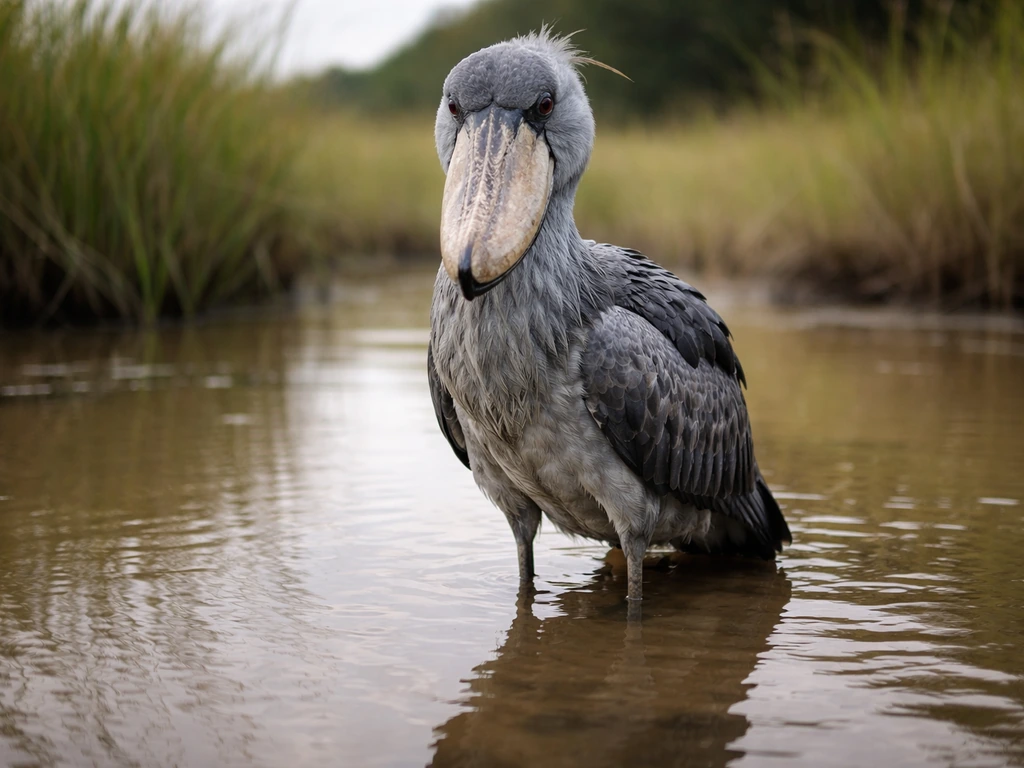
Is Shoebill Bird Extinct? Current Status and Evidence
Is the shoebill extinct? Learn its current status, range, evidence it survives, threats, and conservation updates.
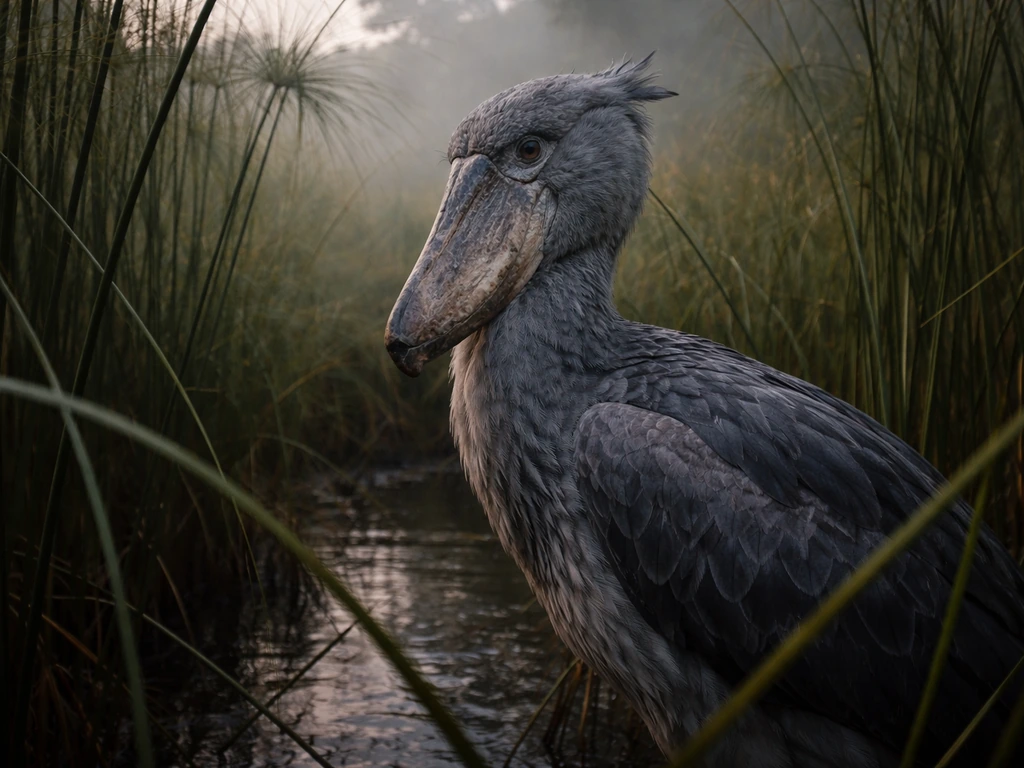
Where Does the Shoebill Bird Live? Range and Habitat Guide
Where the shoebill lives in Africa, its wetland habitat needs, and how to read range vs occasional sightings today.
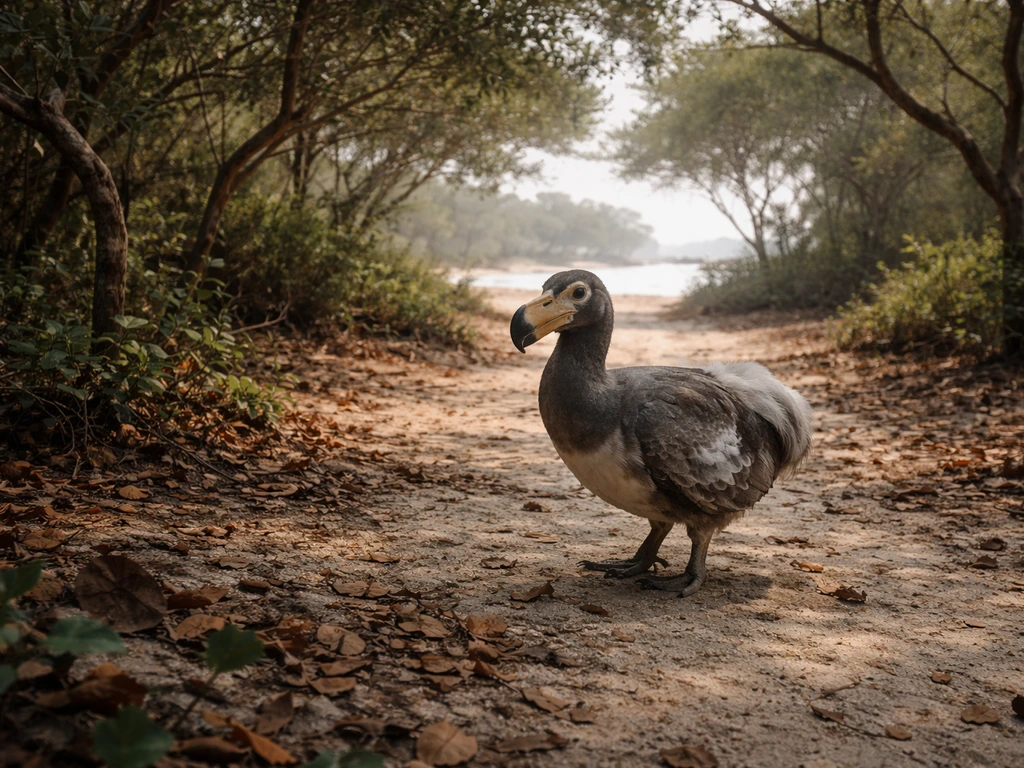
Is the Dodo Bird Still Alive? What Evidence Shows Today
Learn if any dodos could exist today, why scientists say they are extinct, and how to judge sightings reliably.