
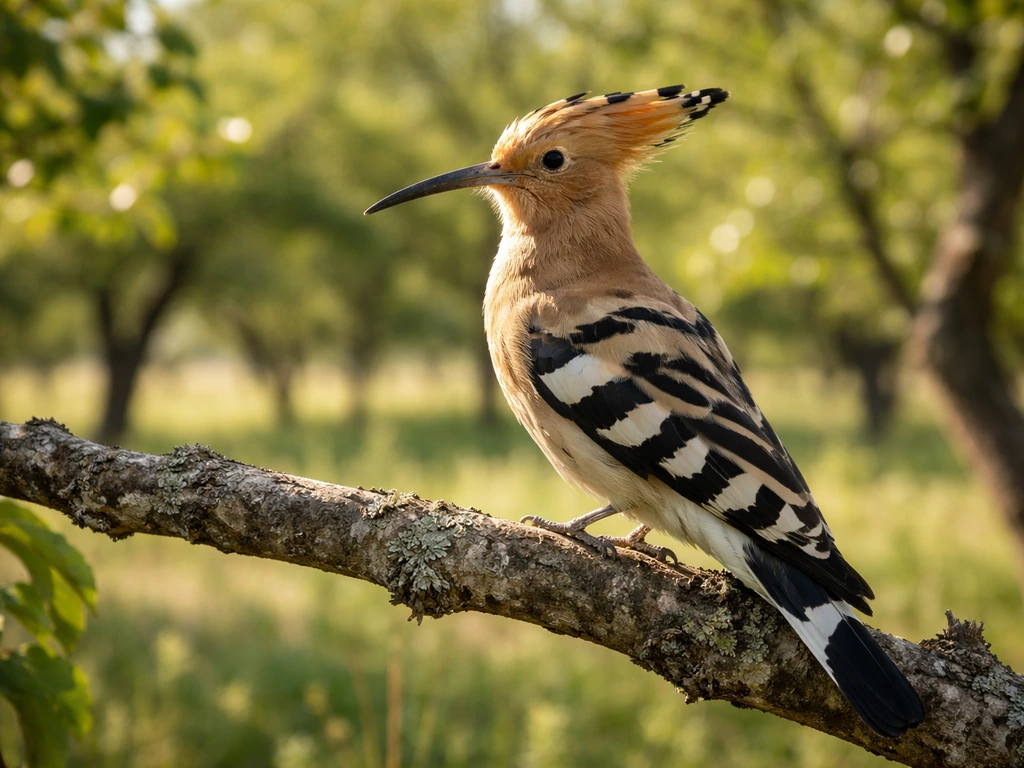
The hoopoe (Upupa epops) is not endangered. Globally, the IUCN classifies it as Least Concern, the lowest-risk category on the Red List. That means the species as a whole is not facing any imminent collapse, its population is large enough and widespread enough that extinction is not a near-term threat. That said, 'Least Concern' is not the same as 'thriving everywhere,' and some regional populations in Europe and parts of Asia are showing declines that are worth paying attention to.
Is Hoopoe Bird Endangered? Current Status and Why

Maya Hennessy
16 May 2026
What 'Least Concern' actually means

The IUCN Red List uses a tiered system to rank how close a species is to extinction. From most to least urgent, the categories run: Extinct, Extinct in the Wild, Critically Endangered, Endangered, Vulnerable, Near Threatened, and Least Concern. A bird lands in Least Concern when its population is large, stable enough, or its range is wide enough that it does not meet the thresholds for any of the threatened categories. The hoopoe comfortably sits there at the global level, largely because it breeds across an enormous arc of territory stretching from western Europe through Africa and all the way to southeast Asia. To answer where the hoopoe lives, it prefers open to semi-open habitats like orchards, vineyards, and farmland edges within that broad range breeds across an enormous arc of territory stretching from western Europe through Africa and all the way to southeast Asia.
One important clarification before going further: when people search 'hoopoe bird,' they are almost always thinking of the Common Hoopoe (Upupa epops). There are also two island species, the African Hoopoe (Upupa africana) and the Madagascar Hoopoe (Upupa marginata), sometimes treated as full species and sometimes as subspecies. This article focuses on Upupa epops, the bird you are most likely to have spotted or read about.
Global vs. regional: the status is not the same everywhere
Global IUCN status is a broad-brush picture. It averages out a lot of local variation. The hoopoe's European Red List status, assessed by BirdLife International in 2021, is also Least Concern at the continental scale. But underneath that headline number, the European supplementary data shows real variation by country. Some national populations show stable or even increasing trends, while others show short-term or long-term declines. The European migration atlas describes the continent-wide trend as 'uncertain,' which is an honest signal that the data is patchy and the picture is mixed.
If you live in or near hoopoe territory and want to know the status that applies specifically to your country, the best single resource is the National Red List Database (NRLD). It hosts country-level Red List assessments, including an entry for Upupa epops (referenced as NRLD-330474). Many European countries have their own national assessments that may rate the hoopoe as Near Threatened or even Vulnerable at the national scale, even though the global category remains Least Concern. Those national ratings are the ones that trigger local conservation action and legal protections.
| Resource | What it tells you | Best used for |
|---|---|---|
| IUCN Red List (iucnredlist.org) | Global status: currently Least Concern | Broad global picture |
| BirdLife DataZone | Global assessment history + links to sub-global data | Tracking how status has changed over time |
| National Red List Database (NRLD) | Country-level Red List categories | Checking your own country's assessment |
| European Red List of Birds 2021 (BirdLife) | European-scale LC status + country-level population trend tables | Understanding European regional variation |
| eBird Status and Trends | Range maps and occurrence patterns over time | Visualizing local distribution shifts |
| EUNIS / EEA species portal | Europe threat status, habitat links | Quick European status check |
The real threats to hoopoes right now
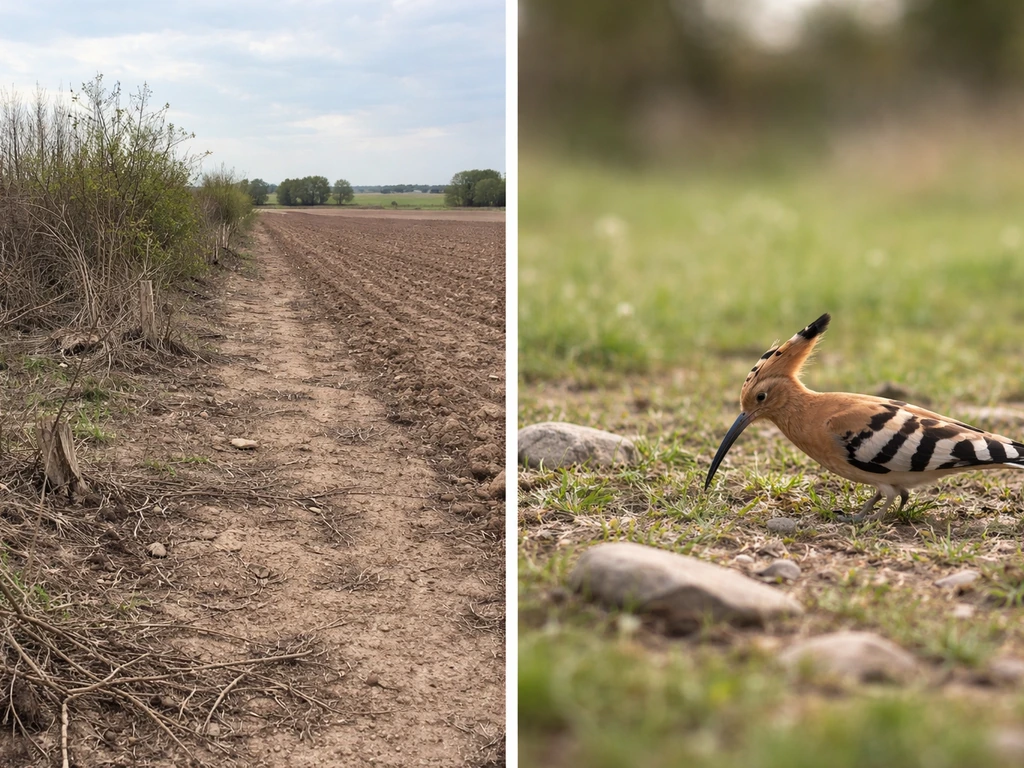
Even a Least Concern species can face serious pressures. The hoopoe's challenges are well-documented, and they map closely onto the same forces driving farmland bird declines across Europe and Central Asia.
Habitat loss and fragmentation
The Swiss Ornithological Institute identifies habitat loss and fragmentation as particularly serious threats to the hoopoe. The bird depends on two things simultaneously: open, short-grassed or bare ground where it can probe for invertebrate prey, and a cavity nearby for nesting, whether that is a hollow tree, a crevice in a wall, a rocky bank, or even a termite mound. As agricultural landscapes are intensified, traditional orchards and low-input pastures disappear, eliminating both foraging habitat and nesting trees in one stroke. Urban expansion eats up the same mosaic landscapes.
Agricultural change and pesticides
Modern farming is hard on hoopoes. European agriculture remains heavily dependent on chemical pesticides, and BirdLife has been pushing for food-system reforms that reduce biodiversity harm. BirdLife’s Conservation Investment Strategy for the Birds of the Caribbean Slope of Mexico, Central America and Colombia describes agriculture as a key sector shaping habitat and species pressures, including land-use change and agrochemical exposure. For the hoopoe, the pesticide problem is direct: its diet centers on large invertebrates, especially beetle larvae, mole crickets, and similar prey found in soil. When pesticide use collapses invertebrate populations, the hoopoe's food supply shrinks. Research modeling hoopoe population dynamics found that decline was primarily driven by reduced fledgling production and lower first-year survival, outcomes consistent with reduced food availability during the breeding season.
Climate and weather pressures
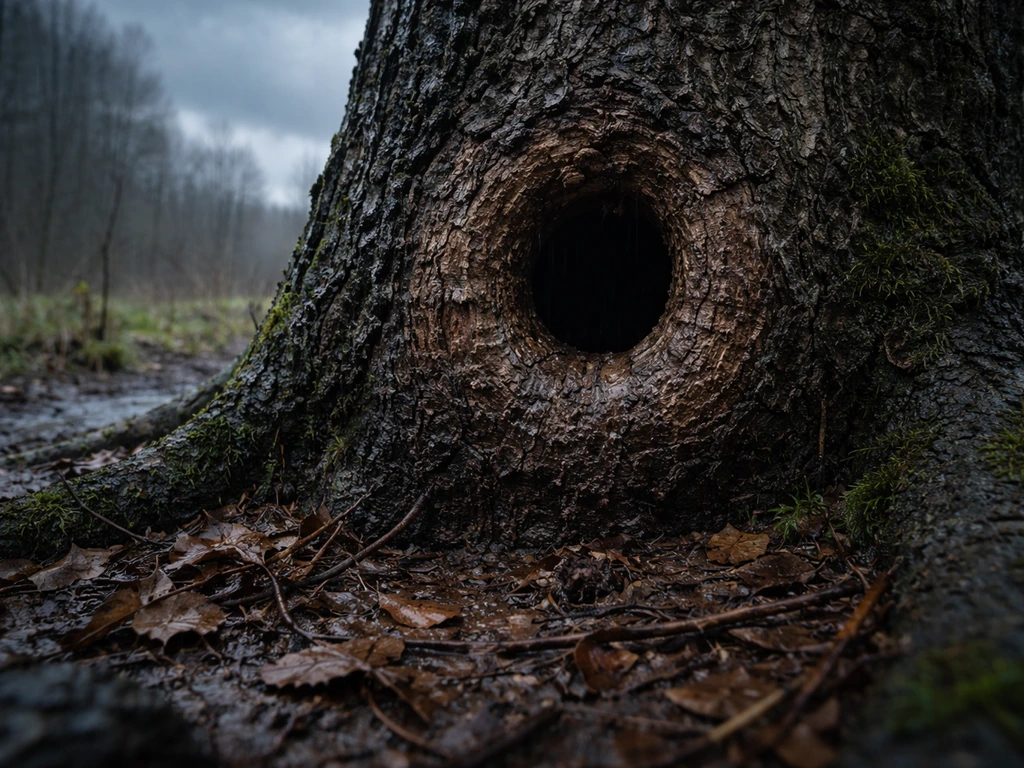
Weather during the breeding season directly affects hoopoe reproductive success. Studies from southeast Spain found that different weather variables shaped breeding performance, food supply, and how well nestlings developed. Drought can bake soil hard, making it impossible for the hoopoe to probe for prey. Unusual cold snaps or wet spells during incubation or early nestling stages can hit survival rates hard. These are not new pressures, but shifting climate patterns make them more unpredictable and more frequent.
Other pressures worth knowing
- Loss of old trees with natural cavities, often removed in orchard renovation or urban tree management
- Building renovation that seals wall cavities used as nest sites, a documented problem for cavity-nesting birds generally
- Disturbance at nest sites, particularly where hoopoes breed close to human habitation
- Migration hazards across the Sahara and Mediterranean, including illegal trapping in parts of the Middle East and Mediterranean region
Hoopoe habitat and breeding basics: why threats hit hard
Understanding why these threats matter requires knowing a bit about how hoopoes actually live. They are birds of open to semi-open environments: traditional orchards, vineyards, parkland, open woodland edges, farmland with hedges, and even village outskirts. Potoos are nocturnal birds, and their habitats range across tropical and subtropical forests where they roost on branches and blend in with the bark where does the potoo bird live. They forage on the ground, using their long curved bill to probe soil for prey. That bill is useless if the ground is compacted by intensive agriculture or dried out by drought.
Breeding runs roughly from February to July depending on latitude. A pair can raise up to two broods in a season, occasionally three, with clutches typically containing six to eight eggs. Incubation lasts around 15 to 18 days, and chicks fledge about 26 days after hatching. That tight, multi-brood schedule means the pair is highly dependent on a stable local food supply for several months at a stretch. Any disruption, whether a pesticide application on a nearby field or a hard drought in early summer, can cascade through the whole breeding attempt.
Nesting is exclusively in cavities. Hoopoes do not build elaborate nests; they find a hole and use it. This makes them completely dependent on cavity availability in their territory. Where old trees are removed or buildings are sealed, pairs simply cannot breed, even if foraging habitat is adequate nearby. Research using around 400 nest boxes in southeast Spain confirmed that artificial cavities work well as substitutes, which is one reason nest-box programs are a core conservation tool for the species.
What the population data actually shows
Monitoring the hoopoe is not straightforward. It breeds across a huge range spanning multiple continents, and survey effort is uneven. In Europe, the 2021 BirdLife Red List assessment drew on national breeding population estimates and trend reports from partner organizations across the continent, with country-level data showing a patchwork of stable, increasing, and declining populations. The overall European trend is described as uncertain, reflecting both genuine population variability and gaps in monitoring coverage.
In the UK, the hoopoe is a scarce migrant rather than a regular breeder. The British Trust for Ornithology tracks it through volunteer survey networks and atlas projects, but the British picture is different from continental Europe where the bird actually breeds in numbers. In countries like France, Spain, Germany, and Switzerland, local declines have prompted national action plans and habitat management programs.
Tools like eBird Status and Trends provide range maps that show how the hoopoe's detectable distribution shifts over time, which is useful for spotting local contractions even when formal survey data is sparse. Tools like eBird Status and Trends provide hoopoe range maps that support status-and-trends reporting eBird Status and Trends provide range maps. This kind of citizen-science data increasingly complements professional monitoring, especially in range-edge areas.
Conservation efforts that are making a difference
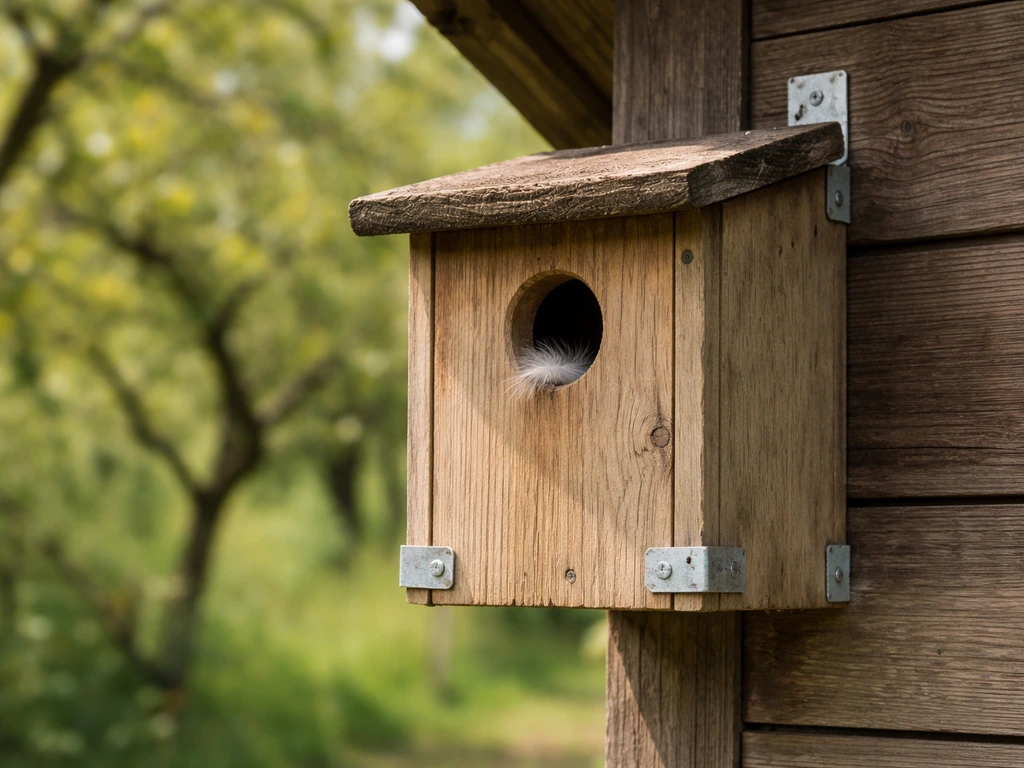
Several targeted programs are working on the specific bottlenecks the hoopoe faces. In Switzerland, BirdLife Switzerland has an action plan for the species (Plan d'action Huppe fasciée) focused on habitat and site networking strategies. In South Moravia (Czech Republic), an EEA Grants-funded project worked on landscape management, improving turf and ground food supply, and constructing and placing artificial nest boxes in key areas. These are not generic conservation measures, they are designed around what the hoopoe actually needs.
Nest-box installation is one of the most practical and evidence-backed interventions. Research confirms that hoopoes readily adopt nest boxes of appropriate dimensions, and the boxes allow breeding in areas where natural cavities have disappeared. This mirrors what has been shown for other cavity-nesting birds: artificial nest sites can genuinely compensate for cavity loss caused by building renovation and tree removal.
At a policy level, BirdLife Europe advocates for agricultural reform, pushing to reduce chemical pesticide dependency and support the kind of low-intensity farmland that benefits hoopoes and dozens of other farmland bird species. Progress is slow, but the direction of travel in EU agri-environment policy does acknowledge biodiversity harm from current farming practices.
What you can do today
If you have spotted a hoopoe or you live in an area where they breed, there are concrete things you can do right now. None of them require expertise or funding.
- Check your country's specific Red List status: Go to the National Red List Database (nrldatabase.org) and search for Upupa epops to see if your country has its own assessment. Your national status may be more urgent than the global Least Concern label suggests.
- Submit your sightings to eBird or a national atlas: Hoopoe occurrence records genuinely contribute to population monitoring. If you see one, log it with date, location, and behavior. This feeds into the datasets that researchers and conservation bodies use.
- Do not disturb active nest sites: Hoopoes nesting in wall cavities, tree holes, or nest boxes are easily stressed into abandonment. Keep a respectful distance, especially during incubation (the first two to three weeks after the female enters the nest regularly).
- Install a nest box if you have suitable land: Hoopoe nest boxes are straightforward to build or buy. If you have a garden, orchard, or farmland in hoopoe territory with open foraging ground nearby, a correctly sized and positioned box can directly enable breeding.
- Support or advocate for low-intensity farmland management: If you farm or know someone who does, agri-environment schemes that maintain short-grassed areas, reduce pesticide use, and keep old trees are exactly what hoopoes need. These are also the kinds of practices that BirdLife and national conservation bodies actively promote.
- Avoid pesticide use in gardens near hoopoe habitat: Insecticides reduce the prey populations hoopoes depend on. Organic gardening practices and reducing or eliminating pesticide use in your own patch makes a real difference at the local level.
- Contact your national BirdLife partner: Most European countries have a BirdLife partner organization with species-specific programs. They can tell you about local nest-box schemes, monitoring volunteer opportunities, and where help is most needed.
The hoopoe is one of the more distinctive birds in its range, instantly recognizable by its crest and bold plumage, and it tends to breed in habitats that put it in close contact with people: orchards, village outskirts, old stone walls. In Hawaii, the common myna bird is another distinctive species people may come across, especially around urban and coastal habitats hoopoe. That proximity is actually an advantage for conservation. It means citizen monitoring works well, nest-box programs are practical, and individual landowners and gardeners can make a genuine contribution. The species is not in crisis, but keeping it that way requires exactly the kind of habitat-conscious, pesticide-aware land management that benefits a whole community of farmland birds, not just the hoopoe.
FAQ
If hoopoes are not endangered globally, can they still be threatened where I am?
For the Common Hoopoe (Upupa epops), the global conservation status is Least Concern, meaning it is not considered endangered overall. However, local or national assessments can classify it as Near Threatened or Vulnerable in specific countries, so the practical answer depends on where you live and which Red List system is being referenced.
Why does the hoopoe’s risk level differ between the IUCN category and my local bird reports?
Yes. “Least Concern” is based on global thresholds, but Europe and parts of Asia can show uneven trends. The most useful approach is to check your country’s national Red List entry (or equivalent local assessment) rather than relying only on the global category.
What’s the most effective way for a homeowner to help hoopoes without accidentally doing the wrong thing?
The hoopoe is a cavity nester, so you can help primarily by increasing safe nesting sites and suitable ground foraging. Putting out a nest box only helps if the box is placed where the surrounding ground is not heavily compacted, and where pesticides are minimized near the foraging area.
Do nest boxes always attract hoopoes, and are there placement or timing mistakes to avoid?
Nest-box programs work, but placement matters. Boxes need to be sited in appropriate habitat close enough to foraging ground, mounted securely, and managed so they are not cleaned at the wrong time (typically you want to avoid disturbing active breeding). If you are unsure, use guidance from regional cavity-nesting bird programs or local conservation groups.
How do pesticides affect hoopoes in practice, and what can I change on my land?
Hoopoes often probe for invertebrates in soil, so reducing pesticide use near orchards, vineyards, field margins, and village edges can directly improve food availability. If you must use chemicals, a safer approach is to keep treated areas away from hedges, bare-ground patches, and any known nesting cavities.
Why can hoopoe numbers fluctuate even when habitat looks suitable?
Breeding depends on having both nesting cavities and open ground nearby, plus stable conditions through incubation and early chick development. In drought, soil can become too hard to probe, and in cold or wet spells, survival during incubation and early nestling stages can drop. That means habitat tweaks may help, but weather variability can still cause bad breeding years.
Can eBird or atlas data be misleading when people say hoopoes are disappearing?
Monitoring is uneven across the hoopoe’s range, so “scarce” in one dataset can reflect survey gaps rather than true population collapse. Using multiple sources, including citizen-science reporting where available, can help you interpret local trends more realistically.
Are there different hoopoe species, and could that affect whether people think it is endangered?
The common hoopoe is the one most people mean, but there are also island forms that may be treated as separate species in different classifications. If your local area has an African or Madagascar hoopoe taxon (depending on region), conservation context can differ, so check which hoopoe you are actually referring to.
What should I watch out for during building work or landscaping if hoopoes breed nearby?
If hoopoes are visiting your property, avoid sealing cracks, removing old stonework crevices, or trimming potential cavity trees during the breeding season. Conversely, if you are doing renovation, plan for replacement cavities or nest boxes in advance so pairs still have viable nesting sites.
What practical next step should I take if I want to help more than just make my garden “wild”?
If you want to take action beyond general habitat gardening, look for local nest-box or farmland bird projects and follow their installation standards. In many regions, collaboration matters because success depends on landscape-scale habitat continuity, not just isolated actions.