
The common myna (Acridotheres tristis) is everywhere in Hawaiʻi, and once you know what to look for, you'll spot it constantly. It's a stocky, nine-inch bird with a chocolate-brown body, a black head and neck, a bright yellow bill, yellow legs, and a vivid patch of bare yellow skin just behind each eye. In flight, a bold white wing patch flashes on each wing, and the dark tail has a clean white tip. It's loud, bold, and completely unafraid of people, which is exactly why so many Hawaiʻi residents want to know how to deal with it.
Common Myna Bird in Hawaii: Identify, Impact, and Control

Maya Hennessy
15 May 2026
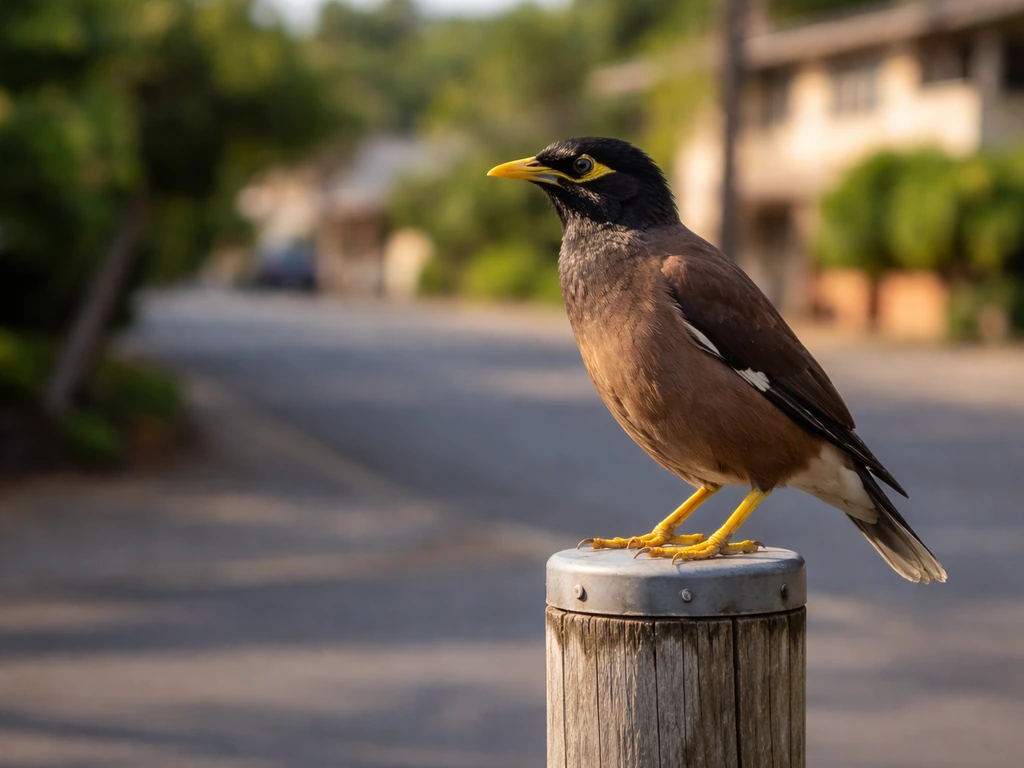
How to Identify the Common Myna in Hawaiʻi
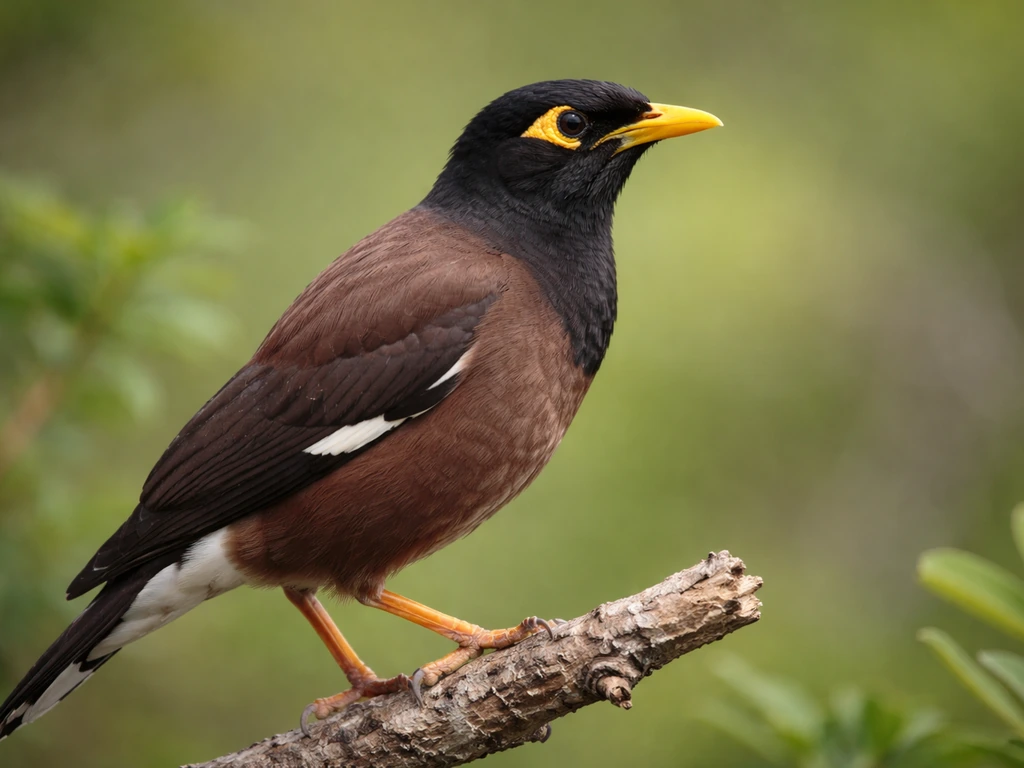
Up close, the common myna is hard to confuse with anything else once you've seen one. The black hood stops sharply at the upper chest, where it transitions into a rich maroon-brown that covers the back, wings, and belly. The short tail is dark with crisp white tips on the outer feathers, and those white-tipped tail feathers fan out when the bird lands or walks. The bare yellow eye patch (not just a ring, but a full teardrop-shaped patch of skin) is one of the most distinctive features and distinguishes it from almost every other bird you'd see in a Hawaiian backyard or park.
In flight, look for that white wing patch, which appears as a bright, square-ish flash on the inner wing. The bird also has a somewhat heavy, direct flight style, not the undulating dip of a finch. It walks confidently on the ground with a strutting gait, often bobbing its head. Its calls range from a harsh, chattering rattle to surprisingly melodic whistles. You'll often hear a flock before you see it.
| Feature | What You'll See |
|---|---|
| Body size | About 9 inches (23 cm) long, stocky build |
| Head and neck | Black (hood-like), contrasts sharply with the body |
| Body plumage | Chocolate-brown to maroon-brown |
| Bill | Yellow, short and stout |
| Legs and feet | Yellow |
| Eye patch | Bare yellow skin behind the eye (teardrop shape) |
| Wing patch | Bold white patch, very visible in flight |
| Tail | Dark with white-tipped outer feathers |
Where Common Mynas Live and How to Find Them
Common mynas thrive in exactly the kinds of places humans have created: towns, suburbs, parks, agricultural land, and golf courses. If you’re also curious about a different bird, you might be wondering where the hoopoe bird lives and what habitats it prefers Where Common Mynas Live. Toucan birds can be found in tropical forests and other warm, humid habitats across Central and South America where does the toucan bird live.
They were introduced to Hawaiʻi in 1865, originally to control armyworms in sugarcane fields, and they've since spread across all the main islands. You'll find the densest populations in low to mid-elevation areas, especially anywhere with open ground, short grass, and nearby food sources. Manicured parks, shopping center parking lots, school campuses, and residential neighborhoods with fruit trees are prime habitat.
Roosting is where common mynas become genuinely disruptive. At dusk, flocks of dozens to hundreds of birds converge on communal roost trees, usually large trees in urban areas, making a deafening noise for an hour or more before settling. They favor big monkeypod trees, banyan trees, and similar wide-canopied species. Once a roost is established, the same trees are used night after night, and the droppings accumulate rapidly beneath them.
During the day, common mynas typically work in pairs or small groups, foraging on lawns, near dumpsters, around outdoor dining areas, and in gardens. They're most active in the morning and late afternoon. Breeding pairs are intensely territorial and will often return to the same nest site year after year, which is worth knowing if you're trying to manage them on your property.
What They Eat and Why They Show Up in Your Yard
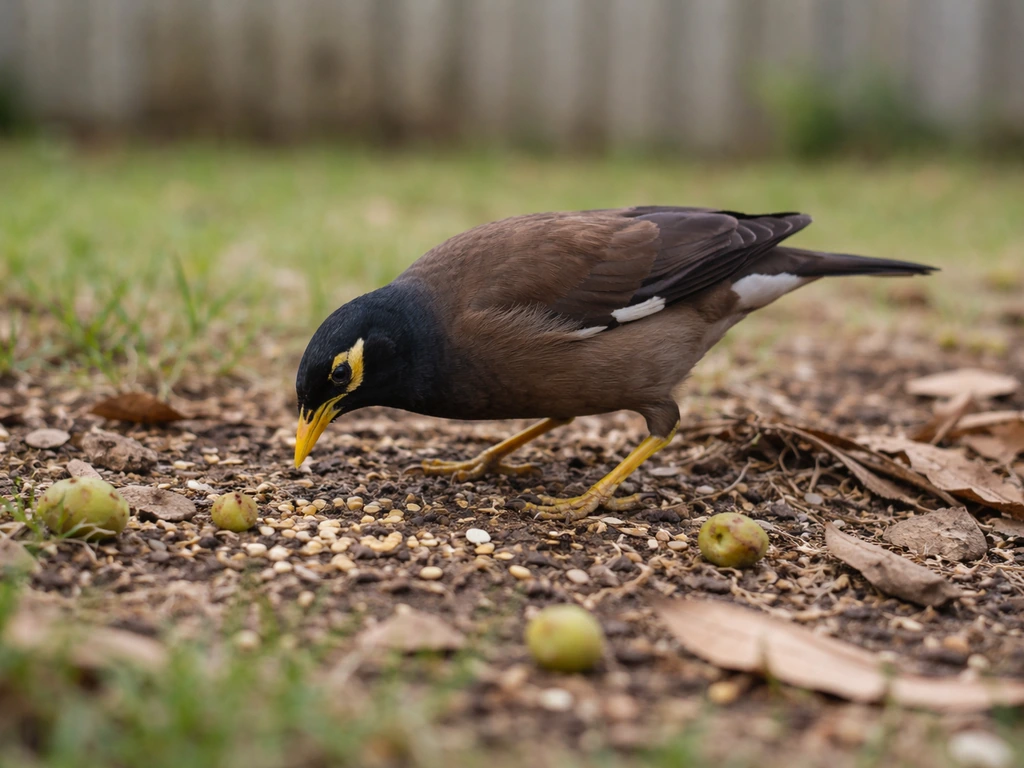
Common mynas are opportunistic omnivores, and that flexibility is a big part of what makes them so successful. They eat insects and invertebrates, fruit, seeds, food scraps, and virtually anything left out for pets or other wildlife. If you have fruit trees (papaya, guava, lychee, fig, banana), fallen fruit on the ground is a reliable attractant. Pet food left outside, uncovered compost bins, and exposed trash are also major draws.
They're also well-documented nest raiders. Common mynas will investigate and evict other birds from nest cavities, including native species, and they'll eat eggs and nestlings. This is one reason they're so harmful in Hawaiʻi, where many native birds are already critically threatened. In gardens and yards, they'll often follow lawn mowers or irrigation systems, snatching earthworms and insects displaced by the activity. They're smart enough to associate human activity with food, which makes them persistent visitors.
Telling the Common Myna Apart from Similar Birds
A few other birds in Hawaiʻi can cause confusion, particularly for people new to the islands. Here's how to sort them out.
| Species | Key Differences from Common Myna |
|---|---|
| Common myna (Acridotheres tristis) | Yellow bill, yellow legs, bare yellow eye patch, white wing patch in flight, black hood — the standard reference bird |
| Jungle myna (Acridotheres fuscus) | Also in Hawaiʻi; similar size and shape, but has a pale eye (often yellow-orange iris), a small tuft of feathers at the base of the bill, and less vivid bare skin around the eye |
| European starling (Sturnus vulgaris) | Shorter tail, iridescent dark plumage with pale spotting, no yellow bill or eye patch; moves in large swirling flocks |
| Hill myna (Gracula religiosa) | Less common; larger body, glossy black all over, very prominent orange-yellow wattles on the head, known for extraordinary mimicry |
The jungle myna is the one that most consistently trips people up because it's also an introduced species in Hawaiʻi and lives in similar habitats. If you're comparing different birds' ranges and habitats, you might also be curious where does the potoo bird live as a related question. The key tells are the small forehead tuft on the jungle myna and its paler, more uniform eye (without that dramatic bare skin patch). If the bird has a feathery crest at the base of its bill, it's a jungle myna. If you see that bold bare yellow teardrop behind the eye, it's a common myna.
Why Common Mynas Are a Serious Problem in Hawaiʻi
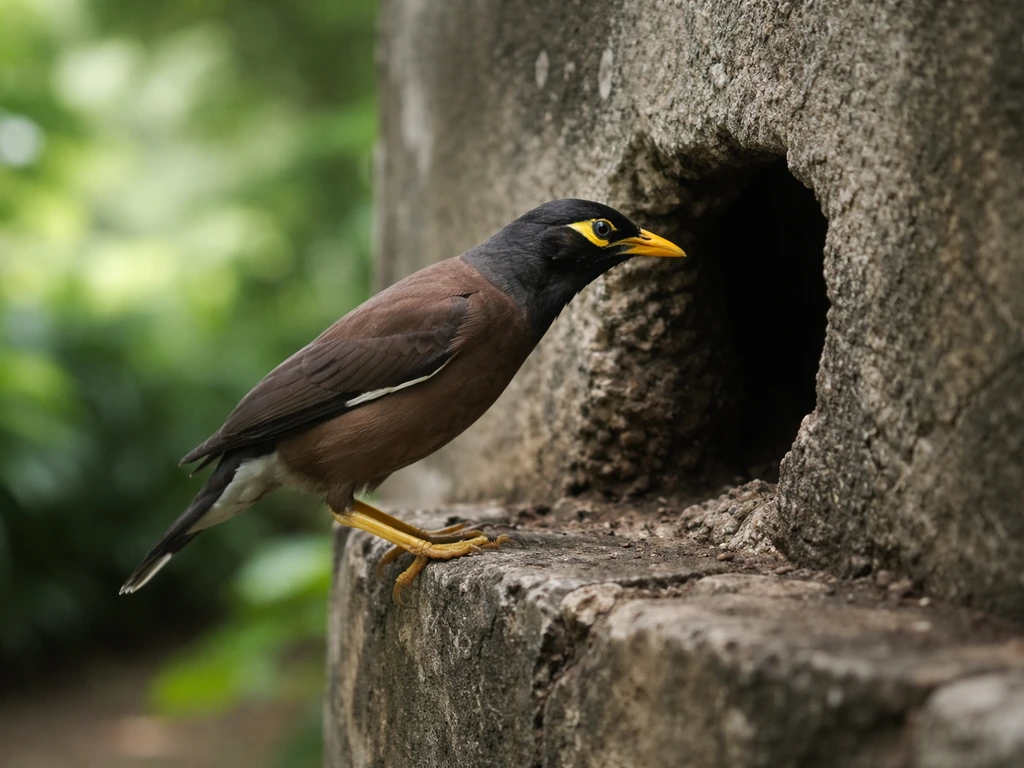
Hawaiʻi has the highest rate of bird extinctions of any place on Earth. If you're also wondering whether the hoopoe bird is endangered, it can help to look at region-specific assessments and population trends is hoopoe bird endangered. More than 70 endemic bird species have gone extinct since humans arrived, and dozens more are on the endangered list today. Into this already fragile system, introduced species like the common myna act as an accelerant. The common myna's most direct impact is on native cavity-nesting birds: it aggressively competes for nest sites, evicts established pairs, destroys eggs, and kills nestlings. It also spreads invasive plants by dispersing seeds from fruits it eats, which can alter native forest understories.
Common mynas are also reservoir hosts for avian diseases and parasites, including some that affect native Hawaiian honeycreepers, which are already devastated by avian malaria. The sheer abundance of mynas in lowland and mid-elevation Hawaiʻi means that native birds have been effectively pushed out of large portions of their historical range. Conservationists working to protect species like the ʻalala (Hawaiian crow) and various honeycreepers consistently flag invasive birds like the common myna as a top management concern.
It's worth framing this clearly: the common myna is not a neutral presence. It is an active driver of habitat degradation and native species decline in one of the world's most biodiverse and vulnerable island ecosystems. Understanding that context matters when you're deciding whether and how to act on your property.
What You Can Do About Them Today
There's no single switch that makes common mynas disappear from your yard, but a combination of removing attractants and applying targeted deterrents can significantly reduce how many visit and whether they nest on your property. Start with the obvious food sources.
Remove What's Drawing Them In
- Pick up fallen fruit from beneath fruit trees daily. Even a few days of accumulation creates a reliable food source.
- Store pet food indoors or use feeders that close when not in active use. Never leave kibble outside overnight.
- Use lidded compost bins and keep trash containers tightly sealed.
- If you have bird feeders, be aware that seed scattered on the ground will attract mynas. Consider platform feeders with catch trays and clean up spilled seed regularly.
- Remove standing water sources that aren't actively needed. Birdbaths can be managed by only filling them in the morning and emptying them in the afternoon.
Physical Deterrents That Actually Work
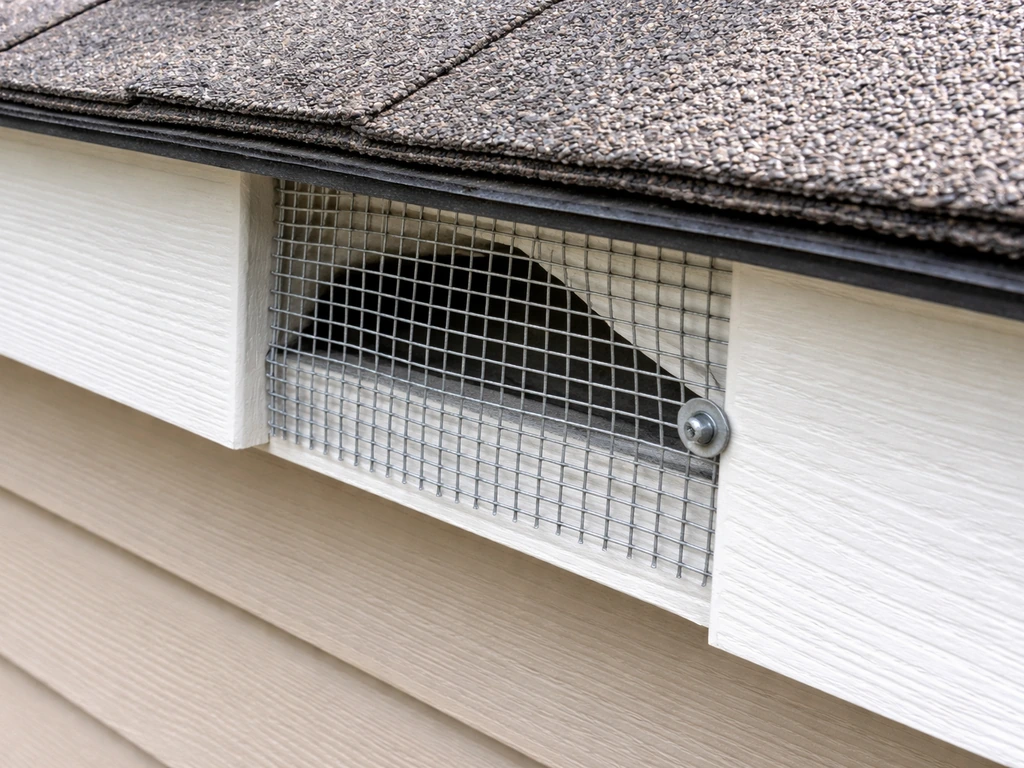
- Block nest cavities in eaves, roof vents, and gaps in structures using hardware cloth or commercial vent covers. Common mynas are persistent nesters in buildings and will reuse the same site annually if access isn't closed off.
- Install bird exclusion netting over fruit trees or garden beds during fruiting season. This is one of the most effective direct interventions.
- For roost trees on your property, visual deterrents like reflective tape, predator decoys (owl or hawk silhouettes), or motion-activated sprinklers can disrupt roosting behavior, though mynas are smart and may habituate to static deterrents over time. Rotate and move them regularly.
- Avoid planting additional fruit trees or berry-producing ornamentals near your home if myna pressure is already high. Introduced species like strawberry guava are both common myna favorites and themselves invasive plants in Hawaiʻi.
Trapping and Population Control
Trapping is legal for common mynas in Hawaiʻi, and community-level trapping programs do have measurable impact when sustained over time. Cage traps baited with fruit or bread are the most commonly used method by homeowners. However, trapping requires consistent effort and a plan for what to do with captured birds. Lethal control of invasive species is permitted and is the standard approach recommended by invasive species managers in Hawaiʻi, but you should confirm current local guidance before acting. Release and relocation generally isn't recommended because it moves the problem rather than solving it.
Getting Professional Help and the Right Local Contacts
If you're dealing with a large roosting flock, ongoing nesting in structures, or simply want to contribute to coordinated control efforts, connecting with local organizations is the most effective next step. Here are the key contacts and resources in Hawaiʻi as of 2026.
- Hawaiʻi Department of Land and Natural Resources (DLNR), Division of Forestry and Wildlife (DOFAW): The primary state agency for invasive species and native wildlife in Hawaiʻi. They can advise on legal control methods and point you to active management programs in your area. Contact via the DLNR website or your island's district office.
- Hawaiʻi Invasive Species Council (HISC): Coordinates multi-agency invasive species efforts statewide. Their website lists current priority species, control programs, and how to report sightings.
- Invasive Species Committees (ISCs): Each major island has its own committee (e.g., the Oahu Invasive Species Committee, Maui Invasive Species Committee). These are often the most responsive local contacts for hands-on management questions and can connect you with community trapping programs.
- University of Hawaiʻi Cooperative Extension: Provides practical, research-backed guidance for homeowners and landowners on managing invasive species, including birds. Your county extension office is a good first call for property-level advice.
- Report unusual bird sightings or behaviors to the DLNR or eBird (Cornell Lab): Reporting helps track population changes and informs conservation decisions. If you see a bird you don't recognize, documenting and reporting it is genuinely useful to researchers.
One legal point worth knowing: common mynas are not protected under the U.S. Migratory Bird Treaty Act because they are a non-native invasive species. That means homeowners have more legal flexibility than they would with native birds. However, any control activity on public land, in protected areas, or using certain methods may still require permits. When in doubt, check with DOFAW before acting.
The broader conservation picture here is one that anyone interested in Hawaiʻi's birds needs to sit with. Every native species that gets pushed out of lowland habitat by invasive birds like the common myna represents a real loss, sometimes irreversible. We've already watched dozens of Hawaiian bird species disappear entirely. The common myna is one of many introduced pressures those remaining species face, alongside habitat loss, avian disease, and predation by invasive mammals. Managing it on your property is a small but real contribution to a larger fight, and connecting with the organizations above puts that individual action into a coordinated effort that actually moves the needle.
FAQ
What should I target first in Hawaii if I want fewer common myna visits and fewer nests?
If your goal is to protect native cavity nesters, focus on reducing nesting success first, not just daily foraging. Common mynas return to the same nest sites, so put deterrents and nest-exclusion measures in place before the breeding season and keep them consistent through the year.
Why do common mynas keep coming back even after I tried basic cleanup?
A key mistake is leaving fruit or pet attractants out “for a day or two” while you set up deterrents. Mynas are persistent and will learn the routine, so remove fallen fruit daily, secure pet food, and tightly cover trash and compost immediately when you start control.
Do birdhouses and nest boxes in my yard increase the chance that common mynas will take over?
If you have birdhouse-style cavities or manmade nest boxes, treat them as a potential competitor resource for mynas. Use entry hole sizes and designs that exclude larger cavity competitors where appropriate, and inspect boxes frequently for signs of occupation or eviction behavior.
My area has a roost nearby. What’s the best way to reduce the nightly noise and droppings?
For roost problems, the most noticeable results usually come from changing the conditions that support nightly gatherings, not only stopping individual birds. Since roost trees are used night after night, work on deterring roost attendance and reducing nearby food sources at the same time, then reassess after several weeks.
How do I avoid wasting time if I decide to use cage traps for common myna in Hawaii?
Trapping can work when it is sustained and coordinated, but it fails when effort stops after the first few captures. Plan for repeated checks and a clear disposition method for captured birds before you start, because inconsistency allows surviving birds to refill the local area.
Is it better to relocate captured common mynas to a different part of the island?
Release and relocation usually does not solve the issue because it simply moves breeding and feeding pressure to a new location, and relocated birds may return or create new nuisance sites. If you are working with a program, ask what their post-capture protocol is and ensure it aligns with local invasive species guidance.
How can I check whether common mynas are nesting in or near my property?
Common mynas often reuse the same nest cavities, including human-made structures, so annual inspections matter. Look for fresh activity around vents, eaves, and cavity openings, and schedule exclusion or repairs during the period you can legally and safely manage.
What are the quickest visual markers that confirm a bird is a common myna (not a similar myna)?
If you’re comparing the common myna to similar introduced species, don’t rely only on color descriptions. Use the combination of the bare yellow teardrop-shaped skin patch behind the eye, the bold white wing patch in flight, and the dark tail with clean white tips to confirm.
Are there health or disease concerns when dealing with common myna droppings or captured birds in Hawaii?
Disease risk is one reason management should avoid casual handling of captured birds or roosting areas. Wear protective gloves and consider masking when cleaning droppings, then avoid spreading dust into living spaces, especially if you have people or pets with higher health risk.
When during the day or year are myna deterrents most likely to work?
Yes, weather and season can change activity patterns, so timing affects results. If you only manage during morning when you usually see foraging, you can miss midday nest defense or late-day roost preparation, which is why a schedule that covers morning and late afternoon is more effective.
What permit or legality issues should I check before using deterrents or trapping on my property?
Common mynas are not protected federally as native migratory birds because they are non-native, but some controls on public land or protected areas can still require coordination. Before acting, confirm what’s allowed for your exact site (property type and location) and methods, and check with DOFAW when uncertain.
Next Articles
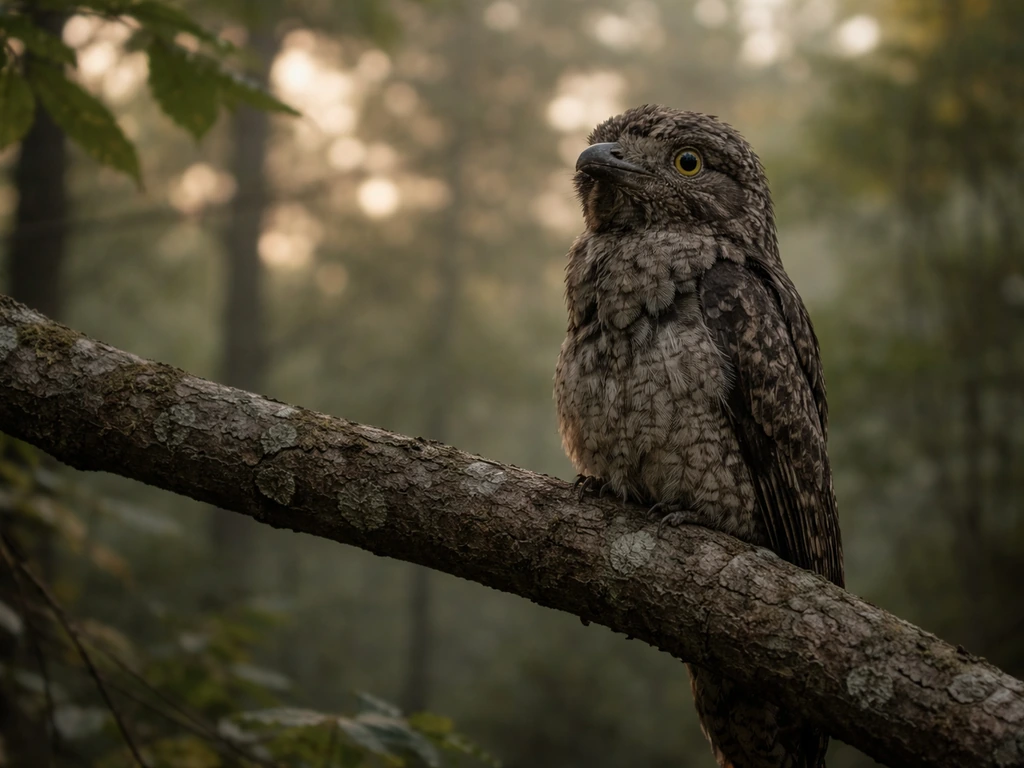
Where Does the Potoo Bird Live Habitat and Range by Species
Learn where potoo birds live by species, including native regions, habitats, roosting sites, and range by climate and el
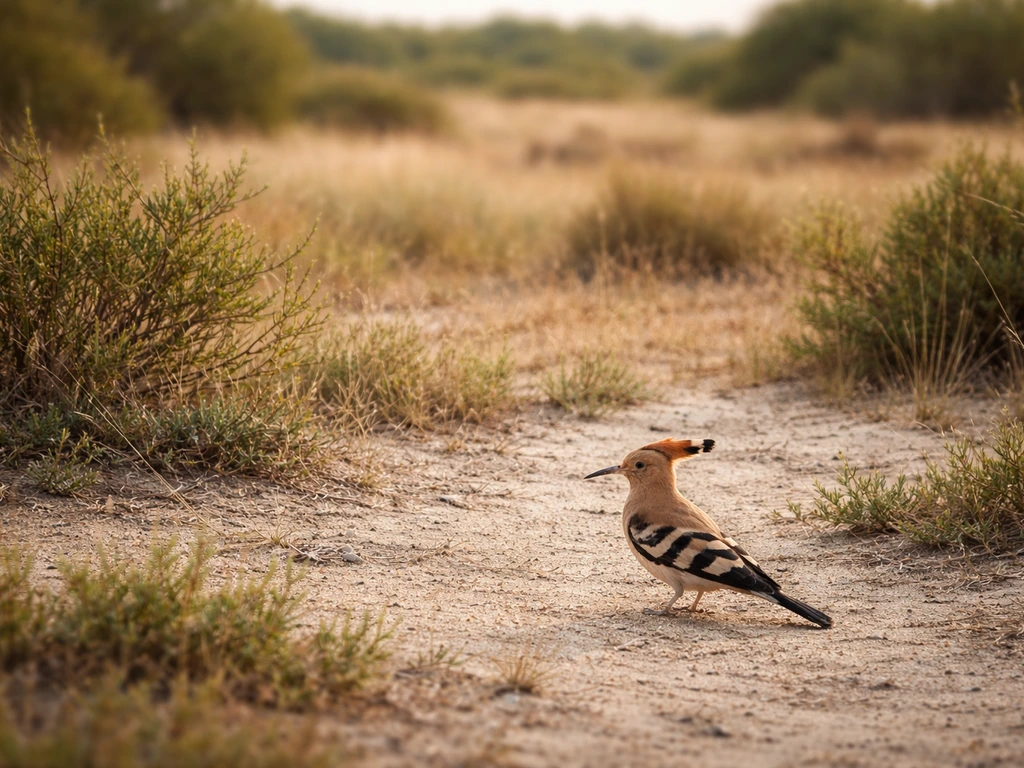
Where Does the Hoopoe Bird Live Habitat, Range, Seasons
Learn where hoopoes live, their habitat preferences, nesting and roosting sites, and seasonal range by region.
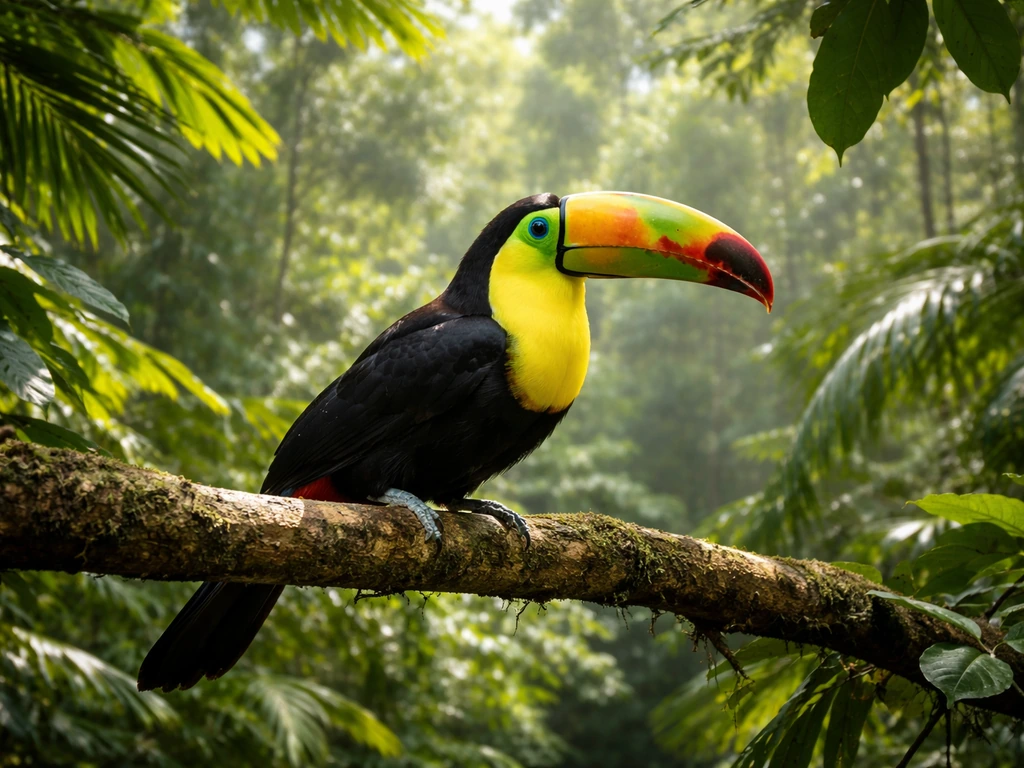
Where Does the Toucan Bird Live? Native Range and Habitat
Find where toucans live in the Americas and which forests they inhabit, including how climate and altitude shape sightin