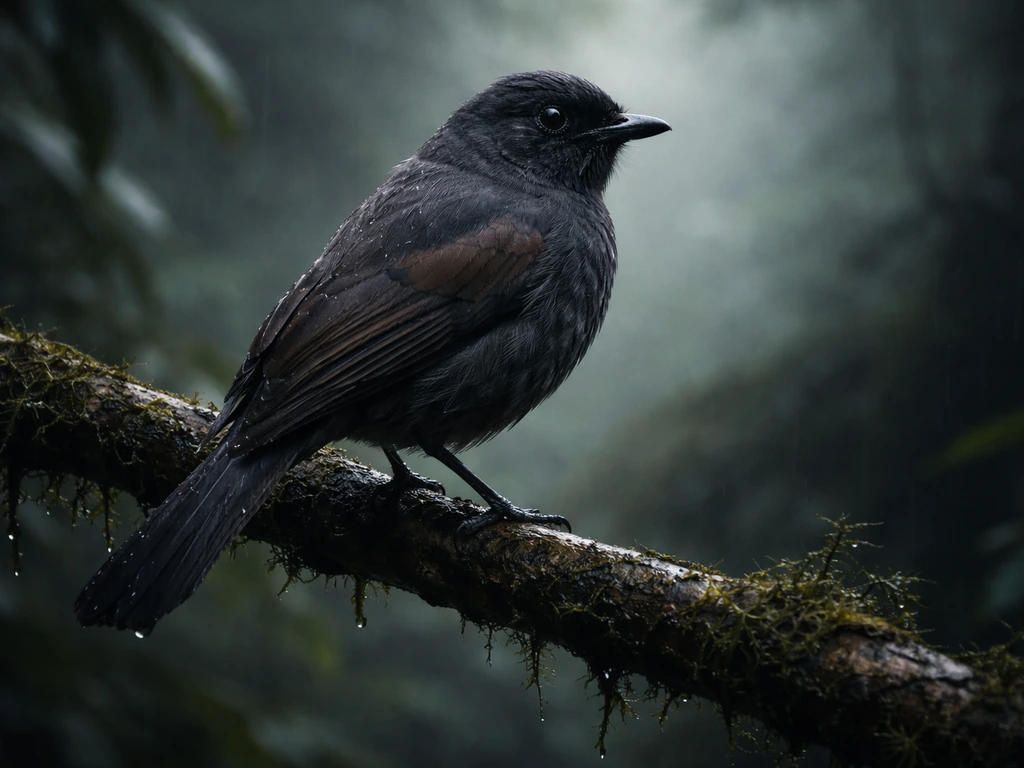
One of the most immediate and measurable effects of declining bird populations is the breakdown of ecological services that ecosystems depend on: pest control collapses, seed dispersal networks unravel, and pollination drops. These are not slow, abstract changes. Studies on New Zealand shrubland showed that when bird pollinators functionally disappeared from a site, the plant Rhabdothamnus solandri produced fewer seeds and showed lower plant density compared to nearby island sanctuaries where birds remained abundant. Remove the birds, and the plants start to follow.
What Is an Effect of the Reduction in Bird Populations?

Maya Hennessy
12 May 2026
What happens right away when bird numbers drop
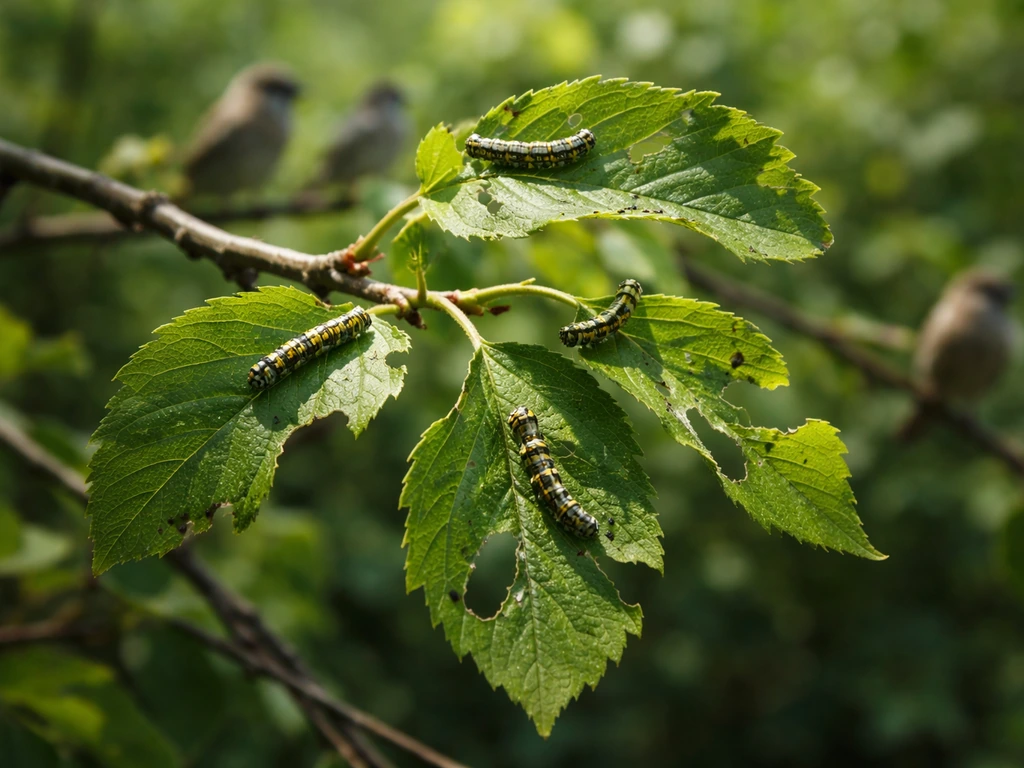
The first impacts hit the systems birds directly regulate. Insectivorous birds are estimated to consume somewhere between 400 and 500 million tons of insect prey globally each year. That is an enormous suppressive force on insect populations. When birds thin out, insect pest populations can rebound. Research using bird exclosure experiments during spruce budworm outbreaks showed that bird predation measurably influenced budworm density dynamics, with foraging activity and predation rates varying significantly depending on bird presence. Take that pressure away and pest cycles can intensify.
Seed dispersal is another immediate casualty. Frugivorous birds move seeds across landscapes, sometimes over kilometers, which plants cannot do on their own. Modeling studies of seed-dispersal networks found that removing just 10 percent of bird species caused more secondary plant extinctions in a 'downsizing' scenario than a random removal scenario. The functional loss outpaces the structural loss, meaning ecosystems lose capability faster than they lose species count. On Guam, where invasive predators wiped out native forest birds, researchers modeled how reduced dispersal cascaded into altered plant recruitment probabilities across multiple life-history stages, from seed ingestion all the way to seedling survival.
How food webs and ecosystems unravel
Birds sit at multiple levels of the food web simultaneously. A single species might be a predator of insects, a prey item for raptors, and a seed disperser for plants all at once. When populations shrink, these linked roles weaken together. The cascading effects do not travel in neat, predictable lines. Fewer insectivores means more herbivorous insects, which means more plant damage, which can reduce canopy cover and alter the habitat structure that other birds depend on. A review in Annual Reviews of Ecology synthesized the mechanisms linking seed-disperser loss to measurable changes in plant community composition and ecosystem function, confirming the chain reaction is real and documented across multiple biomes.
Larger frugivorous birds are disproportionately important in these networks. They tend to be the ones capable of swallowing bigger seeds and dispersing them farther. When these larger species are lost first (which often happens because they are more vulnerable to hunting and habitat change), the remaining smaller birds cannot pick up the slack. The network does not just shrink proportionally; it loses its most critical long-distance links first.
Biodiversity loss and the extinction spiral
Bird population declines do not just threaten individual species. They accelerate extinction risk across entire communities, including within the declining bird populations themselves. For example, when small birds continue to decline, some species can reach the point where they are considered extinct, such as sparrow birds accelerate extinction risk. Research on southern dunlins, an endangered shorebird, found that long-term population decline was associated with increased inbreeding and measurable loss of genetic diversity. This is the extinction vortex in action: small populations breed within themselves, accumulate genetic problems, and become less adaptable to disease, climate shifts, or any new pressure. A 2025 study in BMC Biology on two endangered buntings documented patterns of genetic diversity loss using runs of homozygosity analysis, showing how rapidly evolutionary potential erodes after severe population declines.
Habitat degradation is the engine driving much of this. Those drivers, the causes of bird extinction, are what conservation efforts must target to stop the spiral early. A Nature Ecology and Evolution study back-cast species distribution models across eastern Canada and found that forest degradation drove widespread breeding habitat loss for forest-associated bird species. Fewer birds means less forest regeneration through seed dispersal, which means less breeding habitat for the next generation of birds. The cycle feeds itself. This connects directly to what drives the extinction of flightless and island birds, where habitat changes have historically been irreversible once crossed.
The DDT story is worth revisiting here as a proof of concept. This same logic helps explain how did high concentrations of DDT affect bird populations by showing how a persistent chemical can disrupt survival and reproduction, eventually reshaping entire bird communities. After the U.S. EPA banned DDT in 1972, populations of bald eagles, brown pelicans, ospreys, and peregrine falcons all increased. The mechanism was well-documented: DDE, the breakdown product of DDT, caused eggshell thinning, with bald eagle eggshells along the lower Columbia River measured at roughly 11 percent thinner than pre-DDT-era shells. That single chemical cascade nearly pushed multiple raptor species into functional extinction before the ban reversed it. It shows that targeted intervention can work, but also how quickly birds can spiral when a systemic pressure goes unchecked. The history of DDT's effects on raptors is one of the clearest examples of how human choices propagate through bird populations into broader biodiversity loss.
What bird loss means for farming, disease, and human life
This is where bird population declines stop being just a wildlife issue and become a practical human problem. Crop pest control is one of the clearest examples. USDA forest science research has tested bird exclusion experiments on farmland and found that bird communities can meaningfully improve biological pest control for certain crop groups, with measurable differences in pest populations and leaf damage when birds are excluded. The effect is crop-specific: brassicas and cucurbits showed stronger benefits than some other crop types, which is why the picture is nuanced rather than uniform. But the direction is clear: fewer birds means more reliance on synthetic pest control.
Disease ecology is a less obvious but equally important link. Birds influence vector populations, including mosquitoes that carry diseases like West Nile Virus. Changes in bird community composition can shift which bird species are most common, and some species are much better amplifying hosts for certain pathogens than others. Losing birds that are poor hosts while retaining those that are good hosts can increase disease transmission risk in a given area. This is a well-documented phenomenon in public health research and it means that bird conservation is, in part, human health infrastructure.
Beyond pest control and disease, bird-mediated pollination and seed dispersal underpin the functioning of wild plant communities that stabilize soils, filter water, and regulate local climates. These are services that agriculture and human settlements draw on constantly, often without accounting for the birds doing the work in the background.
Tipping points: when decline becomes collapse
Ecosystems do not always decline gradually. A 36-year study of a threatened bird community's wintering dynamics found evidence of a catastrophic bifurcation, meaning the community crossed a threshold and shifted to an alternative stable state rather than declining smoothly. This is the tipping-point concept applied to real bird communities, and it matters enormously for conservation planning. If you assume decline is linear, you set conservation triggers too late. By the time population numbers look alarming on a graph, the community may already have crossed a threshold from which recovery is far harder. In other words, once a bird is almost extinct, the risk is that the ecosystem tipping point has already been reached what bird is almost extinct.
Seed-dispersal network modeling reinforces this concern. When larger bird species disappear first, smaller species cannot substitute their long-distance dispersal role, so the network loses redundancy fast. Plant recruitment drops, forests thin, and the habitat that supports remaining birds deteriorates. This is not speculation: it is what happened on islands across the Pacific, where the loss of native frugivorous birds contributed to altered forest structure that persisted for decades after the bird declines. The connection to cacao farm research, which has documented how bird abundance shifts in modified landscapes affect local biodiversity, illustrates the same principle at a landscape scale.
What you can actually do today

The scale of bird population decline can feel paralyzing, but the research consistently shows that specific, targeted actions produce real results. The DDT recovery story is the most dramatic proof: a policy change reversed the near-extinction of multiple raptor species within decades. That same pattern of evidence-driven updates also keeps flightless bird news grounded in measurable conservation outcomes DDT recovery story. Individual actions compound in the same way. Audubon specifically recommends blank" rel="noopener noreferrer">keeping cats indoors to reduce risks to birds, especially where bird feeders are nearby.
- Fix your windows. Bird-window collisions kill an estimated hundreds of millions of birds annually in North America. Audubon and the U.S. Fish and Wildlife Service both recommend patterned films or physical barriers with spacing no greater than 2 inches by 4 inches (the 2x4 rule) to break up reflections that birds cannot perceive as solid surfaces. This is one of the highest-impact single changes a homeowner can make.
- Keep cats indoors. The U.S. Fish and Wildlife Service identifies free-roaming cats as one of the leading direct causes of bird mortality in the United States. Keeping cats inside, or using enclosed outdoor structures, directly reduces that pressure on local bird populations.
- Reduce pesticide use around your home and garden. U.S. EPA guidance recommends using pesticides only when necessary and treating only the specific areas that need it. Insecticides remove the prey base insectivorous birds depend on, and some compounds bioaccumulate up the food chain just as DDT did.
- Plant native species in your yard or community spaces. Native plants support the native insect communities that insectivorous birds feed on, and native fruiting plants support the frugivores whose seed-dispersal role is so critical to ecosystem function.
- Support habitat protection and restoration organizations. Forest degradation has been quantitatively linked to breeding habitat loss for dozens of bird species. Organizations working on forest conservation and corridor restoration address the structural drivers of decline that individual actions alone cannot fix.
- Report and record bird sightings through citizen science platforms. Data from programs like eBird directly informs conservation prioritization, species distribution modeling, and policy. Every checklist contributes to the scientific foundation that makes conservation decisions more accurate.
- Advocate for Integrated Pest Management in your community. The U.S. EPA and CDC describe IPM as a science-based approach that reduces reliance on chemical pesticides by emphasizing prevention and biological control. Supporting IPM adoption in local agriculture and public spaces protects insectivorous birds while maintaining pest control.
The link between individual birds and entire ecosystems is not metaphorical. It is measured, modeled, and documented across continents and crop types. When bird populations shrink, the effects travel outward through food webs, plant communities, genetic diversity, and ultimately into agriculture and human health. If some mother birds never return to the nest, the loss compounds through both breeding success and the survival of offspring. Understanding that chain is the first step. Acting on it, starting with the practical steps above, is how the chain gets interrupted before more species cross the line from endangered to gone. The U.S. National Park Service notes that visual markers such as blank" rel="noopener noreferrer">dots or stripes spaced no more than 2 inches apart are among the most effective approaches for bird-safe glass, emphasizing correct placement and spacing.
FAQ
What is an effect of the reduction in bird populations that people notice quickly at home or in nearby farms?
Insect and crop damage can worsen because insectivorous birds decline, which reduces natural pest suppression. Bird exclosure and field studies in farm settings often find higher pest numbers and more leaf damage when birds are kept out.
Why do ecosystems lose function faster than they lose the number of bird species?
Functional roles depend on which species remain, not just how many. If the most effective seed dispersers or long-distance dispersers disappear first, the network loses key links quickly, even when some other bird species are still present.
Does bird decline always increase pests, or can the ecosystem sometimes compensate?
Compensation is limited. Some remaining species may eat more insects, but this rarely restores the original predation pressure or the timing of insect control, especially when larger or specialized birds are the ones lost first.
How does losing frugivorous or seed-dispersing birds change plant communities over time?
Reduced dispersal lowers seed arrival to suitable sites, which can decrease recruitment across multiple plant life stages. Over years to decades, this can shift forest structure, reduce canopy recovery, and alter habitat quality for other wildlife.
What is a less obvious effect of bird population declines related to human health?
Disease transmission risk can change because different bird species vary as hosts for disease-carrying vectors. Losing low-amplifier hosts while retaining high-amplifier hosts can increase pathogen spread in a local area.
Why are larger birds so important in these cascading effects?
Large frugivorous birds tend to handle bigger seeds and disperse them farther. When they are removed early, smaller birds usually cannot replace those long-distance, high-impact dispersal links.
Can bird declines lead to “tipping points,” or is change always gradual?
Change can be non-linear. Some bird communities show evidence of crossing thresholds into alternative stable states, meaning recovery can become much harder once a tipping point is passed.
How does inbreeding fit into the effects of reduced bird populations?
When populations shrink, breeding happens within a smaller gene pool, which can increase inbreeding and reduce genetic diversity. That reduces adaptive potential to new disease pressures, climate stress, and other future disturbances.
Is the effect on birds mainly caused by habitat loss, or are other drivers equally important?
Habitat degradation is often a primary driver, but the effects interact with other pressures like harvesting, invasive predators, and pollutants. In practice, the strongest conservation outcomes come when the underlying drivers are addressed together, not one at a time.
What does the DDT example add to understanding effects of bird population reduction?
It shows that systemic pressures can cause reproductive failures that cascade through communities, and that policy intervention can reverse the trend. It also highlights lag times, because recovery depends on how quickly reproduction and chemical exposure return to safe levels.
If birds are excluded from farmland, does that always mean chemical pest control increases immediately?
Often the direction is toward more reliance on other controls, but the magnitude can be crop-specific. Some crop groups respond more strongly to bird-mediated pest control than others, so effects are not uniform across farms.
What is a common mistake people make when trying to predict outcomes from declining bird numbers?
Assuming decline is proportional and linear. Because losses often target key functional species first, ecosystems can shift to different states or lose redundancy faster than population graphs suggest.
Next Article
What Bird Is Almost Extinct? How to Identify It and Help
Identify the bird often called almost extinct, why it’s near extinction, how to verify on IUCN, and what you can do.